
1968 Chevrolet Camaro
$69,997
Vehicle Details
Chevrolet
Camaro
1968
68,640 miles
124378N378851
Coupe
Manual
454 V8
Description
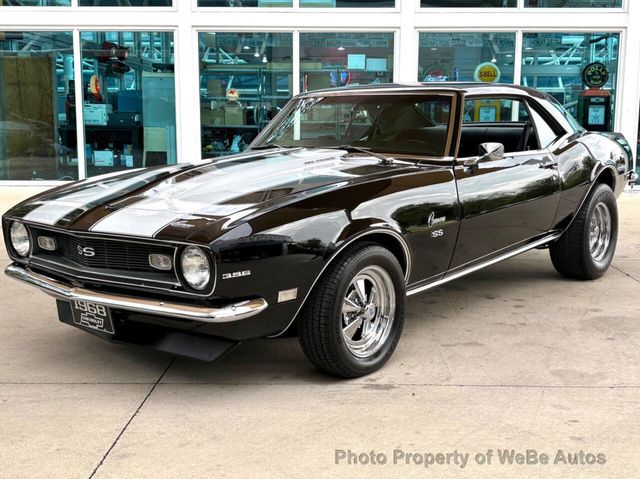
1968 Chevrolet Camaro SS — 454 Turbo-Jet V8, 4-Speed, Black on Black Why This Car Is Special The 1968 Chevrolet Camaro SS is widely regarded as the high point of the first-generation Camaro's design. Chevrolet refined the body for 1968 with side marker lights, revised trim, and a cleaner roofline, and the result is a profile that still stops people in their tracks more than five decades later. The first-gen Camaro ran from 1967 through 1969, with 1968 sitting squarely in the middle of what many collectors consider the golden era of American muscle.
Total Camaro production for 1968 reached just over 235,000 units, but the SS package — which required the buyer to step up to a big-block or the top-shelf small-block — accounted for a much smaller fraction of that total. What makes this particular 1968 Chevrolet Camaro SS worth serious attention is what sits under the cowl induction hood. This car carries a 454 cubic inch Turbo-Jet V8, an engine that Chevrolet did not offer in the Camaro from the factory in 1968.
The 454 big-block was introduced in 1970 across the Chevrolet lineup, which means this car has been built up with a period-correct but upgraded powerplant — a common and well-regarded approach among first-gen Camaro owners who want more cubic inches than the factory 396 could deliver. The engine wear markings, valve covers, and air cleaner lid on this car all identify it as a 454 Turbo-Jet rated at 425 horsepower, the same specification used in the LS6 Chevelle and Corvette applications of the early 1970s. It is a serious engine in a serious car, and the builder made no compromises in putting it together.
The VIN on this car decodes to a 1968 Camaro Sport Coupe built at the Norwood, Ohio assembly plant, which was one of two facilities producing Camaros during this period. The body style code confirms the hardtop coupe configuration, and the VIN structure is consistent with an SS-optioned car built with the big-block engine package. The SS option in 1968 brought with it a specific hood, SS badging front and rear, a blacked-out grille, heavy-duty suspension, and front disc brakes as standard equipment.
All of those features are present on this car. The combination of black exterior, black interior, white racing stripes, and a cowl induction hood gives this 1968 Chevrolet Camaro SS a presence that photographs well and looks even better in person. It has been built to drive, not just to show — the gauge cluster, the Hurst shifter, the front discs, and the clean undercarriage all point to an owner who put thought and money into the right places.
Features List - 454 Turbo-Jet V8, 425 HP - Cowl Induction Hood - 4-Speed Manual Transmission - Hurst Shifter - Front Disc Brakes - Dual Exhaust - Cragar Chrome Wheels - BFGoodrich Radial T/A Tires - White Racing Stripes - Black Vinyl Bucket Seats - Black Carpet - 3-Spoke Sport Steering Wheel - AM/FM Radio - Additional Gauges: Tachometer, Oil Pressure, Volts, Water Temp - SS Badging Front and Rear - 396 Fender Badges - Brown Vinyl Top - Clean Undercarriage - Sport Mirror Mechanical The 454 Turbo-Jet is the centerpiece of this build. Displacing 454 cubic inches and wearing a Turbo-Jet 425 HP air cleaner lid, this engine was the top-of-the-line big-block in Chevrolet's inventory when it was introduced. It features the distinctive finned valve covers in black and red that were associated with high-output Chevy applications, and the engine bay has been finished to a level that reflects care and attention rather than a quick clean-up.
The red plug wires, clean intake, and period-correct detailing all show that work was done with an eye toward authenticity as well as performance. The 4-speed manual transmission is operated through a Hurst shifter, which is exactly how these cars were meant to be driven. Hurst Performance was the preferred shifter manufacturer among GM, Ford, and Chrysler during the muscle car era, and Chevrolet either factory-installed or dealer-recommen
Classic Chevrolet Camaro Buyer's Guide
Chevrolet Camaro Market Overview
Based on 368 Chevrolet Camaro listings currently on ClassicCarsArena.com
Classic Chevrolet Camaro Buyer's Guide
The Chevrolet Camaro launched in September 1966 as Chevy's direct response to the Ford Mustang, and for over five decades it has defined American performance for an entire generation of enthusiasts. Whether you're hunting a numbers-matching first-generation Z/28, a survivor split-bumper second-gen, or a clean third-gen IROC-Z, the Camaro buyer's market is deep, varied, and full of pitfalls for the unprepared.
What to Check Before Buying
Common Issues
What to Look For
Price Guide
Did You Know?
Also Consider
Similar classic cars shoppers also browse:
How Does It Compare?
Head-to-head matchups for the Chevrolet Camaro:
1968 Chevrolet Camaro
Contact Seller
Listed by dealer
Nationwide consignment dealer
WeBe Autos lists vehicles from sellers across multiple states. The vehicle may not be at the dealer's address shown. Contact the dealer to confirm the vehicle's actual location before traveling.
Buying safely?
Read our scam-avoidance tips before paying →
Listing Actions
Browse by Era
1960s Classics for SaleAll 1968 Classics
Browse all 1968 Cars for SaleGet classic car alerts
Latest arrivals, newest deals, and discount coupons — straight to your inbox.
Selling your classic car?
Reach millions of classic car enthusiasts on the largest US classics marketplace.
Sell Your Car →Similar Listings
 Dealer
 United States
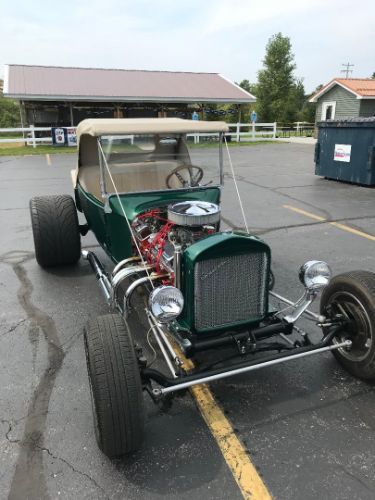
1918 Chevrolet 100
 Dealer
United States
Dealer
United States
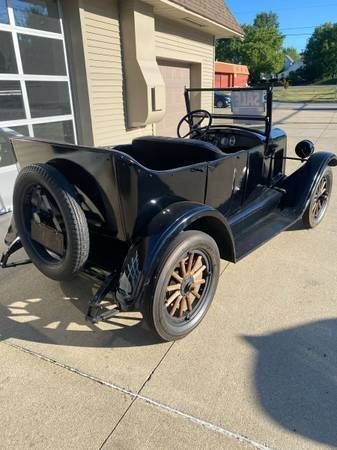
1923 Chevrolet Master
 Dealer
United States
Dealer
United States
1925 Chevrolet Superior K
 Dealer
United States
Dealer
United States
1926 Chevrolet 100
Contact Seller
Call this seller?
You're about to call WeBe Autos about the 1968 Chevrolet Camaro.
+1 (631) 339-0399
Report this Ad
Help us keep the marketplace clean. Our moderation team reviews every report within 24 hours.