
The Complete Chevrolet Bel Air Evolution: 1950–1975

Ask someone to picture a 1950s American car and there is a good chance they describe a Bel Air without knowing the name. The 1957 with its fins and gold grille has become shorthand for the whole decade. But the Bel Air ran far longer than the Tri-Five years that made it famous, from a 1950 hardtop trim all the way to a plain full-size sedan in the mid-1970s. The story is really two stories: the chrome-and-pastel dream car of the Eisenhower years, and the workaday family Chevrolet that quietly outlived its own legend.
Chevrolet Bel Air — Generation by Generation
Key Changes
- → Introduced as Chevrolet's pillarless hardtop body style
- → 235 cubic inch Stovebolt inline-six
- → Powerglide two-speed automatic option
- → 1953 restyle and expansion of the Bel Air series
- → Bel Air becomes a full model line for 1953
Specs
| Engine | 216/235 inline-six |
| Transmission | 3-speed manual, Powerglide auto |
| Body styles | Hardtop, sedan, convertible |
| Character | Style-led postwar Chevrolet |
 Dealer
 United States
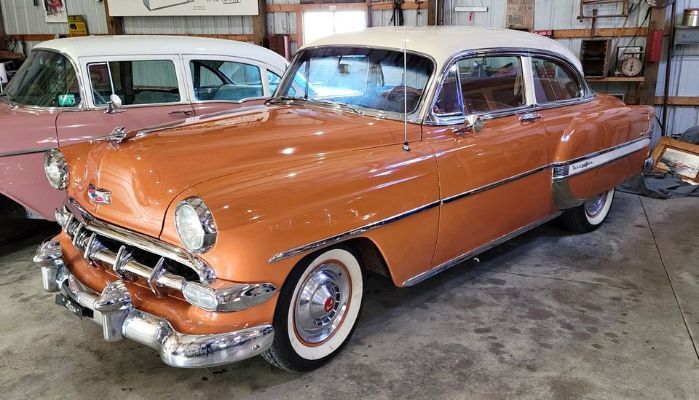
1954 Chevrolet Bel Air
 Dealer
United States
Dealer
United States
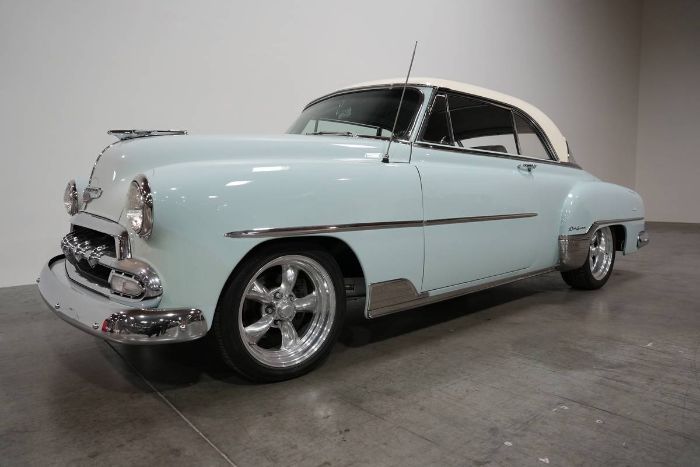
1952 Chevrolet Bel Air
 Dealer
United States
Dealer
United States
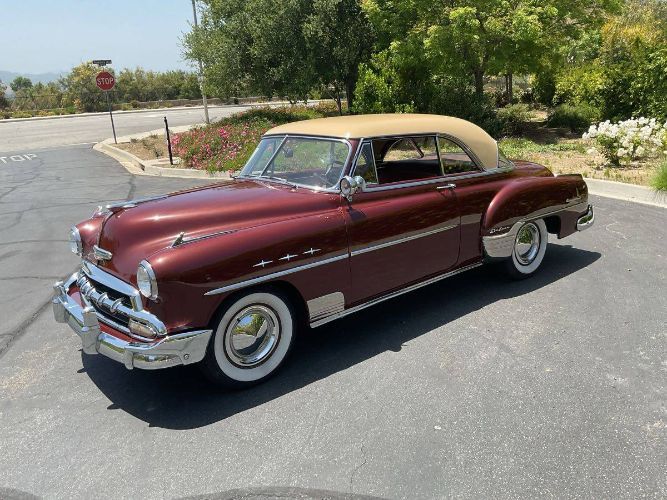
1952 Chevrolet Bel Air
Key Changes
- → All-new 1955 body with the first small-block V8
- → 265 V8 in 1955, 283 V8 added for 1957
- → Optional Rochester fuel injection in 1957 (283 hp)
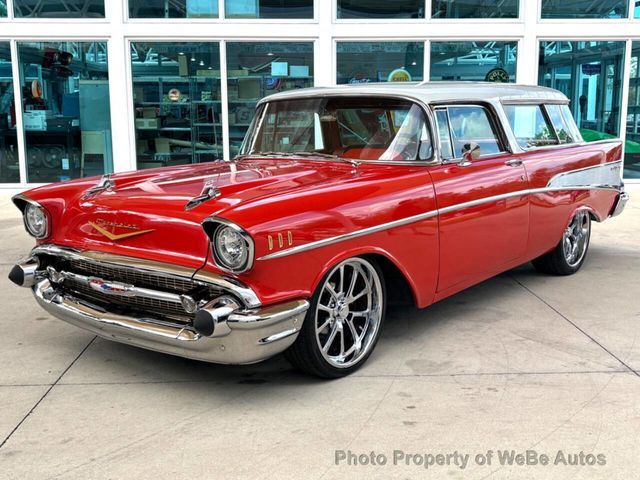
- → Nomad two-door wagon shares the Bel Air trim
- → Tailfins and gold anodized grille for 1957
Specs
| Engines | 235 I6, 265 V8, 283 V8 |
| Top engine | 283 hp fuel-injected 283 (1957) |
| Most wanted | Two-door hardtop, convertible, Nomad |
| Transmission | 3-speed, overdrive, Powerglide, Turboglide |
 Dealer
United States
Dealer
United States
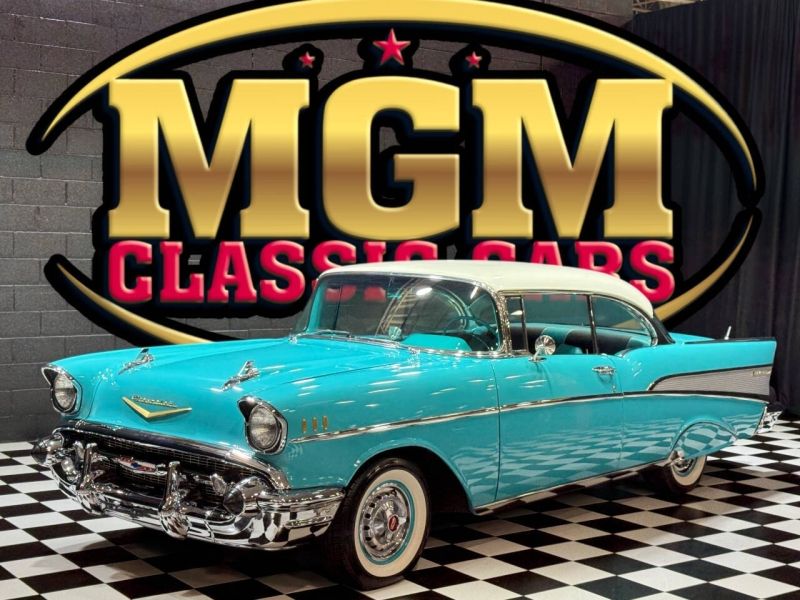
1957 Chevrolet Bel Air
 Dealer
United States
Dealer
United States
1957 Chevrolet Bel Air
 Dealer
United States
Dealer
United States
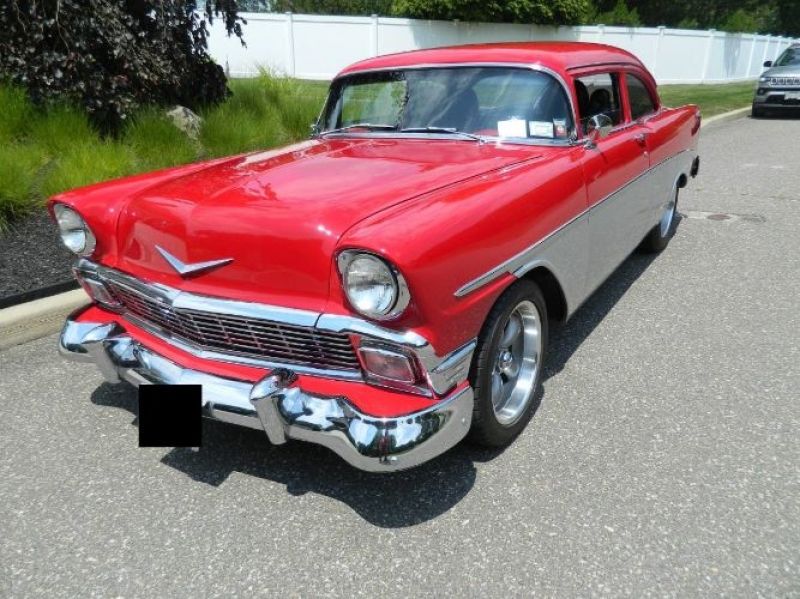
1956 Chevrolet Bel Air
Key Changes
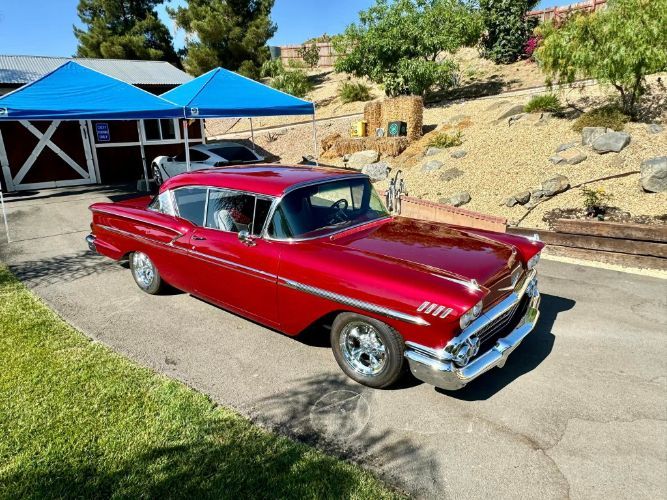
- → 1958 introduces the Impala as a Bel Air sub-series
- → Impala becomes a separate line above Bel Air for 1959
- → Bel Air repositioned as mid- and entry-level full-size
- → Wide engine range including big-block V8s
- → US production ends after 1975
Specs
| Engines | Inline-six through 348/409/396/427 V8 |
| Role | Value full-size below Impala/Caprice |
| Body styles | Sedan, hardtop, wagon |
| US end | 1975 (Canada through 1981) |
 Dealer
United States
Dealer
United States
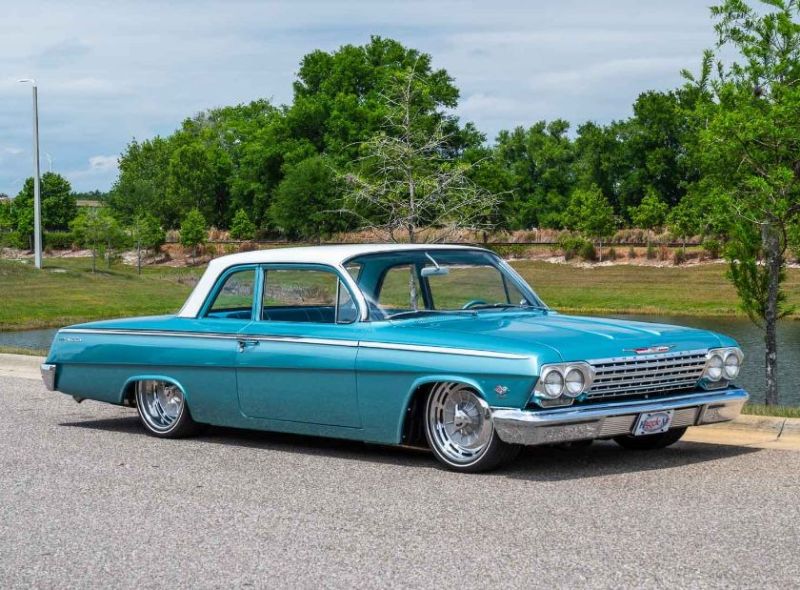
1962 Chevrolet Bel Air
 Dealer
United States
Dealer
United States
1958 Chevrolet Bel Air
Legacy & Impact
The Bel Air matters because it caught a moment. For three years in the middle of the 1950s, Chevrolet built a car that ordinary families could afford and that still looked like something special parked at the curb. That is why the 1955 to 1957 cars sit at the center of American collecting and why a clean two-door hardtop or convertible holds its value through every market swing. The later cars are honest, usable classics that cost a fraction of a Tri-Five. Whichever era you chase, the Bel Air remains one of the most approachable ways into postwar American cars.
Frequently Asked Questions
Find a Bel Air for Sale
Browse active Chevrolet Bel Air listings on Classic Cars Arena.
View Listings →