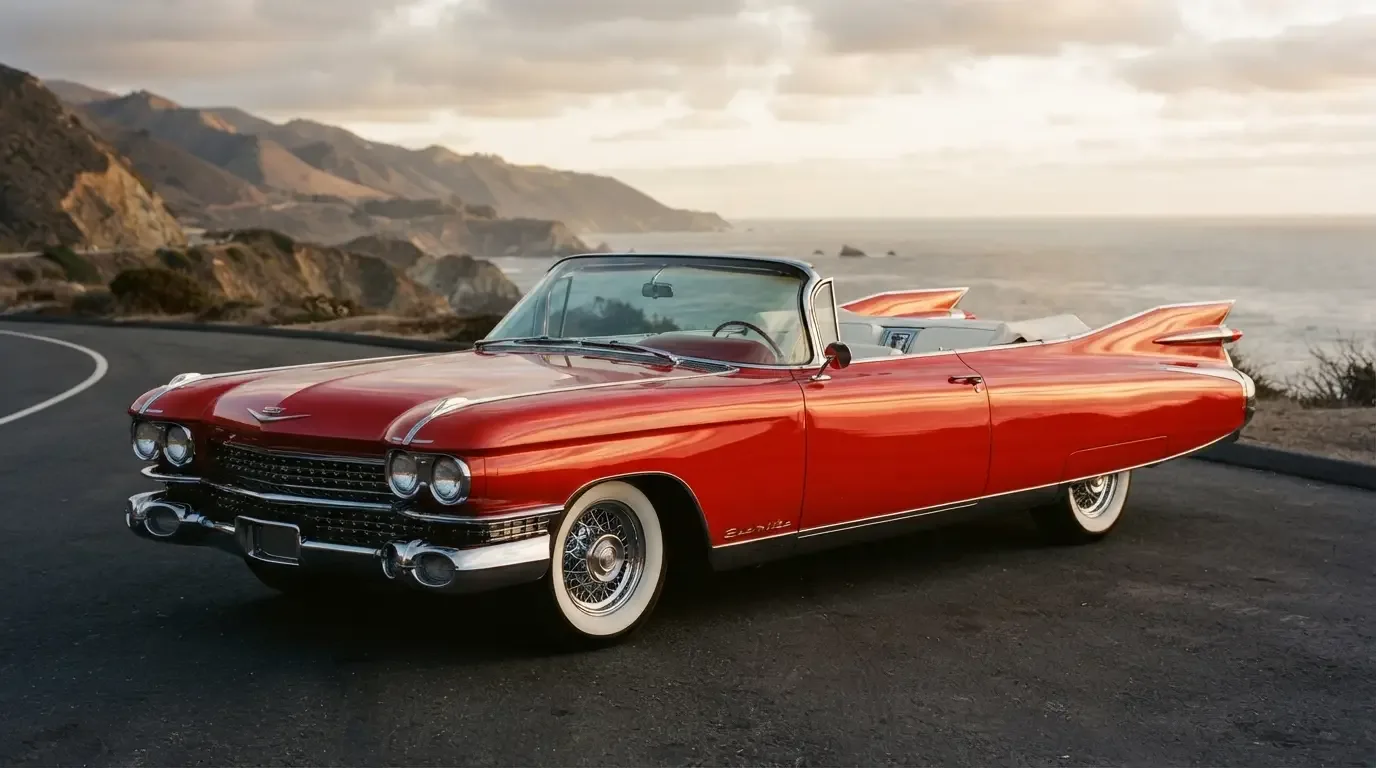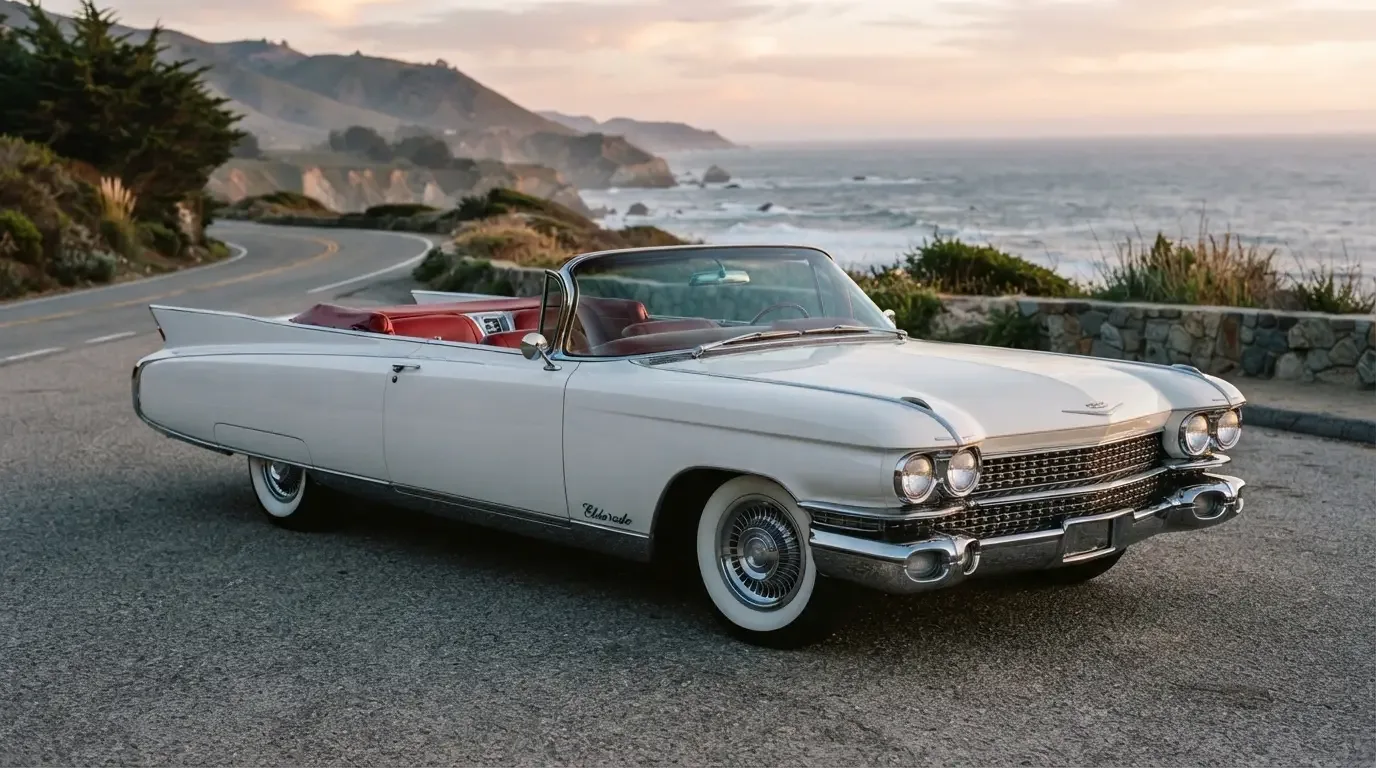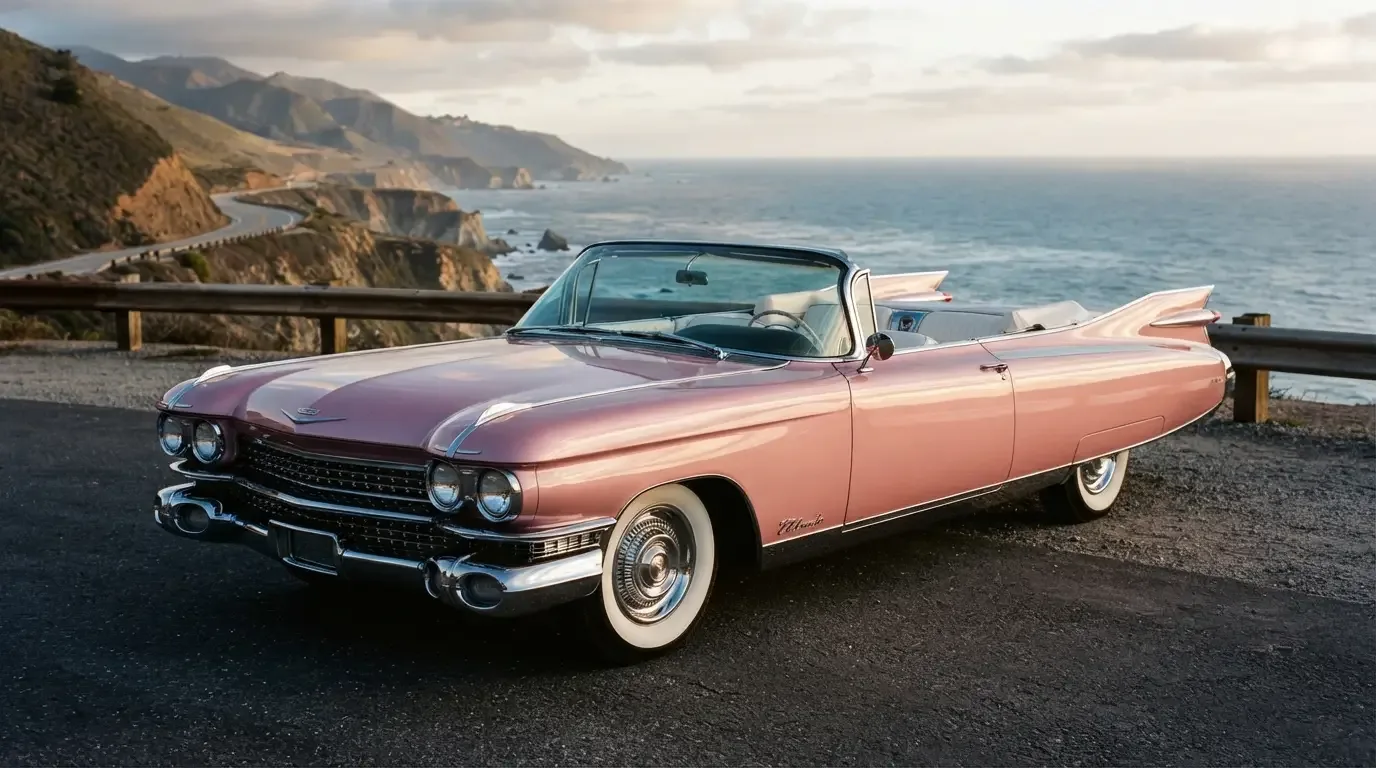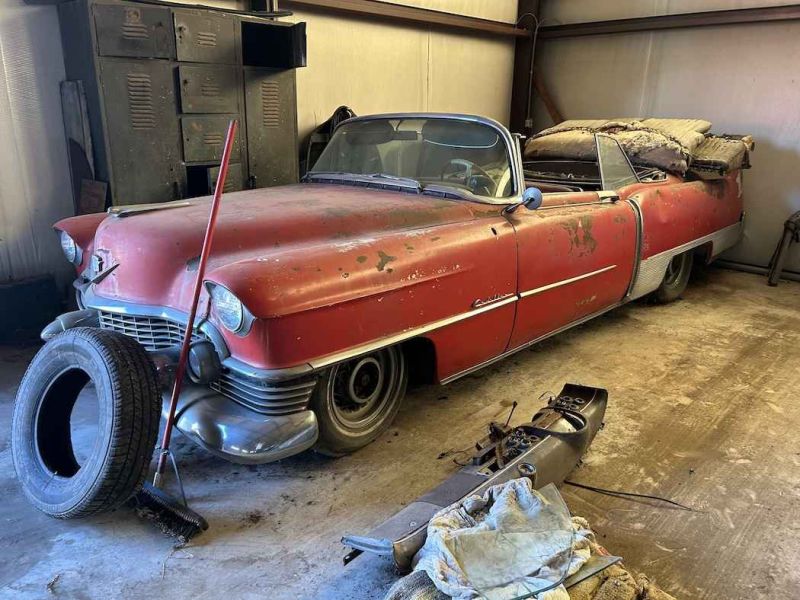
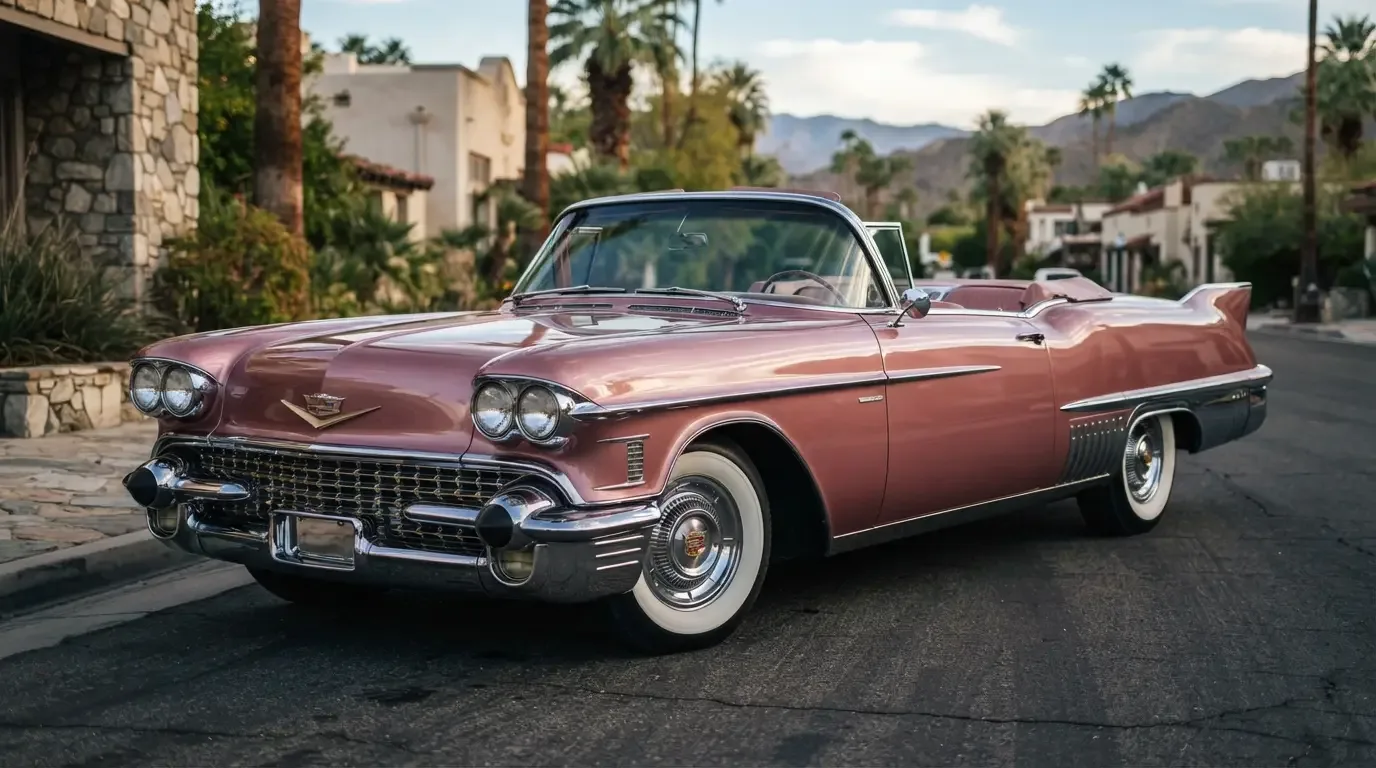
The 1958 Cadillac Eldorado tends to get treated as a curiosity, the model year sandwiched between the more restrained 1957 design and the era-defining fins of 1959. That reading undersells the car. The 1958 Eldorado is its own complete statement, a genuinely chrome-heavy, maximalist design that reflects a specific moment in Cadillac's evolution before the studio pivoted toward the taller, cleaner fin treatment that would define the following year. For that later chapter, read the background on how 1959 built on what 1958 established.
A Cadillac at its most decorated
Of all the model years in the Eldorado's long run, 1958 stands out for sheer quantity of brightwork. The car carried an unusually dense application of chrome trim across the body, front to back, at a moment when American manufacturers broadly were still competing on ornamentation as much as on silhouette. Cadillac had not yet made the disciplined editorial choices that would define 1959, where the fin was allowed to dominate while the rest of the body simplified around it. In 1958, everything got attention: the grille, the hood ornamentation, the side trim, the rear bumper treatment, all of it dense with metal detail.
This was, in its own way, the high point of one design philosophy right before Cadillac's studio shifted decisively to another. Where 1959 would prove that restraint elsewhere could make one dramatic element land harder, 1958 represents the alternative approach still being pursued at full commitment: more decoration everywhere, rather than one focal gesture.
Mechanical specification and body styles
Underneath the extra brightwork, the 1958 Eldorado shared its fundamental architecture with the broader Cadillac lineup of the period, riding on a 130-inch wheelbase and powered by a 365 cubic inch V8 producing 335 horsepower in Eldorado tune with its distinctive triple two-barrel carburetor setup. The Eldorado name that year covered both the Seville hardtop and Biarritz convertible body styles, continuing the specialty-car structure Cadillac had established with the original 1953 Eldorado and carried forward through the mid-1950s Eldorado Brougham as well.
| Spec | 1958 Eldorado |
|---|---|
| Wheelbase | 130 inches |
| Engine | 365 cu in V8, tri-carb |
| Horsepower | 335 hp |
| Body styles | Seville hardtop, Biarritz convertible |
| Design character | Dense chrome ornamentation |
Why 1958 gets overlooked
Part of the reason the 1958 Eldorado does not receive the attention its 1959 successor does is straightforward: it was immediately followed by one of the most famous single model-year designs in automotive history, and that proximity has a way of flattening whatever came directly before it in popular memory. The same pattern shows up across the industry. A transitional year rarely gets remembered on its own terms when the year right after it becomes iconic.
But treating 1958 purely as a warm-up to 1959 misreads what the car was actually doing. The chrome-heavy approach on the 1958 Eldorado was not a tentative step toward the fin era. It was a fully committed design in its own right, built by a studio that had not yet decided restraint elsewhere would make its next big move land harder. Judged on its own terms, rather than as a preview of what followed, the 1958 car is a legitimate, confident expression of a design philosophy Cadillac was still actively pursuing that year.
How it reads to a documentarian today
Cataloguing a 1958 Eldorado for concours judging or historical documentation means paying close attention to trim pieces that simply do not exist on the 1959 car, since so much of the ornamentation was unique to that single model year before the design language shifted. That specificity actually makes the 1958 Eldorado easier to authenticate at a glance than some other years, provided you know exactly which chrome details belong on this car and which ones a seller might have mixed up with an adjacent model year, since trim pieces were frequently swapped or mismatched during earlier decades of casual ownership before the model gained serious collector attention.
"The 1958 Eldorado gets dismissed as the car before the famous car, and that is a disservice to it. It represents Cadillac at maximum ornamentation, a fully realized design philosophy that simply happened to be followed by an even bolder one. On its own terms, it is a remarkable piece of period design."
- Sarah Whitfield
Color and interior choices unique to the year
The 1958 Eldorado's interior and exterior color offerings followed the broader Cadillac palette of the period but were applied against a backdrop of so much exterior chrome that color selection played a slightly different role than it would the following year. Darker exterior colors tended to make the extensive trim read as more dramatic by contrast, while lighter colors softened the overall effect. Interior materials followed the same specialty-car standard as the Seville and Biarritz bodies generally received, with leather and cloth combinations selected to match a buyer's specific order rather than pulled from a narrow standard list.
That build-to-order approach means, as with other Eldorado model years, that surviving 1958 cars show genuine variation from one example to the next, and documentation tying a specific color and trim combination back to the original factory build sheet remains the gold standard for confirming a car's presentation is correct rather than a later reinterpretation done during a repaint decades removed from the original order.
Where the 1958 sits in the collector market
Because the 1958 Eldorado lives in the shadow of 1959, and because its dense trim can be more expensive to restore correctly given the sheer number of unique chrome pieces involved, values have generally trailed the following model year despite comparable rarity in the Seville and Biarritz specialty bodies. That gap has created genuine opportunity for collectors who appreciate the car's design on its own merits rather than chasing the more famous model year exclusively. A well-documented 1958 Eldorado, complete with its full complement of period-correct trim, remains a serious piece of Cadillac history in its own right. Anyone exploring the market can find a classic Eldorado and compare how 1958 examples are currently priced relative to their more famous successor.
That price gap has been narrowing gradually as collectors take a fuller view of the Eldorado's design history rather than fixating on one peak year alone. The 1958 car offers something the 1959 model, for all its fame, cannot: a genuinely different reading of what a flagship Cadillac could be within a single decade, built with the same specialty-car standards and the same commitment to being the most decorated car in the American lineup that year. For a documentarian, that alone makes it worth cataloguing carefully rather than treating it as a footnote to what followed.