A woman at a swap meet in Ohio once told me she could pick her father's truck out of a parking lot full of identical white pickups by the way the light sat on the hood. Not the color. Not the badge. The way a flat, wide panel caught the afternoon sun differently than the humped hoods on the older trucks parked beside it. That is what good design does when it is done right. It becomes a feeling before it becomes a fact, and the 1957 through 1960 Ford F-100 is one of those trucks that people recognize with their gut before they could ever explain what changed and why.
A truck built to be looked at, not just used
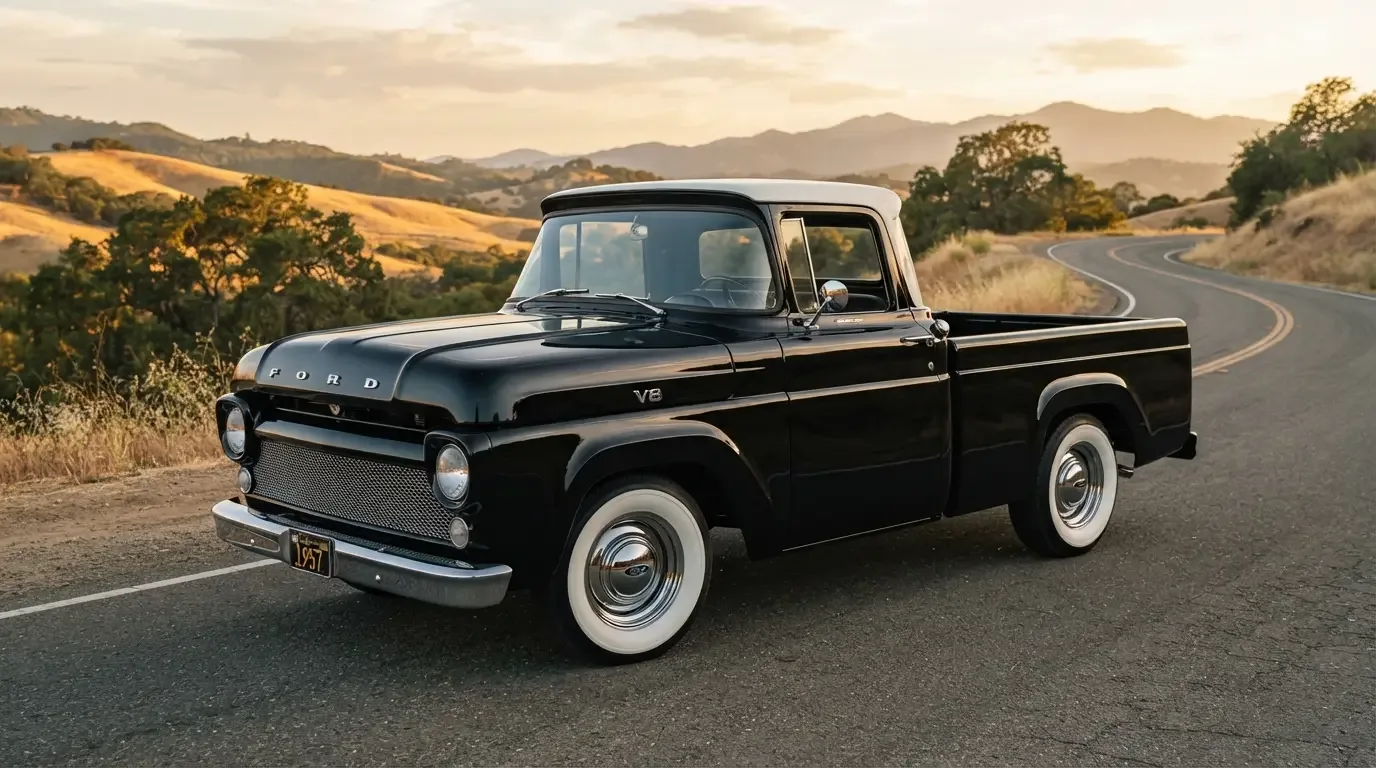
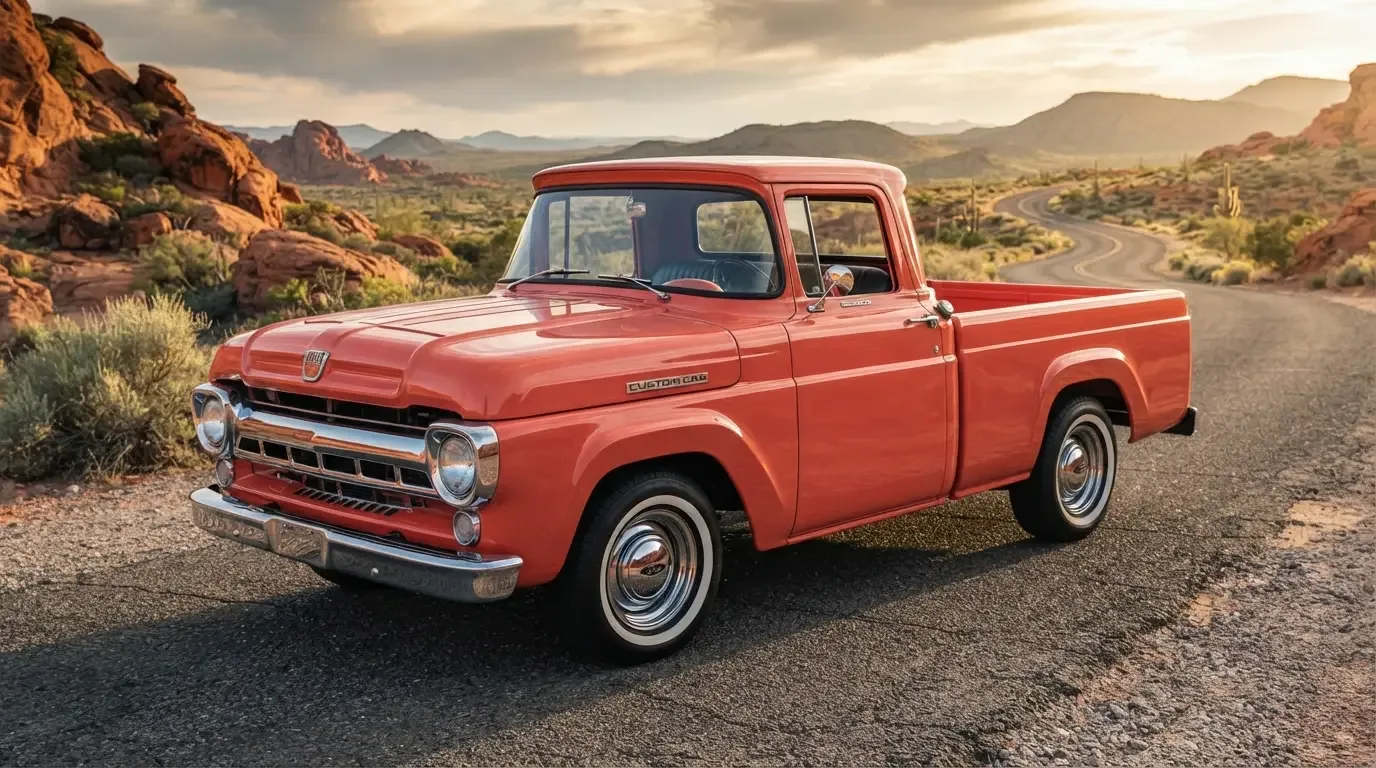
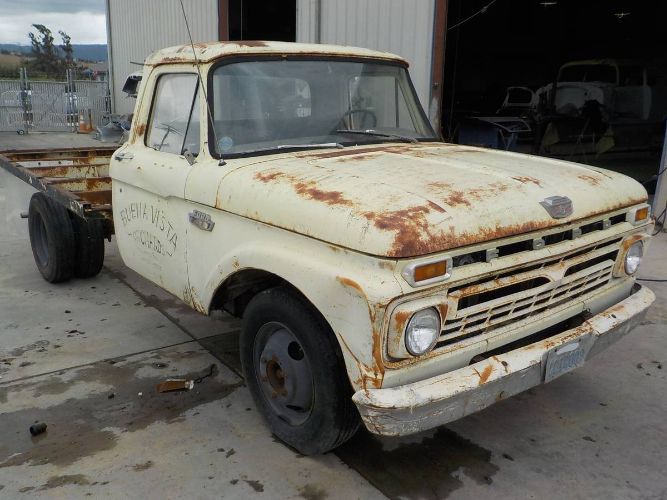
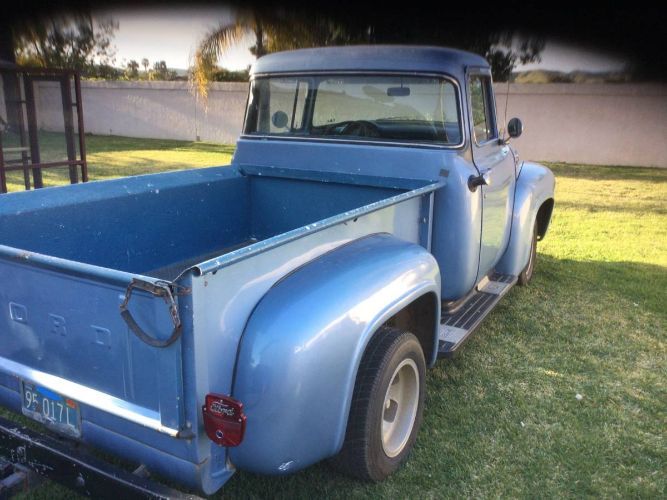
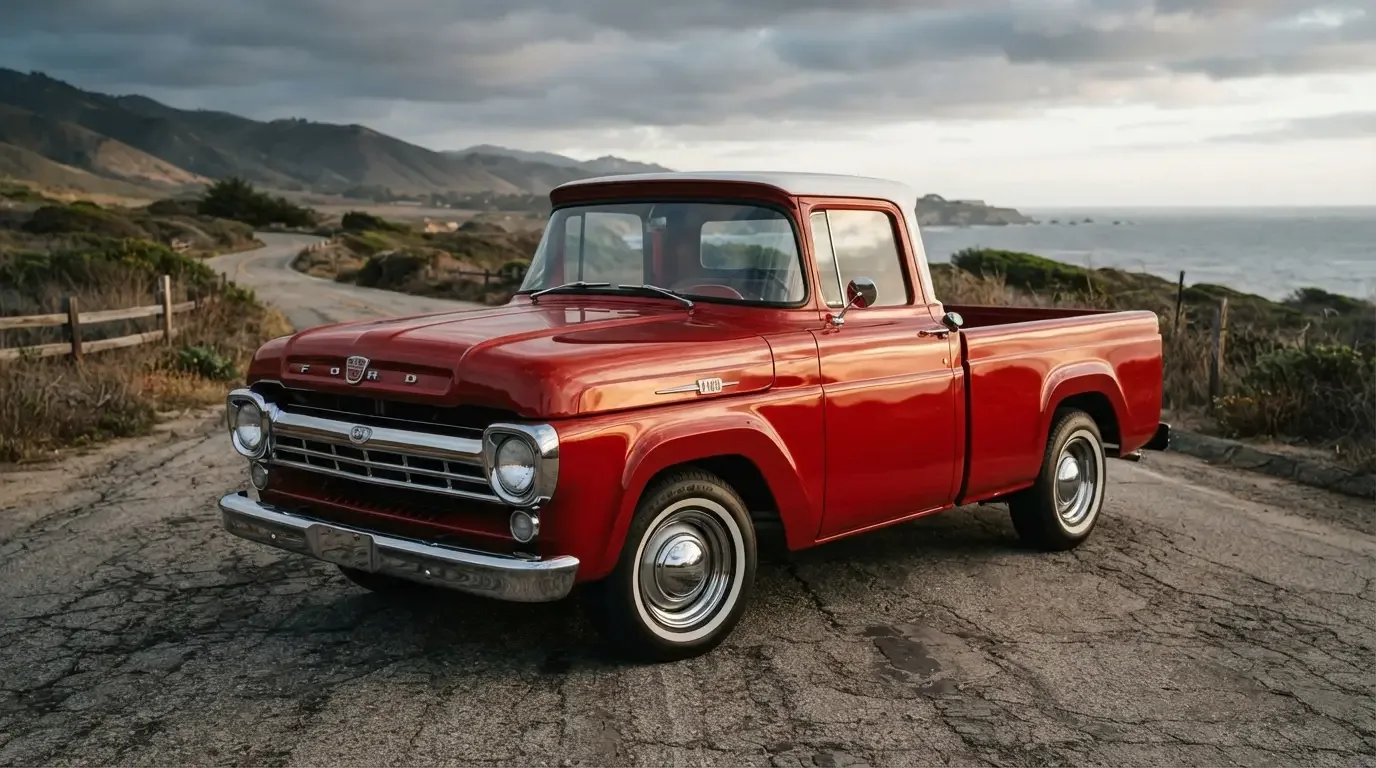
Ford entered the second half of the 1950s watching its own car customers fall in love with lower rooflines, wider stances, and glass that wrapped around a driver instead of just sitting flat in front of them. The company's design leadership made a deliberate choice to bring that same sensibility to its pickup line, a category that had, until then, mostly been styled as an afterthought behind whatever the passenger cars were doing that year. The 1957 F-100 got a flattened hood where earlier trucks had worn a raised, crowned centerline, and a grille and fender treatment that ran the full width of the front end instead of pinching narrow between the headlights. It also picked up a wraparound windshield, borrowed conceptually from the same panoramic glass Ford was putting in its cars, that made the cab feel wider and lower than anything the company had built before.
None of that happened by accident, and none of it happened cheaply. Retooling a truck's entire front clip and cab structure for a single model year is a significant capital commitment, and Ford made it because the company had decided, correctly as it turned out, that a truck buyer in 1957 wanted something that did not look like a leftover from a decade earlier parked next to his neighbor's new car.
Four years of small, deliberate corrections
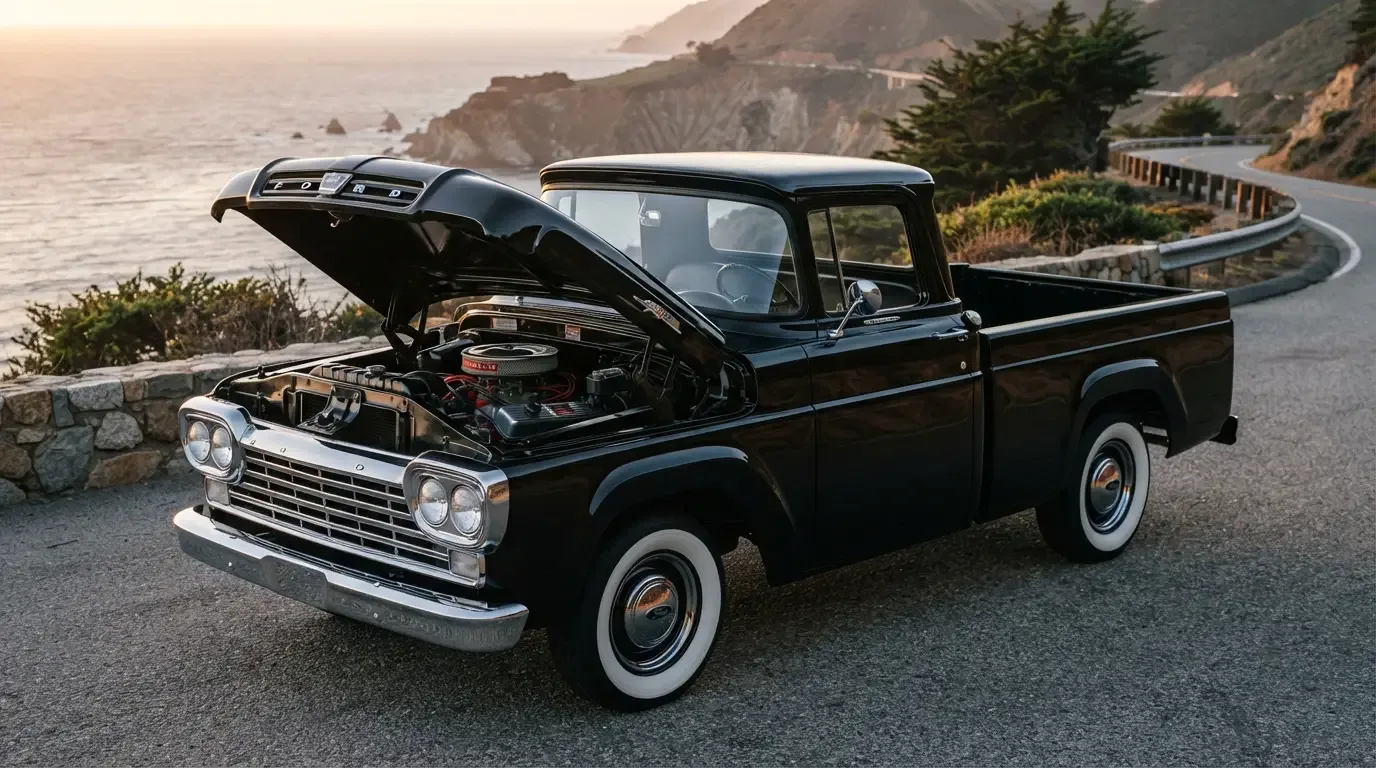
What followed 1957 was not a series of dramatic reinventions but something quieter and, in its way, more interesting: four years of small adjustments to a shape Ford had mostly gotten right the first time. The 1958 model brought stacked quad headlights in place of the single round lamp, a change driven by newly permitted lighting regulations across the country, and the grille was reworked around the new lamps rather than simply having new bezels bolted onto the old opening. The years that followed carried the same basic face forward with only minor trim revisions, refining rather than reinventing what the design team had already established.
There is something almost restrained about that restraint. A lot of manufacturers in this era chased chrome and fins and ever more elaborate ornamentation year over year, sometimes past the point of good taste. Ford's truck team, by comparison, drew a strong shape in 1957 and then spent three more years quietly polishing it rather than piling more onto it. The 1960 truck, the last of this body before an entirely new design replaced it in 1961, is arguably the most resolved version of the idea, carrying every small correction the previous three years had suggested.
| Design element | 1957 debut | By 1960 |
|---|---|---|
| Hood profile | Newly flattened, full width | Unchanged, carried forward |
| Headlights | Single lamp per side | Stacked quad lamps since 1958 |
| Windshield | New wraparound design | Unchanged, carried forward |
| Bed options | Flareside and new Styleside | Both continued, Styleside more popular |
Design language moves in cycles, and this one closed the way most of them do, not with a decline but with a replacement. In 1961, Ford set the whole shape aside for a new unibody truck, an experiment that did not last, and the industry moved on to other ideas. But for four years, this generation of F-100 represented something a lot of buyers had not previously believed a work truck could be: handsome enough to park in front of a house you were proud of, without giving up an ounce of what it was actually built to do.
"People assume a truck's design has to serve function first and everything else second. This one managed both at the same time, and I think that is exactly why it still stops people in a parking lot sixty years later. It looks like someone cared, and you can feel that, even if you could not say precisely why."
— Nora Beckett
The women and men behind the sketches
Design credit in this era rarely landed on a single name the way it sometimes does in the car world, where a Duesenberg or a Cadillac might be traced to one stylist's signature line. Truck styling in the 1950s came out of a design studio working under enormous internal pressure and tight deadlines, a team effort where individual contributions blurred into a single finished product by the time it reached a dealer lot. That anonymity does not make the work any less deliberate. Somebody sat at a drafting table and decided exactly how far the fender line should sweep before it met the door, exactly how much chrome the grille should carry before it tipped into excess. Those decisions, made by people whose names rarely made it into the sales brochure, are what a truck buyer was actually responding to when they said a particular model just looked right.
It is worth remembering, too, that these decisions were made under real constraint. Stamping dies cost real money, tooling changes had to be justified against projected sales volume, and a design team could not simply chase every good idea that came up in a sketch session. What made the 1957-60 generation work was not unlimited ambition. It was a team getting the fundamentals right within the budget and the deadline they actually had, which is a harder trick than it sounds and one that plenty of far better funded design efforts, in this era and since, have failed to pull off.
Why it still resonates
The people who show up to truck meets with a 1957-60 F-100 tend to talk about the truck the way you would talk about an old friend, not a machine. They remember the specific curve of the fender line, the particular way the chrome catches light at dusk, the sound the door makes when it closes. That is not an accident of nostalgia. It is the result of a design team getting the fundamentals right the first time and then having the discipline to leave a good shape alone rather than fussing with it past the point of improvement.
For the fuller history of how this generation came together, from the flat hood's engineering to the new bed design that debuted alongside it, read the background on the full 1957-60 story. And if a truck from this era has caught your eye the same way it caught that woman's father's eye at a dealership decades ago, you can go find a classic F-100 and see for yourself what still holds up about a design this old.