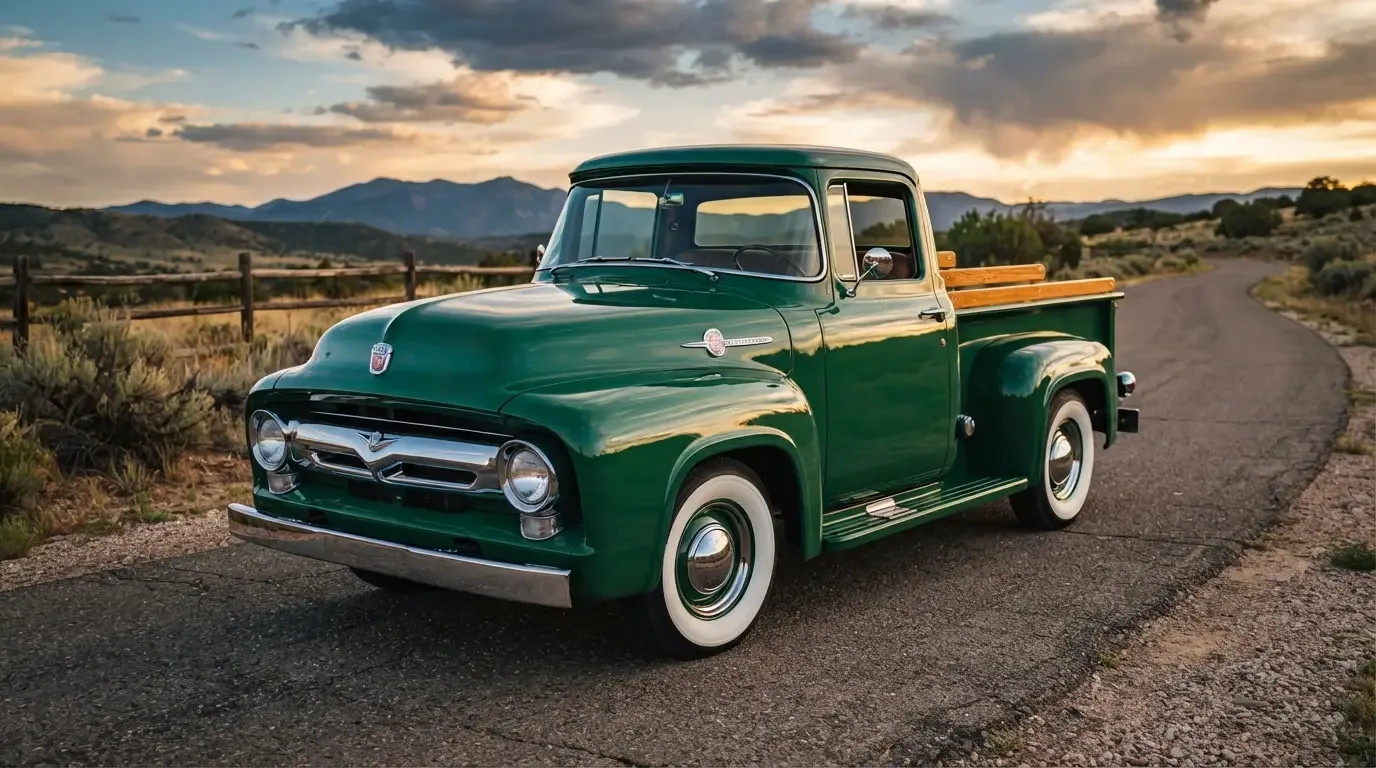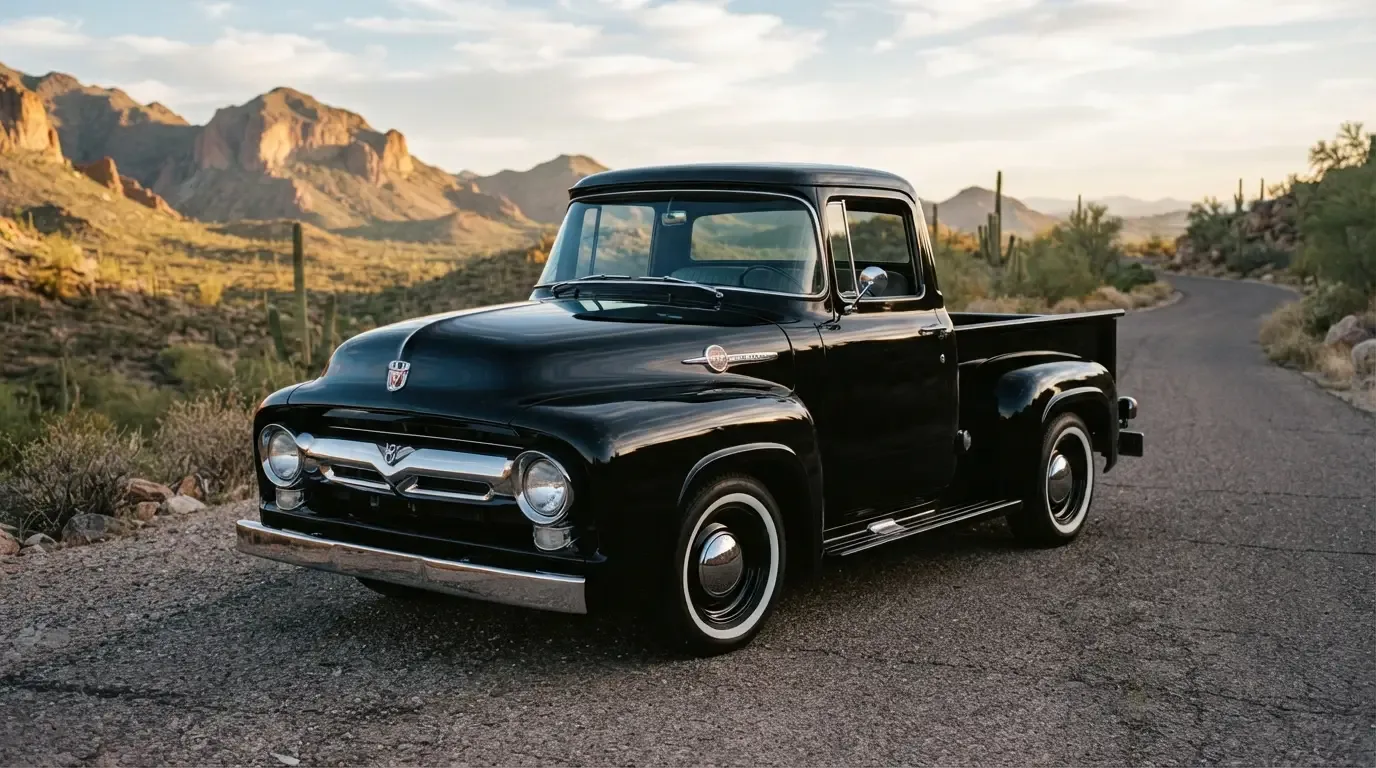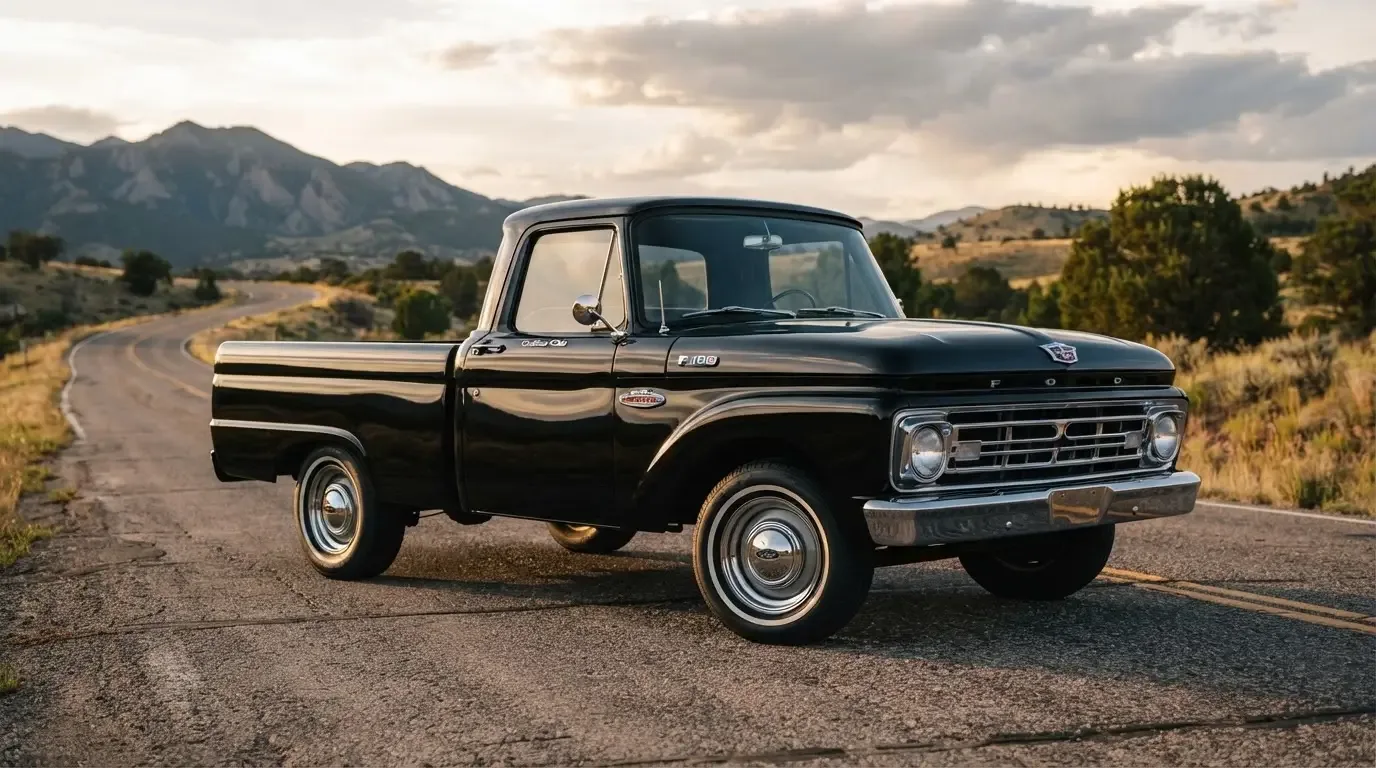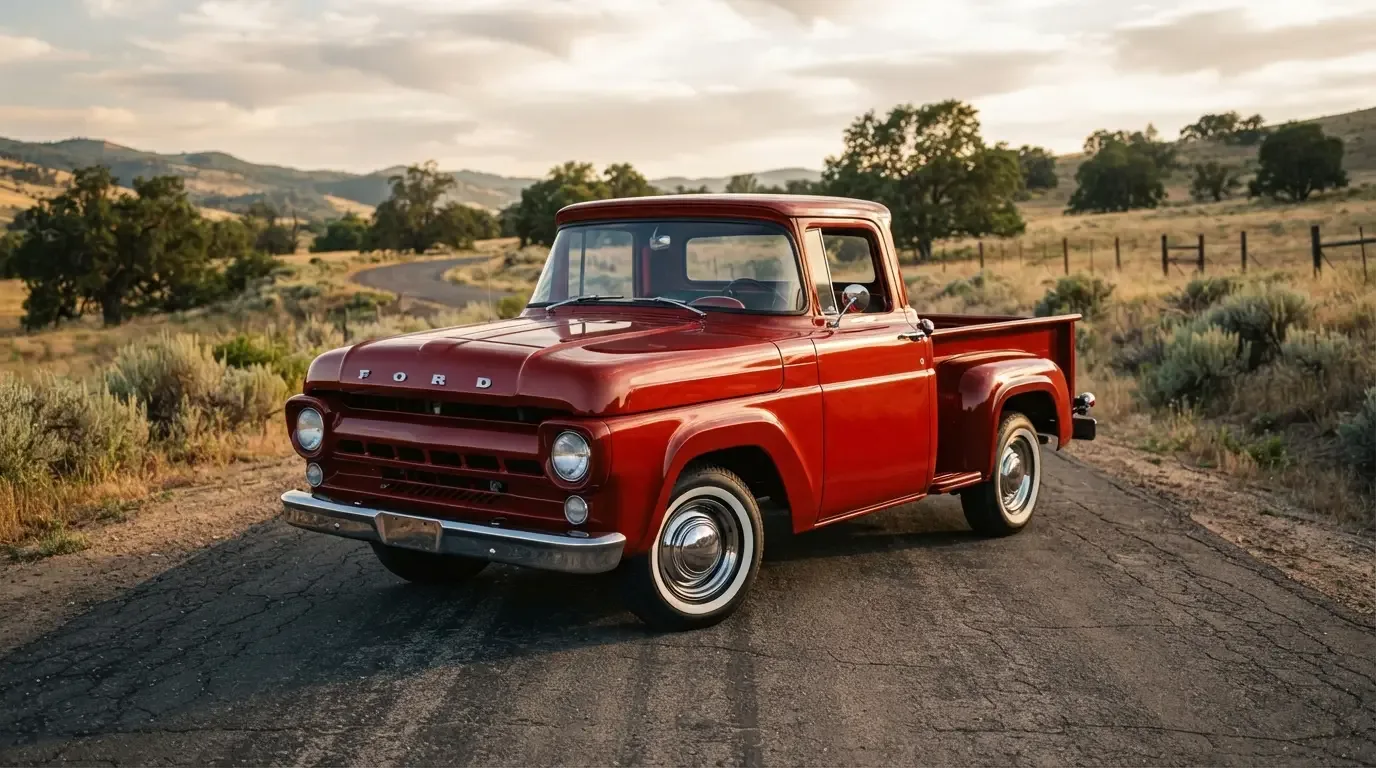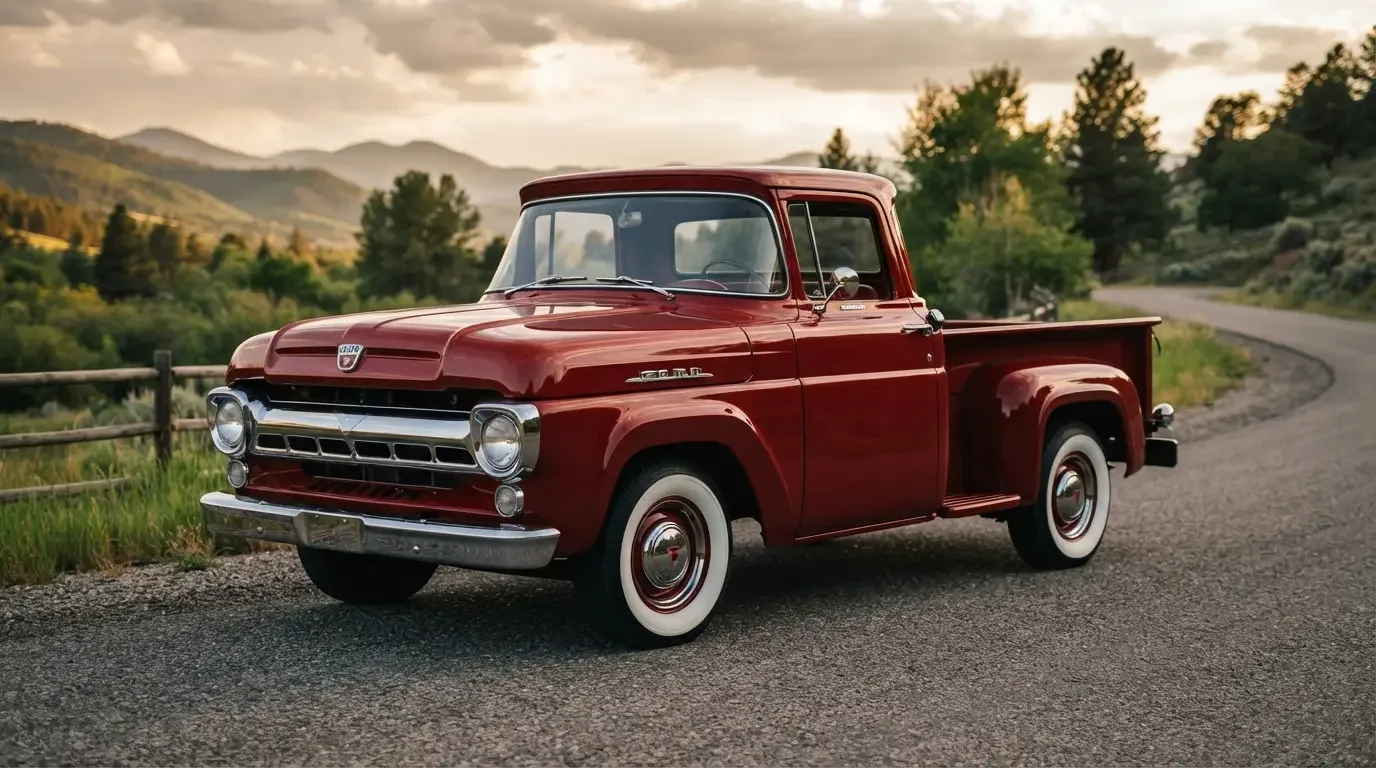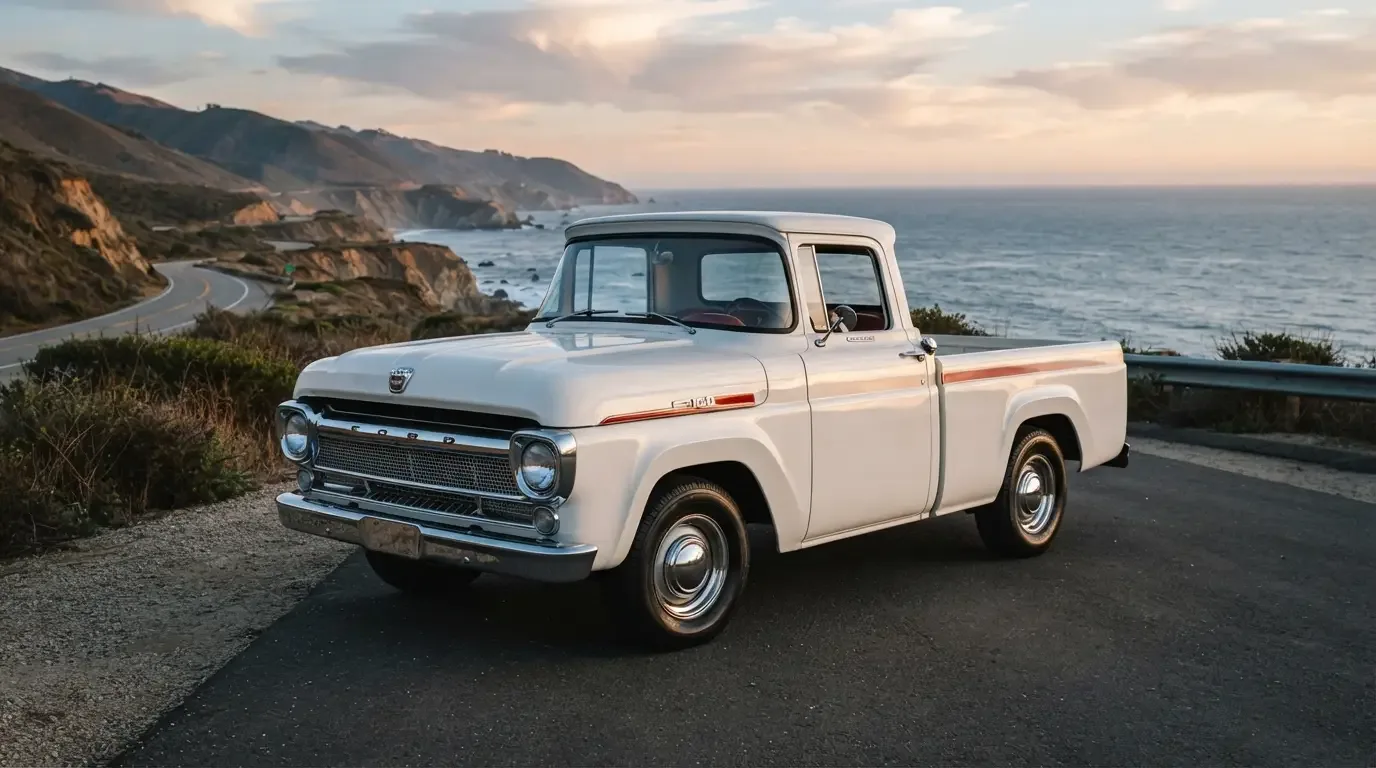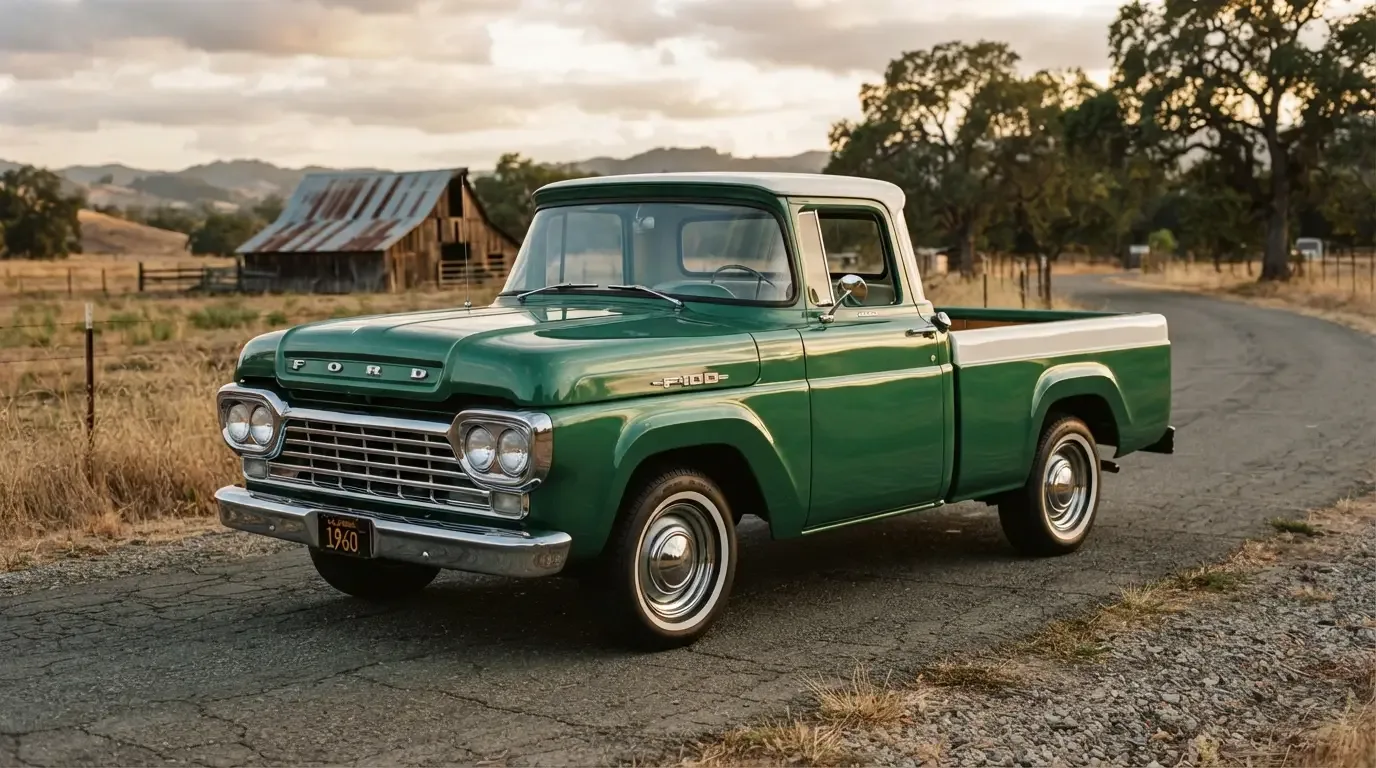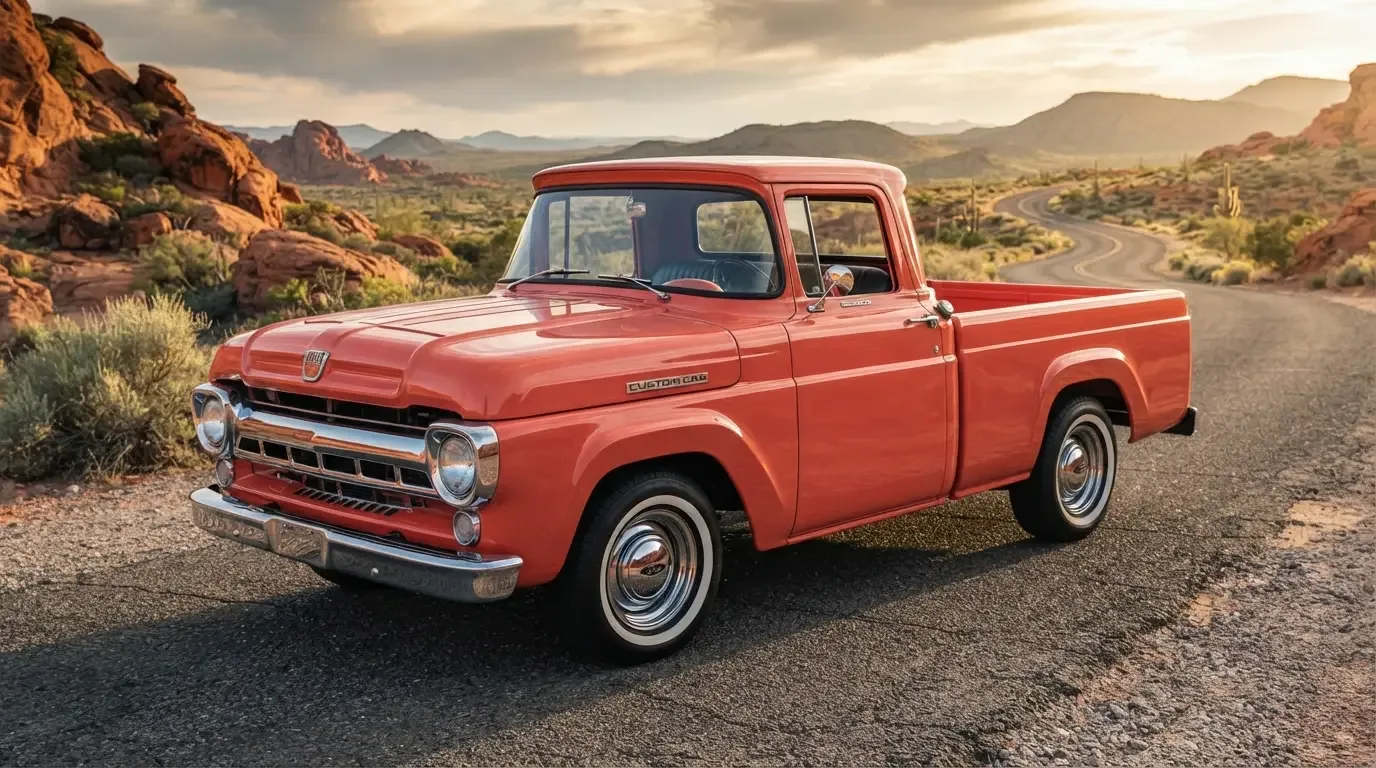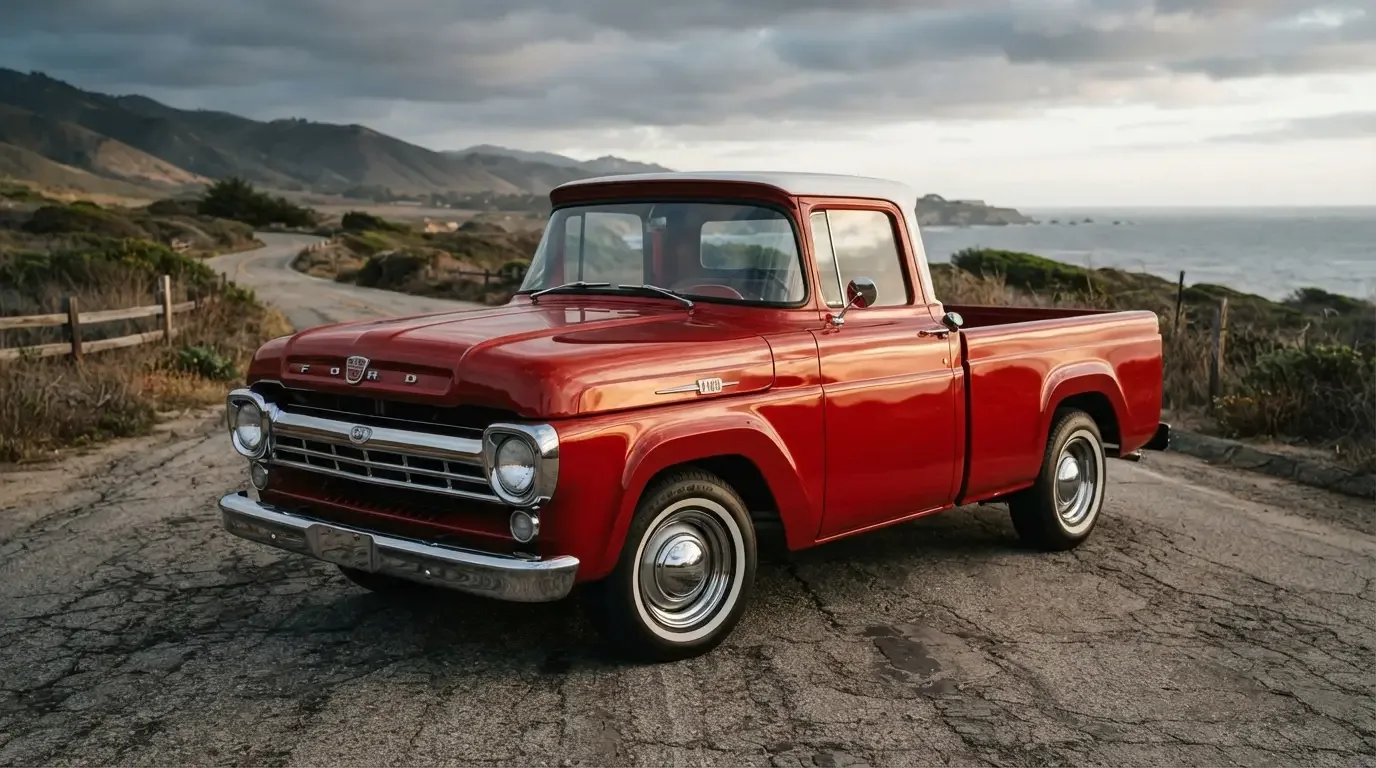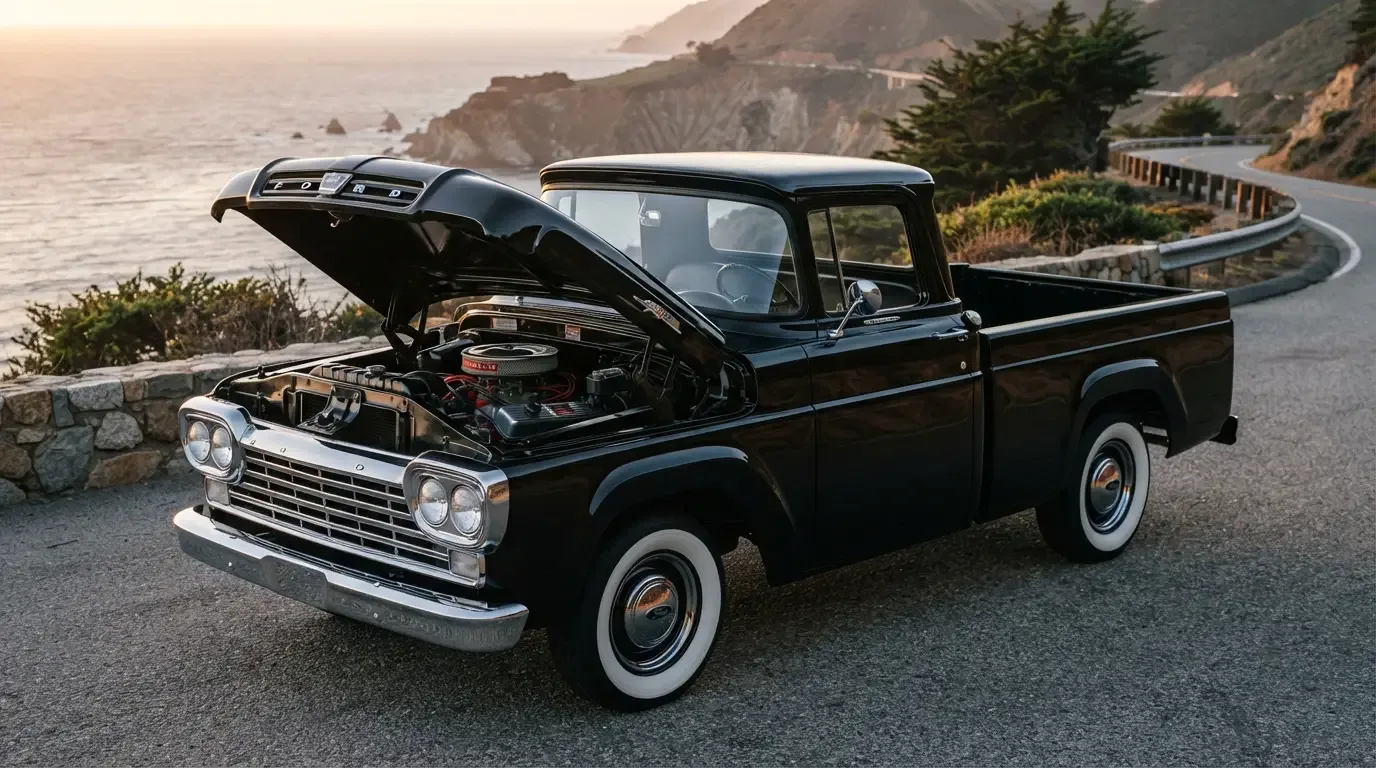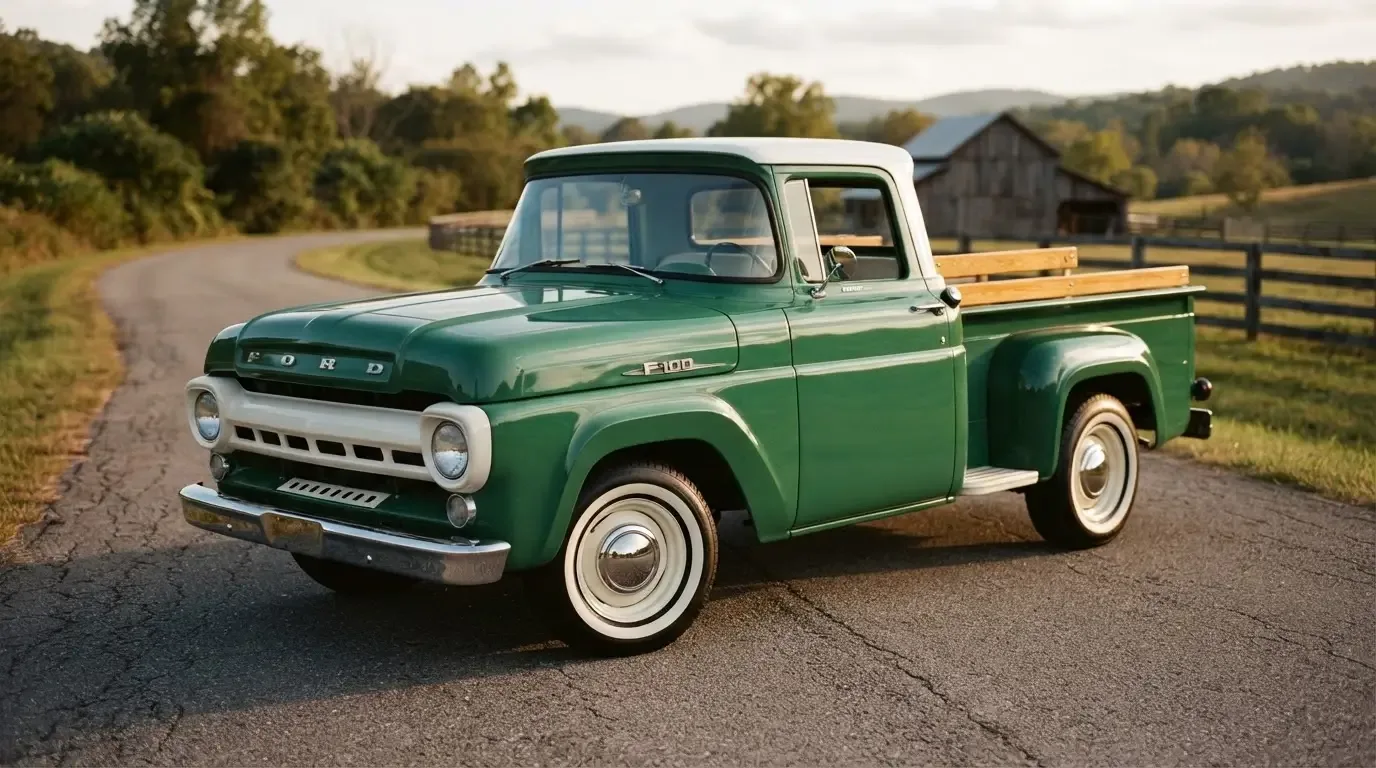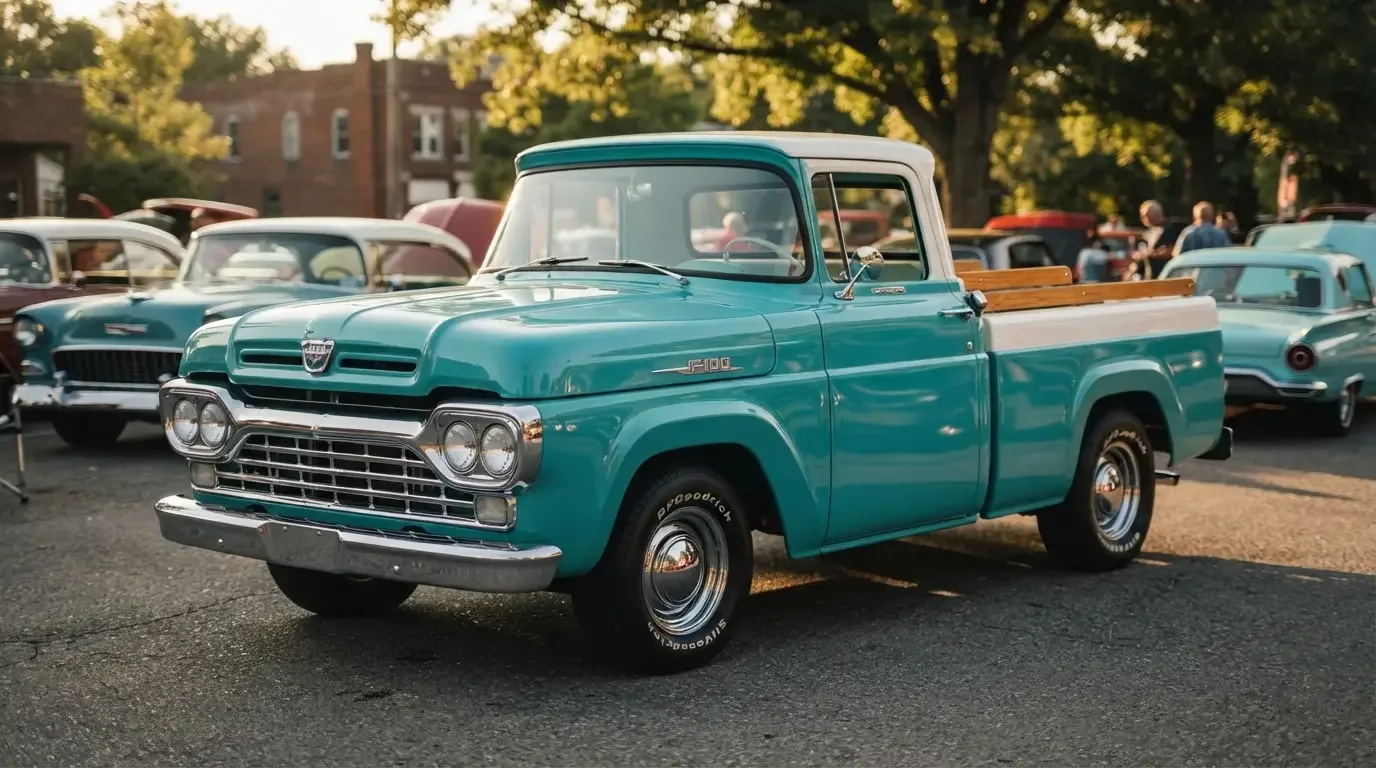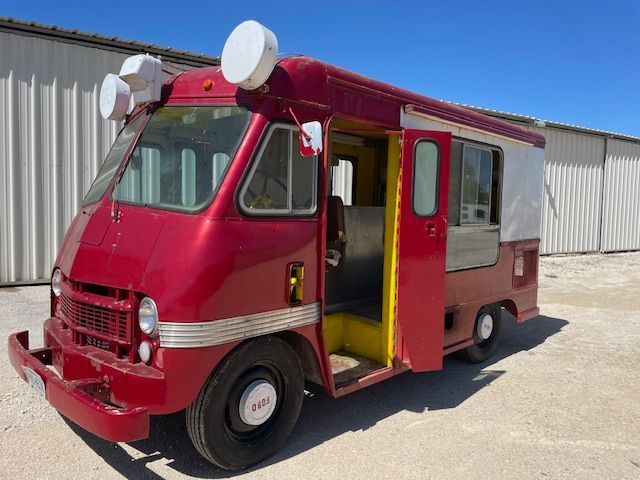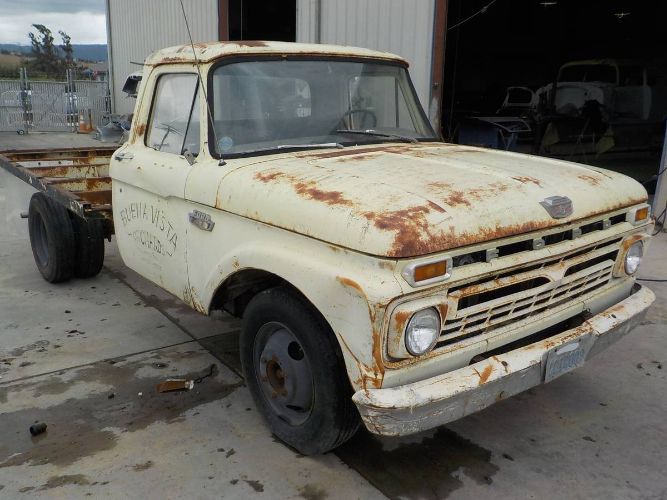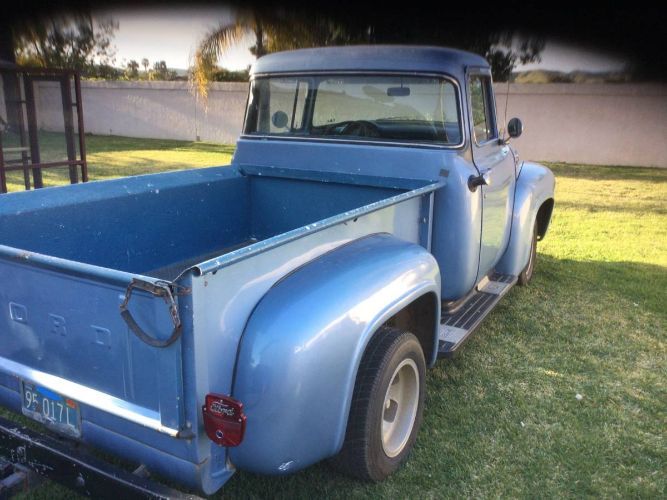
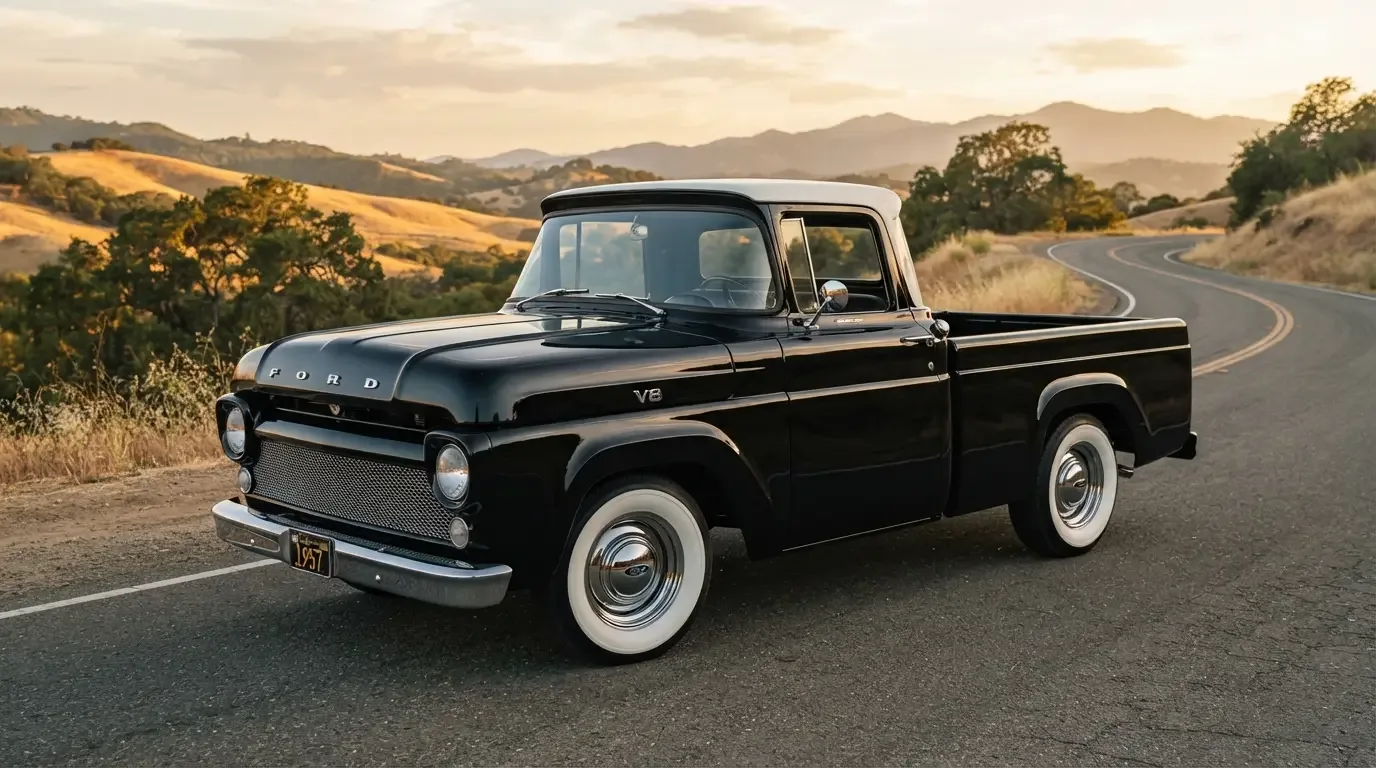
The 1957 Ford F100 is the truck where the modern pickup shape arrives, more or less fully formed. Look at a 1956 F-100 and then a 1957, built one year apart, and you are looking at two different ideas about what a truck should be. The older truck has separate, sculpted fenders and a tall, upright cab that trace back to prewar thinking. The 1957 has a flat hood level with the fenders, a lower and wider stance, and, most importantly, the option of a smooth-sided cargo box that made the bed part of the truck's silhouette rather than a bolt-on afterthought. Ford called that smooth box the Styleside, and it changed the pickup permanently.
This third generation ran from 1957 through 1960, and while it is sometimes overshadowed by the flashier trucks that came before and after it, it did more to define the shape of the American pickup than either. Everything that followed, from the 1960s Ford trucks to the pickups in driveways today, owes its basic proportions to the decisions Ford made for 1957.
Styleside versus Flareside: the choice that mattered
The headline change for 1957 was the bed. Ford offered two versions. The traditional bed, with separate rear fenders bulging outside a narrower box, was called the Flareside, and it was the familiar shape carried over in spirit from decades of trucks. The new option was the Styleside, a full-width smooth-sided box whose outer walls were flush with the cab. The Styleside gave more usable cargo width and a cleaner look, and buyers took to it quickly.
What makes this interesting historically is that Ford beat its rivals to a full-width factory bed as standard styling. The Styleside was not an afterthought or a dealer accessory. It was engineered as an integral part of the truck's design, and its flush flanks let stylists treat the whole vehicle as a single form for the first time. The Flareside stayed available for buyers who wanted the traditional look or the easier access to the rear wheels, but the Styleside was the future, and the sales split showed it. To understand how this fits into the larger arc of the nameplate, the full the ford f100 story traces the design from the 1948 F-1 through the trucks that followed.
A flat hood and a lower cab
Beyond the bed, the 1957 cab was a clean-sheet design. The hood sat flush with the tops of the front fenders, creating a flat, full-width front end that replaced the older raised hood flanked by separate fender crowns. The windshield was wide, the roofline lower, and the overall effect was of a truck that had been styled rather than merely assembled. Ford's designers gave the front end a wide grille and quad-style trim treatments across the run that made the truck look planted and deliberate.
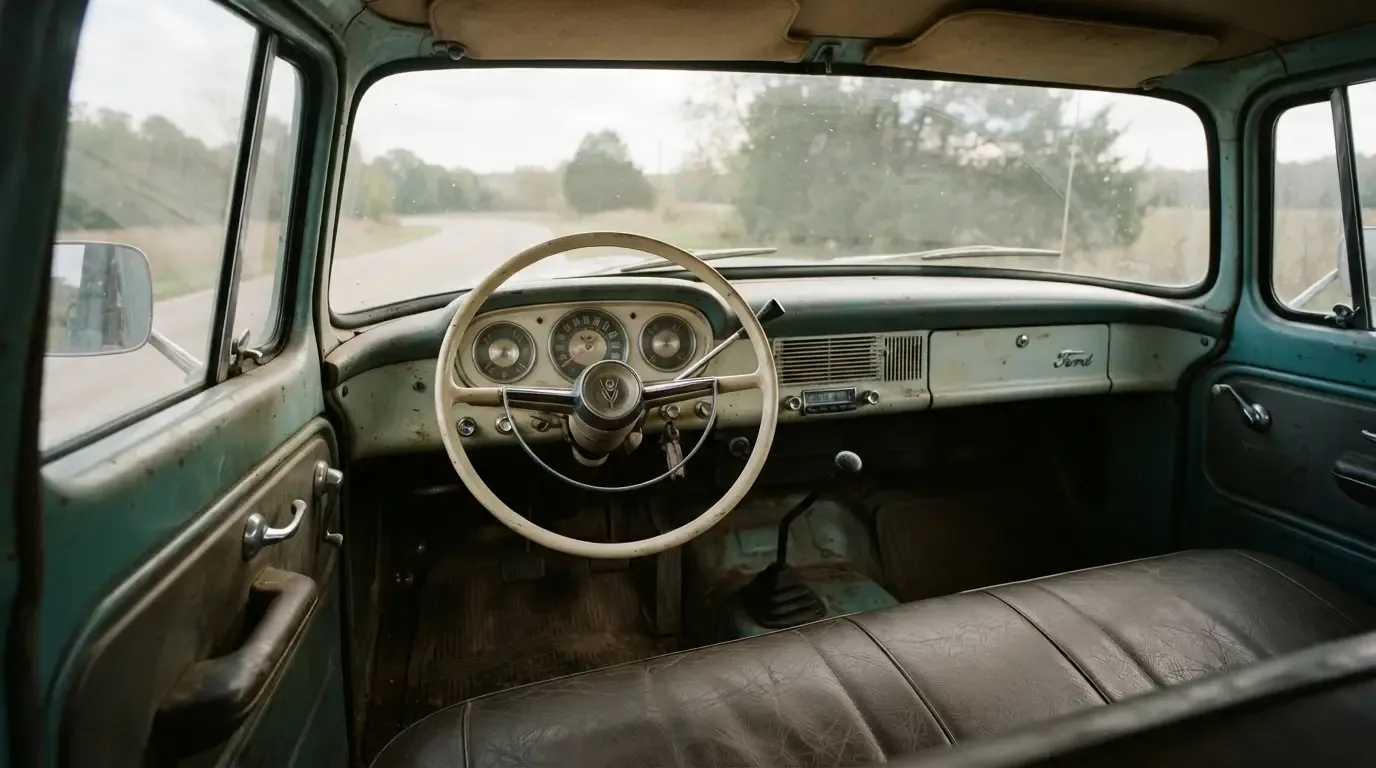
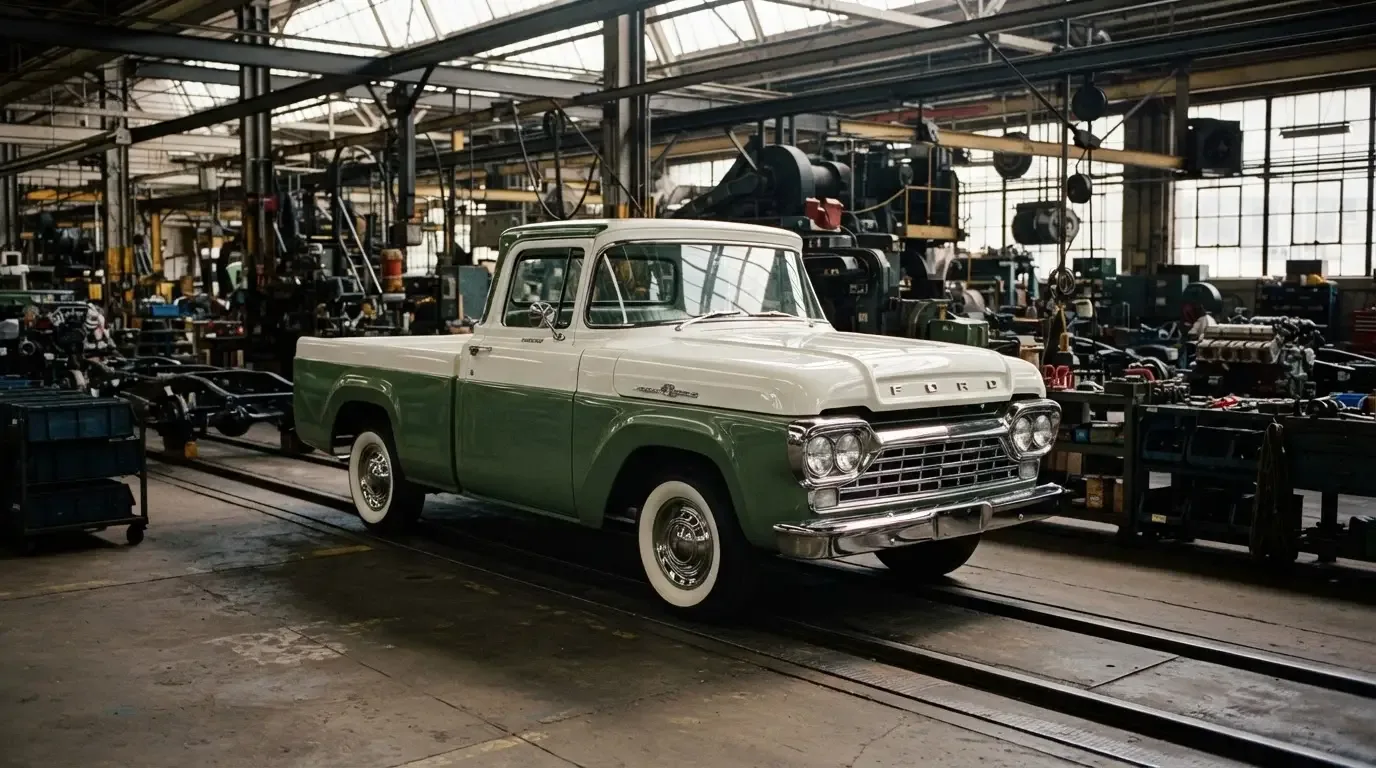
The lower cab was not only about looks. Step-in height dropped, visibility improved, and the wider body gave more room across the seat. Ford was continuing the comfort argument it had started with the "Driverized" cab of the previous generation, but now the styling and the ergonomics pulled in the same direction. The 1957 truck looked modern because it was modern, and the two-tone paint options of the era emphasized the long horizontal lines that the new body made possible.
| Year | Notable change | Body note |
|---|---|---|
| 1957 | All-new flat-hood cab, Styleside bed debuts | Styleside and Flareside offered |
| 1958 | Quad headlights, grille restyle | Four-headlamp front end arrives |
| 1959 | Trim updates, factory 4x4 availability grows | Four-wheel drive gains traction |
| 1960 | Final year of the generation, grille refresh | Styleside now the volume choice |
Quad headlights and the 1958 restyle
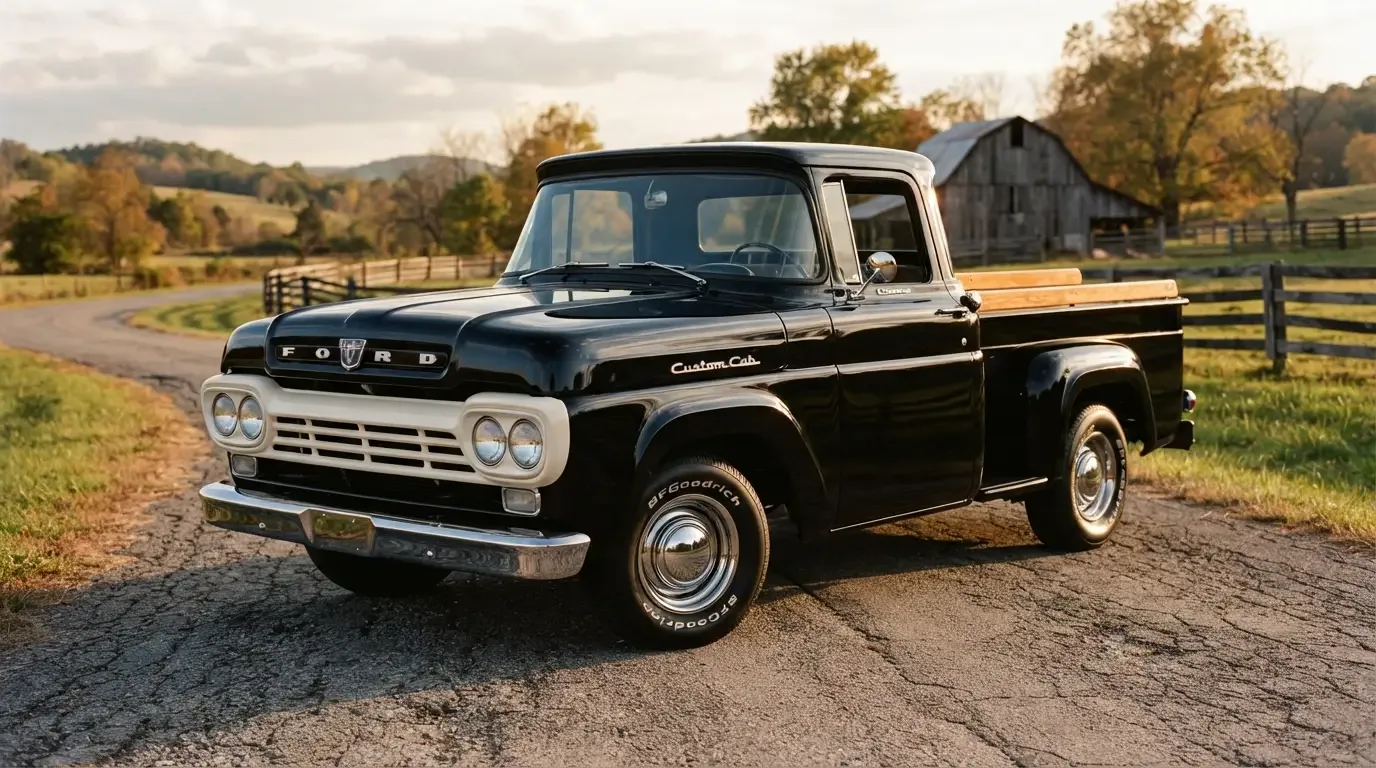
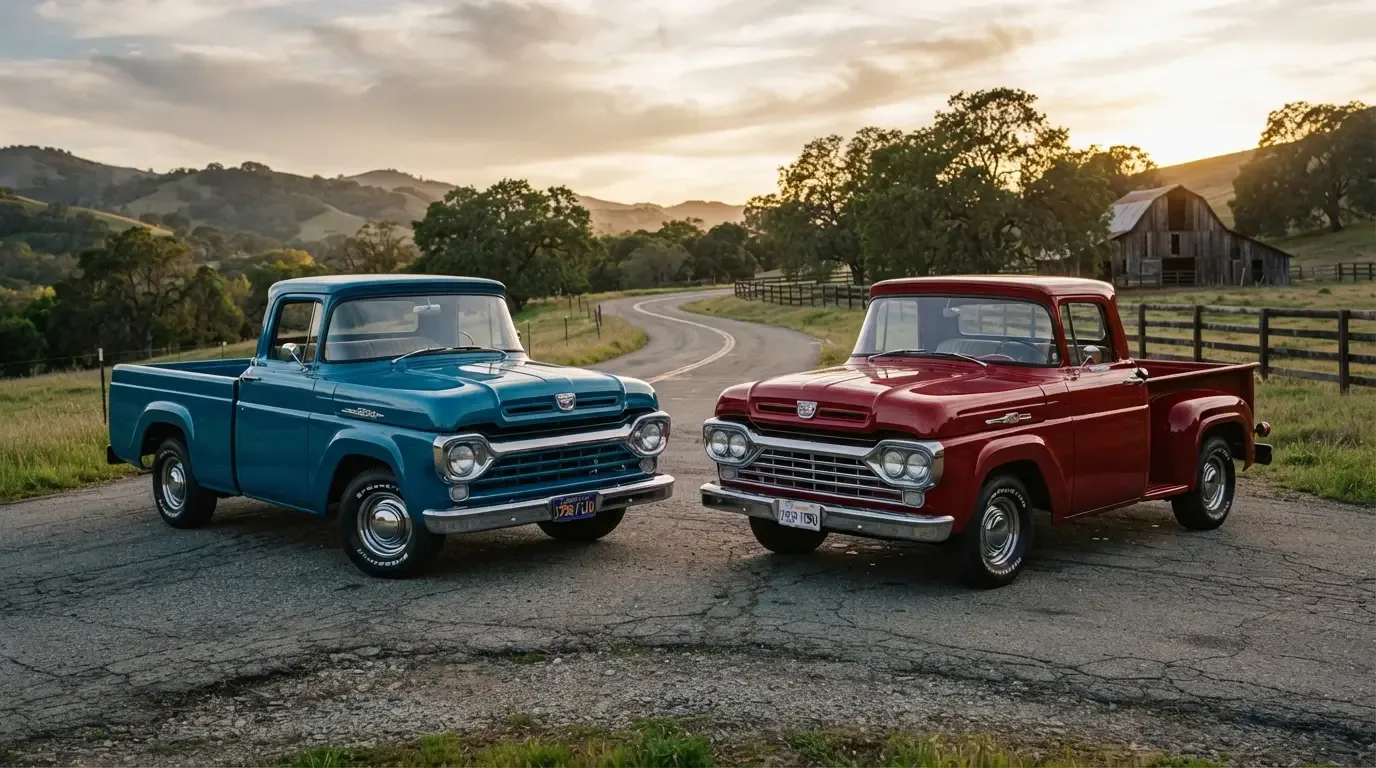
For 1958, Ford gave the F-100 a significant facelift centered on a switch to four headlights. Quad headlamps were the fashionable new detail sweeping through the American auto industry that year, freshly legal in more states, and Ford applied them to its trucks along with a restyled grille that spread the front end wider still. The 1958 and later trucks are easy to distinguish from the single-headlamp 1957 as a result, and the quad-lamp face is a defining marker of the back half of this generation.
The engine story through these years continued the Y-block V8 that had arrived in 1954, with displacements and outputs that grew across the range. The inline six remained the economy choice for buyers who wanted simplicity and low running costs. Toward the end of the generation, Ford was preparing a new family of engines that would arrive with the next redesign, but the 1957 through 1960 trucks are Y-block trucks at heart, and that engine defines their character just as the flat hood defines their look.
Four-wheel drive and the widening lineup
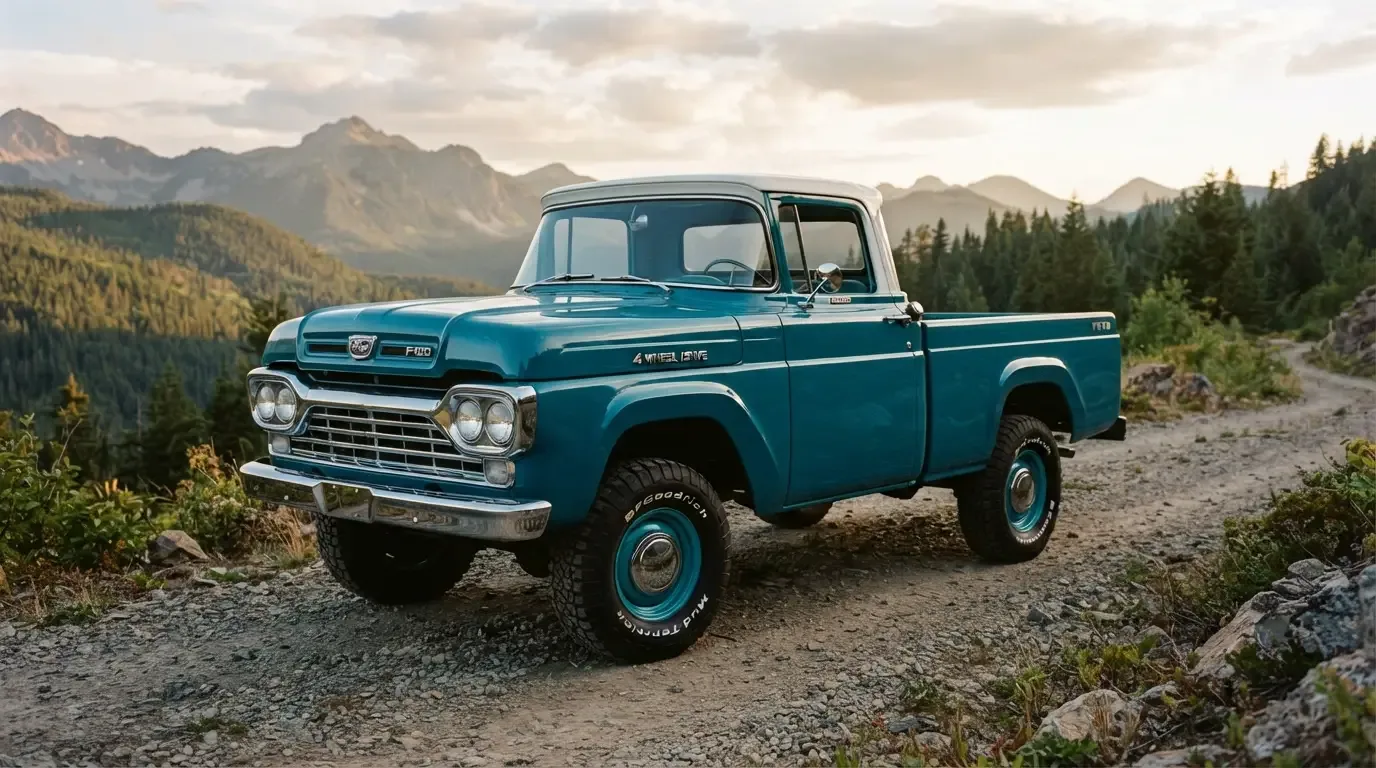
This generation also saw factory four-wheel drive become a more serious and better-integrated option. Ford had offered four-wheel-drive conversions through outside suppliers earlier in the decade, but through the late 1950s the company brought that capability more firmly into its own catalog. A four-wheel-drive F-100 from this era sat taller and meaner, and those trucks are a distinct sub-story within the generation, prized today by collectors who want a period-correct off-road pickup rather than a lowered street truck.
The broader point is that Ford was expanding what a pickup could be. The same basic truck could be ordered as a plain-jane work six with a Flareside bed or as a two-tone V8 Styleside with the Custom Cab trim and four-wheel drive. That flexibility was deliberate. Ford understood that the pickup buyer of 1958 was no longer a single type of customer, and the third-generation F-100 was built to be configured across a wide range of jobs and tastes.
The Custom Cab trim carried over as the comfort-and-appearance package on these trucks, adding brighter interior materials, extra sound insulation, and exterior chrome that separated a nicely optioned truck from a base work unit. It is the trim collectors look for today, because it represents the version of the truck that a buyer chose to dress up rather than simply put to work. A Custom Cab Styleside with a V8 is the configuration that most fully expresses what Ford was trying to sell in this era, which was a pickup you could be glad to own rather than merely one you needed.
The design language that outlived the generation
What is striking in hindsight is how permanent the 1957 vocabulary turned out to be. The flat hood, the full-width front, and the flush-sided cargo box did not go away when this generation ended in 1960. Every F-Series that followed refined those ideas rather than replacing them. The trucks got squarer and then rounder again over the decades, the beds got bigger, and the cabs grew, but the fundamental notion of a pickup as a single integrated form, established here, never reversed. That is a longer legacy than most single generations of any vehicle can claim.
For a collector, that continuity is part of the intellectual appeal of owning one of these. A 1957 Styleside is not just a nice old truck. It is the first clear statement of an idea that shaped tens of millions of vehicles after it. You are buying a piece of design history that happens to also be a usable, good-looking pickup, and that dual identity is exactly what makes the third generation reward the buyer who understands what they are looking at.
"If you want to point at the exact moment the pickup stopped looking like a prewar truck and started looking like a modern one, it is the 1957 model. The flat hood and the Styleside bed did that in a single year, and Ford never looked back."
- Tom Ramirez
Collectibility and where these trucks stand
In the collector market, the 1957 through 1960 trucks occupy an interesting middle ground. They do not carry quite the automatic premium of the 1953 to 1956 big-window trucks, which gives them real appeal to buyers who want a stylish, usable classic without the top-tier price. Yet their historical importance is arguably greater, because they established the template. That combination of relative value and genuine significance makes them a knowing collector's pick rather than an obvious one.
Condition and configuration drive value here as everywhere. A Styleside V8 with the desirable trim and honest sheet metal sits well above a tired Flareside six, and the four-wheel-drive trucks command their own following. Original two-tone paint, intact chrome, and a straight flat hood all matter. Survival is the usual truck problem, since these were working vehicles used hard, so clean examples are less common than the large original production numbers might suggest. For readers comparing what is out there, it is worth taking time to study several years side by side before deciding which generation fits your taste and budget.
The generation that set the shape
The 1957 through 1960 F-100 is the quiet revolutionary of the line. It did not have the big-window drama of 1956 or the muscle-era swagger of the trucks that came later, but it drew the blueprint everything else followed. The flat hood, the full-width Styleside bed, the lower and wider stance: these are the bones of the modern pickup, and Ford set them here. Anyone who wants to understand why trucks look the way they do has to start with this generation.
The next redesign, arriving for 1961, took the integrated look even further and introduced ideas that were bolder still, some of which Ford later walked back. That truck is another one worth knowing if the shape of the F-100 story interests you. And if the 1957 look is the one that speaks to you, the browse classic F-100 listings page is the place to see how the late trucks of this generation are holding up in the market today. The 1957 Ford F100 started the modern pickup, and that alone earns it a permanent place in the story.