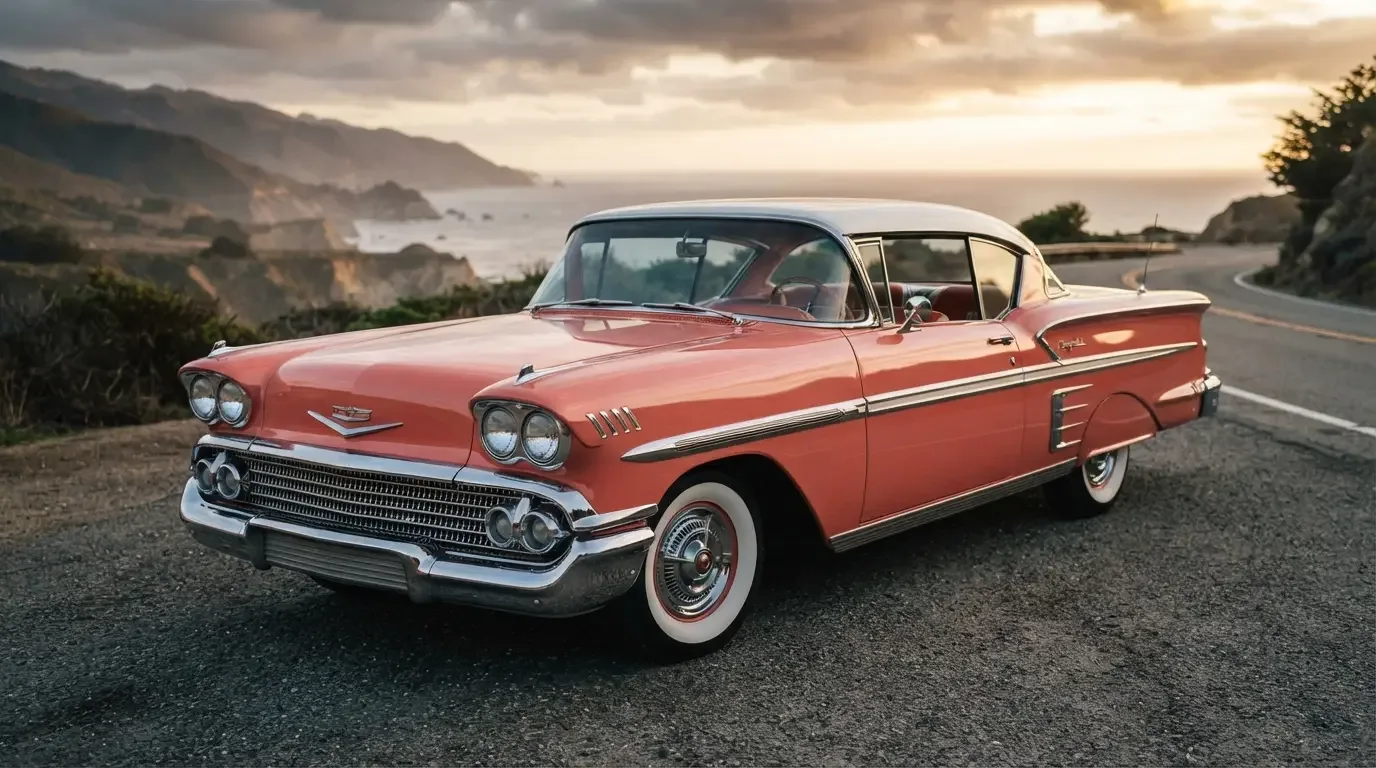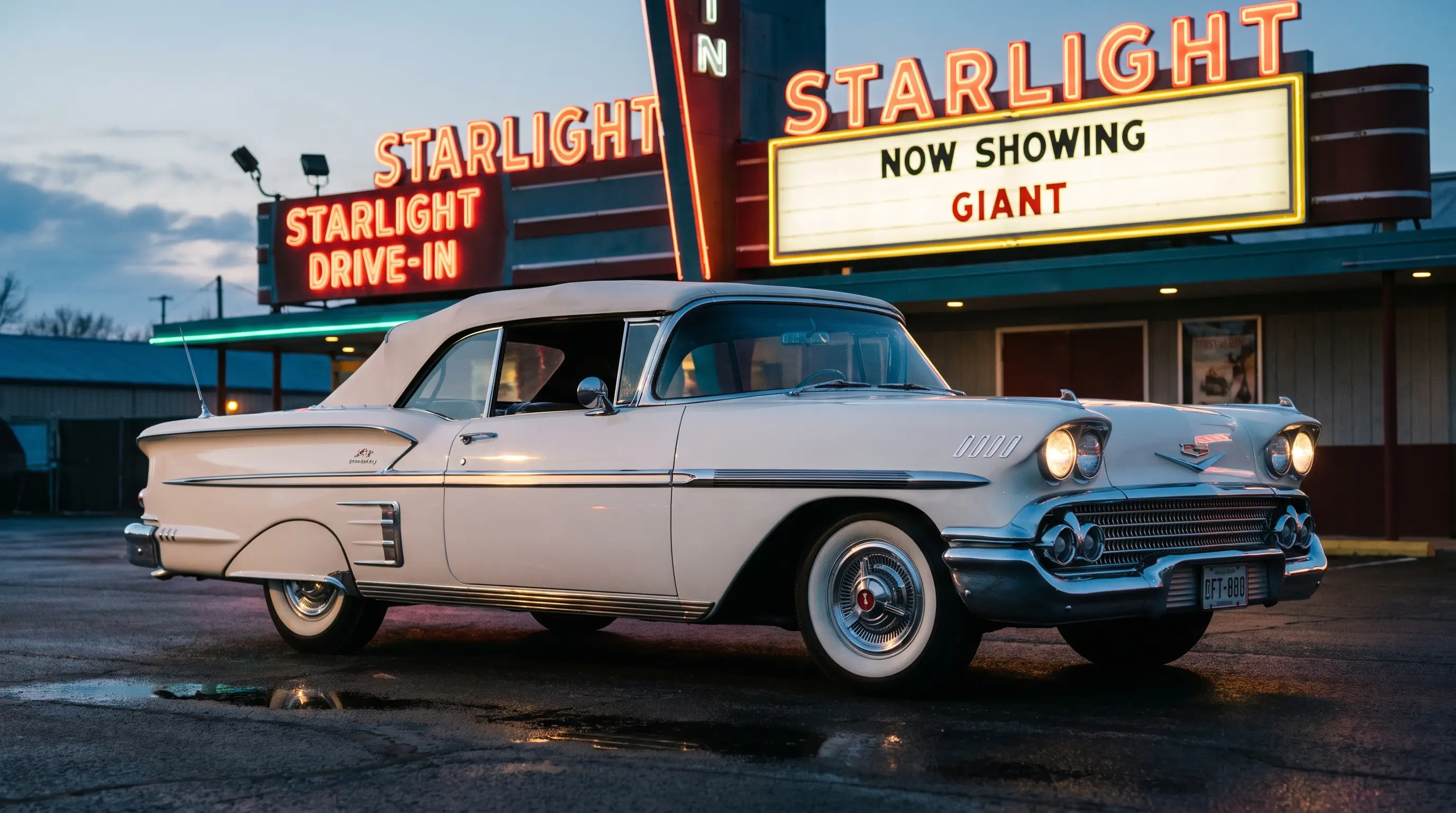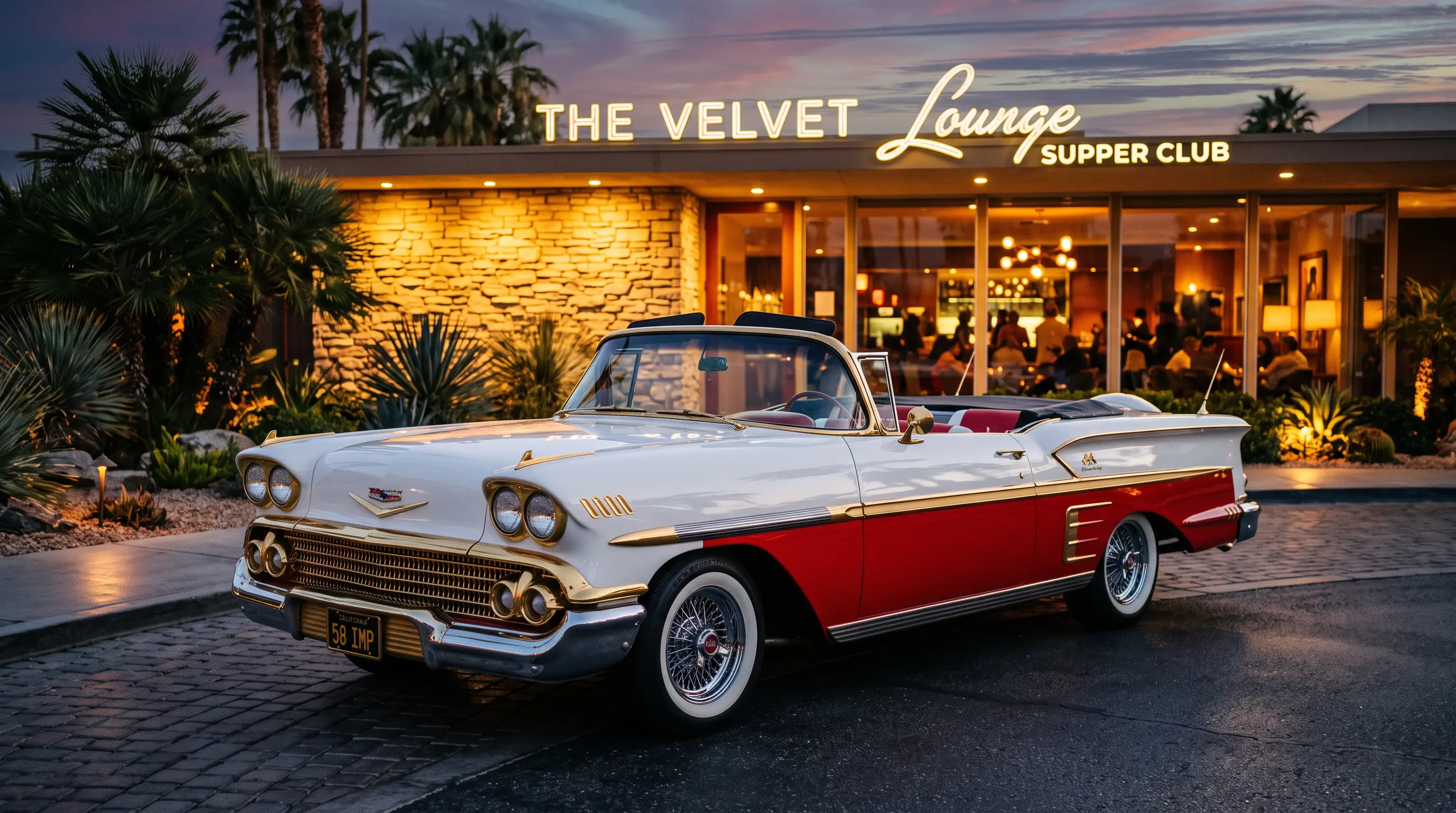
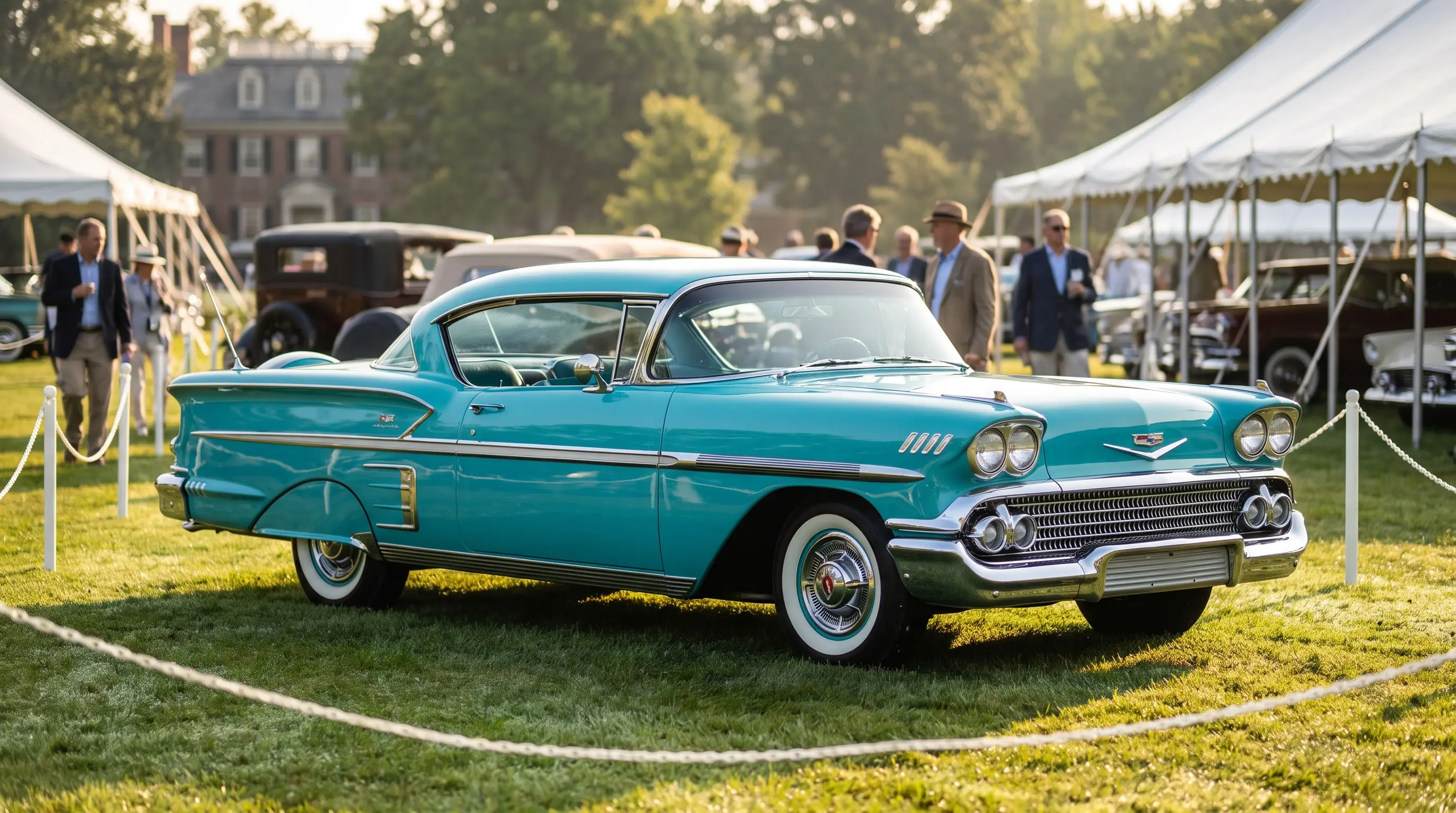
A 1958 Impala collectible commands a premium over most other full-size Chevrolets from the same decade, and the reasons come down to a fairly straightforward set of factors once you strip away the nostalgia. Scarcity, documentation, and demand concentrated on a single, unrepeatable model year drive the price gap, and none of it depends on sentiment about how the car looks or drives. Appraisers evaluating a 1958 Impala start with the same questions asked about any collectible asset. How many were built, how many survive in original condition, and how easily can a specific example's history be verified.
Those questions matter more for the 1958 Impala than for later model years because the car existed as a debut-year trim, limited to two body styles, built on a chassis and body Chevrolet used for exactly one season before moving to a full redesign. That combination of limited original production and a one-year-only design creates the kind of scarcity that supports real premiums, provided the underlying documentation holds up.
Scarcity that actually holds up under scrutiny
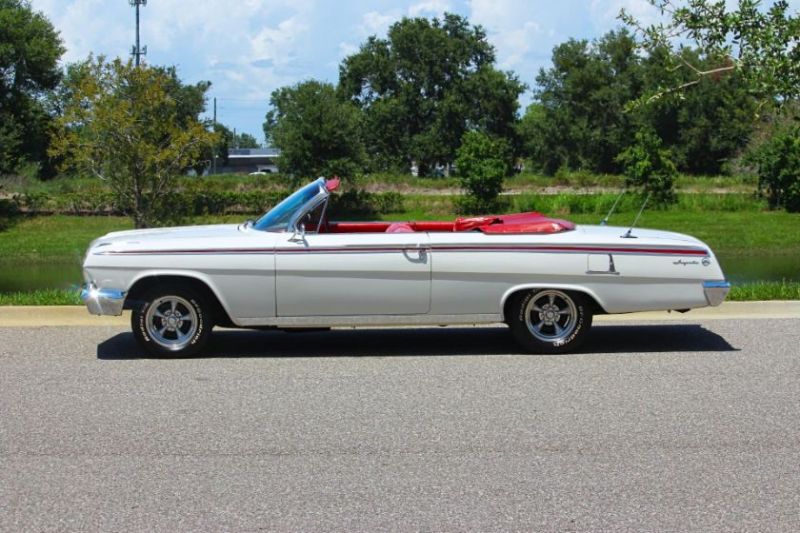
Unlike some collectible claims that fall apart once you check actual production figures, the 1958 Impala's scarcity case is grounded in real structural limits. Chevrolet offered the nameplate in only two body styles that year, the Sport Coupe and the Convertible, compared to the full range of sedans and wagons available once Impala became its own standalone line for 1959. Fewer body styles meant fewer total units built under the Impala name in 1958 than in any of the several years that followed, and that mathematical scarcity is not a marketing story, it shows up directly in how few original examples surface at auction compared to 1959 and 1960 cars.
The convertible in particular carries a further scarcity premium within the 1958 lineup itself, since convertibles cost more to build, sold in smaller numbers than the coupe even within that debut year, and suffered higher attrition over the decades from the structural demands and exposure that convertibles typically face. A documented original 1958 Impala convertible sits at the narrow end of a scarcity funnel that starts with the entire model year and narrows further by body style.
Documentation risk is the real variable
Scarcity alone does not set a price. What actually separates a strong sale from a disappointing one is documentation, and the 1958 Impala carries specific documentation risks that buyers need to understand before paying a scarcity premium. Because the car shared its body and chassis with the standard Bel Air that year, differing mainly in trim, badging, and taillight configuration, cars that started life as a Bel Air have occasionally been re-trimmed to present as an Impala. That risk is real enough that serious buyers should expect to verify trim tags, body numbers, and factory build documentation rather than relying on visual impression alone.
The emblem history matters here too, since correct badging is one of the more checkable authenticity markers on a 1958 car, and mismatched or incorrect reproduction emblems are a common red flag on cars presented as more original than they actually are. A buyer paying a genuine scarcity premium should insist on paperwork that substantiates the claim, not just a badge and a story.
"Scarcity sets the ceiling. Documentation sets the actual price. A 1958 Impala with a clean paper trail is worth real money. The same car without one is a Bel Air wearing better trim, priced accordingly."
- Marcus Feld
What actually moves the needle at sale time
Condition matters, as it does for any collectible car, but for the 1958 Impala specifically, originality tends to matter more than raw cosmetic presentation. A well-preserved, honestly aged original example with its correct engine, trim, and paperwork intact will often outperform a car that has been extensively restored but lacks the documentation to prove it started life correctly badged. That is a different calculation than buyers sometimes apply to more common classic cars, where a fresh, well executed restoration can command a premium over an unrestored survivor regardless of paper trail. Readers building a fuller picture of the model should look at where this started, since the debut year context explains directly why documentation carries so much weight in this specific market.
Liquidity is the last piece of the appraisal picture, and it works in the 1958 Impala's favor. Genuine, documented examples do not sit on the market long when priced realistically, because demand from serious collectors specifically targeting the debut year consistently outpaces the small number of qualifying cars that come up for sale in any given year. Buyers actively evaluating the market can review shop classic Impala listings to see how that combination of scarcity and demand plays out in current asking prices.
How the 1958 premium compares to later Impala years
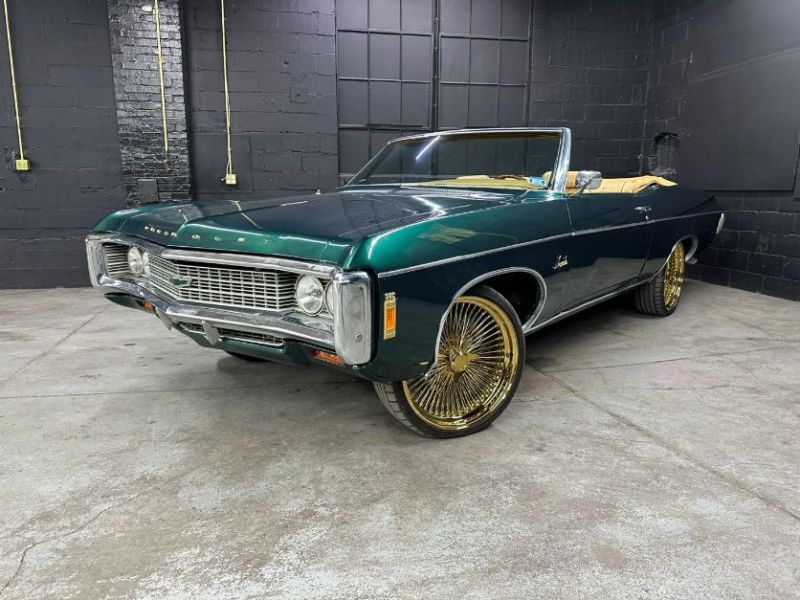
Set a genuine 1958 Impala next to a comparable 1965 or 1966 model, the years when Impala production peaked in the millions of units annually, and the value gap becomes easy to explain in a single sentence. Later cars, however desirable, simply do not carry the same structural scarcity, because Chevrolet built far more of them across a much wider range of body styles and engine combinations. That volume keeps prices for good original mid-1960s Impalas reasonable and accessible, which is exactly why the market treats them differently from the debut year cars. A 1958 buyer is not competing against a large supply of similar cars. A 1965 or 1966 buyer generally is.
That distinction is worth remembering for anyone shopping across model years rather than committing to a single one. A 1958 Impala is not simply an older, rarer version of the same collecting proposition as a 1966 model. It is a different category of purchase entirely, with different risks, different documentation demands, and a different ceiling, and appraisers who blur that line tend to either overpay for common later cars or underpay sellers of genuinely scarce debut year examples.
The bottom line on paying a premium
A 1958 Impala collectible earns its premium honestly, through structural scarcity tied to a single model year and two body styles, rather than through hype detached from the underlying numbers. That said, the premium only holds for buyers willing to do the documentation work upfront. Pay for scarcity without verifying the paperwork behind it, and the premium evaporates the moment a more careful buyer or appraiser looks closely. Do the verification properly, and the 1958 Impala remains one of the more defensible premiums in full-size 1950s Chevrolet collecting, precisely because the scarcity behind it is real and the documentation that proves it is checkable rather than taken on faith.