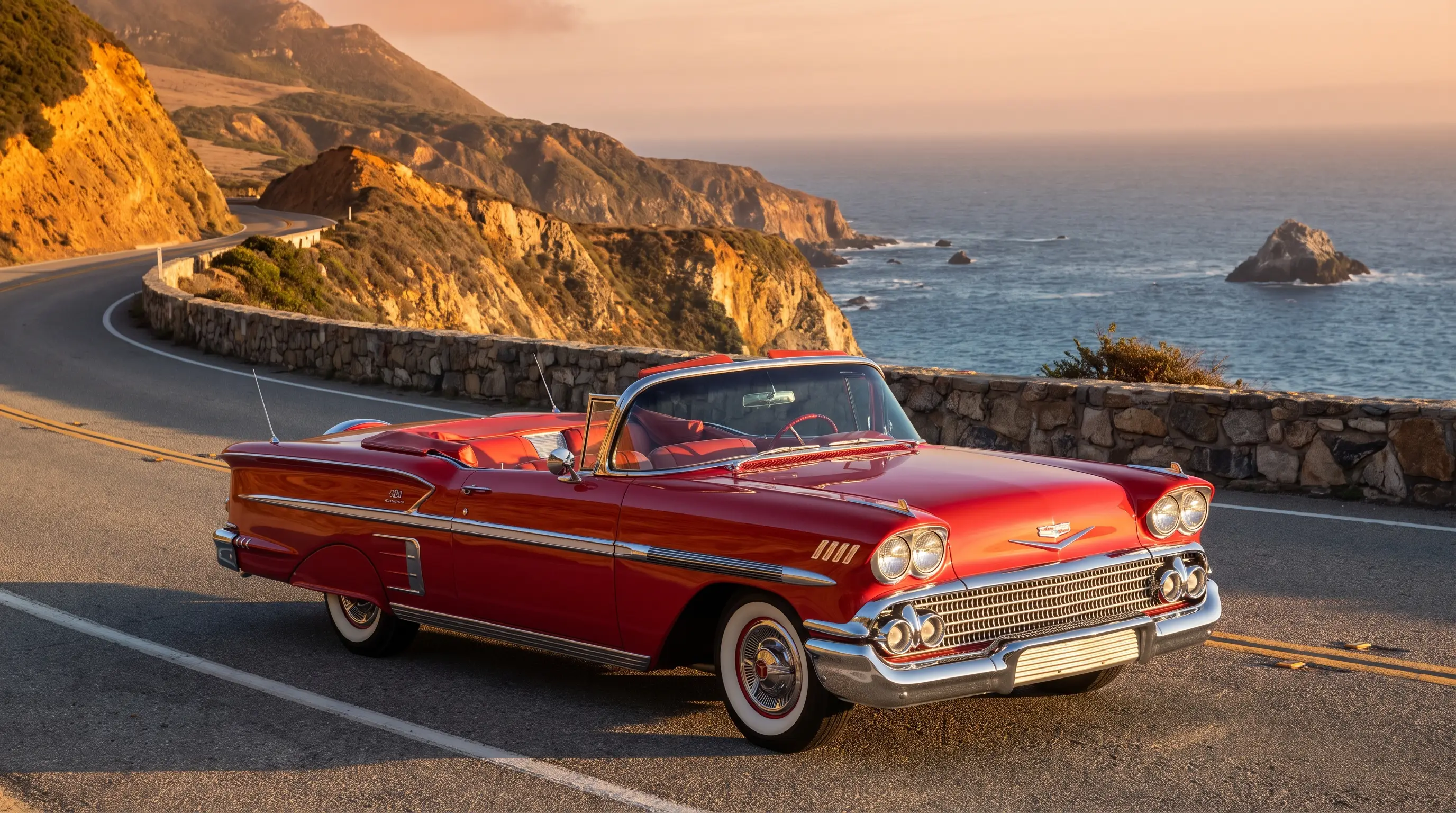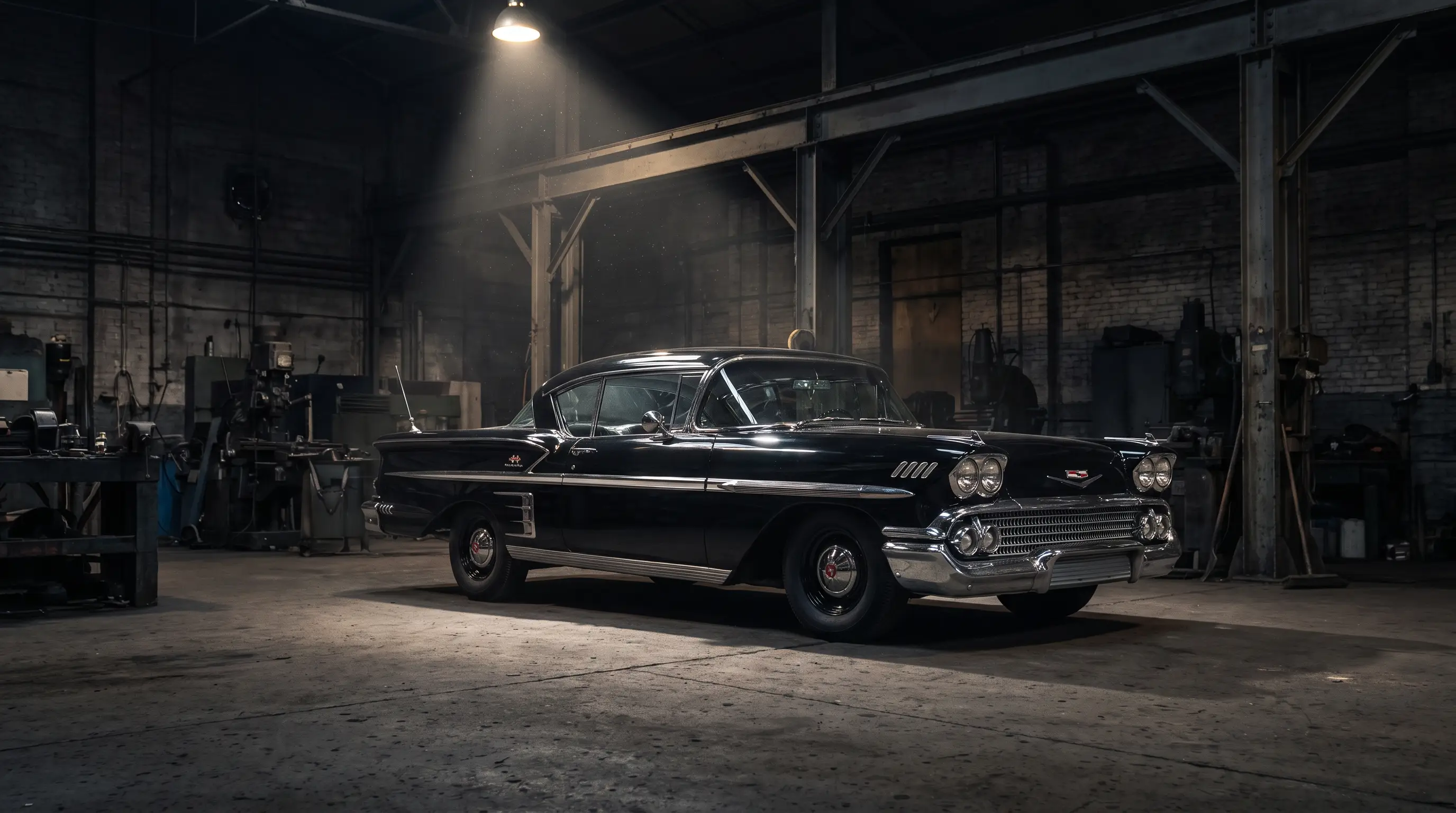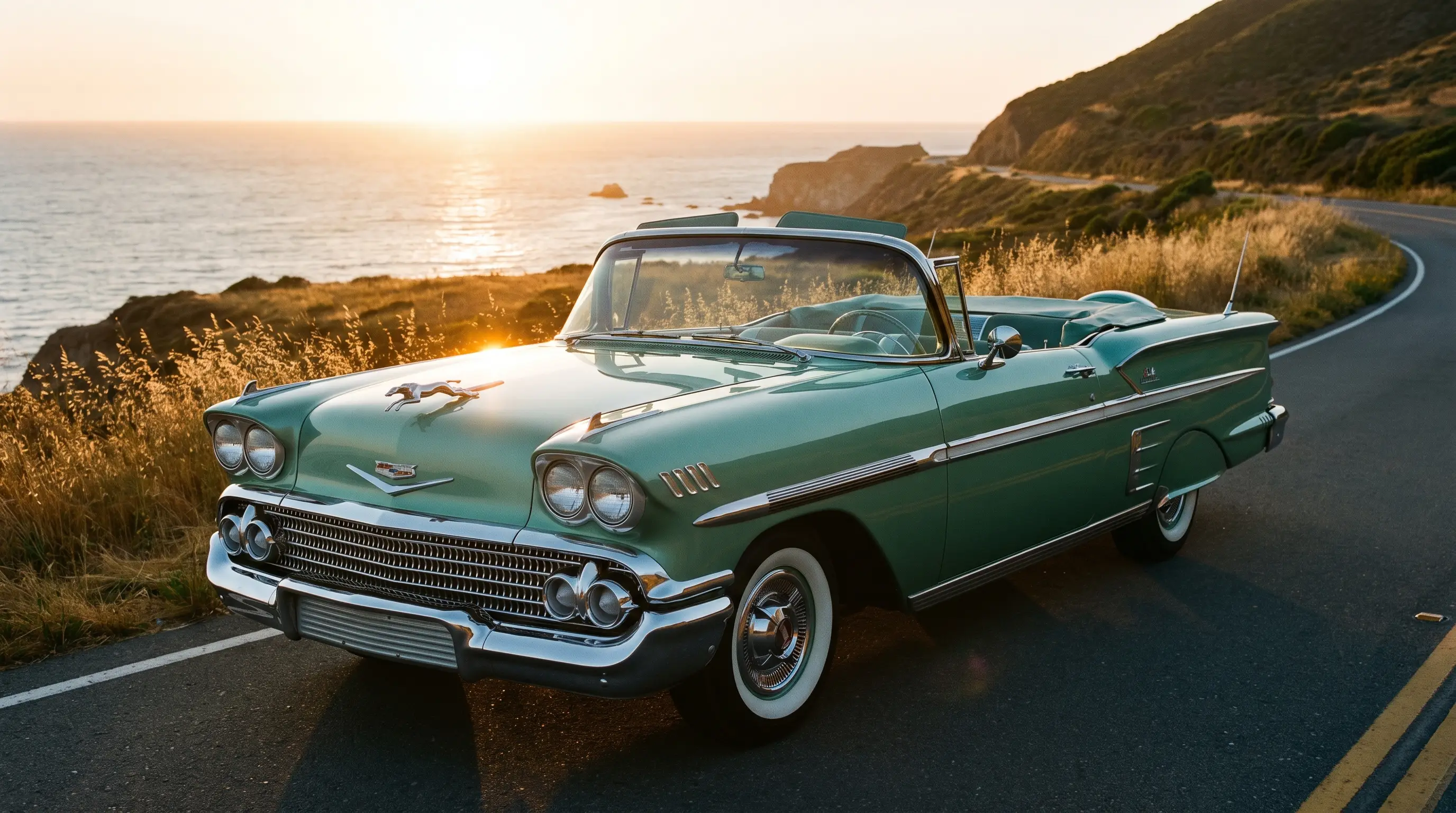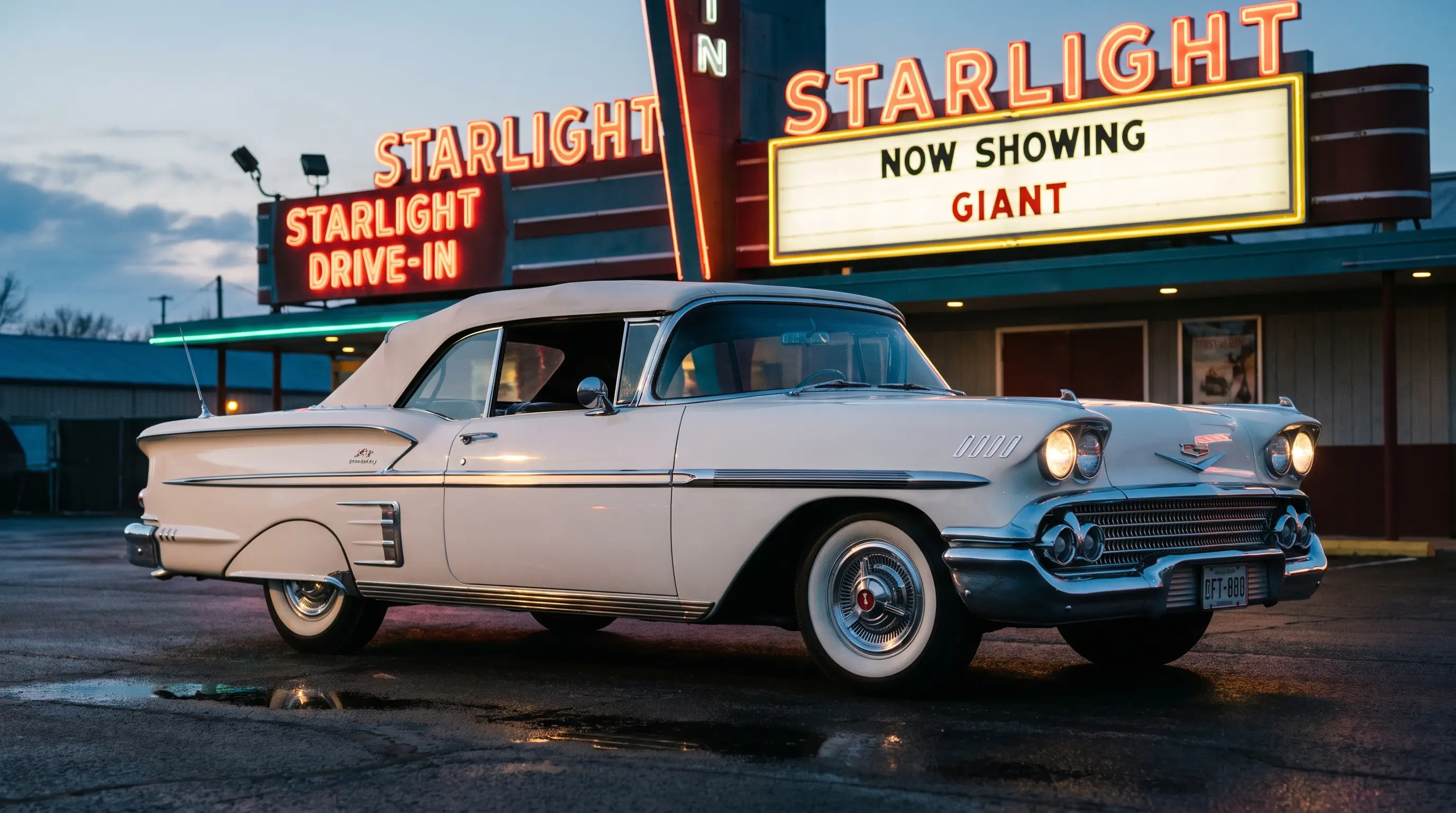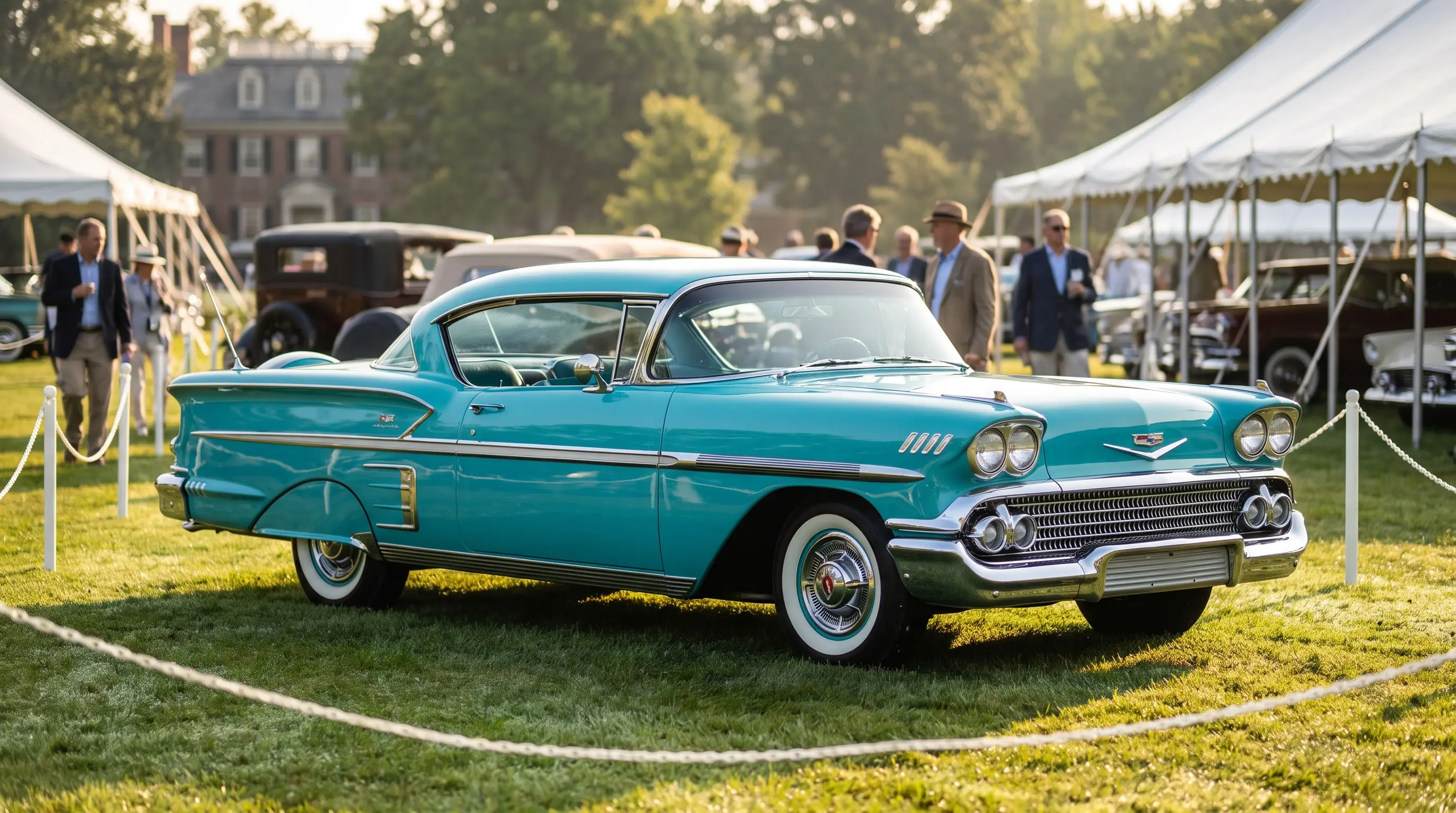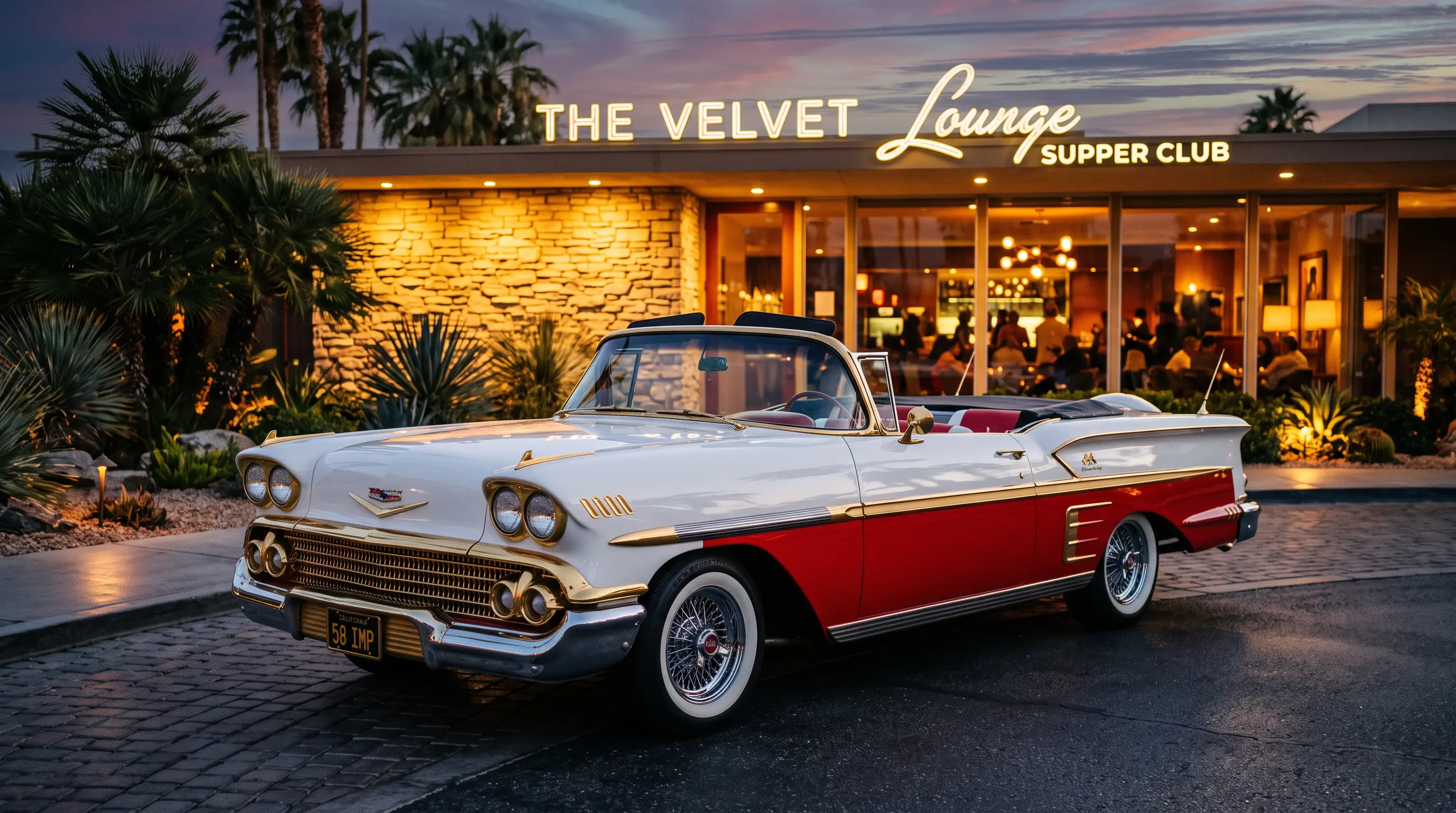
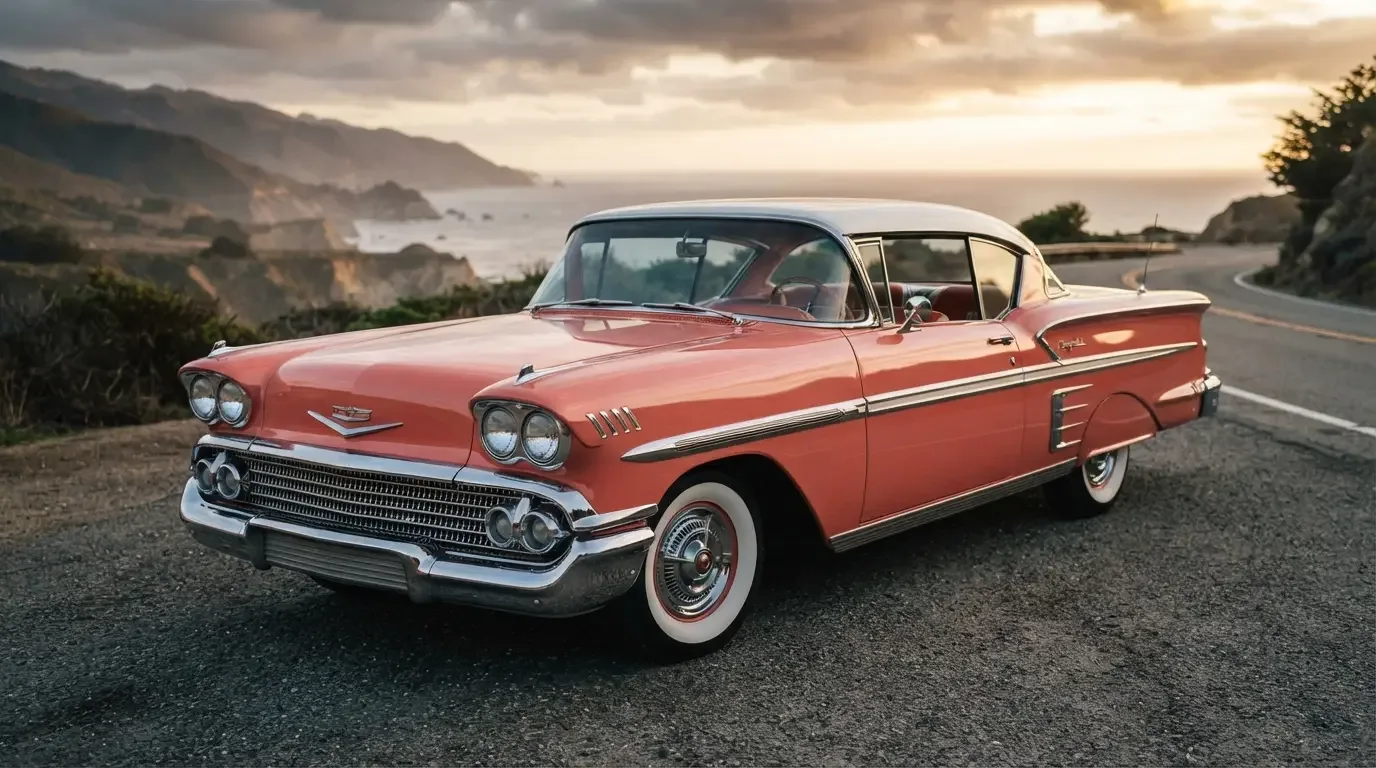
The 1958 Impala arrived as a top-trim afterthought and left as the name Chevrolet would build its full-size identity around for the next two decades. For one model year only, the Impala was not its own series but the most expensive way to buy a Bel Air, offered strictly as a two-door Sport Coupe or a convertible. That narrow catalog listing hides how carefully the car was assembled, and how much of what collectors chase today was decided in a single season that never repeated.
To understand why a one-year body matters so much, it helps to place it against the wider chevy impala history, where 1958 reads as the prologue rather than a footnote.
A one-year body that never came back
Chevrolet redesigned its entire full-size line for 1958. The cars were longer, lower, and wider than the 1957 models that preceded them, and the platform underneath was new: an X-member frame with no side rails, which allowed a lower floor and a lower roofline. That chassis is one of the defining artifacts of the year. It was praised for its low stance and criticized, then and later, for the collision protection it gave up at the door openings.
The 1958 sheet metal served a single model year. For 1959 the full-size Chevrolet was redesigned again, top to bottom, so the body a 1958 Impala wears cannot be found on any other production year. That fact alone gives the car an unusual position among 1950s Chevrolets. Owners are not maintaining a shape that ran three or four seasons with detail changes. They are maintaining the only examples that ever existed.
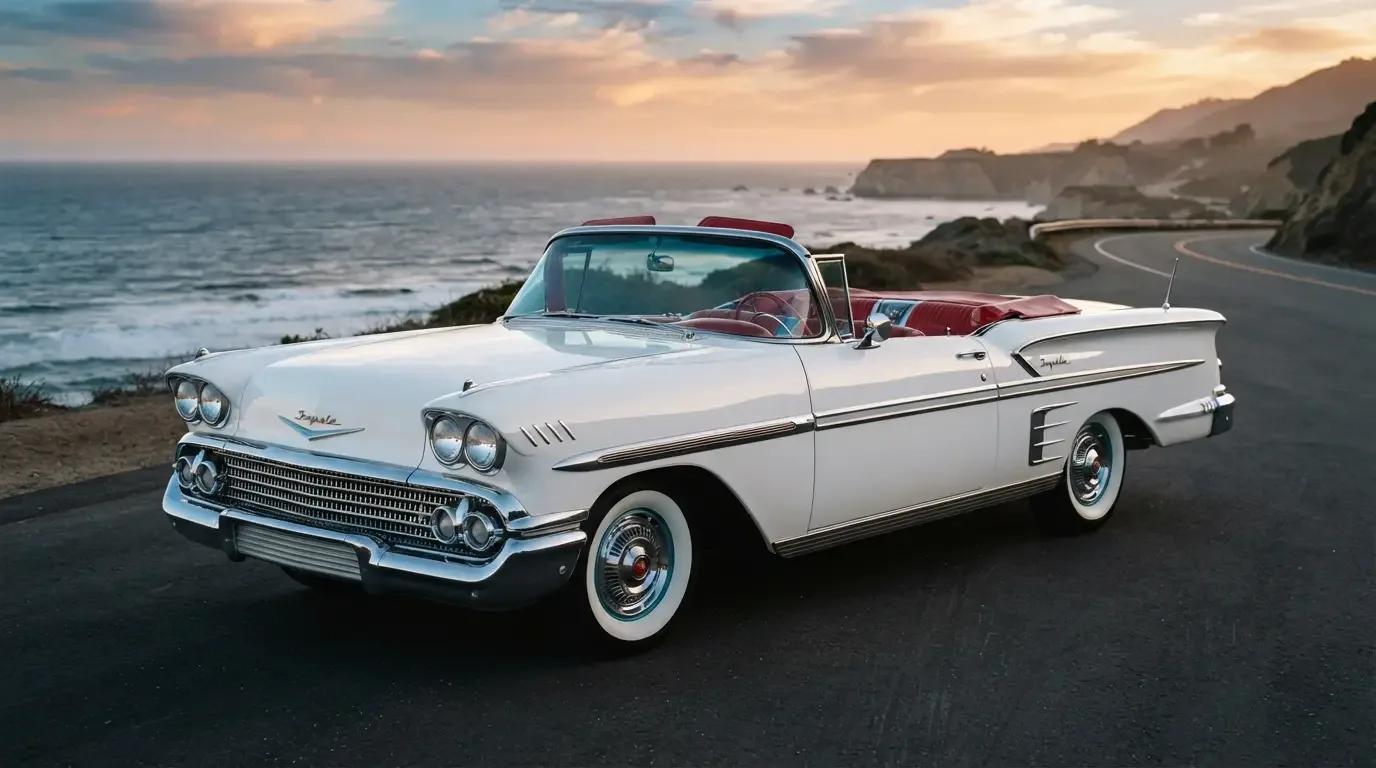
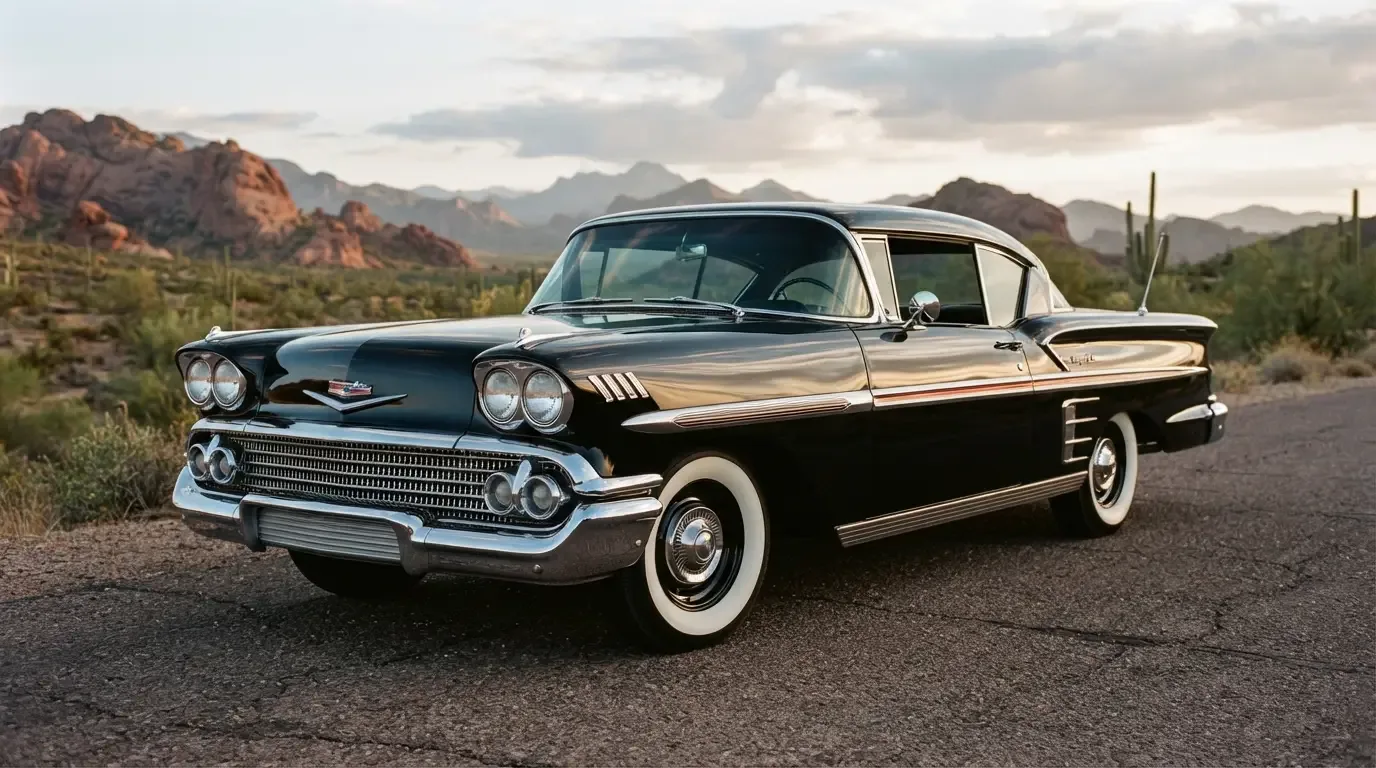
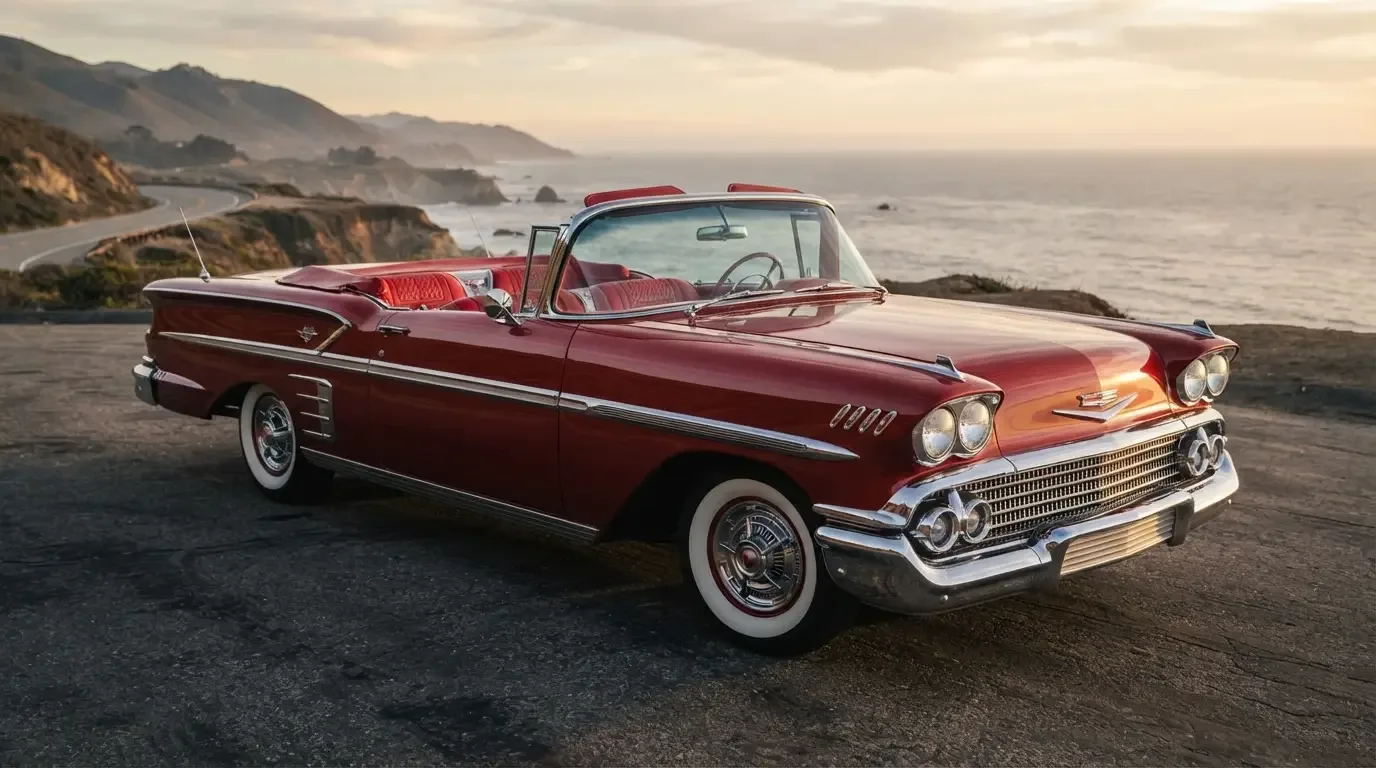
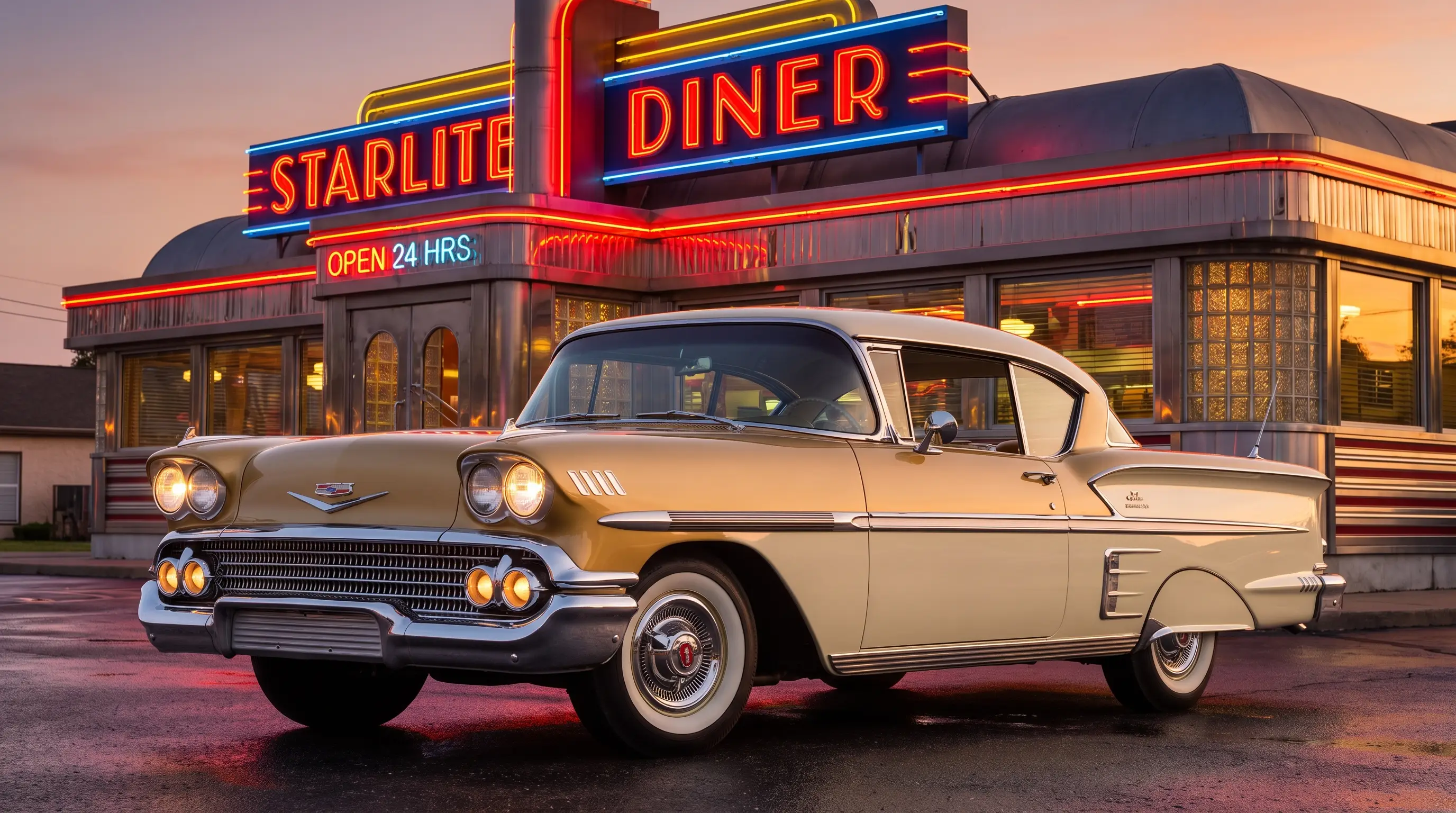
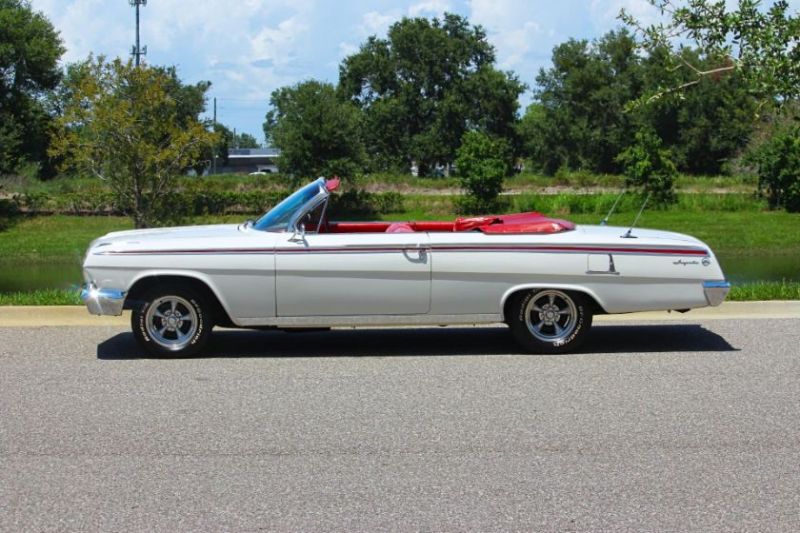
The proportions were deliberate. Anodized aluminum side trim, a wide grille carrying the new quad headlamps, and a rear deck that sat low over the fuel filler. Chevrolet was reaching upmarket, and the Impala was the instrument. It carried more chrome, richer interior materials, and standard equipment that the plainer Bel Air, Biscayne, and Delray models did without.
Reading the badges: what made an Impala an Impala
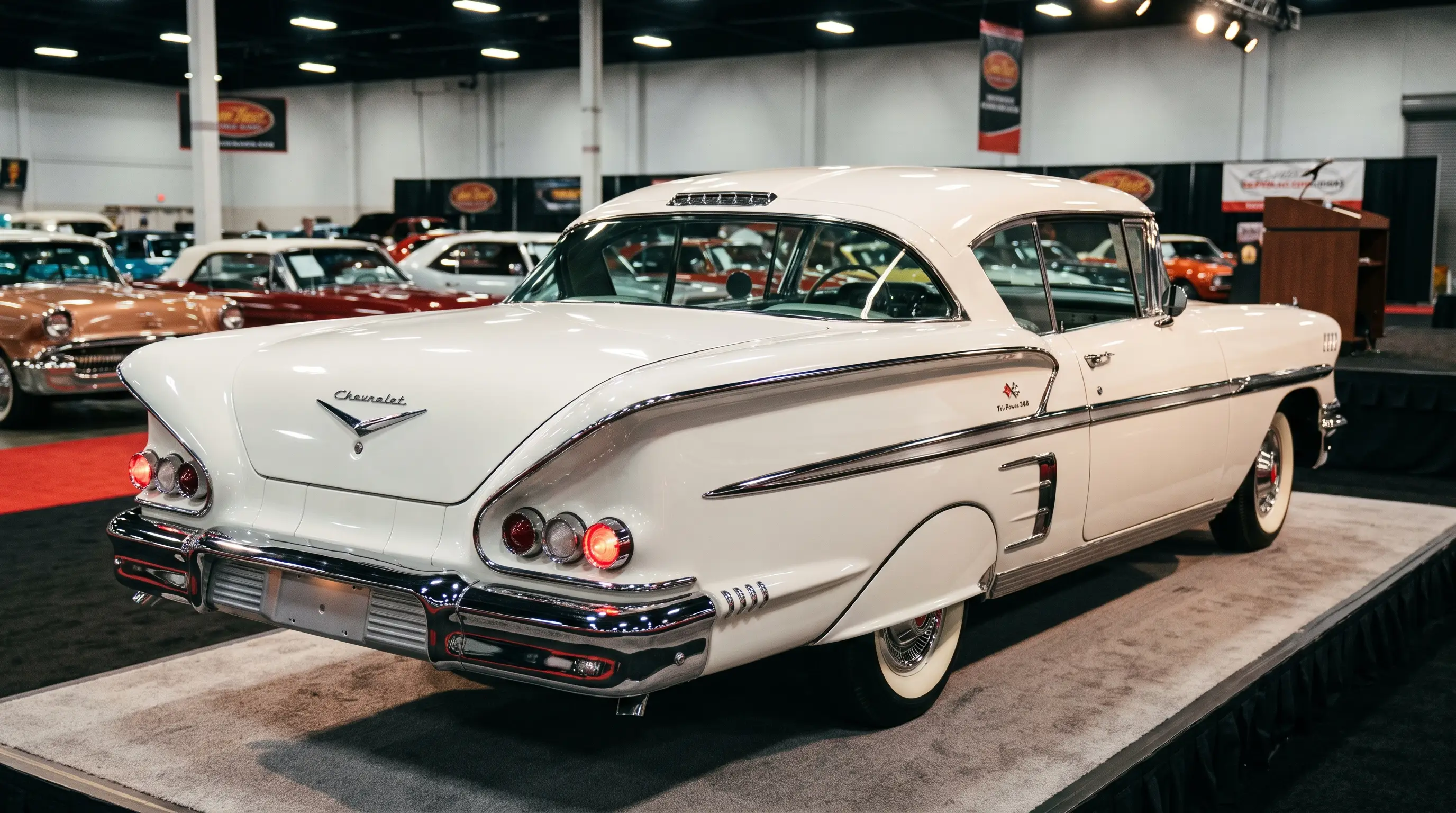
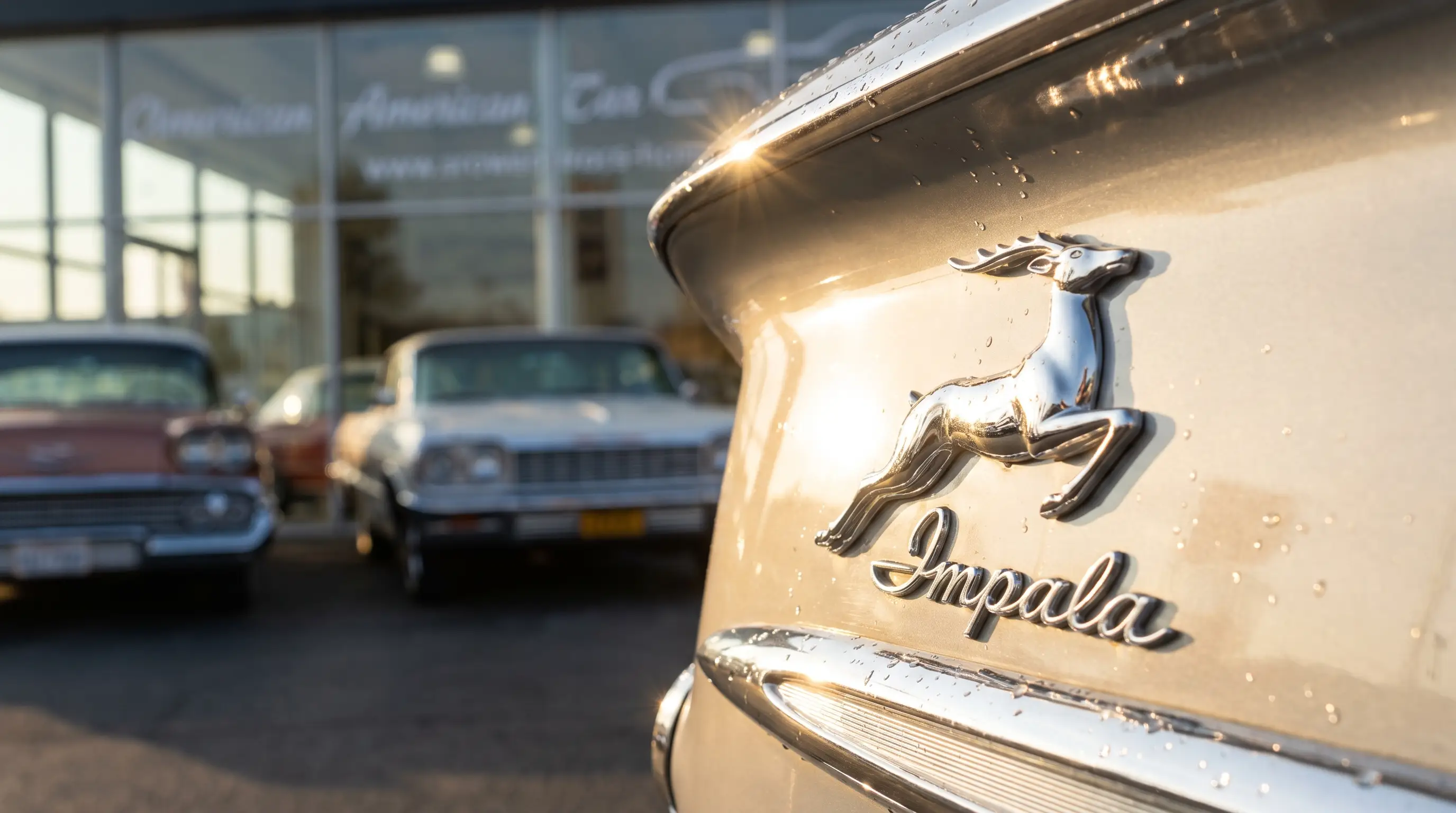
The quickest way to authenticate a 1958 Impala is to read what the factory used to separate it from a Bel Air. The rear quarters carried simulated air scoops ahead of the wheel openings, a crossed-flags emblem, and the Impala script. Inside, the door panels and seat inserts were unique to the trim, and the dashboard carried its own detailing.
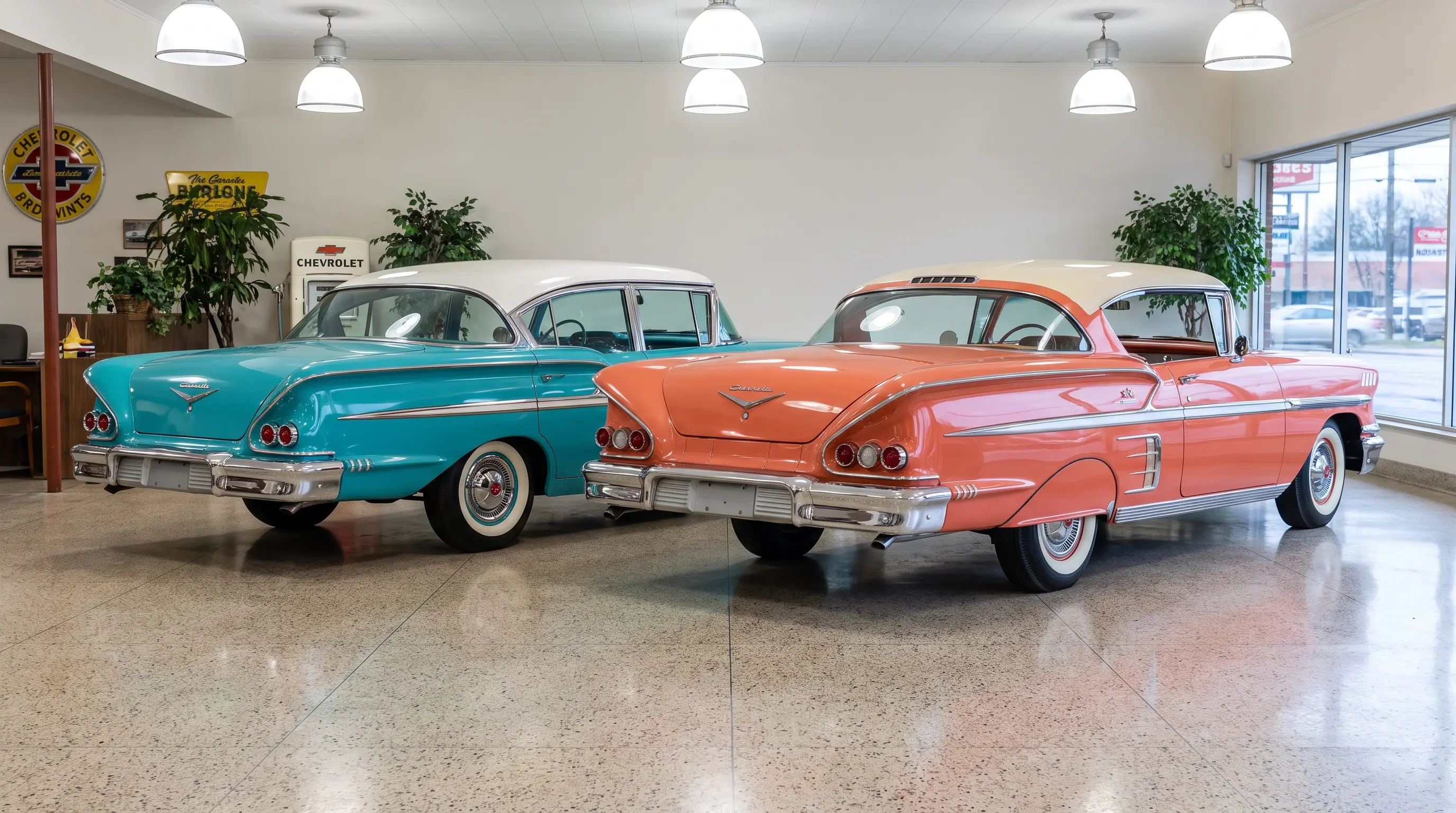
The single most cited signature is the taillamp treatment. Where lesser 1958 Chevrolets used a single large lamp per side, the Impala used three smaller round lamps on each rear quarter. That triple-taillight arrangement became one of the most durable Chevrolet cues of the era, returning on later Impalas and turning into shorthand for the model across generations. On a 1958 car it is original equipment, not a styling revival, which is part of why the year reads as a starting point.
Engines: the six, the small-block, and the new W-block
The 1958 Impala could be ordered across a wide span of drivetrains, and the range itself is part of the story. At the economy end sat the 235 cubic inch Blue Flame inline six, a design with roots in the early 1950s that still found buyers who wanted the Impala look without V8 running costs.
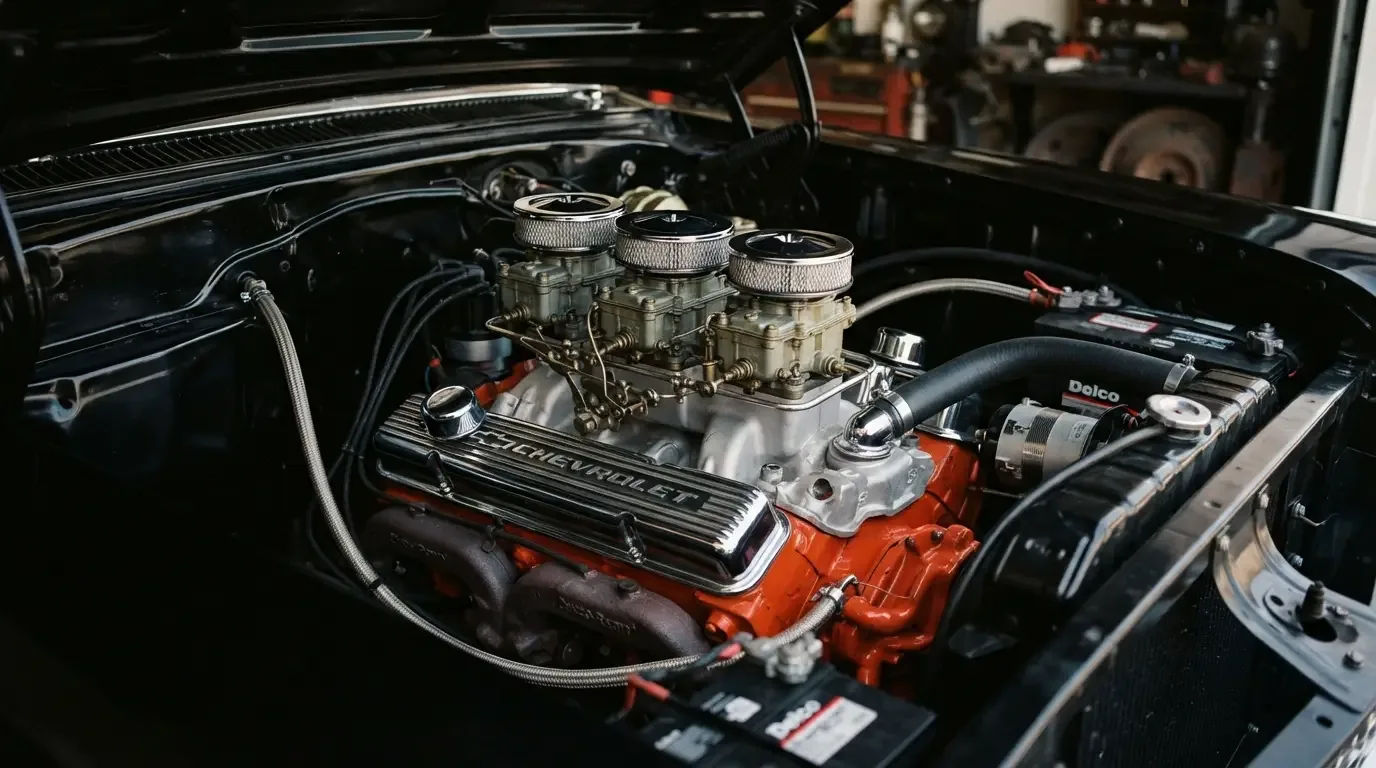
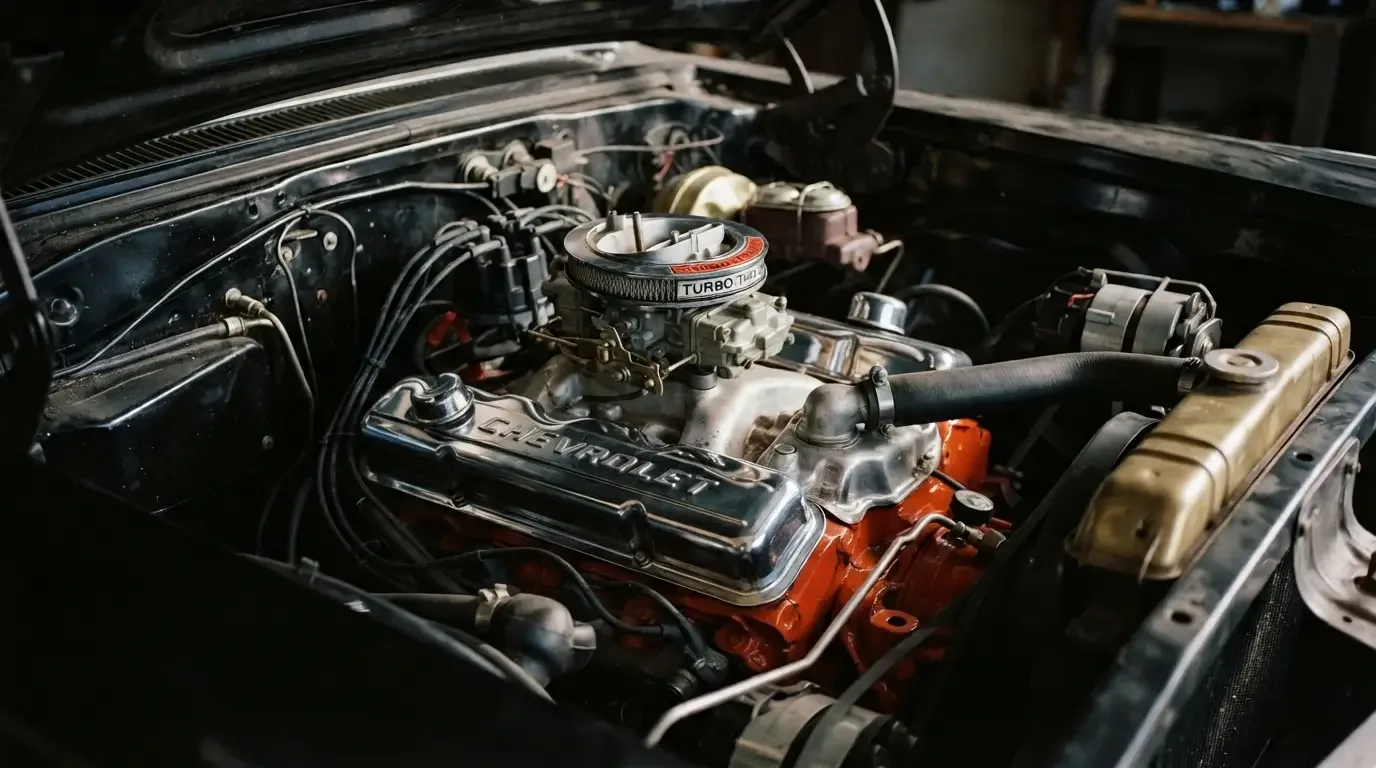
Above it was the 283 cubic inch small-block V8, by 1958 a mature and well-regarded engine offered in several states of tune. But the drivetrain that gives the 1958 car its collector weight is the one that debuted that year: the 348 cubic inch Turbo-Thrust, the first of the W-series big-blocks. The 348 was engineered as a truck and passenger-car V8 with distinctive scalloped valve covers, and it introduced the architecture that would later grow into the famous 409. A 1958 Impala fitted with the 348 is buying into the first chapter of that engine family.
The 1958 348 came in four factory ratings depending on carburetion and valve gear: a 250 hp Turbo-Thrust with a single four-barrel, a 280 hp Super Turbo-Thrust with triple two-barrels, a 305 hp Special Turbo-Thrust, and a top 315 hp Special Super Turbo-Thrust with mechanical lifters. Any specific horsepower claim on a survivor should still be checked against the car's documentation, since option combinations varied. What matters historically is the breadth: a single trim level that could be a mild cruiser or, with the W-block, a genuinely quick car for 1958.
| Attribute | 1958 Impala detail |
|---|---|
| Model year | 1958 only (one-year body) |
| Series position | Top trim of the Bel Air series |
| Body styles | Sport Coupe (hardtop) and convertible |
| Chassis | New X-member frame, lower stance |
| Base six | 235 cu in Blue Flame inline six |
| V8 range | 283 small-block; new 348 Turbo-Thrust W-block |
| Signature cue | Triple round taillamps per side |
Production numbers and why survivors are scarce
Chevrolet built roughly 181,469 1958 Impalas across the two body styles: about 125,480 Sport Coupes and about 55,989 convertibles, together representing around 15 percent of Chevrolet's total output in a recession year. The convertible was built in clearly smaller numbers than the closed car, and that gap has shaped values ever since.
Attrition did the rest. These were expensive, chrome-heavy cars used as daily transportation, and the X-frame body was never treated as precious in period. Many were driven hard, rusted out, or broken up for parts through the 1960s and 1970s. The result is that a well-documented 1958 Impala, especially a convertible or a 348 car, is a genuinely uncommon object today rather than merely an old one.
Documentation is the researcher's tool here. Trim tags, engine casting evidence, and correct interior materials separate a real Impala from a Bel Air dressed up to look like one. The financial gap between the two trims makes that distinction worth taking seriously, and it is one reason serious buyers read a car closely before they read the asking price.
Color, trim, and the interior as evidence
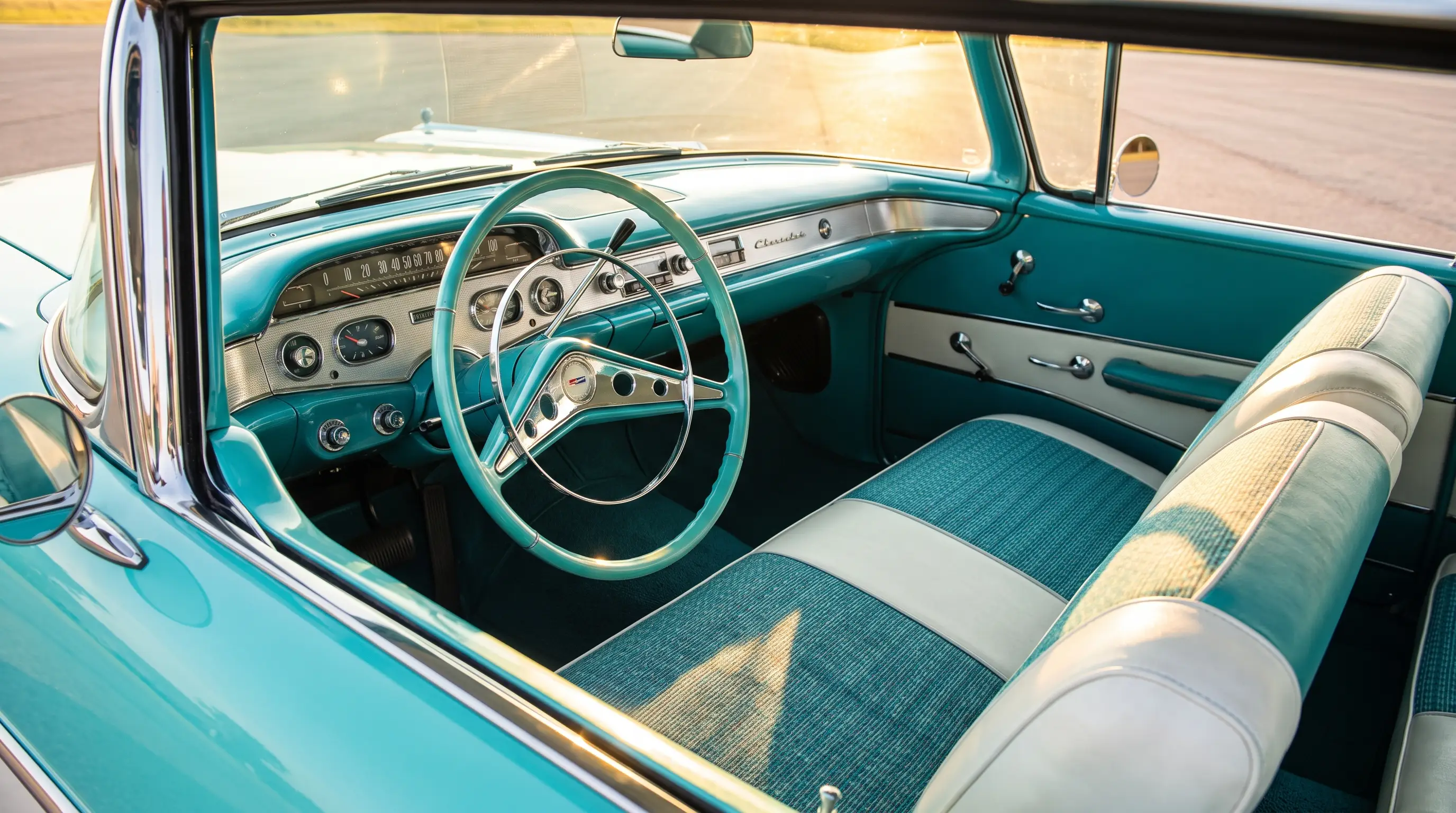
A concours eye reads a 1958 Impala from the inside as carefully as from the outside, because the interior is where the trim distinction was most heavily invested. The seat inserts, door panels, and dash appointments were specific to the Impala and richer than anything in the Bel Air below it. Correct patterns and materials are among the first things a knowledgeable inspector checks, because a reupholstered car finished in a lesser-grade or later-pattern material has lost part of what made it an Impala in the first place.
The exterior palette matters too. 1958 was a year of two-tone combinations and bright, optimistic colors, and the anodized aluminum side trim was designed to frame those choices. Original paint codes and correct trim application tell a researcher whether a car wears its factory identity or a later respray in a color it never left the plant wearing. None of this is about how to restore the car. It is about learning to read what the factory actually did, so that a survivor can be understood as the artifact it is rather than the sum of decades of changes.
Even small hardware carries information. The quad headlamps were new for 1958 and not universally legal in every market at launch, the dashboard layout was unique to the redesigned body, and the steering wheel and column details belong to that single year. Each correct piece is a small confirmation. Enough of them together is what separates a documented 1958 Impala from a car that merely resembles one.
The 1958 Impala in period context
1958 was a difficult year for the American economy, and the car market felt it. Chevrolet's decision to push a plush, distinct trim to the top of its range during a soft year was a bet on aspiration, and it worked well enough that the Impala graduated to its own series the following season. Read that way, the 1958 car is the moment a marketing idea proved itself.
It also sits at a stylistic hinge. The 1958 Chevrolet still wore heavy chrome and rounded forms belonging to the late 1950s, before the sharper, wing-heavy shapes of 1959 arrived. If you want to see how quickly the visual language changed, the next year is the obvious place to look, and it is worth keep exploring to watch the same nameplate take a dramatically different form.
For collectors, the appeal is exactly this combination: a nameplate that would become one of the best-selling cars in America, captured in its first and only appearance in this body, in limited numbers, with the first W-block engine available under the hood. Few single model years carry that much origin-story weight.
Why the debut year still leads the conversation
The 1958 Impala is not the fastest, the rarest, or the most valuable car to wear the name. It is the first, and in this hobby first counts for a great deal. It established the triple taillamp, the aspirational positioning, and the assumption that Impala meant the best full-size Chevrolet you could buy. Everything the model became over the following decades traces back to a single soft-market season and a trim level that was never repeated.
Interest has followed that logic. When a clean, documented example surfaces, whether a Sport Coupe or a convertible, buyers who understand the year treat it as the origin point it is. Anyone who wants to see where those cars sit in the current market can start by looking at a classic Impala for sale and comparing what documentation each example actually carries. The 1958 Impala rewards that kind of close reading, because so much of what made the name matter was decided in the one year this body existed.
There is a quieter reason the year holds its place, and it has to do with how the hobby remembers cars. Enthusiasts tend to celebrate the dramatic tailfin years on either side of 1958, the flashy 1957 that preceded it and the batwing 1959 that followed, and the 1958 can slip between them in the popular imagination. That relative modesty is an opportunity for the researcher. A single-year body, built in limited numbers as a trim option, sitting in the shadow of its more famous neighbors, is exactly the kind of car whose importance is understood by specialists before it is understood by the wider market. The people who study these cars closely have long treated the debut year as more significant than its profile suggests, and the record supports them.
Read the 1958 Impala as a first edition and everything about it makes sense. First editions are rarely the most refined version of a thing. They are valued because they came first, because they set the template, and because comparatively few survive in honest condition. That is the 1958 exactly. It established the name, the taillamps, and the ambition, then handed all three to the cars that followed and never appeared in this form again.
"I treat a 1958 Impala the way I would treat any single-season artifact: the body tells you the year, the trim tells you the ambition, and the documentation tells you whether what you are looking at is what the factory actually built."
- Sarah Whitfield
Sources and notes
- Chevrolet Impala - Wikipedia
- Throwback Thursday: The 348 Cubic-Inch W-Series Engine
- 1958 Chevrolet Bel Air Impala Sport Coupe - autoevolution
- 1958-90 Impala and Passenger Car Production Figures
- Chevrolet big-block engine - Wikipedia
- 1958 Chevrolet Impala Convertible 348 V-8 Specs - Automobile Catalog