I've had a lot of Chargers up on the lift over the years, and the first thing I tell people is that "Charger" doesn't mean one car. It means four very different cars wearing the same name between 1966 and 1978. A guy calls me about a Charger he's looking at, and my first question is always the year, because a 1969 R/T and a 1977 SE have almost nothing in common except the badge on the fender.
That confuses buyers, and confused buyers overpay. So this is the whole story of the classic B-body Charger, told straight, generation by generation, with the numbers that matter and the flaws I've actually found underneath these things. If you want to see what's out there right now, there's usually a decent spread of classic Dodge Chargers for sale to compare against as you read.
The Charger arrived because Dodge was late to a party everybody else was already at. Plymouth had the Barracuda, Ford had the Mustang, and the whole idea of a sporty, youth-oriented car was printing money. Dodge needed something with attitude, and in the middle of 1966 they gave it to us.
Where the Charger started in 1966
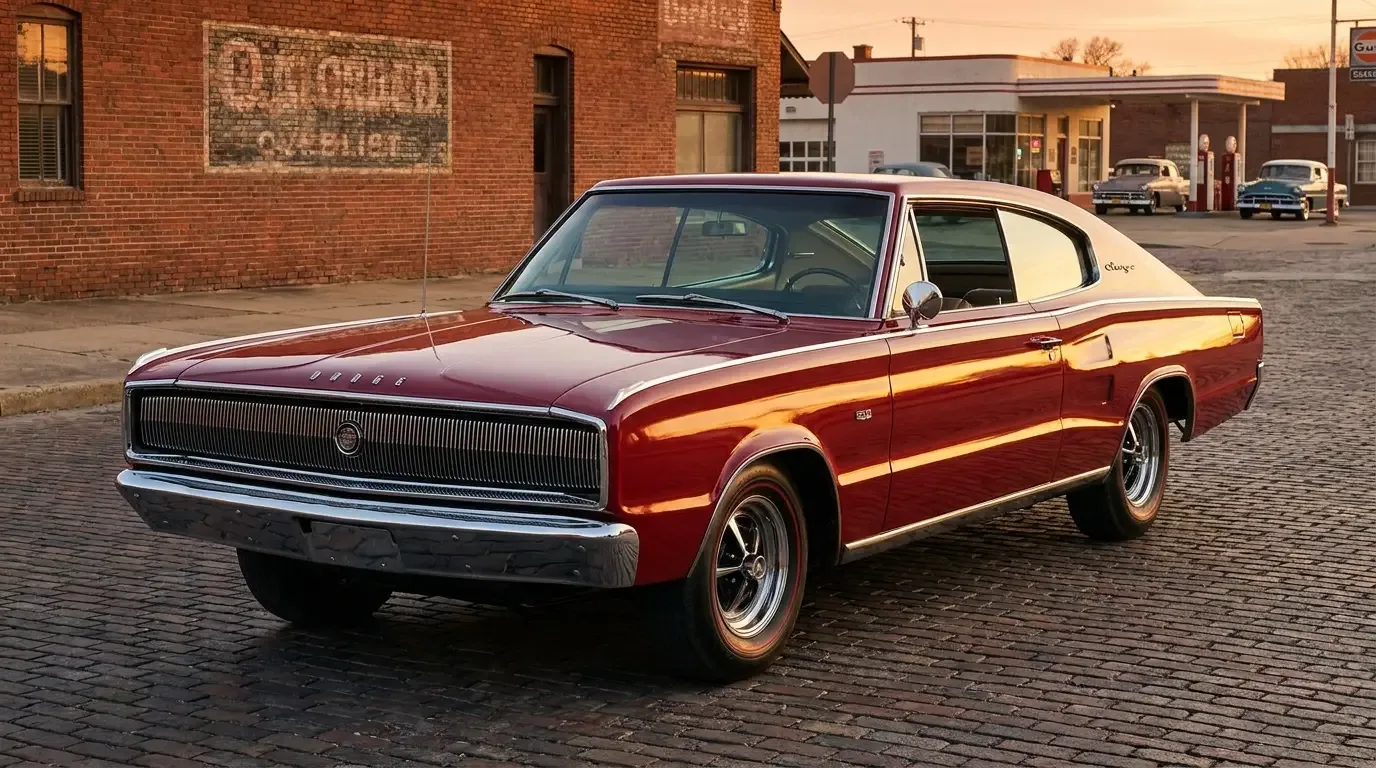
The first Charger was built on the Coronet, which was Dodge's mid-size B-body platform. That's important. This was never a compact pony car like the Mustang. It was a big, wide, two-door with real room in it. Dodge took the Coronet, gave it a fastback roofline, hid the headlights behind flip-up doors in the grille, and ran a single full-width taillight across the back.
Inside, they went a little wild. Four bucket seats, a center console that ran front to rear, and a dash that glowed. The instrument panel used electroluminescent lighting, which was genuinely unusual for a Detroit car in 1966. The rear seats folded down flat so you could slide long cargo through from the trunk. It was a clever package.
Engine-wise, the base car came with a 318 V8, and you could work your way up through a 361 and a 383, with the big 440 big-block joining the range for 1967. But the headline was the 426 Hemi, offered from the start. Rated at 425 hp gross, it turned a fairly heavy fastback into something that would embarrass a lot of lighter cars. Hemi cars from 1966 are rare and expensive today, and most of the ones I get asked to look at turn out to be 383 cars with a story attached.
Sales the first year were decent, somewhere around 37,000 units. Then 1967 came, the styling was nearly identical, and the market moved on. Sales fell off a cliff, down to roughly 15,000. Dodge knew the shape wasn't landing. The fastback looked heavy and a little awkward, especially the back half. They went back to the drawing board, and what came out of it is the reason anybody remembers the Charger at all.
The 1968 redesign that made the legend
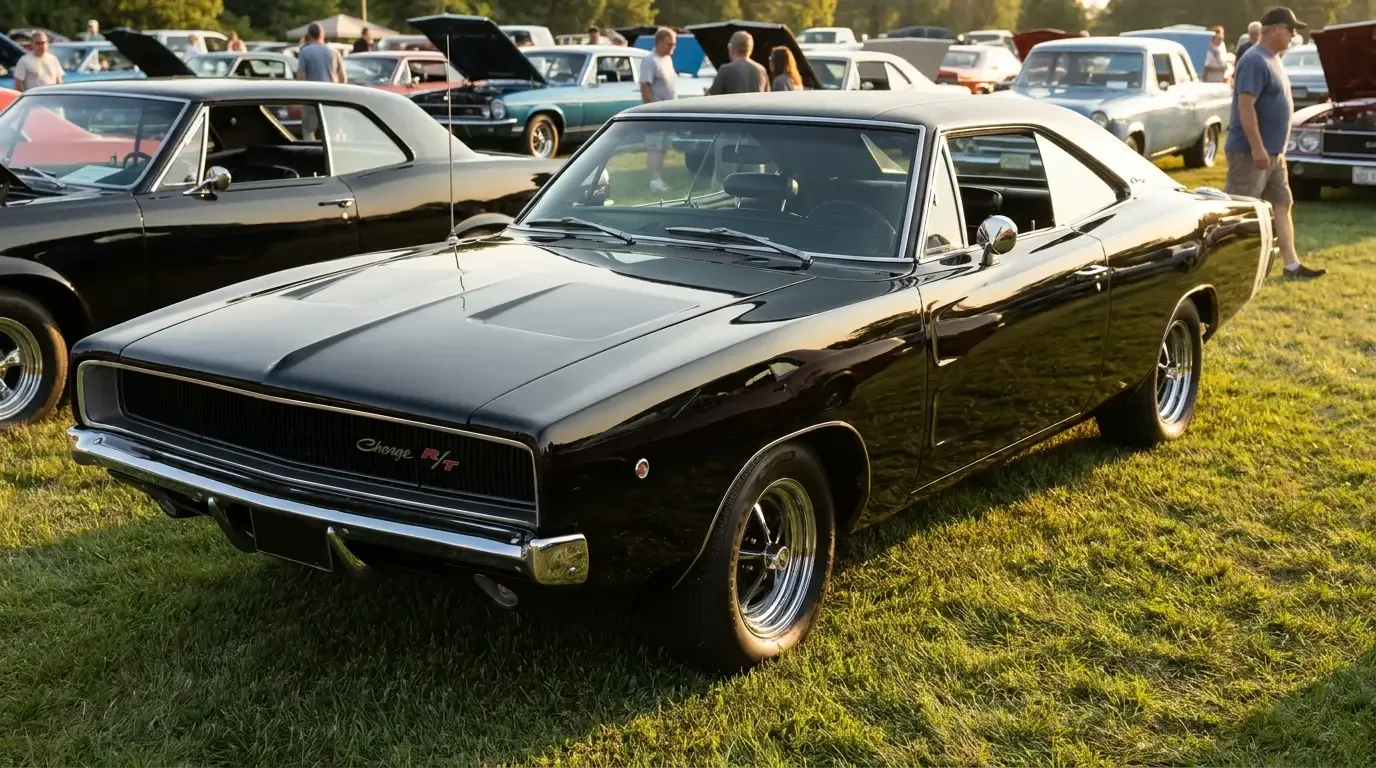
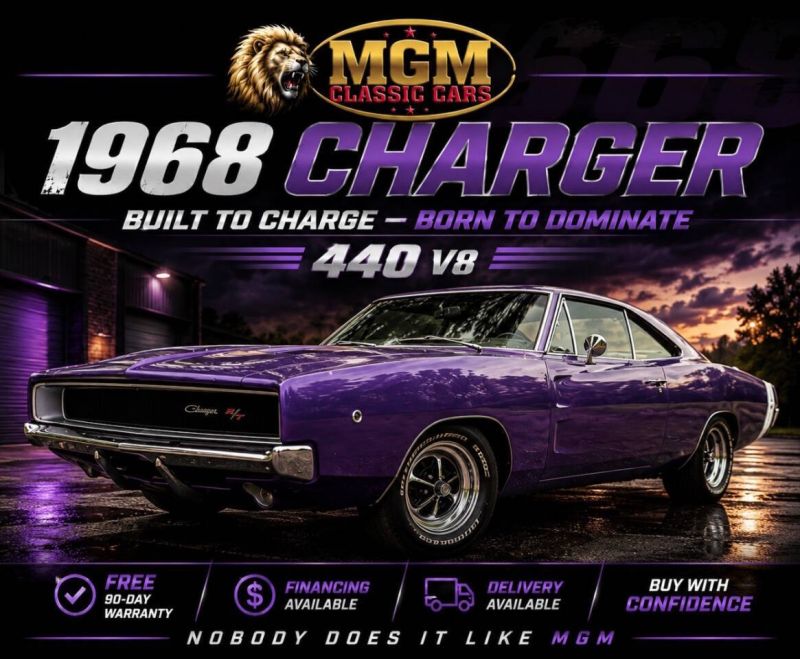
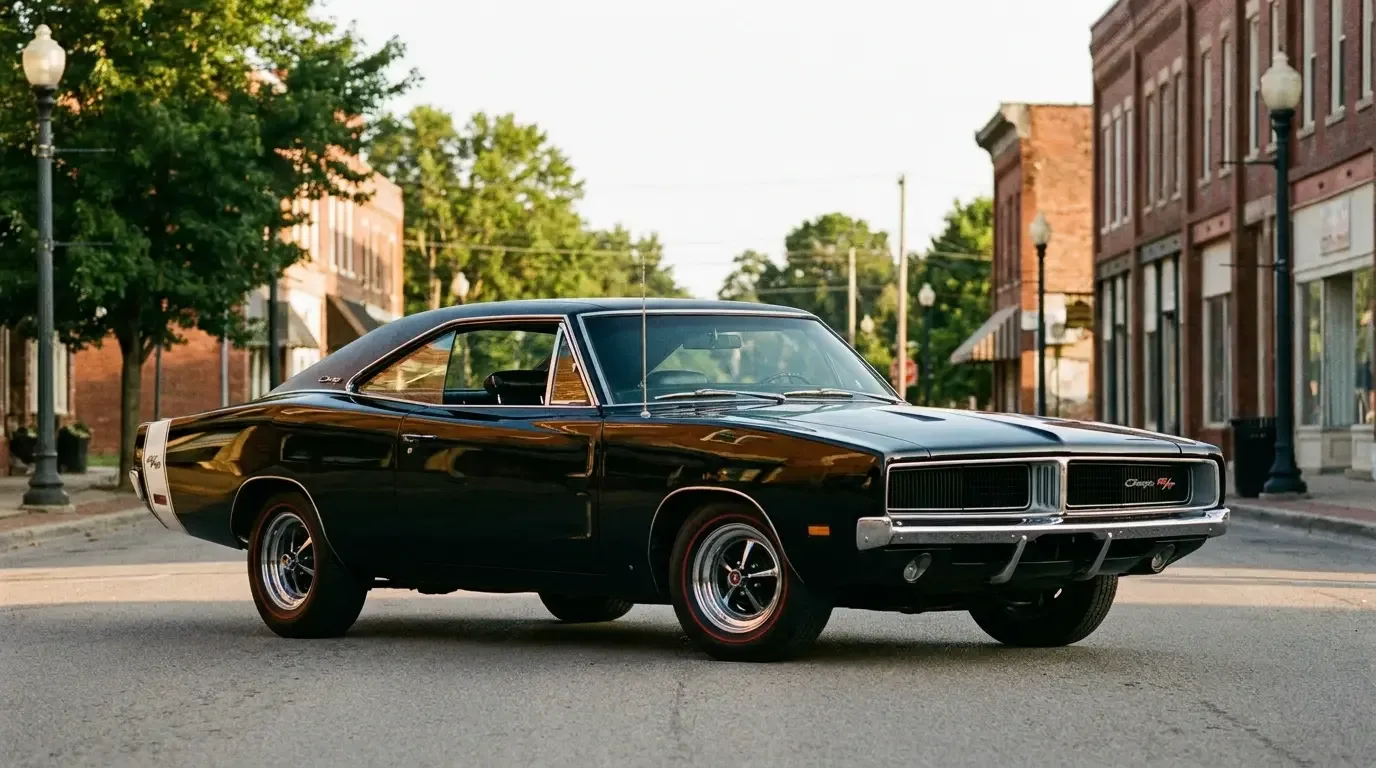
The 1968 Charger is the one people picture when they hear the name, and for good reason. Dodge threw out the fastback and gave it the "Coke bottle" shape, with the pinched waist, the flying-buttress rear roof pillars, and the tunneled back window. Richard Sias gets credit for the design. It's one of the cleanest muscle car shapes Detroit ever built, and it barely changed for three years because it didn't need to.
Buyers agreed. Sales exploded to around 96,000 for 1968, roughly six times the previous year. The car also got a movie career almost immediately, showing up as the black villain car in the Bullitt chase, getting thrown around the hills of San Francisco. That kind of exposure doesn't hurt.
This is the generation that gave us the trim levels collectors chase now. The base Charger, the R/T, and a couple of specials that came later. If you're trying to understand where the Charger fits against its rivals from Ford and Chevy, this is the era that put it in the conversation, right in the middle of the Big Three muscle feud that defined the whole period.
The R/T and what came standard
R/T stood for Road and Track, and it was the performance package. It came standard with the 440 Magnum, a big-block making 375 hp, and the 426 Hemi was the option box you checked if you had the money and the nerve. Hemi cars were expensive when new and needed maintenance most owners weren't ready for. That's still true. A real Hemi R/T is a six-figure car now, and the fakes outnumber the real ones by a wide margin.
The R/T also brought heavier-duty suspension, better brakes, and the bumblebee stripe around the tail that everybody recognizes. If you're shopping, the difference between a base 318 car dressed up to look like an R/T and a genuine R/T is thousands of dollars. Get the fender tag and the build sheet decoded before you believe anybody.
The Daytona, the 500, and the NASCAR years
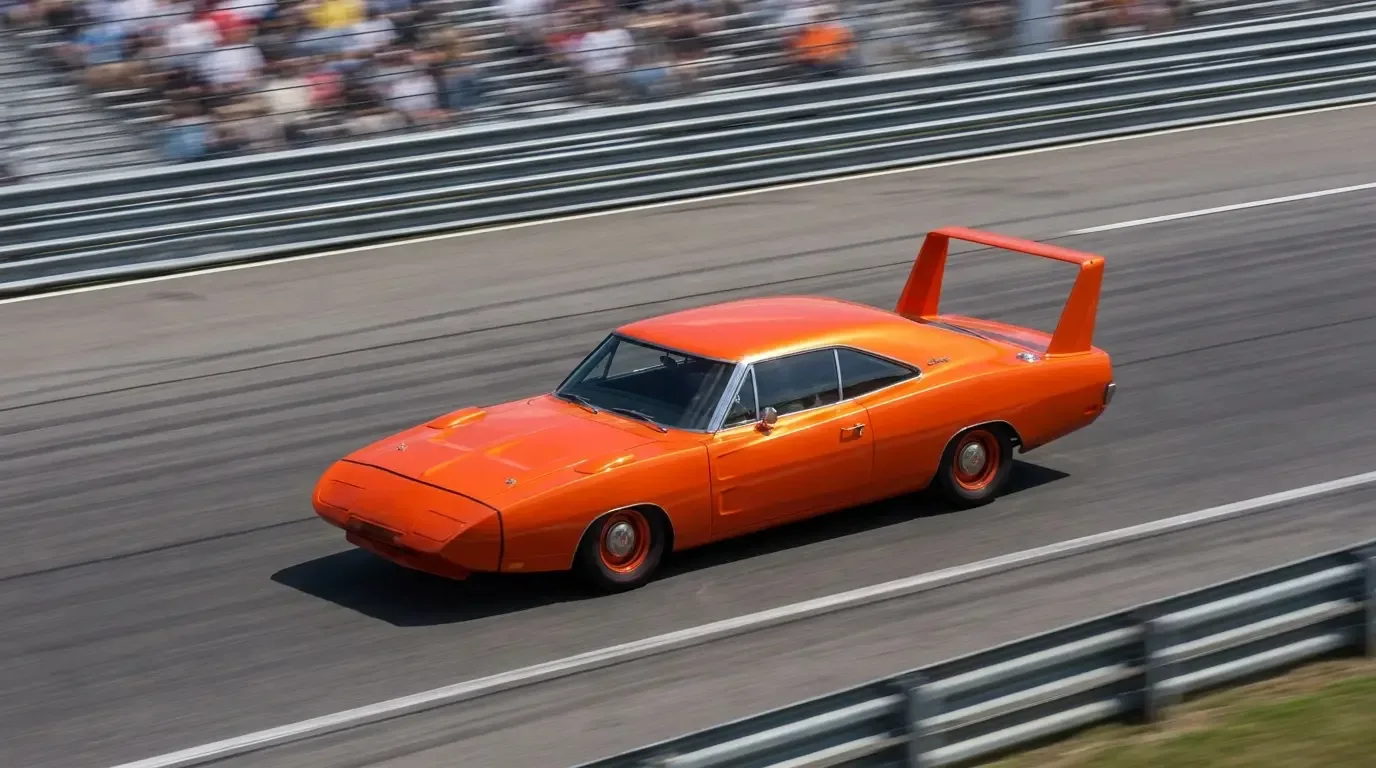
Here's where the Charger gets its wildest chapter. Dodge was racing in NASCAR, and the standard 1968 body, for all its good looks, was aerodynamically a mess at 190 mph. The recessed grille and tunneled rear window created drag and lift. So Dodge built special versions to fix it, and the rules said they had to sell street versions to qualify.
First came the 1969 Charger 500. They took the recessed grille and made it flush with a Coronet grille, and they filled in the tunneled backlight so the rear glass sat flush with the roofline. Only about 392 were actually built. The 500 in the name comes from the homologation quota Dodge was chasing, not the final count.
When the 500 wasn't enough, they went further and built the Charger Daytona. That's the winged one. A pointed sheet-metal nose cone stretched the front, and a tall rear wing stood up on struts high enough to clear the trunk lid. It looked absurd in a dealership. On a superspeedway it was the first NASCAR car to officially break 200 mph, when Buddy Baker ran 200.447 mph at Talladega in March 1970. Dodge built about 500 street Daytonas to make it legal, and today they are among the most valuable American muscle cars in existence.
"People see the wing and think it was a marketing gimmick. It wasn't. That nose and that wing were engineering answers to a specific problem at 200 miles an hour, and the fact that you could buy one and drive it to work was almost an accident. I've never worked on one. Most mechanics never will."
— Mike Sullivan
One more thing from this era that outgrew the cars themselves. The 1969 Charger became the General Lee in The Dukes of Hazzard a decade later, and the show wrecked hundreds of them jumping creeks and ravines. That destroyed a lot of good cores and helped drive up the value of the survivors. Every orange Charger at a show gets the same jokes, and the owners are usually tired of them.
Engines from the 318 to the 426 Hemi
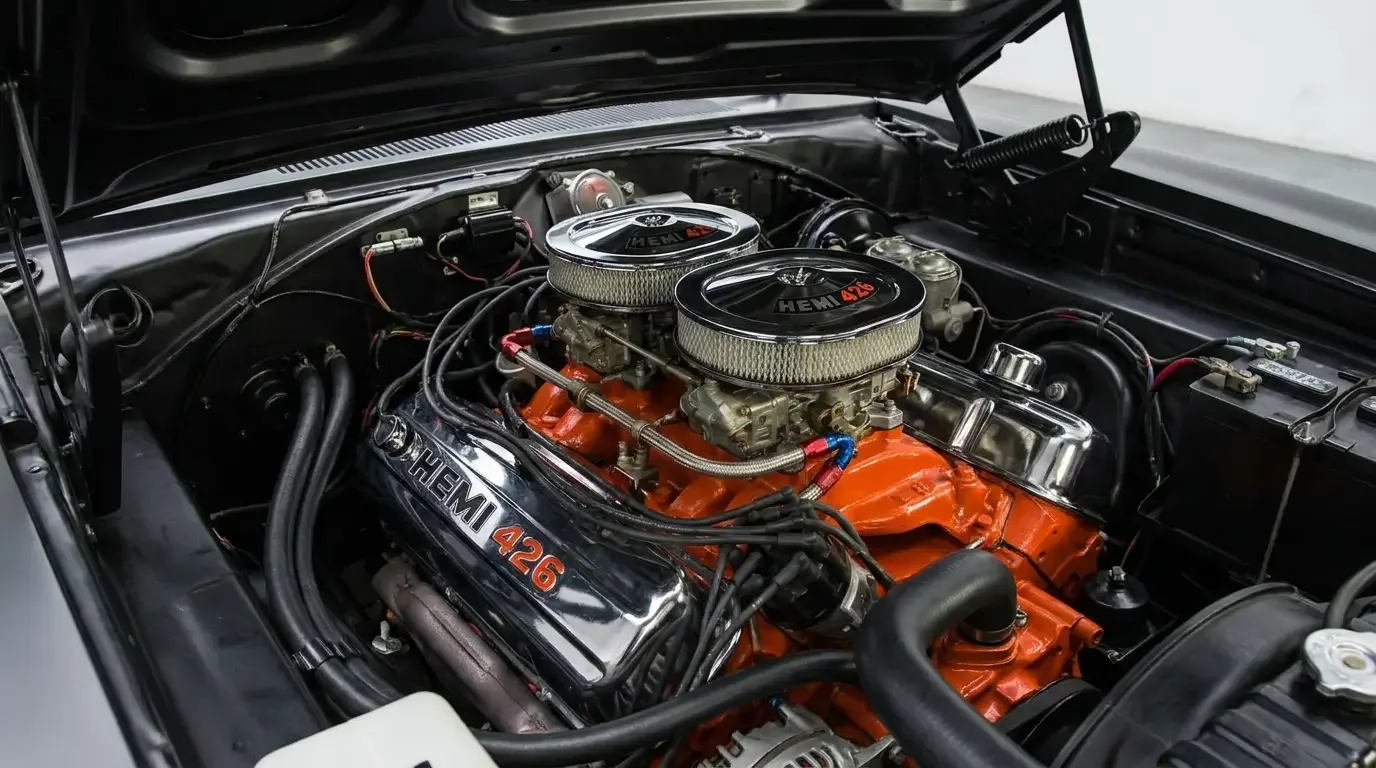
The engine lineup is where buyers get lost, so let me lay it out plainly. Across the classic years you had small-blocks and big-blocks, and the numbers on the air cleaner don't always match what's in the block. I pull valve covers and check casting numbers because too many of these cars have been re-engined over fifty years.
- 318 small-block. The base V8 through most of the run. Around 230 hp in the muscle years. Tough, cheap to fix, not fast. Nothing wrong with it if you know that's what you bought.
- 383 big-block. The everyman big-block. In the R/T-adjacent tune it made around 330 hp. This is the sweet spot for a driver, plenty of torque and parts are everywhere.
- 440 Magnum. The standard R/T engine, roughly 375 hp. Big torque down low, the engine most people should actually want.
- 440 Six Pack. Three two-barrel carburetors on top of the 440, about 390 hp. More top-end, more to tune, more to go wrong if a previous owner didn't understand it.
- 426 Hemi. The legend. 425 hp gross, hemispherical combustion chambers, and a maintenance schedule that punished neglect. Dual quads, solid lifters that needed adjusting. Wonderful and demanding.
One caution on horsepower figures. Everything through 1971 was rated gross, measured without accessories or a full exhaust. Starting in 1972 the industry switched to net ratings, which are lower and more honest. A 1971 number and a 1972 number for what looks like the same engine are not measuring the same thing. Don't compare them straight across.
The 1971 to 1974 restyle
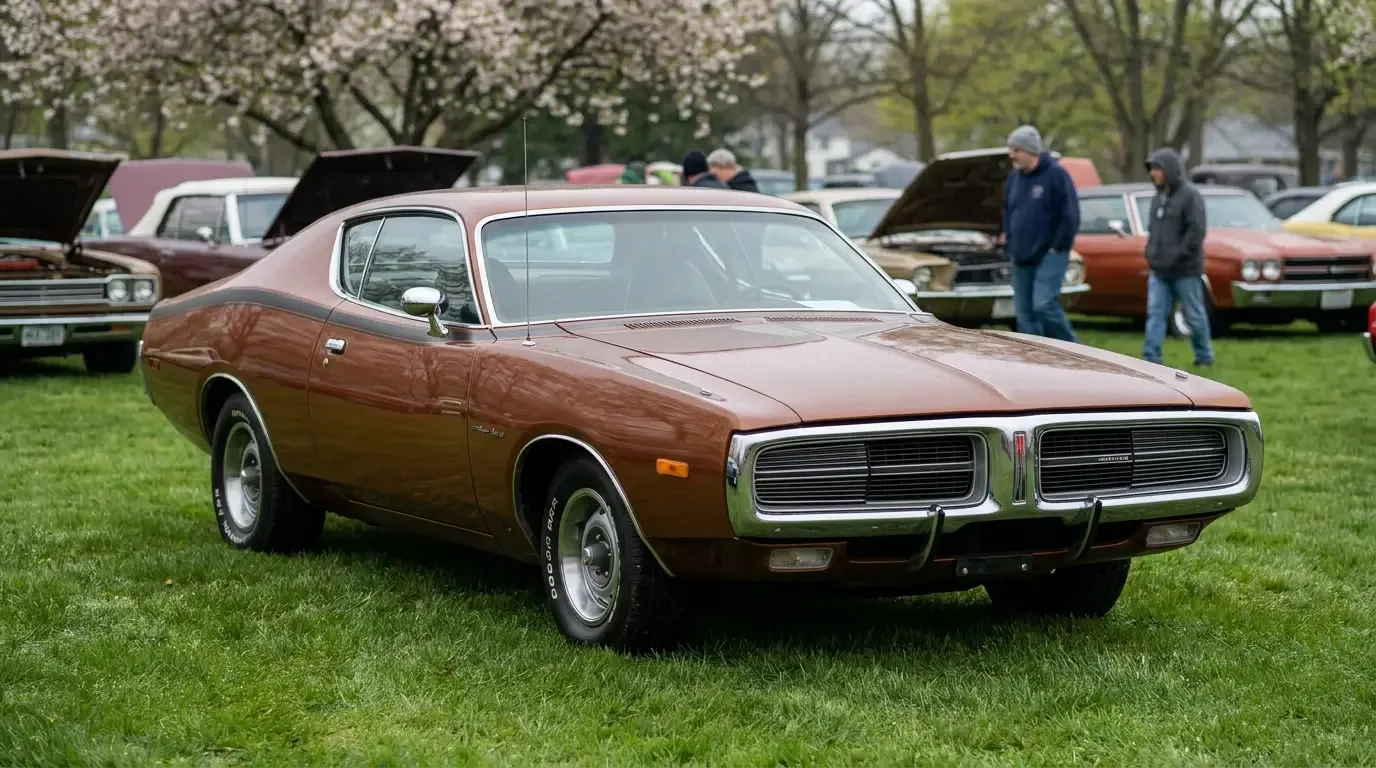
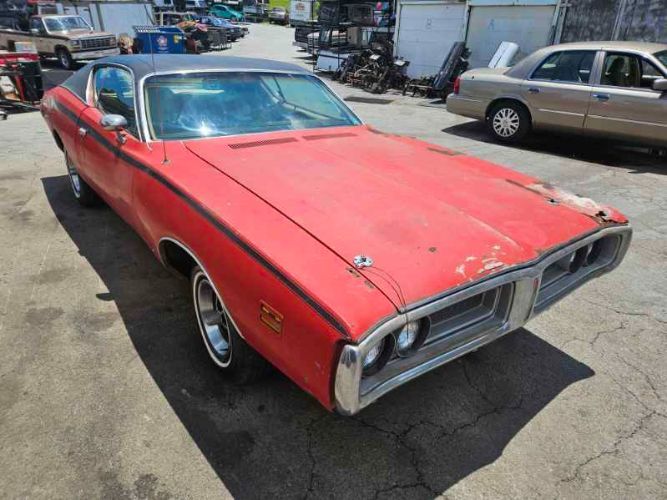
For 1971 the Charger got a new body again. Still a B-body, still a two-door, but rounder, with a split grille and a semi-fastback roof. This generation offered a lot of trim levels, from the plain coupe up to the Charger SE, which leaned toward comfort. The R/T survived for 1971 and then disappeared. That was the last year for the serious performance badge.
The timing was brutal. Insurance companies had figured out muscle cars and were pricing young owners out of them. Emissions rules tightened and compression ratios dropped to run on lower-octane, unleaded-ready fuel. The engines that survived into 1972 and later made less power, and the buyers who wanted raw speed were already leaving. A 1973 Charger is a good-looking, comfortable car. It is not the fire-breather a 1969 is, and anybody selling you one as if it were is either confused or hoping you are.
These middle-70s cars are, honestly, the value play in the whole Charger family right now. They drive well, parts support is reasonable, and they cost a fraction of what a 1968 to 1970 car brings. If you want the look and the cruise without a second mortgage, this is where I point people who ask.
The personal-luxury years, 1975 to 1978
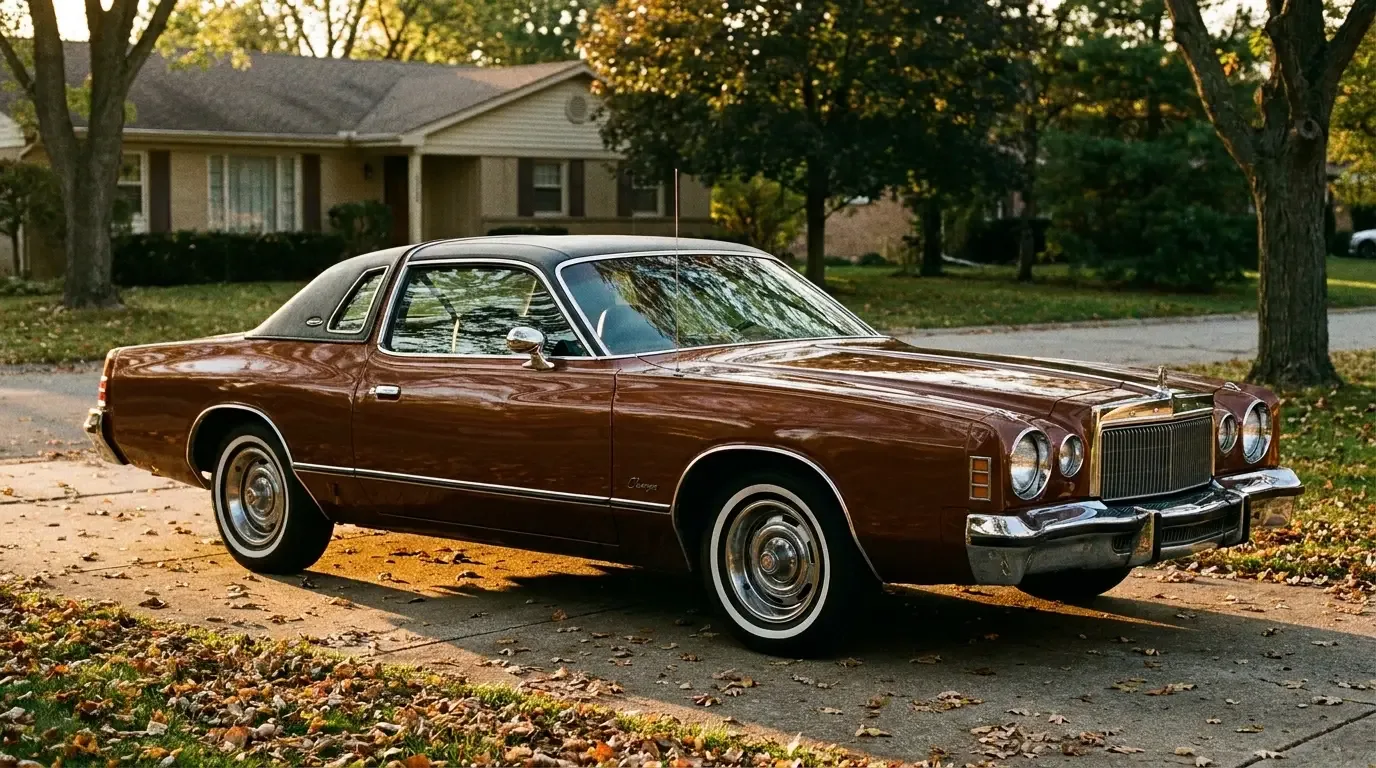
The last classic Charger is barely a muscle car at all, and buyers need to hear that before they get excited. For 1975 Dodge moved the Charger onto the same platform as the Chrysler Cordoba, and it became a personal-luxury coupe. Soft ride, plush interior, opera windows, vinyl roofs. The Charger SE of this era was competing with the Monte Carlo and the Grand Prix, not with Camaros.
The engines matched the mission. A 318 or a 360 in most cars, with the bigger 400 available, all breathing through early emissions equipment and making modest net horsepower. These are cruisers. Nothing wrong with that, but the word "Charger" on the fender writes checks the 1977 car can't cash at a stoplight.
1978 was the end of the line for the classic Charger. After that the name went away for a while, and when it came back later it was on cars that have nothing to do with what we're talking about here. For our purposes, the classic Charger story runs from that mid-year 1966 fastback to the 1978 luxury coupe, and then it's done.
"I get calls from people who bought a 1976 Charger expecting a rocket because they grew up on the 1969 cars. It's not the same animal. Buy the late one because you like how it rides and how it looks in the driveway, not because you think you're getting a muscle car on a budget. You're not, and that's fine as long as you know it going in."
— Mike Sullivan
Classic Charger specs at a glance
Here's a rough map of the four classic generations. Treat the horsepower as the top available figure for that period, and remember the 1972-and-later numbers are net ratings, not gross.
| Generation | Years | Platform | Top engine | Top power |
|---|---|---|---|---|
| First | 1966-1967 | B-body (Coronet) | 426 Hemi | 425 hp gross |
| Second | 1968-1970 | B-body | 426 Hemi | 425 hp gross |
| Third | 1971-1974 | B-body | 440 (early) | ~370 hp gross, then net |
| Fourth | 1975-1978 | B-body (Cordoba) | 400 | ~190 hp net |
What to check before you buy one
Every classic Charger I inspect has the same handful of problems, and they're all rust and paperwork. These are steel unibody cars that spent decades outdoors, and the sheet metal is where the money hides. Here's the order I look in.
🔧 Inspection Priorities
- Trunk floor and rear frame rails. Water sits in the trunk and eats the floor and the rails underneath. A patched trunk floor is cheap. Rotted frame rails are structural and can run several thousand to fix right.
- Lower quarter panels and wheel arches. These rust from the inside out. Poke them. Fresh undercoating sprayed over filler is a classic cover-up and I find it constantly.
- Floor pans under the carpet. Pull the carpet if the seller lets you. Bubbling or soft spots mean the floor is gone, and a full pan is real labor.
- Hidden headlight mechanism (1966-1970). The vacuum-operated headlight doors stick, leak, and hang open. Parts exist but troubleshooting the vacuum system is fiddly and eats hours.
- Numbers matching and the fender tag. Decode the VIN and the fender tag against the engine casting numbers. On R/T and Hemi cars this is the difference between the real value and half of it.
- Frame connectors and torsion bars. Chrysler torsion-bar front suspension is durable but the adjusters seize. Check ride height side to side and look for sag.
What the classic Charger is worth in 2026
Values split hard by generation, and that surprises people. The 1968 to 1970 cars are the blue chips. A clean, documented 1969 R/T with the 440 sits comfortably in the strong five figures, a real Hemi car is six figures, and a genuine 1969 Daytona is one of the most valuable American cars you can own, with Hemi examples reaching the seven-figure range at the top auctions. The first-generation 1966 to 1967 cars trail behind the second generation despite being rarer, because the shape was never as loved.
Then the market falls off. The 1971 to 1974 cars are worth a fraction of the earlier ones, and the 1975 to 1978 luxury coupes are the cheapest way into the name by a wide margin. That spread is your opportunity or your trap, depending on what you actually want. If you want investment-grade metal, you pay up for a documented second-generation car. If you want to drive something with the Charger badge on a normal budget, the later cars are sitting right there and nobody's fighting you for them.
My last piece of advice is the same one I give on every muscle car. The cheapest classic Charger is almost always the most expensive one, because you pay the difference in rust repair and missing parts over the next three years. Buy the best example you can afford, get the documentation, and put a magnet in your pocket before you ever open your wallet.
Sources and notes
- Ate Up With Motor - 1966-1967 Charger - confirmed the 1966 engine lineup (318, 361, 383, 426 Hemi), production figures, and that the 440 was not offered until 1967.
- Classic Nation - Charger 500 - confirmed roughly 392 Charger 500s were actually built against the 500-unit homologation target.
- Wikipedia - Dodge Charger Daytona - confirmed 503 street Daytonas built and the aero-car homologation story.
- NASCAR Hall of Fame - The 200 MPH Dodge - confirmed Buddy Baker's 200.447 mph run at Talladega on March 24, 1970.
- Automobile Catalog - 1975 Charger SE 400 - confirmed the 400 V8 and ~190 hp net rating on the 1975-1978 Cordoba-platform Charger.
- Conceptcarz - 1966 Dodge Charger - confirmed the 426 Hemi's 425 hp gross rating and its rarity in the first-generation cars.