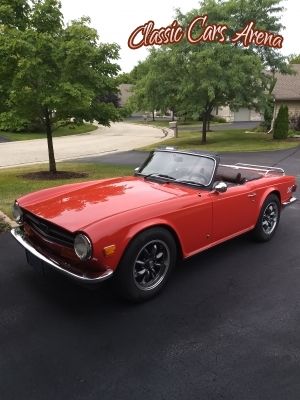
Triumph TR6 vs MGB — British Roadsters of the 1970s
<p>The Triumph TR6 and MGB are the two most accessible and best-supported British roadsters of the postwar era — cars that offer genuine open-air driving pleasure at prices that remain the best value in classic car collecting. The TR6 is the more powerful and torque-rich option; the MGB is the more forgiving, widely-supported, and historically significant. Choosing between them is partly a question of temperament.</p>
Specs side-by-side
| Spec | MG MGB | Triumph TR6 |
|---|---|---|
| Production years | 1962–1980 | 1969–1976 |
| Engine | 1,798cc inline-four, 95 hp (US) | 2,498cc inline-six, 104–150 hp |
| Rear suspension | Live axle with leaf springs | Independent semi-trailing arm |
| Curb weight | ~2,190 lbs | ~2,390 lbs |
| Driver-quality value (2026) | $12,000–$28,000 | $18,000–$35,000 |
The case for MG MGB
The MGB wins on parts availability, community size, and entry-level accessibility. The B-series engine is one of the most widely rebuilt four-cylinders in classic car history — virtually every component is available new, and every independent British specialist knows these engines in their sleep. The MGB was produced from 1962 to 1980 in far higher numbers than the TR6, which means clean examples are more findable and the price range is broader. The MGB GT (the fixed-head version) offers a practical combination of roadster character with improved weather protection. For a first British sports car, the MGB is hard to argue against.
The case for Triumph TR6
The TR6 wins on driver engagement. The 2.5-litre inline-six produces more torque than the MGB's B-series four-cylinder — and that additional pull transforms motorway driving and eliminates the need to rev the engine constantly in traffic. The independent rear suspension (the MGB uses a live axle) provides a more contemporary feel at the limit. European-spec TR6s with the Lucas PI fuel injection system are particularly quick — 150 hp in a car weighing under 2,400 lbs. The TR6 community, while smaller than the MGB world, is well-organized and technically focused.
Verdict
Buy the TR6 if you want more performance and a more involving driving experience — especially if you can find a European-spec PI car. Buy the MGB if you want the broadest support network, the lowest entry price, and a car where parts availability will never be a limiting factor. Both depreciate very slowly; both are excellent choices as affordable classics that reward regular driving over garage storage.
Recent MG MGB listings
 Dealer
 United States
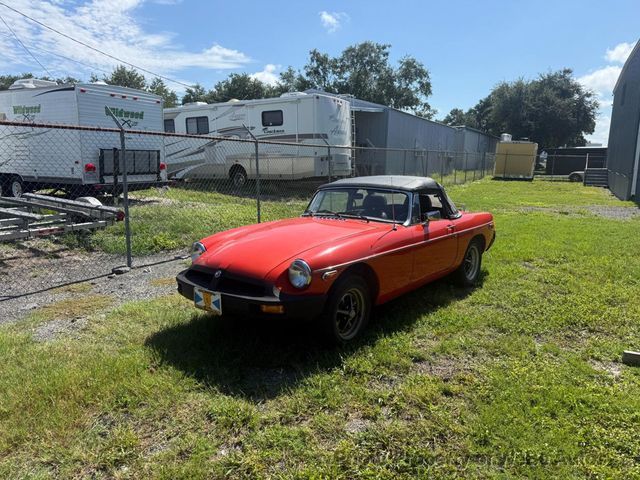
1979 MG MGB
 Dealer
United States
Dealer
United States
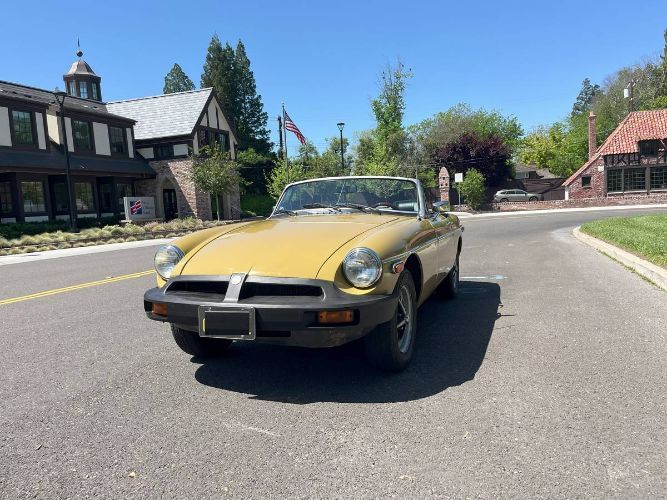
1975 MG MGB
 Dealer
United States
Dealer
United States
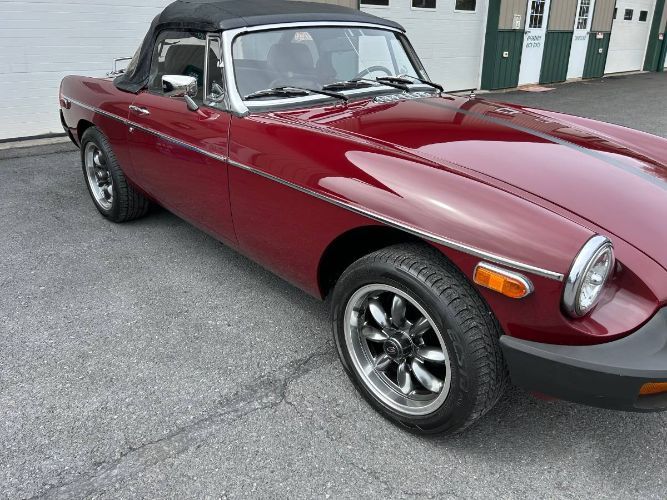
1977 MG MGB
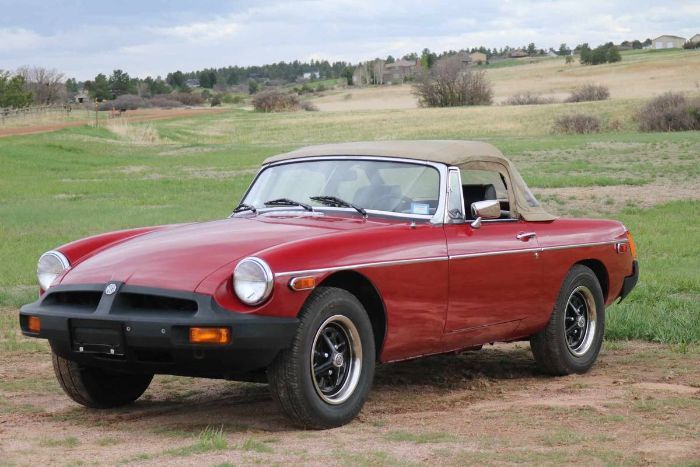 Dealer
United States
Dealer
United States