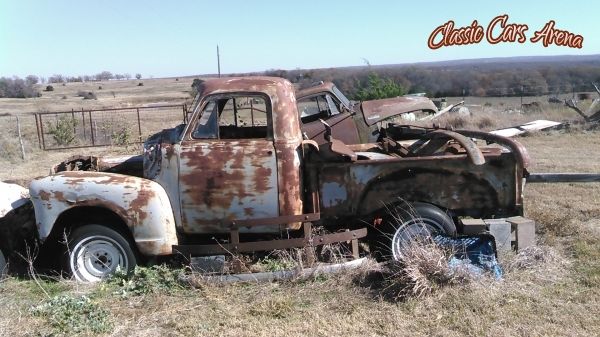
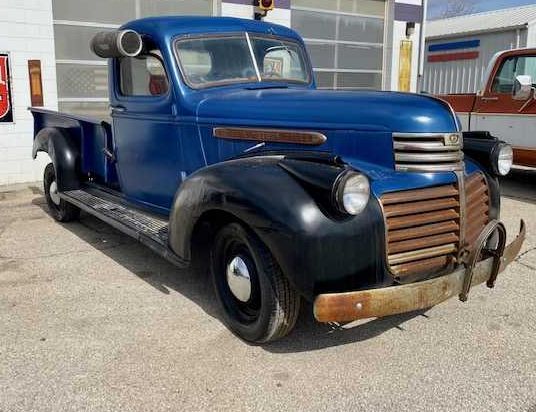
The classic GMC pickup market spans twenty-five years and three distinct platform generations across the post-war American truck era. The 1947-1955 Advance Design pickups established the modern post-war truck aesthetic. The 1955-1959 Blue Chip era brought V8 power and refined styling. The 1960-1972 Action Line era brought the modern chassis and bed designs that became the foundation of the legendary 1973 square-body. Across all three eras, GMC was positioned as the "professional grade" GM truck — heavier-duty engines, reinforced frames, and commercial-grade options that distinguished it from the higher-volume Chevrolet equivalent. The 1967-1972 Action Line short-bed Fleetside is the most actively collected GMC pickup era today. Don't buy somebody else's project — the frame and the cab are non-negotiable.
Common Issues
GMC pickup rust patterns vary by era. The 1947-1955 Advance Design cars rust at the lower body panels, running boards, fender attachment points, cab corners, and floor pans. Pre-1955 cars have wood inner body framing supporting the steel outer panels — water penetration causes wood rot in addition to steel rust. The 1955-1959 Blue Chip era cars share rust patterns with all-steel construction. The 1960-1972 Action Line cars rust at cab corners, rocker panels, floor pans, frame body mount points, and bed floor.
Mechanically, GMC inline-six engines (228, 248, 270, 305) are exceptionally durable when maintained — heavier-duty than Chevrolet equivalents with seven-bearing crankshafts and stronger blocks. Common issues include valve cover leaks, oil pan gasket leaks, worn timing gears, and tired carburetor settings. The 305C, 305E, 351C, and 305 V8 engines (1955-1972) are bulletproof. The Hydra-Matic, Powerglide, and Turbo Hydra-Matic 350/400 automatic transmissions are essentially indestructible.
The Advance Design and Blue Chip era trucks used the original Spicer 18 transfer case (4WD configurations) and Dana 25 front axle (4WD only). The Action Line era introduced the NP201 and NP203 transfer cases. Common 4WD issues include tired transfer case bushings and worn front axle u-joints.
Electrical issues are universal. Pre-1955 cars used 6-volt positive-ground systems requiring specific bulbs and components. Many cars have been converted to 12-volt negative-ground for modern reliability — verify the conversion was done properly. Original wiring on 1955-1972 cars is brittle 50+ years on.
For Advance Design and Blue Chip cars, the wood bed floor common on these eras requires periodic refinishing. Original-condition wood bed floors with proper finish add 5-10% value to documented original cars.
What to Look For
Frame inspection is the first non-negotiable on any classic GMC pickup. Crawl under with a flashlight. Probe the perimeter frame at body mount points, rear cross-member, and front horns. Solid steel resists; rotten metal flakes. Frame replacement on a classic GMC pickup is $8,000-$18,000.
The frame and the cab are non-negotiable. Cab corner rust is universal on driver-quality GMC pickups. Cab corners are reproduction parts available, but installation requires skilled bodywork.
For 1947-1955 Advance Design cars, probe the wood inner body framing at door pillars, windshield post, and rear body corners. Soft, spongy, or rotten wood requires specialist coachbuilding repair — $5,000-$15,000 typical.
Body style verification is essential. GMC pickups were offered in numerous configurations: half-ton (Model 100/1500), 3/4-ton (Model 150/2500), 1-ton (Model 250/3500). Half-ton pickups are most desirable for collector use. Long-bed (8-foot) and short-bed (6.5-foot) variants exist — short-beds command 25-50% premium for 1967-1972 Action Line cars.
For Action Line second-generation (1967-1972) cars, verify the body style: Fleetside (smooth bedside) is dramatically more desirable than Stepside (separate fender flares). Crew cab and chassis cab variants exist but are dramatically less collectible.
Engine identification is straightforward. GMC inline-six engines (228, 248, 270, 305) and V8 engines (305C, 305E, 351C, 305) all have specific casting numbers and stampings. Cross-reference against original specifications.
For 4WD configurations (less common on Action Line cars), verify front axle, transfer case, and rear axle are GMC-specific or appropriate aftermarket. Verify 4WD engagement on a test drive.
Document the truck. Photograph every panel, every frame rail, every body mount, every engine bay component, and every identifying tag.
Price Guide
1947-1955 Advance Design GMC pickups: driver-quality half-ton cars run $22,000-$42,000. The 1948-1953 cars are most desirable. Documented original-paint cars: $40,000-$70,000+. Restomod LS-swapped Advance Design pickups: $55,000-$120,000+.
1955-1959 Blue Chip era: driver-quality half-ton pickups run $22,000-$45,000. V8-equipped (1955+ 305C V8) cars command $5,000-$10,000 premium over inline-six equivalents. Documented original-paint cars: $42,000-$70,000.
1960-1966 Action Line first-generation: driver-quality cars run $18,000-$35,000. The 1960-1962 unibody-style cars are increasingly collected for their unusual short production run. The 1963-1966 conventional cab/bed cars are more practical for collector ownership.
1967-1972 Action Line second-generation: driver-quality short-bed Fleetside cars run $30,000-$55,000. Long-bed Fleetside cars: $22,000-$42,000. Stepside cars: $25,000-$48,000. Documented original-paint short-bed Fleetside cars: $50,000-$85,000+.
1971-1972 Sierra Grande short-bed Fleetside (high-trim variant): driver-quality cars run $35,000-$60,000. Documented original Sierra Grande cars: $55,000-$95,000.
3/4-ton and 1-ton pickups across all eras trade at modest discount versus equivalent half-ton cars due to working-truck association.
4WD pickups command 20-30% premium over equivalent 2WD cars across all eras due to off-road desirability.
Project GMC pickups start around $8,000-$18,000 across most generations. Stripped roller candidates: $3,500-$10,000. Restoration costs are higher than equivalent Chevrolet restoration due to GMC-specific parts (especially engines).
Did You Know?
GMC was originally founded in 1909 as the General Motors Truck Company, becoming a wholly-owned subsidiary of General Motors. From its founding through the modern era, GMC has been positioned as the upmarket truck-only complement to Chevrolet — sharing platforms but offering distinctive engines, badging, and trim. The "professional grade" marketing positioning was established in the 1950s and continues through modern GMC truck production.
The GMC inline-six engines of the 1947-1972 era were significantly heavier-duty than equivalent Chevrolet engines. While Chevrolet trucks of the same era used the 216/235/261 inline-six (with four-bearing crankshaft), GMC used the 228, 248, 270, and 305 inline-six engines (with seven-bearing crankshaft). The seven-bearing GMC engines were among the most durable inline-six engines ever produced for American trucks — commonly exceeding 300,000 miles in commercial service before requiring rebuild.
The 1948 GMC pickup featured one of the first uses of the modern "Fleetside" smooth-side bedside design. Most pickup beds of the 1940s used "Stepside" design with separate fender flares. GMC introduced the smooth-side bed as an option for the 1948 model year — the configuration was widely copied by Ford and Chrysler within a few years and became the dominant pickup bed style by the 1960s. The 1948 Fleetside is increasingly collected for its historical significance.

 Dealer
 United States
 Dealer
 Dealer