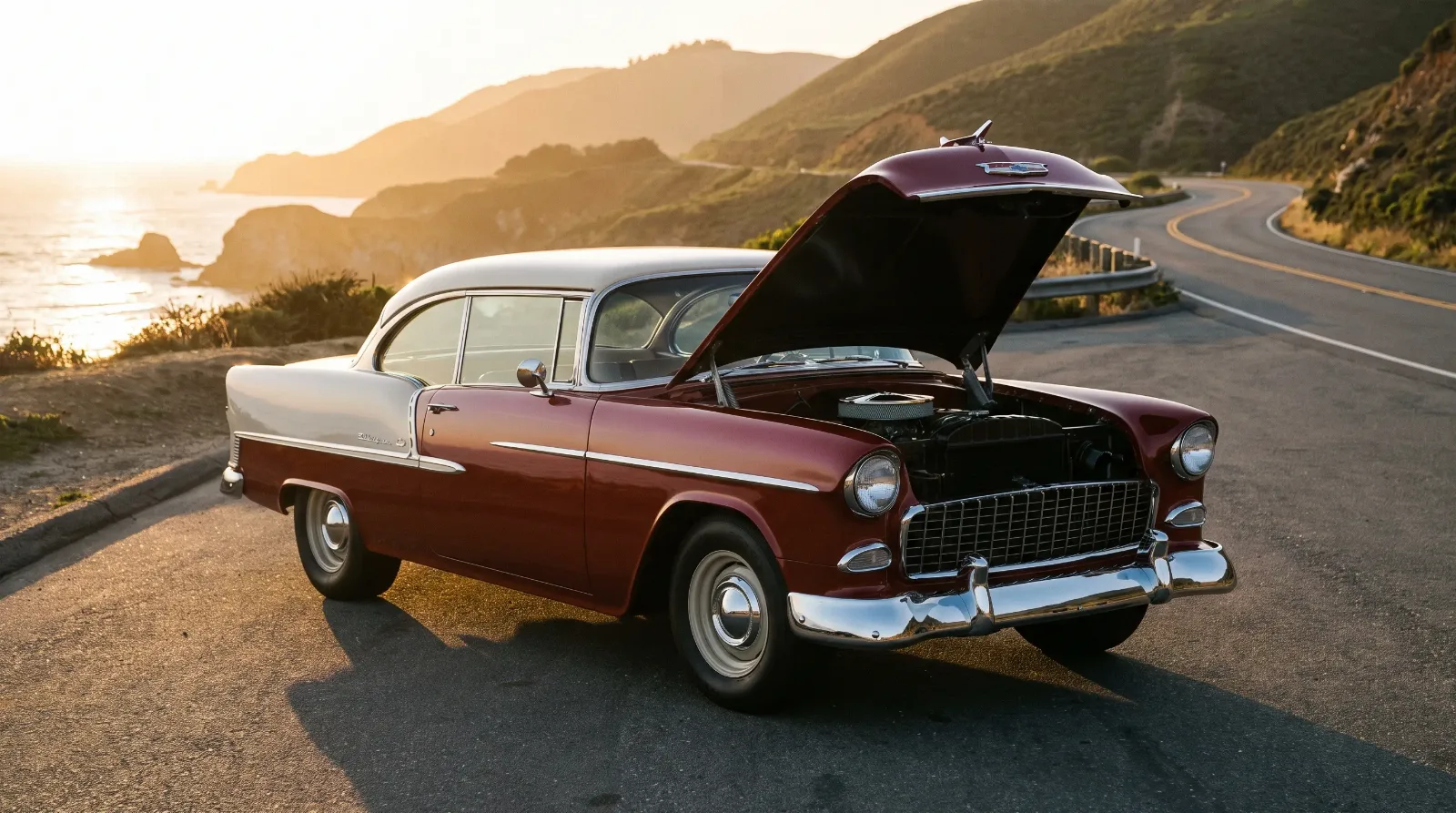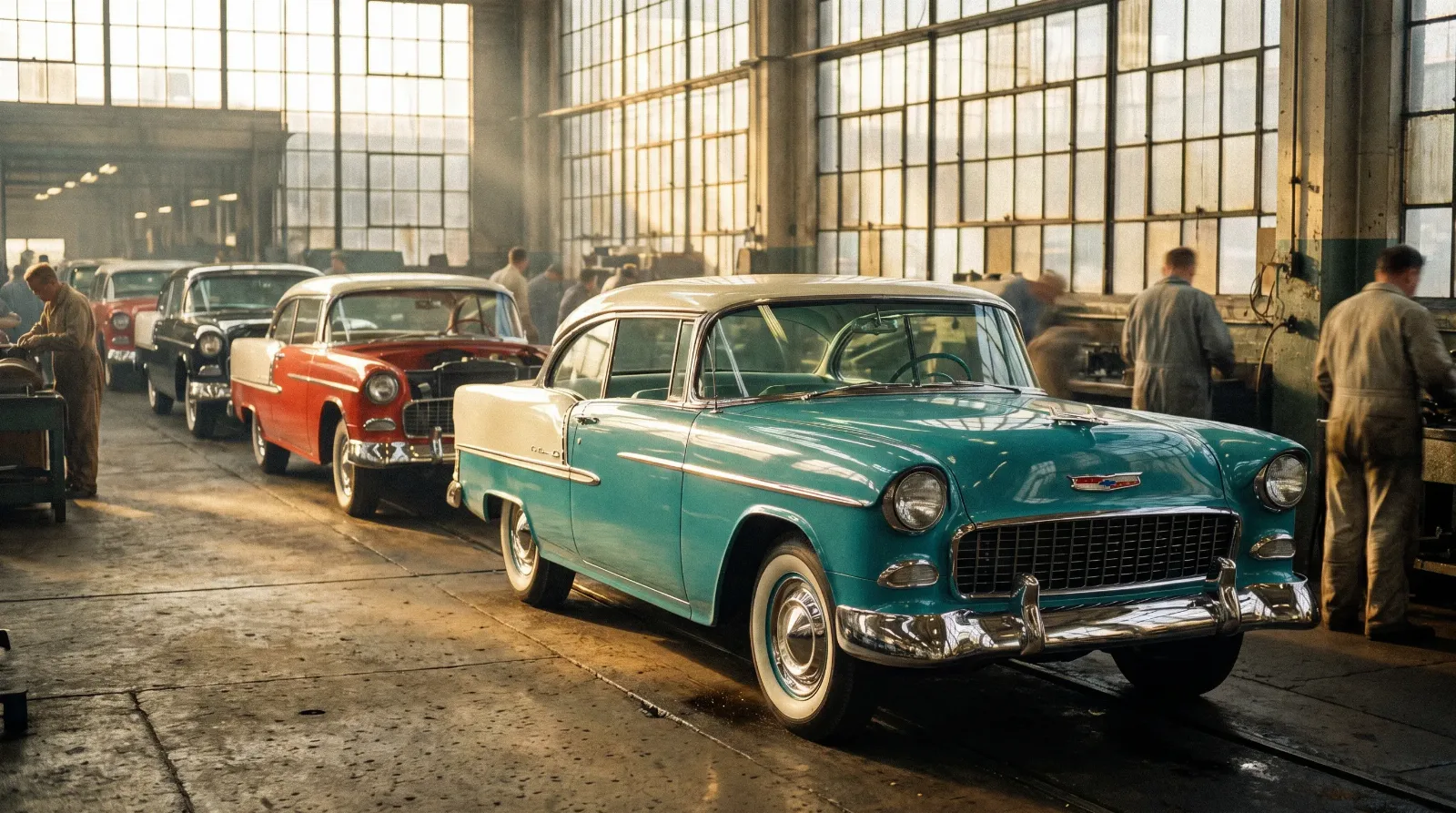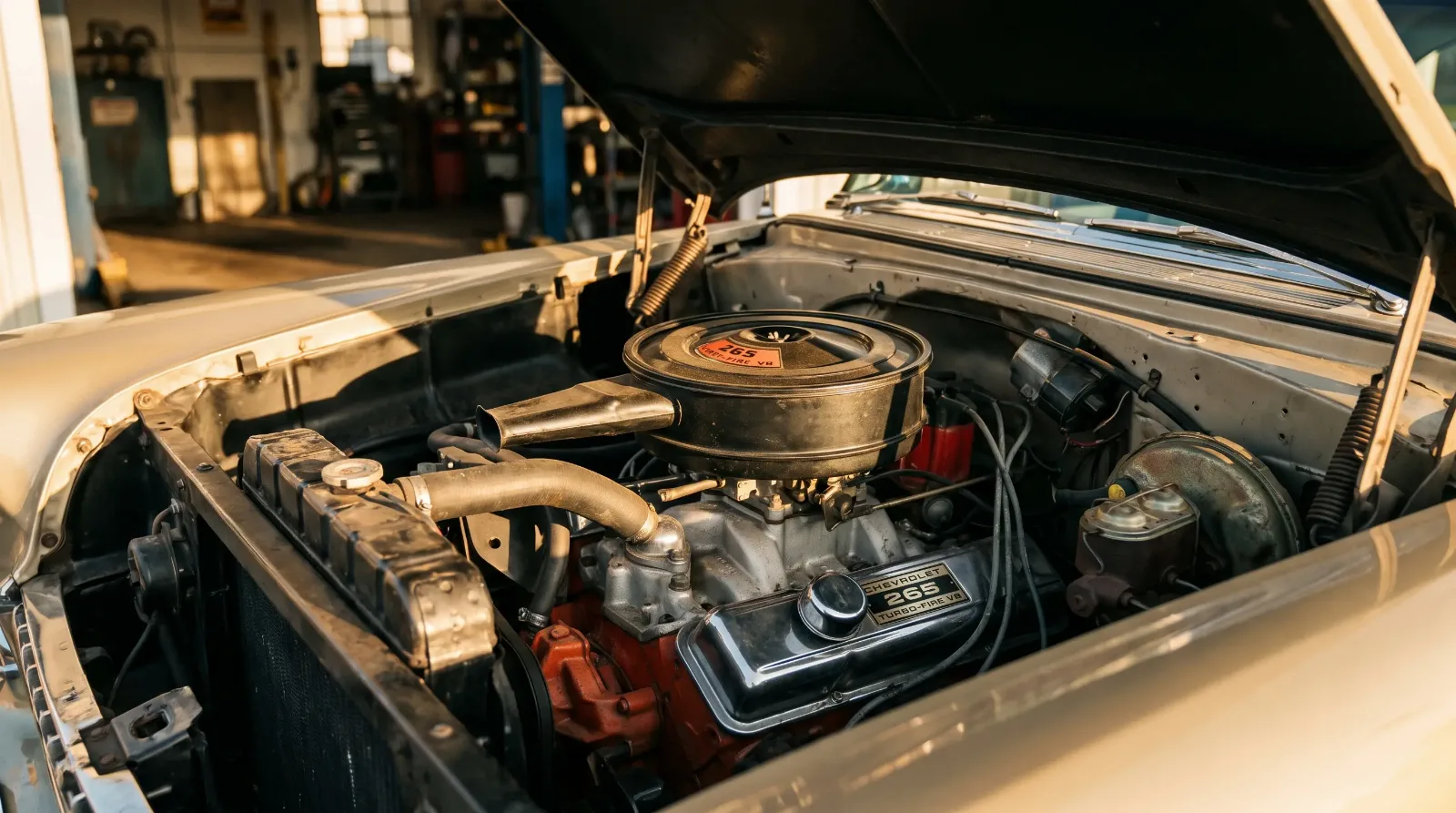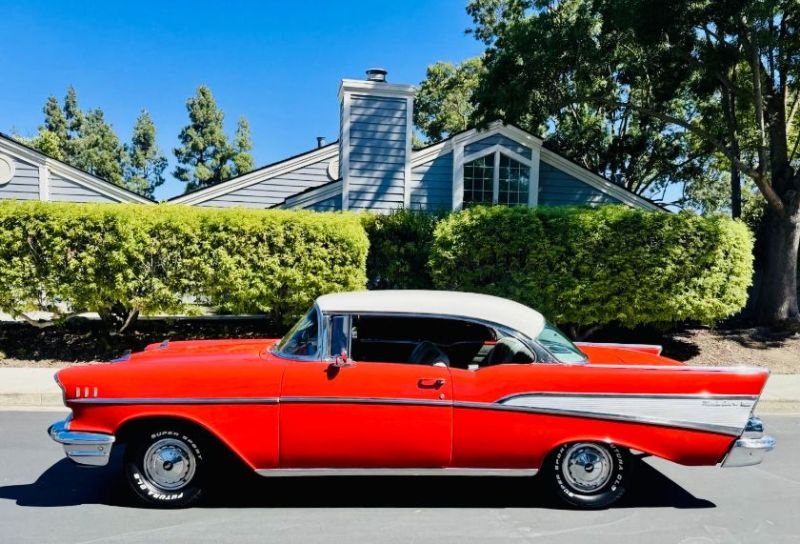
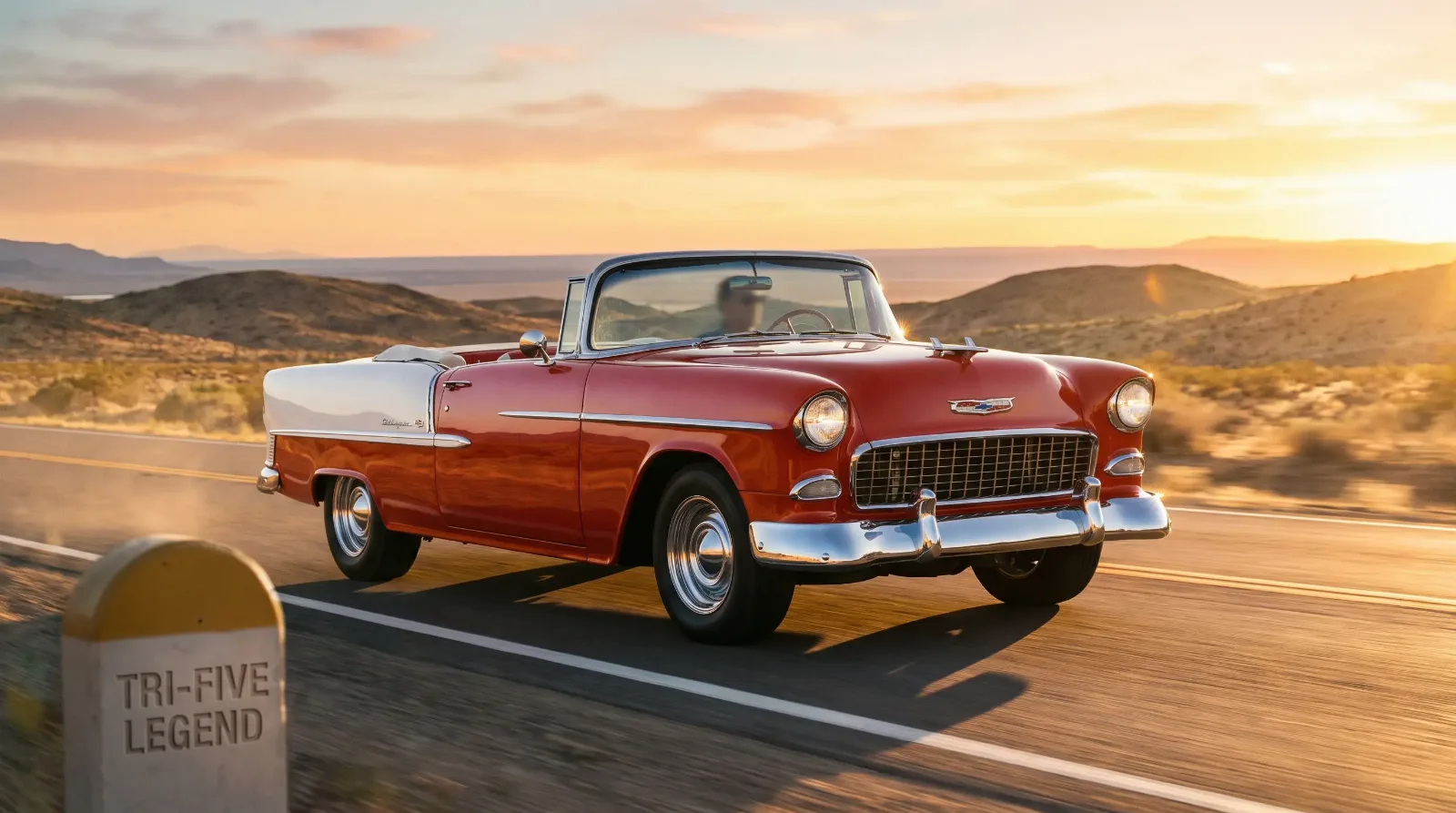
The term "Tri-Five" did not exist in 1955. Chevrolet did not use it, dealers did not use it, and the buyers driving these cars home from the showroom had no idea they were participating in the opening chapter of what collectors would eventually name after the fact. The 1955 tri five legend was built retroactively, stitched together from three consecutive model years, 1955 through 1957, once enthusiasts realized how tightly those three years belonged together as a single design and engineering story. Understanding why 1955 specifically earns credit as the starting point requires separating what actually happened that year from what got attached to it later by nostalgia.
What made 1955 a genuine break from what came before
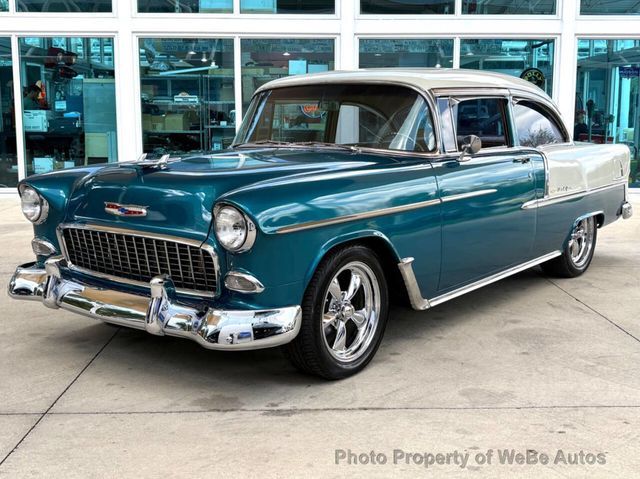
Chevrolet's 1955 lineup was not an evolution of the 1954 cars. It was a full redesign, built on a new chassis with a lower, wider body, and paired with an entirely new V8 engine option that had no direct predecessor in Chevrolet's postwar lineup. Compare that to the more incremental year-over-year changes typical of the early 1950s, and it becomes clear why 1955 reads as a genuine inflection point rather than just another annual refresh. The styling, credited largely to a design team working under GM's Harley Earl, moved Chevrolet's visual language forward by more in one year than the previous several years combined. That combination, all-new chassis, all-new engine, and all-new styling arriving simultaneously, is unusual, and it is the primary reason historians treat 1955 as the true starting line for the Tri-Five era rather than an arbitrary boundary.
Why 1956 and 1957 get folded into the same story
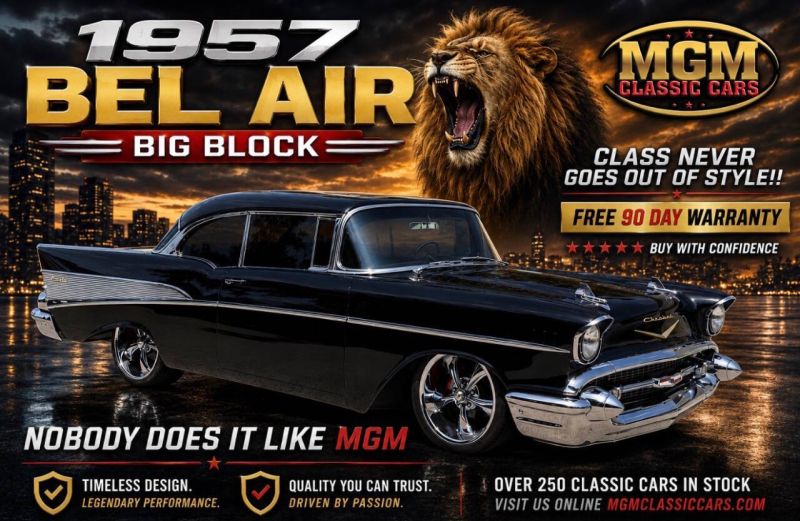
Chevrolet carried the 1955 platform forward through 1956, with modest facelift changes, and then again through 1957 with a more substantial restyle that added the tailfins and grille treatment most people now picture when they hear "Tri-Five" without a specific year attached. Because all three years share the same fundamental chassis architecture and small-block V8 lineage, collectors and historians treat them as a connected family rather than three isolated model years, even though each year has genuinely distinct styling and its own dedicated following. 1957 in particular tends to dominate popular imagination because of its fins and fuel injection option, but that later fame depends entirely on the foundation Chevrolet poured in 1955. Without the 1955 redesign, there is no chassis for 1956 or 1957 to build on.
| Model year | Role in the Tri-Five story |
|---|---|
| 1955 | All-new chassis, body, and V8; the foundation |
| 1956 | Facelift year, same underlying platform |
| 1957 | Major restyle, fins and fuel injection option |
How the term compares to other era nicknames
Retroactive nicknames are common across the collector car world, and Tri-Five is far from an isolated case. Mopar enthusiasts group certain B-body muscle cars under shared shorthand the same way, and Ford collectors have their own informal groupings for specific generations of Mustang or Galaxie. What makes the Tri-Five label unusually durable, compared to some of these other groupings, is how cleanly it maps onto an actual, verifiable engineering fact rather than a looser stylistic impression. The 1955 through 1957 Chevrolets genuinely do share one continuous chassis and one continuous small-block engine family, a technical throughline that gives the nickname real substance beyond marketing convenience. That distinction is part of why the term has held up so well across decades of use without needing revision or replacement, unlike some other era shorthand that has shifted meaning over time as collector consensus evolved.
Collector hierarchy within the legend
Within Tri-Five collecting, opinions differ on which year deserves top billing, and the debate itself says something about how thoroughly all three years get treated as one connected legend rather than separate cars. Some collectors favor 1955 specifically for its cleaner, simpler grille and its status as the genuine original. Others gravitate toward 1957 for its fins and higher-output fuel injected engine option. Both positions are defensible, and the fact that the argument persists at car shows and in club newsletters is itself evidence of how deeply the three years are linked in the collector imagination. None of that debate would exist if 1955 had not established the platform in the first place.
"Every Tri-Five argument eventually circles back to 1955, because that is where the actual engineering decisions got made. 1956 and 1957 are refinements of a car that already worked."
- Sarah Whitfield
How the legend spread beyond the original owners
The Tri-Five reputation did not build itself through original owners holding onto their cars for decades. It grew largely through a second and third generation of enthusiasts, many of them too young to have bought these cars new, who discovered them through club culture, drag strips, and later through organized car shows built specifically around the Tri-Five nameplate. By the 1970s and 1980s, dedicated Tri-Five clubs had formed in cities across the country, publishing newsletters, organizing regional shows, and slowly building the shared vocabulary and grading standards that still shape how these cars get judged and valued today. That community infrastructure did as much to preserve the 1955 legend as any individual car did, since it created a network of people actively hunting down, restoring, and documenting surviving examples at a point when many might otherwise have been scrapped or forgotten.
Hot rodding culture played its own role, since 1955 through 1957 Chevrolets became a favorite platform for builders looking for a light, strong body and a small-block engine bay that welcomed performance modification without a fight. That crossover between concours-style preservation on one side and active hot rod building on the other has given the Tri-Five legend an unusually broad base of support, spanning collectors who want factory-original cars and builders who want something closer to a period-correct custom, both drawing from the same well of 1955 through 1957 history.
Why the origin year still matters to buyers
For collectors specifically hunting the original rather than the refinement, a documented 1955 car carries a particular status within Tri-Five circles, distinct from the fame that later attaches to 1957.
Market data tends to bear this distinction out over time. While 1957 often draws the largest crowds and the highest headline sale prices for exceptional, fully optioned examples, a correctly documented 1955 in strong original or restored condition holds its own with serious collectors who value the car specifically for being the starting point rather than the refinement. Auction houses and club appraisers increasingly note this preference among a subset of buyers who understand the full three-year story and want the car where the actual engineering decisions were made, not just the most photographed version of the platform. That preference is unlikely to overtake 1957's broader popular appeal, but it has kept genuine, well-documented 1955 examples from being treated as merely the cheaper alternative to their more famous siblings. Readers wanting the complete picture of how the 1955 redesign came together, styling, engine, and market reception together, can find our complete history covering the model year in full. For those ready to look at what is actually available, it is worth taking time to browse classic Air listings and see how the year that started the whole legend holds up against its more famous younger siblings.