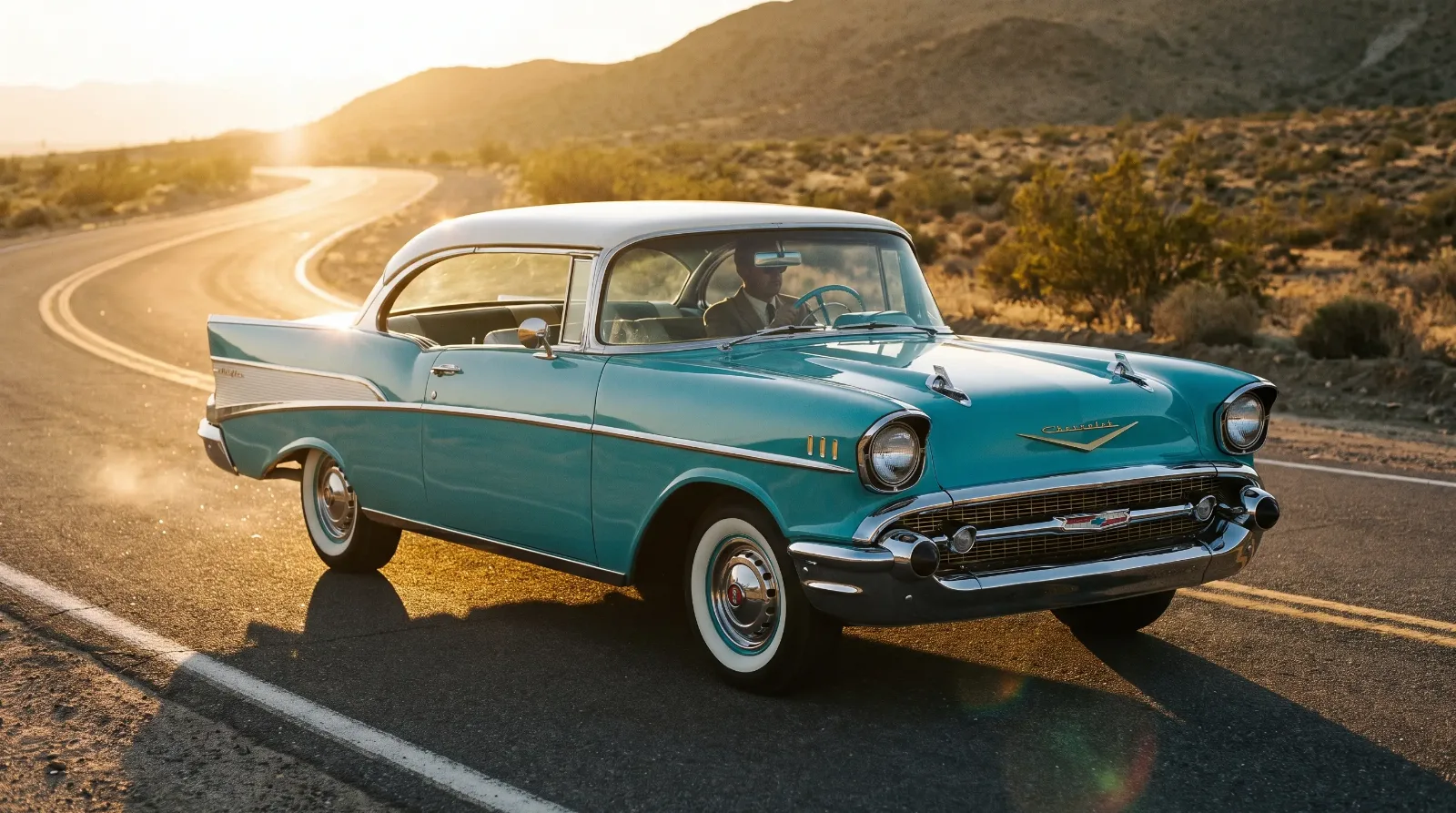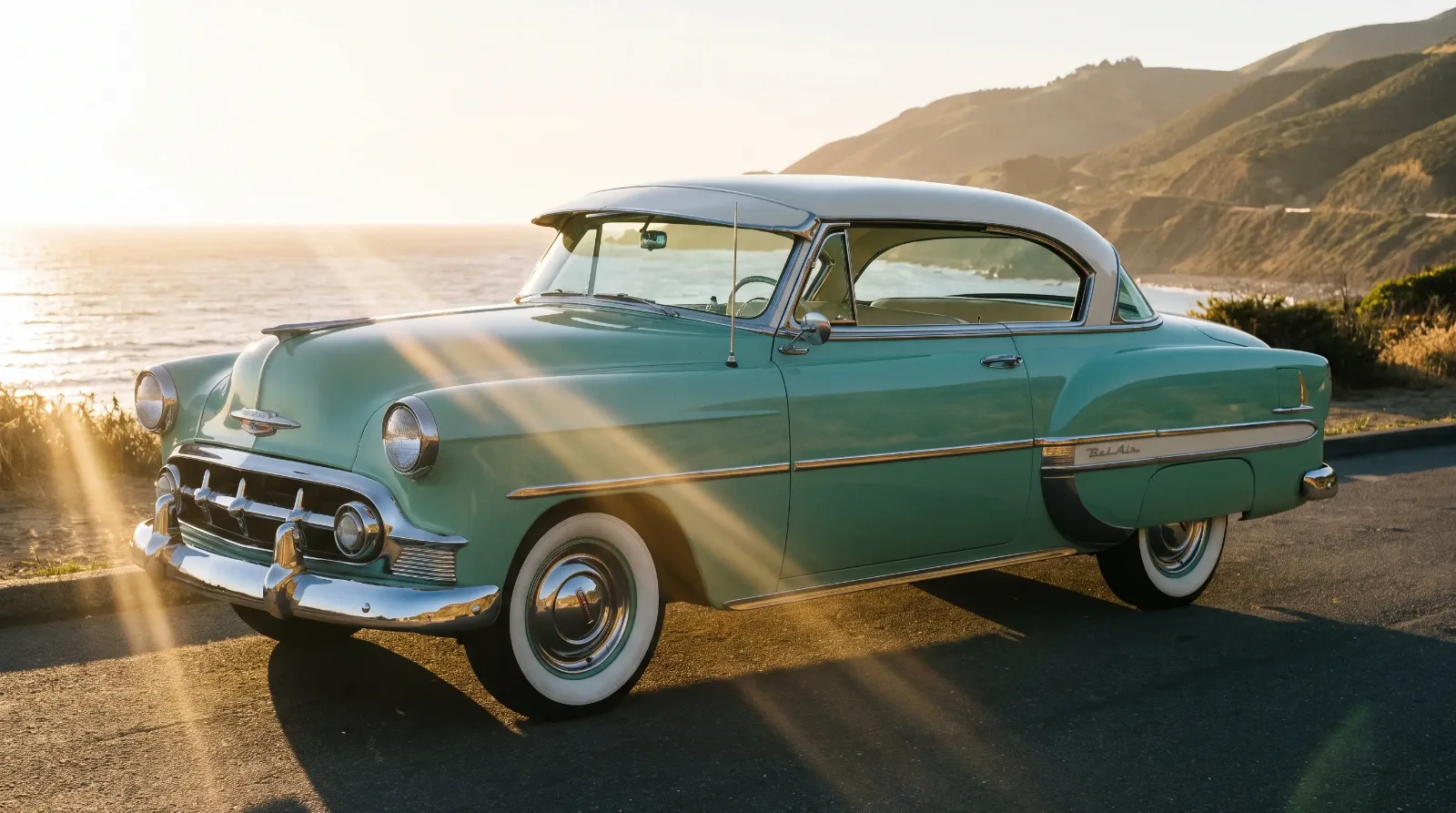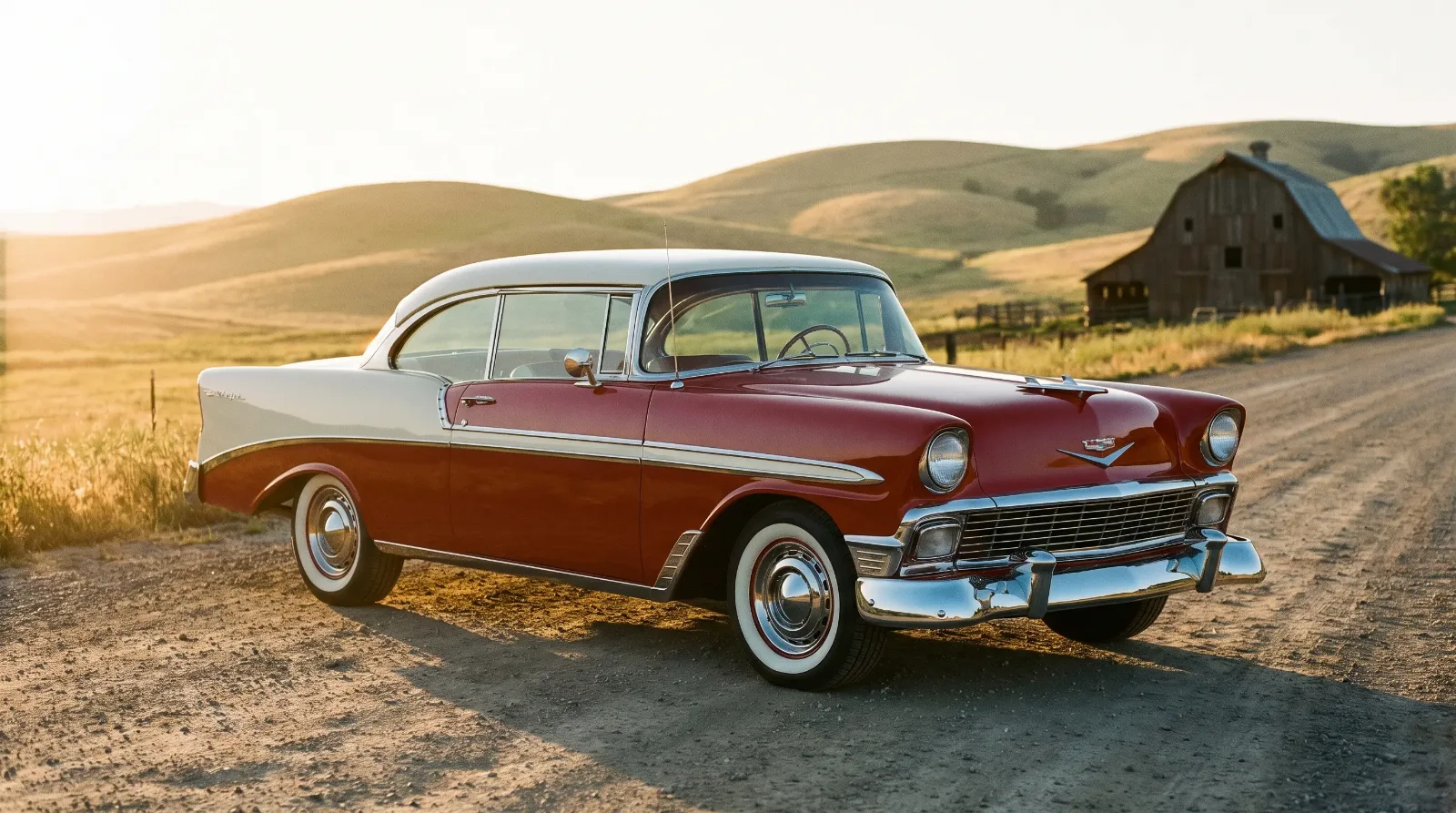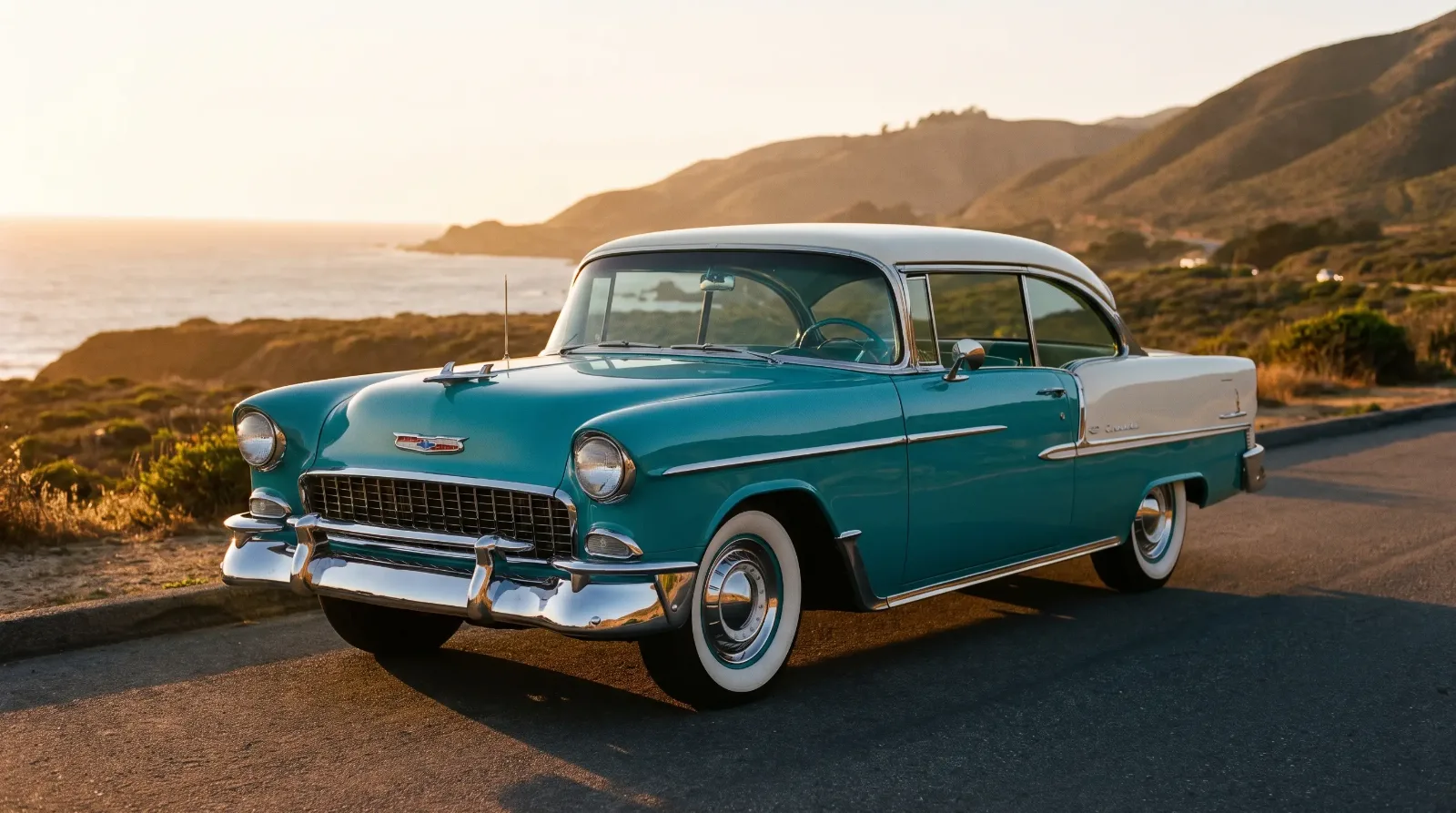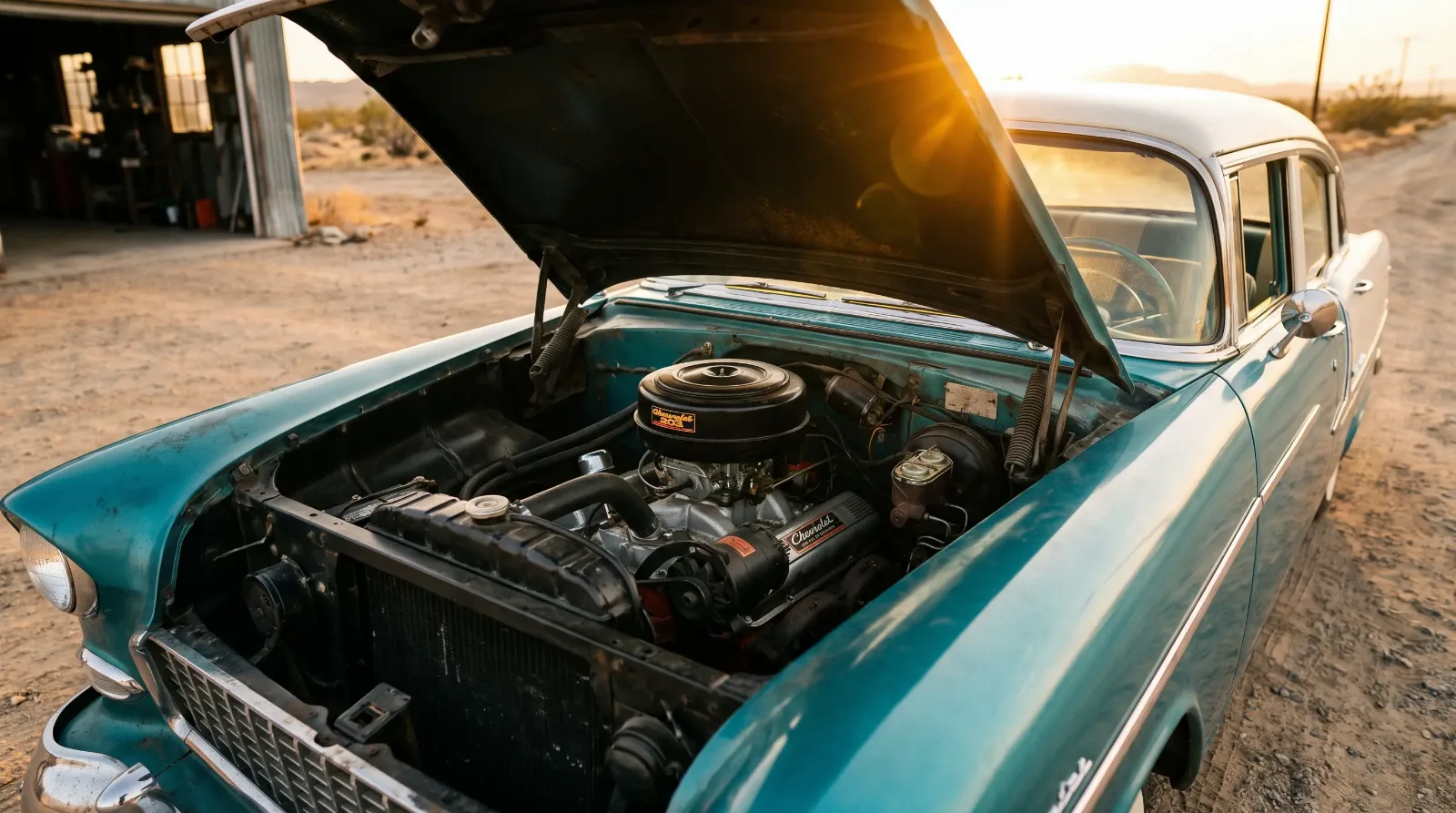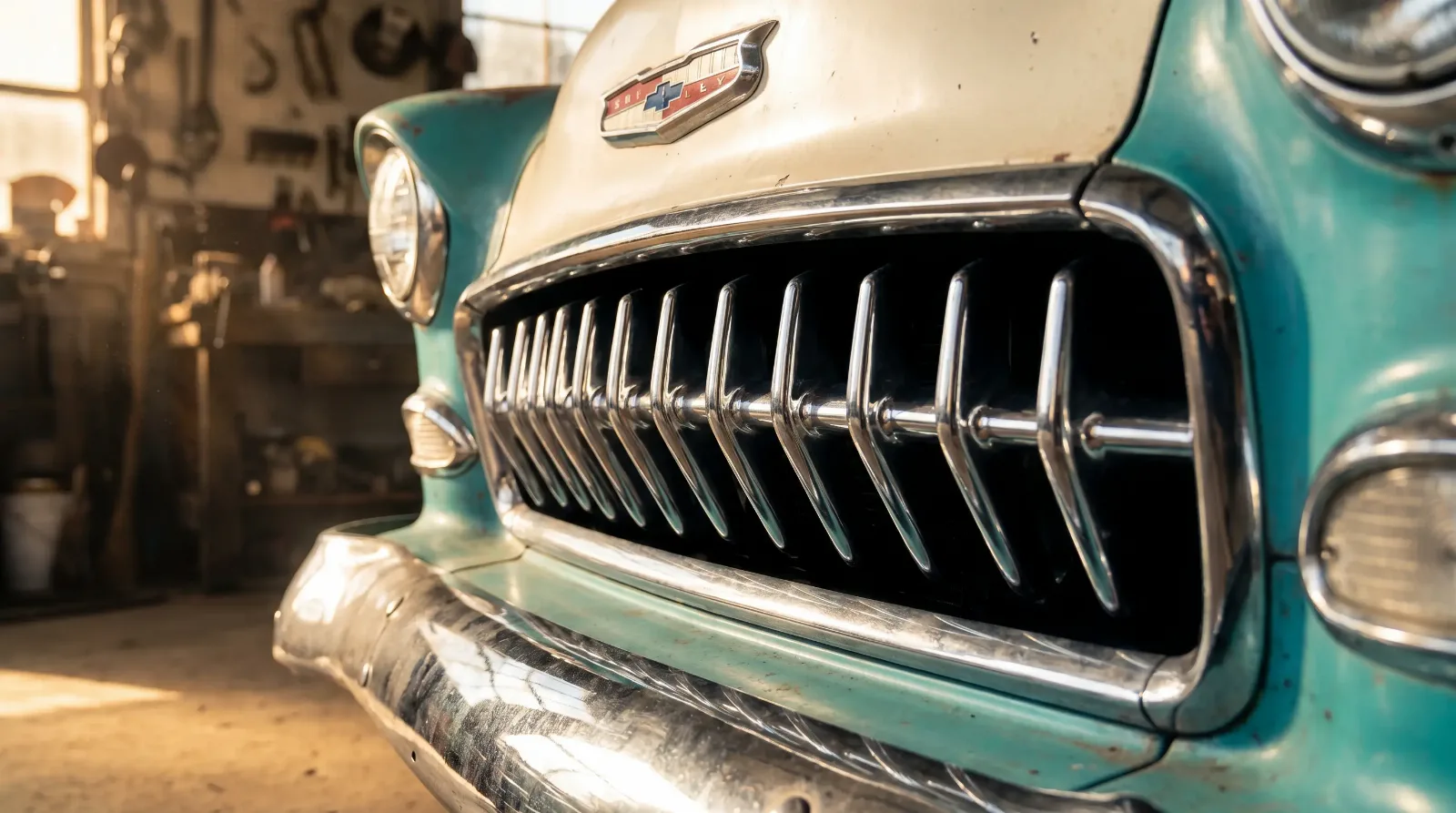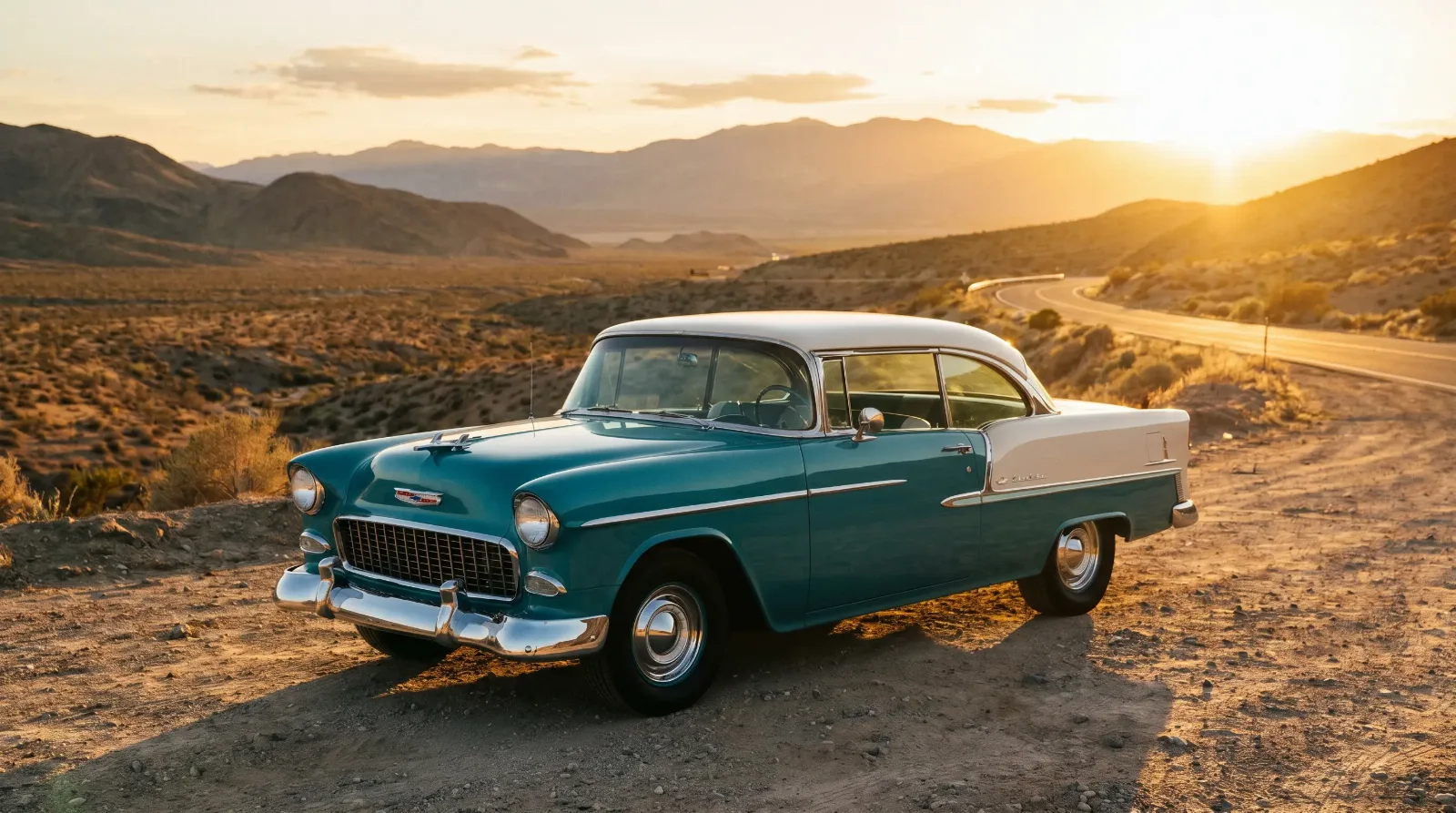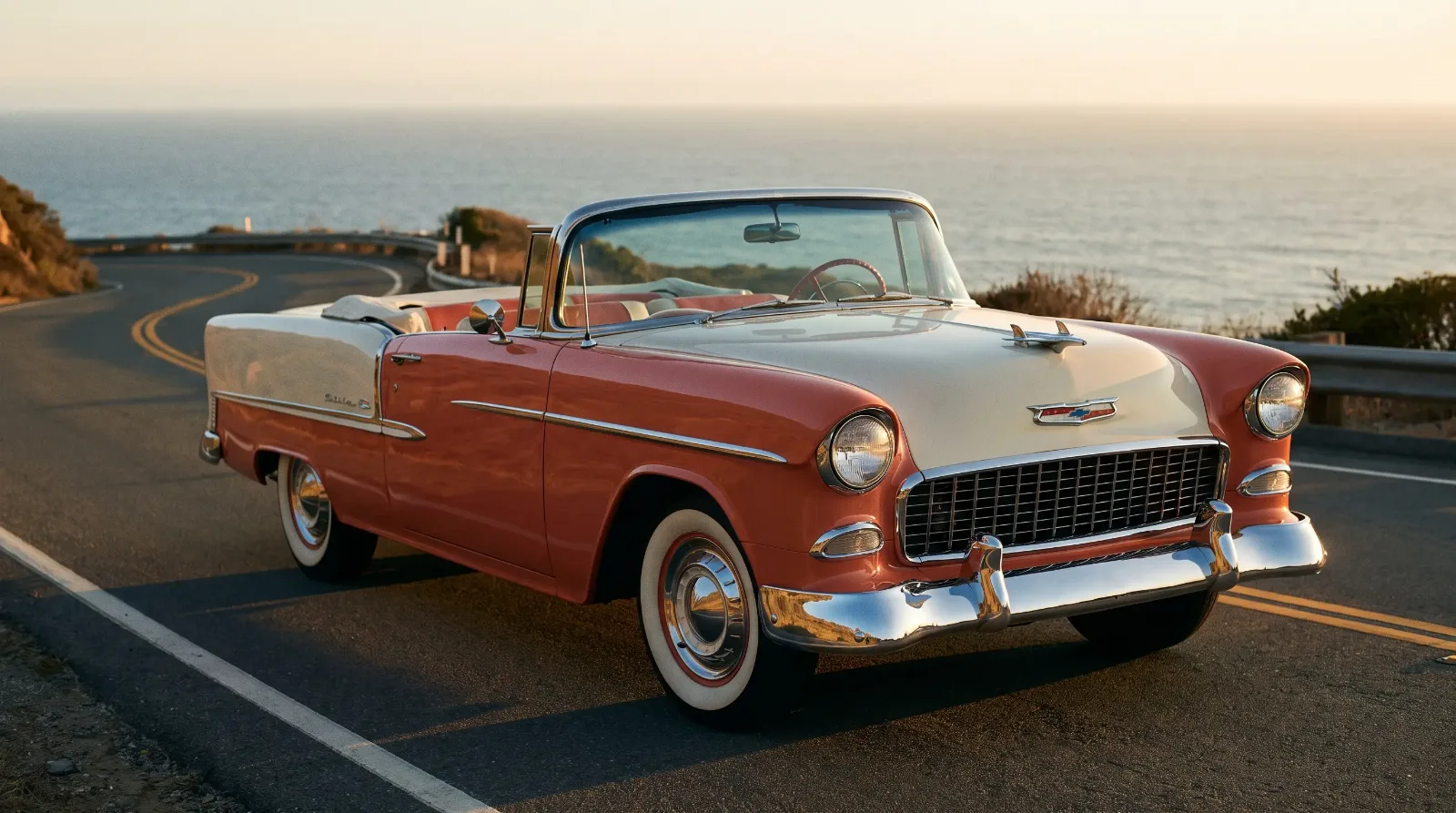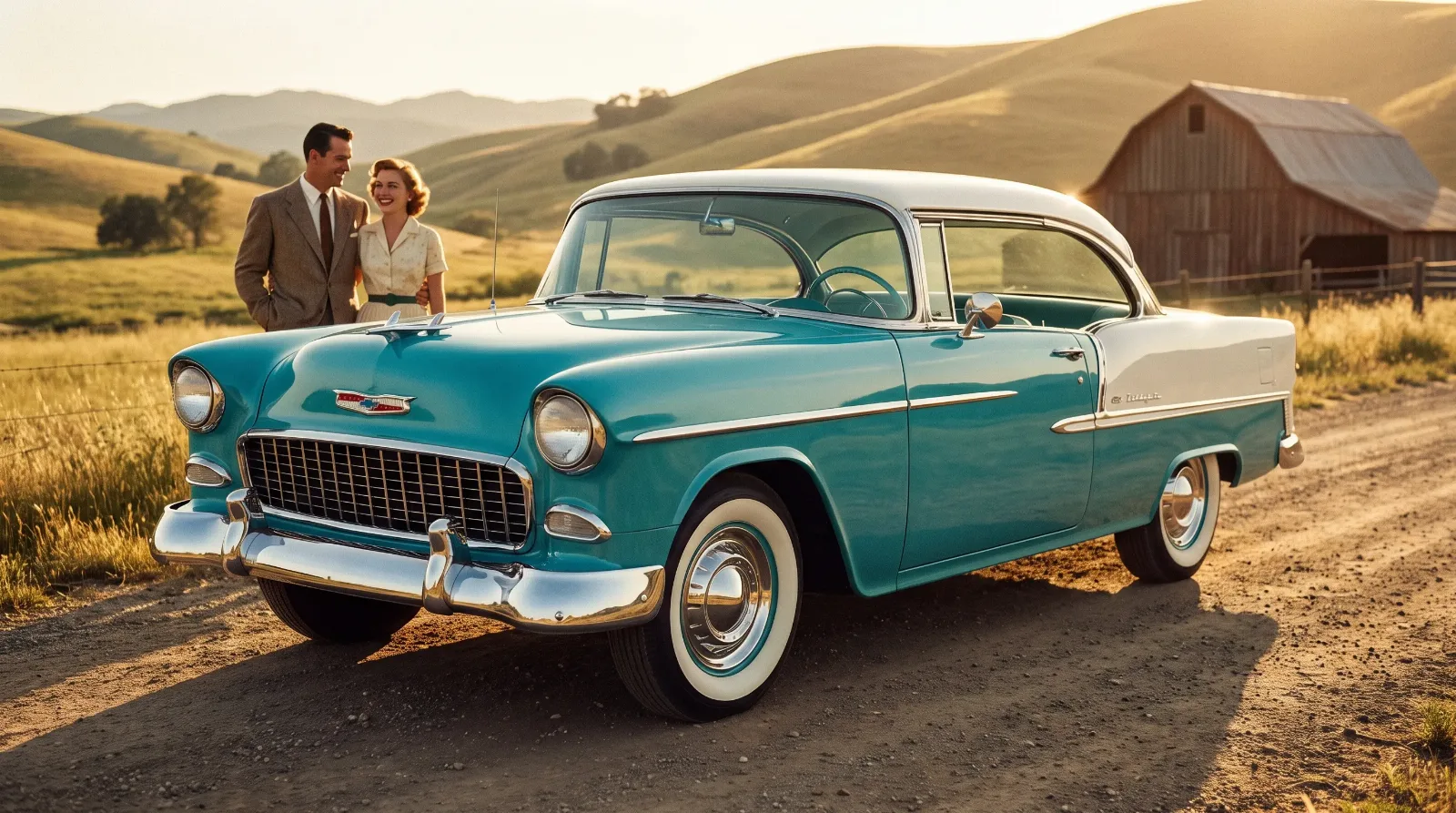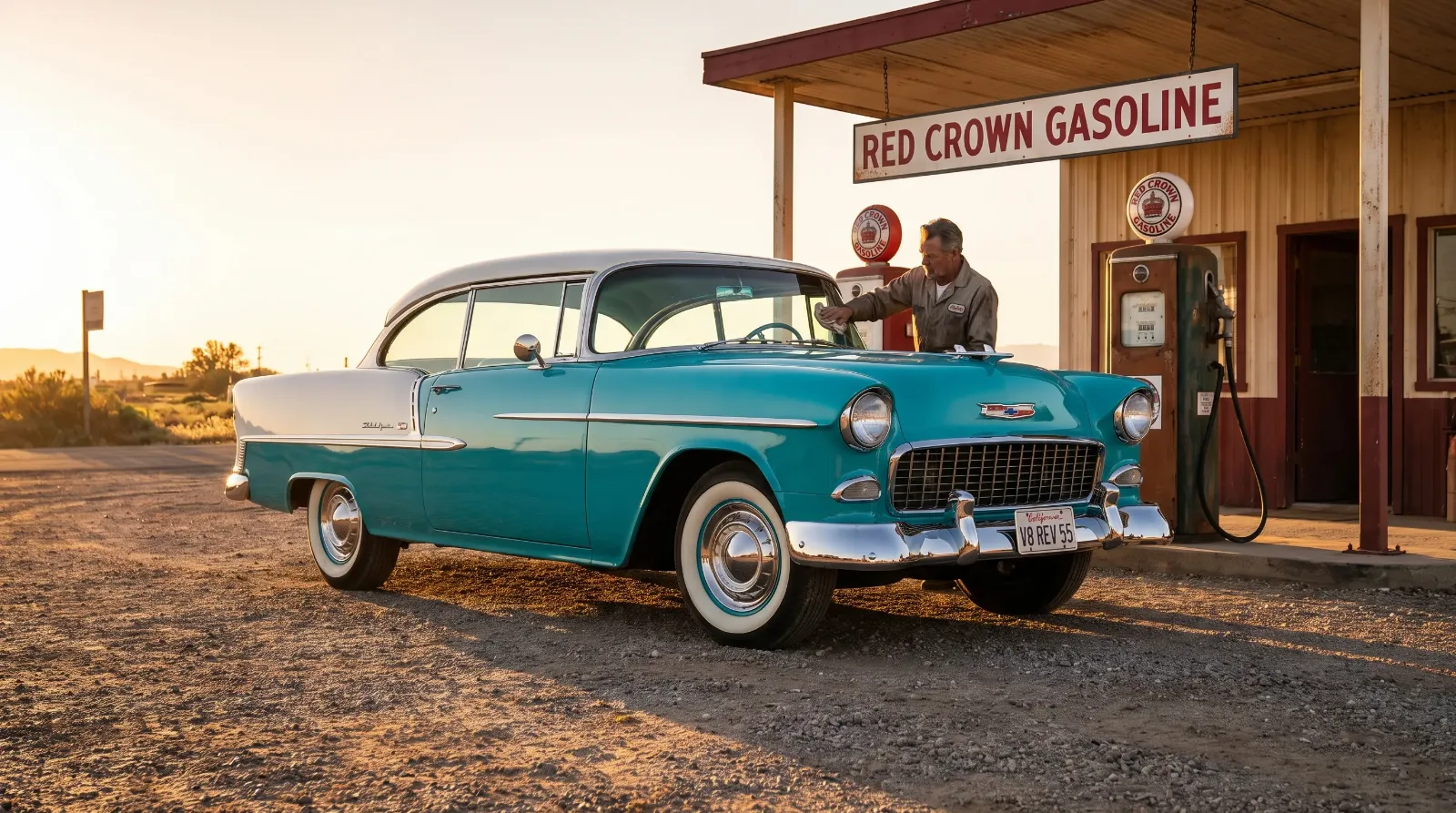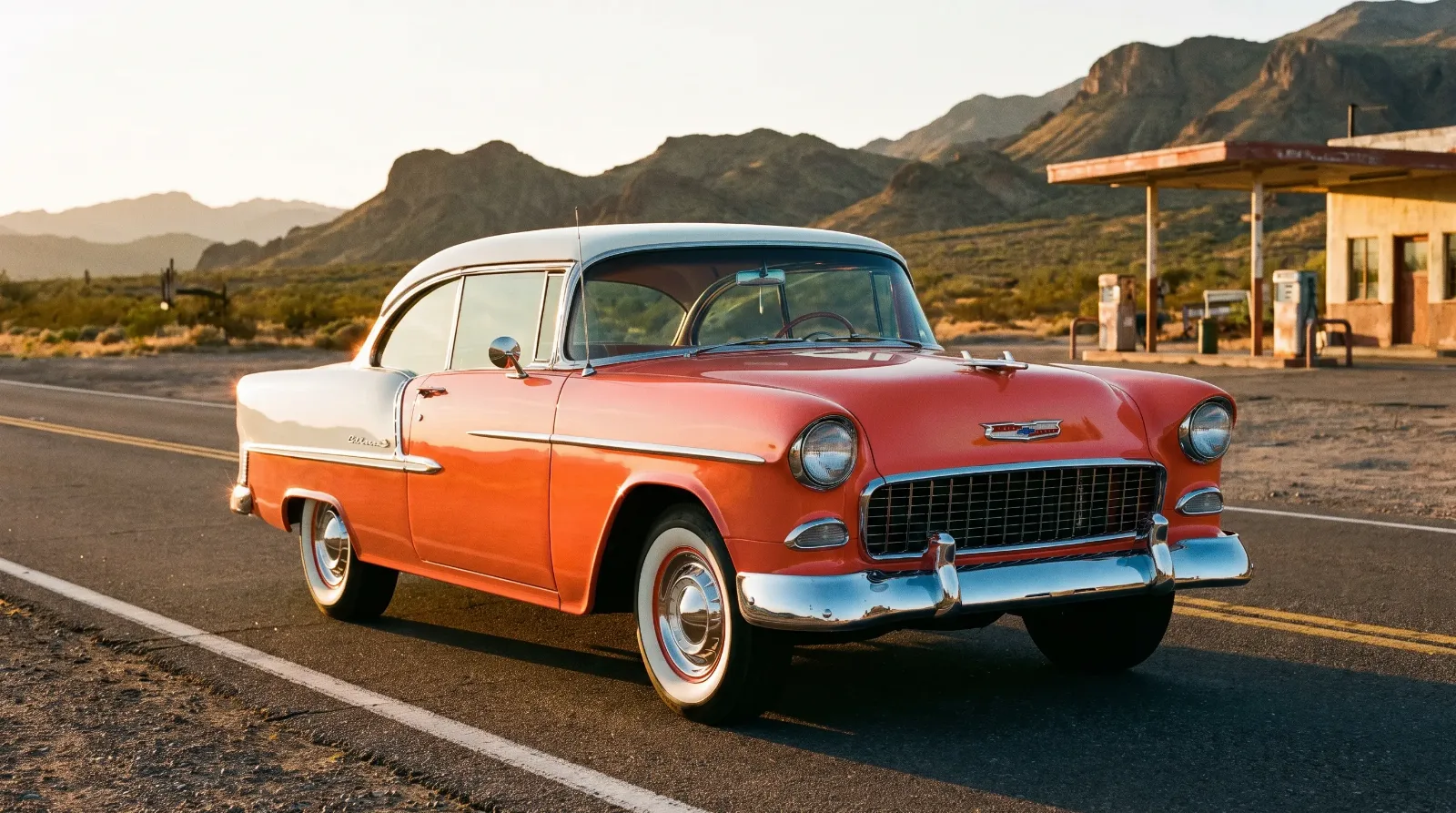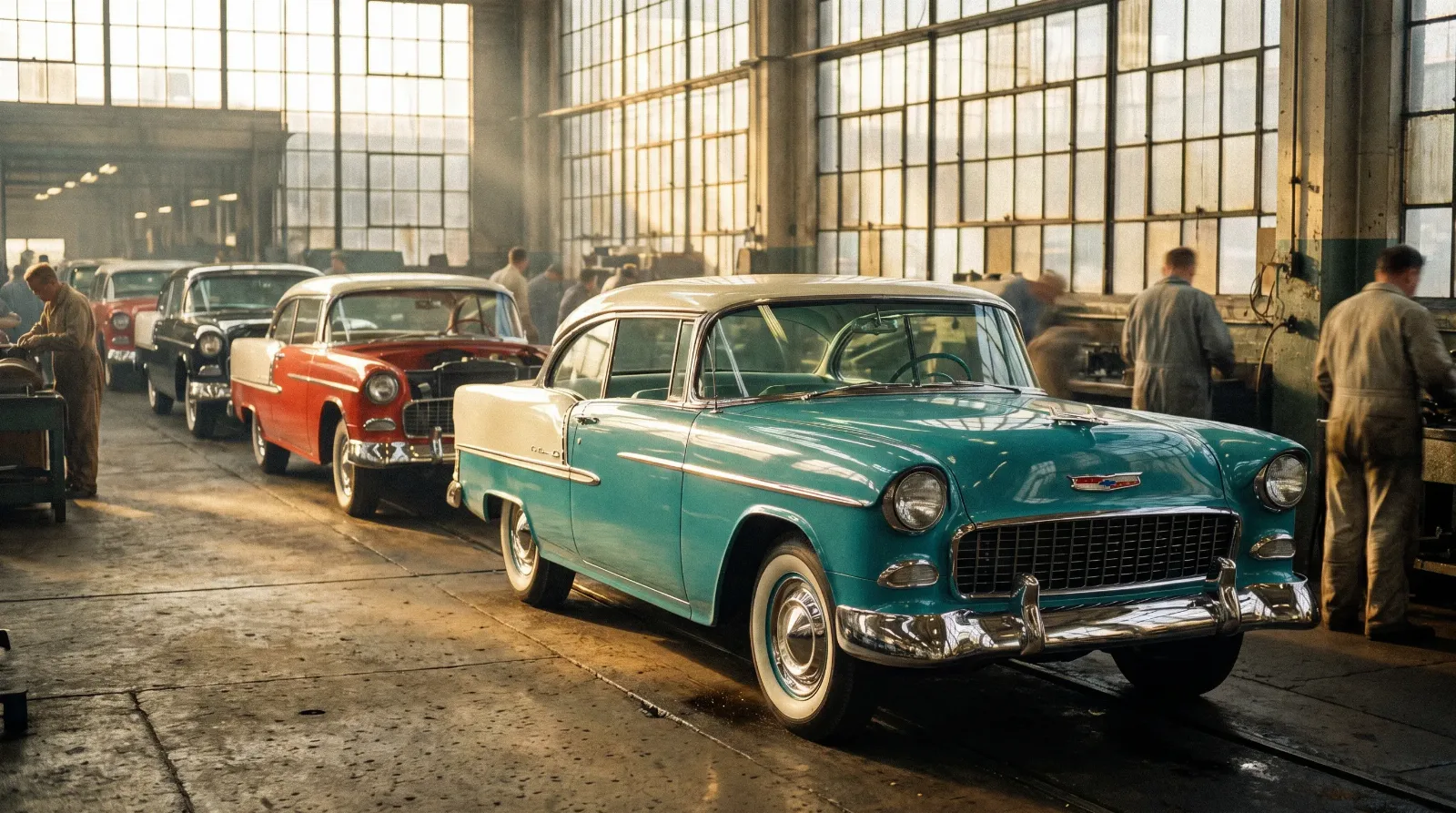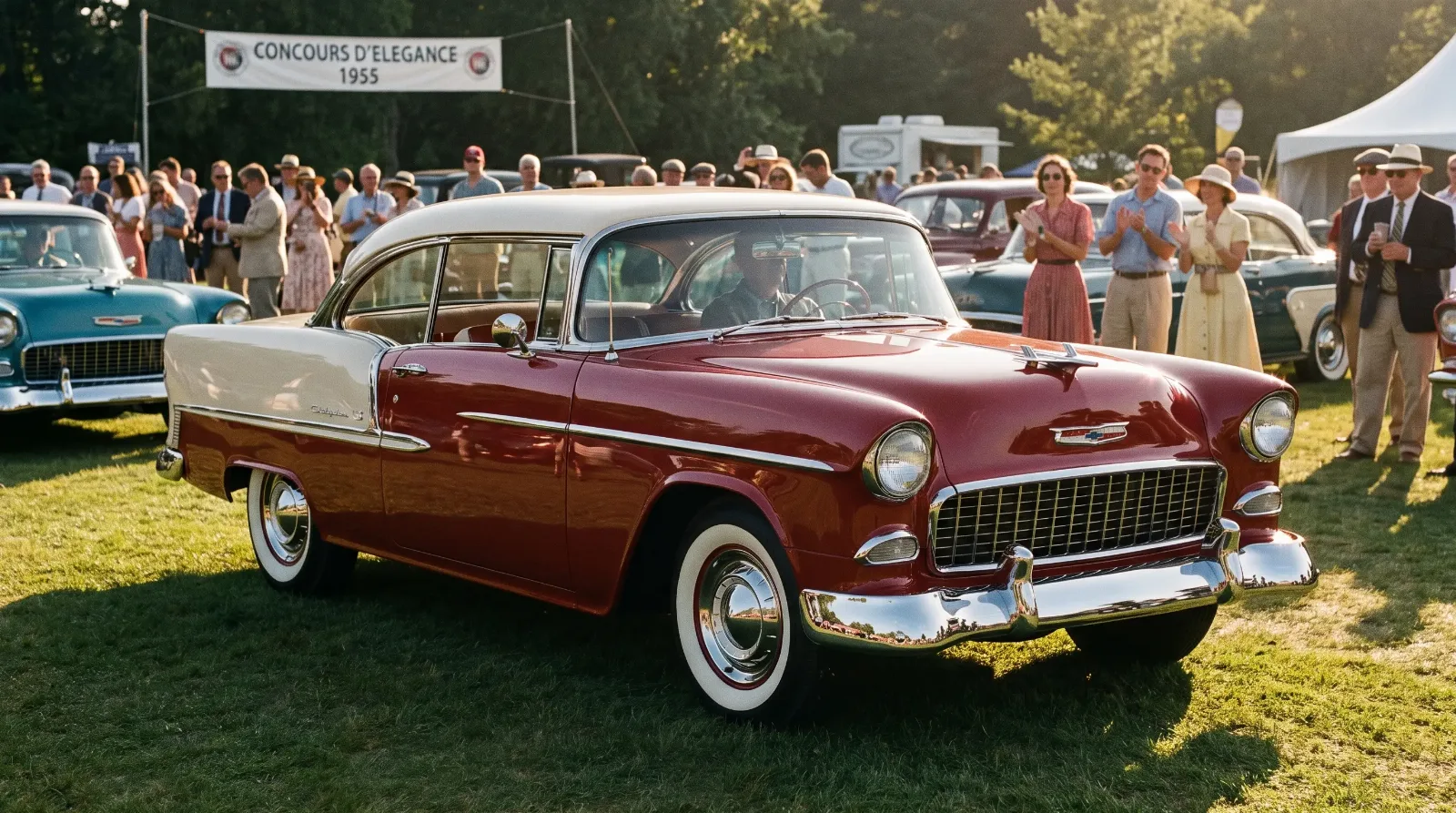
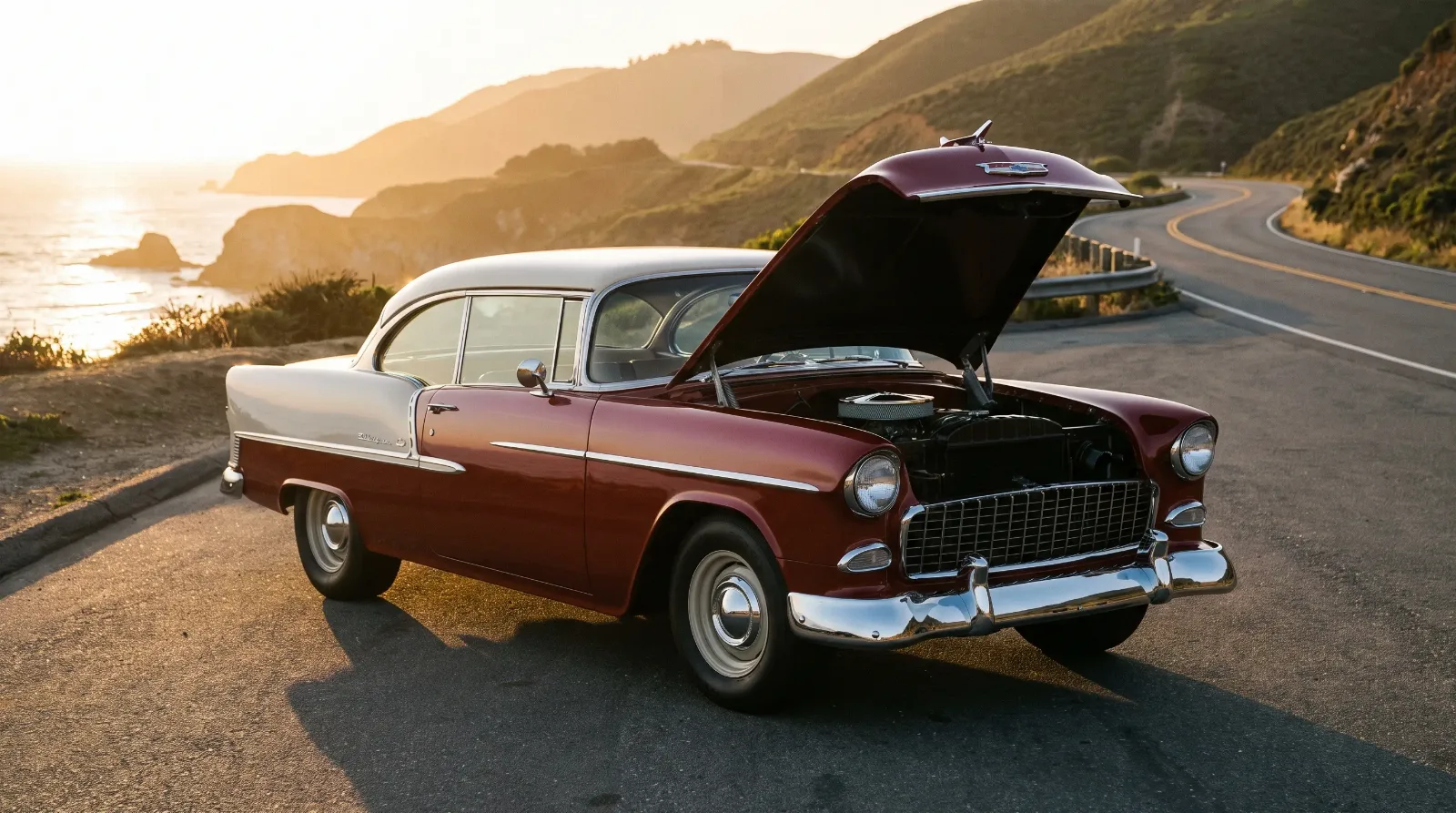
Somewhere in the fall of 1954, a Chevrolet dealer in a mid-sized American town rolled the covers off a new car and watched the room change. People who had walked past Chevrolets for years stopped. The proportions were lower, the glass was bigger, and when the salesman lifted the hood there was something new sitting between the fenders. The 1955 chevy bel air did not look like a warmed-over version of last year's car because it was not one. It was a clean sheet, and it arrived with an engine that would outlive almost everyone who first leaned in to look at it.
The car that broke with the past
To understand why 1955 mattered, you have to remember what came before it. Chevrolet had spent the early part of the decade building sensible, rounded, comfortable cars powered by a dependable six. They sold in enormous numbers, but nobody called them exciting. The full story of how the name climbed to the top of the range is worth reading in the the chevy bel air story, but the short version is that by 1954 the Bel Air was a well-dressed car in search of a personality.
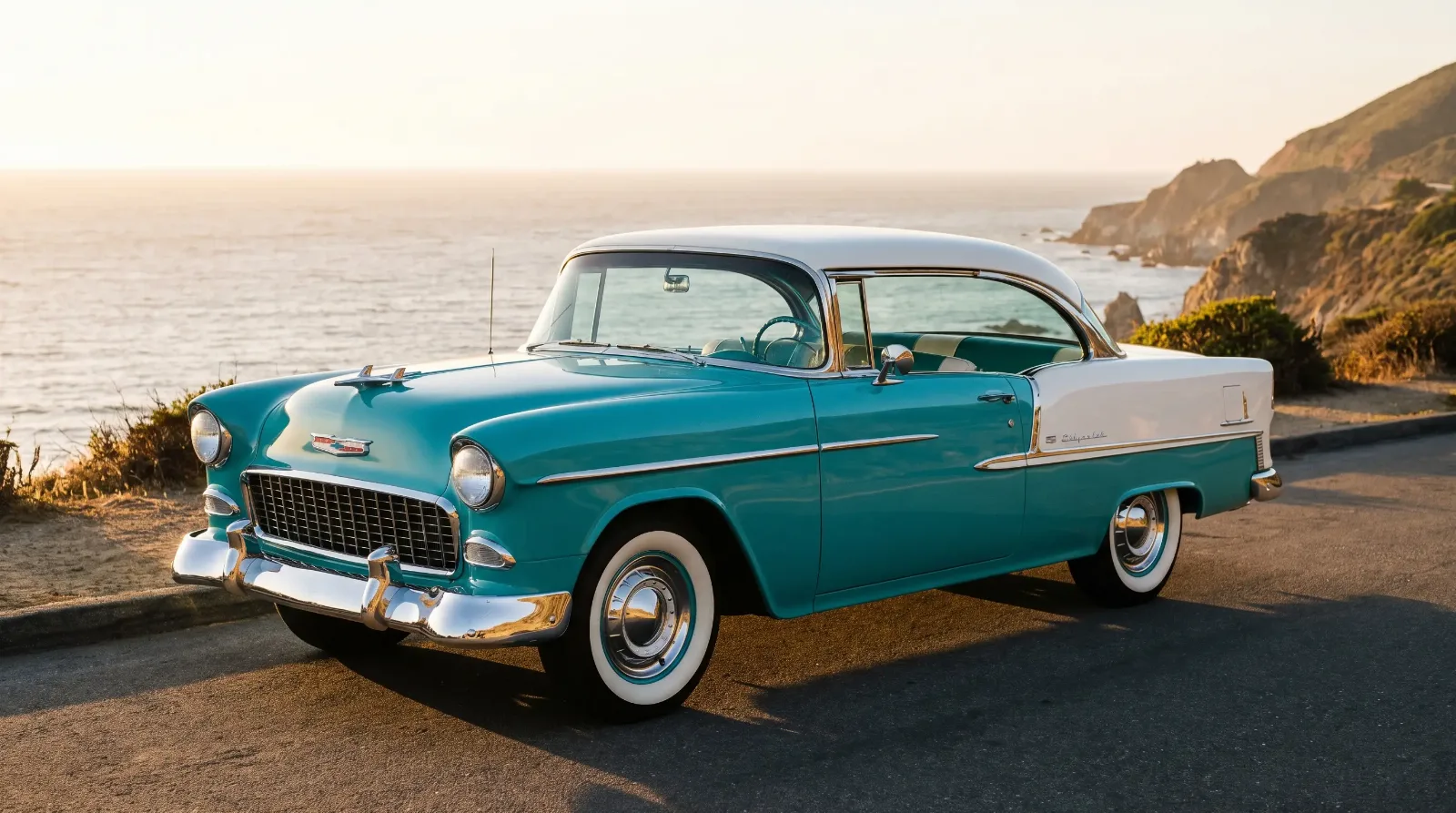
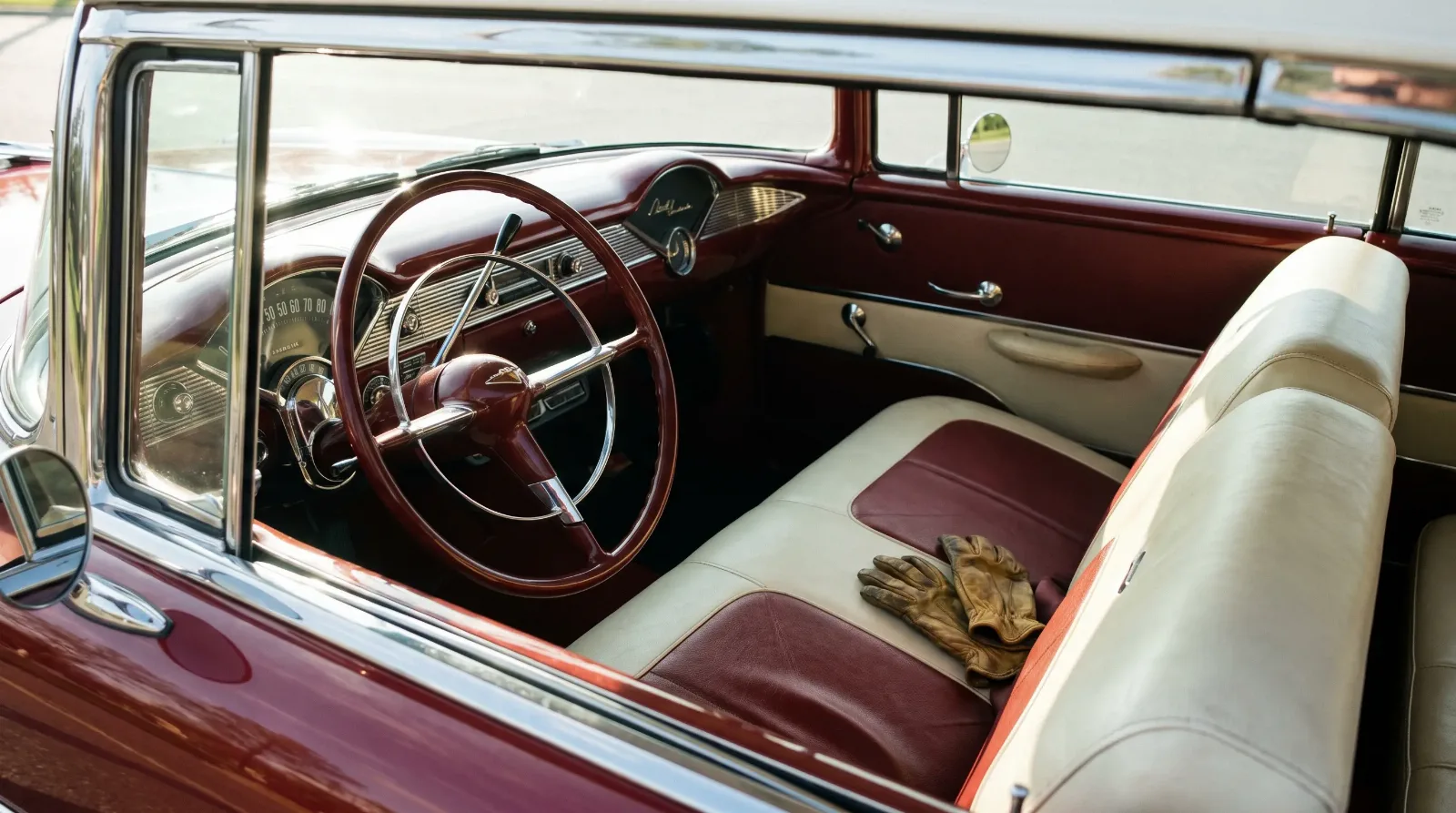
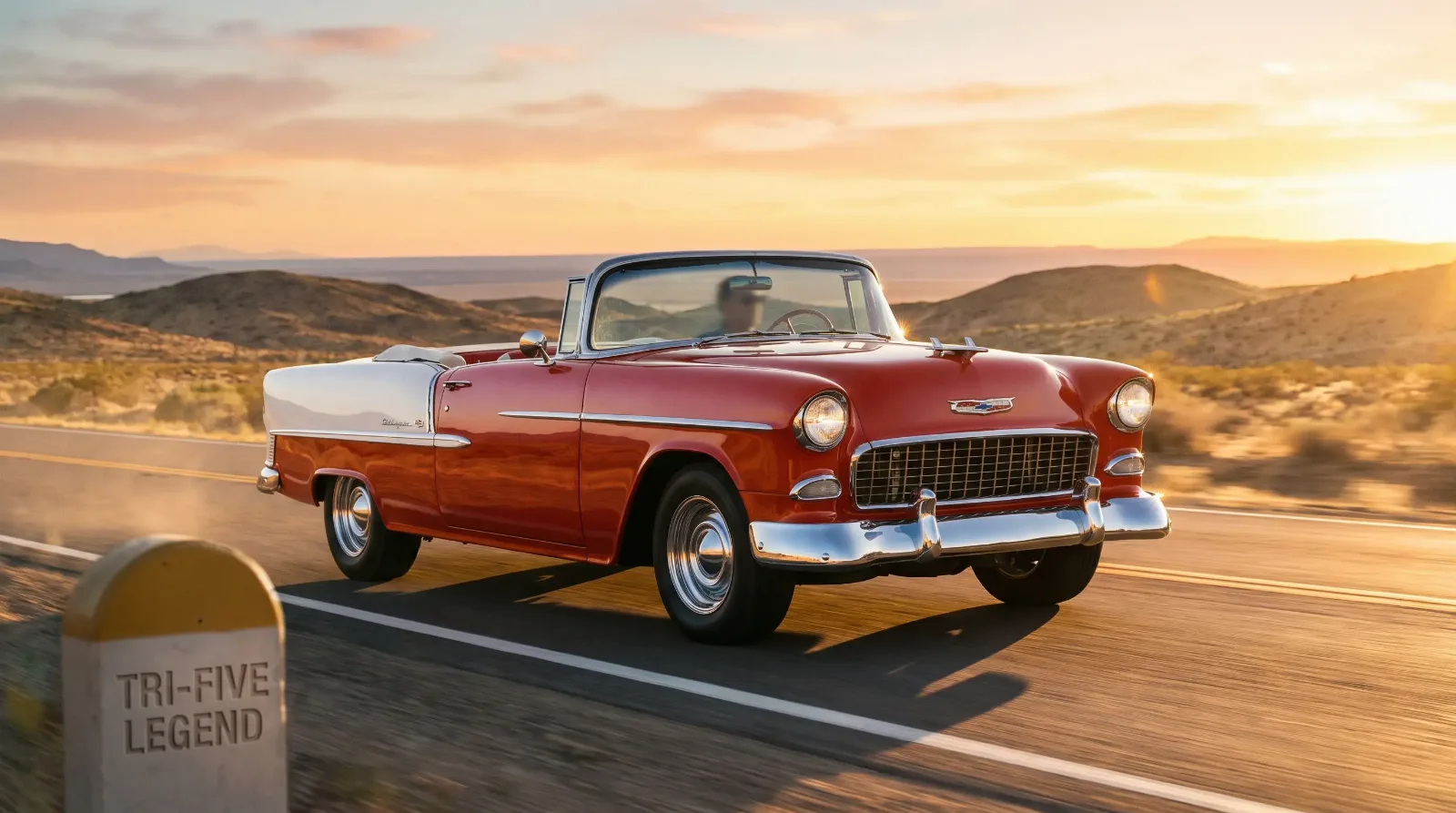
The 1955 redesign gave it one. Harley Earl's styling studio dropped the height, squared the lines, and wrapped the windshield around the corners of the cabin. The Bel Air got the full treatment: extra chrome, a distinctive side spear, richer interiors, and a face that looked forward instead of back. Chevrolet leaned into the change with an advertising campaign that called the new car "The Hot One," a phrase nobody would have dared attach to a 1953 model. For once the copywriters were not exaggerating.
The small-block that changed everything
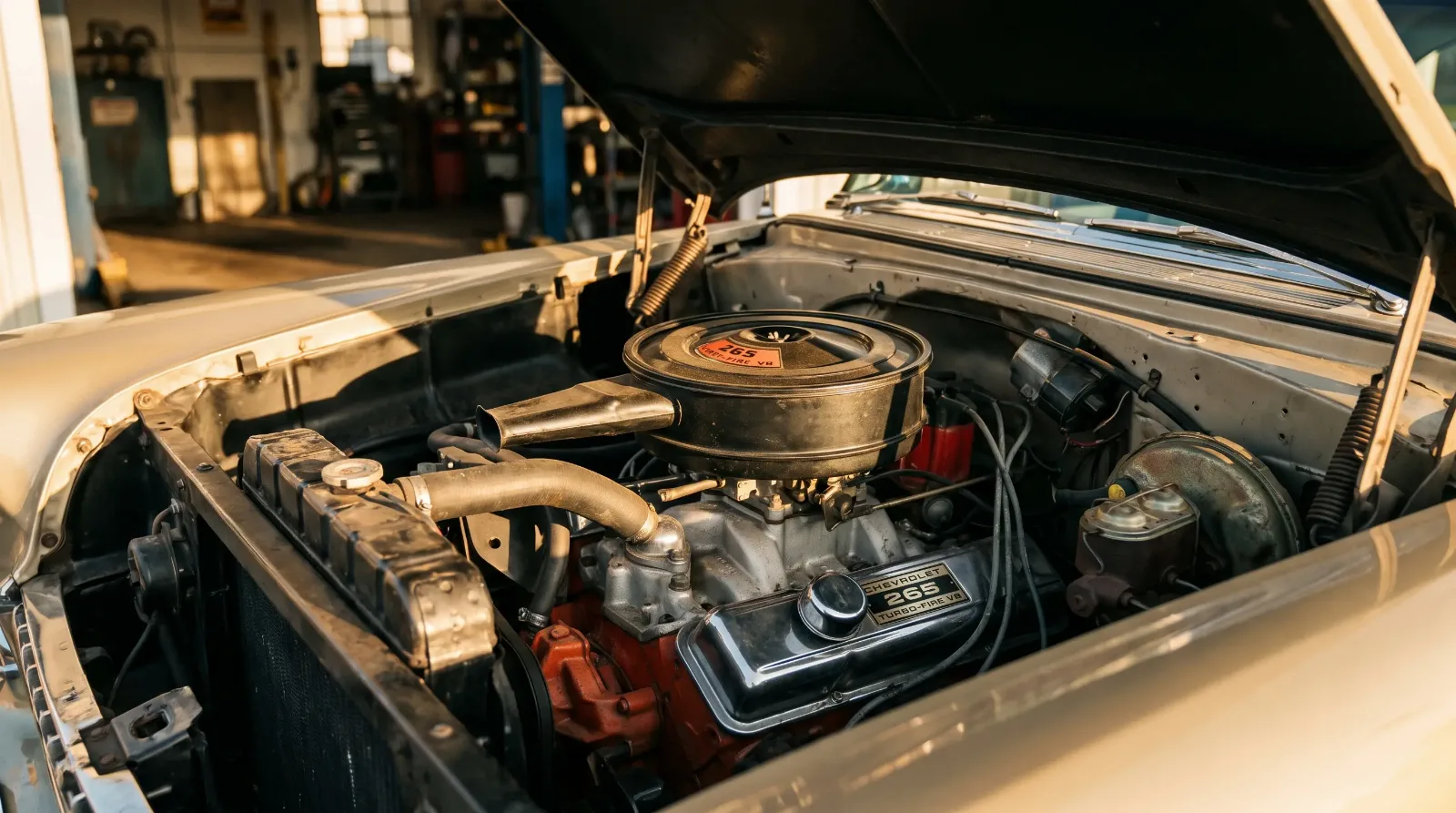
The real revolution was mechanical. For 1955 Chevrolet introduced a brand new overhead-valve V8 displacing 265 cubic inches, an engine designed under Ed Cole that was light, compact, and built to rev. This was the first of the small-block Chevrolet V8s, and calling it influential undersells it. Versions of that basic design stayed in production for decades and found their way into everything from grocery-getters to race cars to hot rods built long after the last Tri-Five left the line.
In the 1955 Bel Air the base V8 made around 162 horsepower, and a buyer who ticked the Power Pack option, which added a four-barrel carburetor and dual exhaust, got closer to 180 horsepower. Those numbers look modest now. In 1955, dropped into a car that weighed far less than the land yachts of the era, they made the Bel Air genuinely quick. Suddenly the affordable Chevrolet could embarrass more expensive machinery at a stoplight, and word of that traveled fast.
Why enthusiasts fixate on the Tri-Five
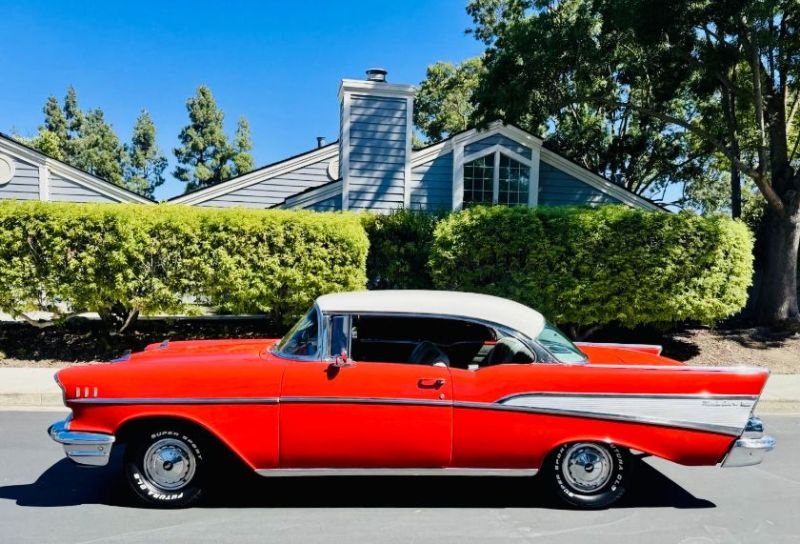
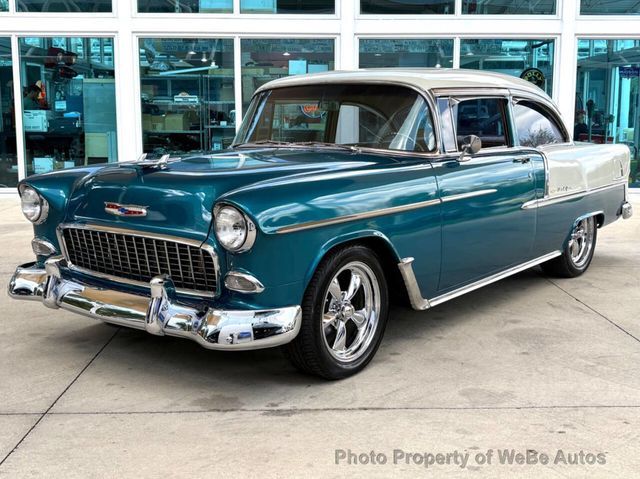
Collectors group 1955, 1956, and 1957 together as the Tri-Five years, and the 1955 car is the one that started it. There is a purity to the first-year design that a lot of enthusiasts prize. The grille was simpler than the heavily chromed 1956 face, the tailfins had not yet arrived, and the whole car had a lean, honest look that felt modern without shouting. To a certain kind of buyer, the 1955 is the most tasteful of the three.
It is also the year the formula came together. A stylish body, a light and eager V8, a choice of transmissions including the improved Powerglide, and a price a working family could reach. That combination is why the Bel Air stopped being merely popular and became something people felt about. The car showed up in driveways, at drive-ins, and eventually in the memories of a generation who learned to drive in one. If you enjoy chasing the differences year by year, the 1956 model is another one worth knowing, and we cover its subtle upgrades in a separate piece on another one worth knowing.
| Attribute | 1955 Chevrolet Bel Air |
|---|---|
| New for the year | Full redesign, first small-block V8 |
| V8 displacement | 265 cu in Turbo-Fire |
| Base V8 output | 162 hp (two-barrel carburetor) |
| Power Pack output | 180 hp (four-barrel carburetor, dual exhaust) |
| Six-cylinder option | 235 cu in Blue Flame |
| Advertising tagline | "The Hot One" |
Body styles and the ones that got away
The 1955 Bel Air came in a full spread of body styles, and the way the market values them today tells you a lot about how people use these cars. The convertible sits at the top, as convertibles almost always do. The two-door hardtop, called the Sport Coupe, is the shape most people picture and remains the heart of the market. Four-door sedans are the affordable way in, prized more for driving than for showing.
Then there is the Nomad, the two-door hardtop wagon that shared the Bel Air's trim and arrived as one of the most stylish wagons Detroit ever built. It was never a big seller, which is exactly why it commands the money it does now. The 1955 Nomad is one of the cars that turned casual admirers into obsessive collectors, and it deserves the separate attention it gets. For the buyer chasing an ordinary Sport Coupe rather than a unicorn, though, the field is deep.
"Ask a hundred Tri-Five people to pick a favorite and the 1955 crowd will always tell you the same thing. It is the cleanest of the three. No jukebox grille, no fins, just a car that got the shape right the first time and never needed the makeup."
- Patrick Walsh
The engineering behind the surprise
What made the 1955 car feel so different from a distance is easy to see, but the reasons it drove differently were hidden. The new small-block was not just smaller and lighter than the six it partnered with, it was designed from the start to breathe. The valvetrain used lightweight stamped rocker arms that let the engine spin freely, and the whole unit weighed less than many rivals' larger V8s. In a car that had shed height and weight in the redesign, that combination produced a machine that felt eager in a way no previous Chevrolet had.
The chassis kept pace with the engine. The 1955 cars used a revised front suspension and improved brakes, and buyers could specify power steering and power brakes to take the effort out of daily driving. The result was a car that could be optioned as a relaxed family cruiser or, with the Power Pack and the right axle ratio, as something genuinely quick for its class. That breadth mattered. A single body could serve the buyer who wanted comfort and the buyer who wanted to win a stoplight sprint, and Chevrolet sold both without apology. The engineering flexibility built into the 1955 platform is a large part of why the same basic car could evolve so successfully across the next two model years.
The car in the culture
Part of what makes the 1955 Bel Air hard to price rationally is that it stopped being just a car a long time ago. It became shorthand. Filmmakers reach for a Tri-Five when they want to put 1950s America on screen, hot rodders have been building them since the bodies were still new at dealers, and the cars anchor cruise nights in every corner of the country. That cultural weight is baked into what people will pay, and it is not going anywhere.
None of that would have happened without the underlying goodness of the machine. Fame does not stick to a bad car for seventy years. The 1955 Bel Air earned its place by being genuinely better than what came before, at a price that let ordinary people find out for themselves. That is a rare thing, and it is why the first Tri-Five still starts arguments about which year is best.
Choosing between the six and the V8
Not every 1955 Bel Air left the factory with the new V8, and the split says something about the moment. The Blue Flame six remained on the price list, and plenty of buyers chose it, either to save money or out of loyalty to an engine they trusted. Those cars are honest and pleasant, if unhurried, and they represent the conservative half of the 1955 market, the buyers who wanted the fresh styling without the leap into new technology. For a collector who values originality over performance, a well-kept six can be an interesting and affordable way into the year.
But the V8 was the future, and the buying public sensed it quickly. Once word spread that the Chevrolet with the new engine could keep pace with far pricier machinery, the balance tipped hard toward the eight. The Power Pack option, with its four-barrel carburetor and dual exhausts, became the enthusiast's choice, and it is the configuration most sought after now. The gap in desirability between a base six and a Power Pack V8 was real when the cars were new and it has only widened since. That said, the market rewards honesty over hype here. A genuine, documented six in original condition tells a truer story than a six-cylinder car clumsily converted to look like something it never was, and experienced buyers weigh authenticity accordingly rather than chasing the badge alone.
Where the 1955 sits today
In a market crowded with Tri-Five cars, the 1955 holds a specific appeal for buyers who want the origin of the small-block story and the least fussy of the three designs. Prices track condition and body style hard, with convertibles and clean hardtops leading and honest driver-grade sedans offering a realistic path in. The badge alone does not guarantee value; a rough car with a famous name is still a rough car.
What the 1955 offers that its successors cannot is the sense of being present at the start. This is the year the engine, the styling, and the ambition all arrived at once, and every celebrated Chevrolet that followed owes it something. The car sits at a specific hinge in the company's history, the point where a maker of dependable, unremarkable transportation decided it wanted to build cars people desired, and then proved it could. That ambition is legible in every panel and every rated horsepower, and it is a large part of why the first Hot One still draws a crowd at any gathering where the three years line up side by side. Anyone ready to see what survives and what it costs can browse classic Air listings through the current browse classic Air listings, then decide whether the first Hot One is the one worth chasing.