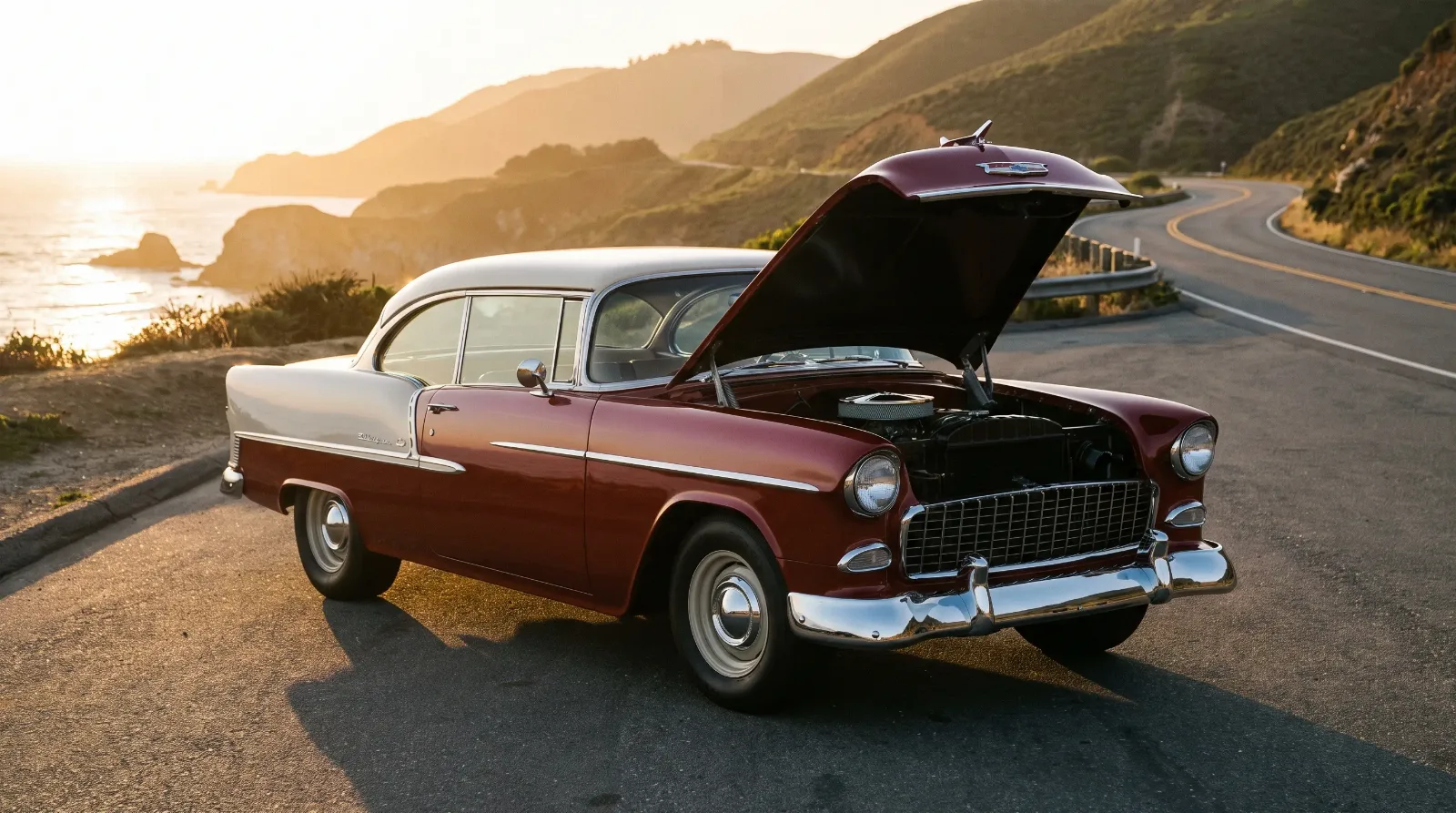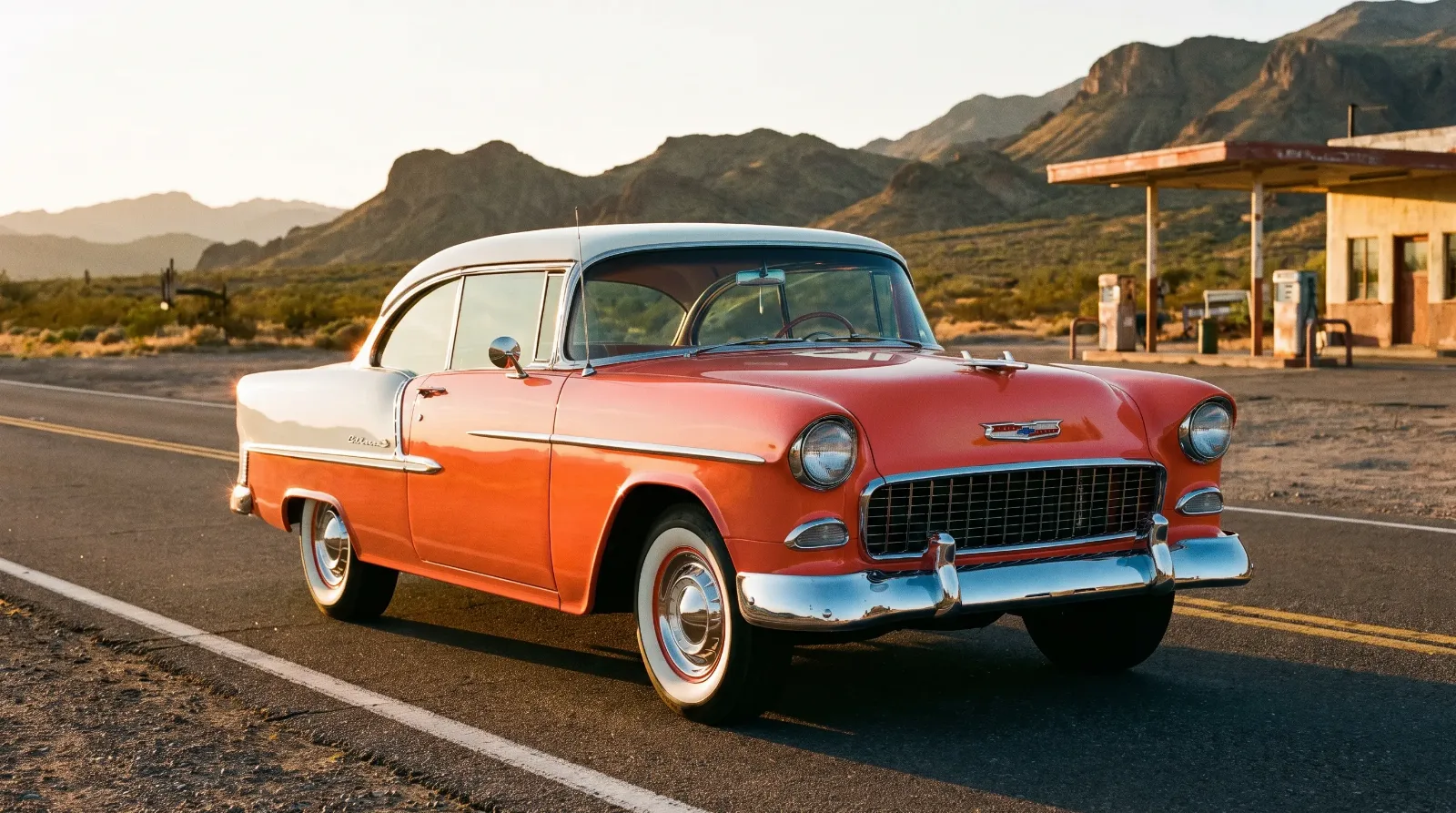
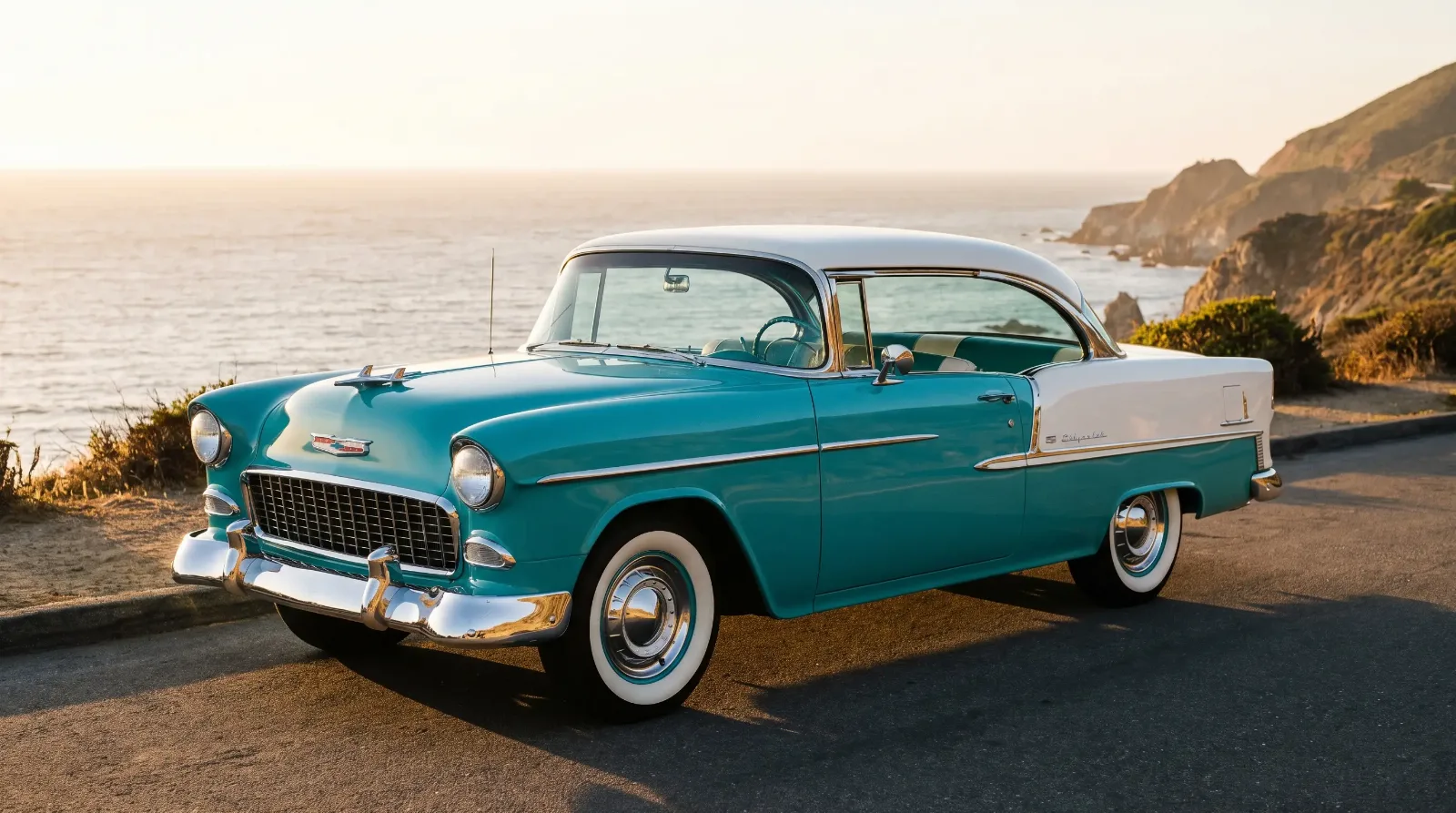
Two-tone paint did not start with Chevrolet in 1955, but the way Chevrolet applied it to the redesigned Bel Air that year set a template other manufacturers spent the rest of the decade copying. The 1955 Bel Air two tone treatment was not a simple roof-and-body split like earlier postwar two-tones. It followed a sweeping character line that ran back from the headlight, through the door, and up into the rear fender, turning the paint break into part of the car's shape rather than a decoration applied on top of it. That distinction is why the 1955 treatment still reads as fresh today, while a lot of earlier two-tone work from the same era looks like an afterthought.
Where 1955 fit in two-tone history
American manufacturers had experimented with two-tone paint before 1955, often limited to a roof painted a contrasting shade against a single-color body, a look that dated back to the late 1940s and carried into the early 1950s largely unchanged. That earlier approach treated the roof almost like a removable accessory rather than an integrated part of the design, and it rarely accounted for how the two colors would interact with the rest of the body's shape. Chevrolet's 1955 execution broke from that habit decisively, tying the contrast color to a sculpted line in the sheet metal itself rather than a simple horizontal boundary between roof and body. That shift from decoration to integration is the real story behind why the 1955 Bel Air two tone look still gets referenced as a turning point in American automotive design, rather than just one more variation on a paint trend that had already existed for years.
How the panel line actually worked
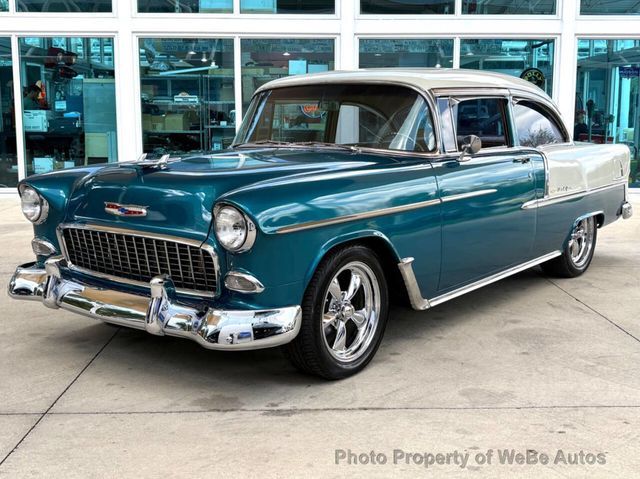
Chevrolet's stylists designed the 1955 body with a defined crease running along the beltline and up through the rear fender, and that crease became the natural boundary for the second color. On Bel Air models the lower body and a wide sweep across the rear fender typically carried the contrast color, while the roof and main body carried the primary shade, with a chrome side spear often installed directly along the seam to hide the paint transition and add a further visual break. This was a genuine manufacturing decision, not a paint shop trick applied after the fact. The body dies were engineered with that line in mind, which is why the two-tone treatment integrates with the car's proportions instead of looking pasted on.
Production reality behind the paint
Building a two-tone car took more line time and more masking than a single-color car, and Chevrolet's factories had to manage the added complexity across enormous production volumes without slowing the line meaningfully. Assembly plants used dedicated masking stations and sequenced paint booths to apply the base color, mask the defined areas, then apply the contrast color in a second pass, a process repeated across a large share of the roughly 1.78 million Chevrolets Chevrolet built for 1955. Exact factory records breaking two-tone cars out from single-color cars have not survived in a form that supports a precise percentage, but two-tone paint was popular enough by 1955 that Chevrolet treated it as close to standard practice on Bel Air rather than a rare special order, a shift from just a few years earlier when two-tone work was a genuine premium option reserved for a minority of cars.
| Detail | 1955 Bel Air two-tone |
|---|---|
| Split line | Beltline crease through rear fender sweep |
| Trim treatment | Chrome side spear along paint seam |
| Typical placement | Contrast color on lower body and fender sweep |
| Availability | Widely ordered, effectively common practice on Bel Air |
Why other manufacturers followed
Within a couple of model years, Ford, Plymouth, and other competitors had adopted their own versions of a sweeping, fender-integrated two-tone split, a clear response to how well Chevrolet's 1955 execution had landed with buyers and how prominently it featured in advertising. That industry-wide shift is a useful marker of how influential the Bel Air's styling actually was in 1955, beyond just the sales figures for that single model year. A styling decision made inside one Chevrolet studio ended up shaping how an entire industry approached exterior color for years afterward.
"The 1955 two-tone line wasn't decoration. It was drawn into the body dies before a single car got painted, and that is the difference between a styling gimmick and a genuine design decision."
- Tom Ramirez
The Nomad and hardtop treatments
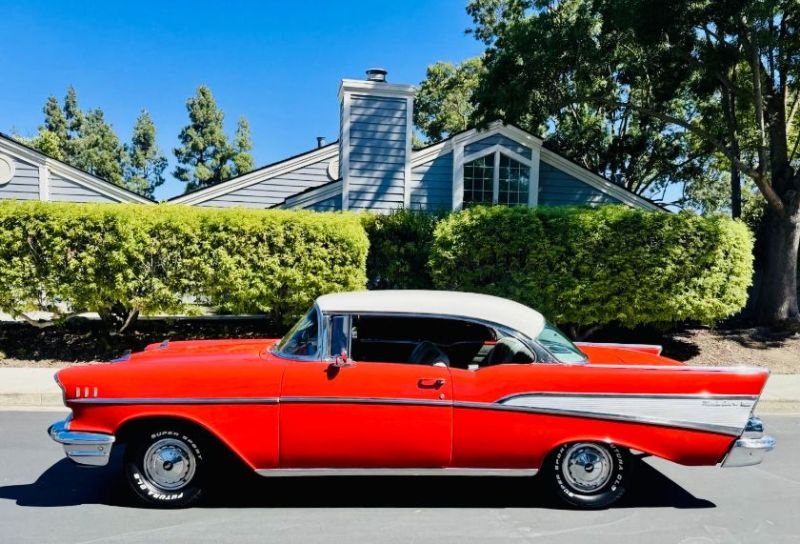
The two-tone approach shifted slightly depending on body style. On the Nomad wagon, the split line had to account for the car's distinctive tailgate and roof rails, and Chevrolet's stylists extended the contrast color further back along the flanks than on the sedan to keep the wagon's proportions from looking chopped up by the paint break. On the two-door Sport Coupe hardtop, the absence of a B-pillar gave the paint line an uninterrupted sweep from front fender to rear that many collectors consider the cleanest execution of the whole 1955 two-tone concept, since there was no pillar to visually break the line partway through. Sedans, with their fixed center pillar, handled the transition slightly differently, and the four-door proportions meant the contrast panel read as a longer, flatter shape than it did on the shorter-bodied hardtop.
These body-style differences matter to restorers today because a two-tone line correct for a hardtop is not automatically correct for a sedan or a wagon, despite sharing the same general concept. Reference photography specific to the exact body style, not just the exact color combination, is necessary to get the restoration right, and shortcuts here are one of the more common mistakes seen at judged shows, where a knowledgeable judge will catch a transposed line faster than almost any other period-incorrect detail.
Restoring the look correctly
Getting a 1955 Bel Air two tone restoration right means respecting the original panel line, not approximating it. Restorers who eyeball the split rather than working from factory documentation or an unrestored reference car often end up with a line that sits slightly off the original crease, which throws off the whole car's proportions even when both colors themselves are correctly matched. This is one area where the paperwork and reference photography genuinely matter as much as the paint itself.
Masking technique matters just as much as the reference line itself. A crisp, straight edge along the chrome spear reads as correct to a trained eye, while a slightly wavy or inconsistent line, even one only a few millimeters off across the length of the car, signals an amateur repaint immediately to anyone who has spent time around original factory work. Professional restoration shops that specialize in Tri-Five Chevrolets often keep dedicated templates for each body style specifically to avoid this problem, since freehand masking on a car this size introduces more room for drift than most painters expect going in. Readers wanting the fuller context on how this styling fit into the 1955 redesign overall can find the whole picture covering the model year beyond just the two-tone treatment.
For anyone shopping the market with an eye specifically toward an original or well-restored two-tone example, it is worth taking time to shop classic Air listings and compare how different sellers describe their paint history, since that detail separates a documented restoration from a guess.