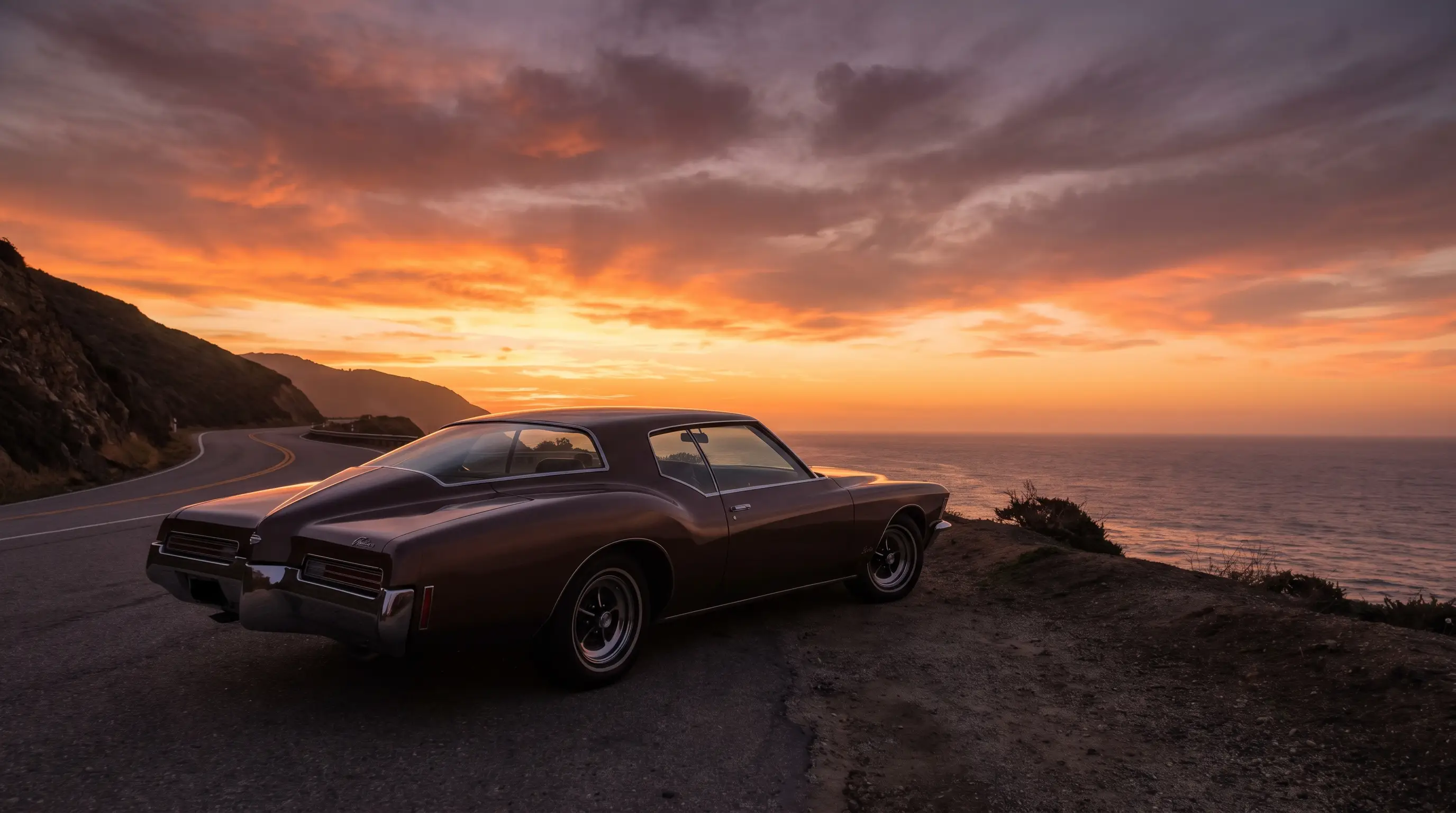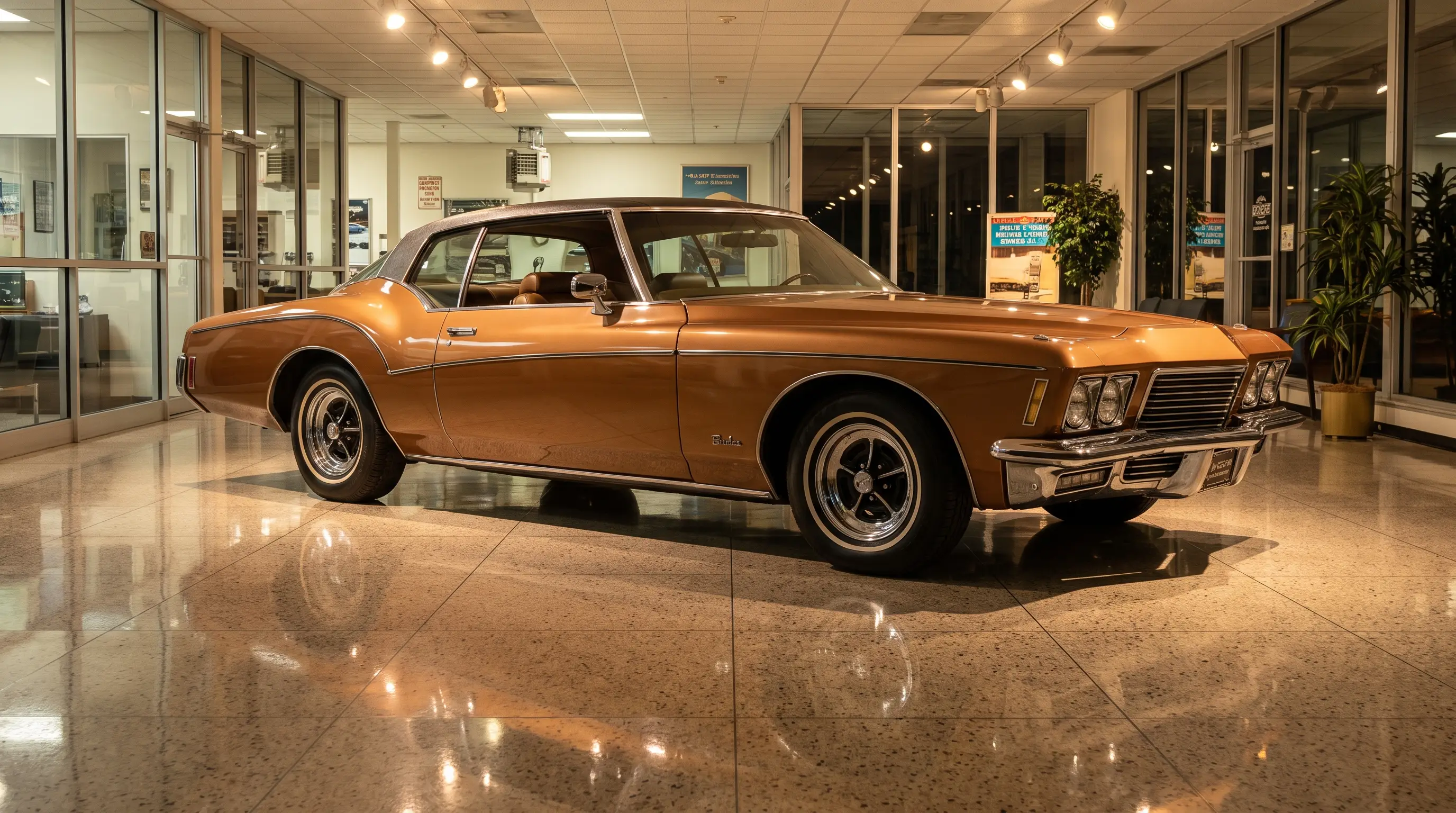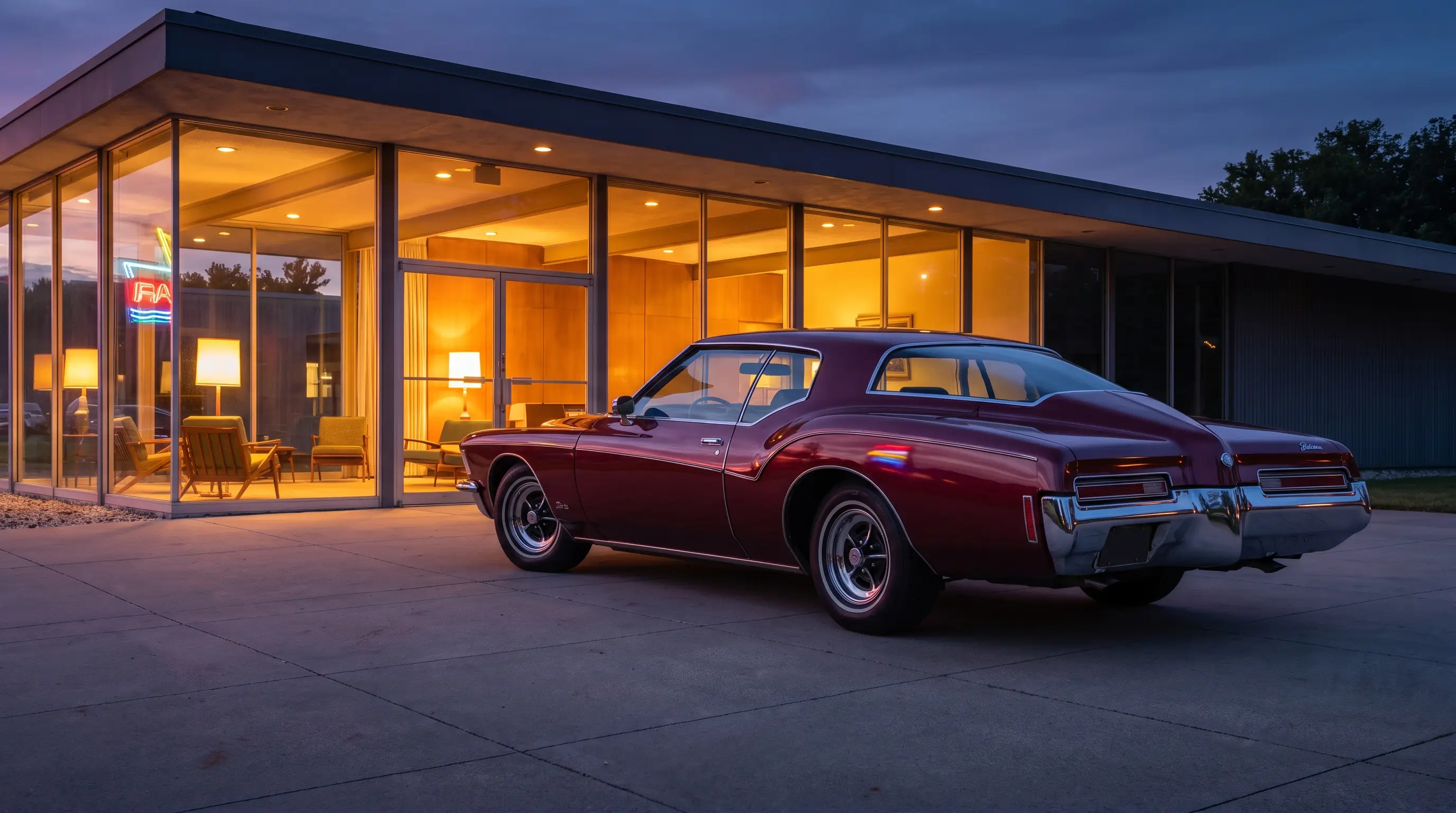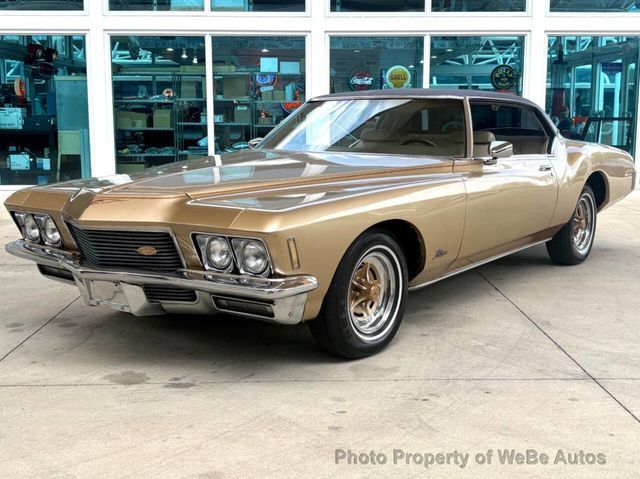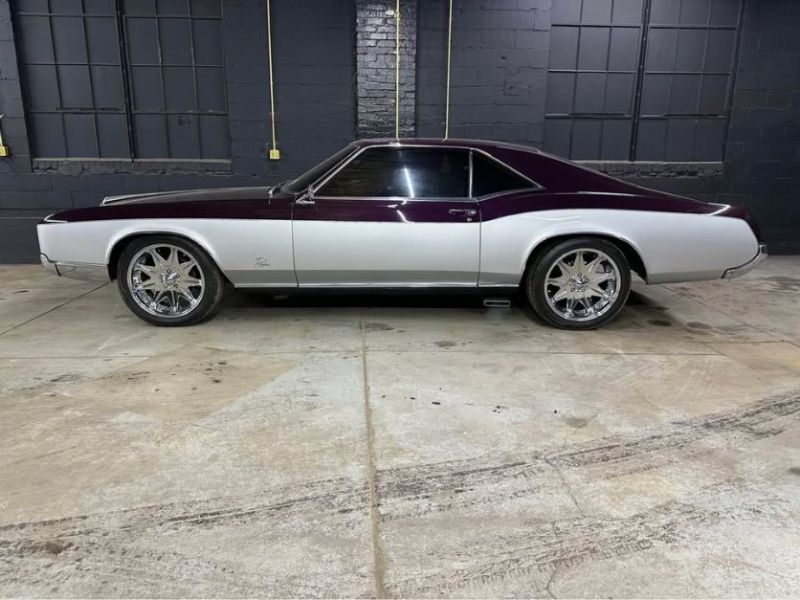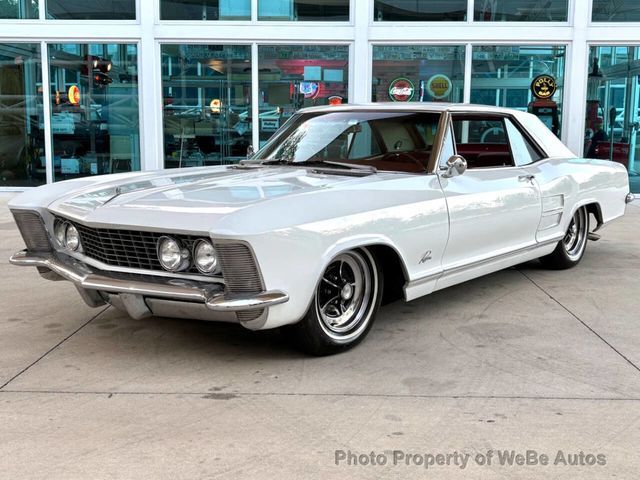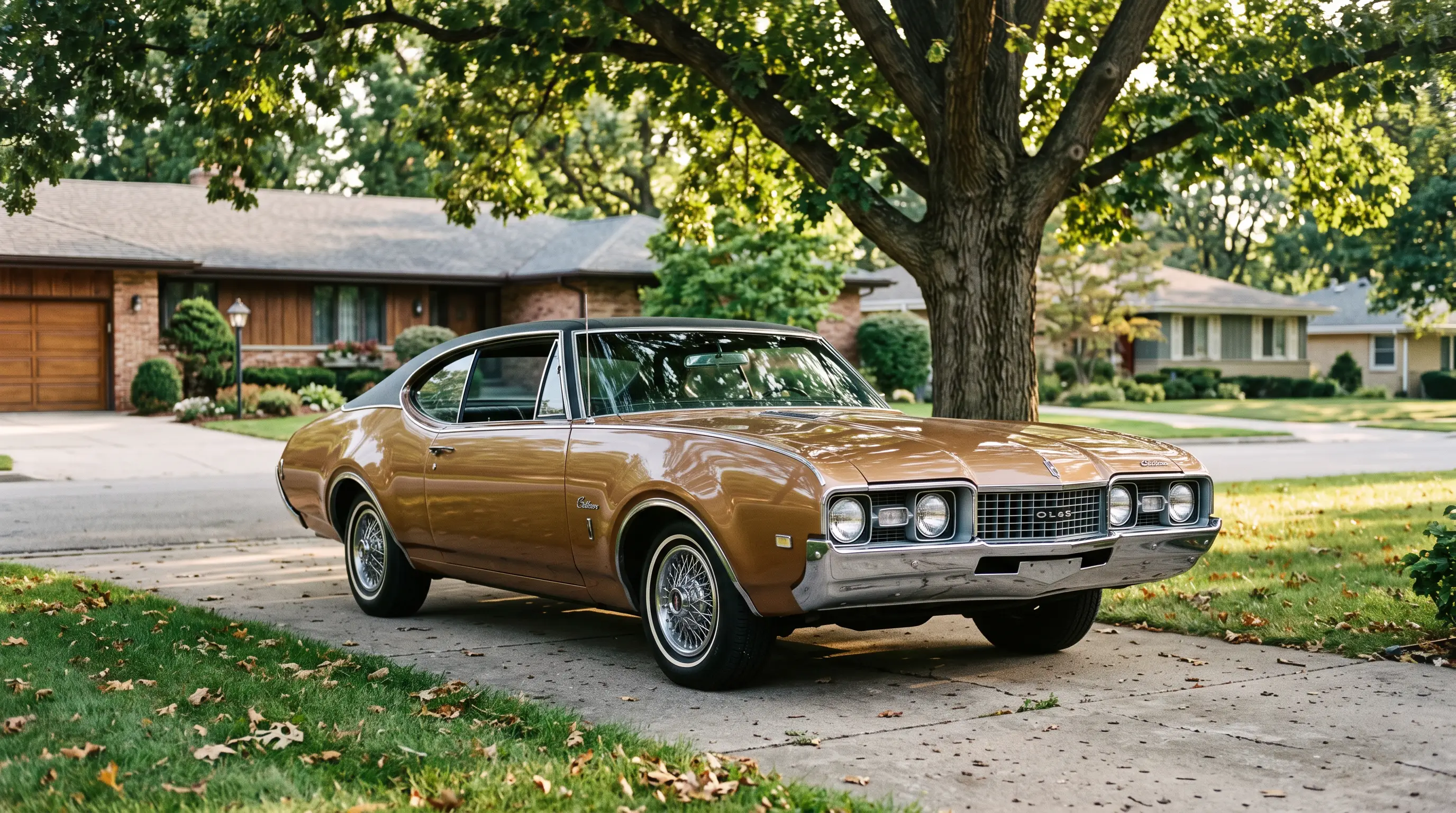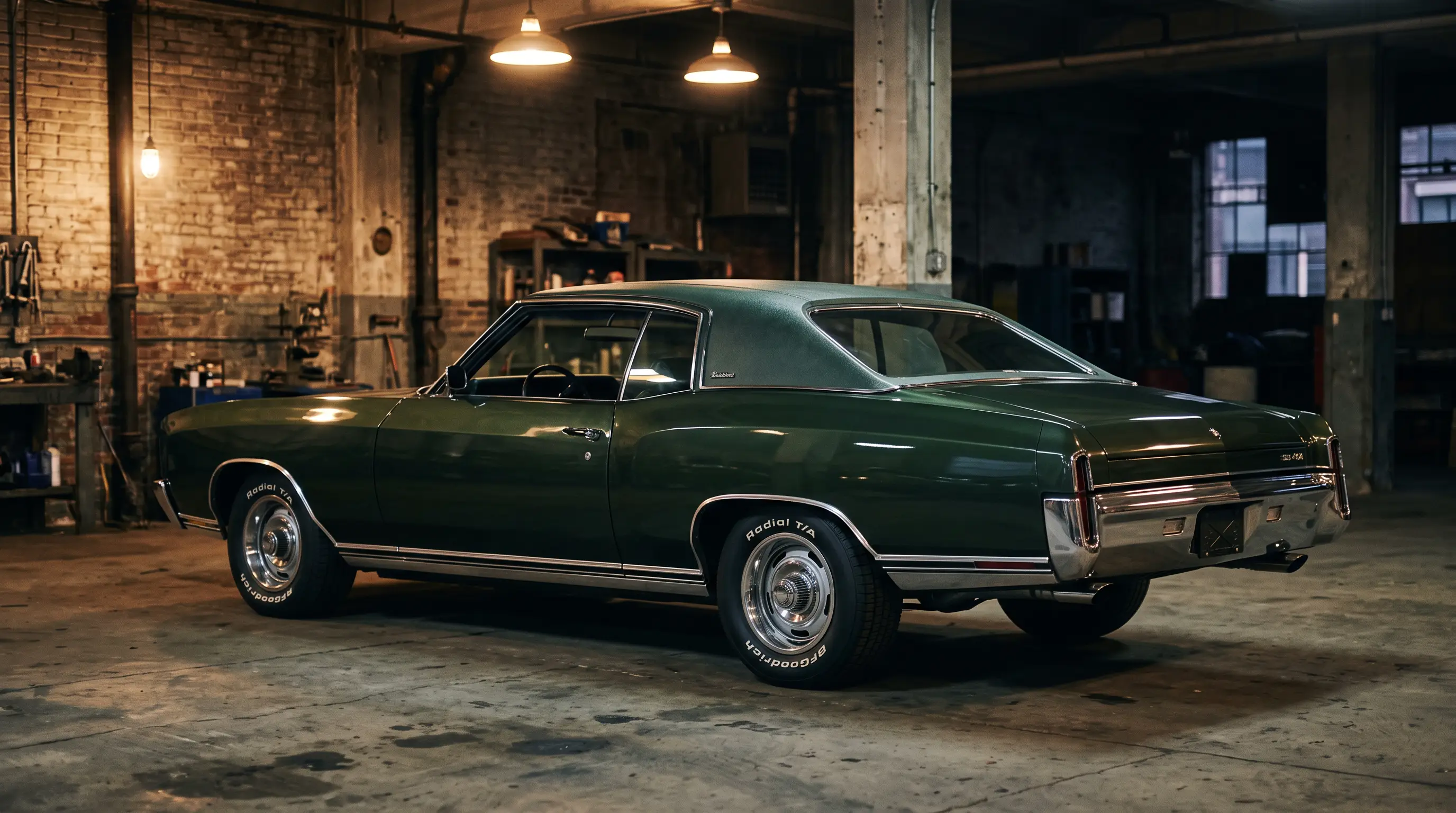
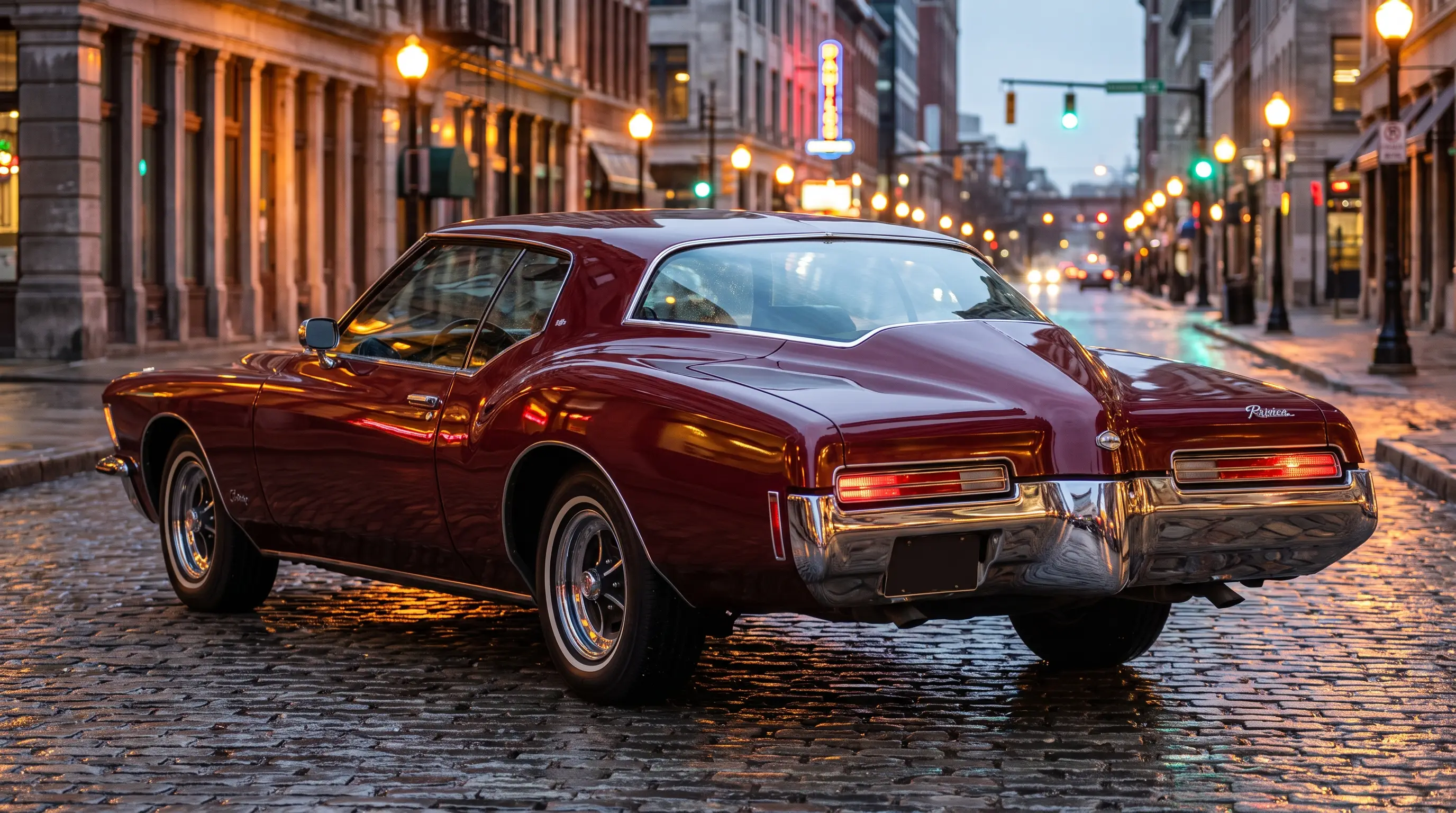
Buick Riviera 1971 road presence is not a phrase that needed much explaining to anyone who parked one nose-out at a shopping center in the fall of 1970. The third-generation Riviera arrived nearly nineteen feet long, wrapped in a fastback roofline that tapered to a point at the rear window, and it did not look like anything else General Motors was building that year. Where the outgoing second-generation car had settled into a handsome but familiar shape, the 1971 car reintroduced the idea that a personal luxury coupe could still be a spectacle. It filled a parking space differently than a Thunderbird or an Eldorado did, and drivers noticed the reaction before they noticed the horsepower rating.
A shape built to be seen from every angle
Bill Mitchell's design studio had been chasing the boat-tail idea for years before it reached production, and by the time it landed on the Riviera the studio had learned how to make a long car read as purposeful rather than bloated. The tapering rear deck, the knife-edge fenders, and the sharply raked windshield gave the car a sense of motion even parked at the curb. That was deliberate. A personal luxury coupe in 1971 lived or died on how it looked sitting still in a driveway as much as how it drove, and Buick's stylists understood that the Riviera needed a silhouette people would recognize from a block away. For the full account of how that shape came together, see where this started.
The proportions mattered as much as the details. A long hood and a short, tapering rear gave the car a wedge profile that made it look faster standing still than most contemporaries looked at speed. Owners who cross-shopped it against an Eldorado or a Mark III often described the same thing: the Riviera looked like it was already leaning into a corner before the key ever went into the ignition.
Size that announced itself
At nearly 218 inches long and riding on a 122-inch wheelbase, the 1971 Riviera was a genuinely large automobile, and Buick never tried to disguise that. Instead the styling leaned into the scale, using the long hood and low beltline to make the mass look intentional rather than excessive. Compared to the tighter, more compact first-generation cars from 1963, this was a different kind of statement, one built for a market that increasingly wanted its personal luxury coupes to look substantial in traffic.
| Spec | 1971 Riviera |
|---|---|
| Overall length | 217.4 in |
| Wheelbase | 122 in |
| Standard engine | 455 cu in V8 |
| Base horsepower | 315 hp (gross) |
| Body style | 2-door fastback hardtop coupe |
| Signature feature | Boat-tail rear deck and split rear glass on certain trims |
Sound and stance backed up the look
The 455 cubic inch V8 under the hood gave the Riviera a low, muted exhaust note that matched the visual confidence of the body. This was not a car chasing quarter-mile bragging rights, but it also never felt underpowered pulling away from a light. That combination, big body, big torque, unmistakable silhouette, is what people mean when they talk about buick riviera 1971 road presence specifically rather than just performance figures. The car communicated authority at idle, before a driver ever touched the accelerator.
Ride height and stance played into this too. Buick tuned the suspension for a settled, planted look rather than a jacked-up stance, which kept the long rear deck from appearing awkward the way some competitors' tails did when loaded down. The result was a coupe that looked composed at 10 miles an hour in a parking lot and equally composed cruising at highway speed.
How period buyers and press reacted
Contemporary road tests spent as much time describing the visual impact of the boat-tail as they did discussing its mechanical specifications, which was unusual for automotive journalism of the era. Reviewers who were accustomed to comparing horsepower and 0 to 60 numbers found themselves writing about proportion and silhouette instead, because that was the story Buick had actually built. Some critics found the shape too aggressive for a car marketed as refined personal luxury, but even the skeptics rarely called it forgettable, and that reaction, love it or argue about it, is exactly what a design department chasing genuine road presence hopes to generate.
"Production records show Buick's stylists chasing one specific goal with the 1971 body: a car you could identify from the back at a hundred yards. Everything else, including the eventual criticism, followed from that decision."
- Tom Ramirez
Presence in daily traffic, not just at a show
It is easy to talk about road presence in terms of car shows and photographs, but the 1971 Riviera earned its reputation in ordinary traffic first. Buyers who used the car as an everyday driver reported the same pattern over and over: other drivers slowed to look, gas station attendants asked questions, and the car drew attention even in cities full of large domestic coupes. Part of that came from unfamiliarity, since nothing else on the road shared the tapering boat-tail profile, and part of it came from the sheer scale of the thing sitting at a stoplight next to smaller sedans. A Riviera in traffic did not need to be moving fast to command a lane's worth of attention.
That everyday visibility mattered to Buick's marketing plan. Personal luxury coupes sold partly on the promise that the owner would be noticed, and the boat-tail Riviera delivered that promise without requiring a loud exhaust or flashy paint. A base color like a deep maroon or forest green on the long body was often enough to make the car look formal and dramatic at once, which is a harder trick to pull off than it sounds.
Why the shape still reads as bold decades later
Personal luxury coupes from the early 1970s tend to blur together in memory, a parade of long hoods and vinyl roofs that competed mostly on badge prestige. The 1971 Riviera does not blur, because the boat-tail rear deck gives it a silhouette that photographs distinctly from every angle, front, side, or rear. That durability of impression is the real measure of road presence, and it explains why collectors today still describe pulling up to a car show in one the same way period owners described pulling into a country club lot in 1971: heads turn before anyone reads the badge. If you want to see what that presence looks like parked in your own driveway, there are shop classic Riviera listings worth a look.
What stands out most, looking back at the model year from decades of hindsight, is how little the Riviera relied on badges or ornamentation to make its case. The proportions did the talking. That is a rarer trait among early 1970s personal luxury coupes than people remember, and it is the real reason the 1971 through 1973 boat-tail cars still get pulled out for a second look at any gathering where they appear.