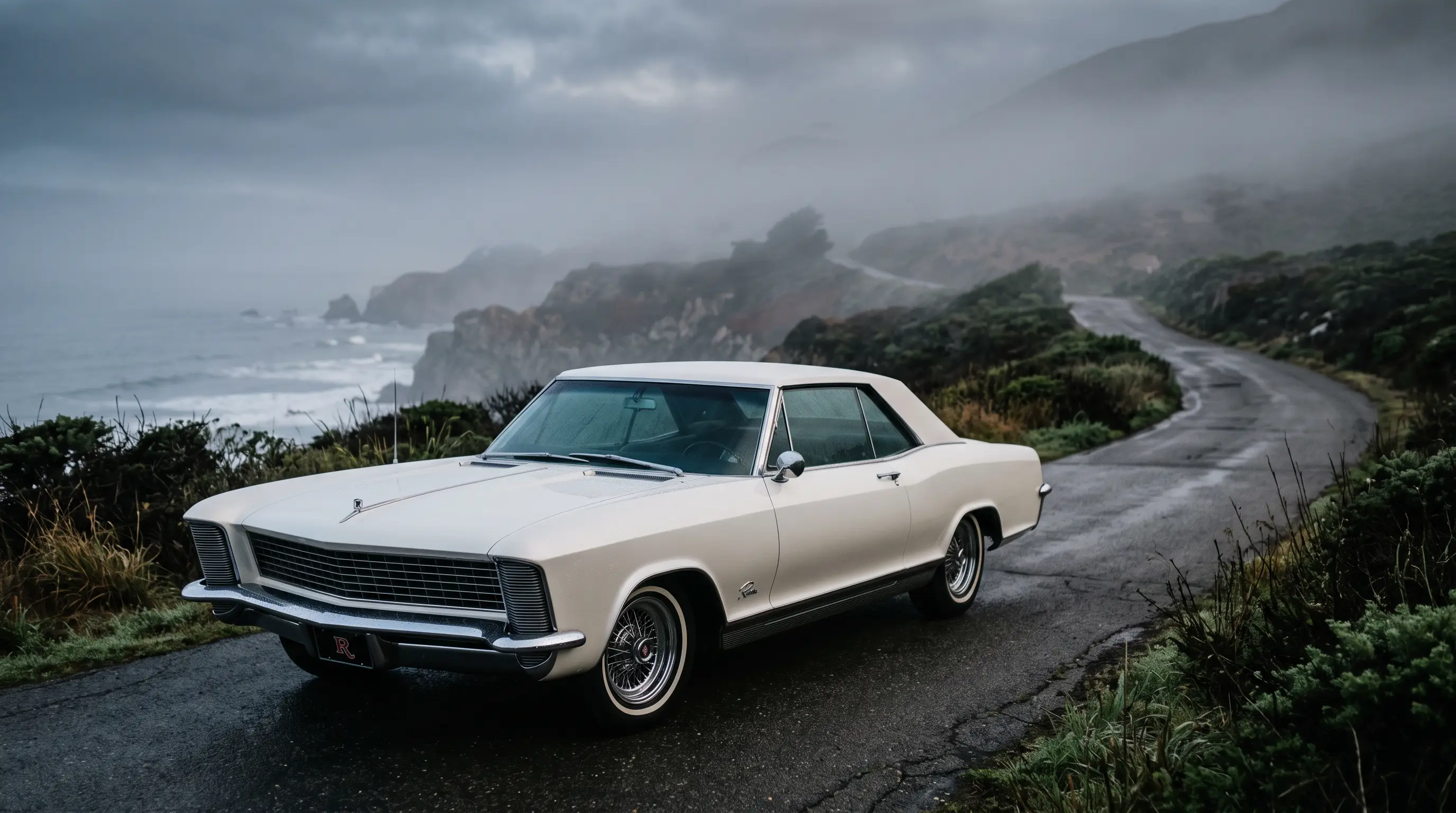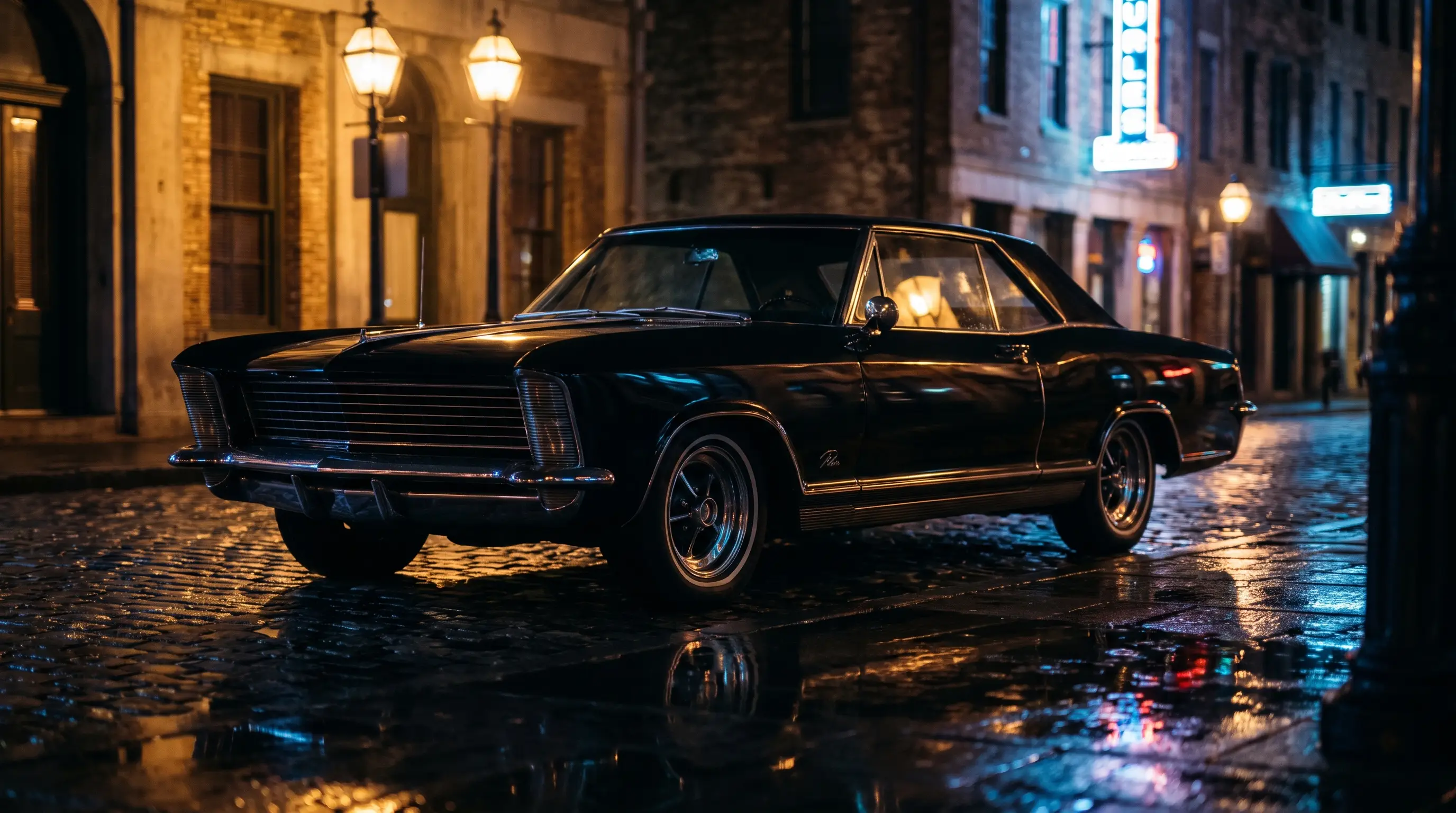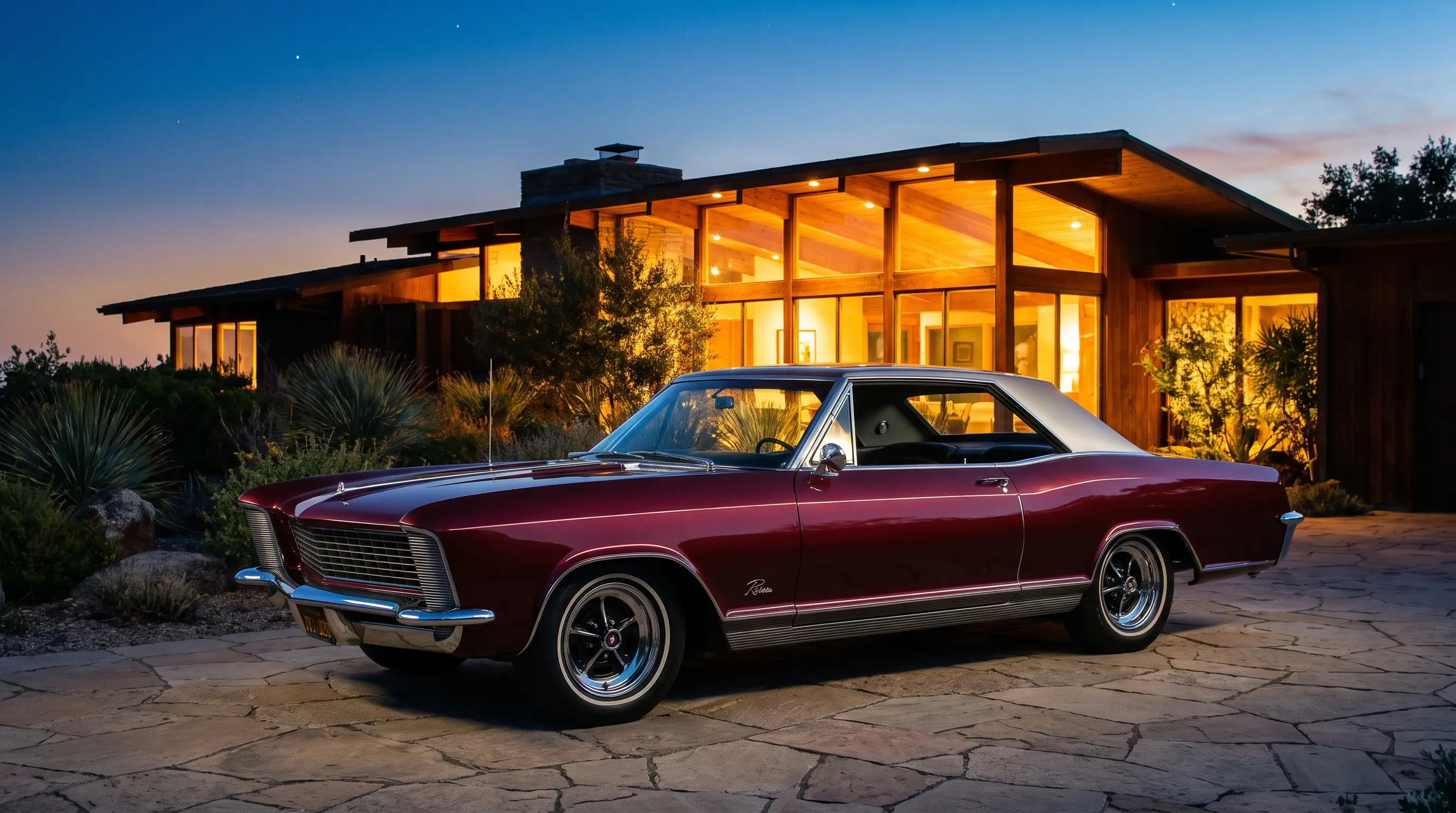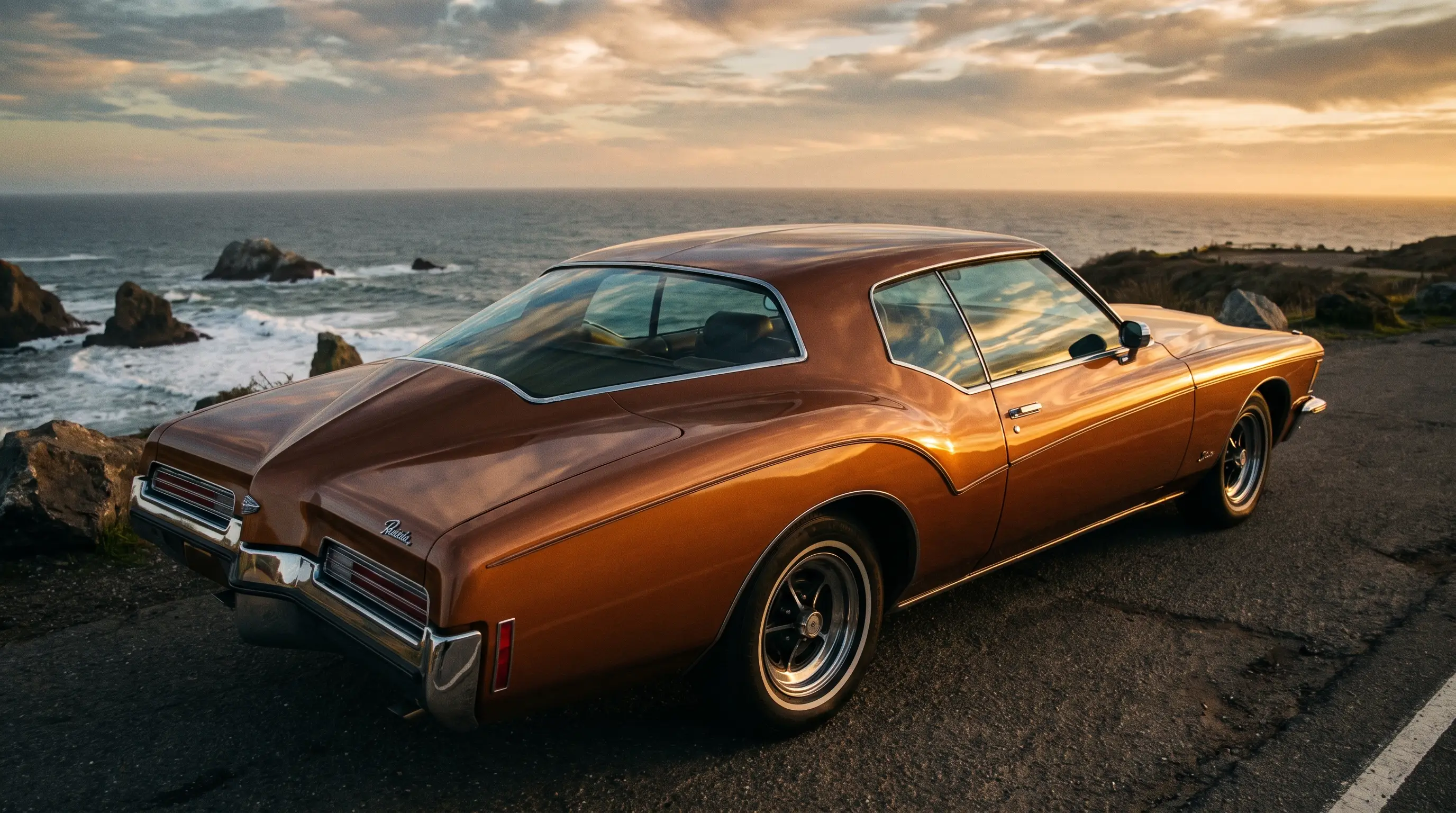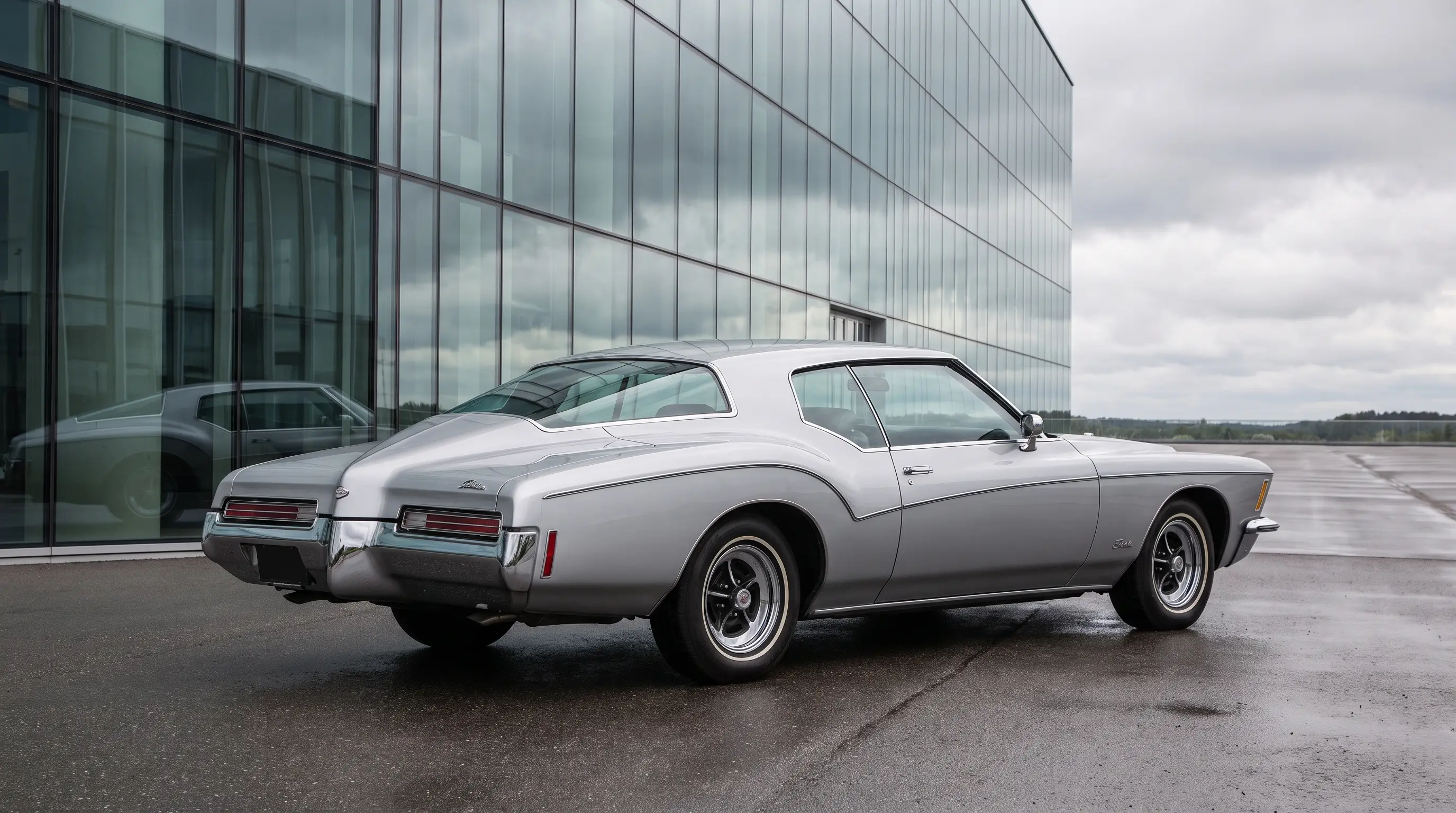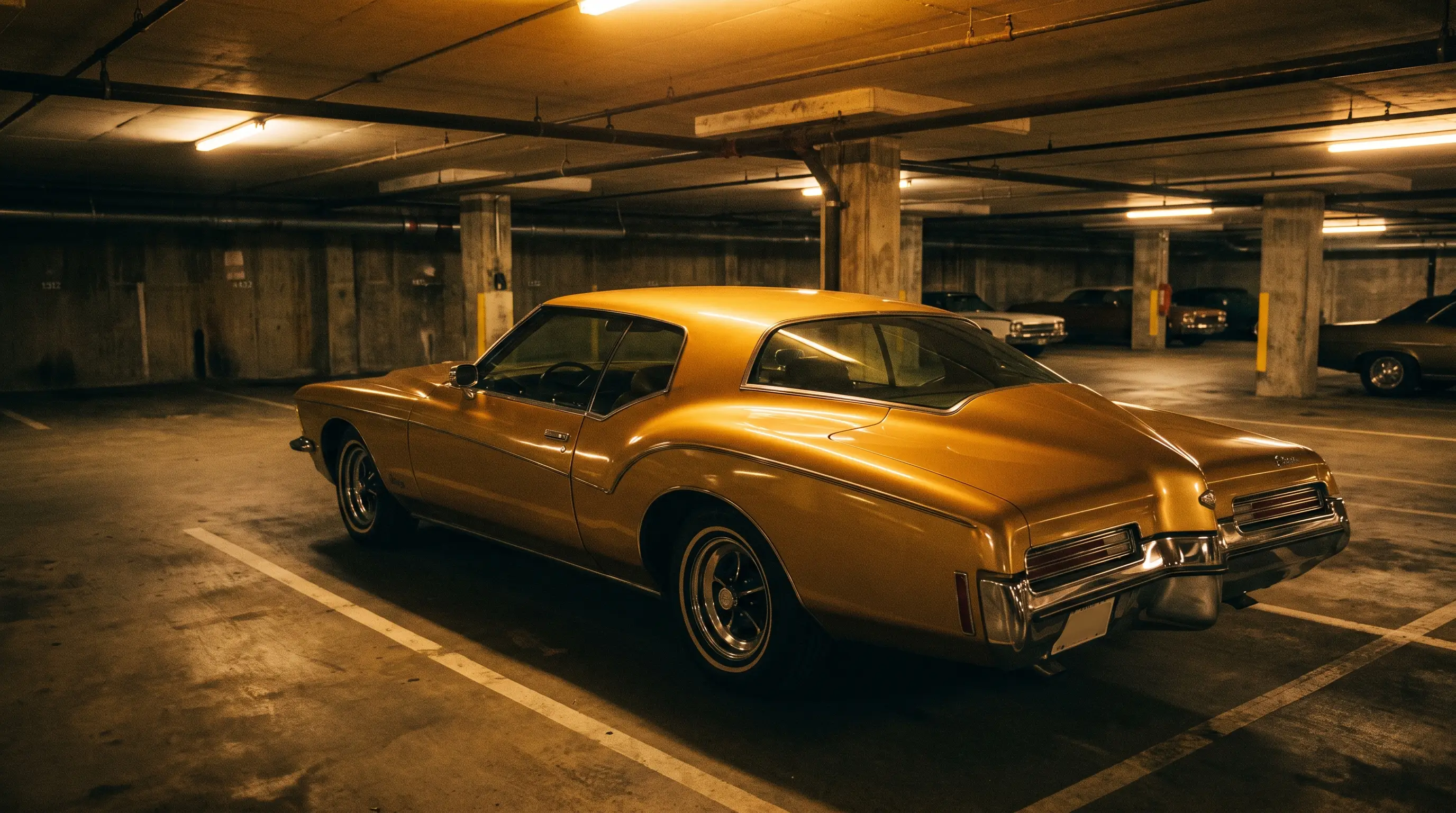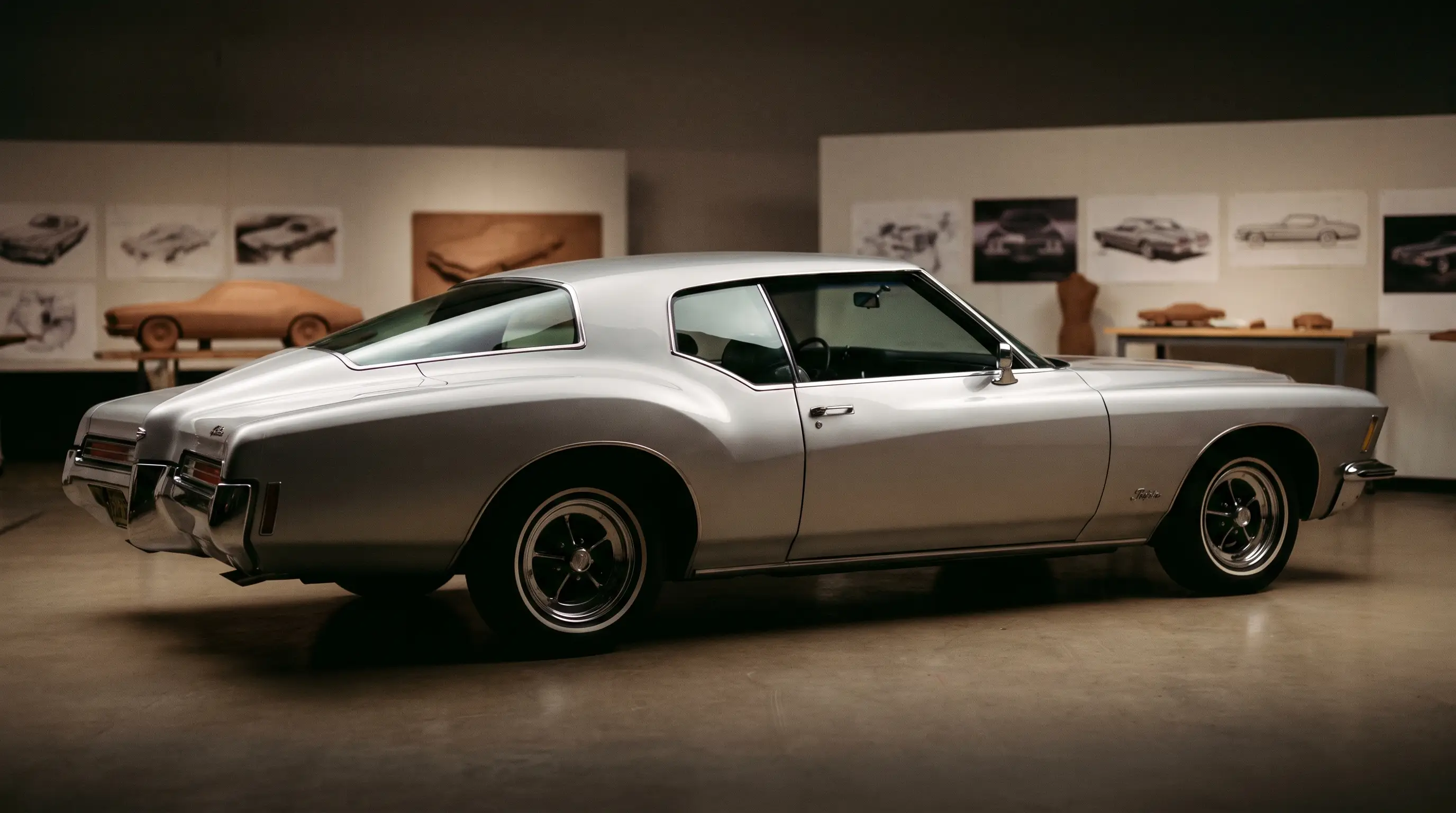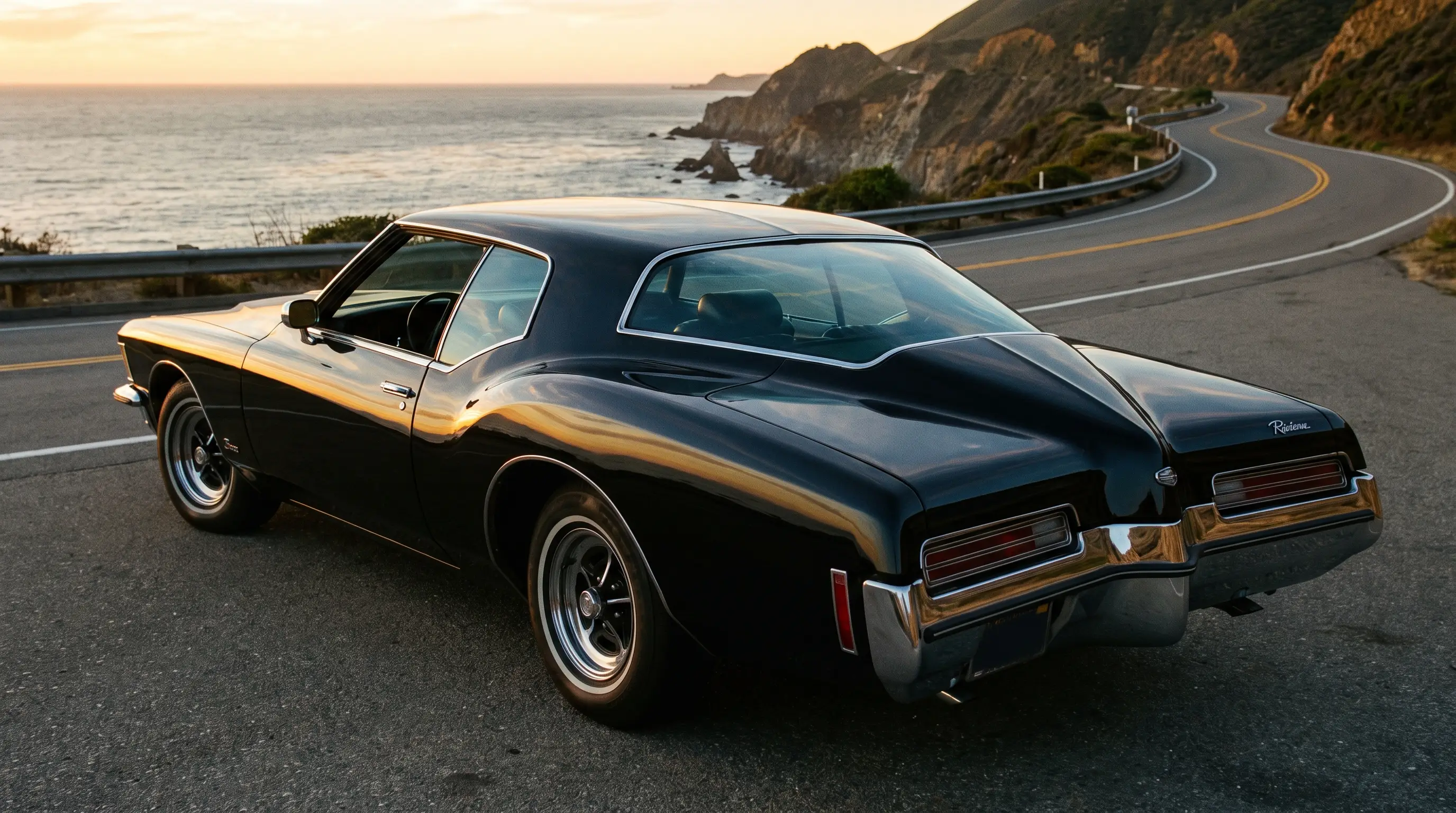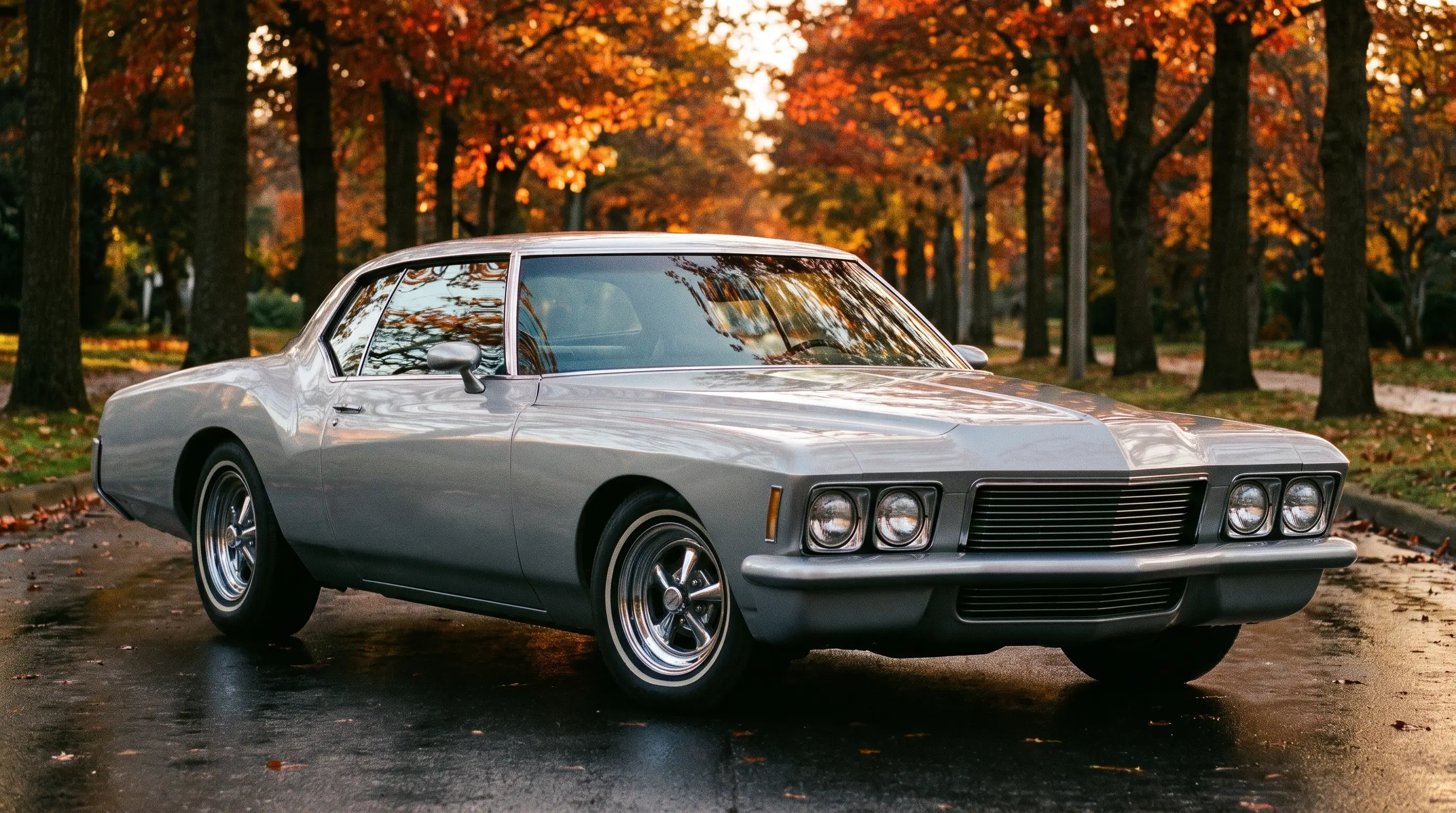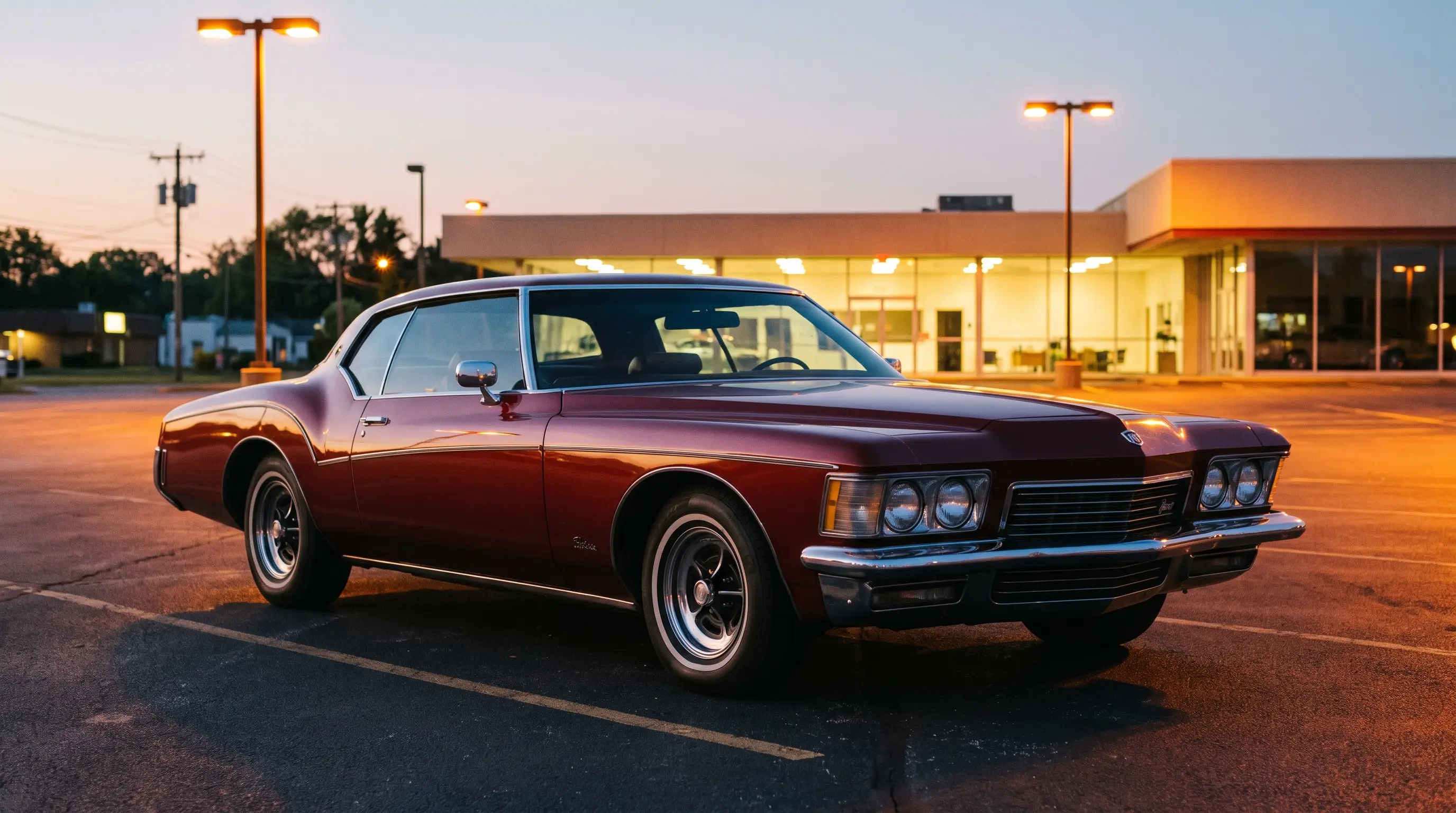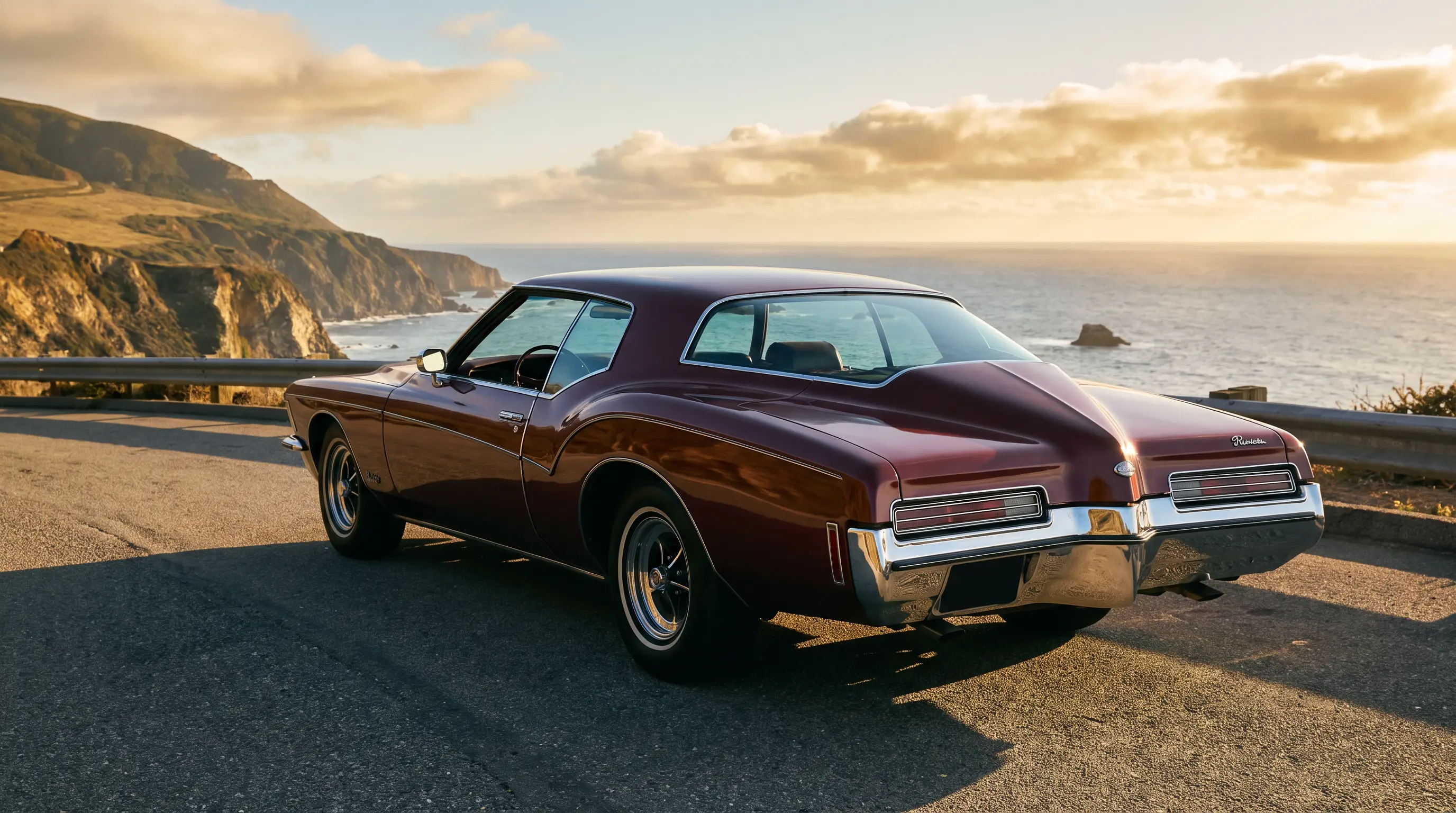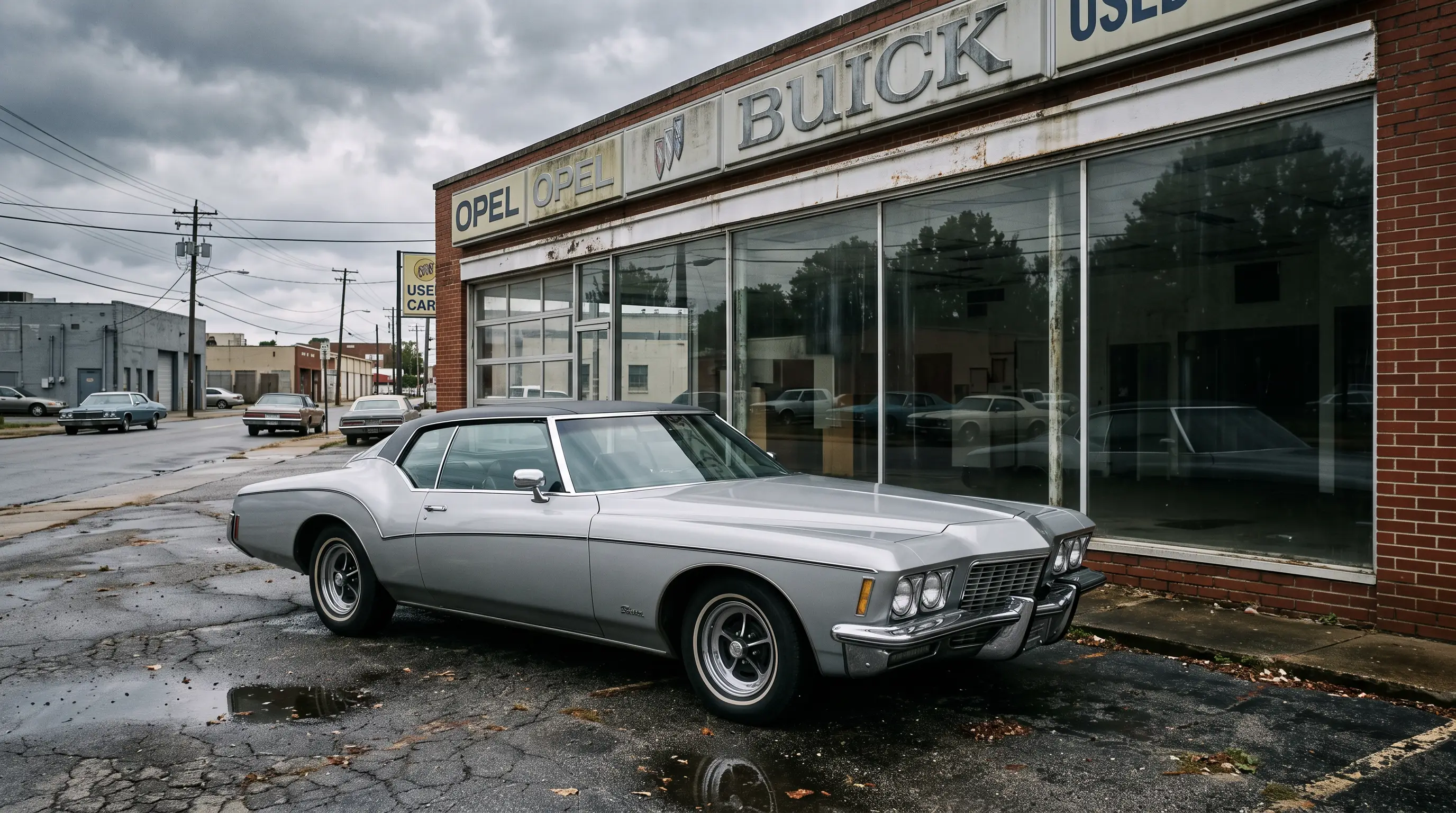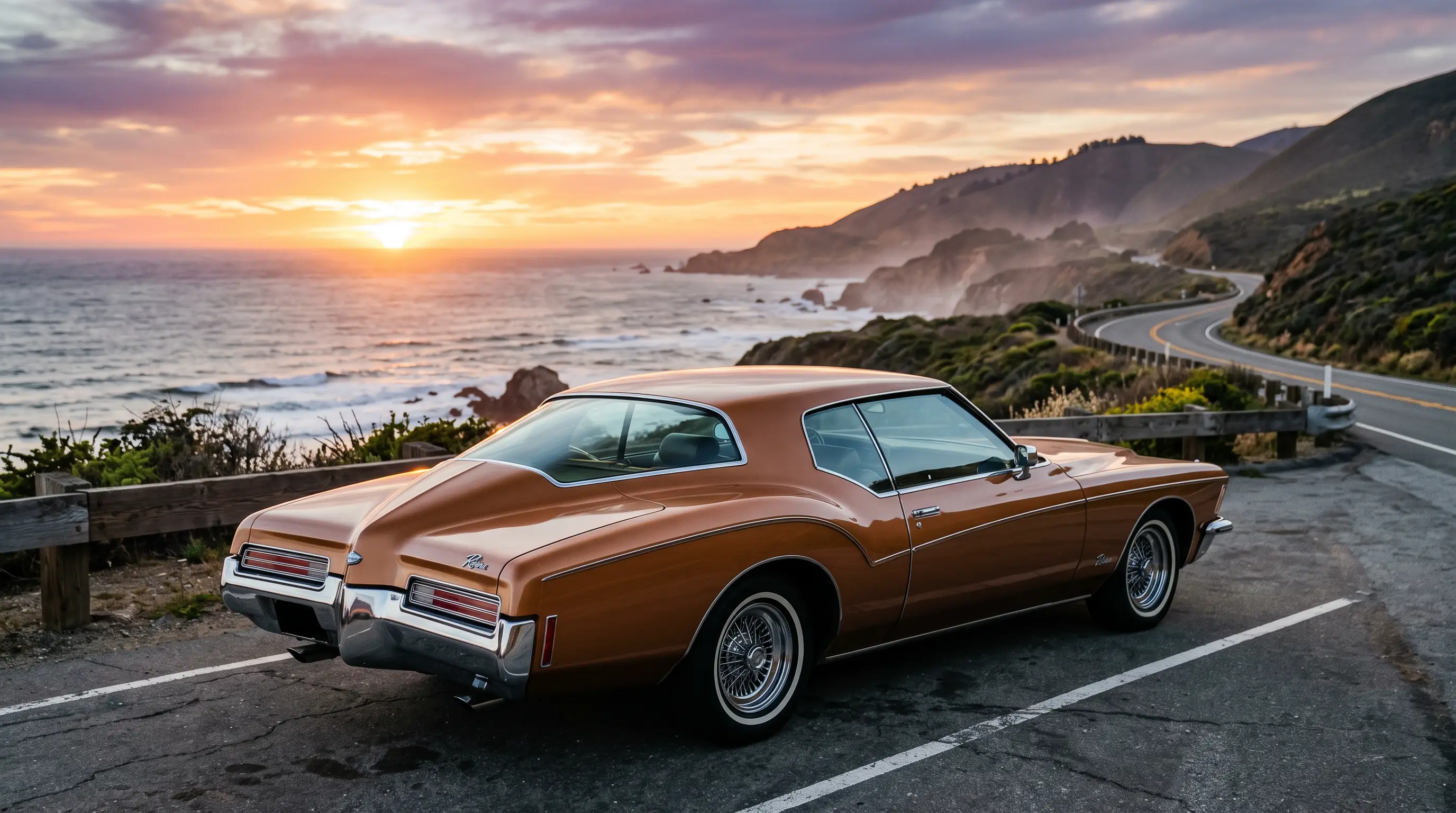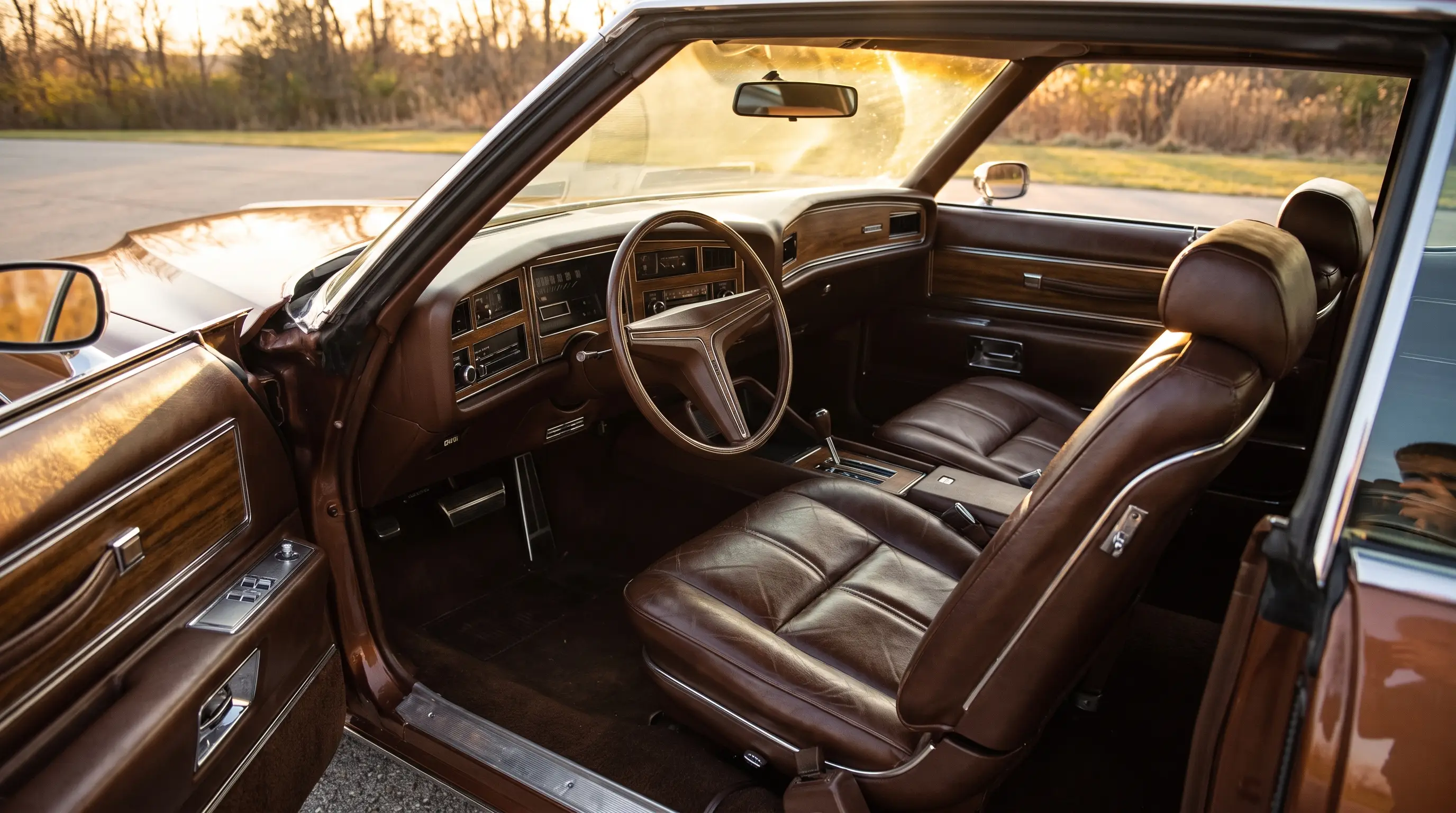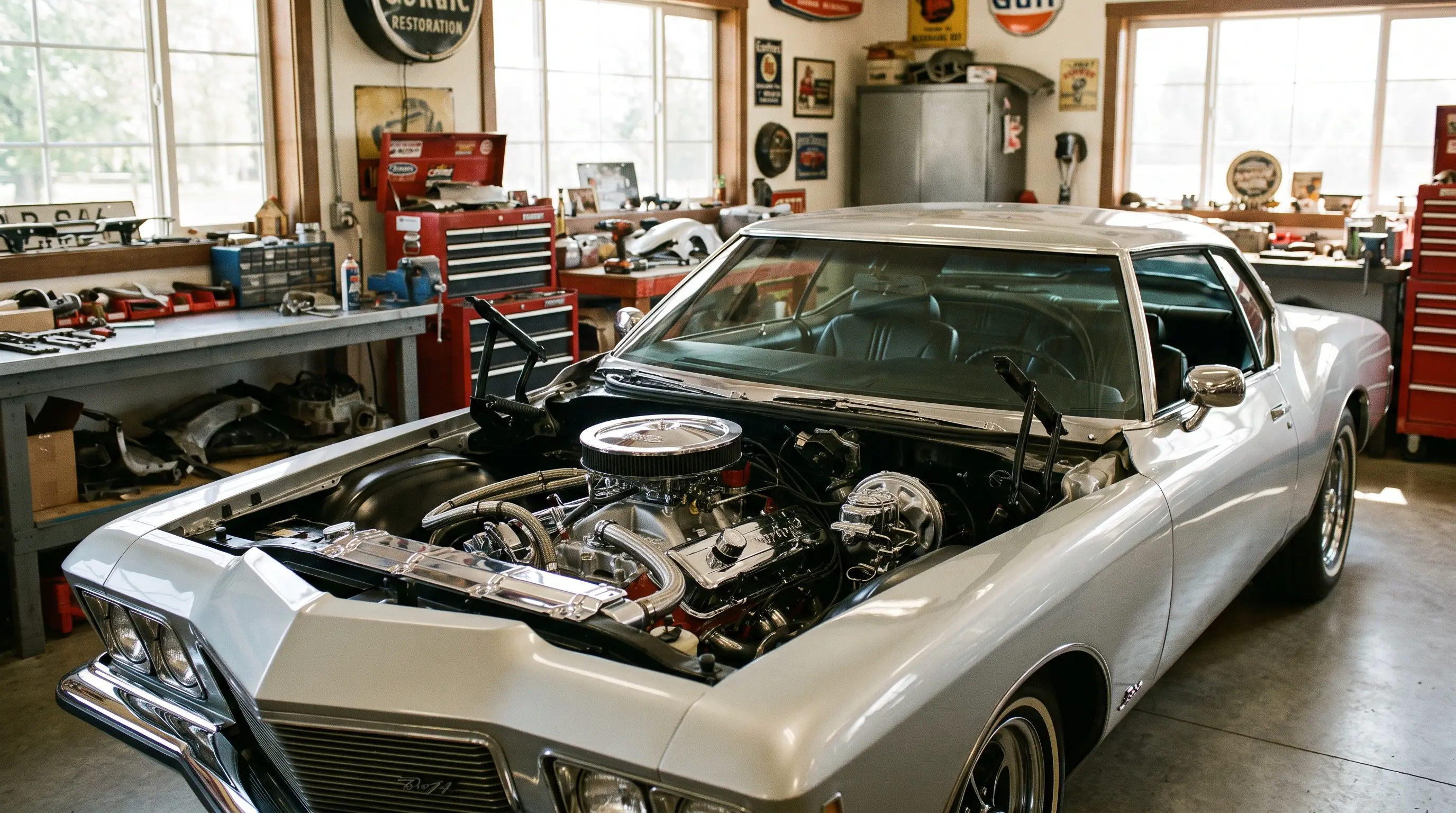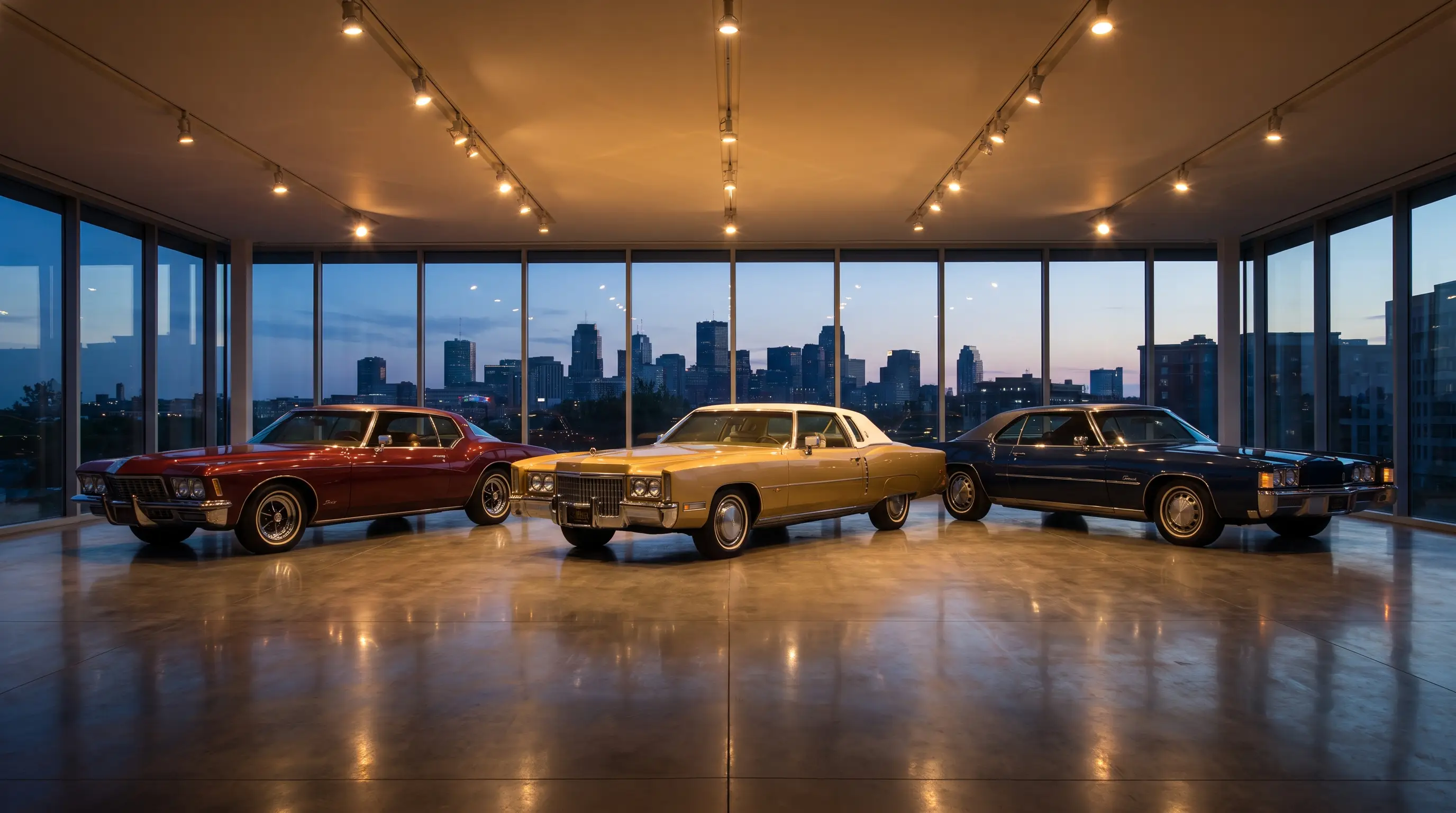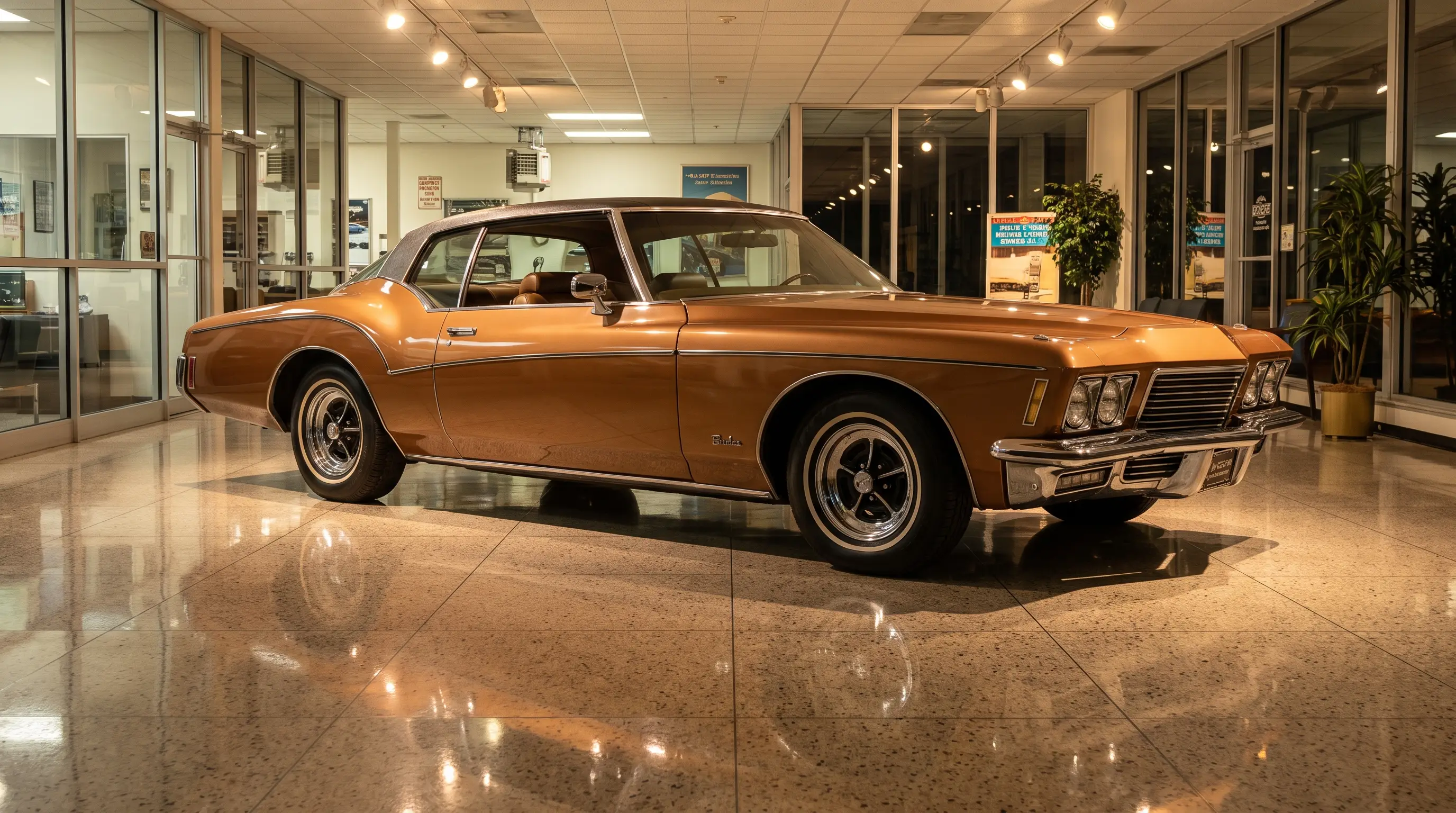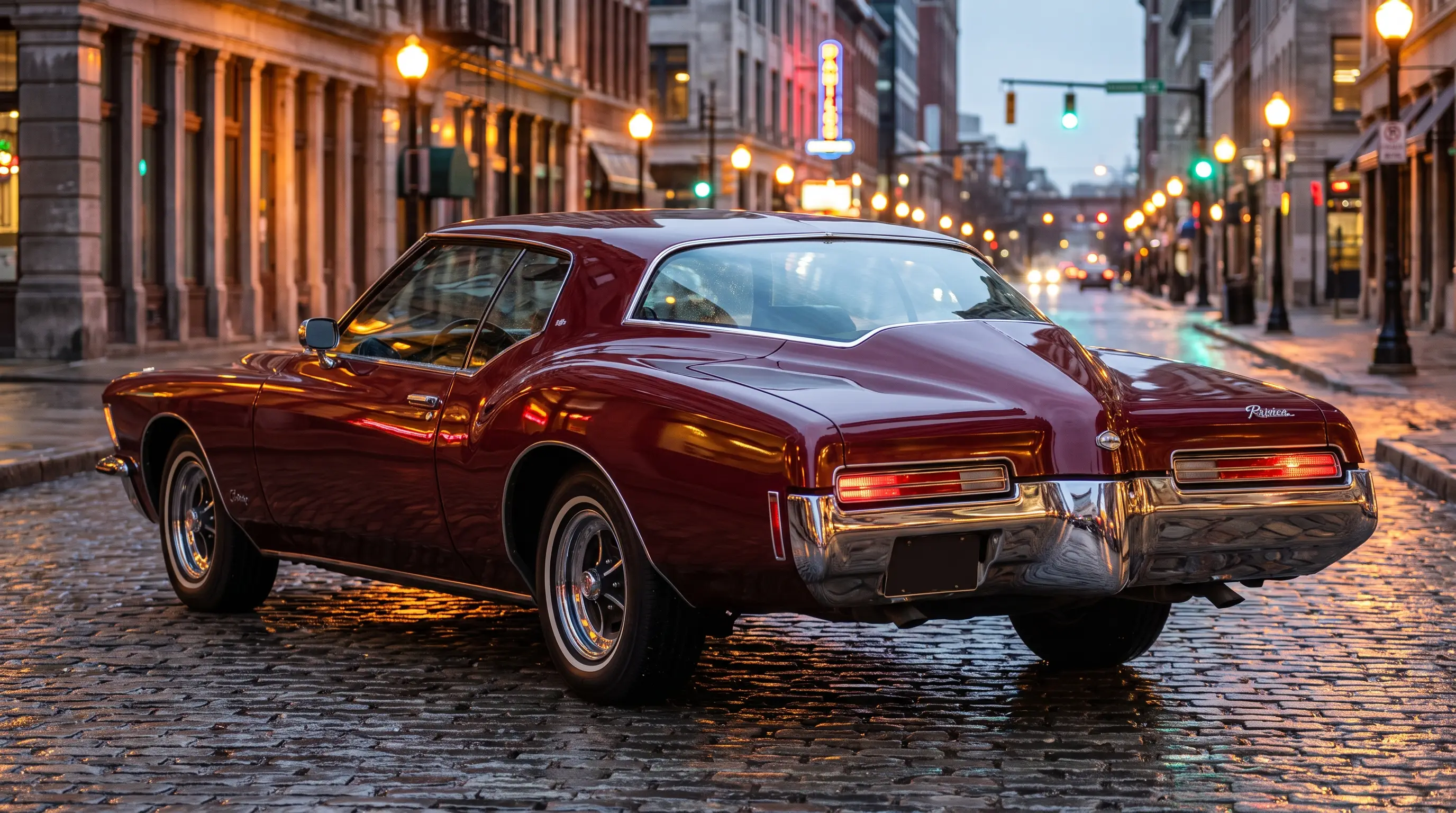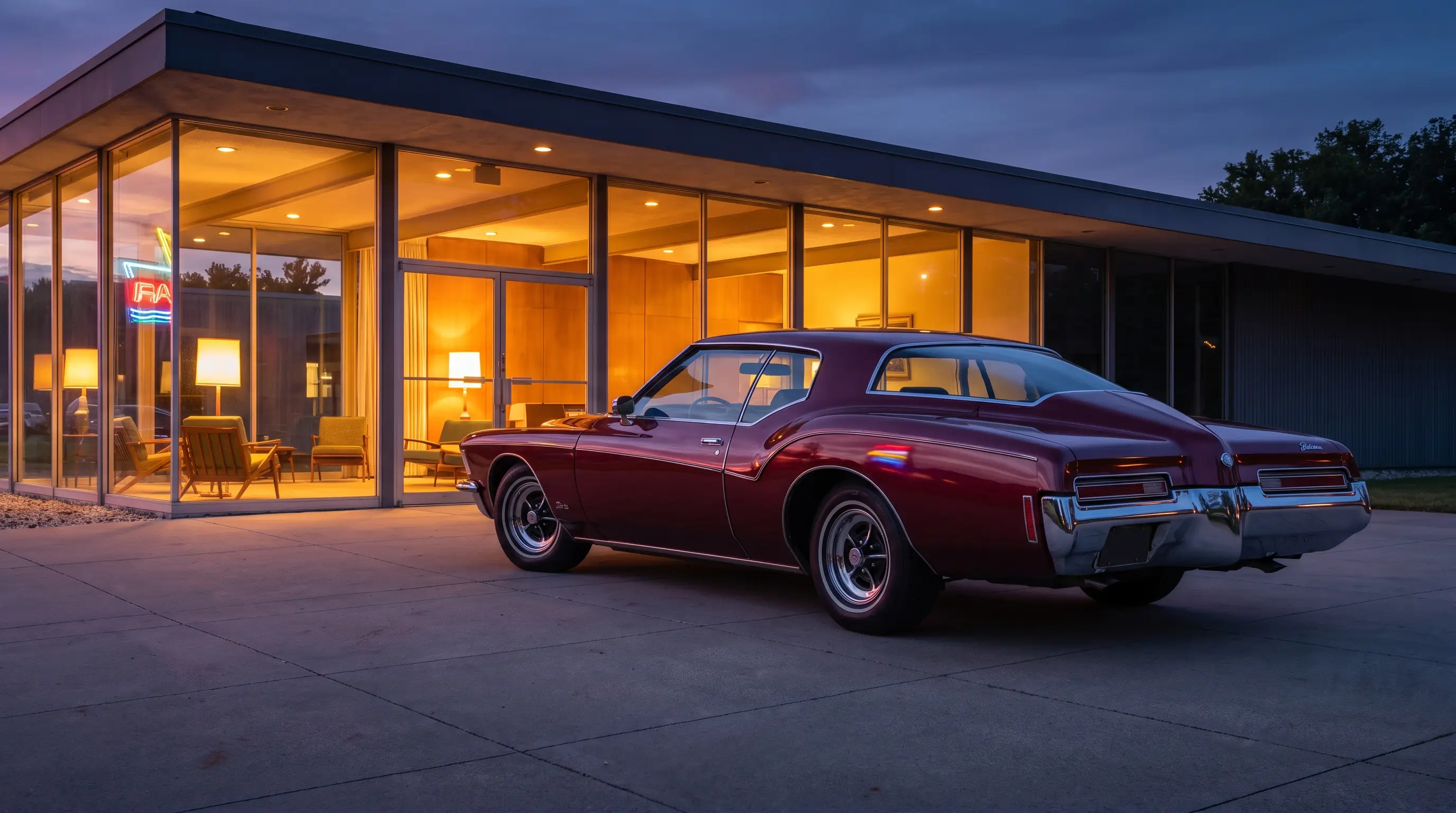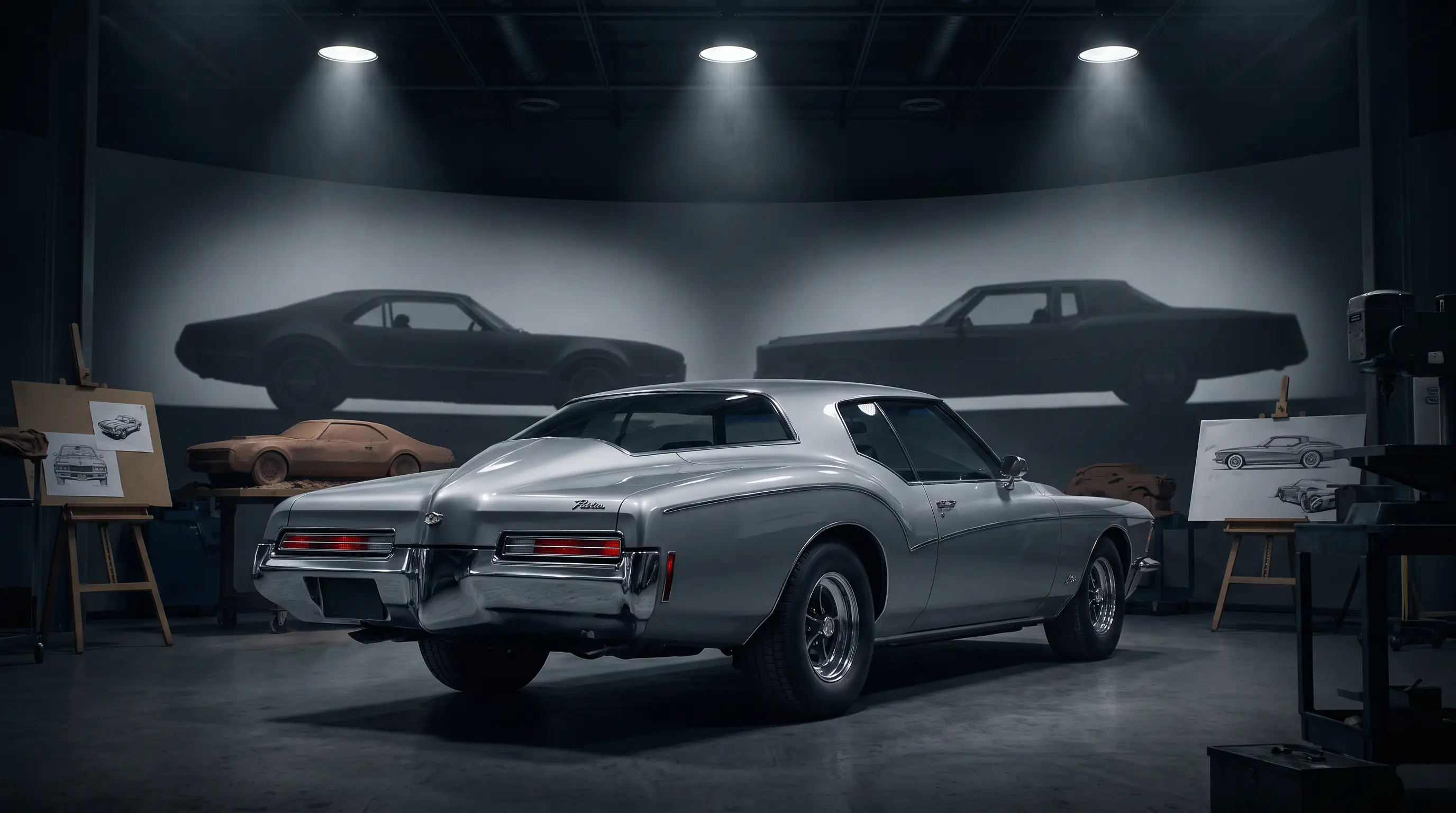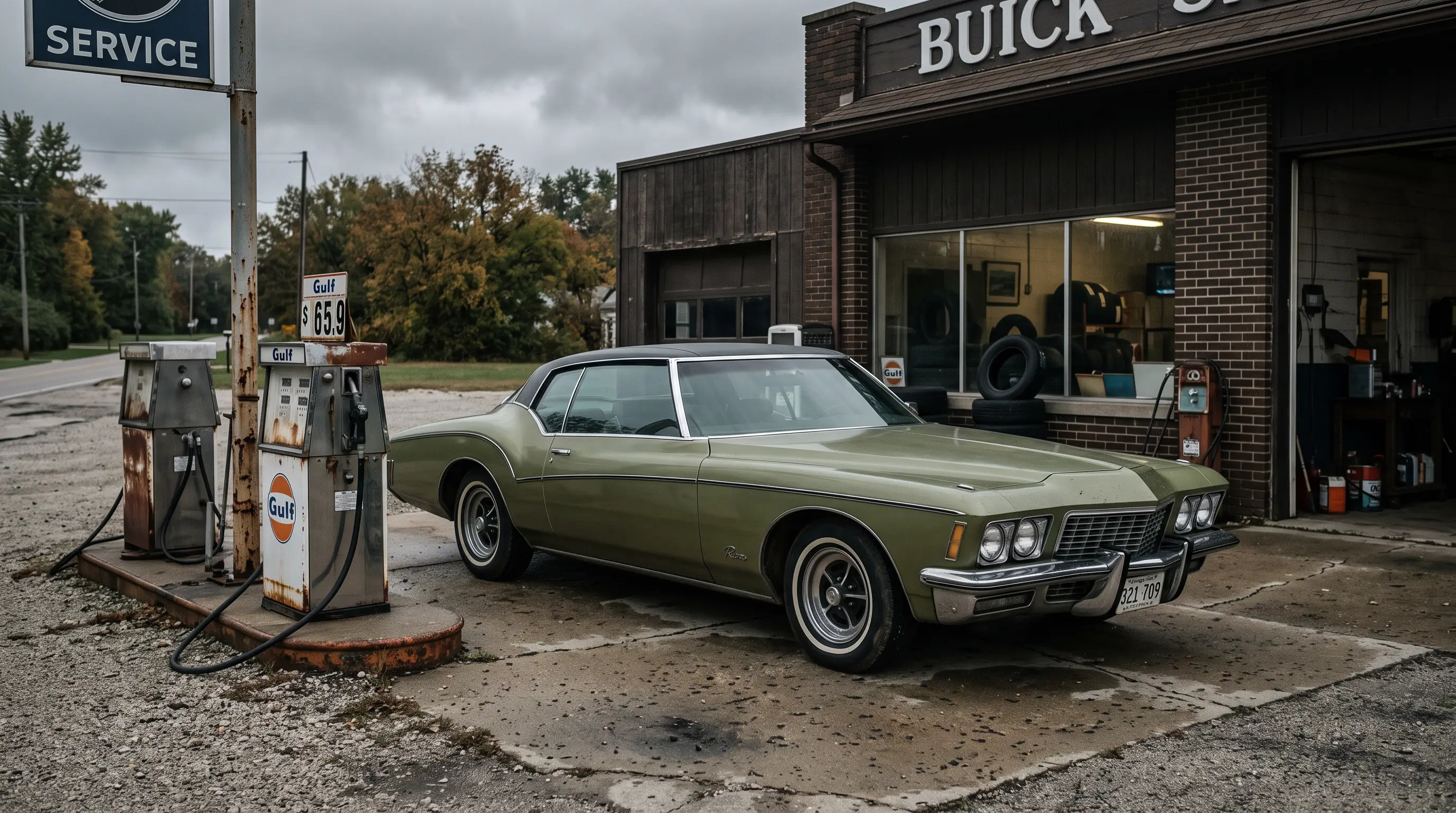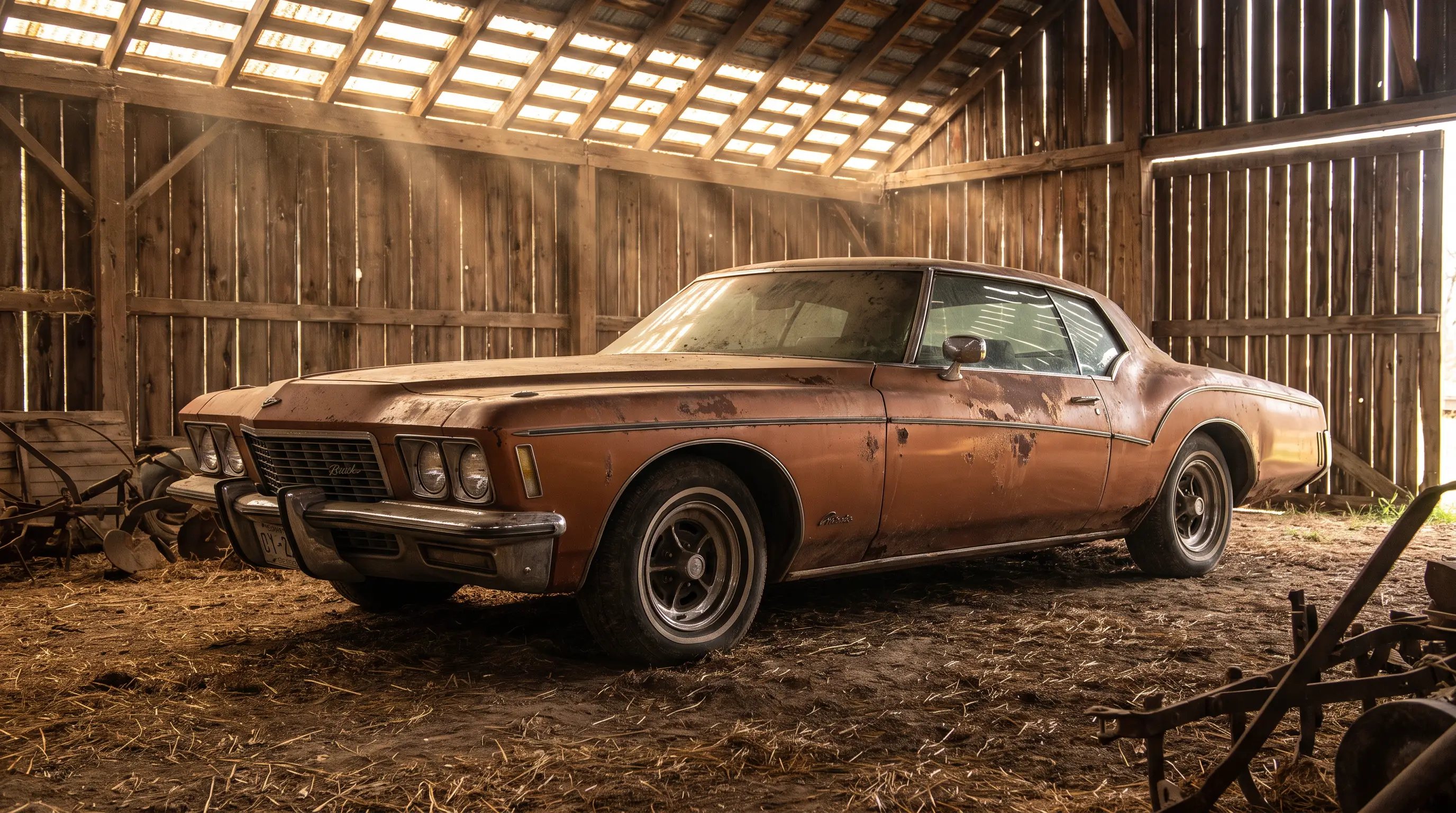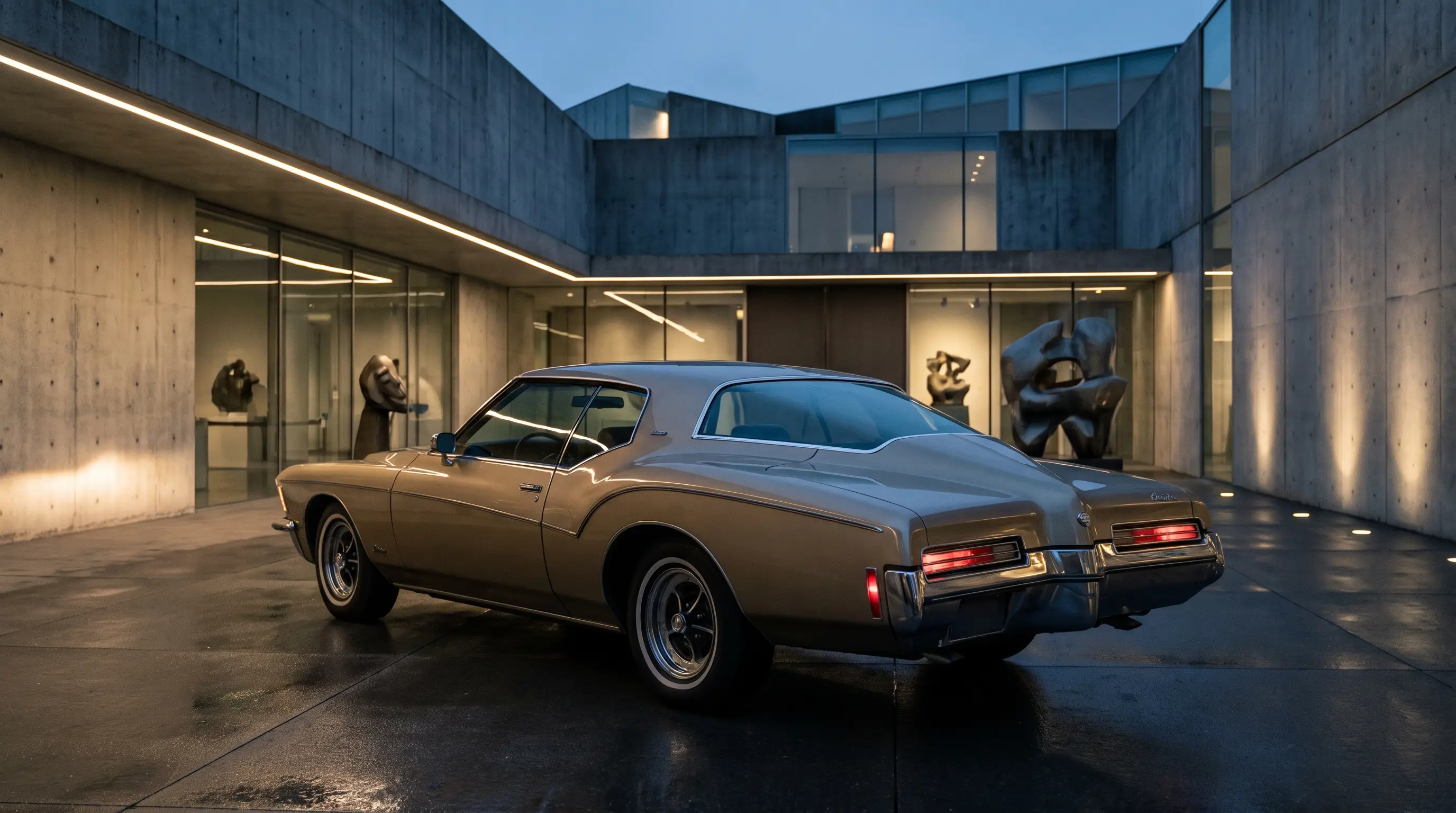
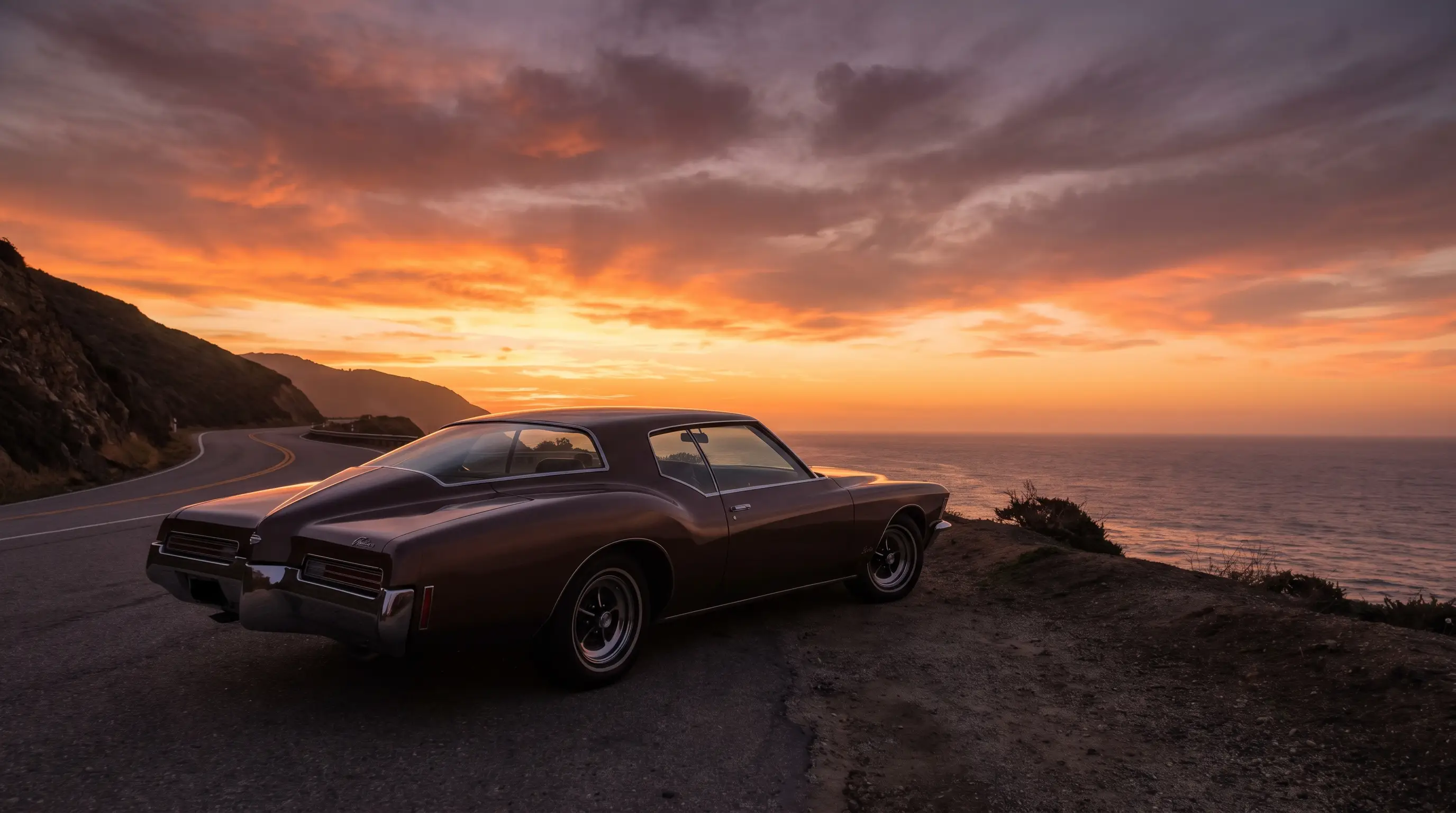
The first time you stand behind a 1971 Buick Riviera and look down that pointed tail, you understand it is not a shape that happened by committee. Somebody fought for it. As a guy who has spent his working life with a sanding block in one hand and a paint gun in the other, I can tell you that the boat-tail is one of the hardest production bodies of its era to make look right, and one of the most rewarding when it does. It is all compound curve and no place to hide. That is exactly why it deserves respect.
Buick built the boat-tail Riviera for three model years, 1971 through 1973, and it split opinion the day it landed. Some people thought it was the most beautiful thing Detroit had done in a decade. Others thought Buick had lost its mind. Both camps were kind of right, and that tension is the whole story of the car.
Bill Mitchell's boldest gamble
The boat-tail came out of the General Motors design world under Bill Mitchell, with a young stylist named Jerry Hirshberg doing much of the heavy lifting on the shape. Mitchell loved the pointed-tail idea. He had done a version of it on the split-window Corvette a few years earlier, and he wanted that dramatic tapering rear on a big personal-luxury coupe. The problem was that the Riviera by 1971 rode on the shared E-body platform, a big car, and grafting a delicate boat-tail onto that much sheet metal was a genuine engineering and styling wrestling match.
What came out the other end was polarizing on purpose. The rear glass swept down into a point. The deck ran back to almost nothing. From the right angle the car looks like it is moving while parked. From the wrong angle, and there are a few, it looks heavy in the hips. Mitchell knew the risk and took it anyway. If you want the full arc of how the model got from its clean 1963 debut to this, the the buick riviera story walks the whole road, and the boat-tail is the boldest swing in it.
Why the body is so hard to get right
Let me talk about the metal for a second, because this is where I live. The boat-tail body has almost no flat panels back there. It is all crown and reflection. When light travels across that rear deck and down into the tail, any low spot, any wave, any filler that was floated a hair proud, it all shows up like a spotlight. Flat panels forgive a builder. Compound curves like these do not.
The rear quarters are enormous single expanses of steel, and the way they roll toward the center point means the two sides have to mirror each other perfectly or the eye catches it instantly. A body that looks straight on a Chevelle would look crooked on this car. So when you see a 1971 Buick Riviera with a tail that reads dead symmetrical and a reflection that runs clean from the roof to the bumper, understand that somebody who knew what they were doing spent real time on it. That is the difference between a period-correct restoration and a poseur that got a quick coat of paint and a wax.
| Specification | 1971-1973 Boat-Tail Riviera |
|---|---|
| Body style | Two-door boat-tail personal-luxury coupe |
| Platform | Shared E-body, rear-wheel drive |
| Standard engine | 455 cubic inch V8 |
| GS / Stage 1 option | Higher-output 455 tuning, part of the GS package through 1972, a standalone option for 1973 |
| Chief stylist | Jerry Hirshberg under Bill Mitchell |
| 1971 production | 33,810 units |
| Design signature | Tapered pointed rear deck and V-shaped backlight |
The platform it was built on
Part of what made the boat-tail such a wrestling match was the starting point. By 1971 the Riviera rode on a shared corporate platform, the same basic underpinnings that lived beneath other big personal-luxury cars in the General Motors lineup. That gave the stylists a large, heavy foundation to work with, and the boat-tail rear had to be draped over it convincingly. A pointed, tapering tail wants a narrow, light body underneath. This body was neither narrow nor light.
The engineering compromise shows if you know where to look. The car is wide across the hips and long in the deck, and the tail has to gather all of that mass and bring it to a single point. On the cars where it works, the transition is seamless and the eye is fooled into thinking the whole thing was always meant to taper. On the cars where it does not, usually because of a repaint or a poorly executed repair, you can see the width fighting the point. From the factory, Buick got it right. The difficulty was keeping it right over fifty years of ownership, weather, and bodywork.
It is worth saying that this was rear-wheel drive, which matters to how the car sits and drives. A long hood, a big V8 up front, and drive to the rear give the boat-tail the classic proportions of a proper American grand tourer. It looks like what it is, a heavy, powerful, rear-drive coupe built for covering distance in comfort rather than carving a back road.
The 455 under the hood
All three boat-tail years ran the big 455 cubic inch V8. This was a torque motor, a giant relaxed engine that moved a heavy car without ever seeming to try. Buick offered a hotter version through its Gran Sport equipment, and the Stage 1 tuning that Buick fans revere was part of that GS package on the boat-tail through 1972, becoming a standalone option for the final 1973 model year. The important cultural point is not the peak number on a chart. It is that even at its most potent, the boat-tail was never a stripped-down brawler. It was a heavyweight that happened to hit hard, dressed in a tuxedo.
By 1971 the industry was already turning away from big compression and toward emissions rules and lower-lead fuel, so the published output figures came down across Detroit, and Buick was no exception. Reading period power ratings on these cars is tricky because the whole industry switched how it measured horsepower in this window, so a builder learns to treat any single number with a raised eyebrow and check what standard it was quoted under. If you care about the muscle side of the Riviera family more broadly, there is another one worth knowing that digs into the Gran Sport and the 455 as its own legend.
Why the market cooled on it, and why that was a mistake
Here is the part that still bugs me. When the boat-tail was new, it did not sell the way Buick hoped. The personal-luxury buyer of the early 1970s was drifting toward formal, upright, opera-window styling, and here was Buick offering something wild and swoopy instead. The market wanted a car that looked like a bank building. Buick handed them a piece of sculpture. Sales came in below expectations, the boat-tail lasted only three years, and Buick pivoted to a squarer car after 1973.
For decades that soft original reception kept boat-tail values quiet, which honestly was a gift to the people paying attention. These cars were undervalued for a long time relative to how special and how hard to build they are. That has been changing. Collectors have figured out that the boat-tail is a rare thing in Detroit history, a big American luxury coupe that took a genuine artistic risk, and the good honest examples have been climbing. A driver-quality car is still attainable, and the boat-tail remains one of the more distinctive things you can put in a garage.
There is a lesson in there about how taste works. When a design is brave, the crowd that rejects it at launch is usually the crowd chasing whatever is safe and current. Safe and current ages badly. The opera-window formal coupes that outsold the boat-tail looked correct in 1972 and look interchangeable now. The boat-tail looked strange in 1972 and looks like nothing else on earth today. That is the reward for taking the risk, and it only pays out to the people who kept the brave car alive long enough for the rest of the world to catch up.
From where I sit, the boat-tail is also a builder's car in the best sense, because a good one announces the quality of its work from across a parking lot. You do not need to open the hood or read the paperwork to know whether someone loved it. The tail tells you. That honesty is rare, and it is a big part of why these cars pull a crowd at every show they attend.
"People ask me if the boat-tail is worth the trouble. I tell them the tail is the trouble, and the tail is the point. You cannot fake straight on those rear quarters. When one is done right, the reflection runs from the roof to the bumper without a single ripple, and that is the whole car telling you somebody cared."
- Jim Vasquez
What separates a real one from a poseur
Because these cars carry a premium now, the market has its share of quick jobs, and a boat-tail is unusually good at exposing a lazy one. My advice comes from the body side, not the mechanical side, because that is what I know. The tail tells the truth. Stand at the back, get low, and let a hard light travel across the rear deck and quarters. On a car that was done properly the surface stays smooth and the two sides match. On a rushed one you will see the waves start to crawl.
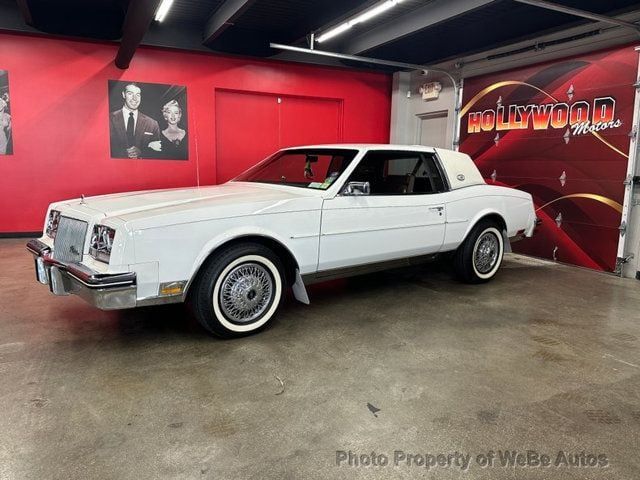
The other thing I watch is honesty about the year. The 1971 and 1972 cars have that purest, most extreme point. The 1973 is softer with the bigger front bumper. All three are legitimate boat-tails, but they are not interchangeable in the eyes of a collector, and a seller who blurs the difference is telling you something about how the rest of the car was handled.
The gamble that aged into a legend
The boat-tail Riviera is proof that the market is not always right in the moment. Buick took a swing that a lot of buyers were not ready for, paid for it in slow sales, and gave up on the shape after three years. Fifty years on, the cars that survived in good honest condition are the ones people crowd around at a show, and the squared-off coupes that outsold them are mostly forgotten. That is usually how it goes with the brave stuff. If the shape has its hooks in you, spend some time and browse classic Riviera listings with your eyes trained on that tail, because a straight one is a thing of beauty and a crooked one will haunt you.
Sources and notes
- Buick Riviera - Wikipedia
- Das Boattail: The 1971-1973 Buick Riviera - Ate Up With Motor
- 1973 Buick Riviera GS Stage 1 With Rare MaxTrac - Curbside Classic
- The 1971-73 Buick Rivieras Offered Great Boattail Designs - MotorCities
- 1971-1973 Buick Riviera - HowStuffWorks
- 1971 Buick Riviera - conceptcarz.com