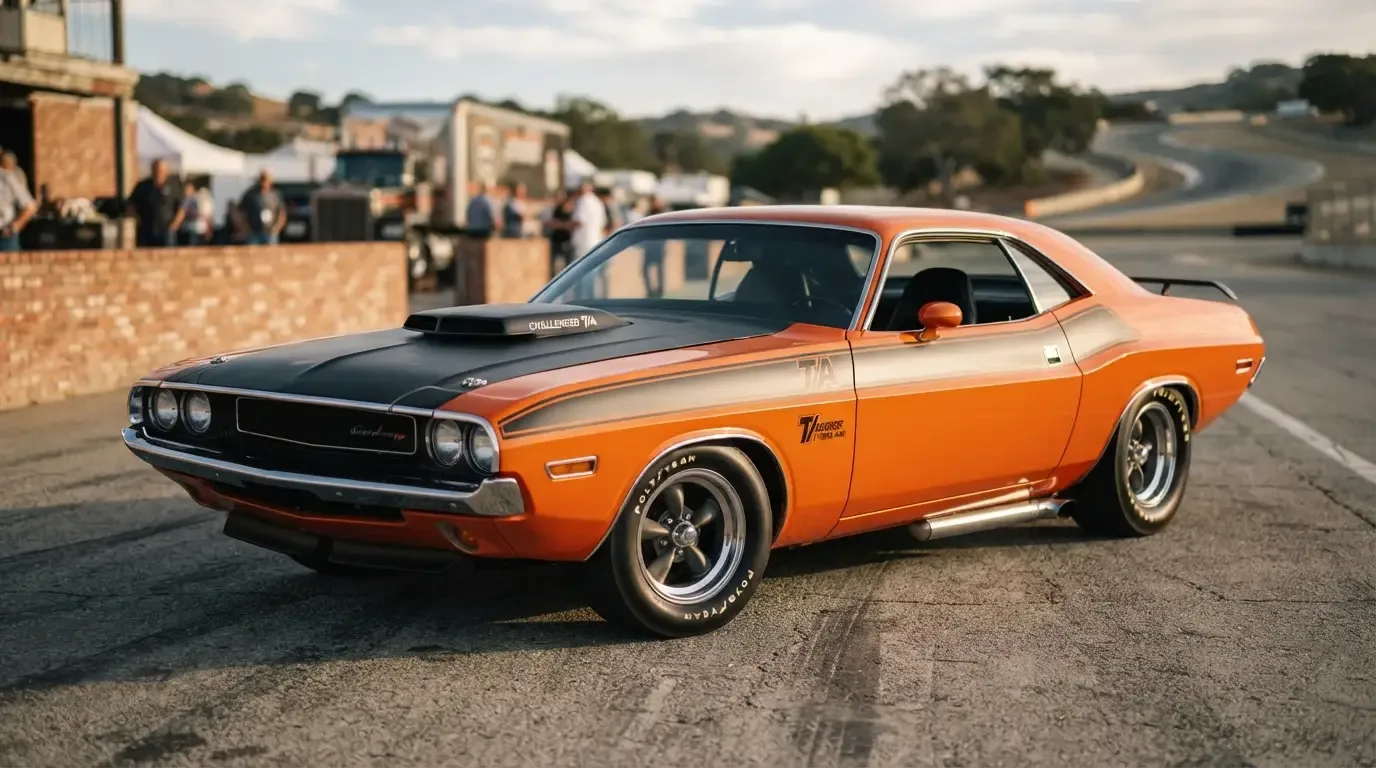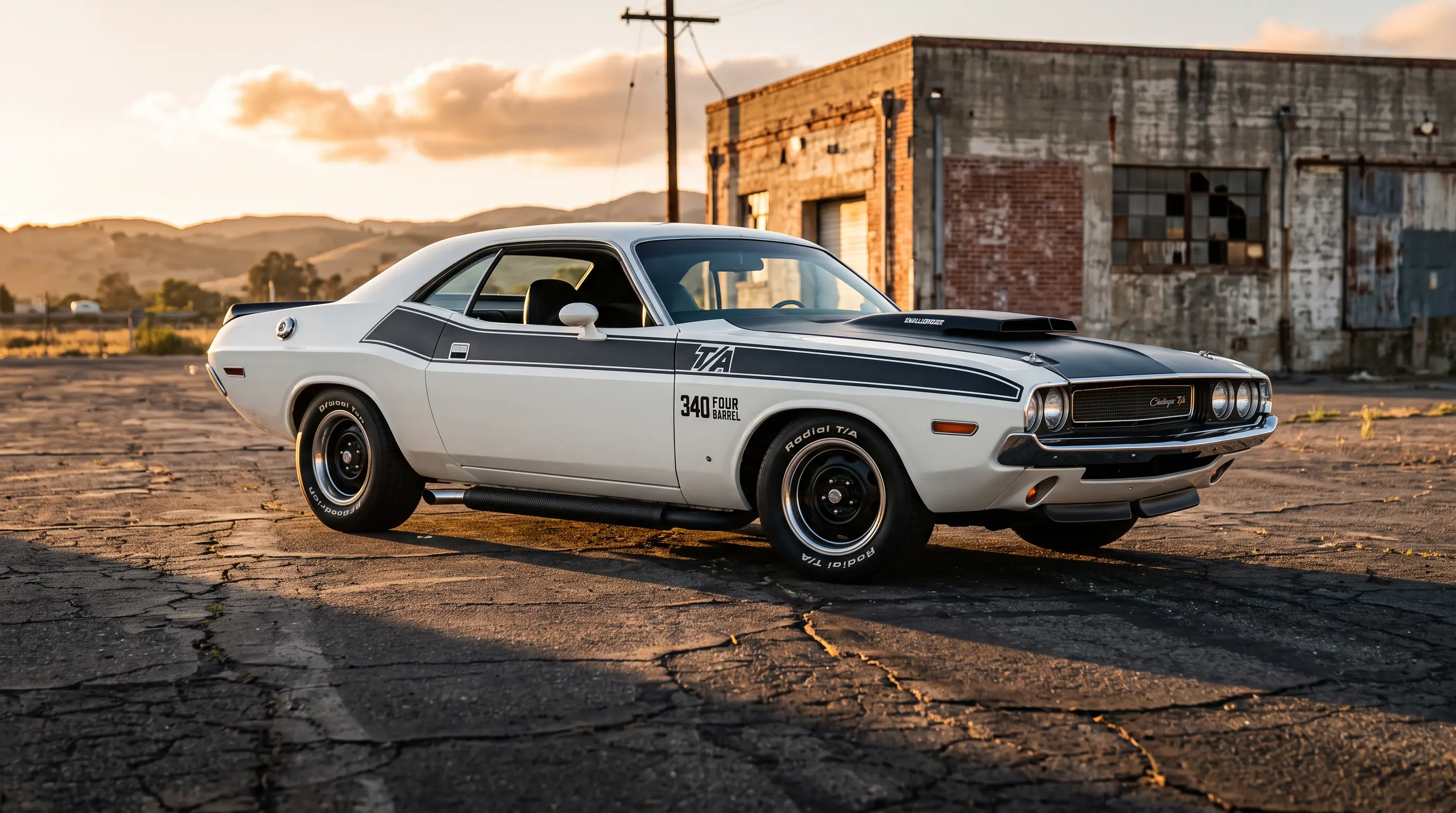
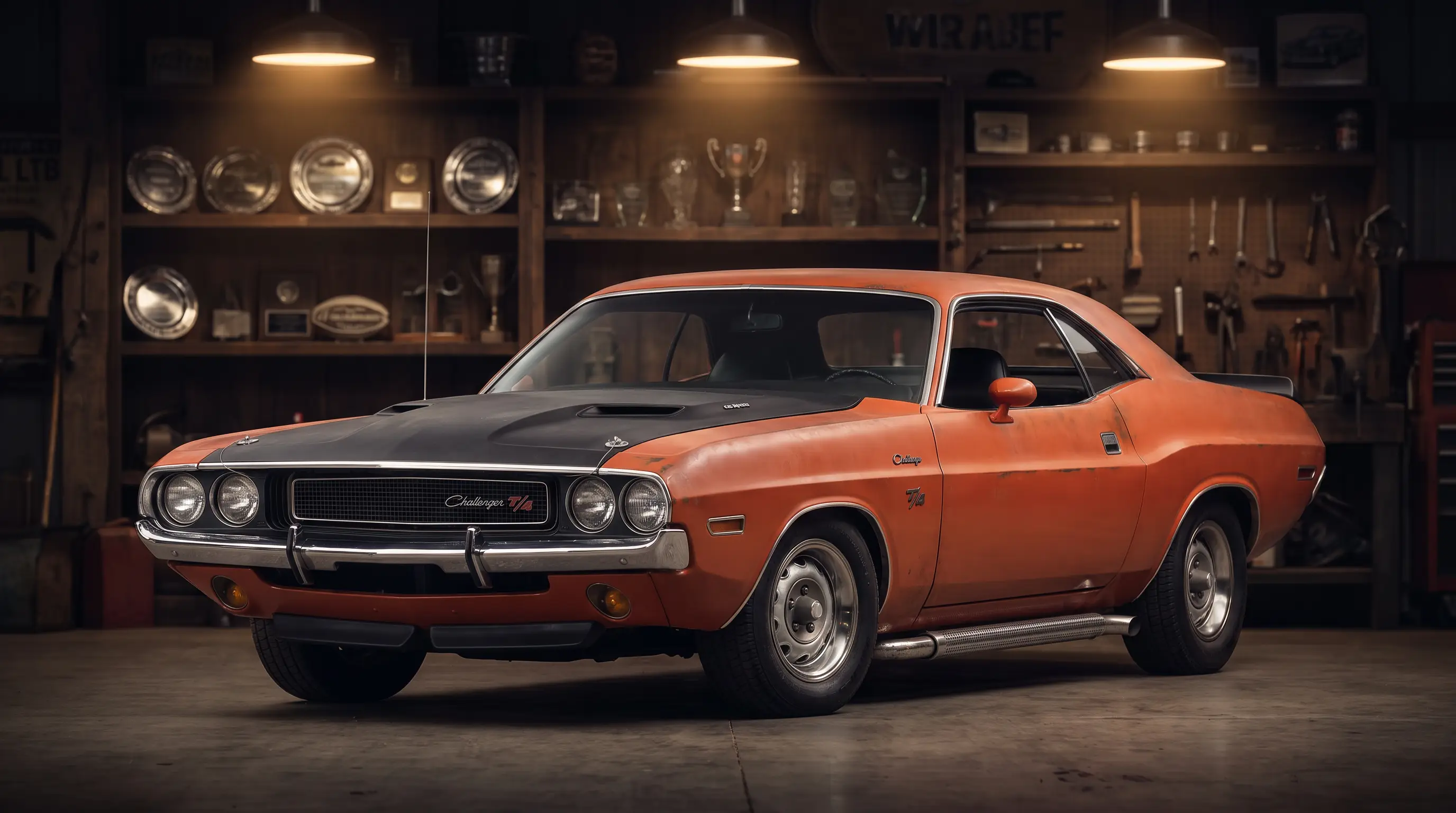
There is a guy in our Mopar club, been a member longer than most of us have owned a driver's license, who tells the same story every summer meet about the first time he saw a Challenger T/A in person. He was fifteen, standing outside a dealership in 1970 that he had no business being at without his father, and he swears he could hear the Six Pack carburetors before the car even turned the corner. Fifty five years later he still owns a T/A, a different one than the dealership car obviously, but the story never gets old at our meetings, and neither does the argument about whether he actually heard those carburetors from two blocks away or just tells it that way now.
A one year car that refused to be forgotten
The Challenger T/A only existed for the 1970 model year, built to satisfy SCCA homologation rules so Dodge could field the Challenger in Trans Am racing. When the racing program wound down, so did the street car, and for a stretch of years afterward it was almost a footnote next to the bigger, louder Hemi Challengers that got most of the magazine covers. Our club has always thought that was backwards. The T/A was the car built by people who actually cared about handling, not just quarter mile bragging rights, and challenger ta legacy in our circle has always meant something closer to engineering respect than raw horsepower worship.
Readers who want the whole picture on how this particular Challenger came to exist should read up on the racing mandate behind it, because the legacy only makes sense once you understand it was never meant to be the biggest engine in the lineup. It was meant to be the smartest one on a road course.
How the community kept the story alive
Muscle car clubs get credit, rightly, for keeping a lot of these cars roadworthy long after the factories stopped caring about them. What gets less credit is the documentation work. Members of our club and clubs like it spent decades tracking down broadcast sheets, cross referencing fender tag codes, and building registries that eventually became the backbone for how these cars get verified and valued today. That work was not glamorous. It was guys in garages with filing cabinets, comparing notes at swap meets, arguing about casting numbers until somebody pulled out a reference book to settle it.
The stories that get passed down at meets
Every club has a version of the guy I opened this piece with, someone whose T/A story has been polished by repetition into something better than a plain account of events. That is not a knock on the storytelling. It is how legacy actually works in a hobby like this. The T/A's reputation was not built by a marketing department after the fact, it was built one driveway conversation at a time, one member showing a newer collector the difference between a real Six Pack setup and an aftermarket copy, one argument settled over coffee about whether a particular fender tag code was legitimate.
I have watched newer members come into the club owning a T/A they bought without fully understanding what they had, and I have watched the older members take real pleasure in walking them through it, not to show off but because that transfer of knowledge is the entire point of belonging to a club like this. Nobody learns this stuff from a spec sheet alone.
"Every T/A owner eventually becomes the guy explaining the car to somebody else. That is not a burden. That is the club working the way it is supposed to."
- Wayne Coburn
The rivalries that kept the story sharp
Every long running club has its friendly disagreements, and ours has a running one about whether the T/A or the bigger engine Challengers deserve more attention at our own events. The Hemi crowd has always had louder cars and bigger crowds around them at a show field, and for years that meant the T/A guys felt a little overlooked, standing next to their smaller displacement engine while a Hemi drew the bigger audience three spaces down. That rivalry, mostly good natured but occasionally not, actually did the T/A a favor over the decades. It pushed the owners who cared about this specific car to document it more thoroughly, to argue its engineering case more persistently, and to build the kind of expertise within the club that eventually made the T/A community one of the most knowledgeable corners of the Mopar hobby.
I have sat through arguments at meets that lasted longer than the drive home, over things as specific as whether a particular hood pin style was correct for a given production date. Nobody outside this hobby would understand why that argument mattered enough to get heated about. Everybody inside it understood completely, because that kind of granular disagreement is how the community actually protects the accuracy of the historical record, one stubborn debate at a time.
What the club actually taught new owners
I remember a particular Saturday morning years back when a new member showed up to our monthly meet with a T/A he had bought sight unseen off an online listing, excited and a little nervous about whether he had made a good decision. Three of our longest tenured members spent the better part of an hour with him in the parking lot, walking through fender tag codes, checking the carburetor linkage against period photographs one of them had brought specifically for this kind of situation, comparing the hood pin hardware against a reference binder someone had assembled over decades of attending these same meets. The car turned out to be legitimate, which was a relief, but what stuck with me was not the verdict. It was watching three people who owed that new owner nothing spend a Saturday morning making sure he understood exactly what he had bought.
That is not a rare story in our club. It happens at nearly every meet, in some form, to somebody. New owners arrive with questions and leave with answers, and more importantly they leave understanding why the answers matter, not just what they are. That transfer of context, not just facts but the reasoning behind them, is the actual mechanism by which a fifty five year old car's reputation gets carried forward instead of flattening into a Wikipedia paragraph nobody argues about anymore.
Why it still matters to a new generation
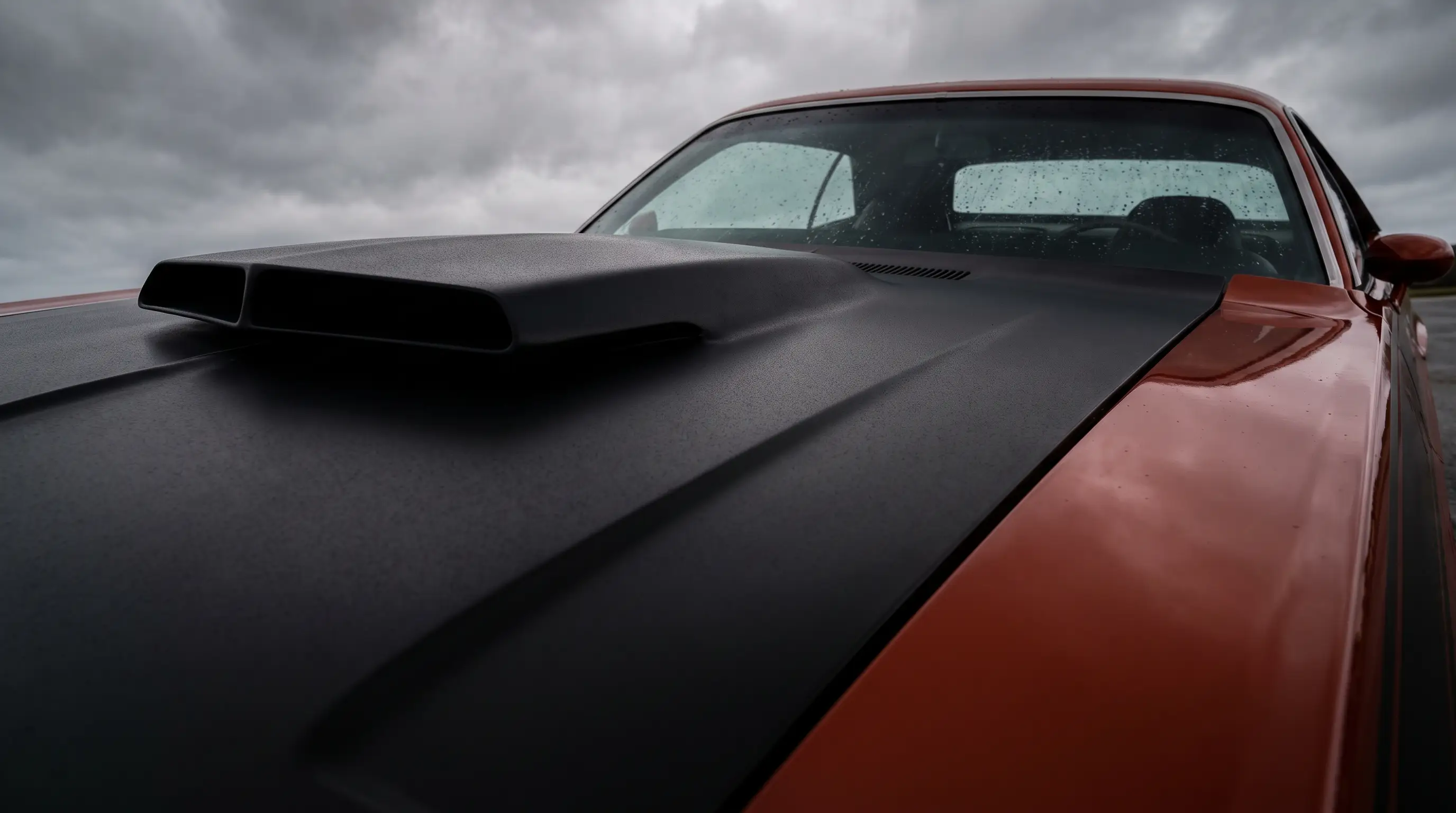
Younger collectors coming into this hobby now, people who were not alive in 1970, tend to find the T/A through the racing angle rather than the horsepower angle, and I think that is a healthier entry point than the one my generation had. They ask better questions. They want to know why the hood is fiberglass before they ask how fast it is in a straight line. That shift in curiosity is, honestly, the best evidence I have that challenger ta legacy is not just nostalgia dressed up for aging club members. It is a genuine engineering and racing story that holds up on its own merits, independent of who is telling it or how many decades have passed since the car left the factory floor.
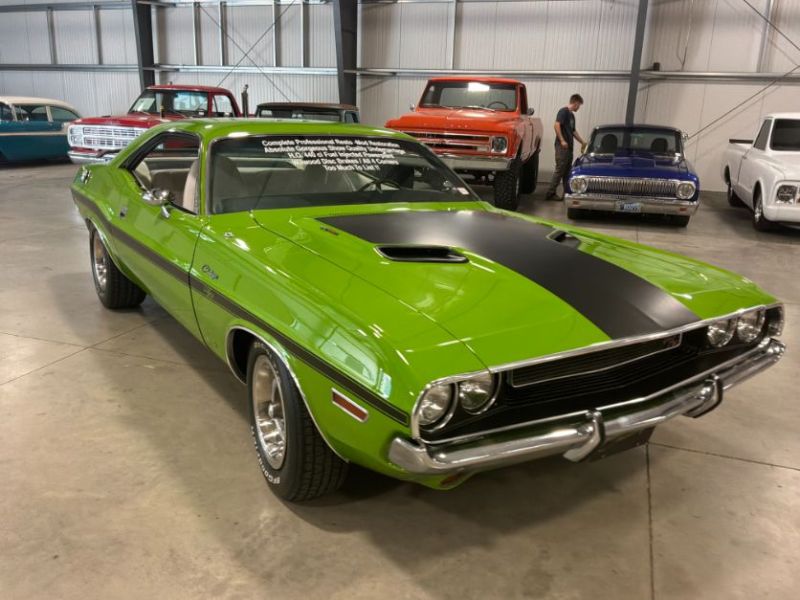
Anyone who wants to stop hearing about it secondhand and go find a classic Challenger for themselves will discover the same thing our fifteen year old kid outside that dealership discovered in 1970, minus the questionable carburetor hearing range. The car earns the attention on its own, every single time, without anyone needing to embellish the story to make the point.