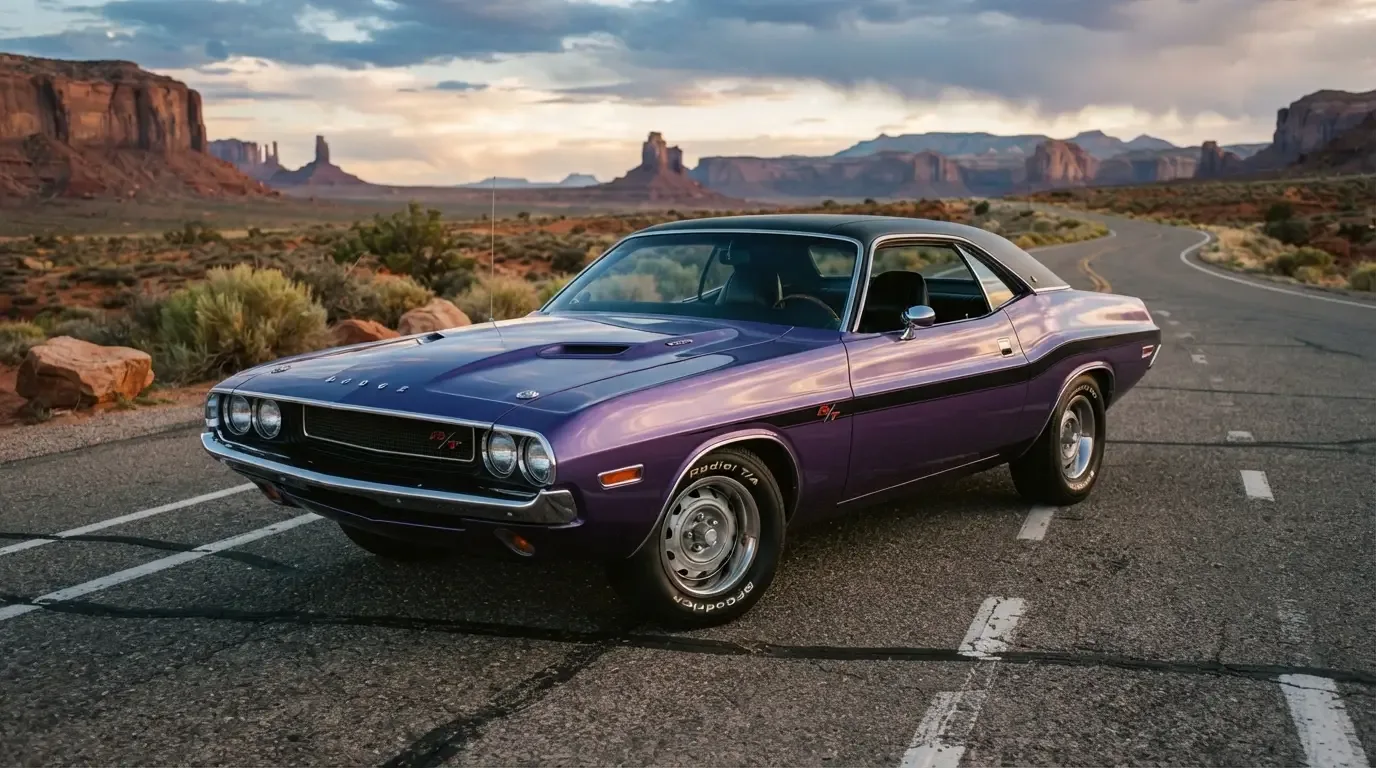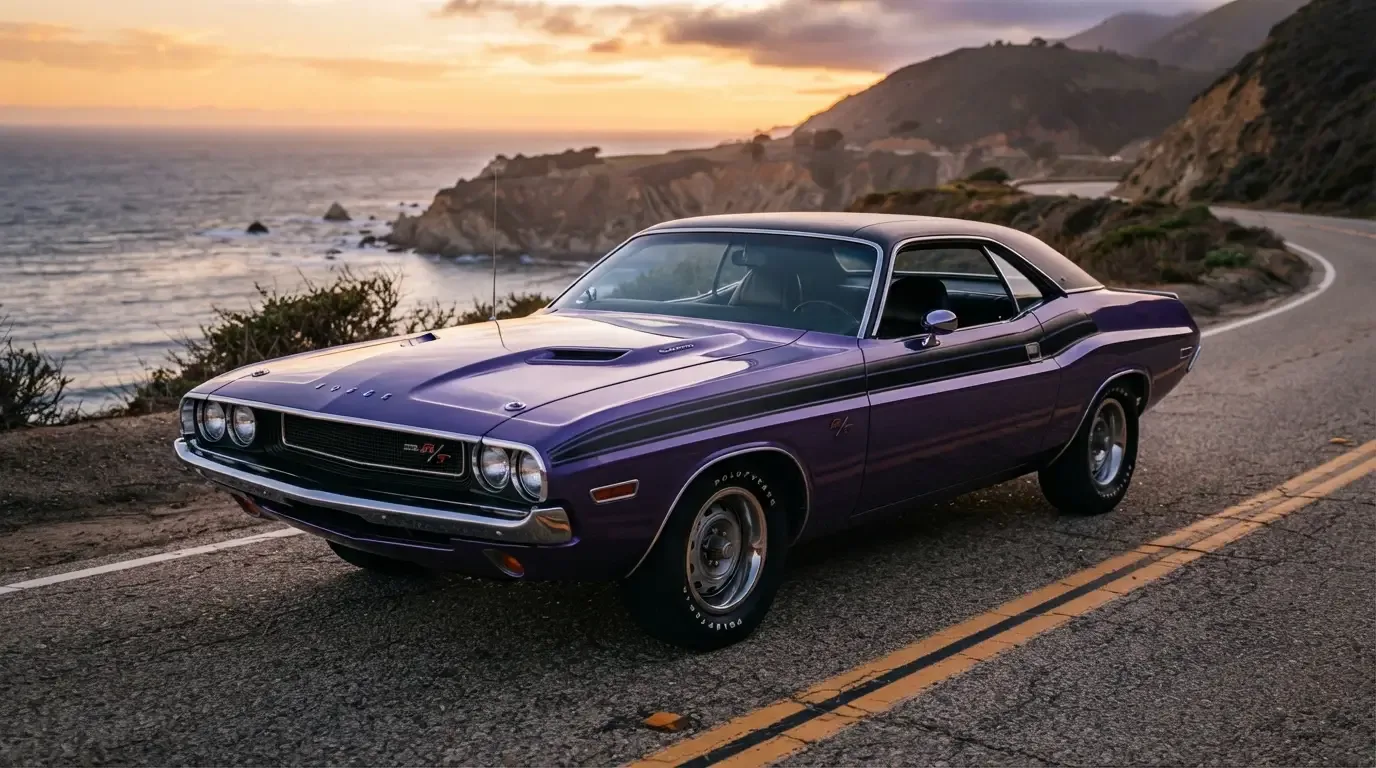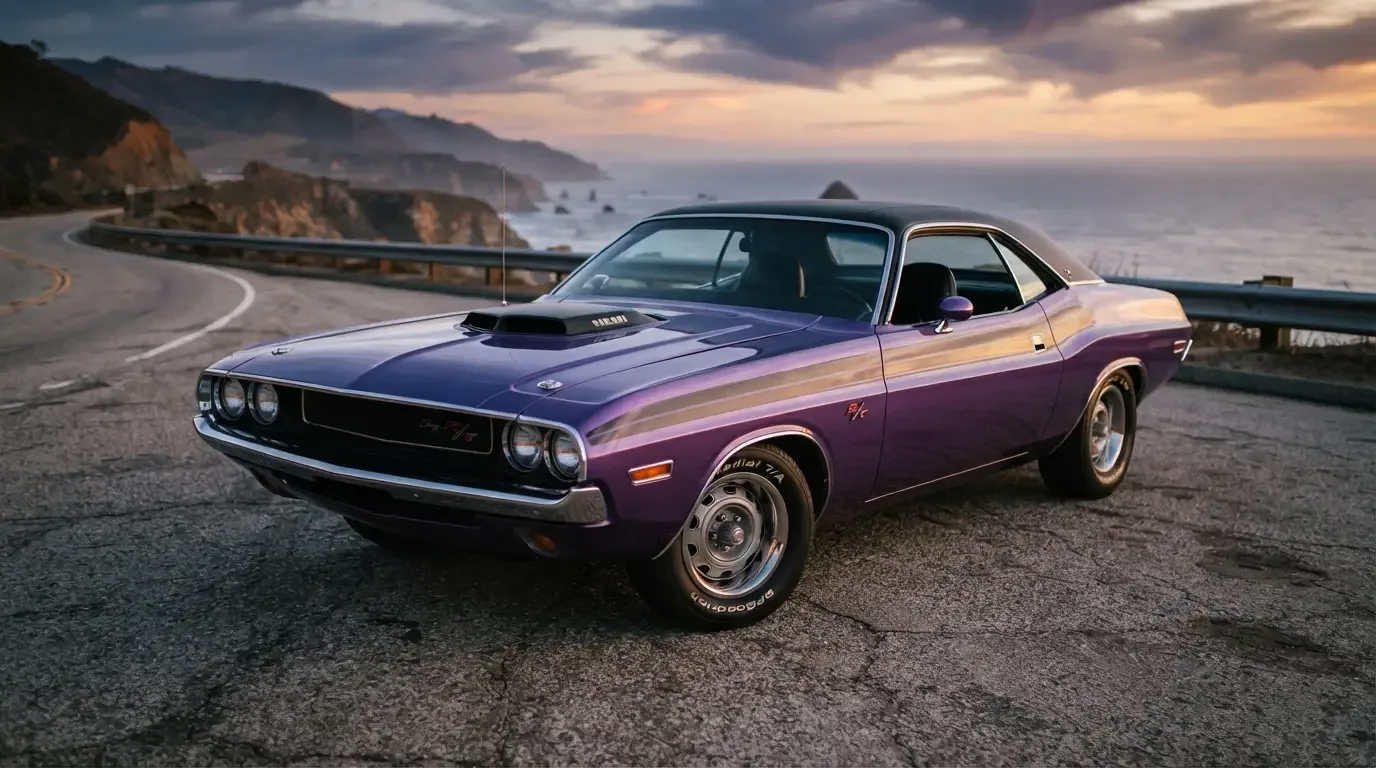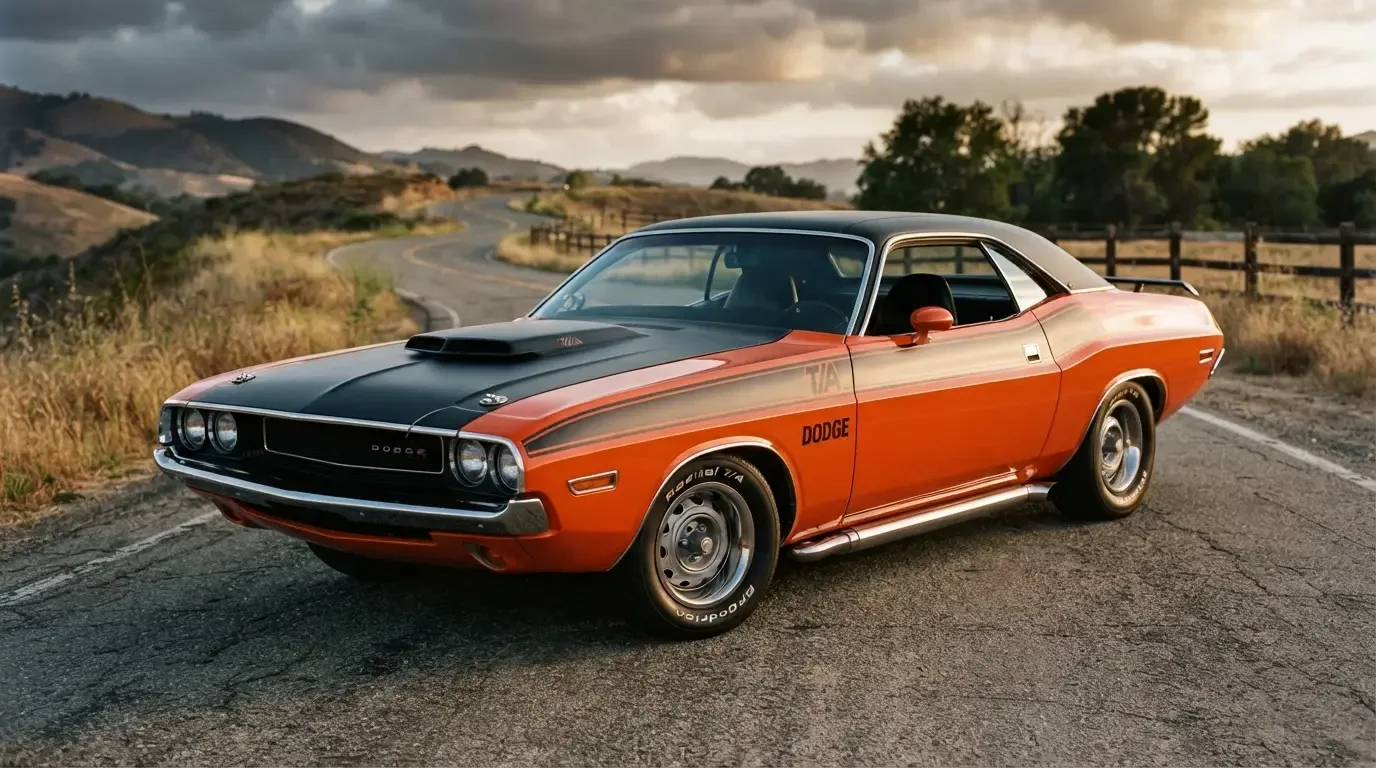
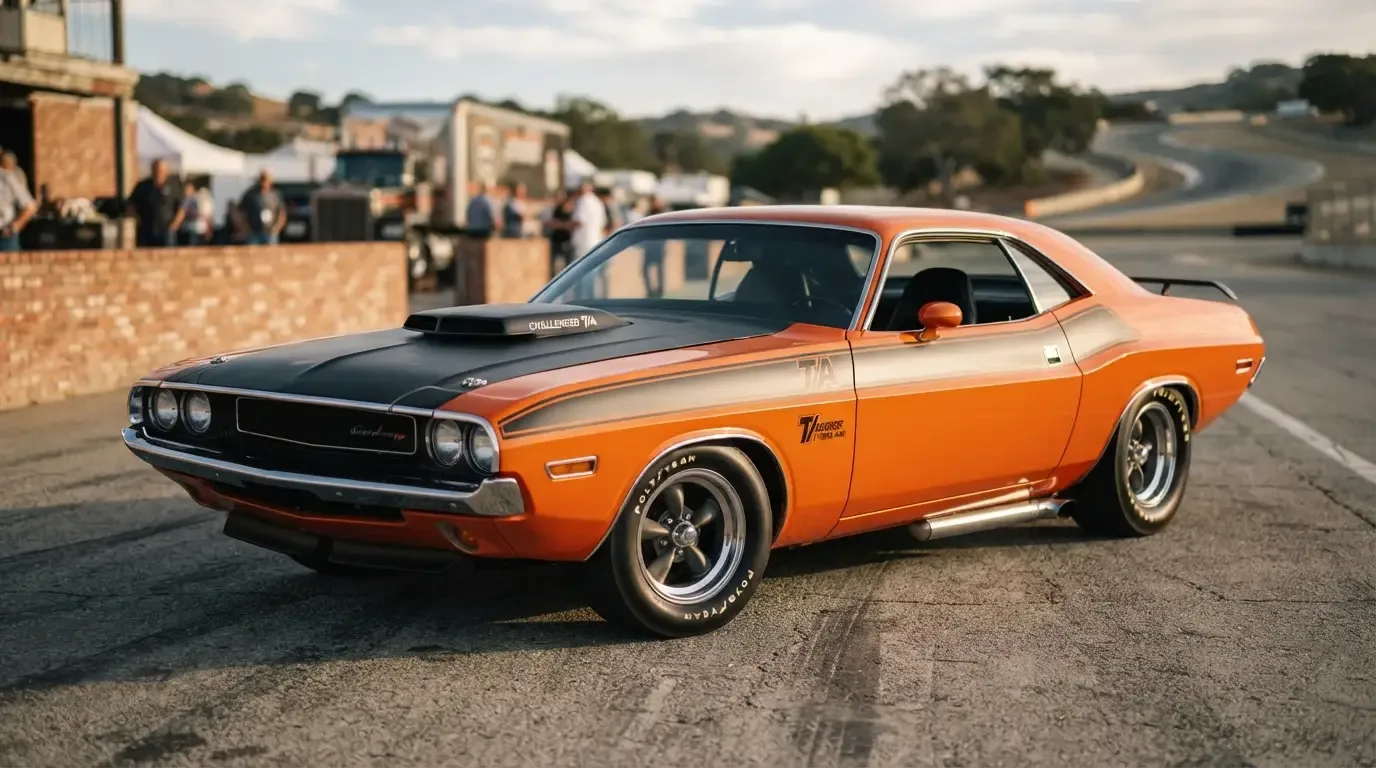
Most muscle cars exist because a marketing department wanted a halo. The Dodge Challenger T/A exists because a rulebook demanded it. In 1970, to enter the SCCA Trans-Am series, a manufacturer had to sell a minimum number of street cars that matched the racer closely enough to count. That homologation rule is the entire reason the Challenger T/A was built, and it explains every unusual detail on the car. This was not a styling exercise. It was a road-legal receipt proving the race car was real.
The rule that created the car
Trans-Am racing in 1970 was the toughest showroom-based series in America. The Mustang Boss 302, the Camaro Z/28, the AMC Javelin, and the Plymouth AAR Cuda all fought there, and all of them came with a street twin built to satisfy the same requirement. Dodge entered with a two-car effort and needed a production model to homologate it. The T/A, which stood for Trans-Am, was that model. Listings today spell it both ways, Dodge Challenger TA and T/A, and both refer to this same homologation special. It was produced for one season only, because the racing program itself lasted one season. When Dodge stopped racing, the reason for the street car evaporated.
If you want the platform context first, our our dodge challenger retrospective covers how the E-body came together. The T/A is a narrow, specific branch of that tree, and it makes the most sense once you understand the broader family.
An engine chosen for the limit, not the badge
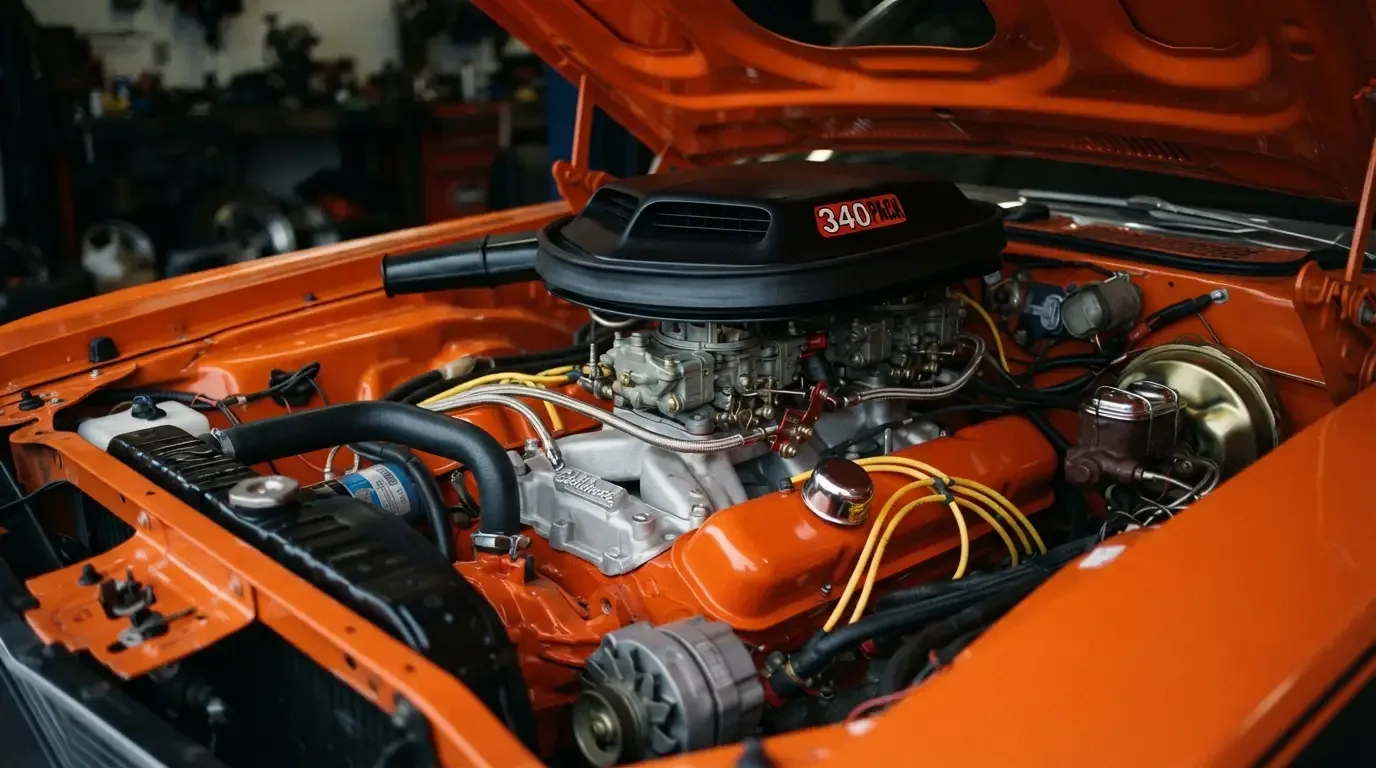
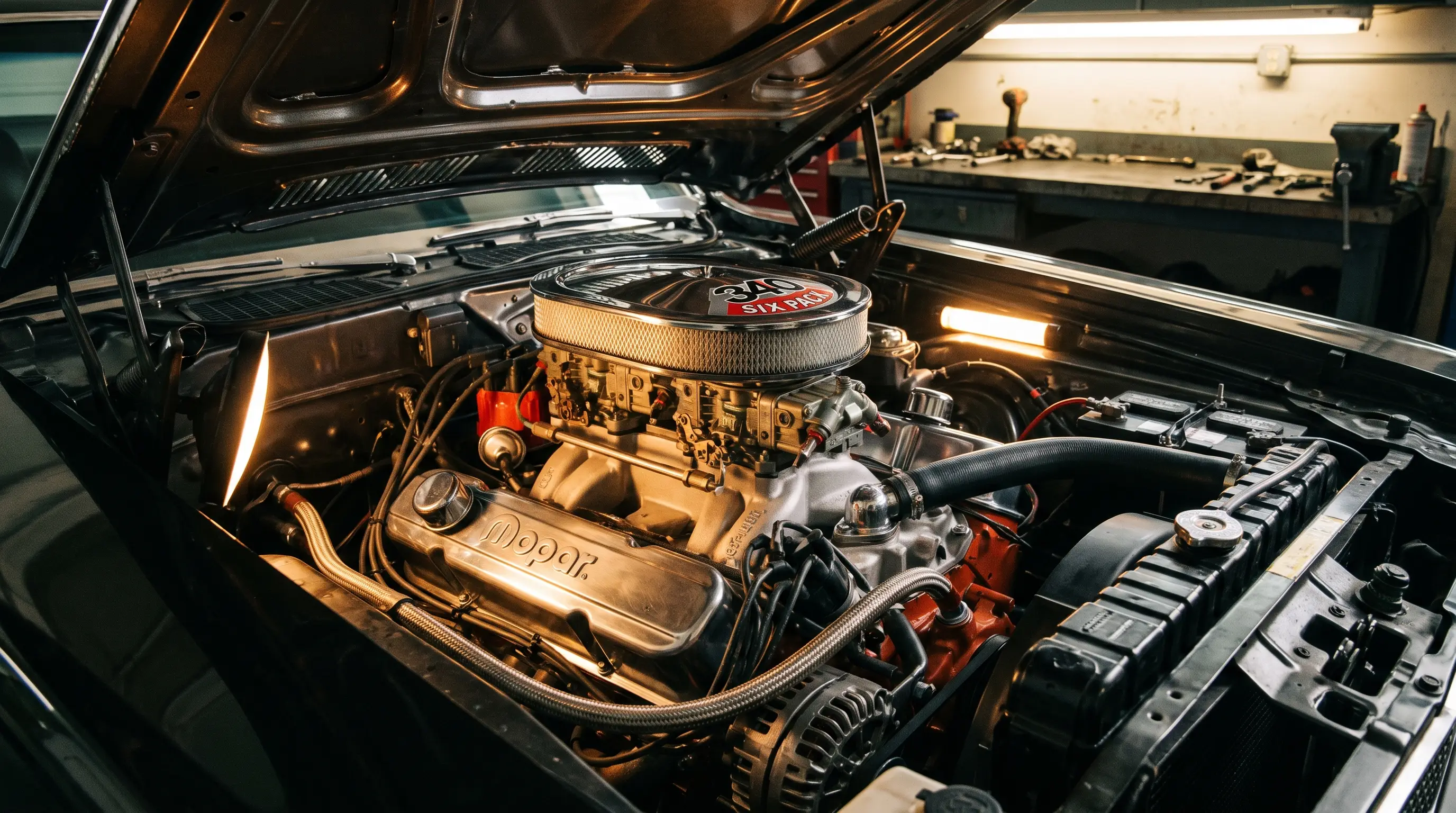
The Trans-Am series capped engine displacement at five liters, roughly 305 cubic inches. That is the constraint that shaped everything. The T/A street car used the 340 small block topped with three two-barrel carburetors, an arrangement Dodge marketed as the 340 Six Pack. It was rated at 290 horsepower. The interesting engineering detail is that the actual race engines could not use the full 340. They were destroked to fit under the displacement limit and built by outside specialists, so the street 340 and the racing 340 shared a design family but not the same internals.
That gap between the showroom engine and the competition engine is normal for homologation cars, and it is the kind of thing that gets lost when people assume the street car is a race car with license plates. It is not. It is the car that made the race car legal. The distinction matters for how you value one.
The details that were all function
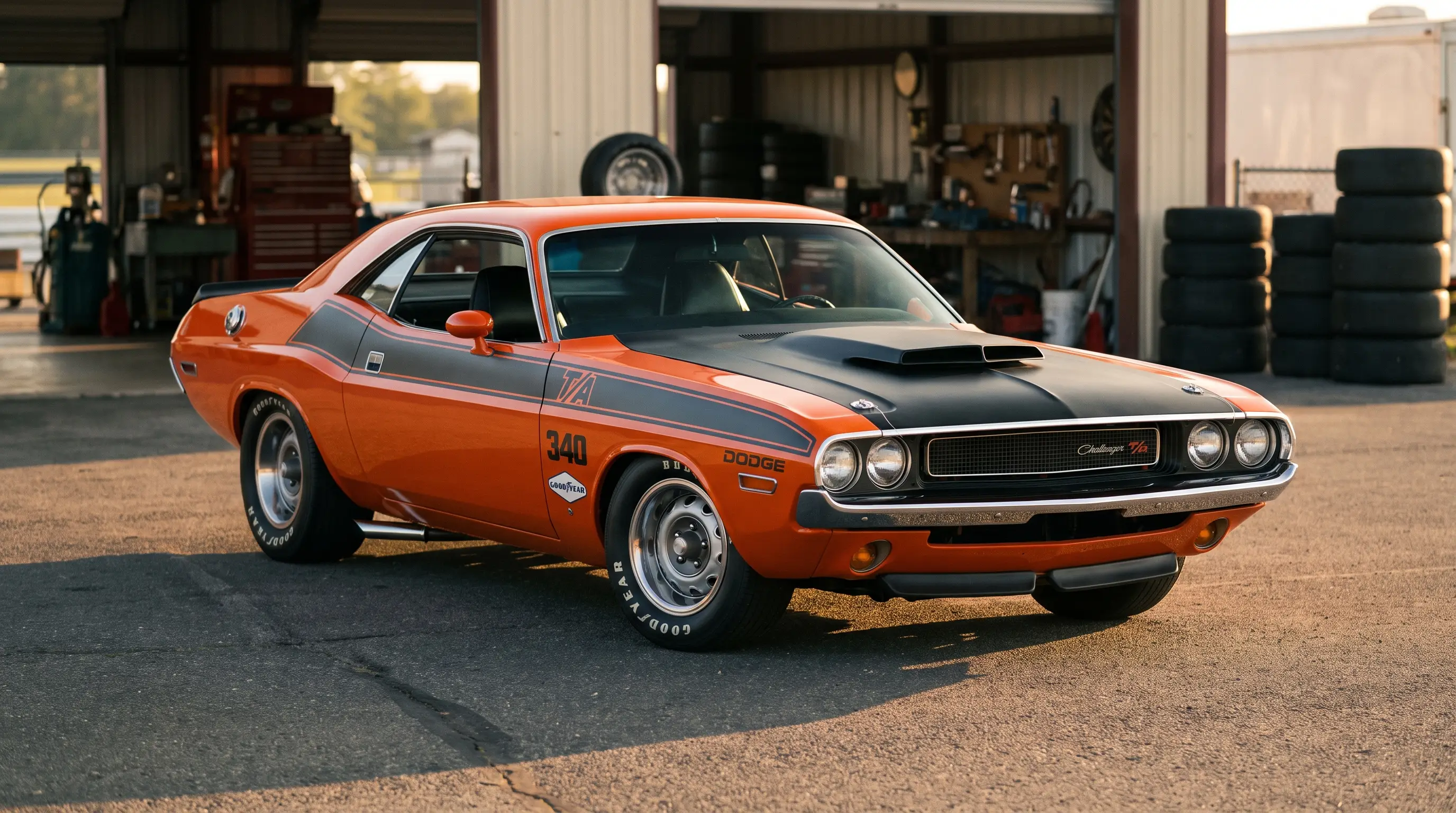
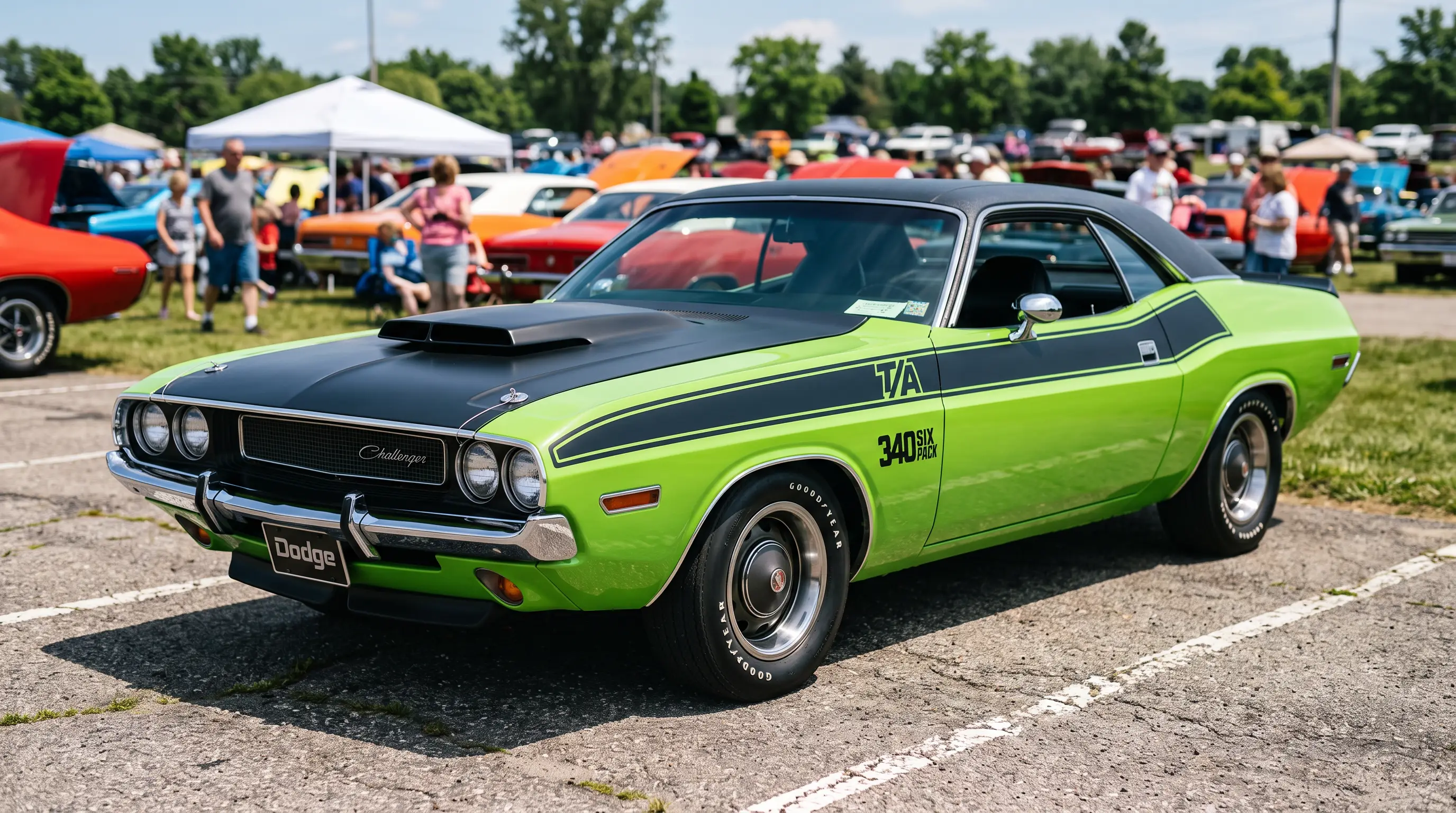
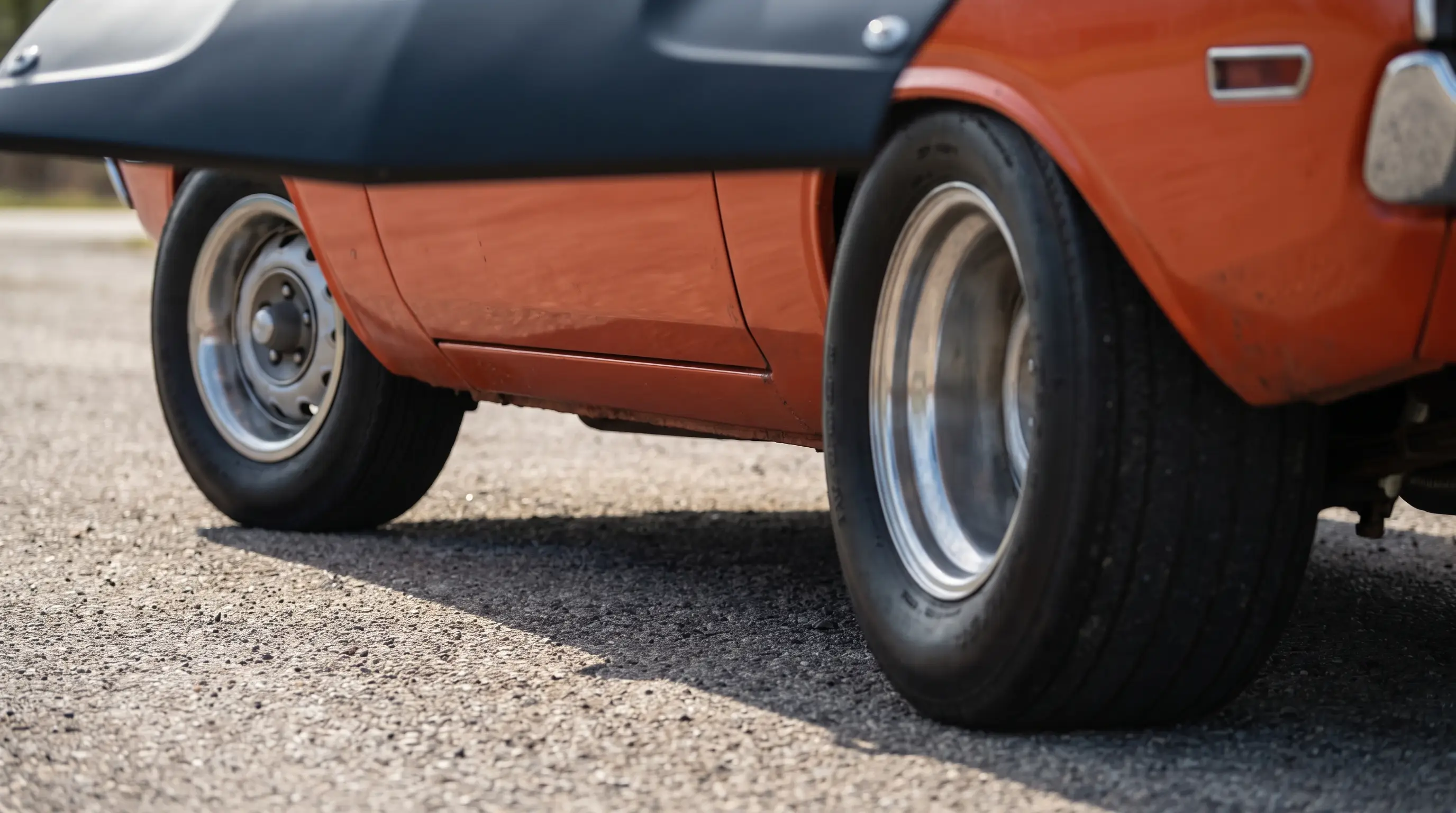
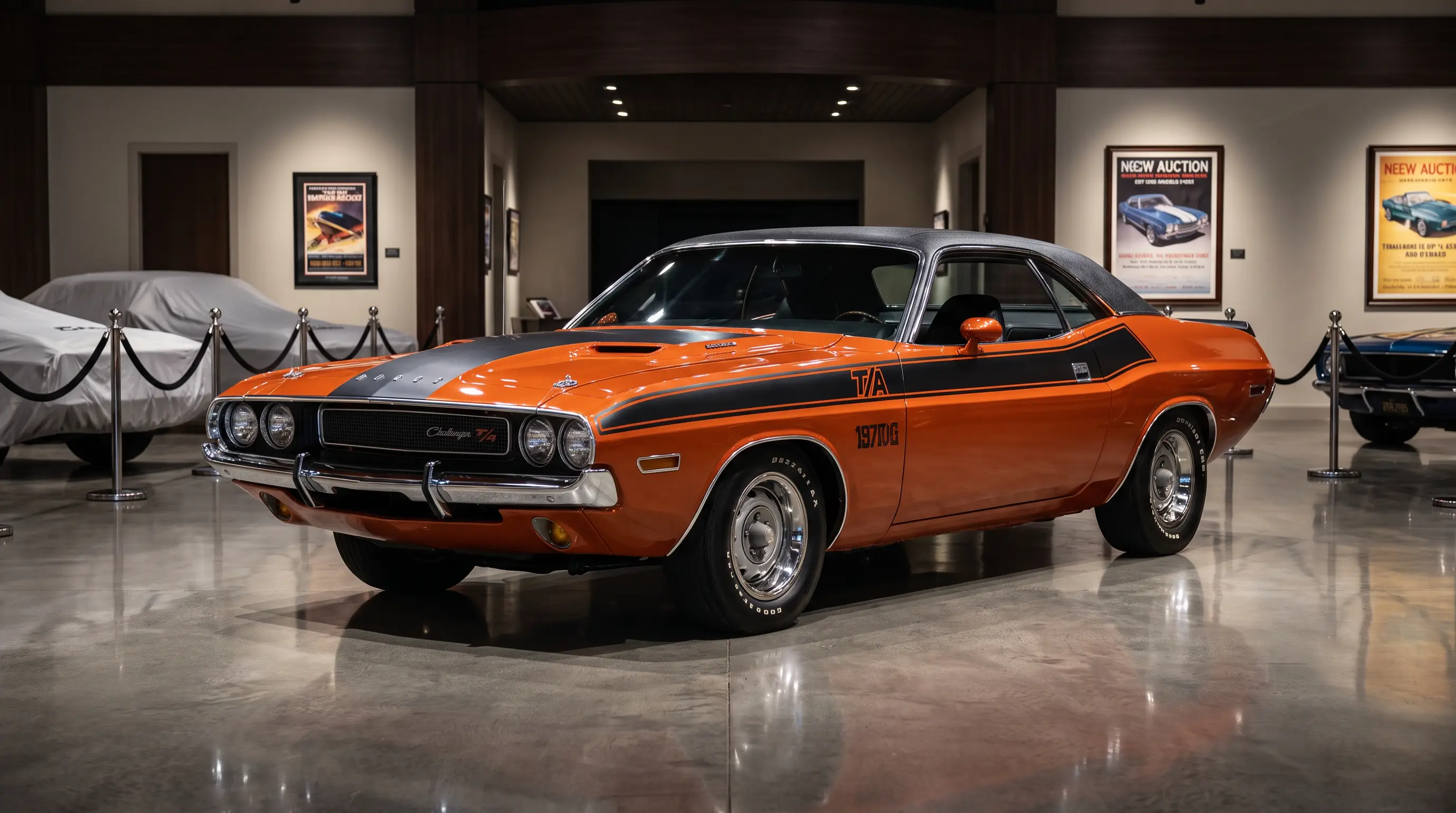
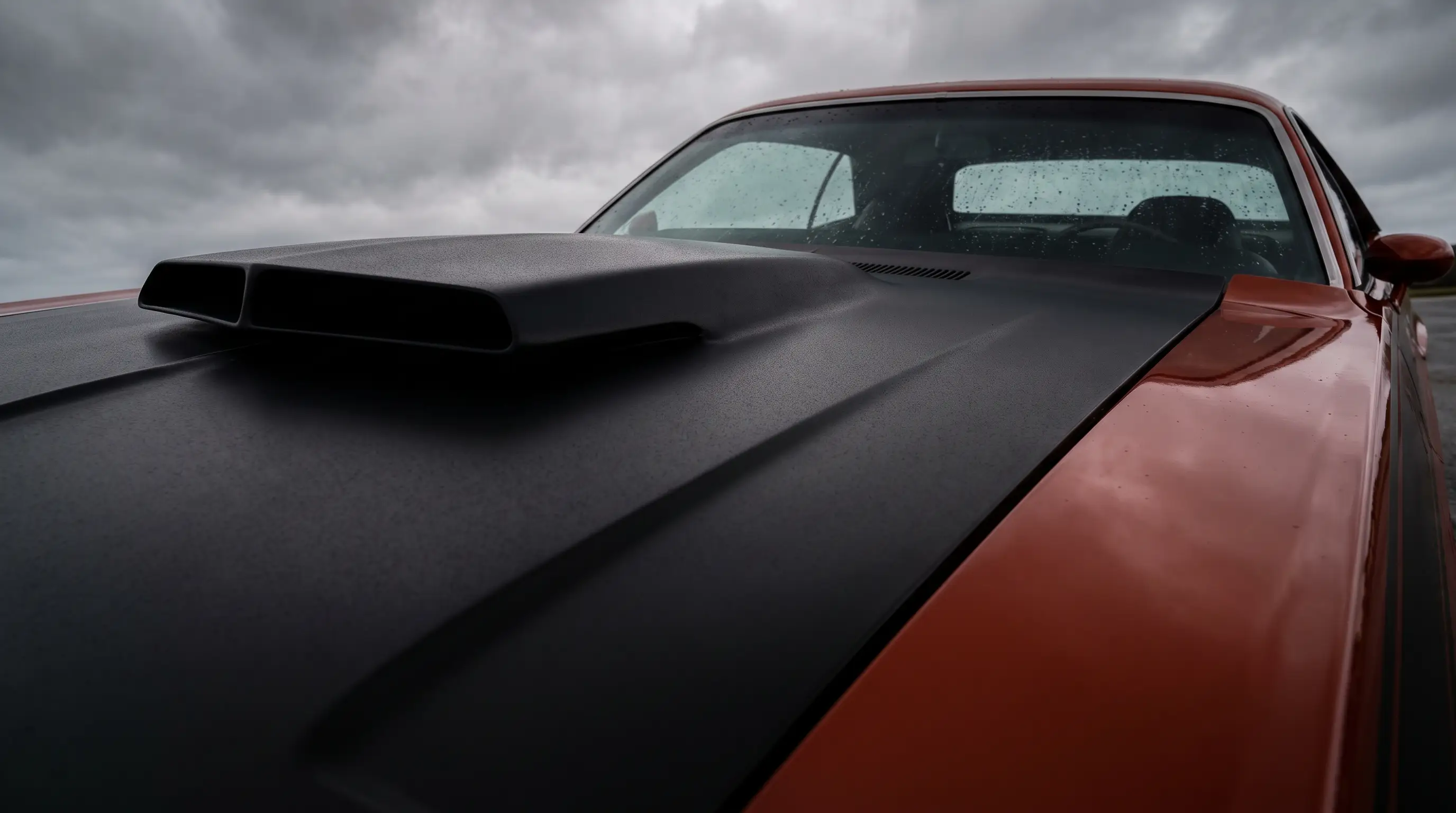
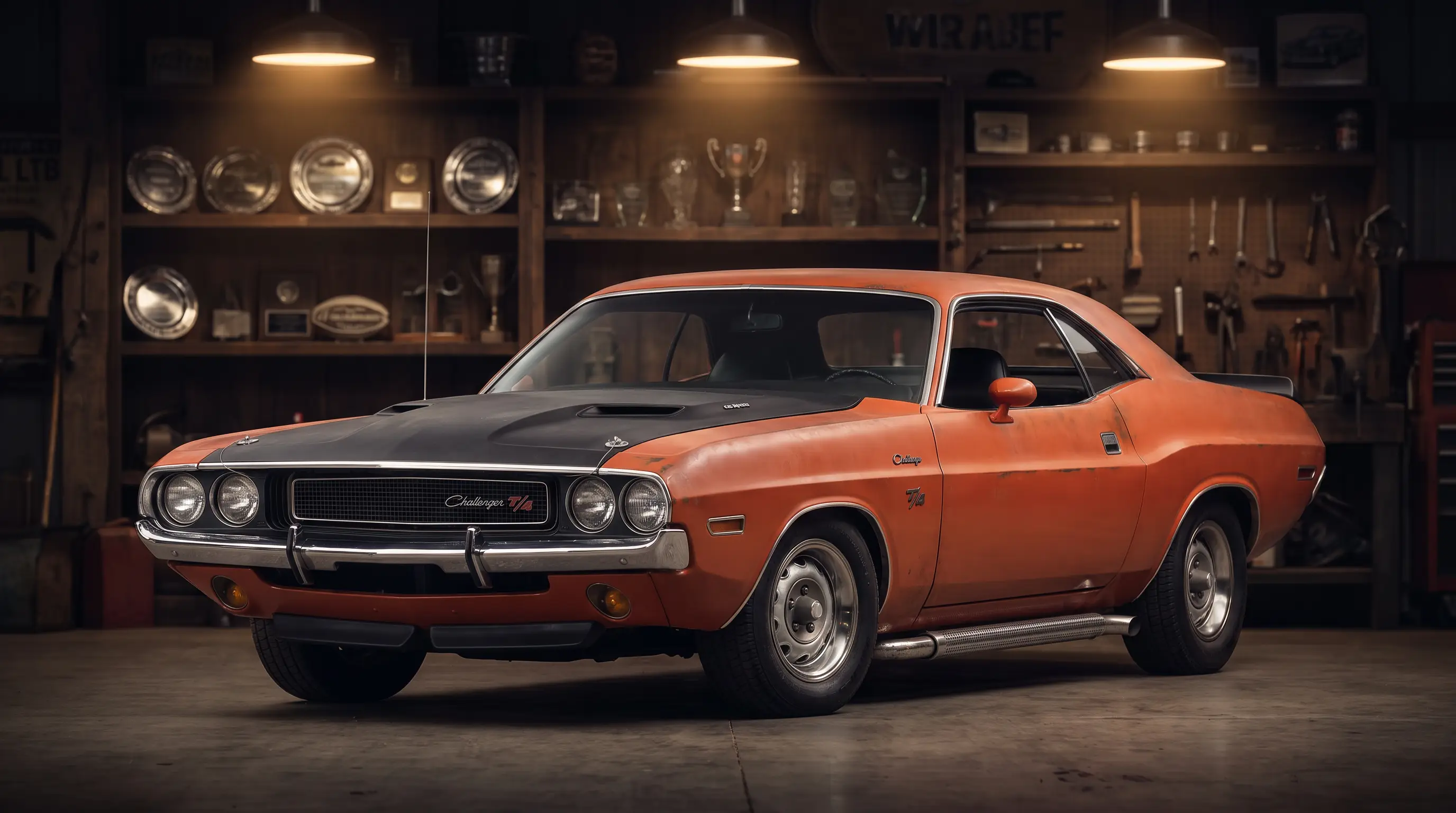
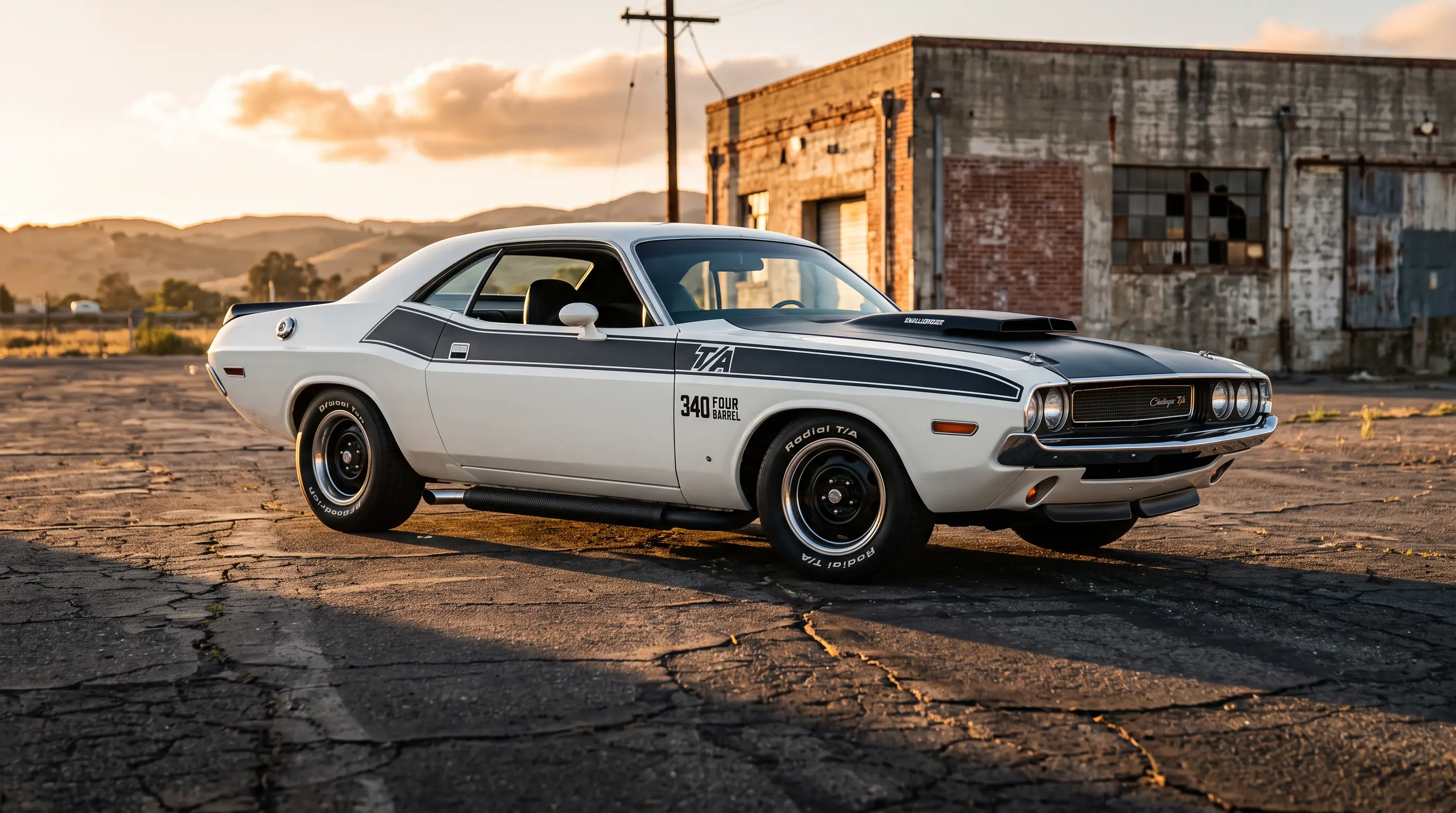
Walk around a T/A and almost every unusual feature traces back to the racing requirement. The matte black hood was fiberglass with a large forward-facing scoop feeding the carburetors. The exhaust exited through chrome megaphone tips ahead of the rear wheels, a side-exit design that looked aggressive and served a packaging purpose. There was a small ducktail spoiler on the trunk and a front chin spoiler. The staggered tires forced that permanent rake. None of it was decoration for its own sake. It was a catalog of homologation compliance that happened to look fantastic.
That is the dry irony of the T/A. Because it was built to a rulebook rather than a stylist's mood board, it ended up more honest than most muscle cars of the period. The form followed the function, and the function was winning a road-racing championship.
Sam Posey and a season that did not end in a trophy
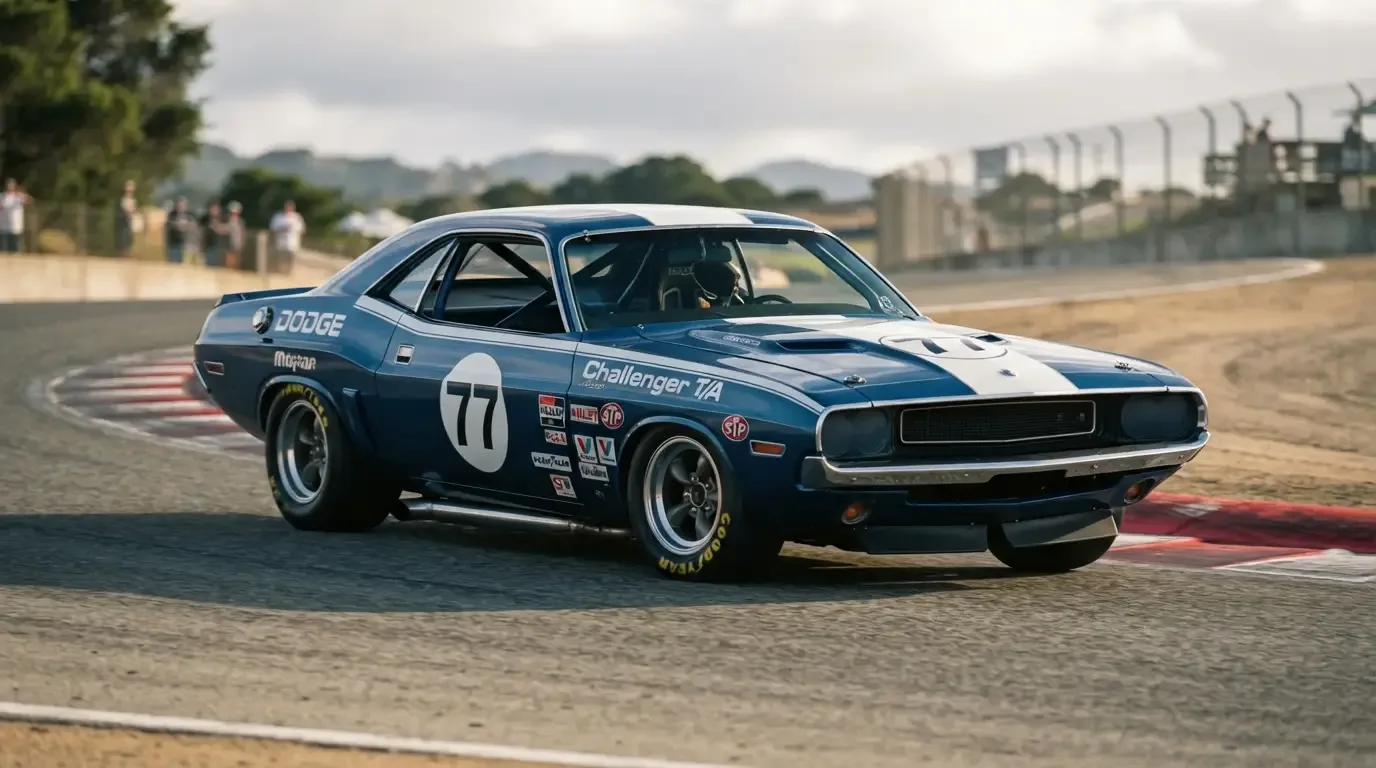
Dodge hired Sam Posey to drive the factory Challenger in the 1970 Trans-Am season, running the number 77 car. The effort was competitive but did not win the championship. Ford and Chevrolet had deeper programs and more experience in the series, and Dodge was a first-year entrant playing catch-up, the same position the Challenger occupied in the pony car market generally. The team scored points and showed pace, but the title went elsewhere, and Dodge withdrew from the series after that single season.
Here is the honest assessment. The T/A is beloved today not because it dominated, but because it is rare, purposeful, and it represents a specific moment when Dodge tried to win the hardest series in the country and built a real road car to do it. Failure to take the championship does not diminish the object. If anything, the one-and-done nature of the program is what makes the surviving cars so collectible.
Posey himself became part of the car's identity over the years, a driver whose name is now spoken in the same breath as the T/A at any Chrysler gathering. That connection between a specific racer and a specific street car is rarer than it sounds. Most muscle cars have no single person attached to them, just an ad campaign. The T/A has a documented racing season, a named driver, and a paper trail that ties the showroom car to the effort on track. For collectors, that human thread adds a dimension of provenance that pure specification cannot, and it is one more reason the car outlasted its brief competition record in the public memory.
| T/A attribute | Detail |
|---|---|
| Purpose | SCCA Trans-Am homologation |
| Production years | 1970 only |
| Street engine | 340 Six Pack, triple two-barrel |
| Rating | 290 hp |
| Hood | Matte black fiberglass with scoop |
| Exhaust | Side-exit megaphone tips |
| Tires | Staggered, larger at rear |
| Production | 2,399 units |
How rare is it, really
Dodge built 2,399 T/A models for 1970, split roughly 1,410 automatics and 989 four-speed manuals. That is scarce by muscle car standards but not vanishingly so, which puts the T/A in an interesting value position. It is rare enough to be special and documented enough that clones are easy to spot. Because the car had so many unique parts, the fiberglass hood, the side exhaust, the specific 340 Six Pack setup, a genuine T/A is hard to fake convincingly, and the correct components are their own form of authentication. That is a rare case where the engineering makes the provenance easier to verify.
"I like the T/A because nothing on it is arbitrary. The scoop feeds the carbs, the exhaust exits where it has to, the tires are staggered for grip. It is a car where you can reverse-engineer the entire spec sheet back to a single rulebook, and that makes it a genuinely satisfying object to study."
- Emily Chen
The Plymouth twin: AAR Cuda
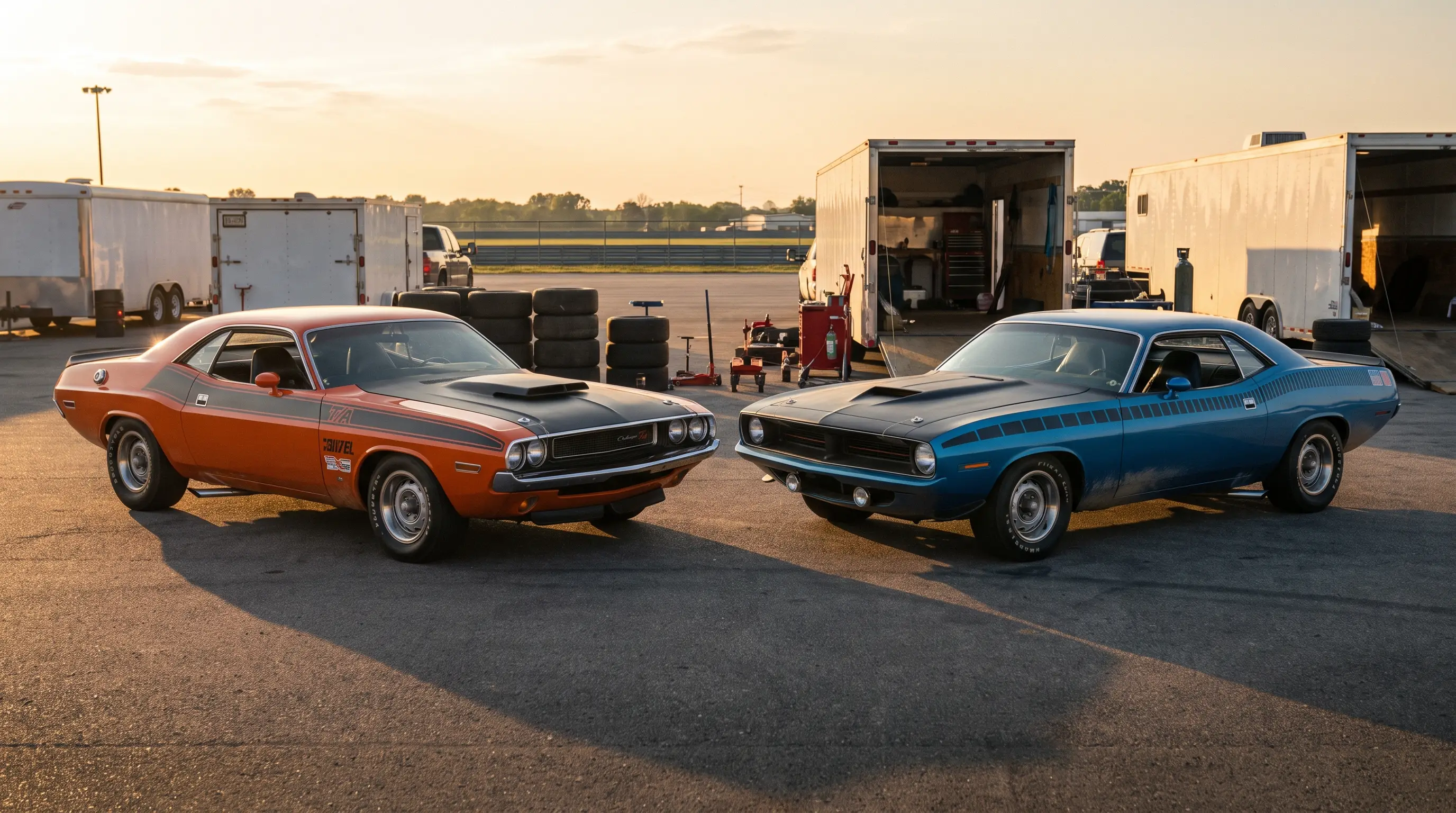
The T/A did not race alone inside Chrysler. Plymouth built its own homologation special on the same E-body platform, the AAR Cuda, named for the Dan Gurney All American Racers team that ran Plymouth's Trans-Am effort. The two cars were siblings, sharing the 340 Six Pack engine, the fiberglass hood concept, the side-exit exhaust, and the staggered-tire rake. They were built for the same series, to satisfy the same rule, in the same single season.
The differences were mostly cosmetic and corporate. The AAR Cuda wore Plymouth sheet metal and its own graphics, while the T/A carried Dodge styling. Their production numbers were similar in scale, both scarce, both one-year cars. For a collector, the pair is a useful study in how one engineering solution produced two distinct icons. If you like the T/A, understanding the AAR Cuda tells you why Chrysler committed two brands to a series it would exit after a single year, and it frames the T/A as one half of a matched set rather than a lone experiment.
What the T/A is worth as a collectible today
In the current market the T/A occupies a respected middle tier of E-body values. It sits below the six-figure Hemi and 440 Six Pack cars but comfortably above ordinary base Challengers, and it holds that position because of what it is rather than how fast it is. Buyers pay for the single-season status, the racing story, and the documented originality. A T/A with its correct fiberglass hood, side exhaust, and matching-numbers 340 Six Pack is a blue-chip small block, and the market treats it that way.
The values also stay steadier than cars whose appeal rests purely on output, for a simple reason. A T/A has a fixed specification defined by a rulebook, so authenticity is easier to judge and harder to argue about. That clarity reduces the disputes that swirl around less documented muscle cars, and steadier provenance tends to mean steadier prices. For a buyer who wants a genuine piece of Trans-Am history without gambling on a six-figure engine, the T/A is one of the more rational entries in the entire muscle field.
Where the T/A sits in the Challenger story
The T/A is the small block hero of a car better known for its big blocks. While collectors chase the 426 Hemi and the 440 Six Pack, the T/A makes the case that displacement is not the only measure of significance. It is a purpose-built, single-season, homologation special, and those three qualities together are what serious collectors prize. For the big-engine counterpoint, there is a related story worth reading, because the Hemi cars and the T/A represent two completely different philosophies inside the same body shell.
The T/A also ages well as an investment thesis, precisely because it is not about raw output. A car built to satisfy a racing rulebook has a fixed, verifiable specification. There is a right answer to what a T/A should be, and cars that match that answer hold their value with less argument than cars whose appeal rests on subjective muscle.
There is a quieter appeal too, one that has nothing to do with spreadsheets. The T/A is the Challenger you can drive and enjoy without the anxiety that follows a six-figure Hemi around. The 340 is a lively, willing engine, lighter over the front wheels than the big blocks, and the car handles better for it. An owner can take a T/A to a show, run it on a back road, and use it the way it was meant to be used, because the stakes of a stone chip are lower than they are on a museum-grade Hemi convertible. For a certain kind of enthusiast, that usability is the whole argument. The T/A rewards driving, not just owning.
The Dodge Challenger T/A is the rare muscle car you can explain from first principles. Every feature answers to a rule, the whole run lasted one season, and the racing program that justified it ended almost as soon as it began. That combination of purpose and brevity is what keeps it valuable. If you want to see how the market treats these one-year specials against the rest of the family, the current Challengers for sale now are a useful place to compare a genuine T/A against the more common cars it shared a showroom with.
Sources and notes
- 1970 Dodge Challenger T/A - Supercars.net
- 1970 Dodge Challenger T/A production information - For E Bodies Only
- Pages From the Past: No Way T/A - DodgeGarage
- 1970 Dodge Challenger T/A Is a Rare Survivor - autoevolution
- Dodge Challenger (1970) - Wikipedia
- 1970 Challenger Production Numbers - Stock Mopar