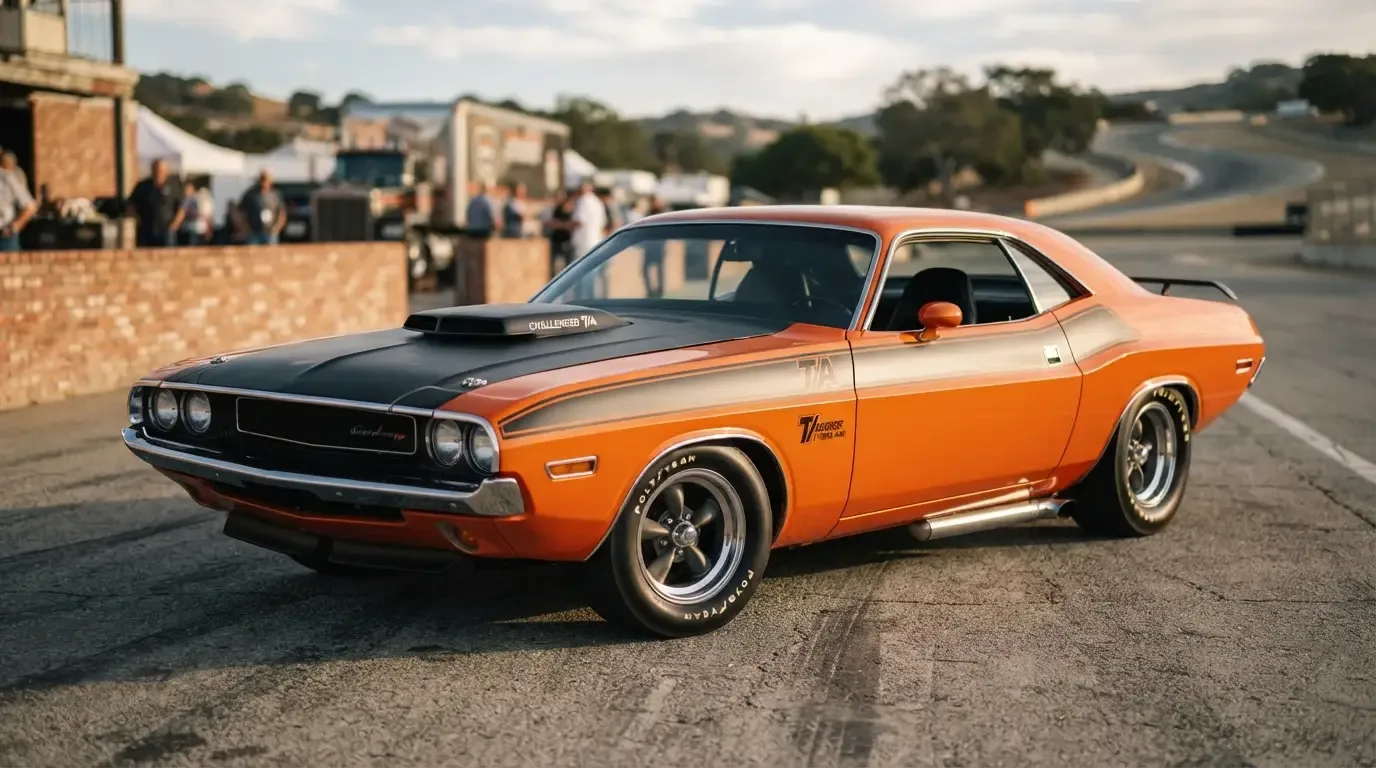
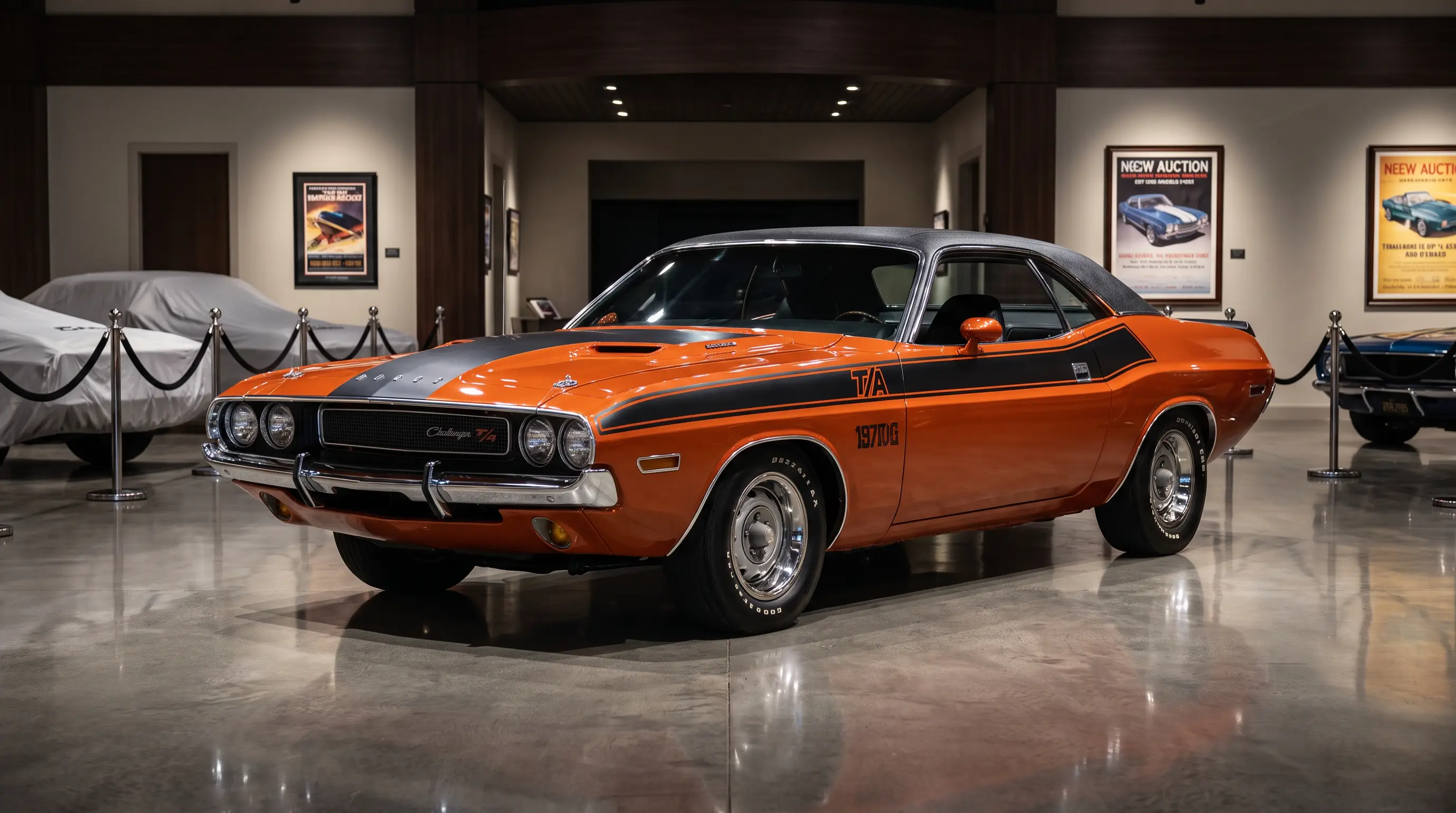
Ask ten dealers what a 1970 Dodge Challenger T/A is worth and you will get ten different numbers, and most of them will be wrong in one direction or the other. The T/A was Dodge's homologation special, built to legalize the Challenger for Trans Am racing, and that single fact still drives challenger ta value more than horsepower, color, or condition combined. I have appraised cars that looked identical from ten feet away and were worth a hundred thousand dollars apart, and the difference was never visible in a photo. It was in a folder.
Readers who want the origin of the car itself, not just what it costs today, should start with the full story, because you cannot appraise a car you do not understand. What follows here is the part nobody tells you at the show field: how the market actually prices this thing, and where the traps are.
What the T/A actually is, in the market's eyes
Dodge built the T/A for one reason: SCCA Trans Am rules required a minimum production run of a street version before a manufacturer could race the car. The Challenger T/A existed to satisfy that rule, and it did so for a single model year, 1970, before the racing program was pulled and the badge quietly disappeared. That short window is the entire reason the car carries a premium today. There is no 1971 T/A to dilute the story, no facelift version to confuse a buyer. One year, one purpose, done.
That scarcity gets misread constantly. Buyers assume every T/A is rare in the way a Hemi car is rare. It is not. Total production ran into the thousands, which sounds like a contradiction until you realize rarity in this hobby is never about raw numbers. It is about surviving, correctly documented, unmolested examples. Most of the production run has been cloned, restomodded, or simply lost to the decades since 1970. The pool of cars a serious buyer will actually consider is a fraction of what left the factory.
The numbers that move challenger ta value
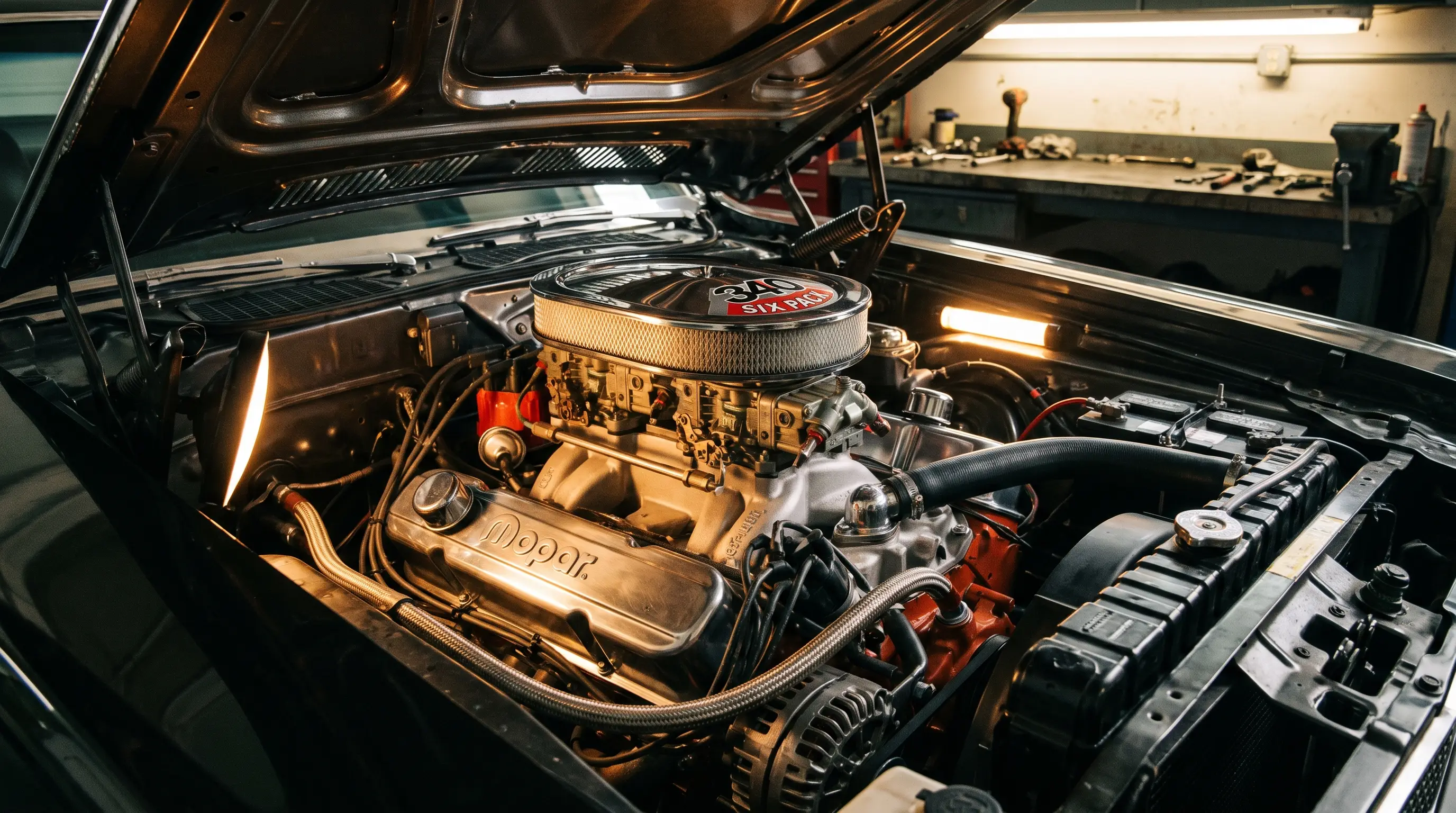
Three factors set the price on any given car, and I weight them in this order: matching numbers drivetrain, broadcast sheet or fender tag verification, and the specific engine and transmission combination. A 340 Six Pack car with a four speed, correctly documented, sits at the top of the non-Hemi Challenger pyramid. Automatic cars trail behind, sometimes by a wide margin, because the enthusiast buying a T/A generally wants the car that matches the racing image, not a cruiser.
| Factor | Effect on Value | Verification Method |
|---|---|---|
| Matching numbers engine | Highest single premium | Broadcast sheet, casting numbers, VIN stamp |
| Four speed manual | Meaningful premium over automatic | Transmission tag, factory documentation |
| Fiberglass hood condition | Costly if damaged or replaced poorly | Visual inspection, fitment check |
| Original color and stripe | Premium for rare or documented combos | Fender tag decode |
| Frame and floor originality | Sets the ceiling on any restoration | Physical inspection, rust history |
Condition matters, obviously, but I have watched a rough driver-quality T/A with airtight paperwork outsell a gorgeous restoration with a murky history. That is not eccentricity on my part. It reflects how the top of this market actually behaves. Buyers with real money are not purchasing a car, they are purchasing a story they can defend later when they sell it.
Where the money hides: options and documentation
Documentation is the quiet variable that separates a six figure sale from a five figure one. A fender tag alone tells you the factory codes. A broadcast sheet, if it survived, tells you the exact build order details, and those two documents rarely agree perfectly with a car's current state after fifty plus years of ownership changes. When they line up, the car is bankable. When they do not, every discrepancy needs an explanation, and buyers price in the uncertainty whether or not the seller admits it exists.
I tell clients the same thing every time: paperwork is not proof of a good car, it is proof of a defensible car, and those are different things. A T/A with a thin folder can still be mechanically excellent. It will simply sell for less, because the next buyer down the line inherits the same documentation gap and will discount for it too.
"A T/A without paperwork is a nice driver. A T/A with paperwork is an asset. Most sellers do not understand that distinction until they are the one trying to sell."
- Marcus Feld
The buy or no-buy call
For a buyer asking whether now is the time, my answer depends entirely on intent. If the goal is a car to drive and enjoy, a well sorted small block T/A with incomplete records is a reasonable purchase at a reasonable discount, and the ownership experience will not suffer for it. If the goal is an appreciating asset, only a documented, numbers matching example belongs on the shortlist, and patience is required. Those cars do not surface often, and when they do, they move fast.
The downside risk in this segment is real. Reproduction parts have improved to the point that an amateur inspection can miss a car built up from a shell rather than restored from a survivor. Anyone serious about challenger ta value should budget for a marque specialist inspection before signing anything, not after. It costs a few hundred dollars and it has saved my clients from six figure mistakes more than once.
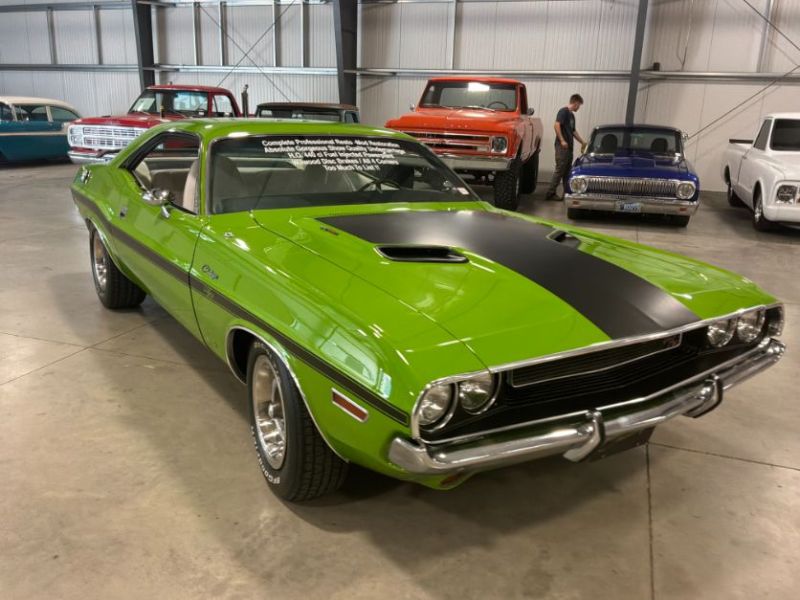
Buyers ready to move should treat the search itself as part of the diligence. Browse a classic Challenger for sale listing with the fender tag codes memorized, not the sales copy. The car will tell you the truth faster than the description will.
The transmission argument, in detail
I raised the four speed premium earlier and it deserves more than a passing mention, because it is the single most consistent argument I have with sellers. The logic behind the premium is not sentimental. A manual gearbox in a car built to satisfy a racing rulebook is simply more consistent with the car's stated purpose, and buyers chasing that purpose pay for the alignment between story and specification. An automatic T/A is not a lesser car mechanically. It is, if anything, the more forgiving car to actually own day to day, since the TorqueFlite tolerates neglect and inconsistent service far better than a worn clutch and linkage setup ever will. But collectors are not always buying the easier ownership experience. They are buying the version of the story that matches what the T/A was built to do, and that preference shows up in every auction result I track.
Sellers sometimes push back on this when they own an automatic car, and I understand the frustration. The car runs the same numbers on paper, wears the same badges, carries the same fiberglass hood. The market simply does not price it the same way, and no amount of arguing changes that reality. My advice to an automatic T/A owner looking to sell is straightforward: lean into the documentation and condition story instead of trying to compete on drivetrain desirability, because that is a fight the car cannot win on its own terms.
What holds the market steady
The T/A market has not been especially volatile compared to some muscle car segments, and I attribute that to the story being simple and hard to dilute. One model year, one racing purpose, a limited and well understood options list. That clarity keeps speculative swings smaller than you see in more complicated production histories where option codes and mid year changes create endless argument. For a collector who wants a car whose value story does not require a graduate seminar to explain, the T/A remains one of the more rational entries in the Mopar muscle car field, provided the paperwork is real and the buyer does the homework before the money changes hands.