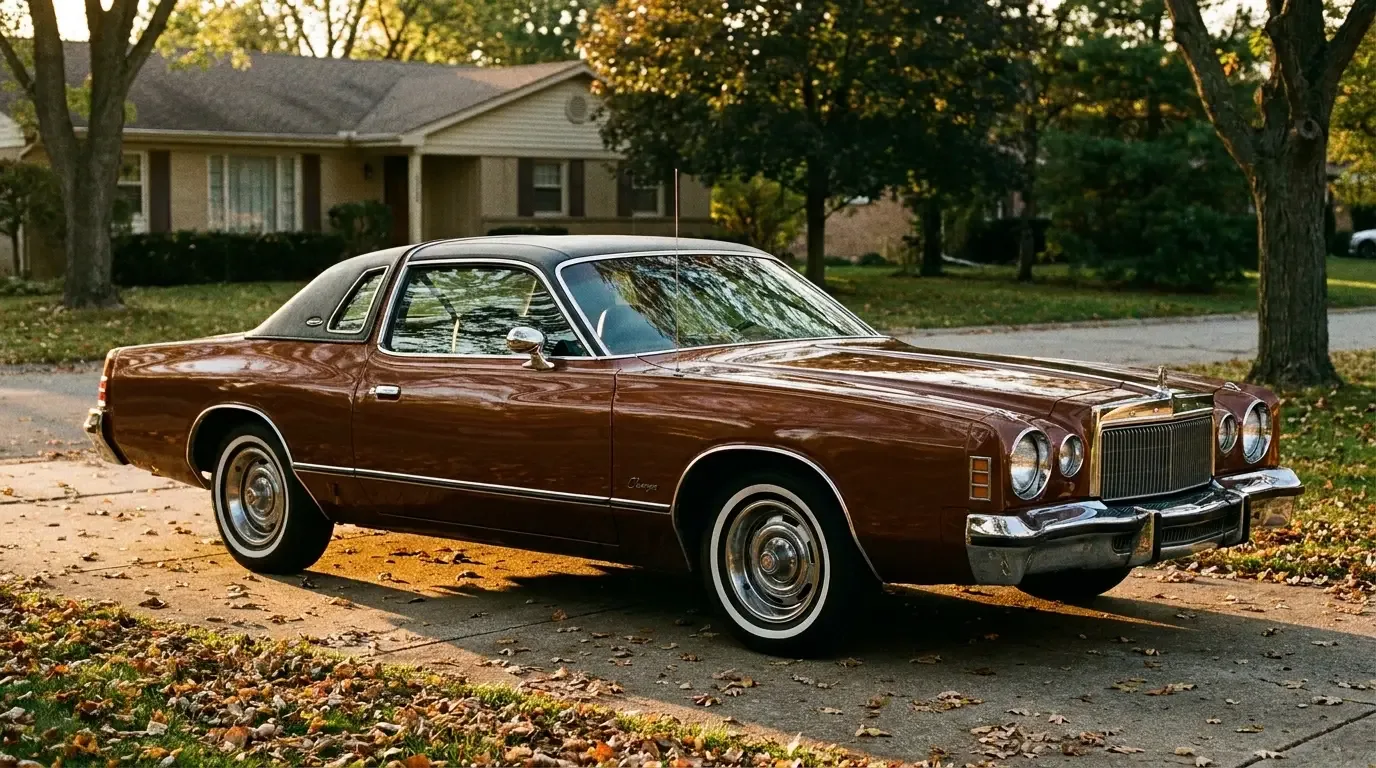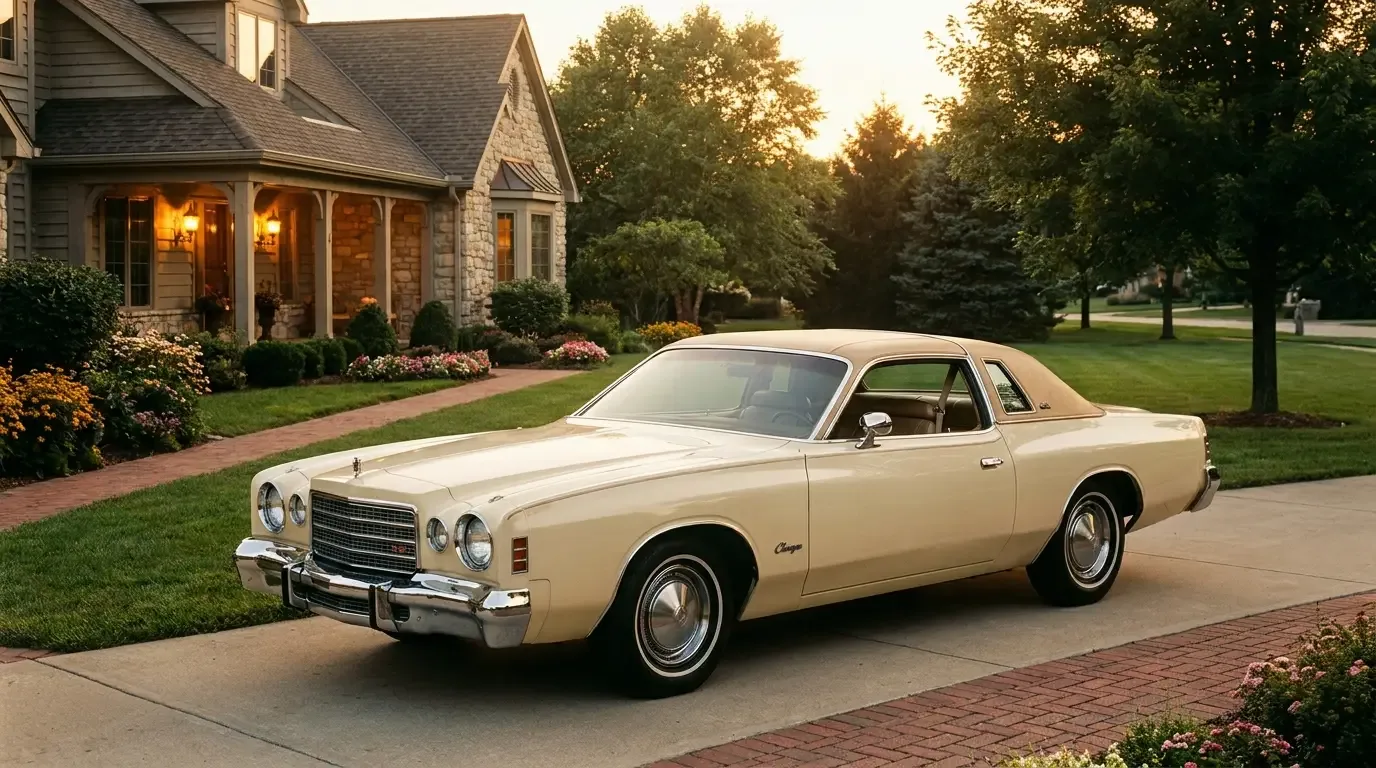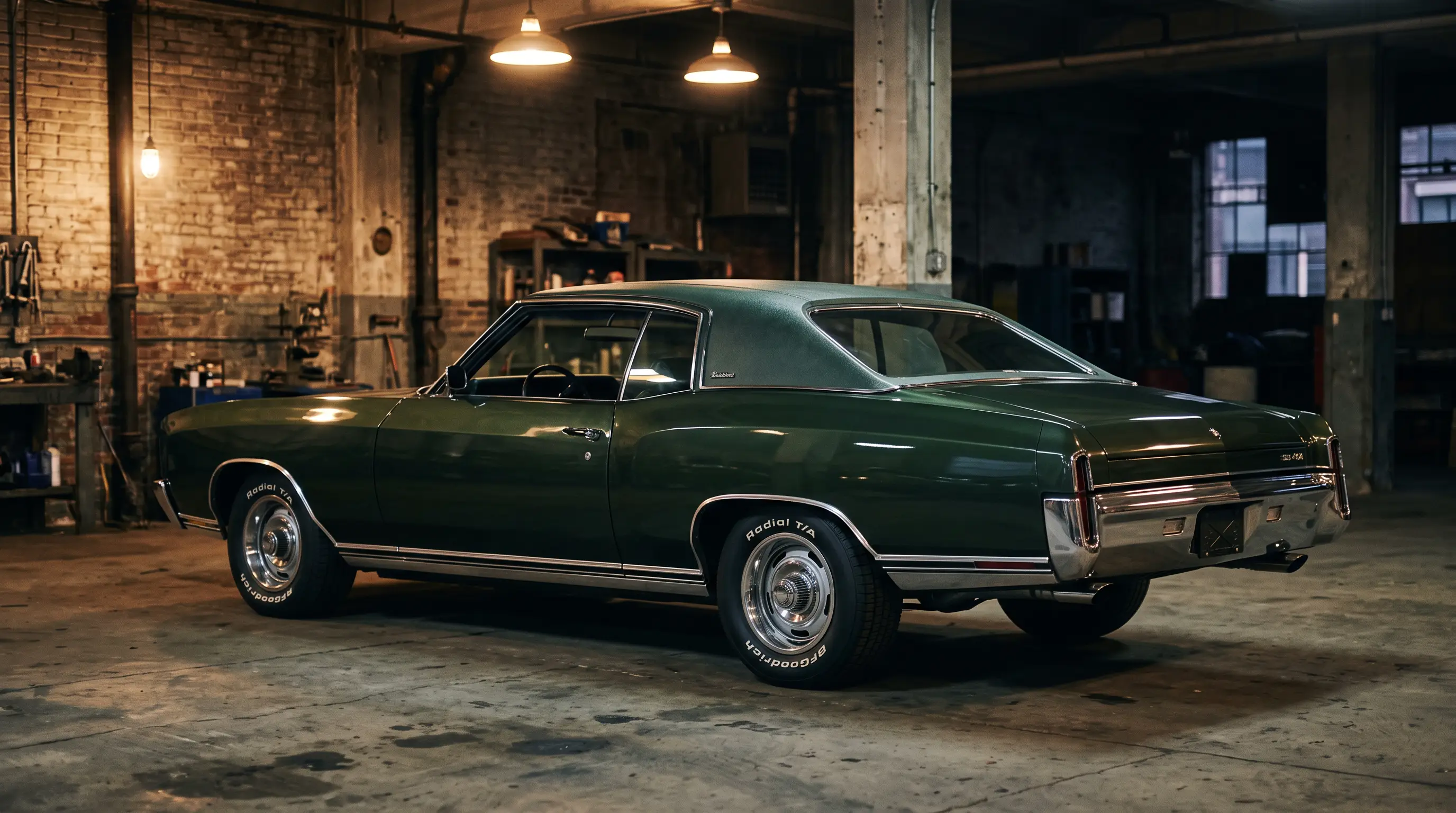
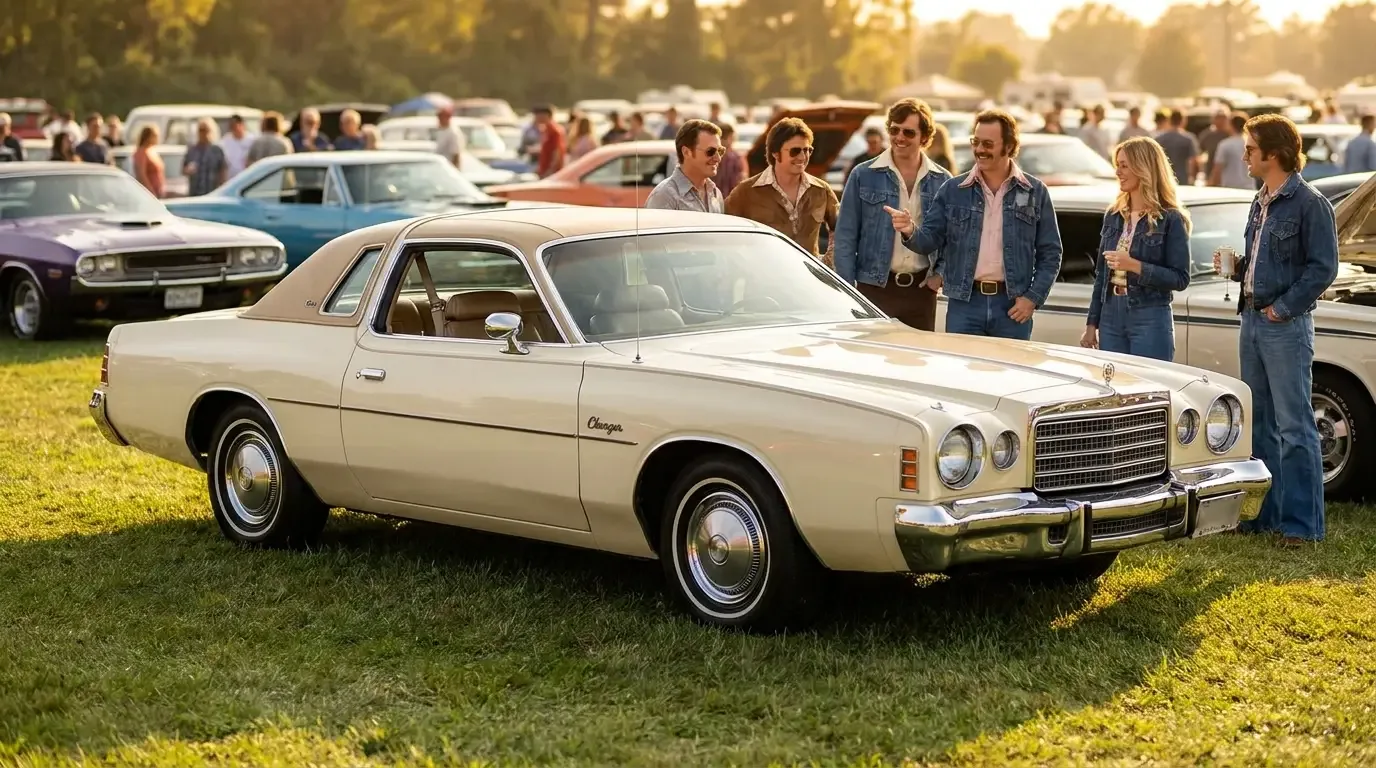
Every car club has one guy who bought the car nobody else wanted, and at the Mopar meets I go to, that guy usually owns a 1975 through 1978 Charger. He's used to the look. Somebody walks past his SE, glances at the vinyl roof and the opera windows, and asks where the real Charger went. He's got the answer memorized by now, and he doesn't mind giving it, because he knows something the rest of the room hasn't figured out yet: this is the cheapest entry point left into Dodge Charger ownership, and the window for buying in at these prices is closing.
The fourth-generation Charger, built on Chrysler's B-body platform from 1975 to 1978, gets dismissed as the car that ended the muscle car story. That reputation is earned in some ways and wrong in others, and I want to walk through what a collector actually gets for the money right now, because the paperwork side of this hobby has a way of telling the truth that nostalgia won't.
Why this generation stayed cheap for so long
The short answer is that the personal-luxury Charger never had the performance résumé the earlier cars did. No R/T package. No 426 Hemi. The top engine was a 400 cubic inch V8 rated in the low 200s of horsepower most years, sometimes less depending on emissions equipment, and that number alone kept muscle car buyers away for three decades. For a longer look at how Dodge repositioned the nameplate for this era, the personal-luxury Charger chapter covers the full pivot from performance flagship to boulevard cruiser.
What that left behind at swap meets and estate sales was a car priced like a parts donor. I've watched clean SE coupes sell in the low five figures for years while a comparable 1969 R/T cleared six figures without much argument. The gap was never about build quality. It was about which decade the buying public decided to romanticize, and the mid seventies lost that vote for a long time.
What the market looks like today
That's starting to shift, and the reason is straightforward: everybody who wanted a numbers-matching R/T from the sixties has mostly bought one already, or priced themselves out of trying. New collectors, particularly ones in their thirties and forties who remember these cars from childhood rather than from magazine covers, are looking at 1975 to 1978 Chargers with fresh eyes. A driver-quality 1975 Charger SE with a straight 400 and a decent interior runs roughly 9,000 to 16,000 dollars depending on region and options. A well-documented, low-mileage example with factory air and the right color combination can clear 20,000. Rust-free rear quarters and floor pans, which are not common on cars that spent forty years in the rust belt, add real money to that number.
I keep records on what actually changes hands at our regional shows, not just what gets listed, and the trend over the last three or four seasons is consistent upward pressure on clean, unmolested cars specifically. Modified examples, the ones somebody dropped a later 440 or an aftermarket interior into, are moving slower. Buyers now want the car the way it left the factory, which is a good sign for anyone who kept theirs stock out of laziness rather than principle.
"Everybody at the club had a theory about why these cars stayed cheap, until somebody actually ran the survivor numbers against the sixties cars, and just like that the bench-racing was over. There just aren't that many left in honest condition, and that scarcity was hiding in plain sight the whole time."
— Wayne Coburn
What to actually buy
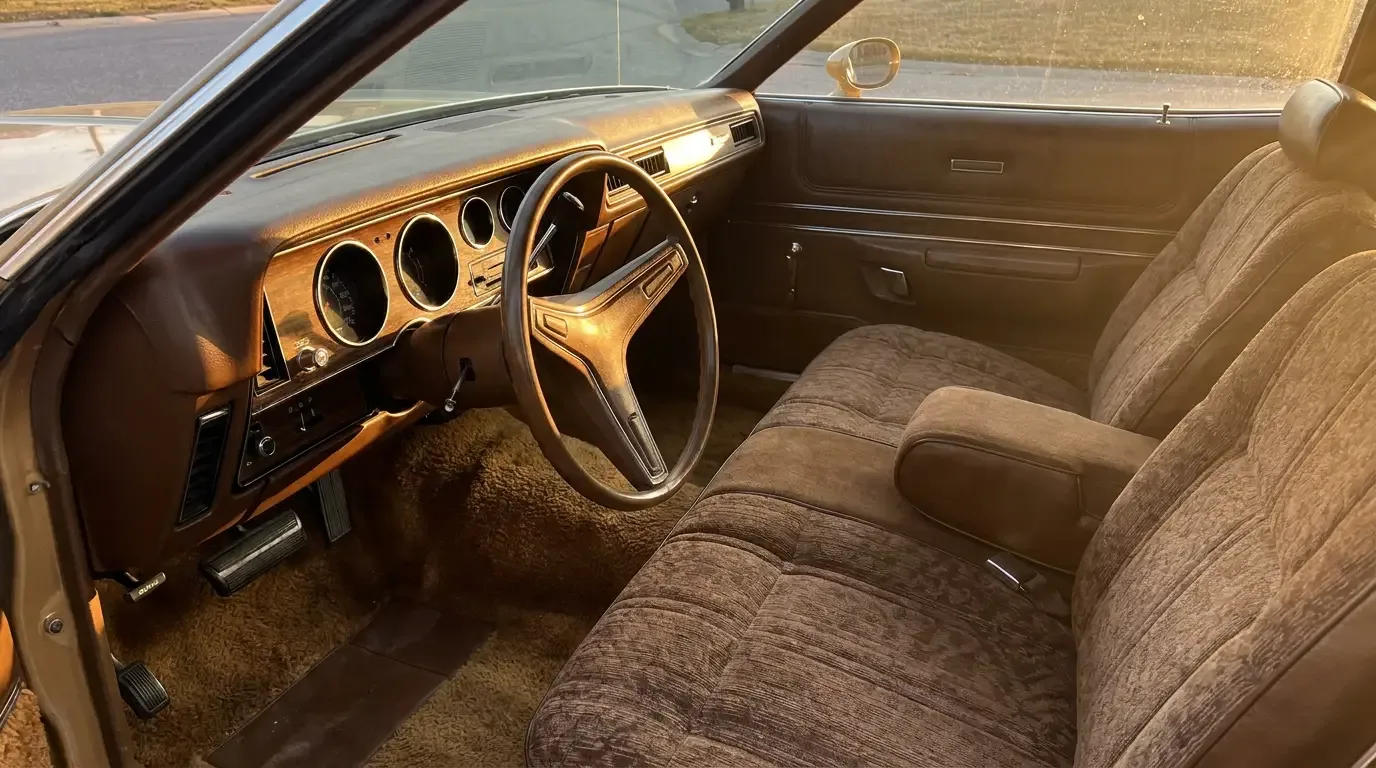
The SE trim is the one to chase if originality and long-term value matter to you. It carried the nicer interior appointments, the crushed velour or leather options depending on year, and the styling touches that defined the generation. A base Charger coupe without the SE package is a lesser find and priced accordingly, though it's a fine driver if the SE's price premium doesn't interest you.
Engine choice matters less than people assume for collectibility, since none of the available V8s were performance engines by this point. What matters is documentation. A build sheet, a broadcast sheet still in the trunk, or factory paperwork showing original ownership adds real value, the same way it does on any Mopar from this era. If you're new to this corner of the hobby, dodge charger history is worth reading start to finish before you write a check, because understanding what came before helps explain why this generation gets undervalued.
| Condition | Typical price range | What to expect |
|---|---|---|
| Project / needs work | around $3,000 - $7,000 | Rust in floors or quarters, incomplete interior, running or not |
| Solid driver | around $9,000 - $16,000 | Straight body, presentable interior, mechanically sound |
| Documented, low-mile SE | around $18,000 - $28,000 | Original paperwork, factory options, minimal rust history |
Where the risk actually sits
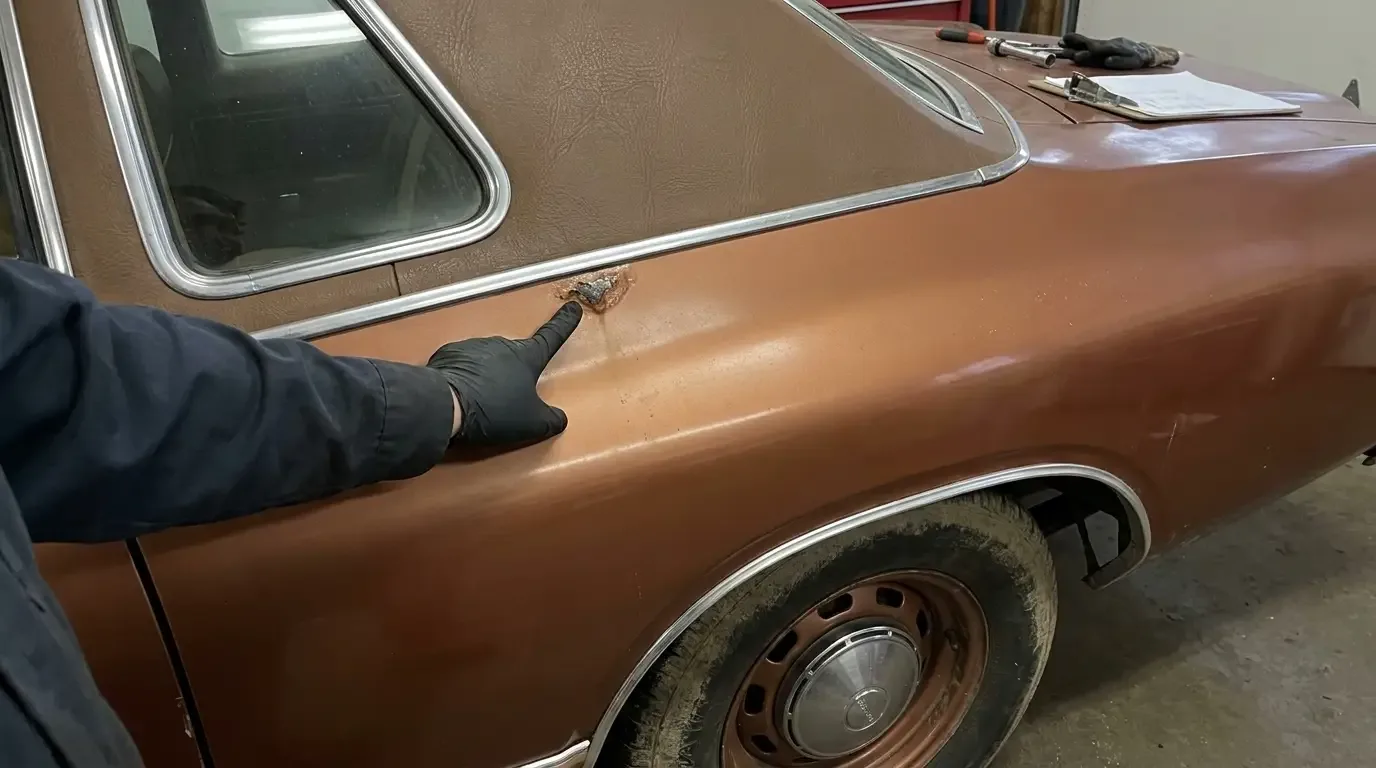
Rust is the honest villain here, more than any mechanical issue. These cars share the B-body's known trouble spots: rear quarter panels, trunk floors, and the front floor pans under the carpet. Because these Chargers weren't babied the way earlier muscle cars often were, plenty of them lived outdoors through winters that didn't do them any favors. Check under the vinyl roof too, since trapped moisture there rots the roof skin from the inside in a way that isn't visible from the driveway.
The case for buying now
I don't tell people to buy anything as an investment, because I've seen too many cars bought on a spreadsheet promise that never showed up. But I will say this: undervalued corners of any hobby don't stay undervalued forever, and the fourth-gen Charger has the ingredients that eventually correct a market, genuine scarcity, factory documentation that rewards research, and a design that's aging into its own period charm rather than out of it. If you want the full arc of how this generation fits into the Charger's story, read more here, and if you're ready to start looking, there are usually a handful of classic Dodge Chargers for sale worth cross-shopping before you commit to one.
Buy the one with the paperwork and the straight quarters over the one with the shinier paint. That's always been true in this hobby, and it's especially true here, where the cars that survived honestly are quietly becoming the rare ones.
Sources and notes
- Dodge Charger (B-body), Wikipedia - confirmed fourth-gen production of 30,812 (1975), 65,900 (1976), ~30,367 (1977) and 2,735 (1978), and the 318/360/400 V8 lineup with no R/T or Hemi.
- Hagerty Valuation Tools condition definitions - confirmed the #1 through #4 condition scale and the weight documentation carries in value.
- Hagerty Insider on widening price gaps - confirmed the pattern of clean, documented cars pulling away from rough drivers.
- Classic.com fourth-gen Charger market - corroborated the low-five-figure market range for driver-quality SE examples.
- Mac's Motor City Garage on the 1975 Cordoba - context on the shared B-body personal-luxury segment the Charger competed in.