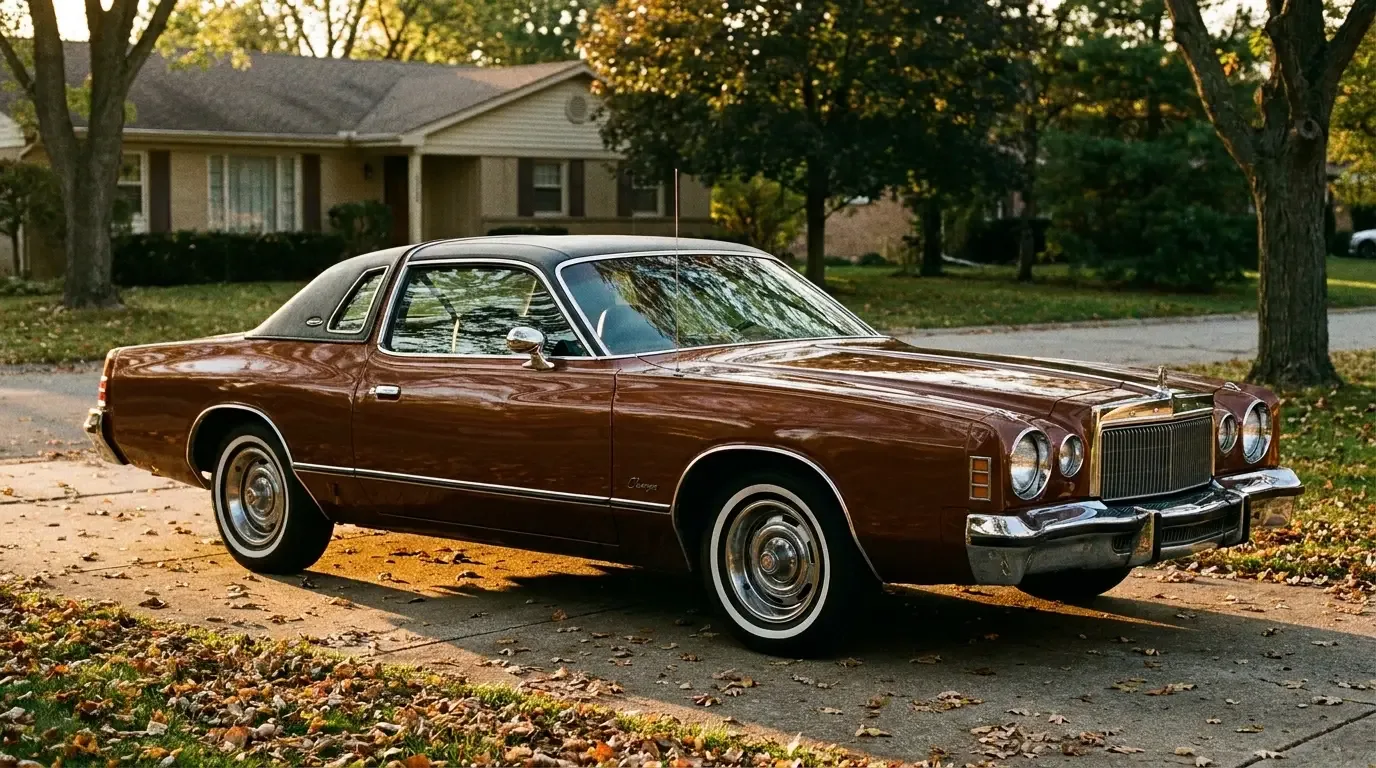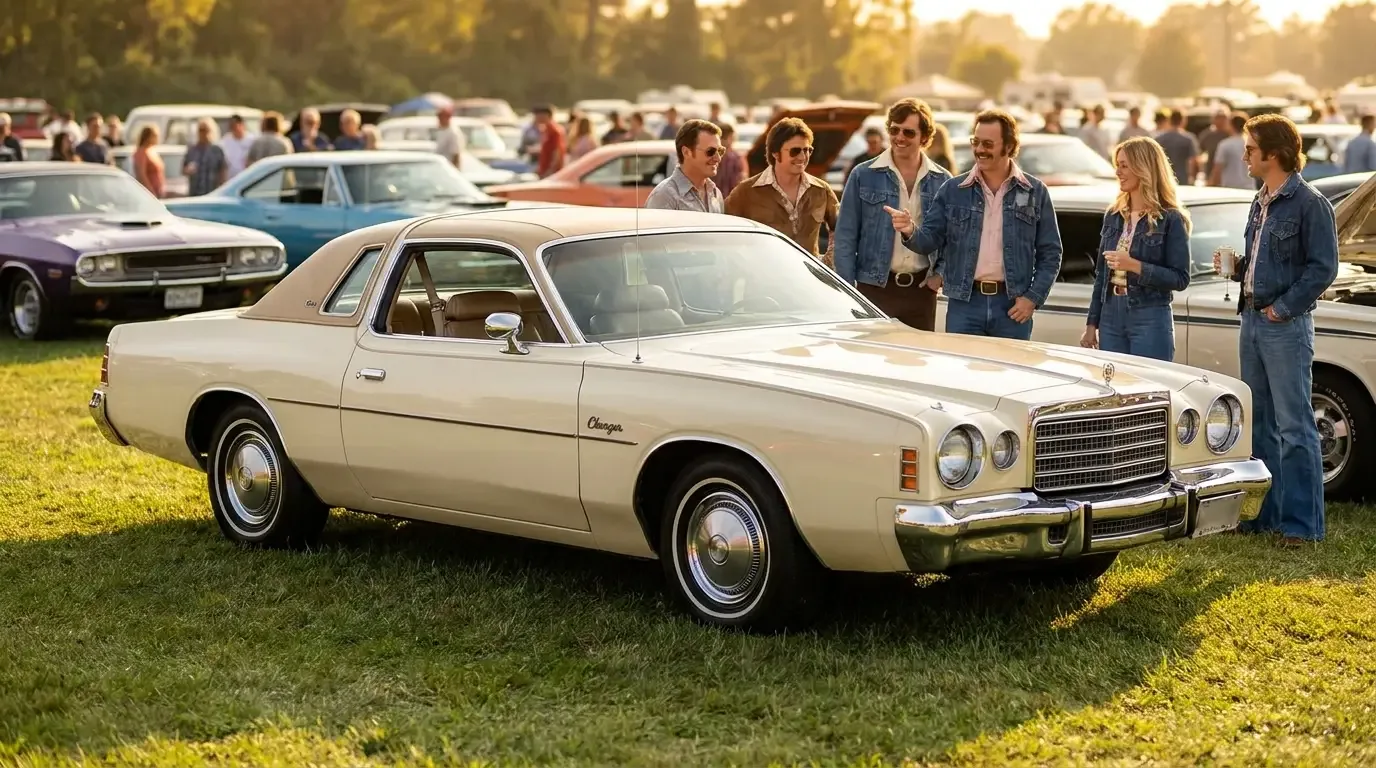
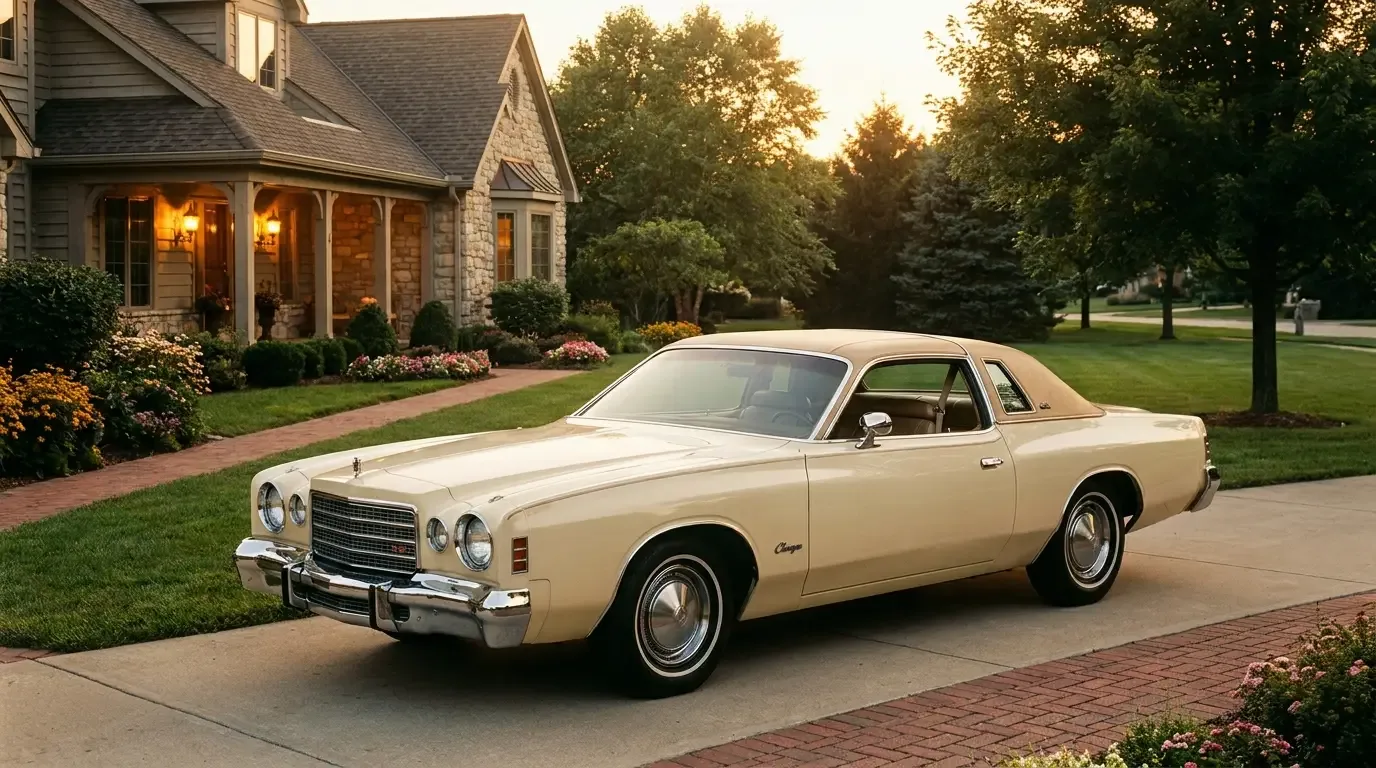
My grandfather kept a stack of old magazines in the garage rafters, and one October afternoon, helping him clear leaves out of the gutters, I found a 1976 issue of a car magazine with a Dodge ad folded into thirds, soft at the creases from being opened and closed a hundred times. It wasn't the Charger he'd owned. It was the Charger he'd wanted, a cream colored coupe with a landau roof, photographed in front of a house that looked nothing like ours, and he told me he'd cut that ad out once, years before I was born, and taped it inside a toolbox lid. He never bought the car. He kept the ad instead.
That's the thing about the advertising built around the fourth-generation Charger. It wasn't selling a quarter mile time or a horsepower number the way the ads for the car's ancestors had. It was selling a feeling, a version of arrival, and looking back at those campaigns now tells you almost as much about the mid seventies as it does about the car itself.
A different pitch for a different decade
By 1975, Dodge wasn't advertising the Charger to the same buyer it had chased in 1969. Insurance surcharges, tightening emissions rules, and a market that had cooled on muscle cars pushed the whole segment toward something softer. The print campaigns leaned hard into comfort and status: crushed velour seats, opera windows, a ride described in terms that would have sounded absurd applied to a 1968 R/T. One recurring headline promised buyers a car that looked expensive without asking them to spend like it. That was the entire strategy in a sentence.
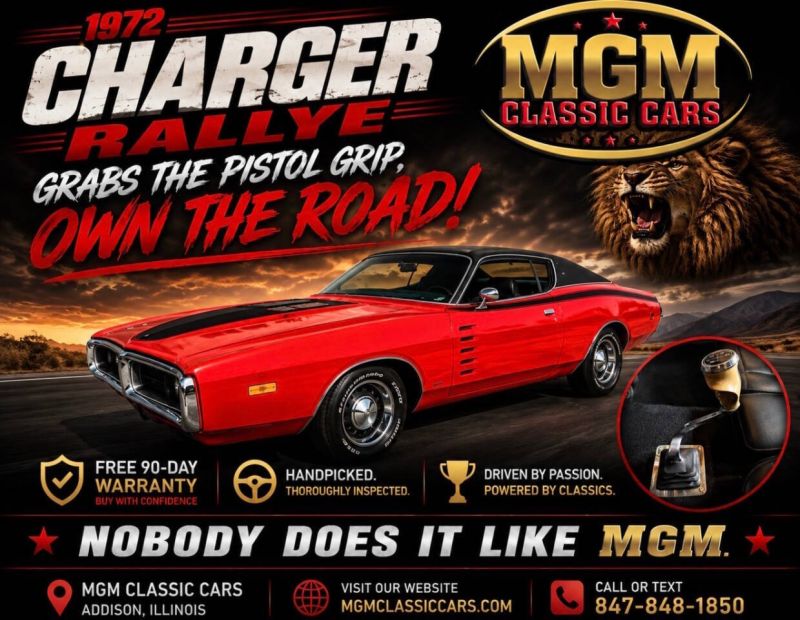
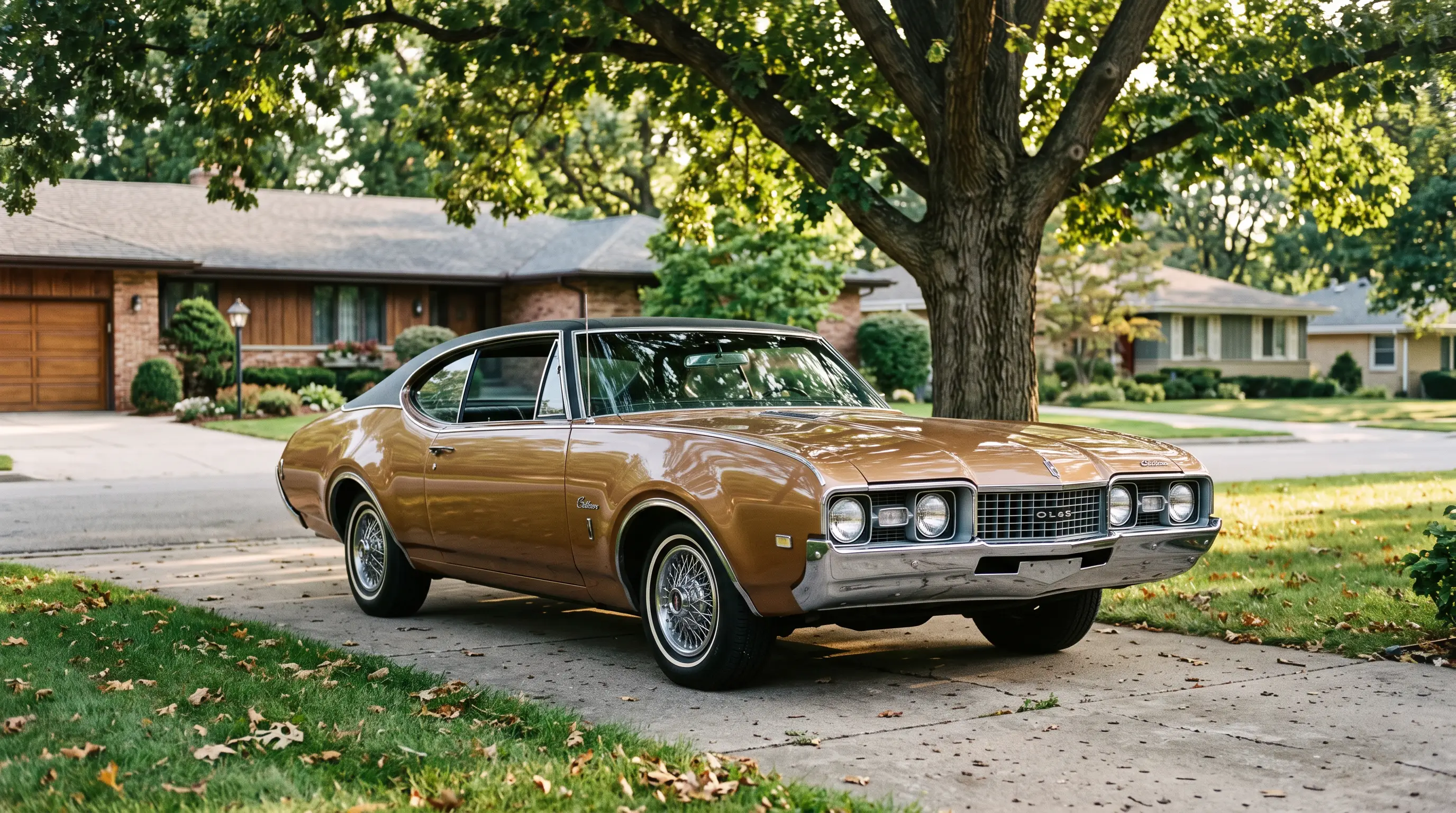
The photography changed to match. Earlier Charger ads had shown cars in motion, blurred backgrounds, a sense of speed baked into the composition. The fourth-gen ads are almost always static. A Charger parked in a driveway. A Charger outside a restaurant at dusk. The car became a stage prop for a lifestyle rather than the subject of a performance claim, and once you notice that shift, you can't unsee it in every ad from the run.
The SE as the star of the campaign
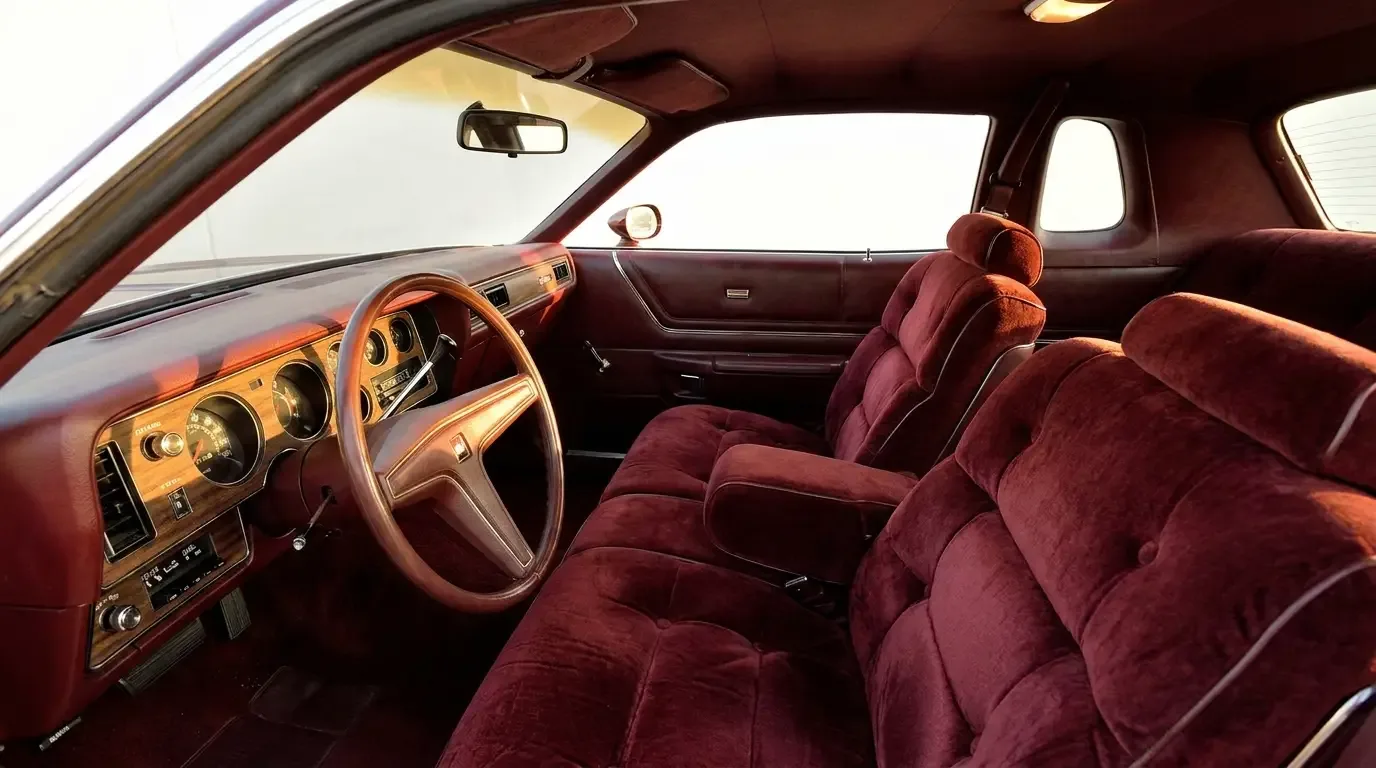
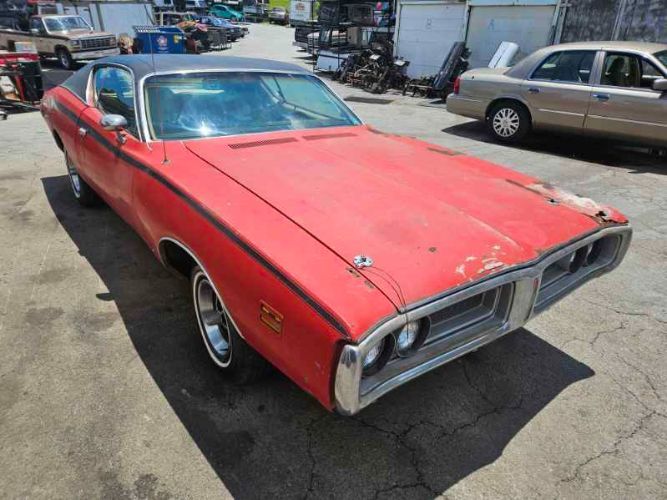
The SE trim got most of the advertising attention, and for good reason. It carried the interior upgrades and the visual cues, the padded landau roof, the opera windows, the available leather, that Dodge wanted front and center. Base Charger coupes barely appeared in national print campaigns at all. If you want the full story of how the SE became the face of this generation, the personal-luxury Charger story covers the trim history in detail, but the short version is that Dodge built the advertising around the car buyers actually wanted to be seen in, not the base model that filled out the price sheet.
What strikes me now, looking at these campaigns decades later, is how honest they were about what the car offered. There's no attempt to disguise the personal-luxury pivot as anything other than what it was. The copy doesn't apologize for leaving performance behind. It just moves on to a different argument, and reading it today feels less like nostalgia and more like watching an industry admit, in real time, that the previous decade had ended.
"She kept the folded ad in a toolbox for forty years, longer than she kept most of the cars she actually owned, because the picture held a version of a life she'd imagined once and never quite let go of. That's what a good car ad does. It outlives the car."
— Nora Beckett
What the ads reveal about the buyer Dodge wanted
The target demographic in these campaigns skewed older and more affluent than the muscle car buyer of years past, and the settings in the photography confirm it. Country clubs. Marina backdrops. A well dressed couple stepping out of a Charger SE in front of what's clearly meant to read as a suburban dream home. It's a far cry from the drag strip imagery that sold the same nameplate a decade earlier, and it tells you Dodge understood exactly who was still willing to buy an American coupe in the middle of the decade's economic anxieties.
| Model year | Advertising focus | Typical setting shown |
|---|---|---|
| 1975 | Introduction of the personal-luxury redesign | Suburban driveway, formal daylight photography |
| 1976 | SE comfort and interior trim emphasis | Evening, restaurant or club exterior |
| 1977 to 1978 | Value and continued refinement messaging | Family-oriented, softer daytime settings |
The copywriting itself deserves a second look
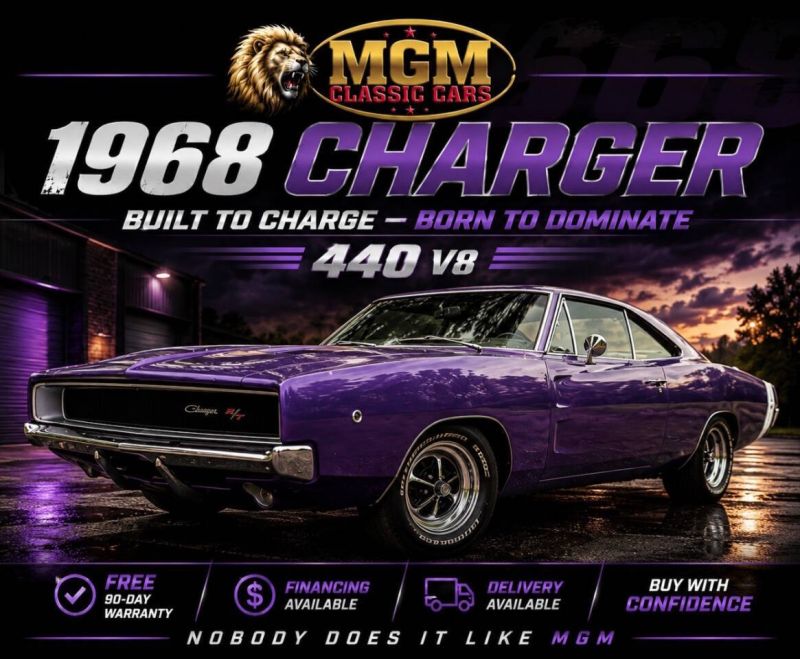
Read the actual body copy from these campaigns, not just the headlines, and a pattern emerges that a lot of people miss. The writers leaned on words like "quiet," "composed," and "arrived," language built for a buyer who wanted the car to say something settled about them rather than something aggressive. Compare that to a Charger ad from 1969, full of verbs, full of motion, and the contrast reads almost like two different companies wrote them. In a sense, two different companies did. The engineers hadn't changed much. The marketing department serving a different America had.
There's a quieter irony buried in all of this too. The same decade that produced these soft-focus, comfort-first Charger ads also produced some of the most anxious economic headlines of the postwar era, oil shortages, inflation, a country genuinely uncertain about its own trajectory. The advertising doesn't reflect any of that directly. If anything, it works harder to project calm precisely because the world outside the dealership window wasn't offering much of it. A car ad selling composure to a nervous decade is its own small piece of social history, and it's one of the reasons I find these campaigns more interesting now than I probably would have found them new.
Why these ads still matter to collectors
Original print ads and dealer brochures from this era have become their own small collectible, separate from the cars entirely. They document colors and option combinations that don't always survive in the metal, and for anyone restoring a fourth-gen Charger to period-correct condition, a stack of old magazine ads can settle an argument about trim or upholstery pattern that a modern parts catalog can't. There's also something about holding the actual paper, the same paper someone once folded and unfolded and folded again, that a digital scan doesn't replicate.
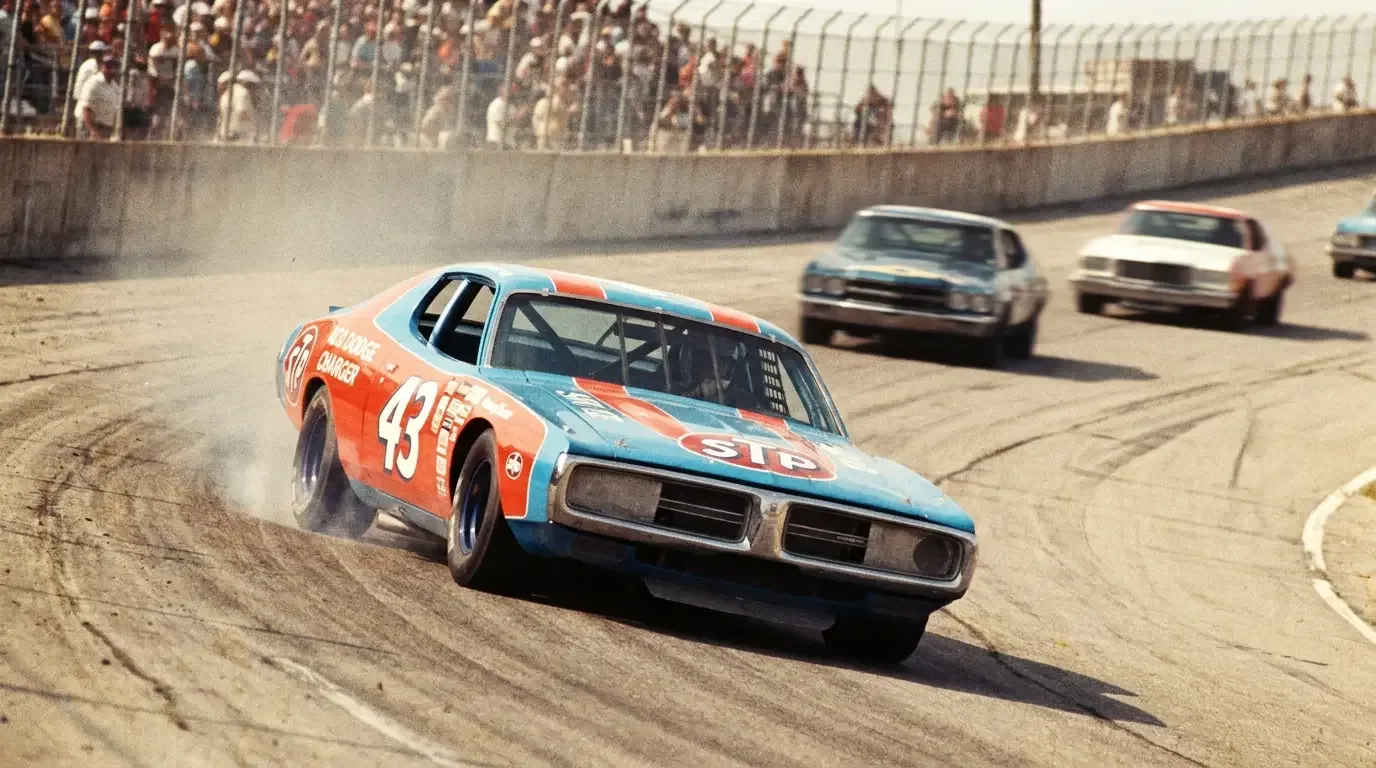
My grandfather never did buy that Charger. He bought a station wagon instead, because that's what the family needed, and he told me once that the ad was easier to love than the car would have been to pay for. I think about that a lot when I look at these campaigns now. They weren't selling cars so much as selling a version of a Tuesday evening that felt just out of reach, and for a lot of people, that was enough. If you want to see where the story goes from the showroom floor to the racetrack, read more here, because the same car that sold on comfort in the ads still had one more chapter left to write on Sunday afternoons.
Sources and notes
- Dodge Charger (B-body), Wikipedia - confirmed the 1975 personal-luxury redesign, the SE trim's landau roof and opera windows, and the departure from R/T performance marketing.
- Mac's Motor City Garage on the 1975 Cordoba - context on how Chrysler pivoted its whole personal-luxury pitch toward comfort and status in this era.
- Old Cars Weekly on the mid-seventies personal-luxury market - period context on the buyer Dodge and Chrysler were courting.
- Chrysler Cordoba, Wikipedia - confirmed the industry-wide shift to comfort-and-status advertising the Charger campaigns followed.
- Classic.com fourth-gen Charger market - corroborated the SE's dominance of the surviving, collected population documented in period brochures.