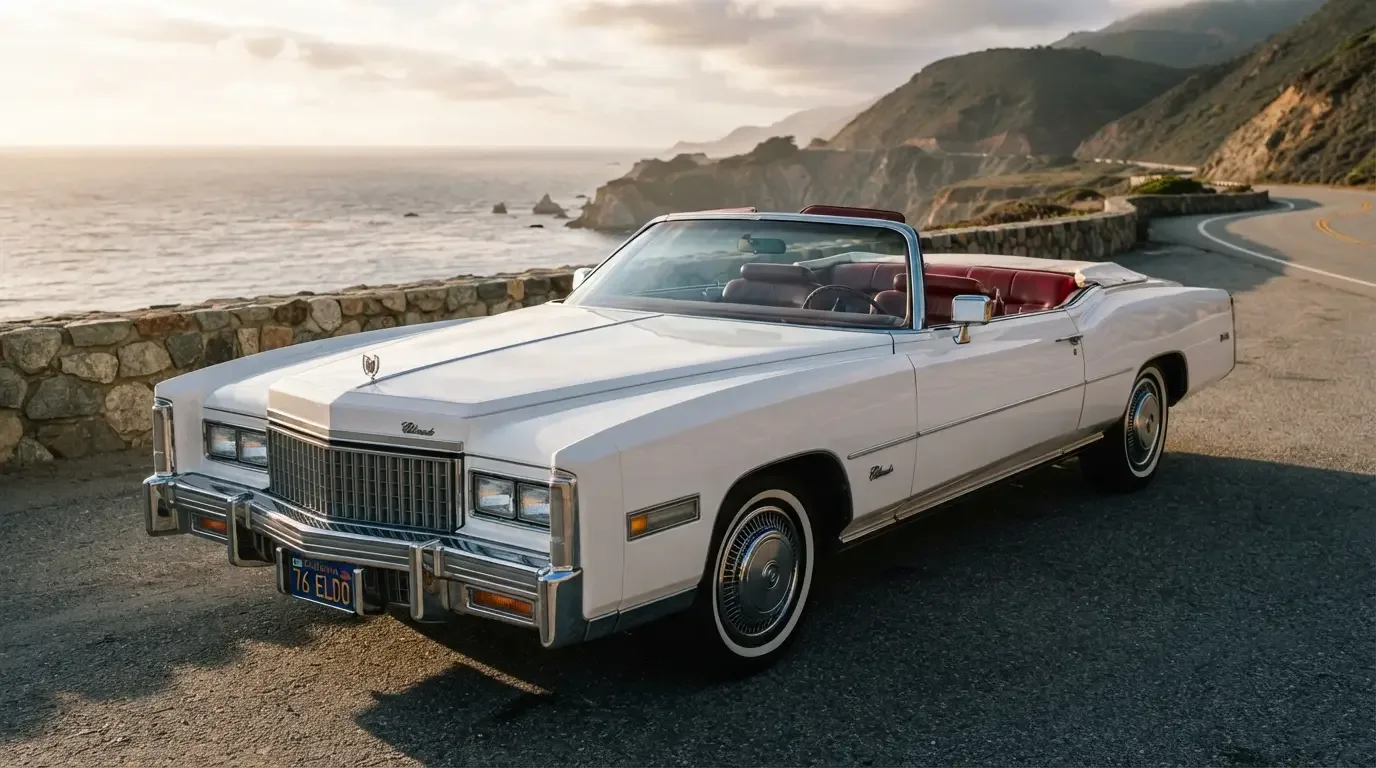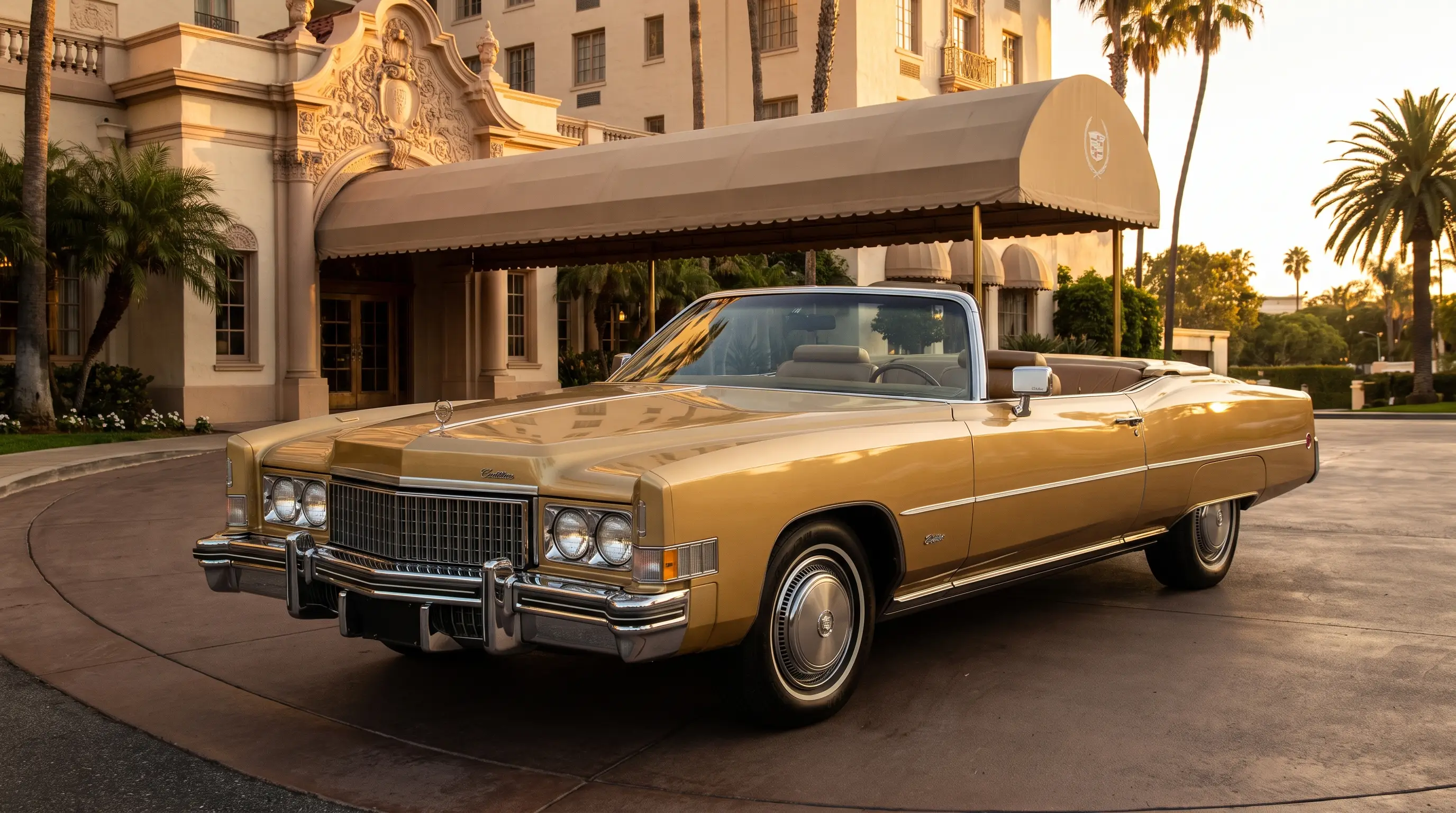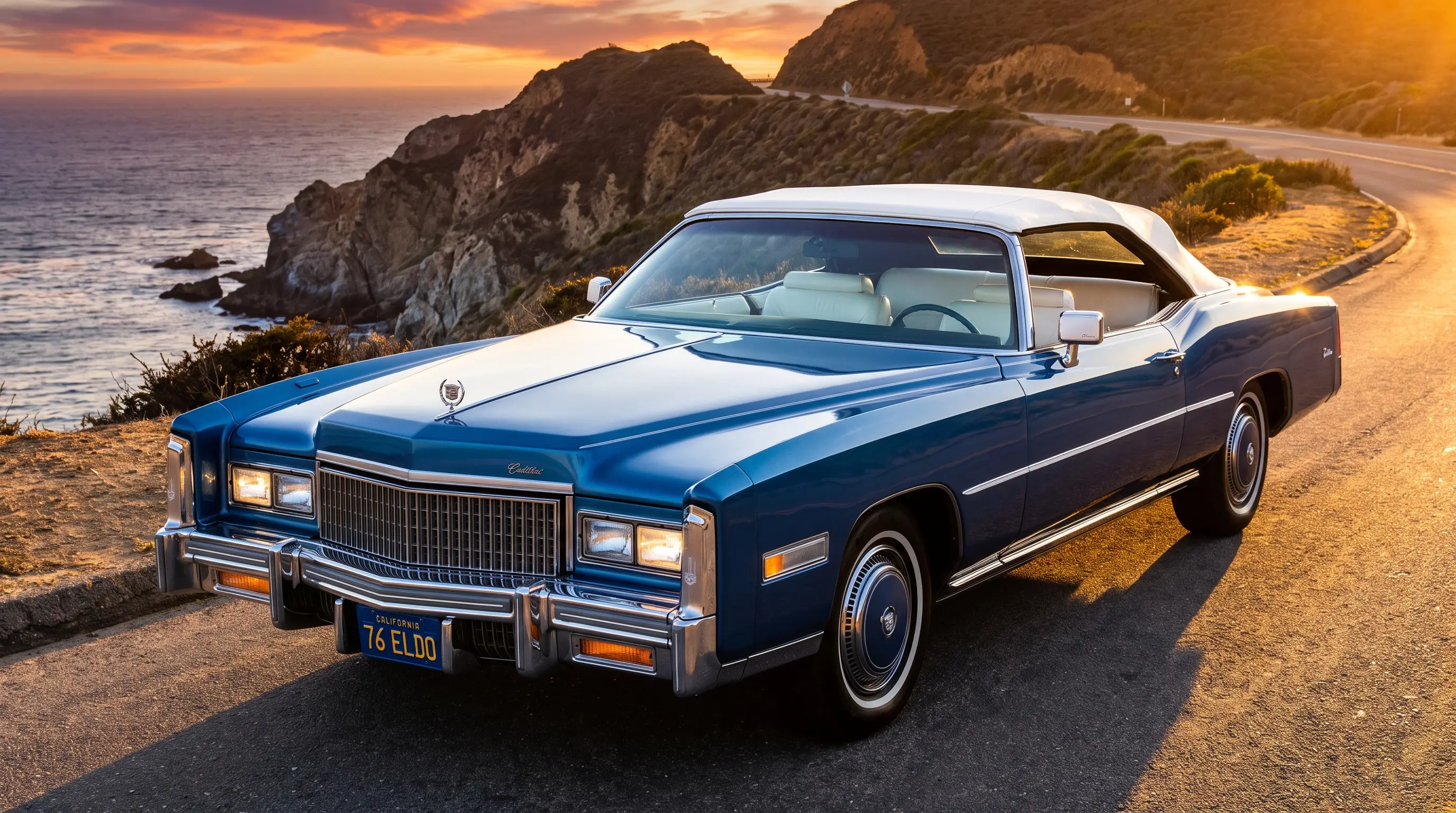
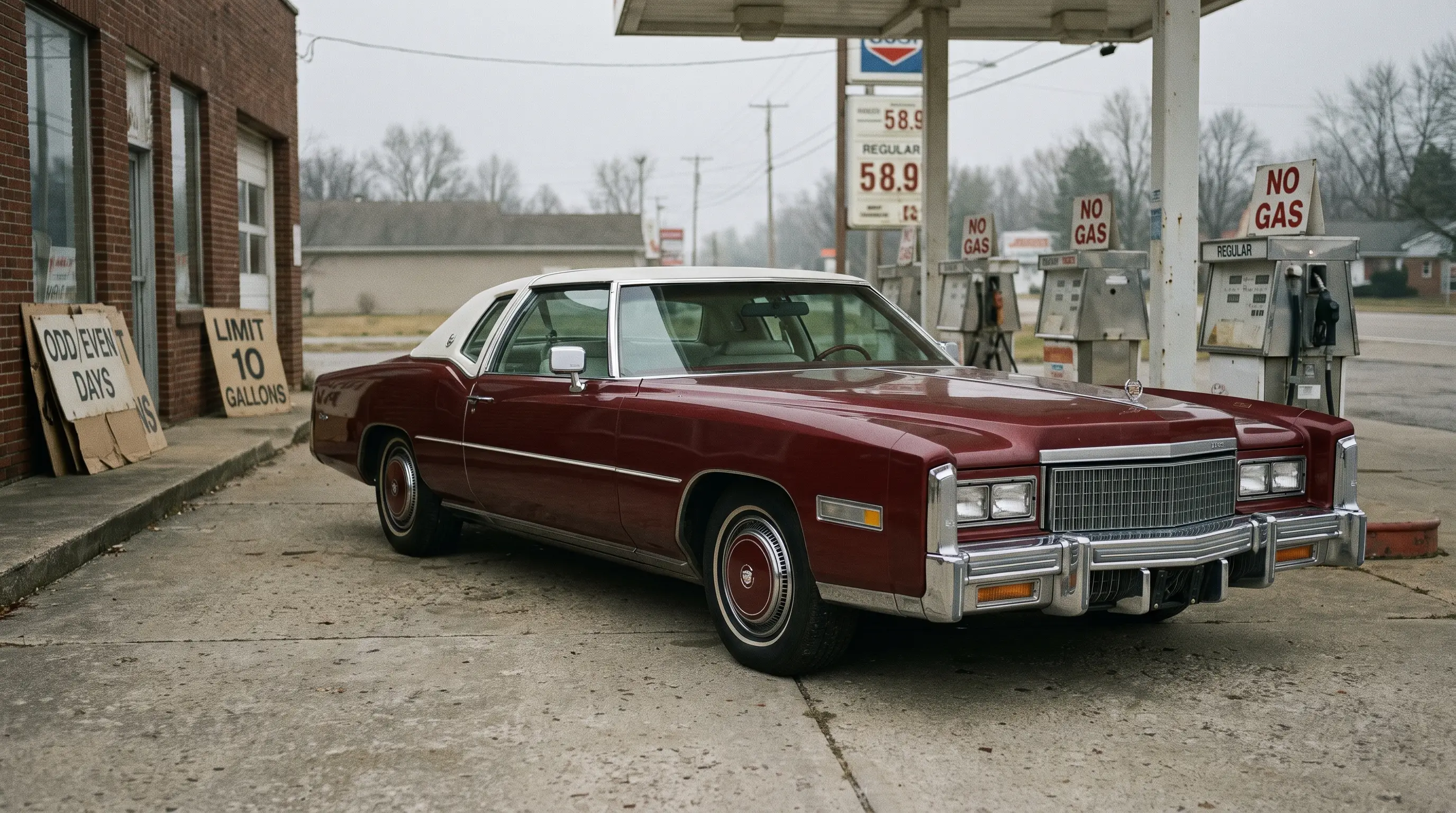
The 1975 Cadillac Eldorado sits in an awkward place in the record, built after the OPEC embargo had already rattled the luxury car market but before the "last convertible" campaign gave the nameplate its second wind. Documenting a car like this means resisting the urge to read the 1976 story backward into it. The 1975 Eldorado was its own object, built under its own set of constraints, and it deserves to be catalogued on those terms.
A car built under new rules
Federal emissions standards tightened substantially for the 1975 model year, and catalytic converters became mandatory equipment on nearly every American car sold, the Eldorado included. That single component changed more about the driving character of the 500 cubic inch V8 than any styling revision could. Compression ratios had already been lowered to run on unleaded fuel starting in 1971, and by 1975 the combination of the catalyst, leaner carburetion, and exhaust gas recirculation left the big Cadillac engine rated at 190 net horsepower (215 hp with the optional Bendix electronic fuel injection), a meaningful drop from the 235 horsepower the same displacement engine had carried just two years earlier.
Cadillac's engineers did not have the luxury of simply detuning the engine and calling it finished. The 500 needed to still deliver the effortless, unhurried acceleration that Eldorado buyers expected, so torque was preserved even as peak horsepower fell. The result was a car that felt similar from behind the wheel at low speed but noticeably softer when asked to pass or merge onto a highway ramp.
| Spec | 1975 Eldorado |
|---|---|
| Engine | 500 cu in (8.2L) OHV V8 with catalytic converter |
| Horsepower | 190 net (215 with fuel injection) |
| Wheelbase | 126.3 in |
| Fuel | Unleaded required |
| Body styles | Coupe and convertible |
| Transmission | Turbo-Hydramatic 400, 3-speed automatic |
Documentation and what survives
Production ledgers for the 1975 Eldorado convertible show a modest recovery from the depressed 1974 figures, though nowhere near the volumes the nameplate had reached in 1973 before the embargo. Coupe sales made up the bulk of Eldorado output that year, with Cadillac building 44,752 Eldorados total for 1975 and only 8,950 of them convertibles, roughly a fifth of the run. What matters for anyone researching a specific car is that Cadillac's build sheets and window sticker data from this period are reasonably well preserved in dealer and factory archives, which makes verifying an individual 1975 Eldorado's original specification more achievable than for many of its contemporaries.
The trim tag, stamped with body style, paint code, and interior trim code, remains the primary reference point for confirming originality. Cross referencing that tag against the factory build sheet, when one survives with the car, is the standard method for establishing whether a given Eldorado left the factory exactly as presented. Dealer invoices, when they turn up in an old owner's paperwork folder, add another layer of confirmation, listing factory installed options that can be checked against the trim tag's option codes for consistency.
Styling in a transitional year
Visually, the 1975 Eldorado carried forward the basic proportions established in 1973, with the same long hood, short deck silhouette and prominent front bumper required by federal impact standards. Detail changes to the grille, taillamp lenses, and available paint and vinyl top combinations distinguish a 1975 car from its 1973 and 1974 siblings, and those details matter enormously to anyone trying to date an unrestored example or confirm a repaint against factory codes.
Interior trim followed the broader Cadillac pattern of the period, with knit cloth, leather, and the more luxurious d'Elegance option available depending on how the car was ordered. Documenting the correct combination for a specific VIN requires patience, since Cadillac offered a wide spread of choices and dealer paperwork from the mid-1970s has not always survived intact.
"People assume every big Cadillac from this decade is interchangeable if you squint. The trim tags and build sheets tell a much more specific story, and 1975 in particular sits at a hinge point in the engineering record that is worth getting right."
- Sarah Whitfield
Road manners under the new regulations
Period road tests from 1975 consistently noted that the Eldorado still felt like a Cadillac from the driver's seat, isolated, quiet, and composed over broken pavement, even as the specification sheet told a story of compromise. Editors who had driven the 1973 cars back to back with 1975 examples reported a softer throttle tip in, a wider window between pressing the pedal and feeling the car respond, and a noticeably different exhaust note thanks to the added muffling required by the catalytic converter housing. None of this made the Eldorado unpleasant to drive. It simply made it a different kind of unpleasant to drive fast, which was increasingly beside the point for most buyers by the middle of the decade.
Fuel economy improved only marginally despite the horsepower reduction, since the Eldorado's weight and aerodynamics had not changed to match the detuned engine. Owners who kept meticulous fuel logs, and some did, recorded figures in the low double digits around town, numbers that were becoming a genuine talking point at dinner parties in a way they never had been in 1973. That shift in what buyers cared about, moving from raw power to running cost, is part of what set the stage for the marketing campaign built around the 1976 model.
Where it fits in the bigger picture
The 1975 Eldorado is best understood as a bridge car, built after the embargo forced Detroit to reconsider the land yacht formula but before Cadillac's marketing department found a new story to tell about the convertible's future. That story arrives fully in the full story of the 1976 model year, when Cadillac told the public the convertible top was disappearing for good. Readers researching the full arc of the 1970s Eldorado convertible should treat 1975 as essential context rather than a footnote.
For collectors evaluating a 1975 Eldorado today, the emissions equipment and lower horsepower rating have kept prices below the more mythologized 1976 cars, even though the underlying body, chassis, and much of the drivetrain are shared between the two model years. Anyone comparing the two years in person, whether at a show or while shopping to browse classic Eldorado listings, should look closely at documentation rather than relying on model year alone to judge originality or value in the end.