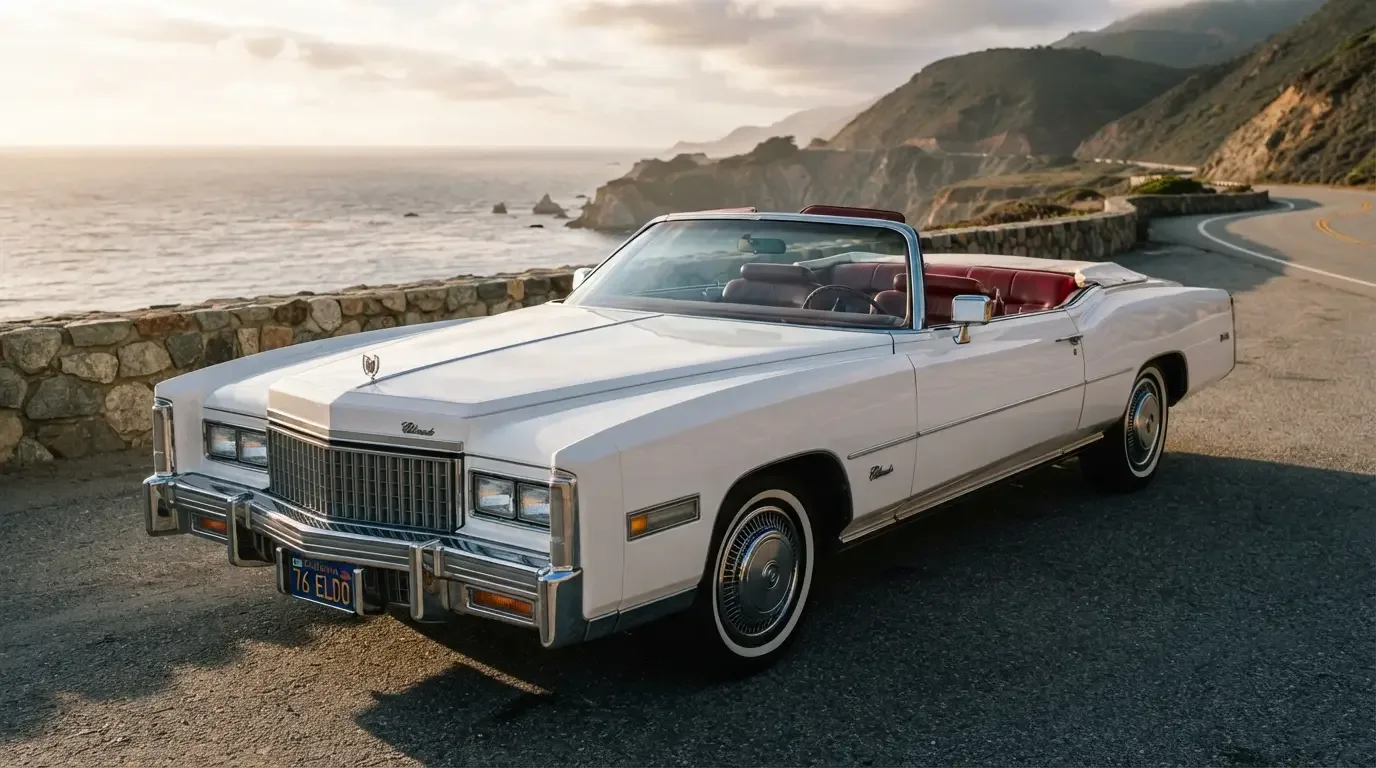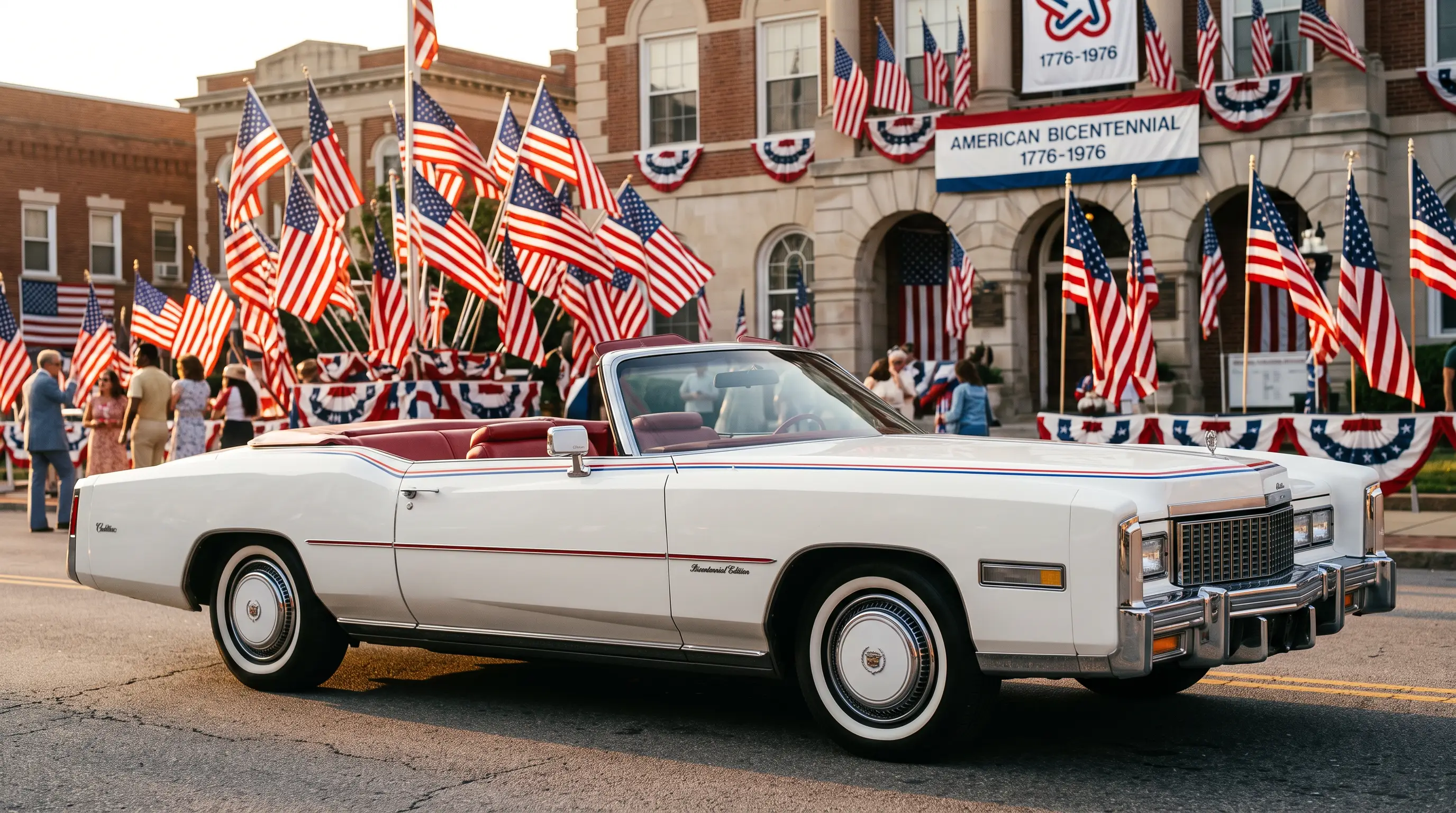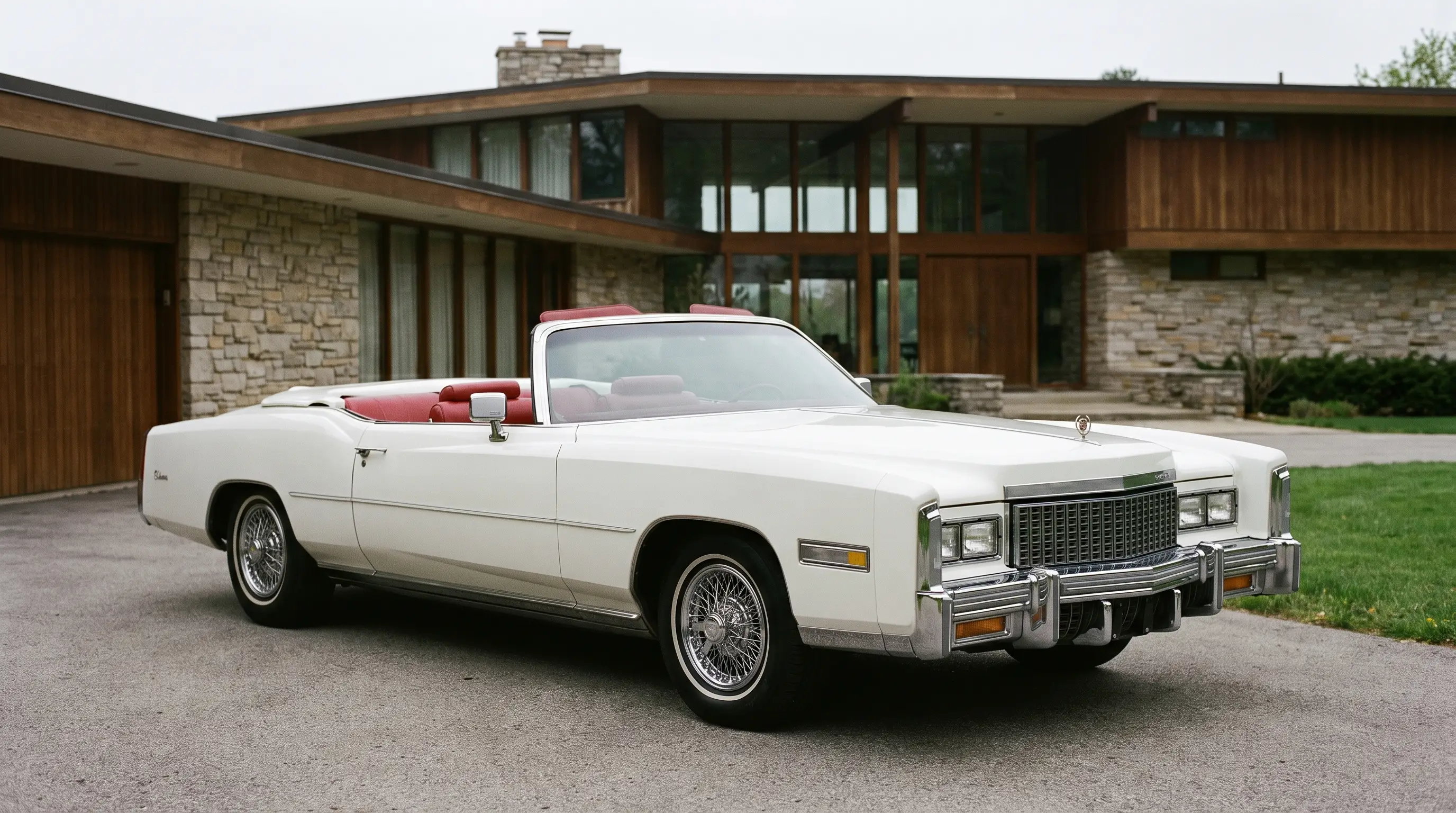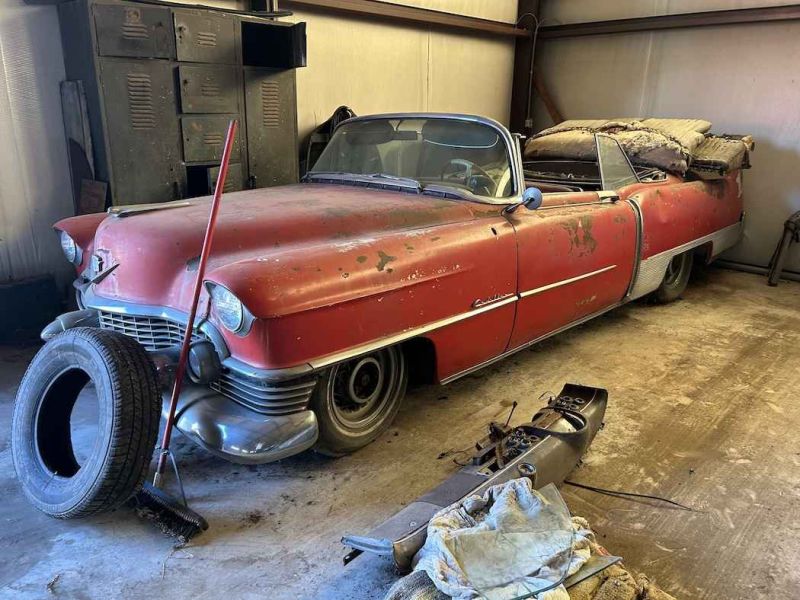
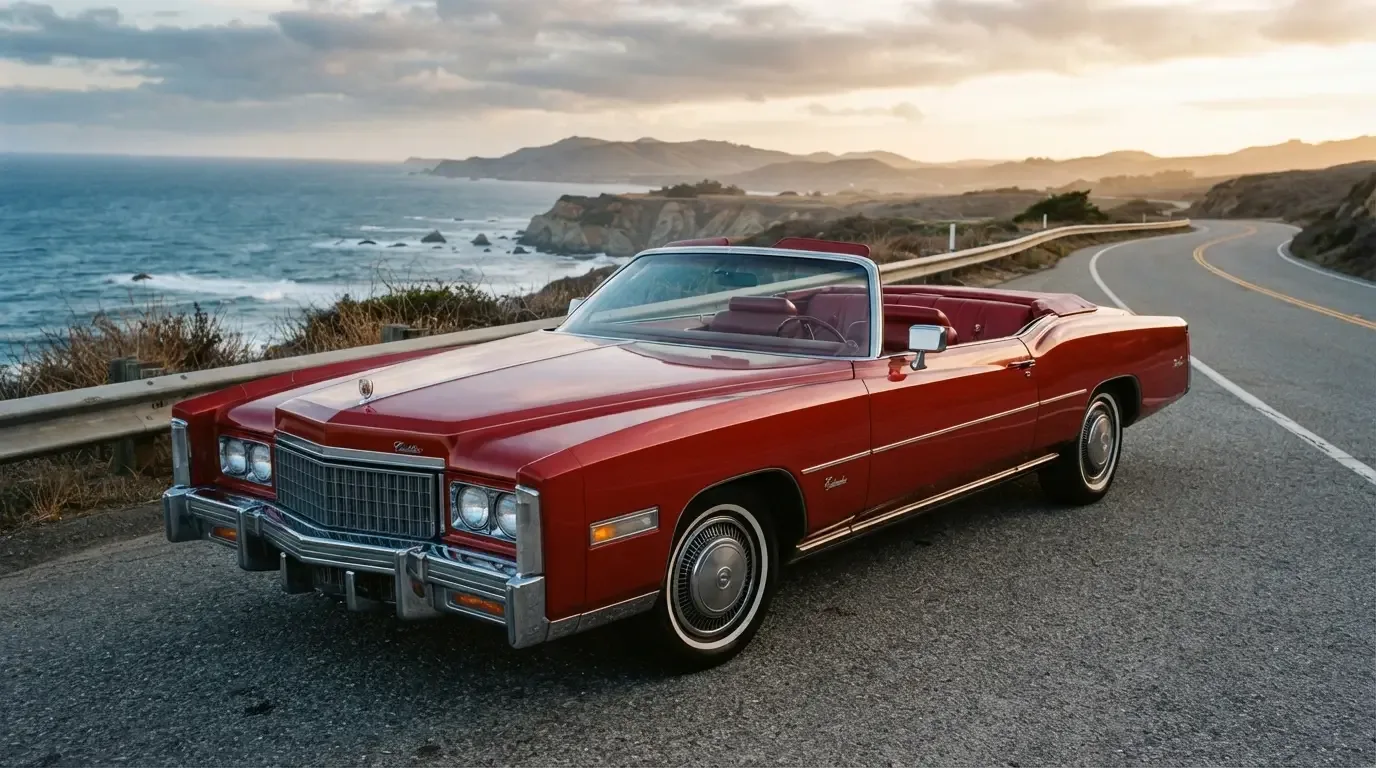
Cadillac's own advertising department wrote the epitaph before the car was even finished. The 1976 Eldorado convertible went to market under a banner declaring it the last American convertible, and for a while that claim looked accurate. It was also, as later years proved, not quite true, which makes the 1976 Eldorado one of the more interesting cases of a marketing line outliving its own facts.
Why convertibles were disappearing in the first place
The retreat from open top cars in the mid 1970s came from a mix of real and anticipated pressure. Proposed federal rollover standards, never actually finalized in the form manufacturers feared, pushed engineers and product planners toward the assumption that convertibles would soon be regulated out of existence. Insurance costs for open cars were climbing. Sales across the industry had been sliding for years as buyers gravitated toward sedans and, increasingly, the growing personal luxury coupe segment that Cadillac itself had helped build with cars like the Eldorado coupe. By the time 1976 rolled around, every major American manufacturer had already dropped or was actively planning to drop its convertible offerings, and Cadillac made the decision to be the last one standing, at least for a while.
How Cadillac played the ending
Rather than quietly discontinuing the convertible, Cadillac turned the car's final year into an event. Dealers were told this was the end of an era, sales literature leaned hard into the historical weight of the moment, and the marketing framed each 1976 Eldorado convertible sold as a piece of automotive history rather than simply a car. That framing worked. Demand for the 1976 convertible outpaced what Cadillac had planned, and by the time production wound down, the division had built roughly 14,000 units for the model year, a number well above what a straightforward market forecast would have predicted for a convertible in a declining segment.
| Detail | 1976 Eldorado convertible |
|---|---|
| Model year production | approximately 14,000 units |
| Marketed as | Last American convertible |
| Body | Front wheel drive, E-body platform |
| Cadillac's next factory convertible | 1984 model year (conversion built) |
The claim did not hold
The idea that American convertibles were gone for good lasted less than a decade. Cadillac itself brought the Eldorado convertible back for the 1984 model year, initially through outside conversion work before bringing the process fully in house, and other manufacturers followed with their own open top revivals through the 1980s. That reversal turned the 1976 "last convertible" claim into one of the more famous overstatements in American car marketing, a promise the industry itself broke within less than ten years. It does not erase what made the 1976 car significant, but it does mean the phrase needs a footnote every time it gets repeated.
That correction matters for buyers and historians alike, because the 1976 Eldorado's reputation still rests heavily on a claim that did not end up being permanent. The car remains historically important as the final convertible of that particular closing chapter in American manufacturing, built during a genuine industry wide retreat from open cars. It simply was not, in the end, the last one ever.
"Every few years someone tells me with total confidence that no American manufacturer built a convertible again after 1976. It is one of the most repeated pieces of misinformation in the hobby, and it usually traces straight back to Cadillac's own advertising copy from that year."
- Tom Ramirez
The speculators noticed first
Not everyone took Cadillac's marketing at face value, but plenty of buyers acted on it anyway. Some purchasers bought 1976 convertibles specifically to park them, betting that a genuinely final American convertible would only climb in value once the model disappeared from showrooms entirely. Dealers reported buyers requesting the lowest possible delivery mileage, some asking that cars be driven onto a trailer rather than off the lot under their own power. That behavior created a small but real subset of 1976 Eldorado convertibles that survive today in remarkably low mileage, near new condition, purchased on a bet about scarcity that only partly paid off once Cadillac reversed course eight years later.
The irony is that the speculation itself became part of the car's story. A 1976 Eldorado convertible with sub four figure original mileage and a documented ownership history tracing back to a buyer who treated it as an investment from day one is now more desirable, not less, even though the specific premise behind that original purchase turned out to be wrong. Rarity earned through genuine low production carries different weight than rarity manufactured through a marketing claim, but collectors have largely made peace with treating both as part of the same story.
What the car actually represents
Strip away the marketing claim and the 1976 Eldorado convertible is still a significant car on its own terms. It closed out the biggest, heaviest Eldorado generation Cadillac ever built, riding on the front wheel drive E-body platform introduced in 1967 and grown to its largest dimensions by the mid 1970s. Buyers who wanted the full land yacht experience, open top, before Cadillac shifted toward the smaller, more efficient cars of the 1980s downsizing found exactly that in the 1976 model, regardless of whether the marketing claim attached to it turned out to be accurate.
The full story of that closing chapter, and how the marketing claim held up against what actually happened next, is covered in 1976 cadillac eldorado history. Readers interested specifically in the limited edition built to mark the occasion should also look at a related story on the Bicentennial edition Cadillac built alongside the standard convertible that year. Buyers ready to see what a 1976 model actually looks like on the current market can browse Eldorados for sale now and judge the car on its own merits, marketing claims aside.
What lasts, in the end, is the timing. Cadillac did close out an era in 1976, just not the one its own advertising described. The convertible body style genuinely did disappear from the mainstream American market for the rest of that decade, and the 1976 Eldorado genuinely was the last full-size factory convertible offered by a major domestic manufacturer for years afterward. That is a real, defensible piece of history, even without the "forever" framing Cadillac's marketing department leaned on to sell the last few thousand cars off the lot.
For a factory historian, the useful lesson in the 1976 Eldorado convertible story is not about the car's engineering or its options list, both of which were fairly conventional for the era. It is about how a single well timed marketing decision can attach itself to a car so firmly that the claim outlives its own accuracy by decades, and how that claim ends up shaping the way collectors, historians, and buyers still talk about the model long after the facts on the ground changed underneath it.
Sources and notes
- Cadillac Eldorado - Wikipedia
- Last Time Around: The 1971-1976 Cadillac Eldorado Convertible - Ate Up With Motor
- The Last* Cadillac Convertible: 1976 Eldorado - Mac's Motor City Garage
- CC Capsule: 1976 Cadillac Eldorado Convertible - Curbside Classic
- Red, white and blue 1976 Cadillac Eldorado Bicentennial Edition - ClassicCars.com Journal