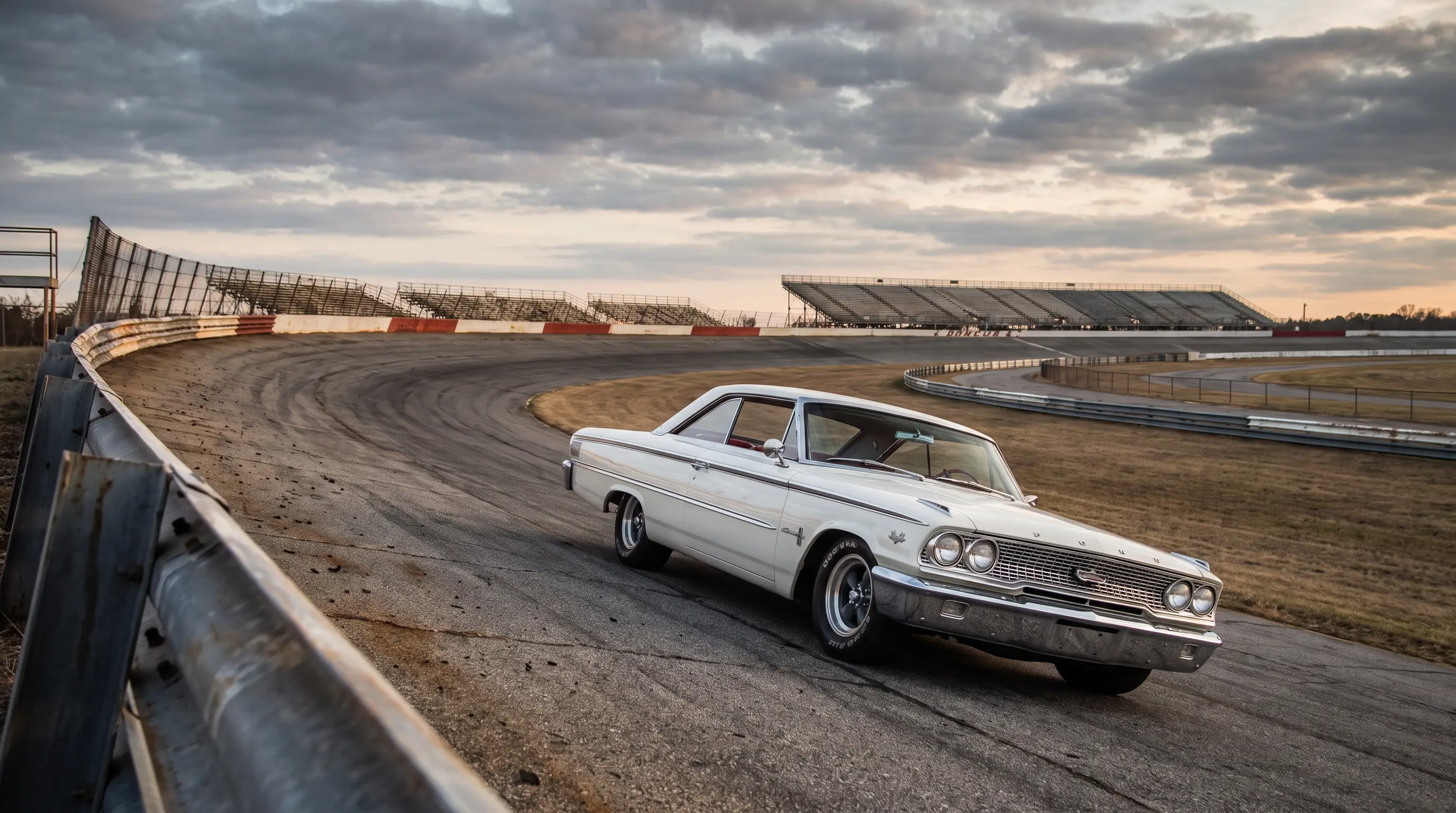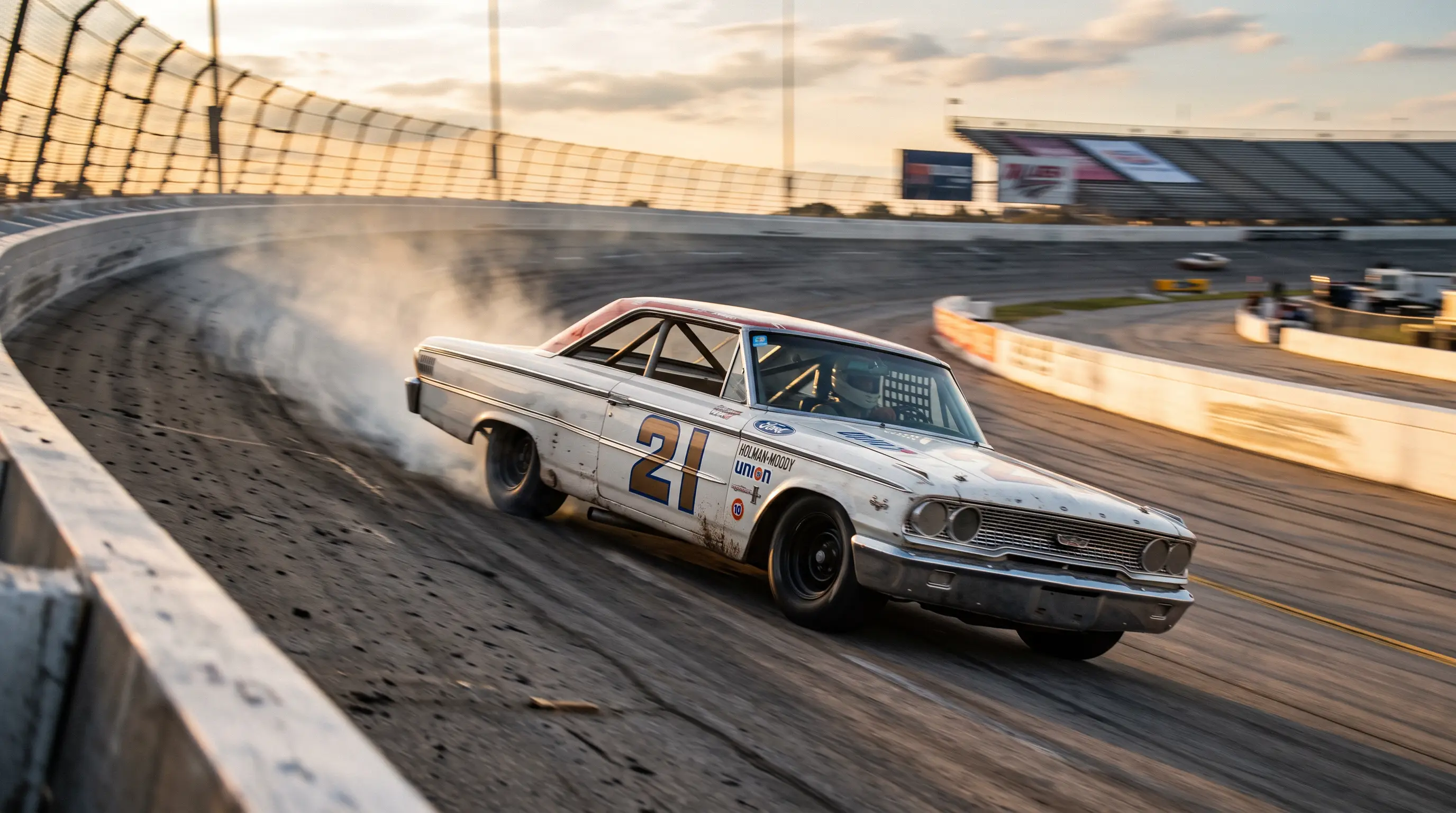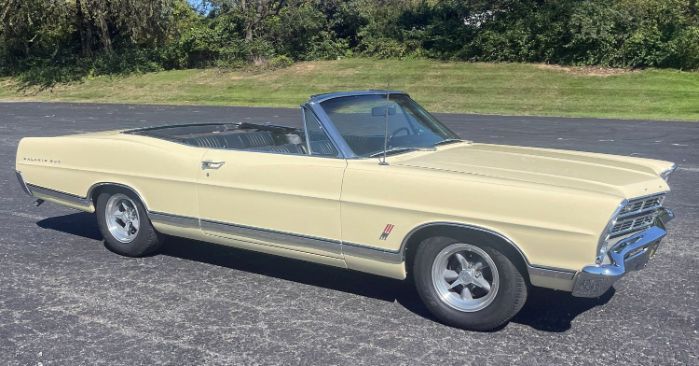
Before Ford built the Fairlane Thunderbolt in 1964, the company's drag racing ambitions ran almost entirely through the full-size Galaxie, and the ford galaxie 1963 thunderbolt precursor story is really the record of Ford figuring out, one strip pass at a time, exactly what a factory drag car needed to be. The lessons learned on 1963 Galaxies did not disappear when the lighter Fairlane arrived the following year. They were the blueprint.
The lightweight Galaxie program
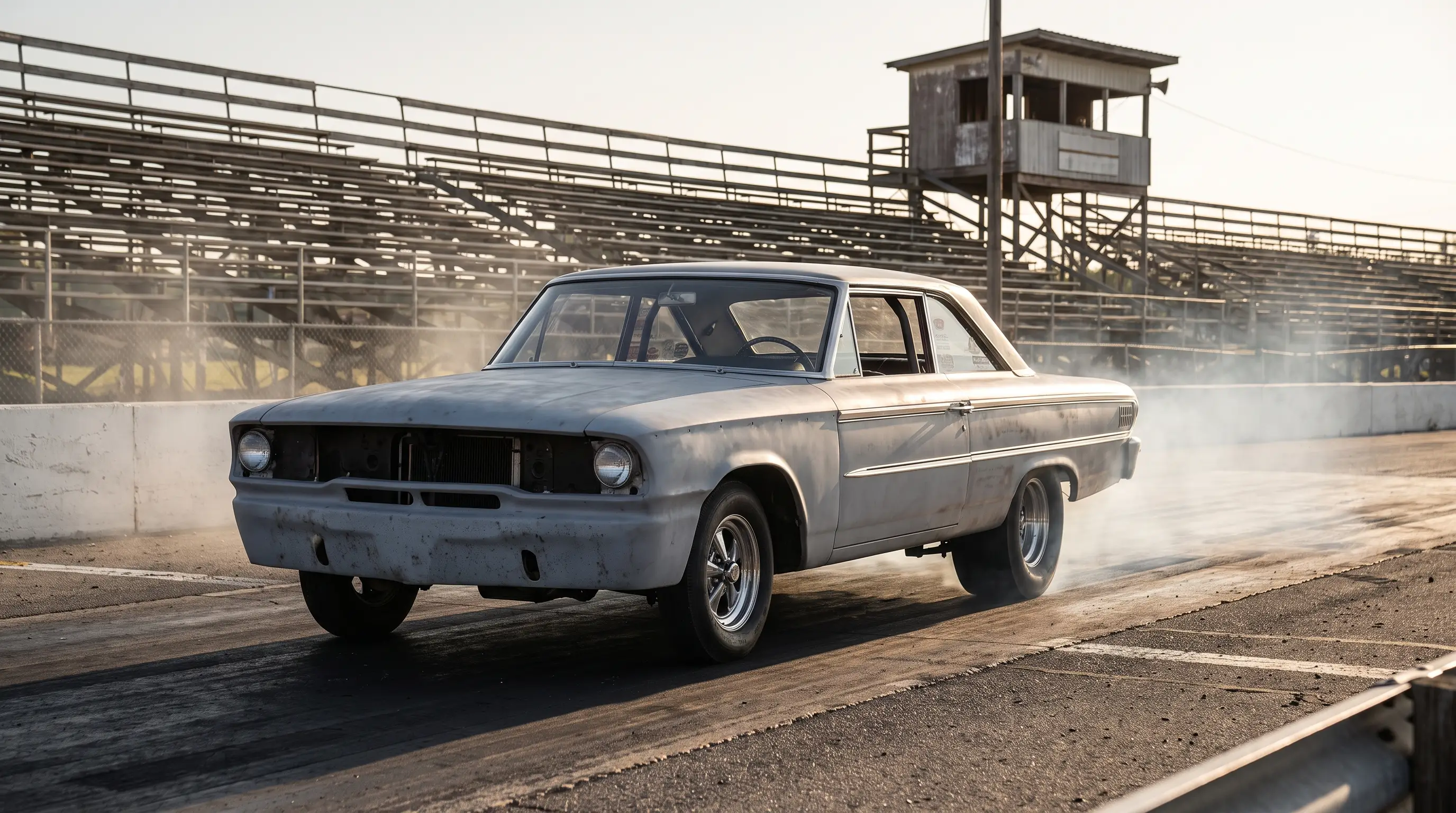
In 1963, Ford built a run of Galaxies specifically stripped and lightened for drag competition, sometimes referred to informally as lightweight or "Lightweight" Galaxies among enthusiasts and racers of the period. Sound deadening was removed, cars used fiberglass front fenders, hood, and trunk lid along with aluminum bumpers, bumper brackets, and radiator support, and interior comforts that added weight without adding speed, including the heater, radio, carpeting, and even the spare tire, were deleted from the build sheet entirely. The goal was simple: keep the 427 top-oiler high-riser engine and strip everything else the NHRA rulebook allowed a manufacturer to strip.
These cars were not subtle about their purpose. They were built for teams and serious privateers running Super Stock and factory experimental classes, and they represented Ford's clearest statement yet that the full-size body, despite its bulk, could be a genuine drag racing weapon if the company was willing to commit real engineering resources to cutting weight out of it. Ford built roughly 212 of these factory Lightweight Galaxies for 1963, enough to satisfy NHRA's homologation minimum, and the finished cars came in around 420 pounds lighter than a standard production Galaxie.
Why the full-size body eventually ran out of room
The problem Ford's engineers kept running into with the Galaxie as a drag platform was physics, not effort. Even with aluminum panels and a stripped interior, a full-size body sitting on a long wheelbase carried weight the 427 had to drag off the line every single run. Chrysler's and Chevrolet's rivals were working the same problem on their own big cars, and everyone in the sport could see where this was heading: the next real gain would not come from lightening a big car further, it would come from putting the same engine in a smaller one.
That is precisely what the 1964 Fairlane Thunderbolt did. Ford took the 427 top-oiler high-riser engineering the Galaxie program had refined over the previous two seasons and dropped it into the considerably lighter Fairlane body, using many of the same lightweight-construction tricks the Galaxie teams had already proven out, fiberglass panels, deleted sound deadening, plexiglass windows on some cars. The Thunderbolt is often talked about as if it appeared from nothing. It appeared from two years of Galaxie drag program experience that had already worked out most of the hard problems.
Drivers and teams who bridged the two eras
Several of the tuners and drivers who ran factory-supported 1963 Galaxies in NHRA competition carried straight over into the Thunderbolt program the following year, bringing tuning knowledge about the 427's carburetion, ignition timing, and driveline behavior at the strip that had been earned the hard way on the heavier car. That continuity is one of the clearest pieces of evidence that the Galaxie drag effort was not a dead end Ford abandoned, it was a research program that graduated into a purpose-built successor.
Collectors and historians researching this period sometimes find that a "Thunderbolt precursor" claim gets loosely applied to any quick 1963 Galaxie, which understates how specific the real lightweight factory cars actually were. A genuine lightweight 1963 Galaxie drag car has documentation, a distinct build sheet, and usually a competition history that a standard 427 street car simply does not carry.
| Feature | 1963 Lightweight Galaxie | 1964 Fairlane Thunderbolt |
|---|---|---|
| Body | Full-size Galaxie | Midsize Fairlane |
| Engine | 427 FE (top-oiler, high-riser) | 427 FE (high-riser, dual quad) |
| Weight strategy | Fiberglass hood/fenders/trunk, aluminum bumpers, deleted sound deadening | Fiberglass panels, plexiglass windows, extensive deletion |
| Racing class | NHRA Super Stock era, factory drag support | NHRA Super Stock, factory drag support |
"Historians tend to treat the Thunderbolt as a clean break, a brand new idea. It wasn't. It was the Galaxie program's conclusion written into a lighter body. The engineering thread runs straight through both cars."
- Sarah Whitfield
The high-riser engine as the shared thread
If one single component ties the 1963 lightweight Galaxie program to the 1964 Thunderbolt most directly, it is the 427 high-riser cylinder head and intake combination developed and refined specifically for drag competition during the Galaxie effort. Ford's engineers spent 1963 working out carburetor sizing, ignition curve, and header design for that engine package on the heavier Galaxie chassis, and by the time the Thunderbolt program began, much of that development work simply transferred over rather than starting from scratch in a new, lighter application. The Thunderbolt's headline performance numbers were only possible because the engine underneath the fiberglass had already been sorted out on a less glamorous car a year earlier.
This is a pattern common across a lot of factory racing history that rarely gets acknowledged properly. The car that gets remembered as the breakthrough is usually standing on the shoulders of a less famous predecessor that did the unglamorous work of proving the concept and working out the failure points first. The 1963 Galaxie played exactly that role for the Thunderbolt, and its contribution deserves more credit than the quick summary version of this story usually gives it.
Why the connection matters for buyers and researchers
Understanding the 1963 Galaxie's role as a genuine drag racing precursor changes how a serious buyer should approach a car claiming that history. Documentation matters enormously here, factory build sheets, period competition records, and continuity of ownership all separate a true lightweight drag Galaxie from a car dressed up to look the part decades later. Anyone assembling the fuller picture of this model year should read the background on the 1963 Galaxie generally before diving into the drag racing specifics covered here.
For anyone shopping this era with drag racing pedigree in mind, it pays to look closely before buying. There are always a few browse classic Galaxie listings worth investigating, and knowing the real Thunderbolt connection helps tell a documented factory piece from an ordinary Galaxie wearing an exaggerated story.
What ultimately makes this chapter worth telling on its own, rather than as a footnote inside the Thunderbolt's more famous story, is that the 1963 Galaxie program took on the harder problem first. Proving a concept on a car that was never going to be lightweight enough to fully solve the equation takes a specific kind of engineering patience, the willingness to do work you already suspect will be superseded within a year or two by a better platform. Ford's team did that work anyway, because the racing calendar did not wait for the ideal car to exist, and the Galaxie was what they had in 1963. That patience is exactly what made the Thunderbolt's success possible on schedule the following year.