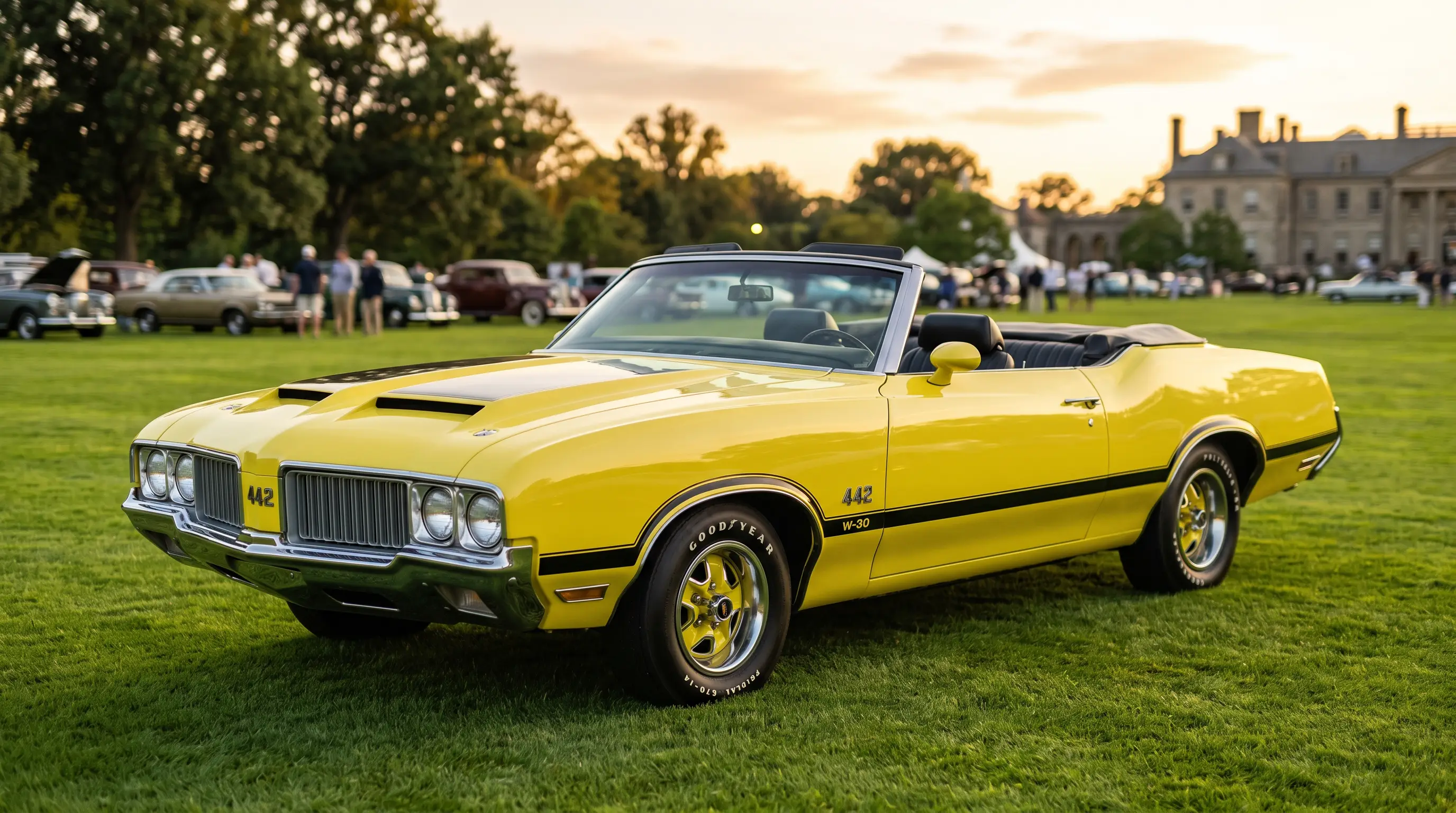
We talk about the Cutlass in our circles like it's the everyday car, the one your tia drove to church, the one that sat in half the driveways on the block growing up. So when word gets around that a Cutlass sold at auction for six figures, real six figures, people who've never followed a Barrett-Jackson broadcast in their lives suddenly want to know the story. We get it. It doesn't square with the memory most of us carry of this car.
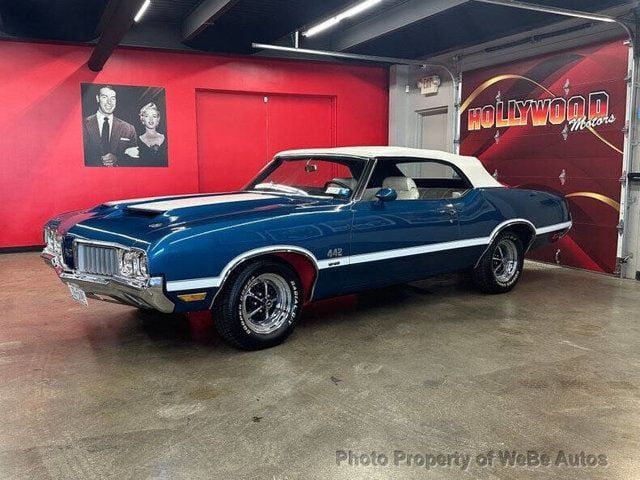
But the most expensive Cutlass ever sold isn't the car your neighbor had. It's a specific, documented, numbers-matching 1970 442 W-30 convertible, the kind of build that only exists in small numbers and that the market has decided to treat like a museum piece rather than a used car. That sale, and the handful of others near it, tell a story about what this community actually values when the money is real and the bidding gets serious.
What put that particular car on top
Every record sale in this hobby comes down to the same handful of ingredients stacking on top of each other, and the top Cutlass sales are no different. You need the right year, 1970 or 1971 for the W-30 in its purest form. You need the right documentation, a build sheet and factory paperwork that confirms the car left the plant exactly the way it's presented now, not restored into a configuration it never actually had. And you need the right story behind it, one owner, low miles, or a restoration done by people the community already trusts.
Take any one of those away and the number drops fast. A W-30 clone, built up from a base 442 with the right badges and stripes added later, might look identical in photos and sell for a fraction of what the real thing brings. We've all seen it happen at shows. Somebody's proud of their build, and it's a good build, but it's not the same conversation as an original car with the paper trail to prove it.
The Hurst/Olds factor
Any real conversation about the top of this market has to bring in the Hurst/Olds cars too, because they occupy their own lane above even the W-30. These were built through a partnership between Oldsmobile and Hurst Performance, limited runs with unique paint, a specific torque converter, and a reputation that's only grown as the surviving examples get harder to find. A documented Hurst/Olds from 1968 or 1969 in the right color combination can outsell a standard 442 by a wide margin, and it's the collaboration story as much as the spec sheet that drives that number. People respect a car with a real story behind the badge on the fender.
That's really the thread running through the whole record-sale conversation. The market isn't just paying for horsepower or rarity in isolation. It's paying for a car it can trust completely, one where every claim on the window sticker checks out against paperwork somebody can actually produce.
"Our community has always known which Cutlass in the neighborhood was the real deal and which one was dressed up to look that way. The auction world finally caught up to what we've been saying at shows for years. Paper and provenance beat a good paint job every time."
— Hector Morales
What a record price doesn't tell you
It's worth being honest about what a single record sale actually proves, because it's less than people assume. One six-figure hammer price doesn't mean every W-30 is suddenly worth that much, and it doesn't mean the broader Cutlass market has jumped overnight. What it does prove is that the ceiling exists, that under the right circumstances, with the right car and the right two bidders in the room, this model can compete with cars that never carried the stigma of being an "everyday" nameplate.
That distinction matters for anyone tempted to use a record sale as a benchmark for their own car. A record price is set by the best documented example, sold at the right moment, in front of buyers who specifically wanted that exact configuration. Most Cutlasses, even good ones, aren't chasing that number and were never going to be. That's not a knock on the car. It's just how auction records work in every corner of this hobby, from Ferraris on down.
Why the number keeps climbing
Record prices don't happen in a vacuum. They happen because a wider circle of buyers has decided a car matters, and the Cutlass has earned that attention slowly, built on decades of people keeping the culture around it alive. Car clubs, swap meets, families passing these cars down instead of trading them in. That groundwork is exactly why the Cutlass endures when plenty of other cars from the same era have faded out of the conversation entirely.
The top sales also reflect something practical: there simply aren't that many correct W-30 convertibles left. Production was never high to begin with, and decades of daily use, rust, and casual restorations thinned the herd of truly original examples down to a small number that serious collectors now compete over directly. Scarcity, once it's proven and documented, does exactly what you'd expect it to do to a price.
What it means if you're not chasing a record
Most of us reading about a six-figure Cutlass sale aren't shopping in that tier, and that's fine. The record sale matters because it sets the ceiling and shows what's possible when a car has everything lined up right, not because it tells you what your own project is worth. If you're building or restoring something in this same family and want to see how a different kind of Cutlass story plays out from the ground up, there's a related deep-dive worth reading on why so many people start their whole journey in this hobby with exactly this car.
And if you want the bigger picture, the whole arc of how this model went from a mid-size family car to a name that can carry a six-figure hammer price, that's laid out in full in the full Cutlass story. The record sale is really just the loudest chapter in a much longer book.
Sources and notes
- 1970 Oldsmobile 442 W-30 Convertible, RM Sotheby's Fort Lauderdale 2022
- Oldsmobile 442, Wikipedia
- Auction Results and Sales Data for 1970 Oldsmobile 442, Conceptcarz
- 1970 442 W30 Production Numbers, ClassicOldsmobile.com Forum
- The Final G-Body Oldsmobile Is Becoming a Genuine Classic, Hagerty
- 1970 Oldsmobile Cutlass 442, GM Heritage Center