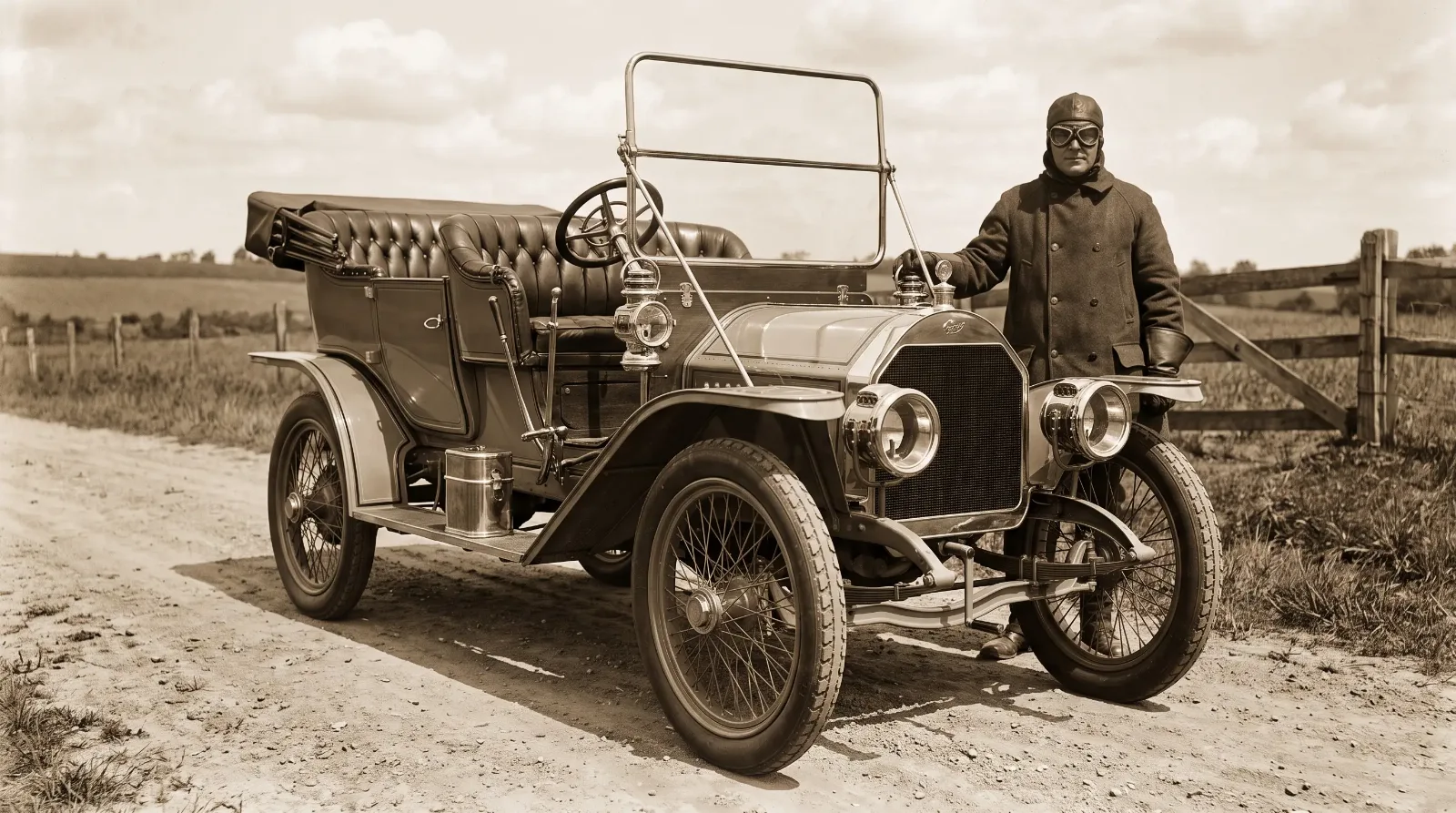
My grandfather used to say a man learned to respect a hand-crank engine the first time it kicked back on him, and he was not exaggerating for effect. Starting an old gasoline car before 1912 was not a button you pushed. It was a physical negotiation with a machine that could genuinely hurt you if you got the timing wrong, and plenty of folks in that era did.
What the crank was actually doing
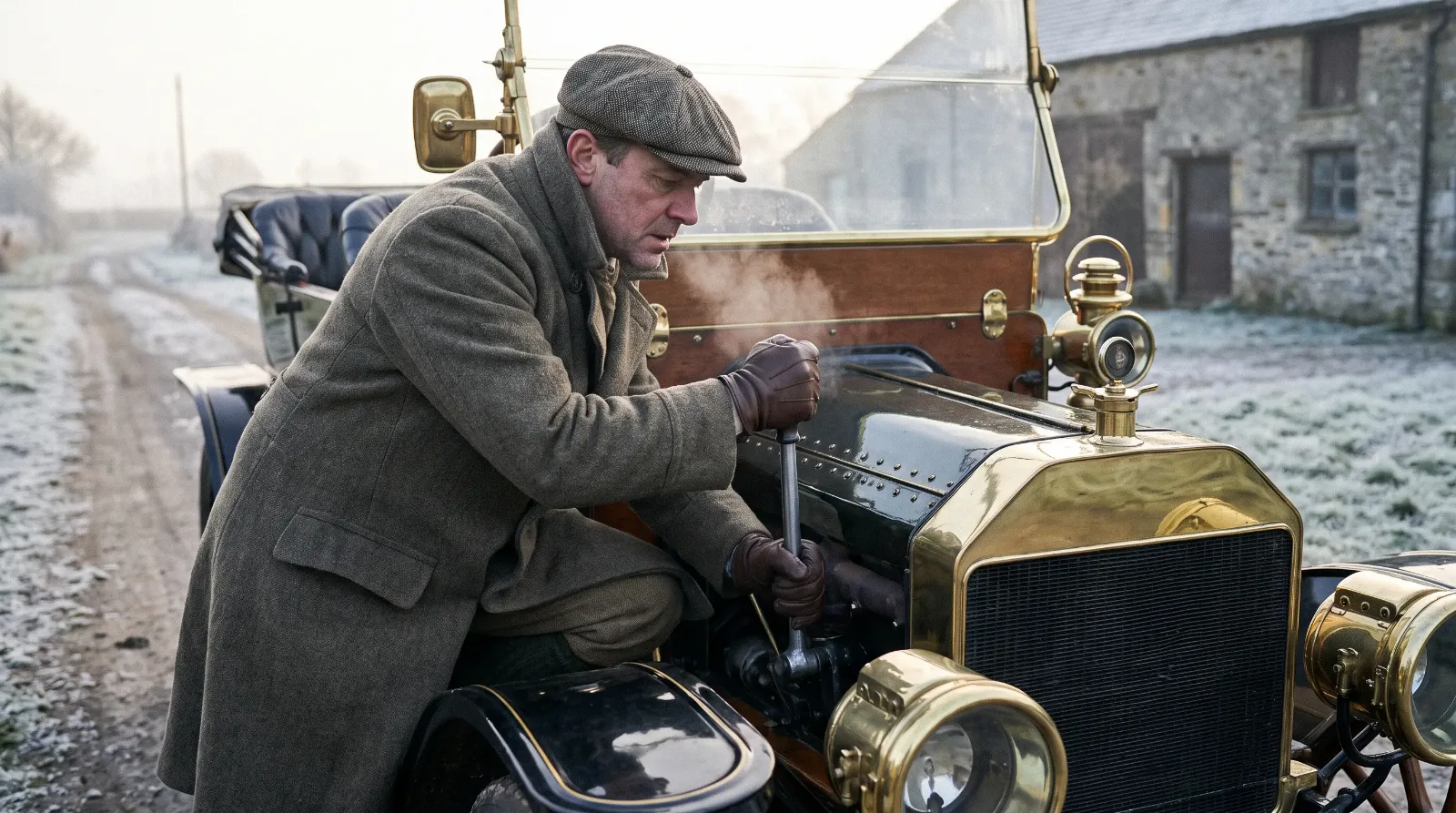
Before the electric self-starter, the only way to get a gasoline engine turning over was to spin it by hand. You inserted a removable steel crank into a socket at the front of the car, below the radiator, and physically rotated the engine through its compression strokes until it caught and started running on its own. It sounds simple described that way, and mechanically it is, but the danger came from what happens the instant the engine actually fires.
If the ignition timing was set even slightly wrong, or if the engine caught earlier in the stroke than expected, the crank could kick backward violently, hard and fast enough to break a wrist or a thumb before a person had any chance to let go. This was common enough that it was simply understood as a real risk of car ownership, not a freak accident story. Doctors of the period reportedly saw enough "crank fractures" that some referred to it informally by that description.
Doing it right, and doing it safely
Experienced owners learned technique specifically to avoid getting hurt. You gripped the crank with your thumb alongside your fingers rather than wrapped around underneath it, so a kickback would tear the crank out of your hand instead of twisting your wrist against it. You set the spark advance lever to a safe retarded position before cranking, because an engine set for full advance would fire earlier in the stroke and kick back harder. You made sure the transmission was in neutral, obviously, but more than one distracted owner learned that lesson the expensive way.
Cold mornings made everything worse. A cold engine needed more cranks to catch, more chances for something to go wrong, and stiff, thick oil made the whole process physically harder. Owners in cold climates sometimes drained the oil at night and warmed it by the stove before a morning start, which tells you how much planning went into something we now do by turning a key.
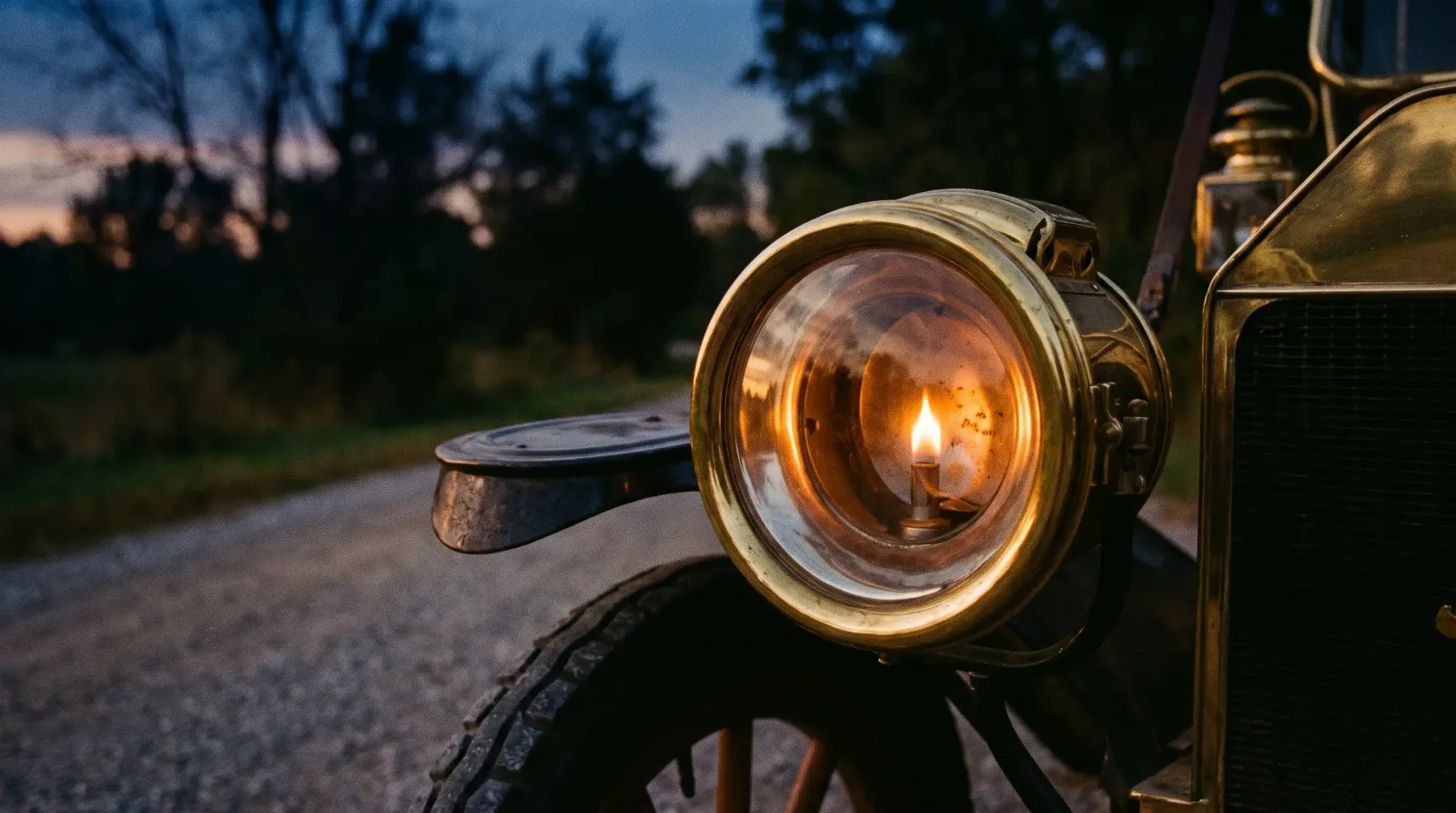
For the fuller picture of what daily driving a brass era car actually involved, beyond just starting it, the starting hand crank cars story covers the whole experience from lighting the lamps to keeping the tires in one piece.
The electric starter changes the whole industry
Charles Kettering developed the first practical electric self-starter for Cadillac, and it debuted on the 1912 model year. The system used an electric motor powered by a battery to spin the engine over without any manual cranking at all, and the effect on the market was immediate and lasting. A car that anyone could start safely, regardless of strength or nerve, opened gasoline cars to buyers who had genuinely avoided them before, women in particular, who had often been steered toward electric cars specifically because they did not require a hand crank.
Within a handful of years, the electric starter went from a Cadillac exclusive to a standard expectation across the industry. Cars that still required hand cranking as the only starting method became old news fast, and manufacturers who did not adapt lost sales to the ones who did.
"I have started plenty of hand-crank cars over the years and I still respect that crank every single time. You do not get careless with it just because you know the technique. My rule is simple: thumb alongside the fingers, never wrapped around, spark retarded, and you never let a kid try it just to feel useful. That crank does not know or care how experienced you are."
— Gary Nowak
Starting one safely today
If you own or are considering a hand-crank-only brass era car, the same rules apply now as they did a century ago, and the physics have not changed even though nobody has to rely on it out of necessity anymore. Use the thumb-alongside grip, never underneath. Confirm the ignition timing and spark advance are set correctly before you crank. Keep the transmission in neutral and double-check it. And go slow the first several times until you have a feel for how that particular engine catches, since every old engine has its own personality about where in the stroke it wants to fire.
Some owners with hand-crank-only cars choose to have a period-correct or discreetly modern starter added for daily reliability, while keeping the original crank in the car for shows and for the times they want the full authentic experience. That is a personal choice and not one that hurts value if done reversibly, but plenty of purists insist on cranking it themselves every time, kickback risk and all, because that is part of what owning the real thing means to them.
What it says about these cars
Every detail of starting these machines, the crank, the spark timing, the technique passed down from owner to owner, is a reminder of how much skill and attention driving a car used to demand before the industry engineered the difficulty out of it. That is part of why brass era enthusiasts talk about their cars the way they do. Getting one running is not incidental to the hobby. It is a real piece of it.
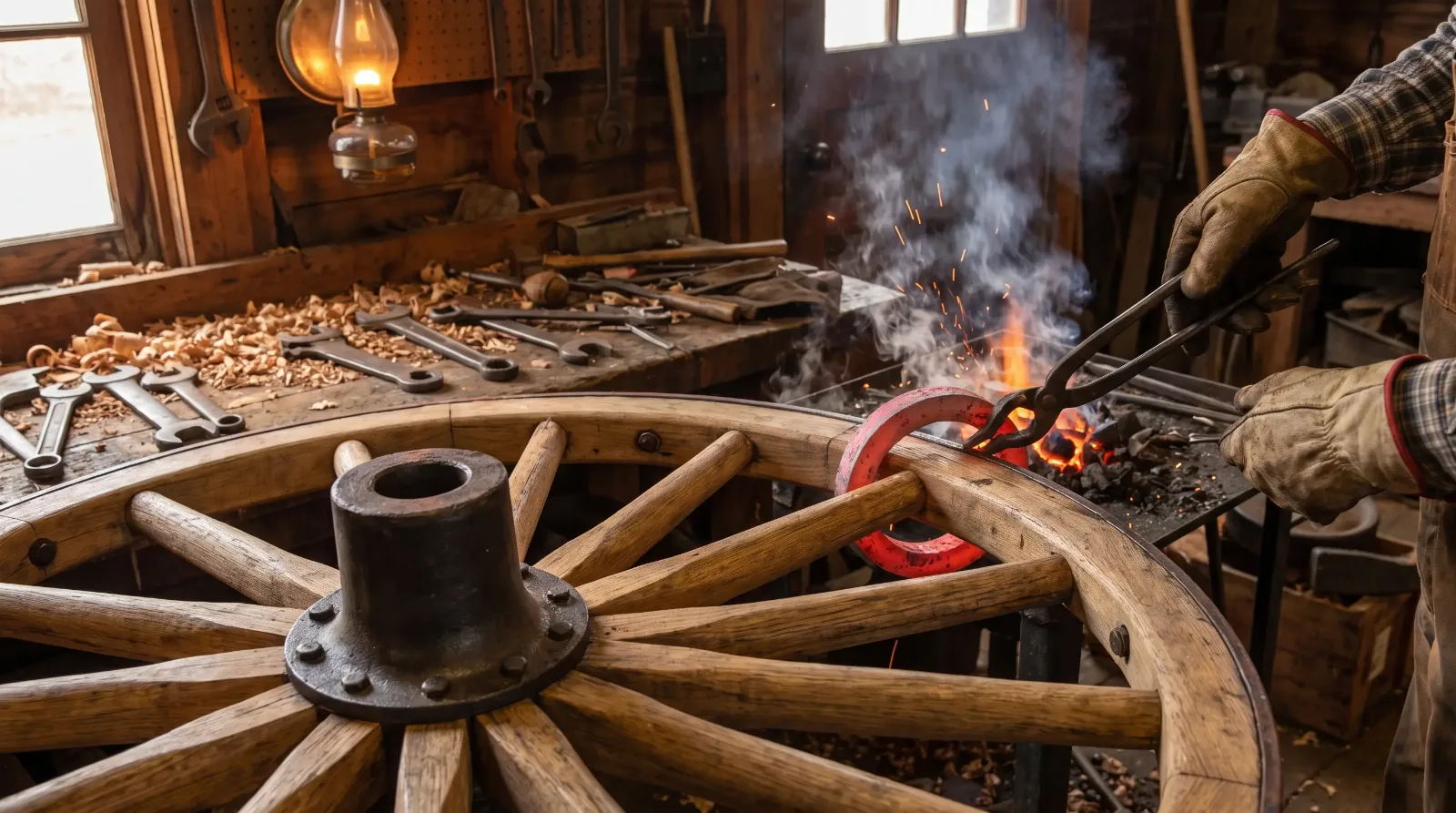
The wheels underneath these cars needed their own kind of care and attention, built from wood rather than the steel and alloy we take for granted now. The next installment covers how those wooden artillery wheels were built and what keeps them roadworthy today.