
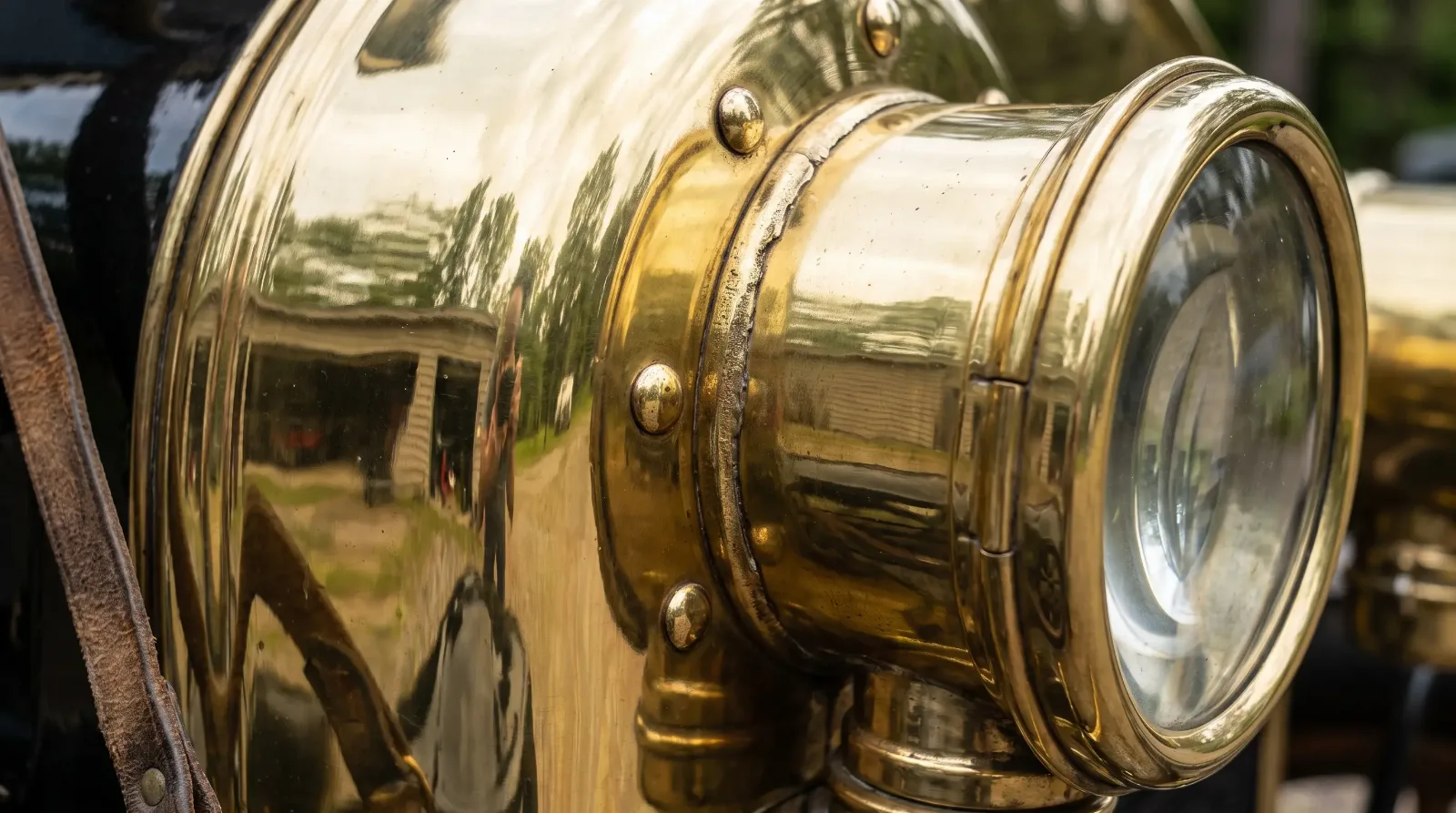
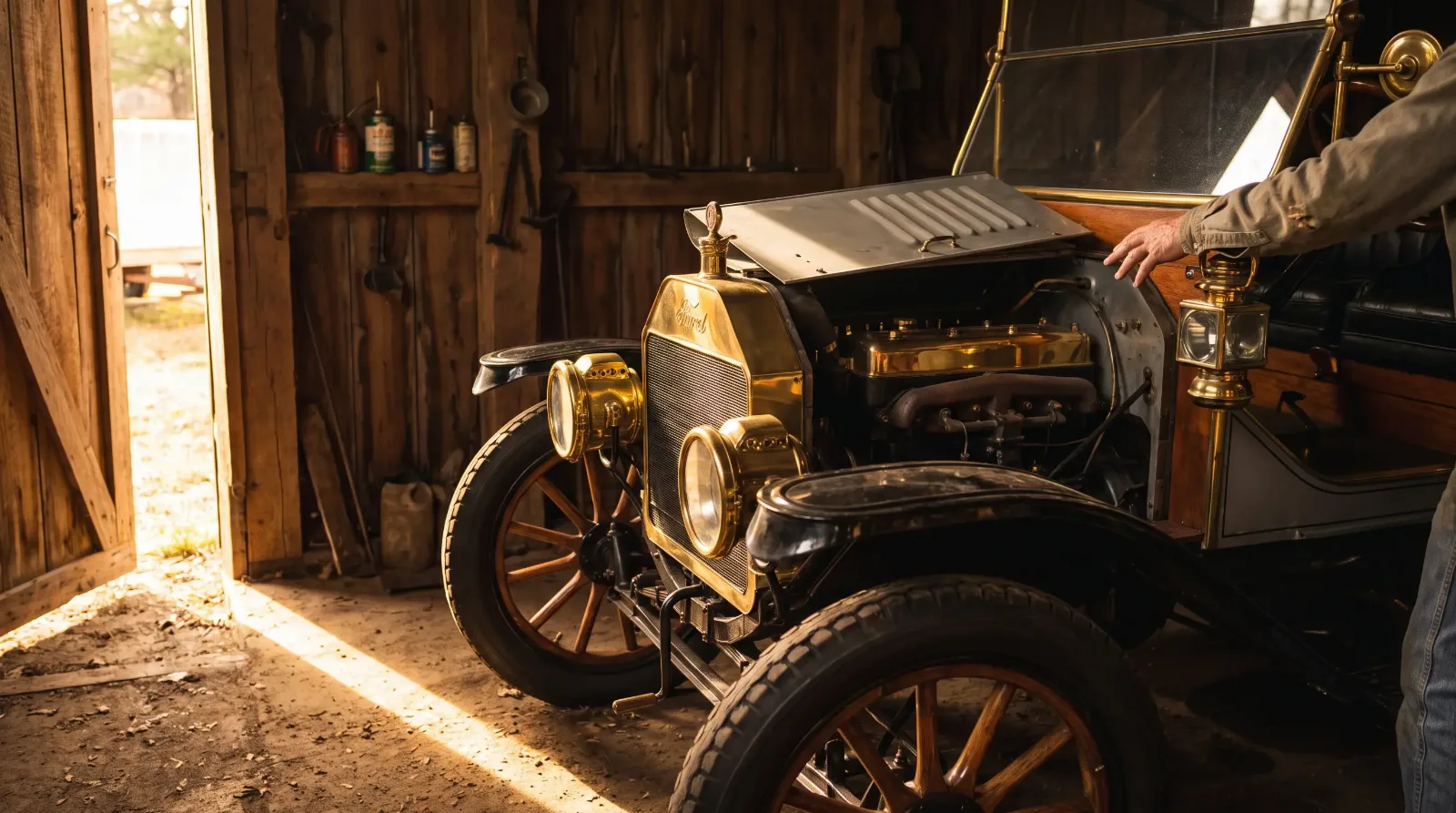
Ask most people when the car was born and they will guess the 1920s, maybe the Model T. They are off by a good twenty years. The real dawn happened earlier, in the stretch from the mid-1890s to the First World War, and we call those machines brass era cars because of all the bright brass hardware bolted to them. Headlamps, radiators, horns, trim, all of it polished bronze that a proud owner buffed by hand.
Car Features
8 min read
Brass Era Cars: The Dawn of the Automobile (1896-1915)
Before the Model T went black, cars wore polished brass and ran on steam, electricity, or gasoline. A look at the wild dawn of the automobile.
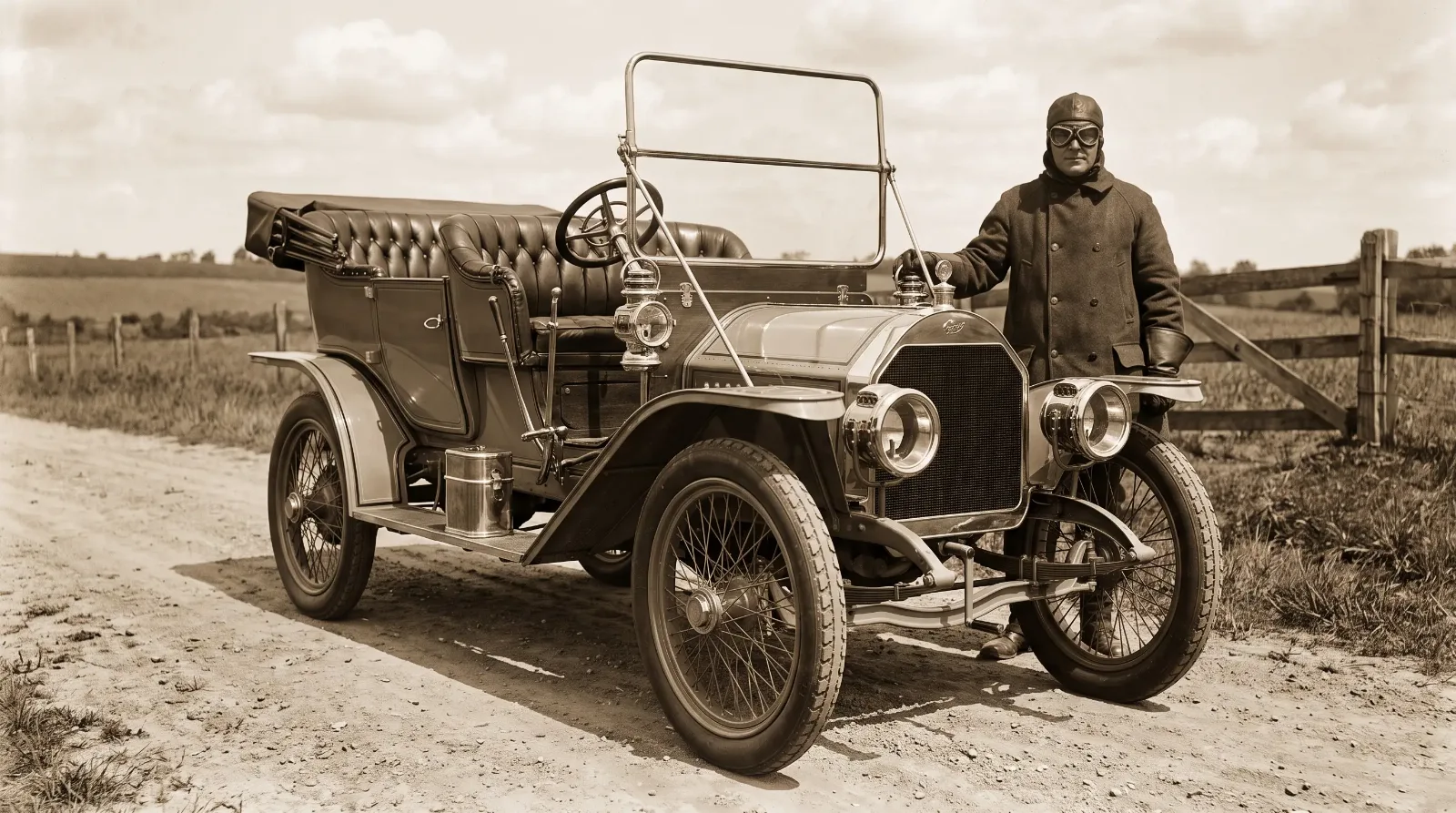
These were the first cars in the modern sense. Loud, tall, temperamental, and wonderful. Every one of them was a small miracle, because the whole idea of a self-propelled road machine was still up for grabs. Nobody had decided yet what a car was even supposed to be.
What the brass era actually was
The name is simple enough. From roughly 1896 to about 1915, cars wore exposed brass fittings that had not yet been replaced by cheaper nickel and steel. Once painted radiator shells and plated trim took over around the First World War, the brass look was done. So the era gets its name from a material, not a single technology, which is a little unusual.
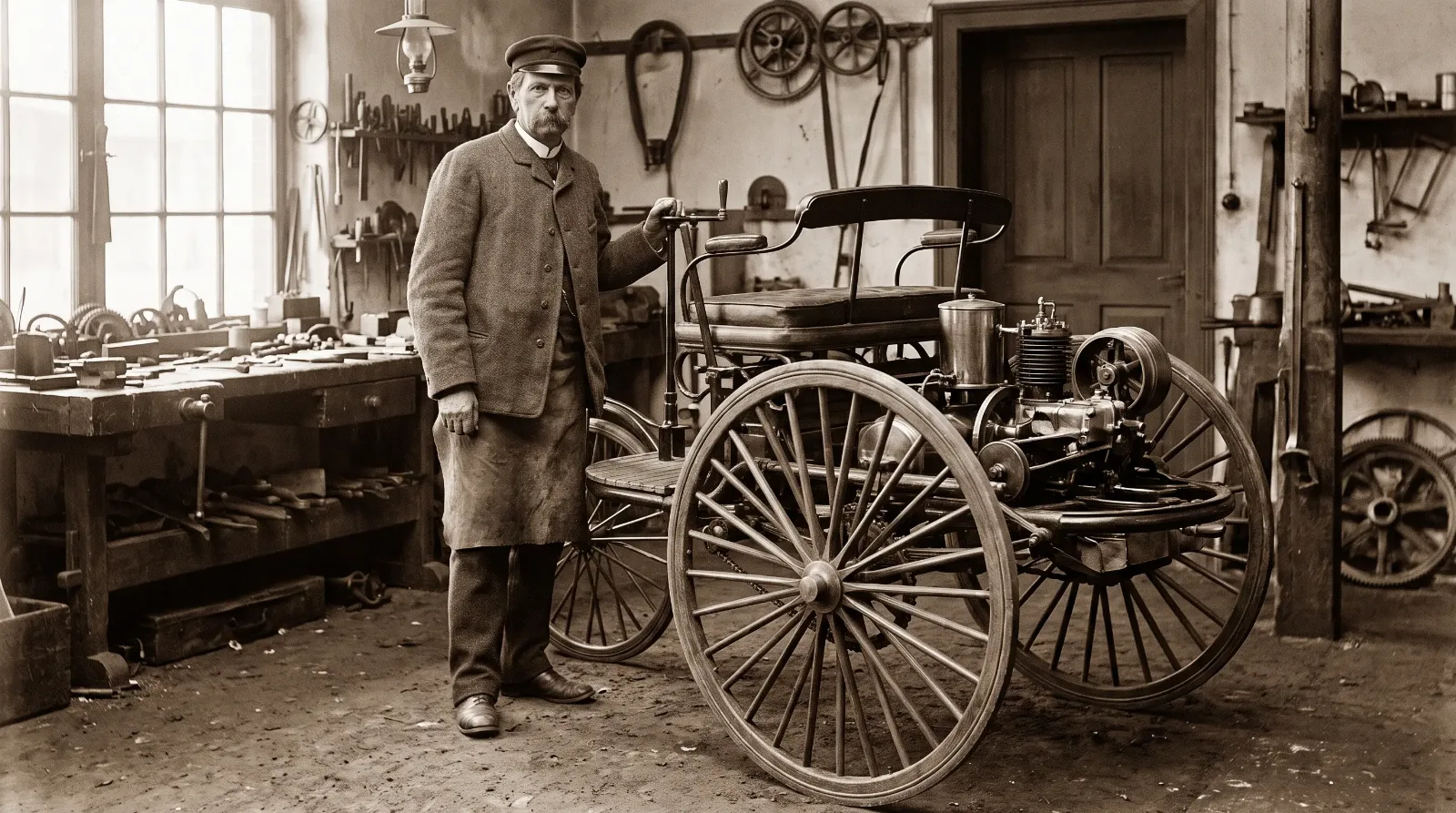
What ties these cars together is that everything was being invented at once. Steering, braking, ignition, cooling, none of it was settled. One builder would put the engine up front, another under the seat. Some cars steered with a tiller like a boat. It was the wild years, and I mean that as a compliment.
This whole period is the opening act of the golden age of the automobile, and you cannot really understand what came later without starting here.
Three ways to move a car
Here is the part that surprises folks. In the brass era, nobody had agreed that gasoline should win. Three kinds of power were fighting it out on the same roads, and for a while it was a genuine contest.
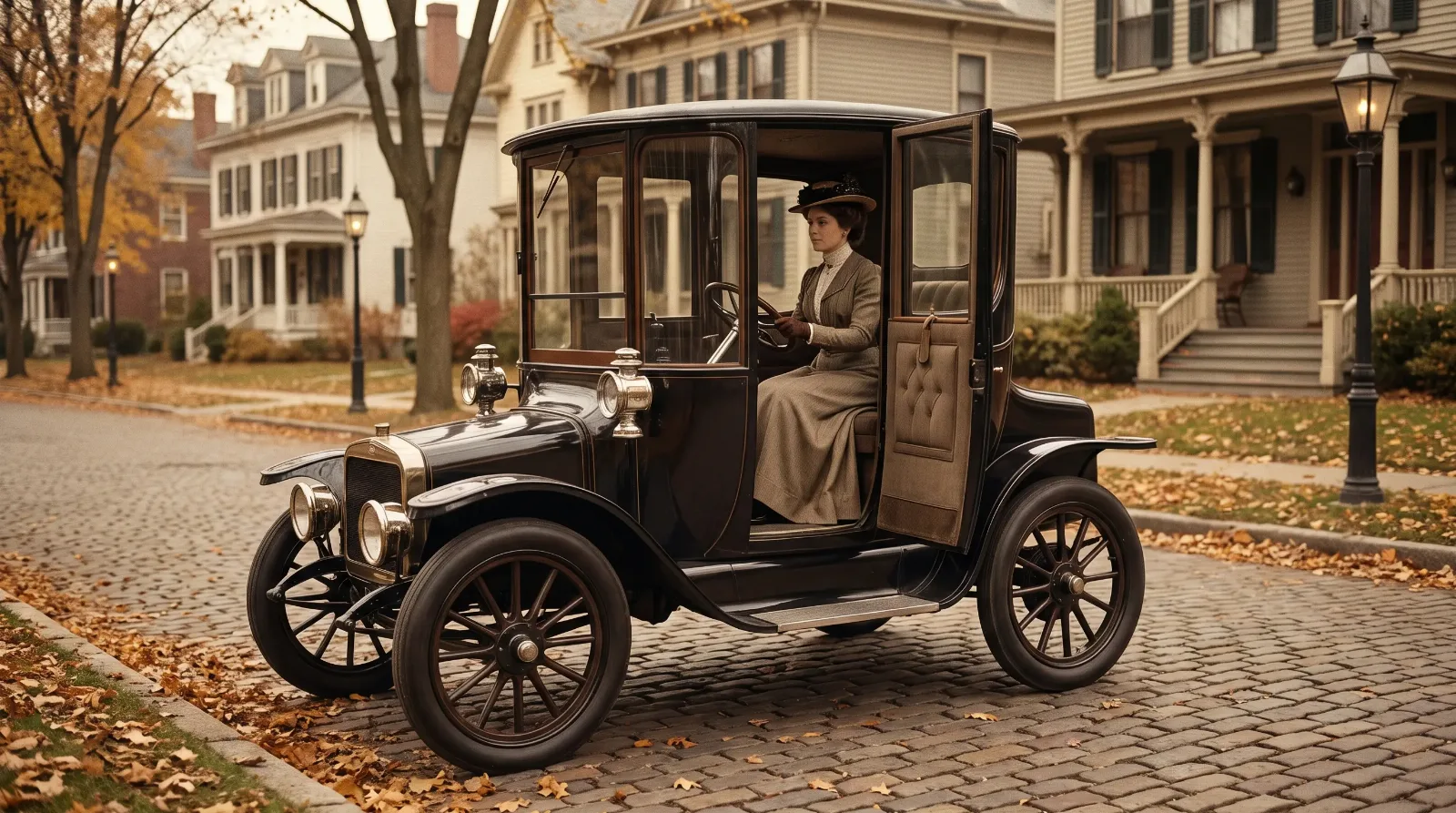
Steam cars, like the Stanley Steamer, were quiet and smooth and made big torque, but you had to wait for the boiler to build pressure and you fed them water all day. Electric cars were clean, silent, and dead easy to drive, which made them popular with well-off buyers in town, but the batteries ran flat after a short range and took forever to charge. Gasoline was smelly, loud, and hard to start, but you could refill it in a minute and drive it as far as the roads went.
Gasoline won on convenience, not because it was obviously better in every way. Anybody who tells you the electric car is a modern invention never looked at a 1910 showroom.
There is a fairness angle worth remembering too. The electric was often sold as the ladies' car, easy to start and clean to run, while the crank-and-grease gasoline machine was pitched at men who did not mind a fight. That marketing boxed the electric in. It got tied to short town trips and a certain kind of buyer, and once gasoline sorted out its starting problem with the electric self-starter, the electric lost its one clear advantage. The batteries never caught up. Range and charging time sank the electric car the same way they still trip up the argument today.
Living with a brass car
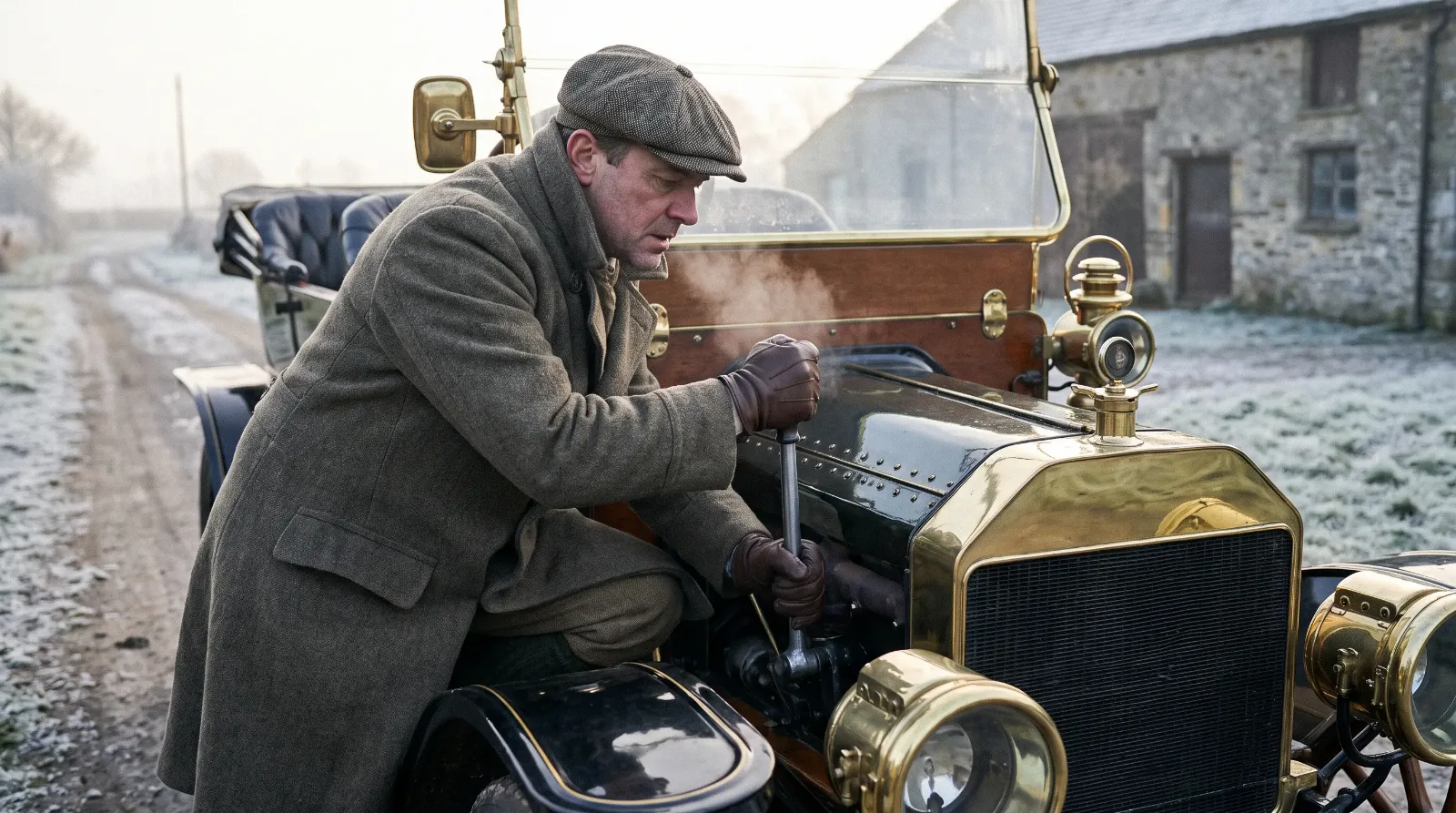
Driving one of these was a job, not a joy ride, at least by our standards. You started most gasoline cars with a hand crank up front, and if you did it wrong the engine could kick back and break your wrist. That is not a scare story, it happened enough that the electric self-starter, which arrived on the 1912 Cadillac, was treated like the end of an era of broken arms.
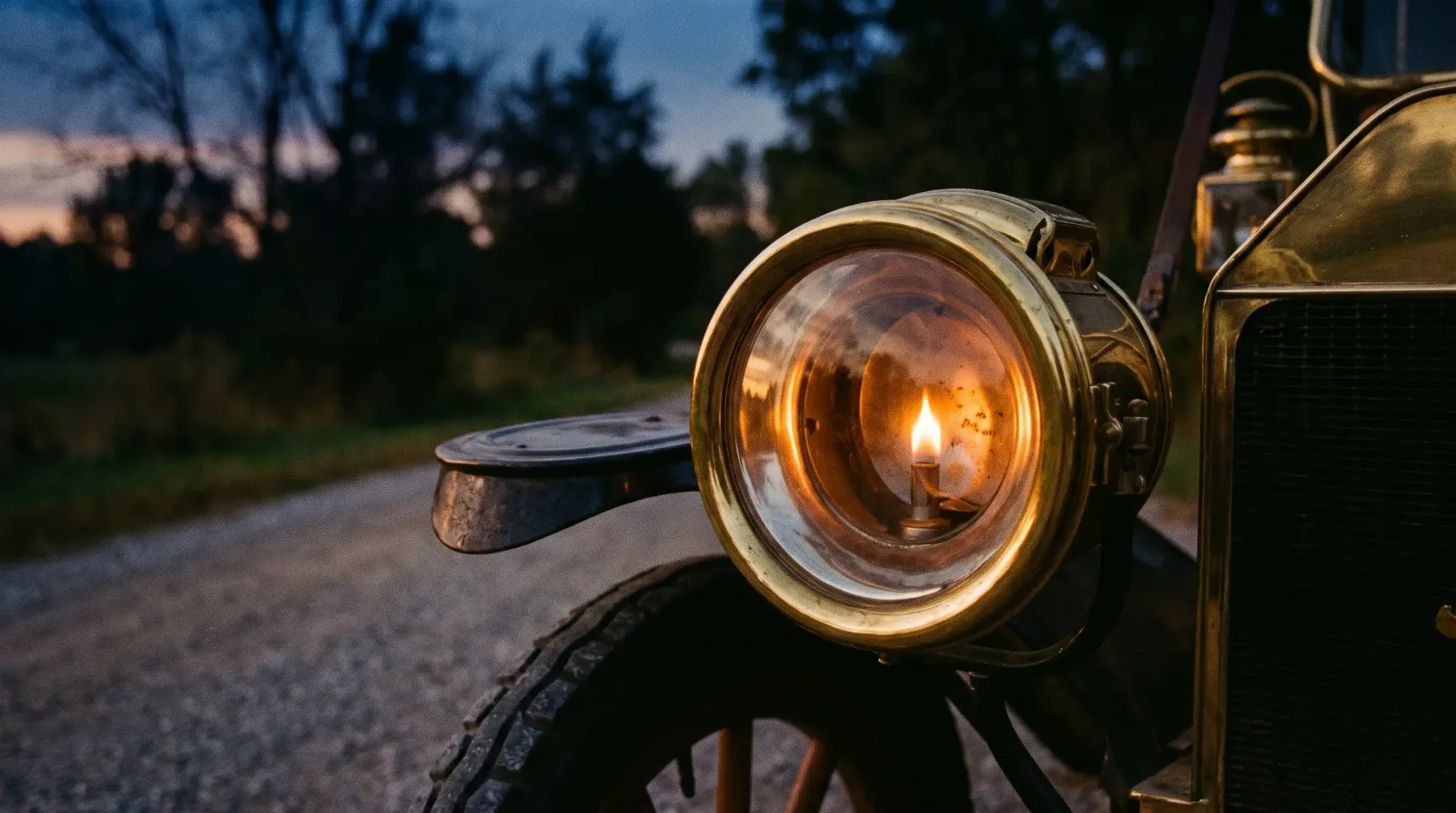
The lights ran on acetylene gas in the early years, a little generator dripping water onto calcium carbide to make a flame bright enough to see by. The tires were skinny and gave out constantly. There was no heater, no radio, and often no roof worth the name. You dressed for the weather and you carried tools, because you were going to need them.
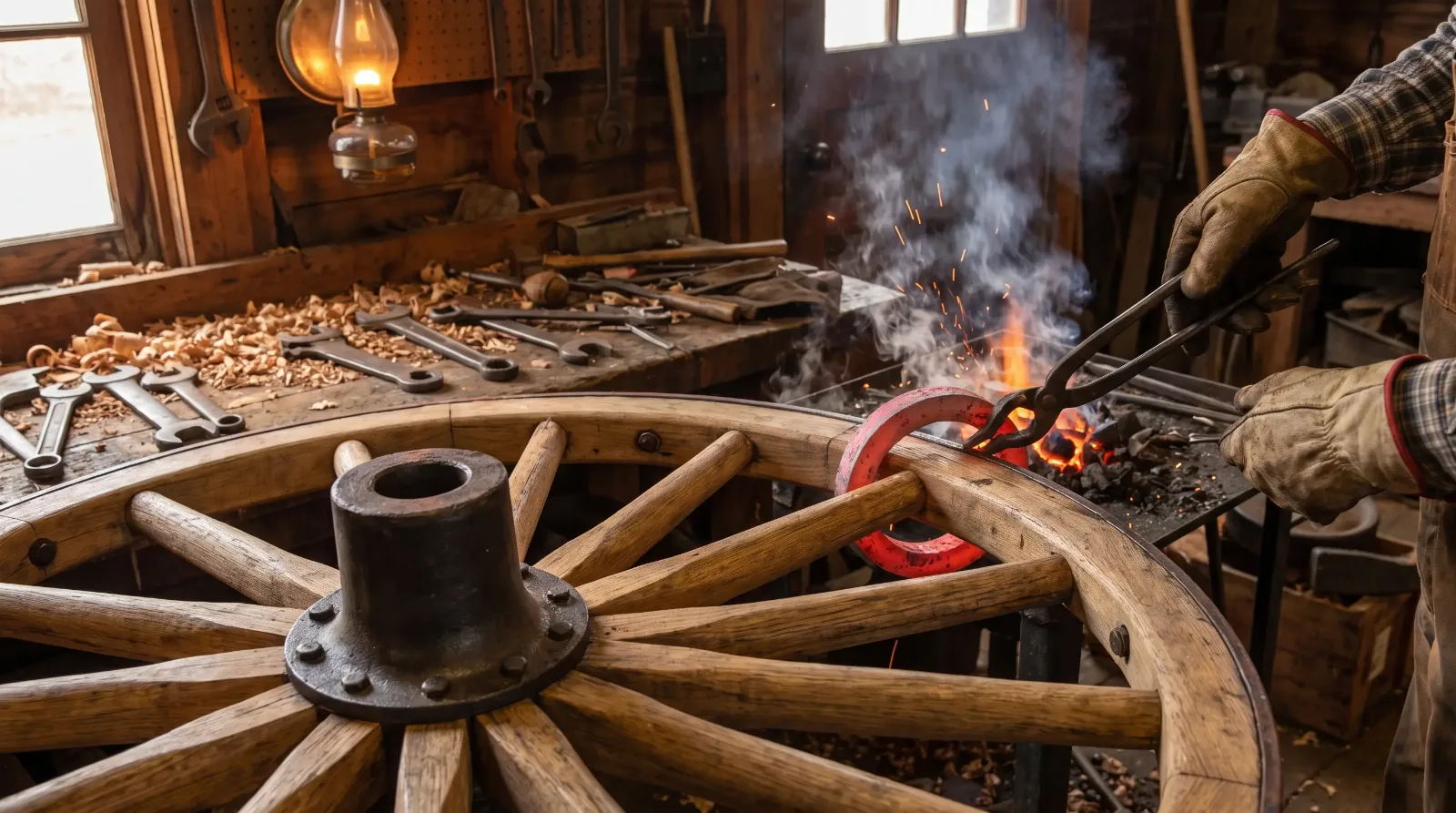
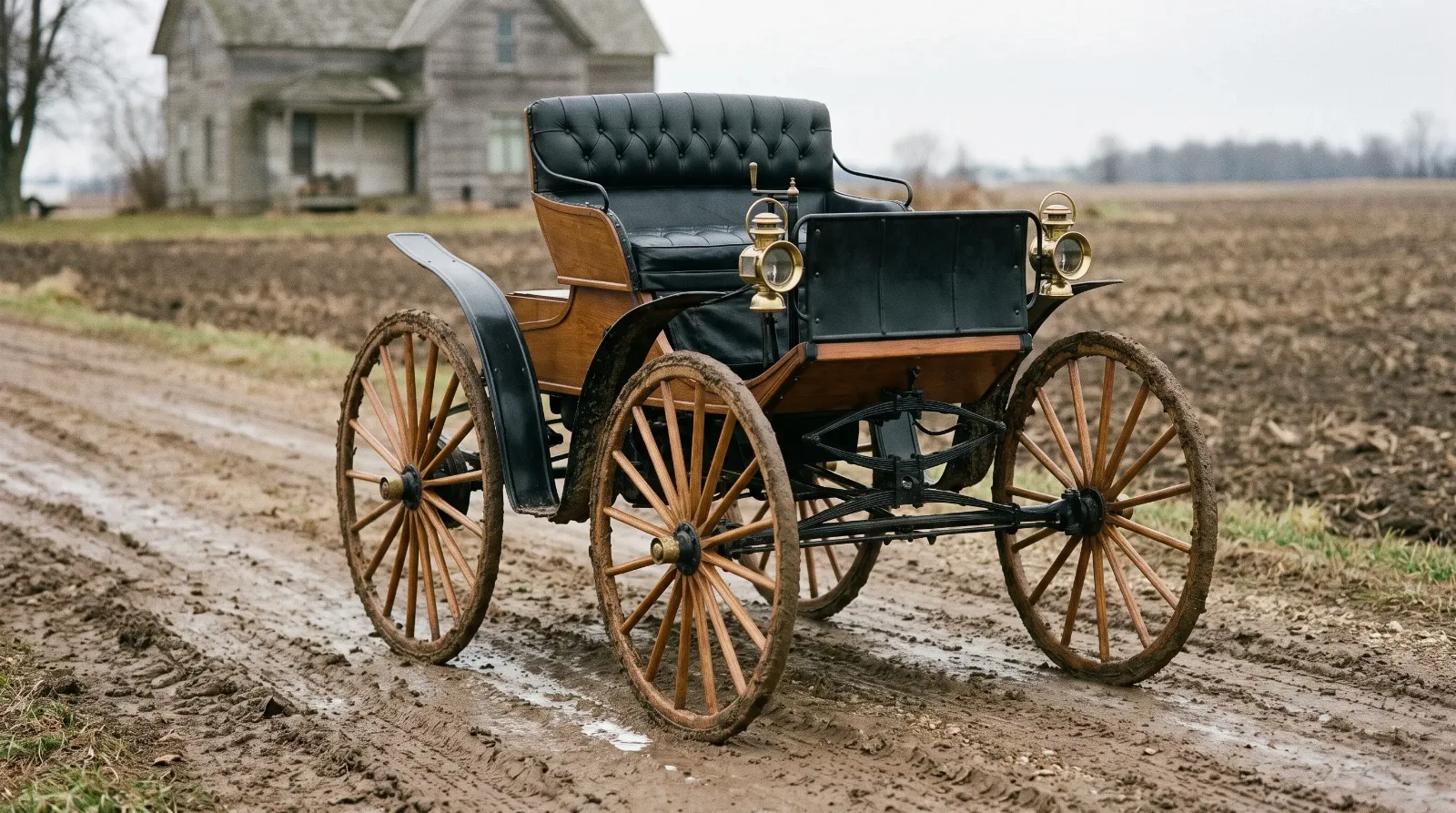
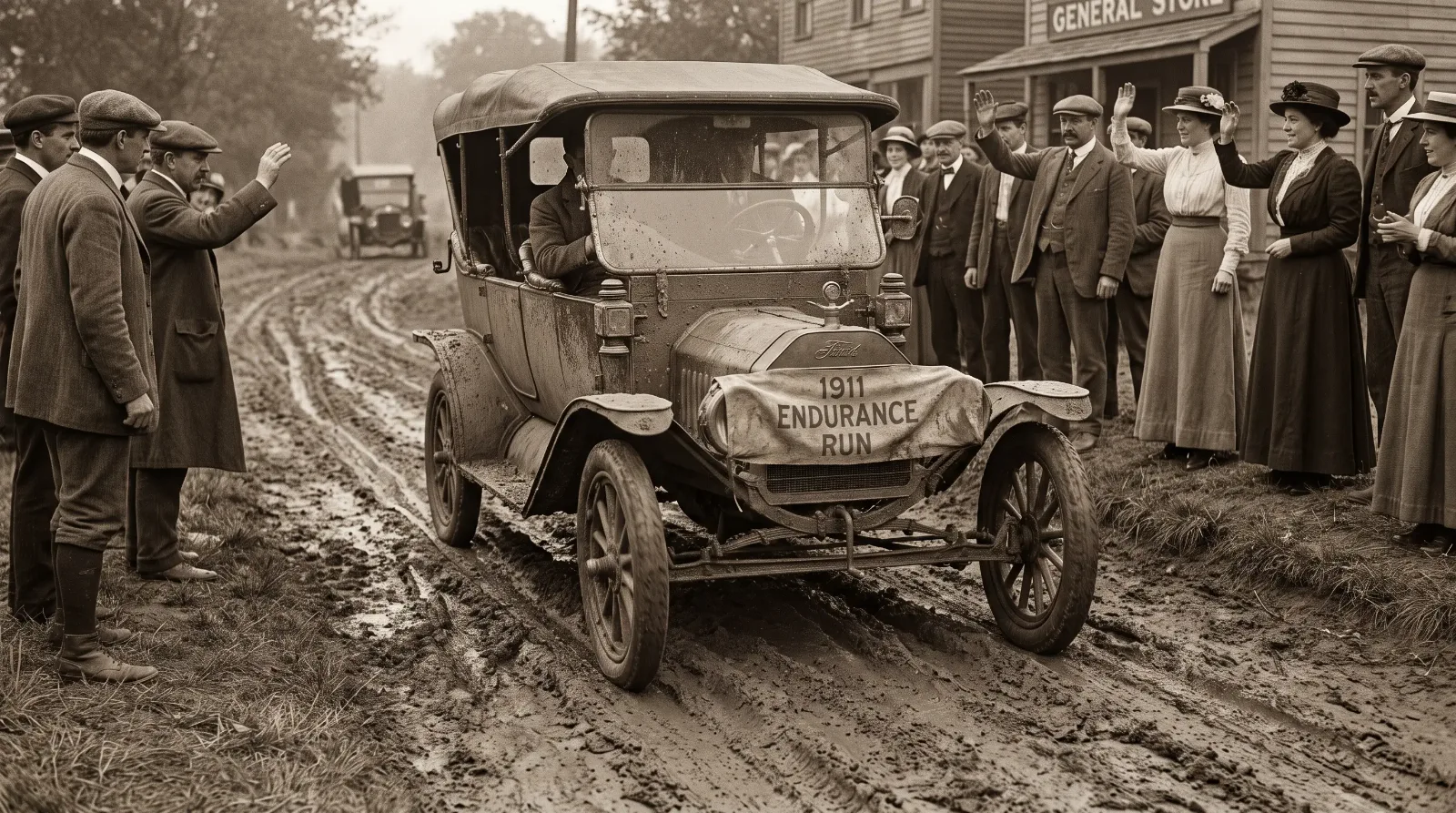
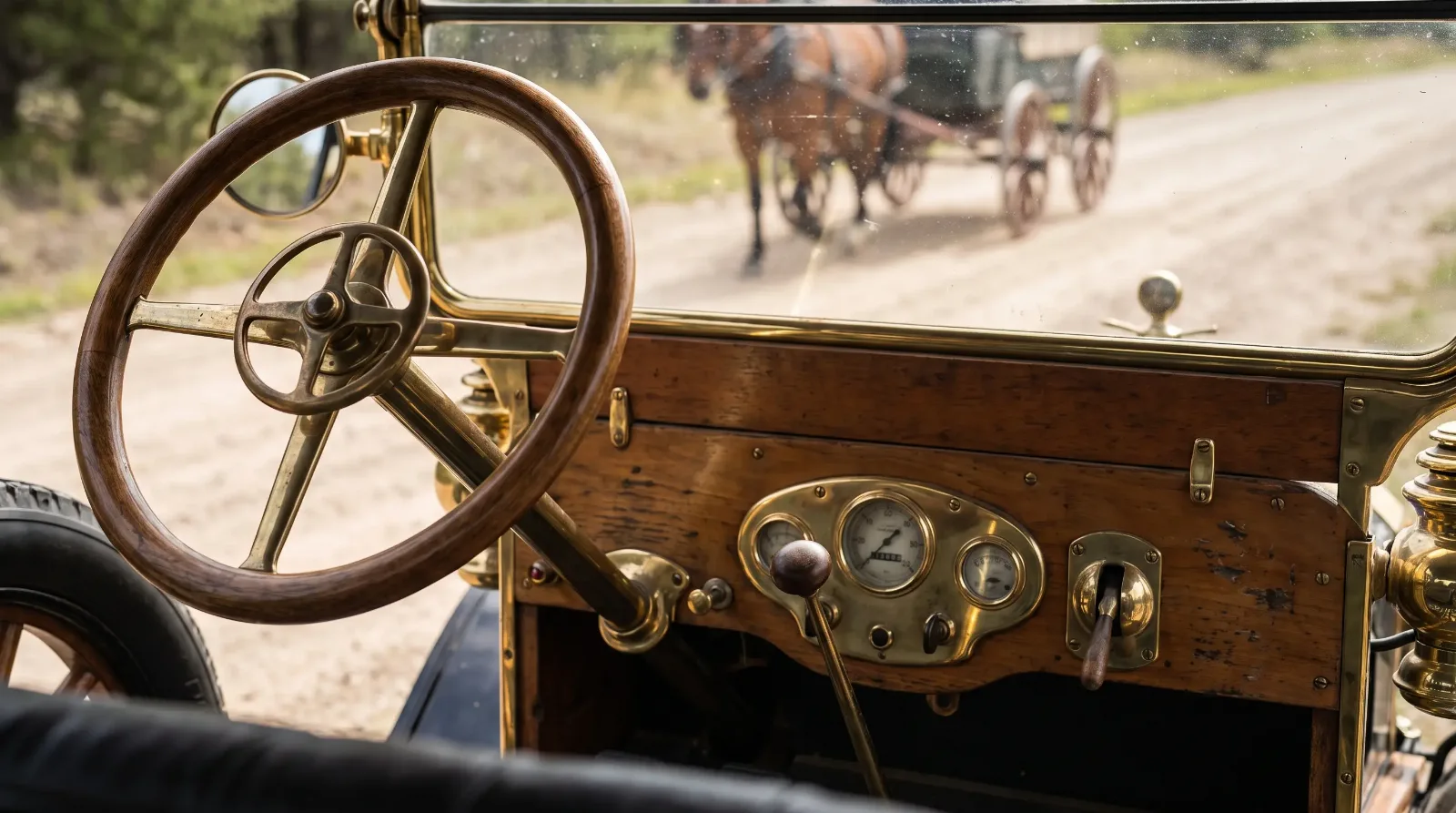
The roads did not help. Outside the towns, most of what a driver faced was dirt, ruts, and mud, laid out for horses and not much good for anything with a wheel. A trip that would take an hour today could eat a whole afternoon, and a hard rain could shut the whole thing down. That is part of why the tall wheels made sense. You needed the ground clearance to clear the ruts and the cow paths. People forget that the car came before the good roads, not the other way around. The machines had to be built tough because the country they drove through was rough.
| Feature | Brass era car (1896-1915) |
|---|---|
| Trim material | Polished brass, later nickel |
| Starting | Hand crank, electric starter from 1912 |
| Lighting | Acetylene gas, later electric |
| Power options | Gasoline, steam, electric |
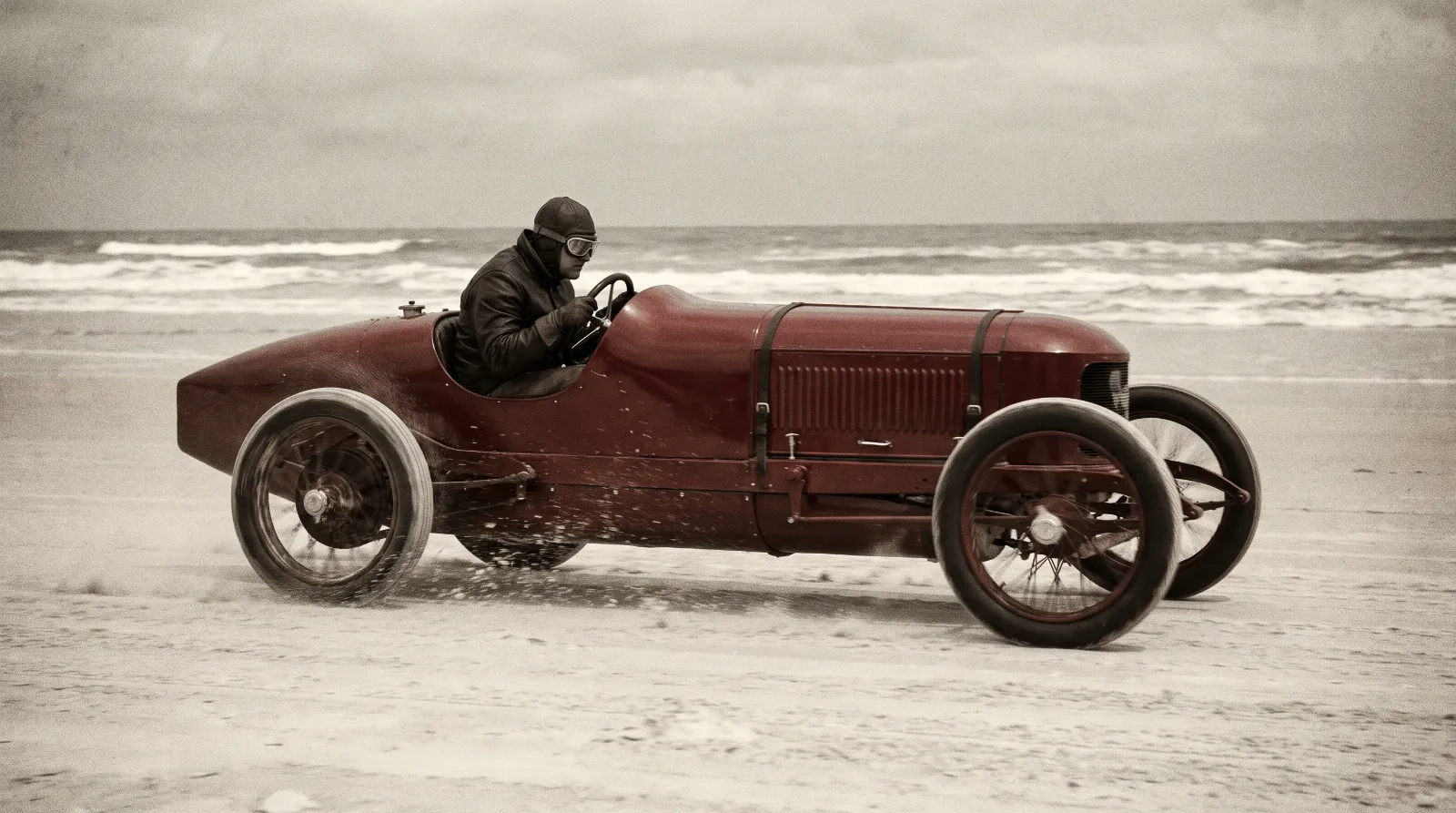
| Top speed | Typically 20 to 40 mph, with a few high-performance cars faster |
| Wheels | Wooden artillery or wire spokes |
| Steering | Tiller on early cars, wheel later |
The Model T changes the math
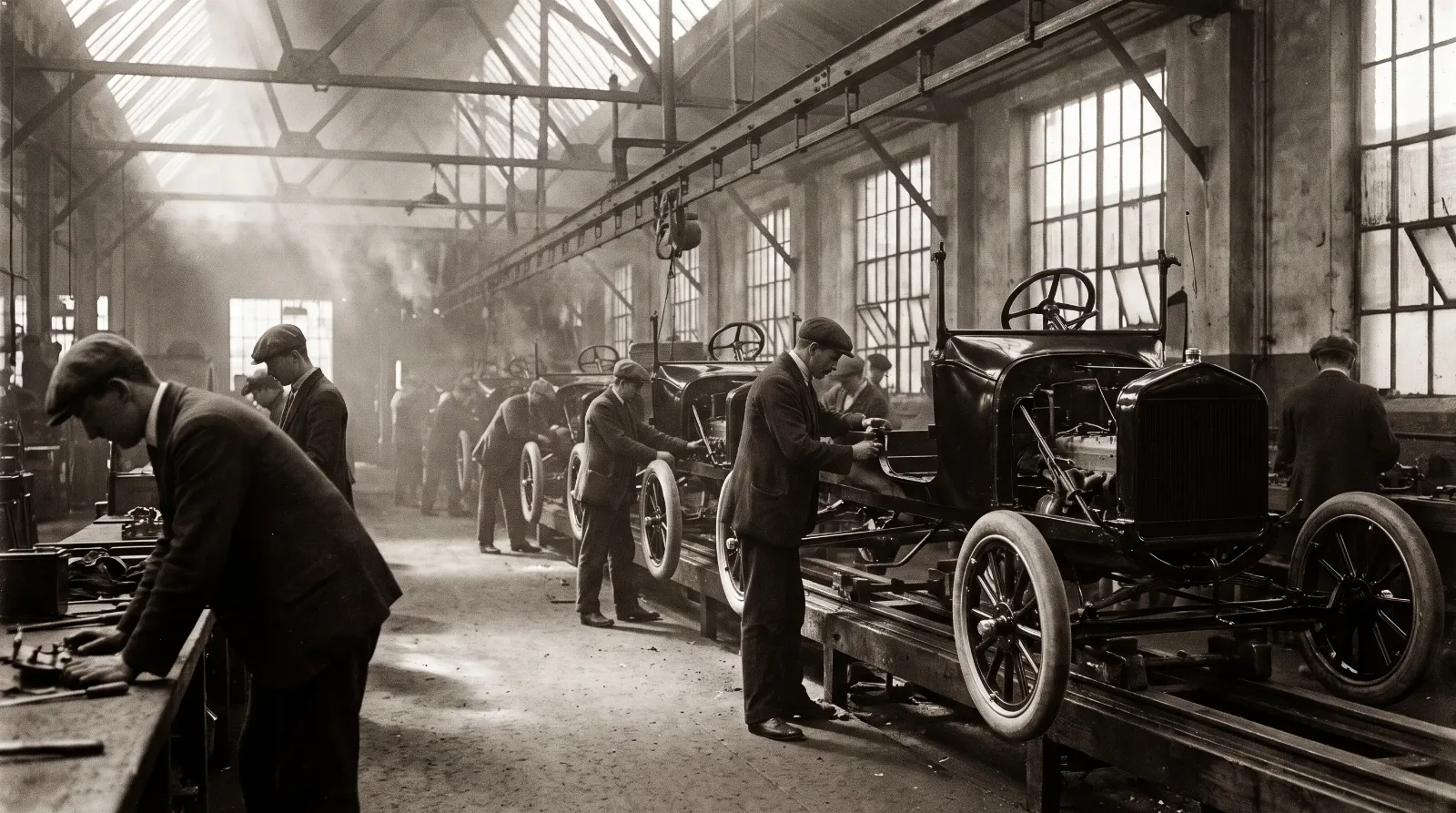
For most of the brass era, a car was a rich man's toy. Prices were high, and a machine could cost more than a house. Then Ford rolled out the Model T in 1908 and started building it on a moving assembly line a few years later, and the price fell year after year.
That is the moment the car stopped being a luxury and became a tool for ordinary people. The Model T is a brass era car in its early years, with the brass radiator and lamps, before it switched to the painted black look we all picture. By the time production hit its stride, Ford was turning out more cars than everybody else combined. The other builders had to answer or fold.
"Folks think the brass era was primitive. I look at it different. Those builders were solving problems nobody had ever solved, with no rulebook and no parts catalog. A man who kept a 1910 touring car running knew more about his machine than most of us know about anything we own today."
Gary Nowak
Who built them, and who vanished
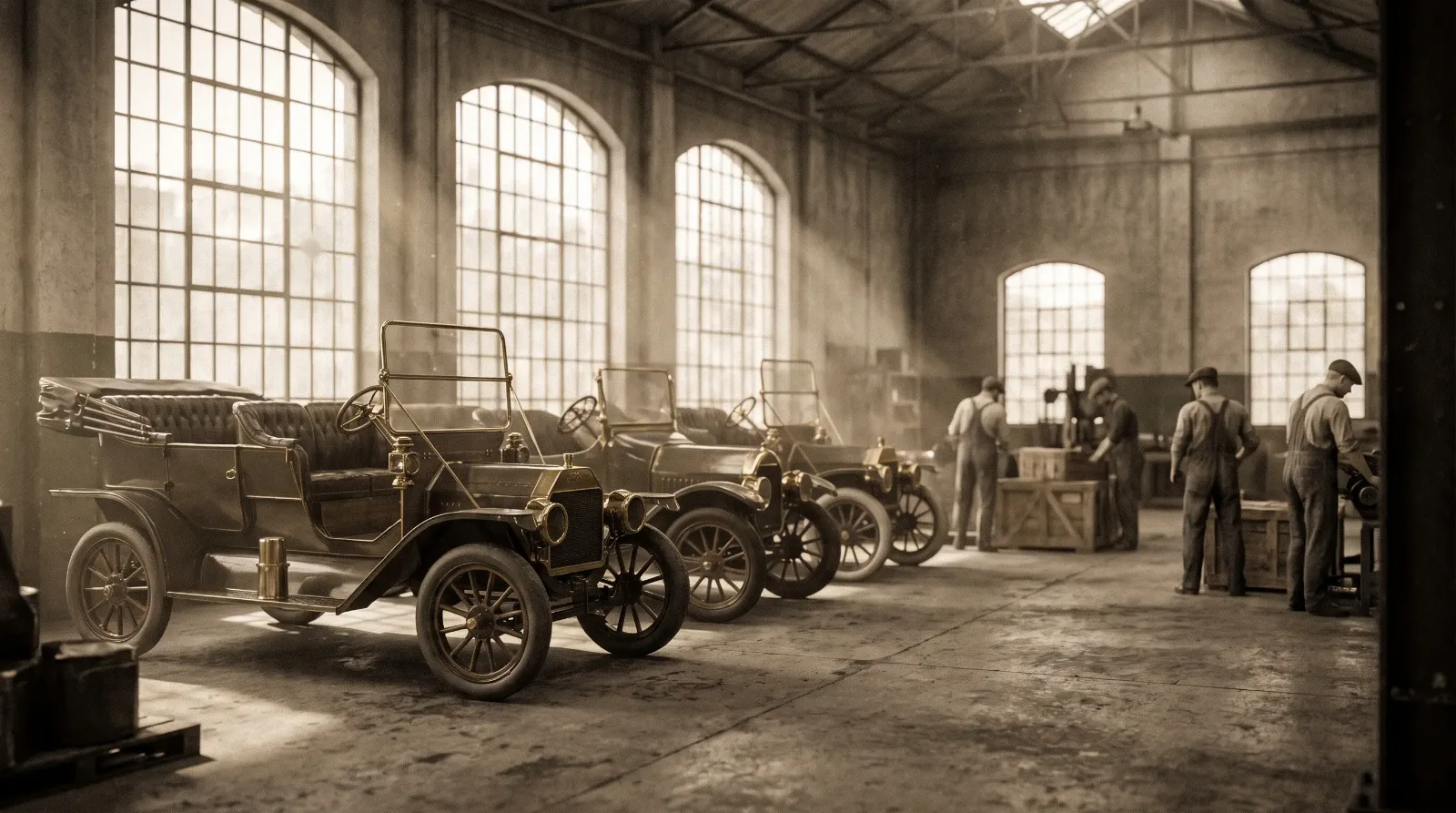
The brass era had hundreds of automakers, and most of them are names you have never heard. There were well over a thousand American car companies at one point or another before the First World War. Some built a handful of cars in a barn. Some, like Winton, Pierce, and Locomobile, were serious operations that mattered in their day.
Almost none survived. The market could not carry that many builders, and the price war Ford started shook out the weak ones fast. What is left today is a scattered survivors' list, and half the fun of the brass hobby is running into a make you have to look up. For the ones that did make a mark, you can find antique cars on the market today, though the good brass survivors trade in a small and knowledgeable circle.
Collecting brass today
If you want into the brass hobby, go in with your eyes open. These cars are old, they are simple, and that is both the appeal and the catch. Simple means you can often fix a lot yourself, but it also means parts do not exist and have to be made. A cracked casting or a missing brass lamp can turn into a long hunt or a machine-shop bill.
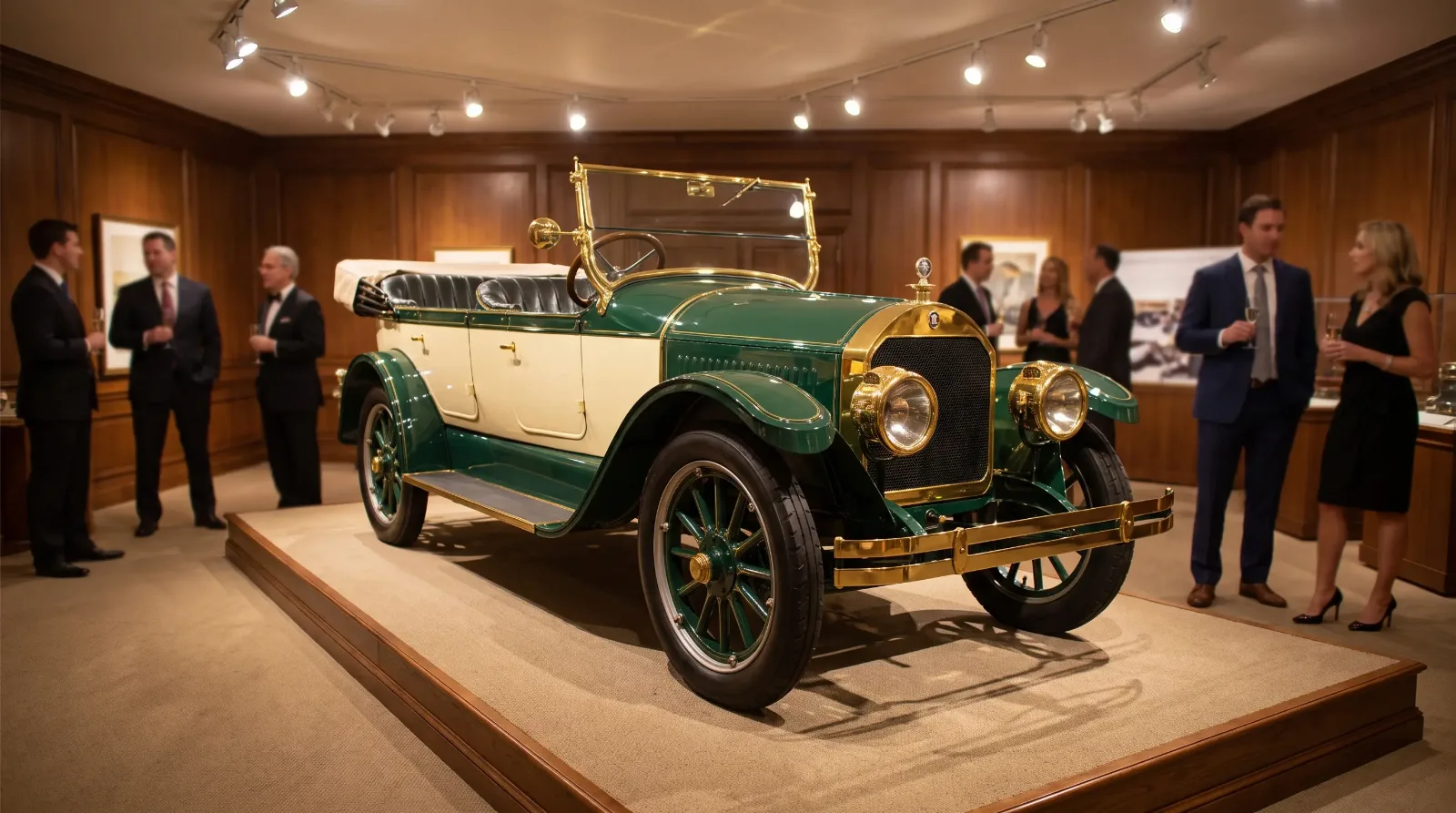
Buy the best original car you can afford, and pay attention to completeness. A brass car missing its correct lamps, horn, and trim is a project that never ends, because that hardware is exactly what got lost or sold off over the decades. A complete, honest, running car is worth paying up for. The brass crowd is friendly and small, and they will tell you straight what a car needs.
These early machines set the table for everything that followed, and if the styling side of the story is what pulls you in, there is more from the pre-war world to dig into once the brass gives way to paint and chrome.
Why the brass era still pulls people in
There is something honest about a brass car. Nothing is hidden. You can see the engine breathe, watch the linkages move, smell the whole business working. It asks something of you, and it gives something back that a modern car never will. That is why people who fall for the brass era rarely fall back out. They started at the beginning of the whole story, and it turns out the beginning is the best part.
Sources and notes
Related Reading
Article
Pre-War Classic Cars: The Golden Age of the American Automobile (1900-1942)
Article
1930s Cars: Streamline Style Through the Depression Era
Article
Art Deco Automobiles: When Cars Became Rolling Sculpture
Article
Who Really Invented the First Automobile?
Article
Steam-Powered Cars That Ruled Early Roads
Article
Electric Cars of the 1900s-1910s: Forgotten EVs
Article
What Was the Brass Era? Years & Meaning
Article
Acetylene Headlights: Lighting the Antique Road
Article
Hand-Crank Starting, Done Safely
Article
Wooden Artillery Wheels of the 1900s
Article
The Planetary Gear Transmission Explained
Article
High-Wheeler Motor Buggies
Article
Top Speed of 1910s Motor Vehicles
Article
The Toughest Endurance Races of the 1910s
Article
The Most Expensive Brass-Era Cars at Auction
Article
The Oldest Cars Still Running Today
Article
Forgotten Automakers of the Pre-WWI Boom
Article
Right-Hand to Left-Hand Drive: The 1910s Shift
Article
How Early License Plates & Registration Began
Article
Where the Assembly Line Really Began
Have a
Classic Car
for Sale?
Reach thousands of serious classic car collectors across the US.
Sell It Here →
Are You a Classic Car Dealer?
List your full inventory and connect with targeted classic car buyers.
Join as a Dealer →

About the author
Gary Nowak
Lifelong Midwest rodder who has been building and driving traditional pre-war hot rods since the 1970s.
Comments
Be the first to comment on this article.