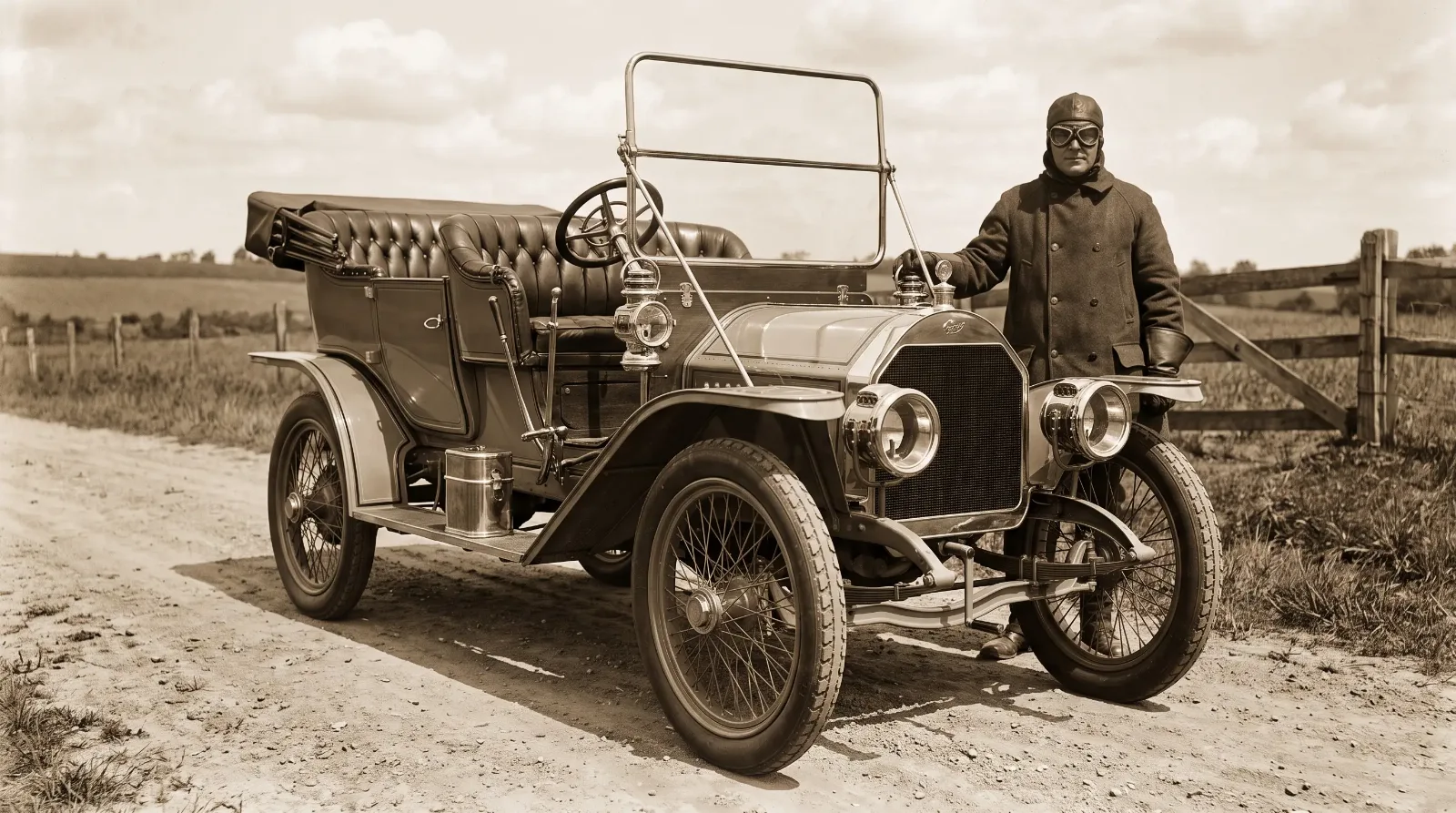
Pull a wheel off a real brass era car and you will not find a stamped steel disc or a cast alloy piece. You will find a hub, a set of spokes, and a felloe, all shaped from solid wood, built the same way a wagon wheel had been built for a century before the automobile existed. That is not a coincidence. The artillery wheel is a direct carryover from horse-drawn transportation, and understanding how one is actually built tells you a lot about why these old cars ride, sound, and fail the way they do.
Why wood, and why "artillery"
The name comes straight from military gun carriages, which used the same wheel construction to move heavy artillery pieces across rough ground for generations before the automobile borrowed the design. Wagon builders and wheelwrights already knew how to build a wheel strong enough to carry serious weight over bad roads, and when the early automobile industry needed wheels fast, it made sense to lean on trades that already had the skill rather than invent something from scratch.
Wood also made practical sense on its own merits, not just as a hand-me-down design. A well-built wooden wheel has some natural give to it, which helped absorb the shock of the rutted, unpaved roads these cars actually drove on. Steel wheels of the period, by contrast, transmitted every bump straight into the frame. On the roads of 1905, that flex mattered more than people give it credit for now.
How one is actually built
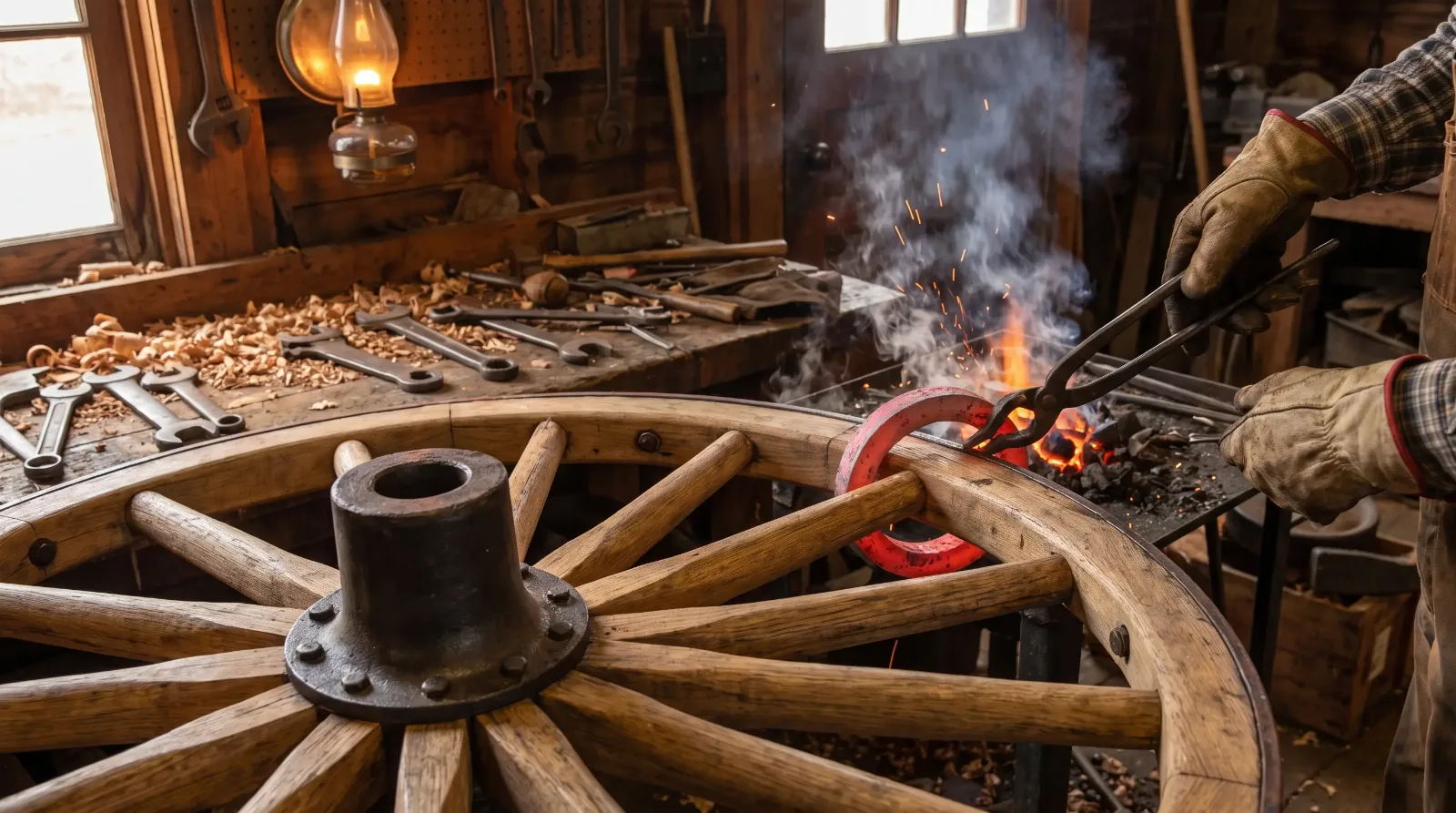
Start with the hub, or nave, which on a true artillery wheel is metal rather than solid wood, typically a two-piece cast fitting that clamps around the inner ends of the spokes and carries the bearing assembly for the axle. Into that metal nave, a wheelwright fits a set of spokes, typically hickory for its strength and shock resistance, shaped and keyed in individually so the finished wheel is round and true. That is not a small job. Getting the angle and fit of a dozen spokes right, by hand, is a skill that took a real apprenticeship to learn properly, and it is what separates the artillery wheel from the older, plainer wagon wheel design it descended from, which relied on spokes mortised straight into an all-wood hub.
The outer ring, called the felloe, is built from curved wooden sections joined together at the rim, and the whole assembly gets bound tight with a steel tire, a metal band shrunk onto the wood while hot so that as it cools, it contracts and clamps the entire wheel together under tension. That heat-shrink process is the same basic technique used on wagon wheels for a very long time before cars existed, and it is why a properly built wooden wheel holds together as well as it does under real load.
For the full story of the rough roads and hard-driving conditions that made this wheel design necessary in the first place, the antique car wooden wheels guide lays out what these cars actually contended with day to day.
Where wood wheels actually fail
Wood dries out. That is the single biggest enemy of an old artillery wheel, and it is the first thing I check on any car that comes into the shop with these wheels still fitted. As the wood loses moisture over decades of storage, especially indoors under dry heat, the spokes shrink slightly inside their mortises. The steel tire, which was sized to clamp a fully hydrated wheel, no longer sits as tight, and the whole wheel can develop play, a wobble you can feel in the spokes if you grab and rock the rim by hand.
A dried, loose wooden wheel is not just uncomfortable, it is a real safety problem at speed, because a spoke can fail without much warning once the joint has enough play in it. This is exactly why a wheel that looks fine sitting still in a museum or a barn needs a careful inspection before anyone drives the car on it, not just a visual check for cracks.
🔧 Inspection Priorities
- Spoke tightness. Grab the rim and rock it against the hub. Any detectable play means the wood has shrunk and the wheel needs rebuilding or at minimum professional re-tightening before driving.
- Cracks along the grain. Check each spoke and felloe section under good light for hairline splits, which often start invisible and worsen under load.
- Steel tire seating. The metal band should sit flush and tight all the way around with no gap. A loose tire means the whole wheel needs to be reset by someone who actually knows the trade.
- Rot and insect damage. Wood stored in damp conditions can rot from the inside, and old wheels sometimes carry hidden insect damage that only shows up once you probe the wood with an awl.
"People bring me a wheel that looks perfect, all the varnish still shiny, and they are surprised when I tell them it is not safe to drive on. Wood does not care how it looks. It cares about moisture content, and a wheel that sat in a heated garage for forty years has given up water it is never getting back on its own. You cannot eyeball that. You have to grab it and feel for the play, every time, before anybody puts weight on it at speed."
— Ray Delgado
Rebuilding and keeping them roadworthy
A small number of wheelwrights still practice this trade specifically for the antique automobile market, and a proper rebuild replaces damaged spokes with correctly seasoned hardwood, refits everything into the hub with the traditional mortise joints, and reshrinks a new or reused steel tire onto the assembly under heat. It is slow, specialized work, and it is not cheap, but there is genuinely no shortcut that preserves both the authenticity and the safety of the wheel at the same time.
If you are shopping for a brass era car, ask directly when the wheels were last rebuilt or inspected by someone who knows this trade, not just when the car was last driven. A seller who cannot answer that question plainly is a seller who has not had the wheels properly checked, and that is a real cost to budget for after the purchase, not a minor detail.
The wheels are only half the drivetrain story on these early cars. What happened between the engine and those wheels was its own piece of clever, unfamiliar engineering. The next story covers how the planetary gear transmission worked and why it disappeared from the industry almost entirely after this era.