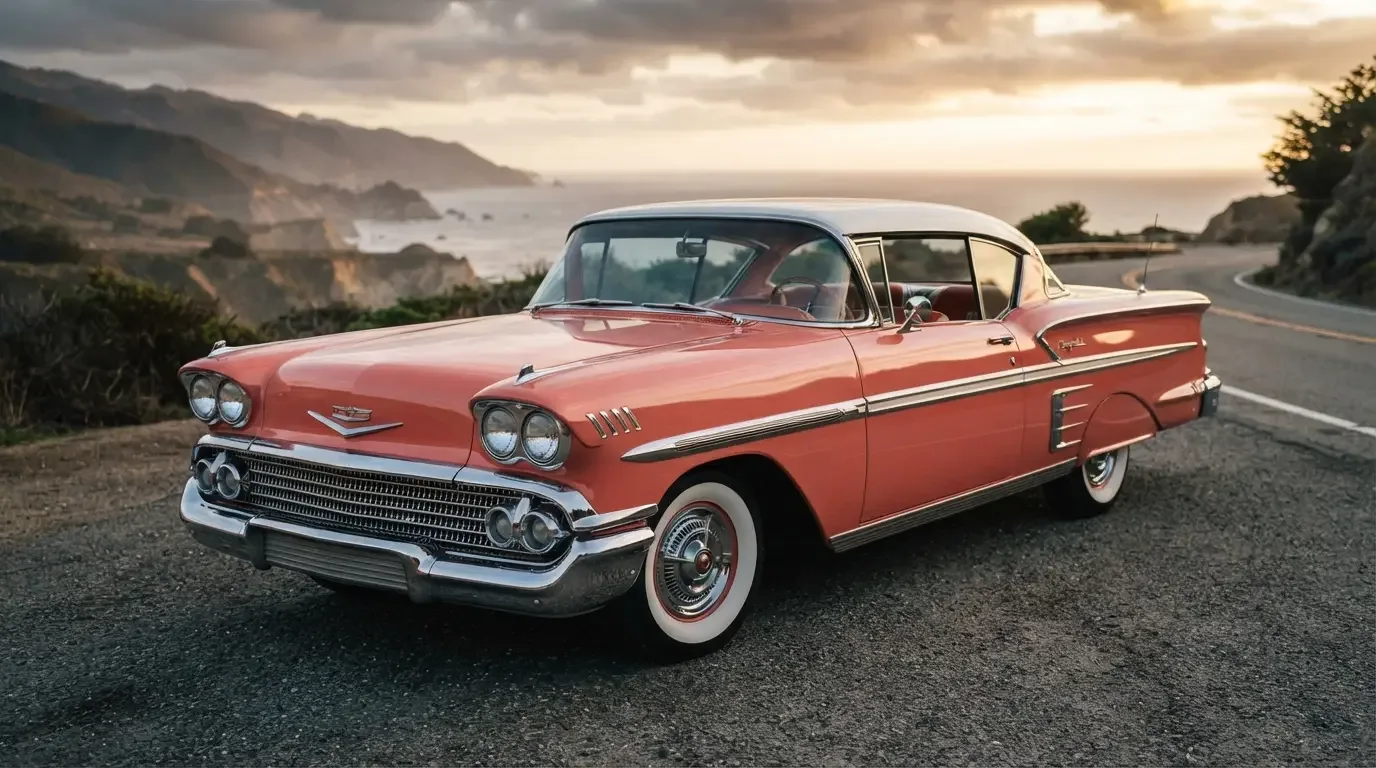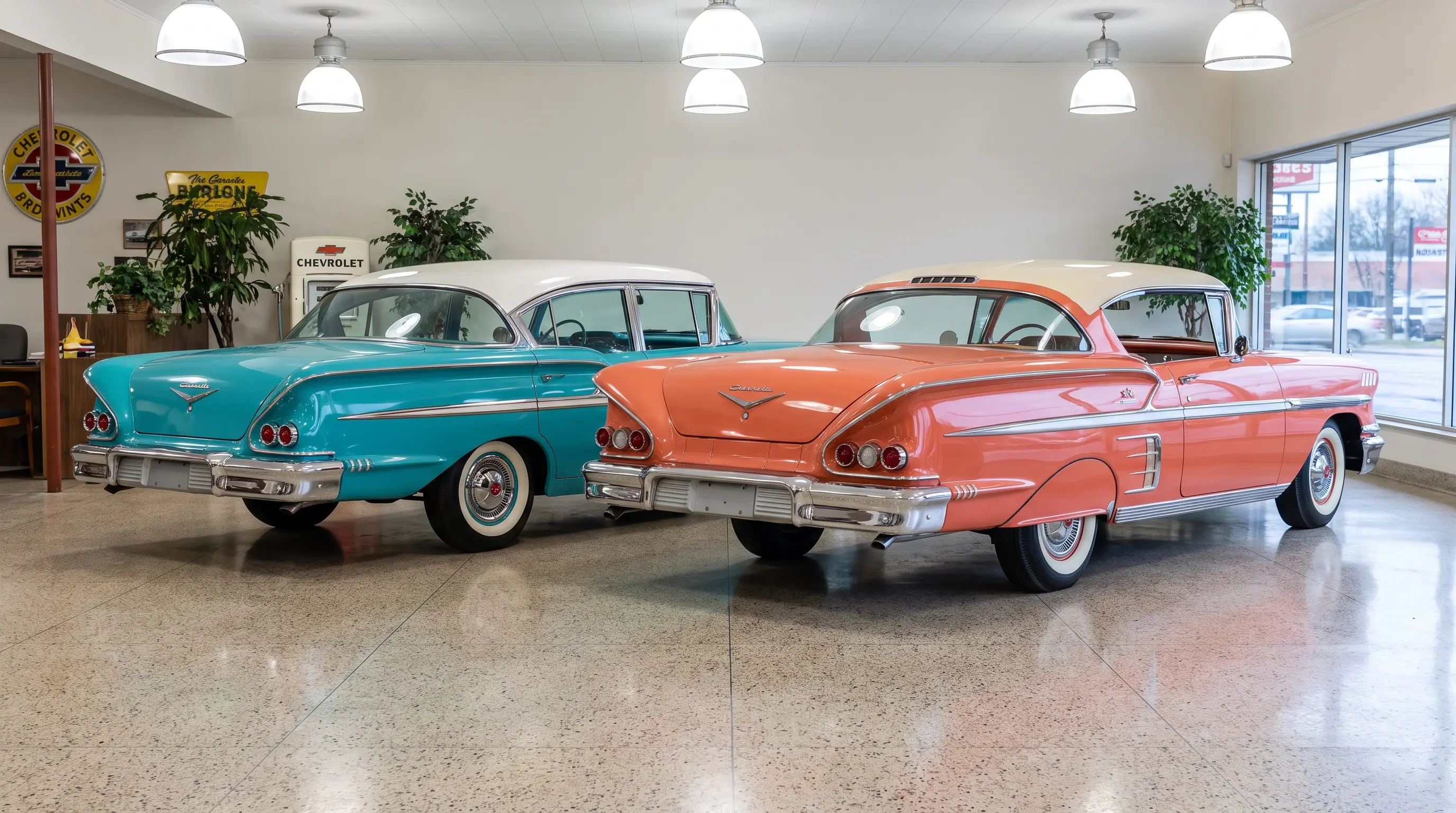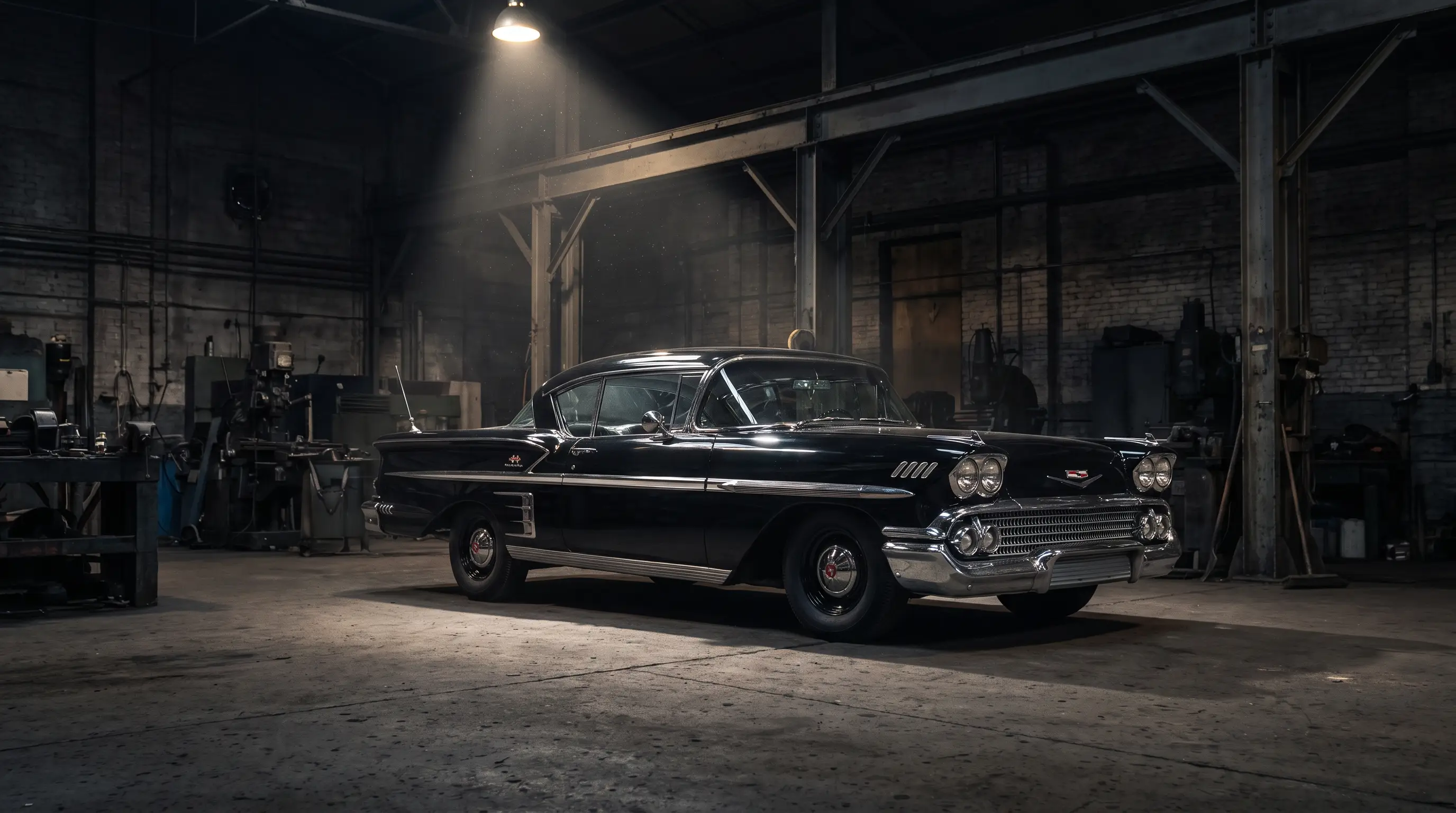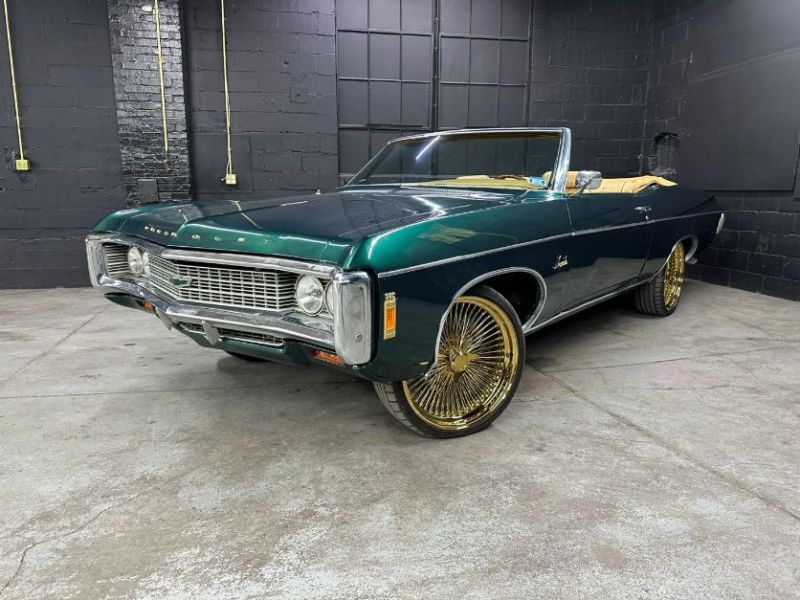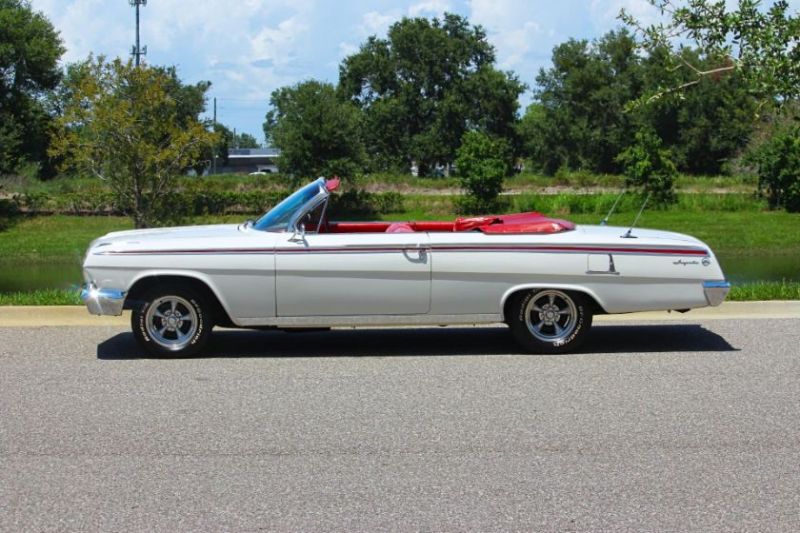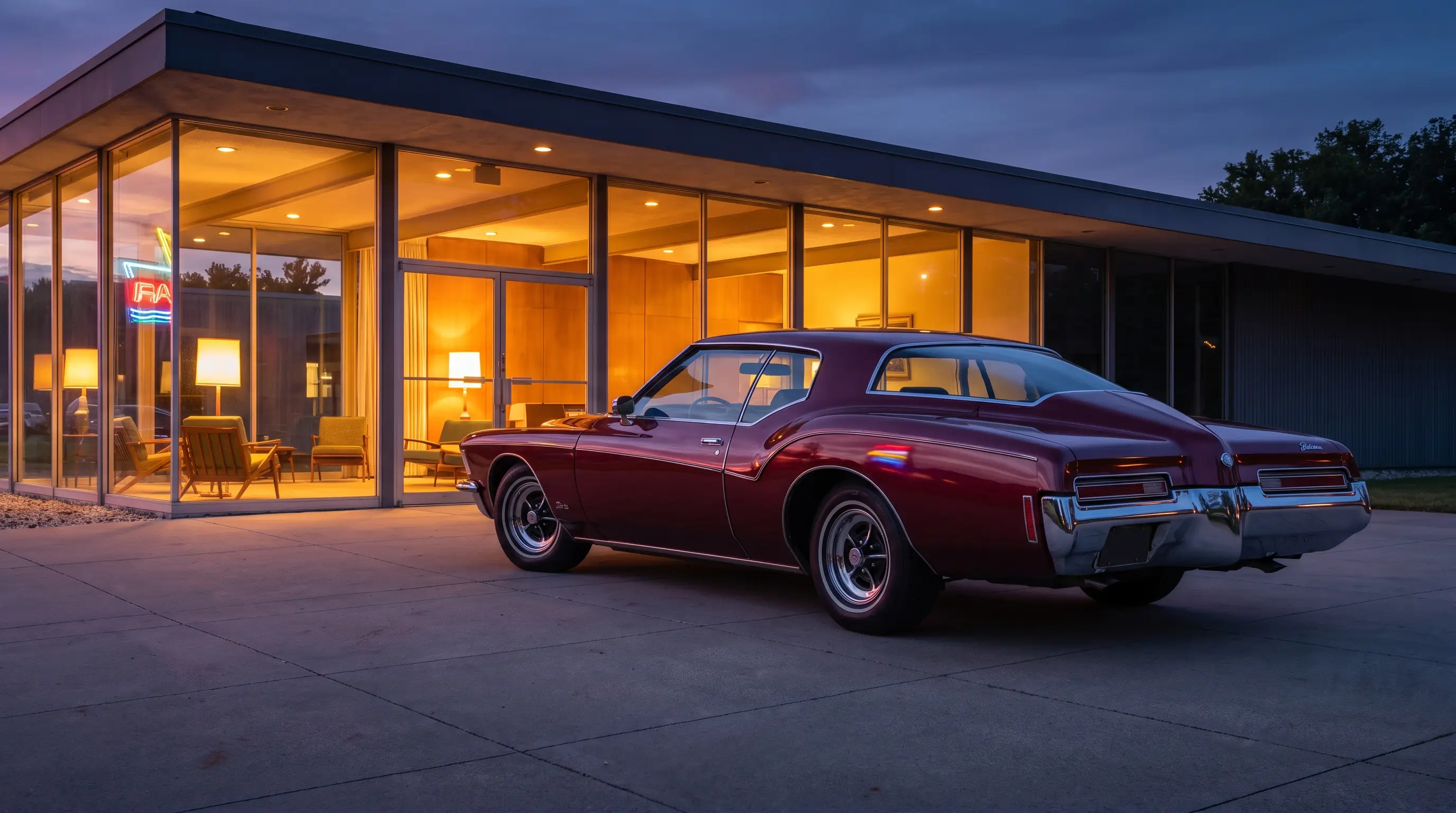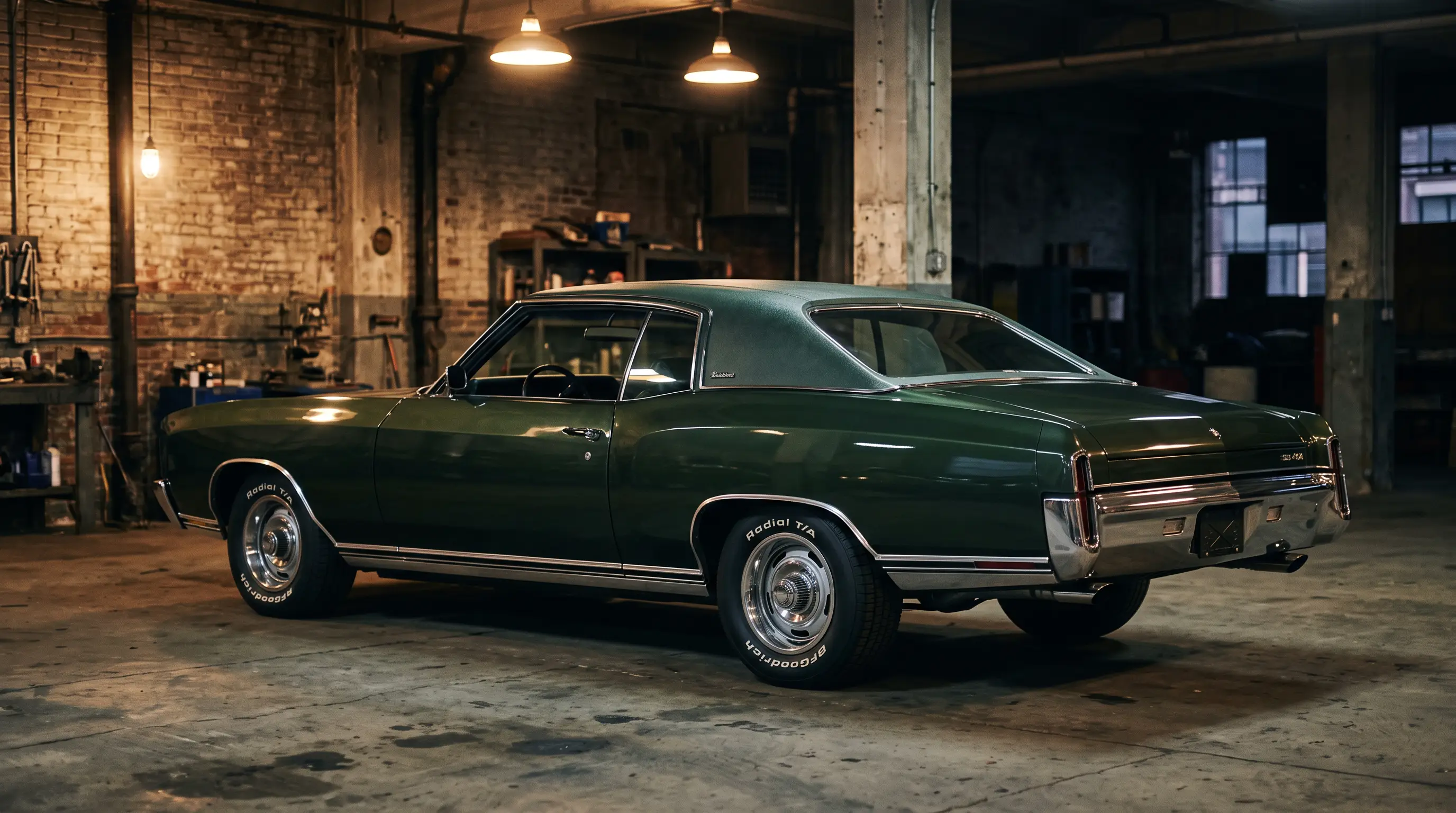
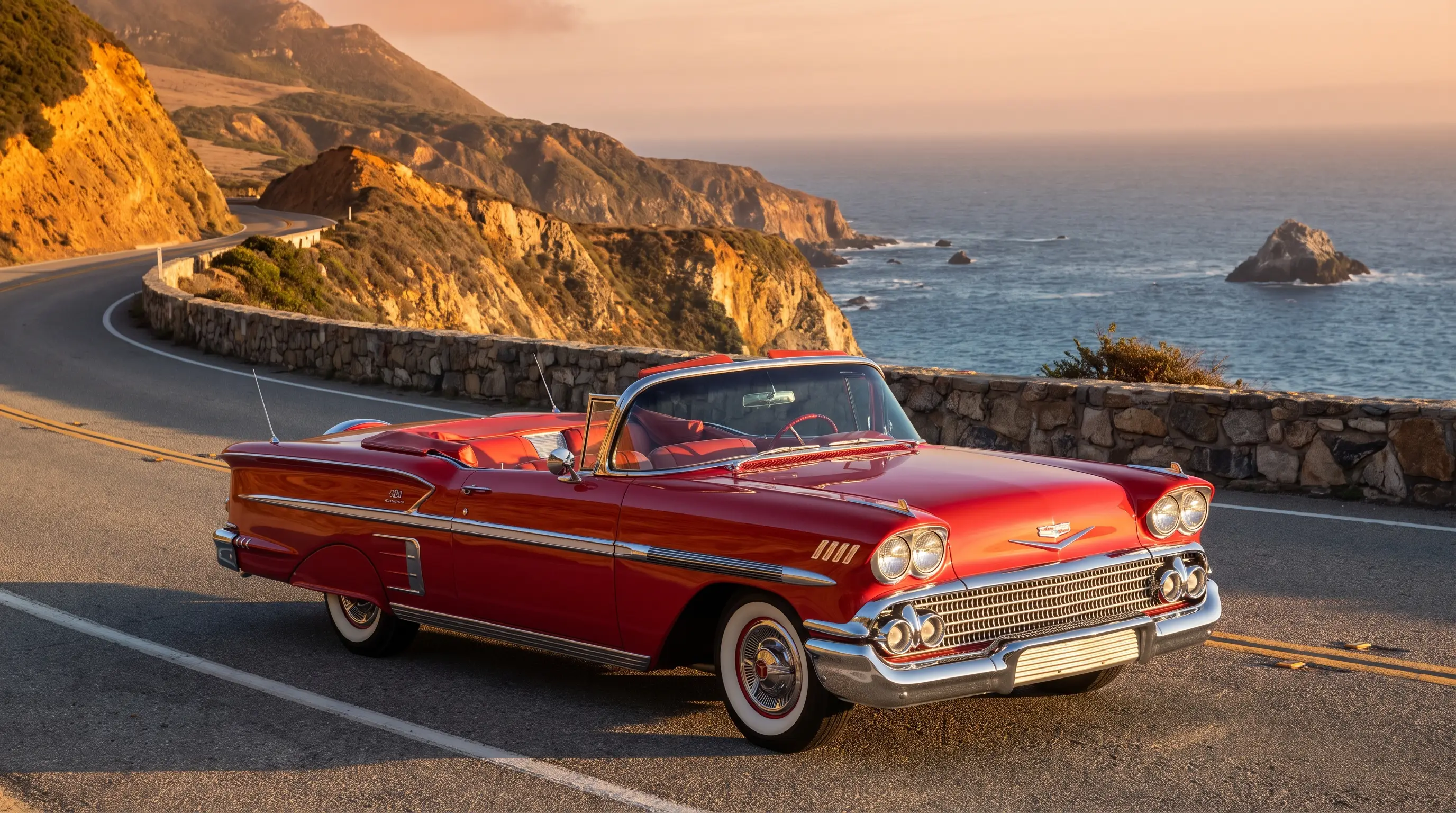
The 1958 Impala convertible is one of exactly two body styles Chevrolet offered under the new Impala name in its debut year, and of the two it is the one collectors chase hardest today. A Sport Coupe survives in reasonable numbers from 1958, but a Convertible in honest, well documented condition is a rarer find, and the gap in asking prices between the two body styles reflects that scarcity plainly. Anyone researching the model soon learns that the convertible was never a mass-market proposition even when new, and that fact shapes how it should be evaluated as a collector car six and a half decades later.
Chevrolet built the 1958 Impala as an upper trim within the Bel Air family, riding on the division's new X-frame chassis and sharing its quad headlights and lower stance with the rest of the corporation's 1958 lineup. The convertible variant added a power-operated top, reinforced rear structure to compensate for the lost roof, and the same triple taillight treatment that distinguished Impala from lesser Bel Airs at a glance. It was, by any measure, the showiest car in Chevrolet's 1958 catalog, and the factory priced and marketed it that way.
What set the convertible apart from the coupe
Beyond the obvious mechanical differences required to build a drop-top from a hardtop body, the 1958 Impala convertible carried its own interior treatments not offered on the Sport Coupe, including certain two-tone vinyl combinations meant to be seen with the top down. The car's structure needed additional reinforcement in the rocker panels and rear kick-up area to make up for the rigidity a fixed roof would otherwise provide, a detail that period engineers took seriously given how much heavier the convertible ran compared to the coupe on the same chassis. That added weight came with a price premium at the dealership, positioning the convertible as the aspirational top of an already aspirational trim level.
Chevrolet also treated the convertible as its de facto image car for advertising purposes that year. Print campaigns and dealer showroom materials for 1958 leaned on the convertible far more often than the Sport Coupe, using its open-top silhouette to sell the entire Impala concept to buyers who would, in practice, mostly end up purchasing a hardtop or a cheaper Bel Air. That marketing emphasis on a body style built in comparatively small numbers is a pattern that shows up across the industry in any given era, and it is worth remembering when reading period brochures as historical evidence rather than as a literal sales breakdown.
Engines and options buyers actually chose
A 1958 Impala convertible could be ordered with the base 235 cubic inch inline six, the 283 cubic inch small-block V8, or Chevrolet's new 348 cubic inch W-series big-block, the same engine spread offered across the Impala line that year. In practice, convertible buyers skewed heavily toward V8 power, and documentation on surviving cars shows the 283 and 348 combinations turning up far more often than the six-cylinder base engine. That buying pattern makes sense given who was actually ordering a convertible in 1958. It was rarely the most budget-conscious customer on the lot, and a buyer willing to pay for a power top and reinforced body was usually willing to pay for a V8 as well.
Options like power steering, power brakes, and the Wonderbar signal-seeking radio also appear disproportionately on surviving convertibles compared to coupes and sedans from the same model year, reinforcing the picture of the convertible as Chevrolet's top-trim offering within an already premium sub-series. For researchers trying to establish what a correctly equipped example should carry, that skew toward options is a useful baseline, though it is never a substitute for verifying an individual car's own build documentation.
"A 1958 Impala convertible was never built to be ordinary. Every reinforcement, every option pattern in the surviving cars tells you Chevrolet built it to be looked at, not just driven."
- Sarah Whitfield
Why documentation matters more on this body style
Because the convertible sits at the top of an already limited debut-year lineup, verifying originality carries more weight than it might on a more common car. Buyers researching the 1958 impala story quickly find that the convertible's rarity has made it a frequent target for re-creations built from coupe donor cars or from cars that started life as a lesser Bel Air. A genuine 1958 Impala convertible should show consistent trim tags, correct body reinforcement details, and ideally a paper trail connecting the car to its original build sheet. Those details separate a documented original from a well-executed replica, and the price difference between the two categories at auction can be substantial.
Readers who want the broader context of how the 1958 model year fits into the full story of the Impala nameplate will find the convertible's debut-year status is central to that narrative, not a side note. For anyone actively comparing what is currently available, it is worth looking at classic Impalas on the market to see how convertible examples are priced relative to Sport Coupes from the same model year.
How the convertible compares across the decade
Set the 1958 Impala convertible next to the convertibles that followed it through the 1960s and the differences are more than cosmetic. Later Impala convertibles rode on longer, lower bodies with progressively larger engines available, and by the middle of the decade the nameplate had become the best selling car in the country across every body style Chevrolet offered. None of that later success changes the fact that the 1958 convertible occupies a distinct category of its own, built on a chassis and body that Chevrolet used for exactly one year before moving on. Collectors who specialize in full-size Chevrolets from this era generally treat the 1958 convertible as its own collecting category rather than simply an early entry in a longer convertible lineage, precisely because so little of the car carried over unchanged into 1959.
That one-year status also affects parts availability in ways buyers should factor into any restoration plan. Trim pieces, taillight housings, and certain interior components specific to the 1958 body were never reused on the 1959 redesign, so sourcing correct replacement parts for a convertible restoration can take longer and cost more than owners expect going in. Cars that have survived with their original trim intact are worth more for exactly this reason, since replacing missing pieces with reproduction parts, where reproductions even exist, is rarely a straightforward transaction.
A short production run with a long collector legacy
The 1958 Impala convertible existed in its original form for one model year before Chevrolet expanded the Impala range into a full lineup for 1959, adding sedans and a wagon but also changing the styling enough that the 1958 cars would never be repeated in exact form. That narrow window is precisely what gives the 1958 convertible its standing among collectors today. It represents the single, brief moment when the Impala name meant exactly two body styles and nothing else, and the convertible was the more expensive, more visible, and ultimately more coveted of the two.