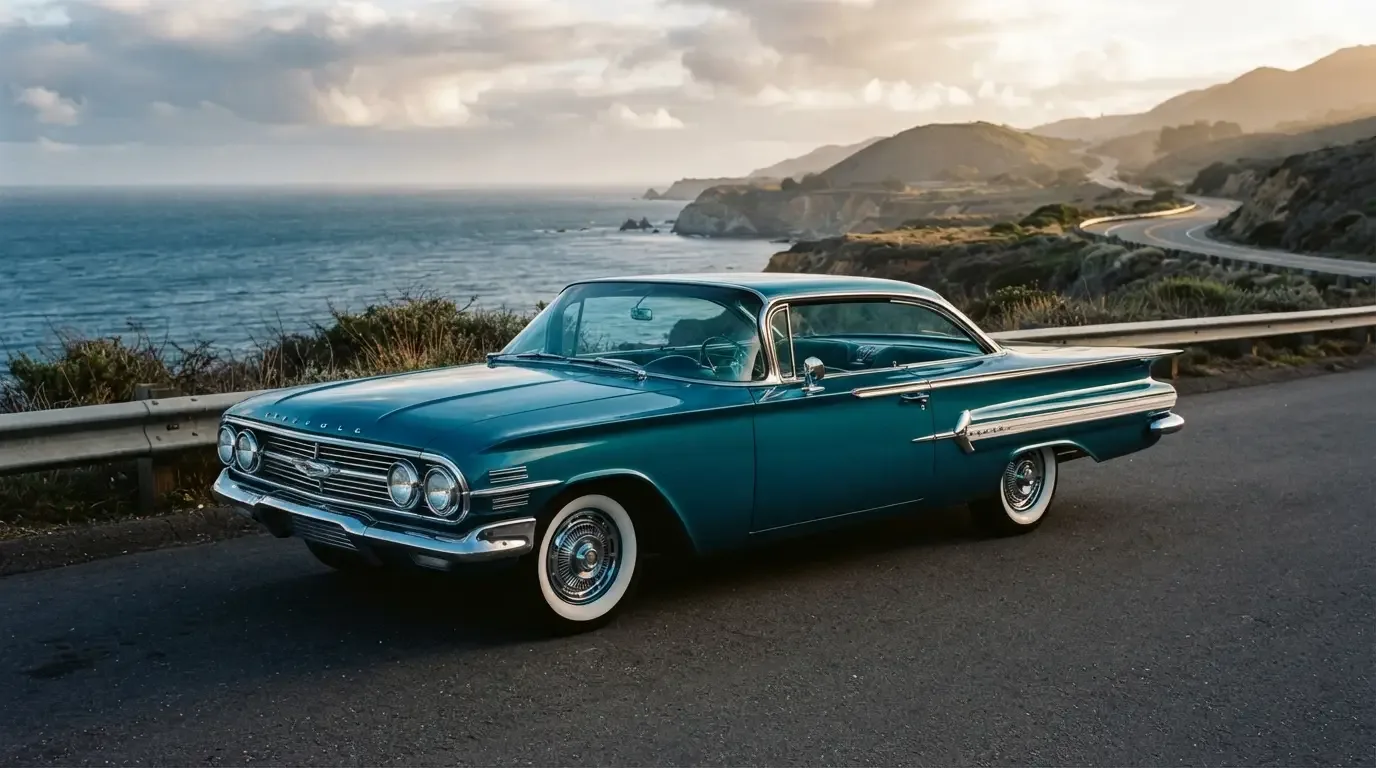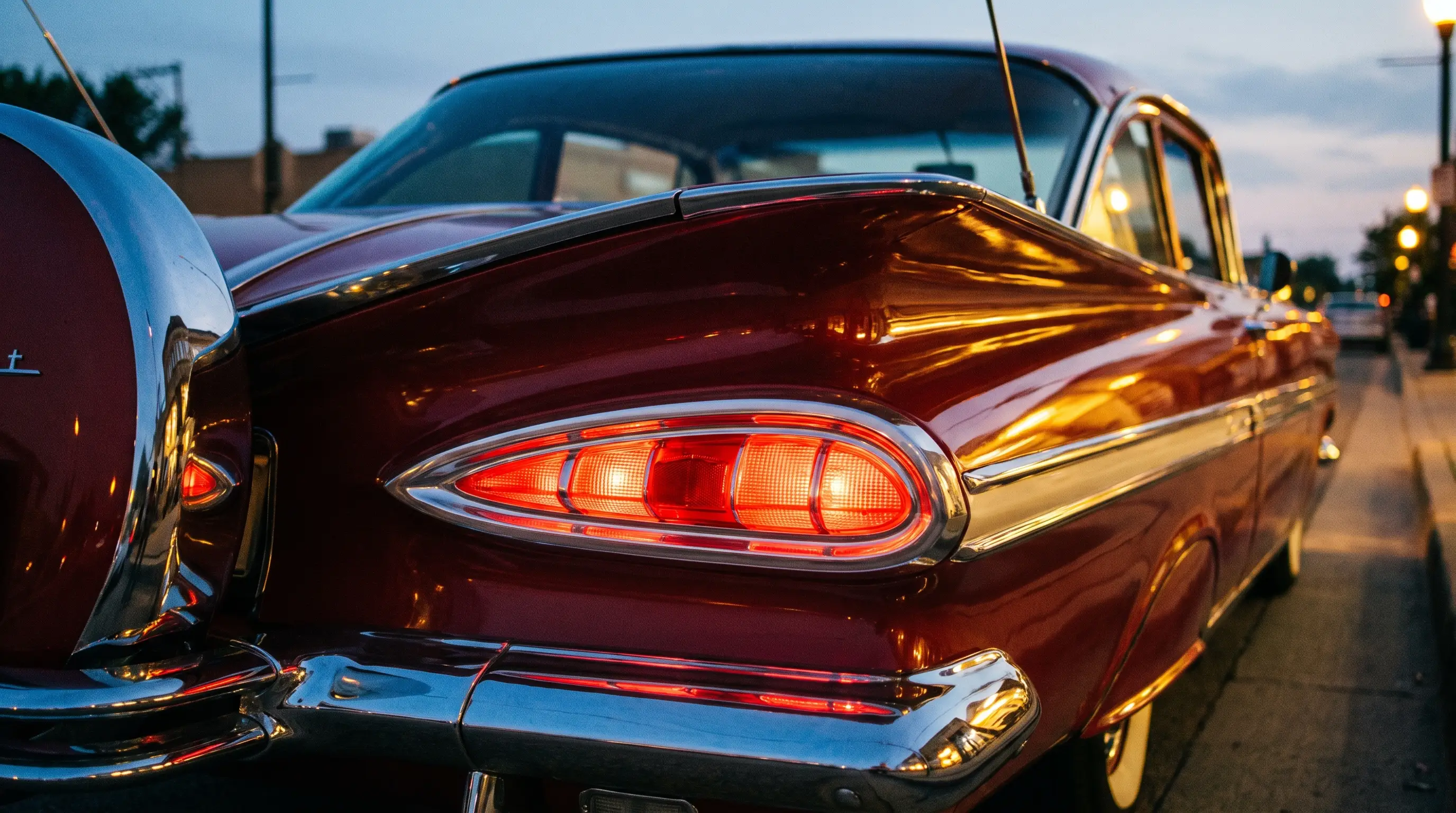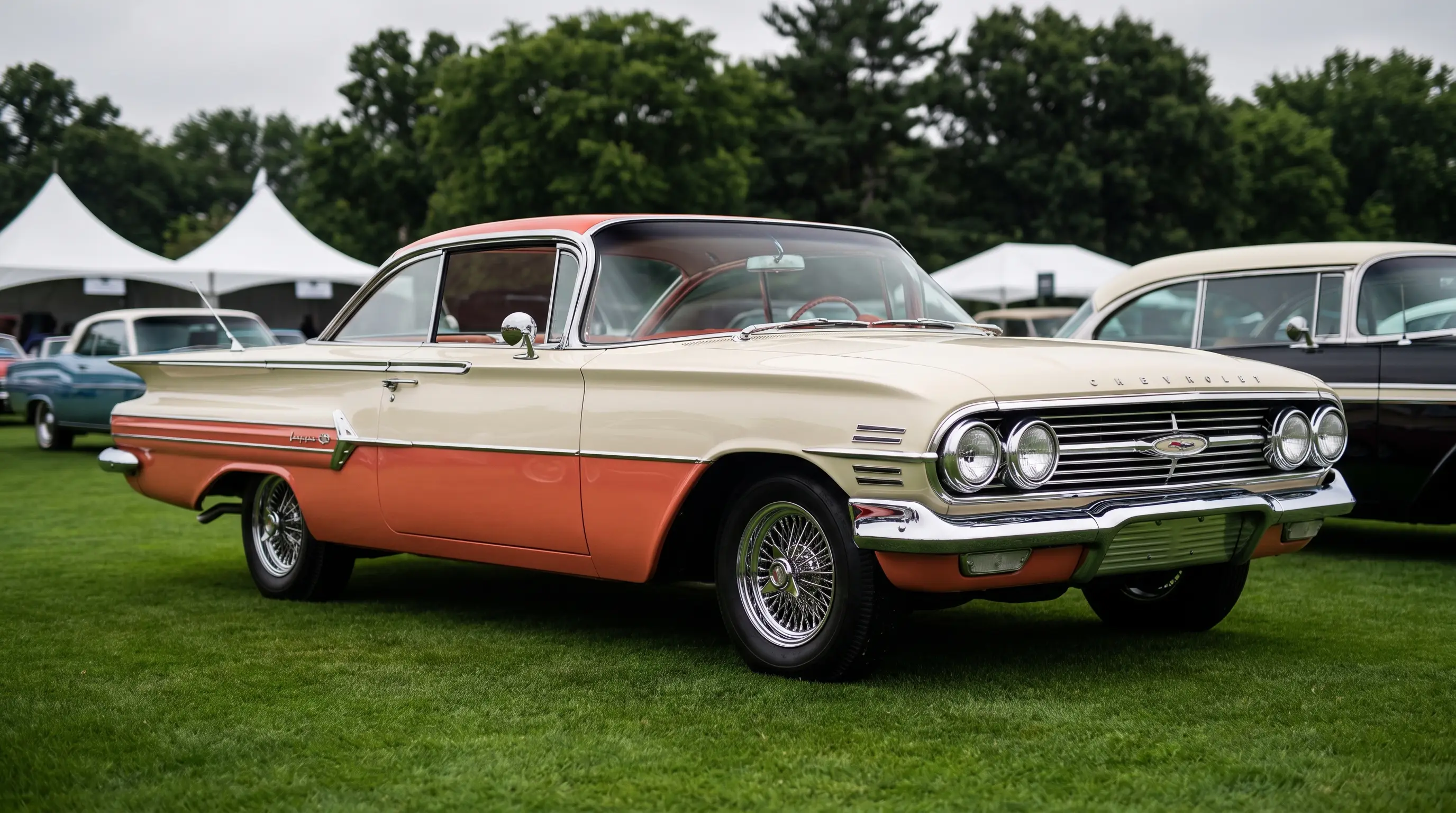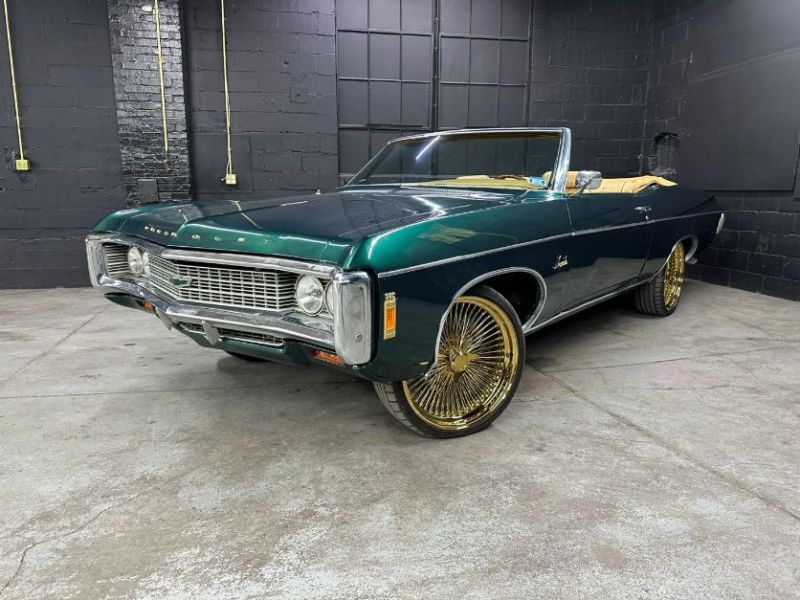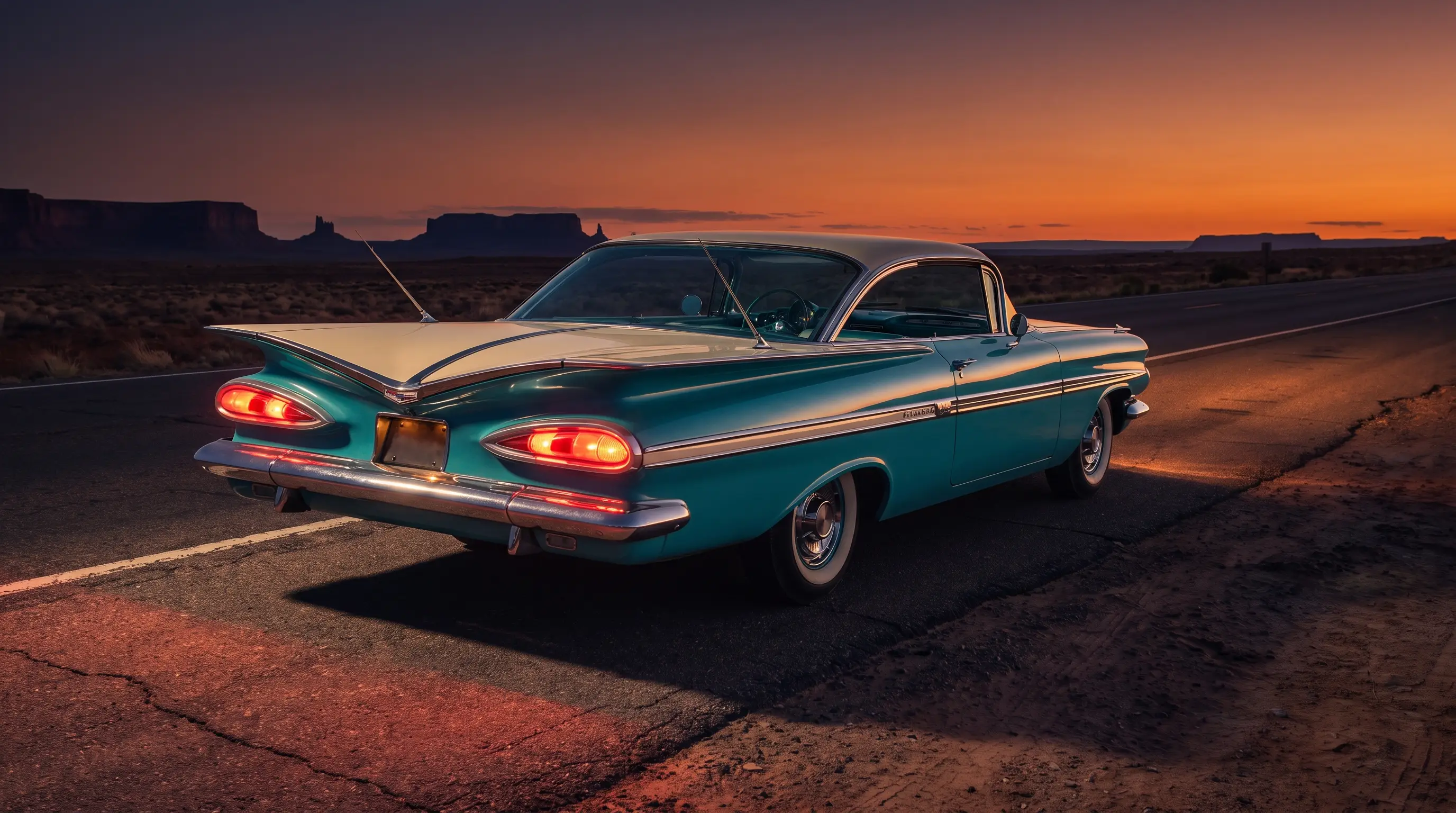
The 1959 Impala batwing earned its nickname honestly, and anyone who has stood behind one understands why the moment they see it. Chevrolet's stylists gave the 1959 full-size lineup a pair of dramatically flared rear fenders that swept upward and outward into an almost horizontal wing shape, a design so aggressive that it makes the 1958 model it replaced look conservative by comparison. Where the 1958 Impala had been a bridge between two design languages, the 1959 car committed fully to a new one, and nothing about that commitment shows more clearly than the batwing rear end.
Understanding why Chevrolet built something so dramatically different after just one year on the previous body requires looking at what was happening across the entire industry in 1958 and 1959, because the batwing was not an isolated styling flourish. It was Chevrolet's answer to a corporate-wide scramble to out-fin, out-flare, and out-dramatize every competitor on the market that year.
Why the design changed so completely in one year
General Motors had committed the entire 1959 lineup to a dramatic new design language built around a much longer, lower body than 1958, and Chevrolet's stylists used that mandate as an opportunity to abandon the transitional look of the previous year entirely. Where the 1958 cars shared their basic passenger compartment proportions with the 1957 models they replaced, the 1959 redesign started essentially from scratch, giving Chevrolet's designers room to push the rear fender treatment further than anything the division had attempted before. The result was a horizontal, wing-like flare that extended well beyond the width of the rest of the body, housing a pair of cat-eye taillights set into the flattened fender tips.
Internally, some Chevrolet designers reportedly worried the batwing treatment went too far even by the standards of an era that tolerated dramatic tailfins across the industry. Those concerns did not stop the design from reaching production, and the finished 1959 Impala remains one of the most visually distinctive American cars of the entire decade, recognizable from a considerable distance by the sheer width of its rear fenders alone.
How the batwing fit into the rest of the 1959 redesign
The rear fender treatment did not exist in isolation. Chevrolet paired it with a completely new body that was longer and lower than the 1958 car, a wraparound windshield carried over and refined from the previous generation, and a horizontal grille treatment that emphasized the car's new width. Impala, having been promoted from a Bel Air sub-series to its own full model line for 1959, now came in sedans and a wagon in addition to the Sport Coupe and Convertible that had defined the 1958 debut year, giving the batwing design far wider exposure across more body styles than the more limited 1958 lineup had allowed.
That expansion mattered commercially as much as it did visually. A dramatic new design reaching buyers across every full-size body style, rather than just two, gave Chevrolet's boldest styling statement of the decade the broadest possible sales platform to prove itself against Ford, Plymouth, and the increasingly flamboyant offerings from GM's own upscale divisions.
"Chevrolet didn't ease into the batwing look. They committed to it completely, across every body style, in a single model year. That kind of conviction either works or it doesn't, and in 1959 it worked."
- Tom Ramirez
Why collectors still chase the batwing today
The 1959 Impala's rear fender design has become one of the most instantly recognizable styling details from the entire tailfin era, and that recognition translates directly into sustained collector interest decades later. Cars from this model year draw attention at shows specifically because of the batwing profile, and well preserved examples with correct cat-eye taillight lenses intact command real respect among Chevrolet specialists who understand how distinctive the design remains even among a decade full of dramatic American car styling. Readers who want context on how this design followed directly from the previous year's more conservative approach can review 1959 impala history for the fuller picture of how the redesign came together.
The taillight housings themselves deserve particular attention from anyone shopping this model year, since the cat-eye lenses set into the batwing fenders are a frequently damaged and sometimes difficult to source detail. Buyers researching that specific component can find a related story covering the taillight design in more depth. For anyone actively looking at what is currently available, it is worth checking Impalas for sale now to compare how batwing-era cars are priced against the more restrained styling that followed in subsequent years.
How the batwing compares to rival tailfins of 1959
1959 was the peak year for dramatic rear-end styling across the American industry, and the Impala's batwing fenders were competing directly against equally bold statements from Ford, Plymouth, and Cadillac that same season. What set Chevrolet's approach apart was the horizontal, wing-like flare rather than the more common vertical fin shape other manufacturers favored. Plymouth and Cadillac pushed their fins upward into tall, pointed shapes, while Chevrolet's stylists chose a flatter, wider silhouette that read as futuristic in a different way, closer to an aircraft wing than a shark fin. That distinction matters to collectors and design historians because it means the 1959 Impala is not simply another entry in a general tailfin trend. It represents a genuinely different design philosophy applied to the same styling problem every full-size American car was chasing that year.
That philosophical difference shows up in how the two approaches aged in public memory. Vertical fins from 1959 rivals are often lumped together as a single design era in casual retrospectives, while the Impala's horizontal batwing remains individually identifiable even to people with only passing familiarity with the period. A shape distinctive enough to earn its own nickname decades after the fact has done something most contemporaries from the same model year never managed.
A design too bold to repeat
Chevrolet never attempted anything quite as dramatic as the 1959 batwing rear end again, and in some ways that restraint afterward only reinforces how singular the design remains within the company's history. The following model year toned the fender treatment down considerably, and by the early 1960s Chevrolet had settled into a more conservative styling direction that would define the Impala for the rest of the decade. The 1959 batwing stands as the moment Chevrolet pushed its full-size styling as far as it was willing to go, and the car's continued popularity among collectors suggests that boldness has aged better than the internal skeptics at the time might have expected. Six decades on, the batwing is not a dated curiosity people tolerate as a product of its time. It is the reason a lot of collectors go looking for a 1959 Impala in the first place.