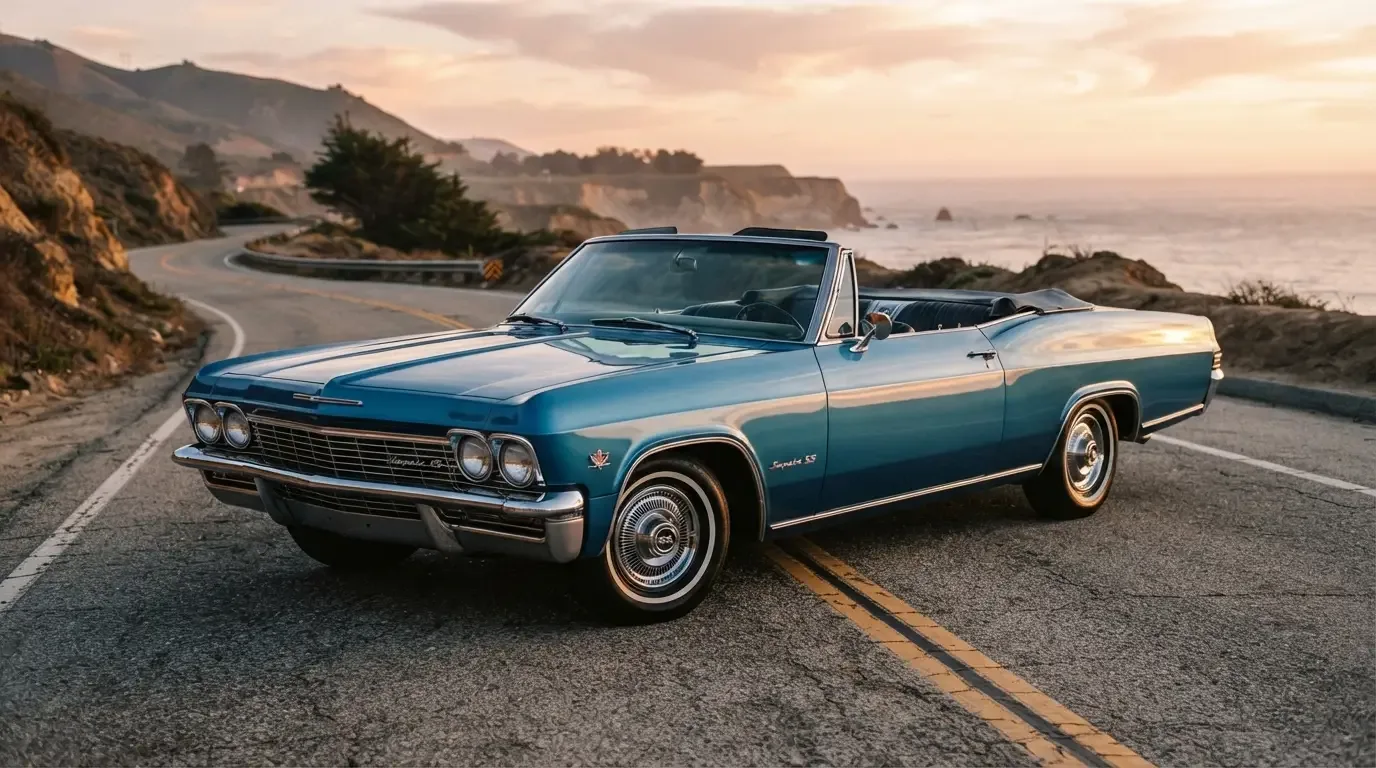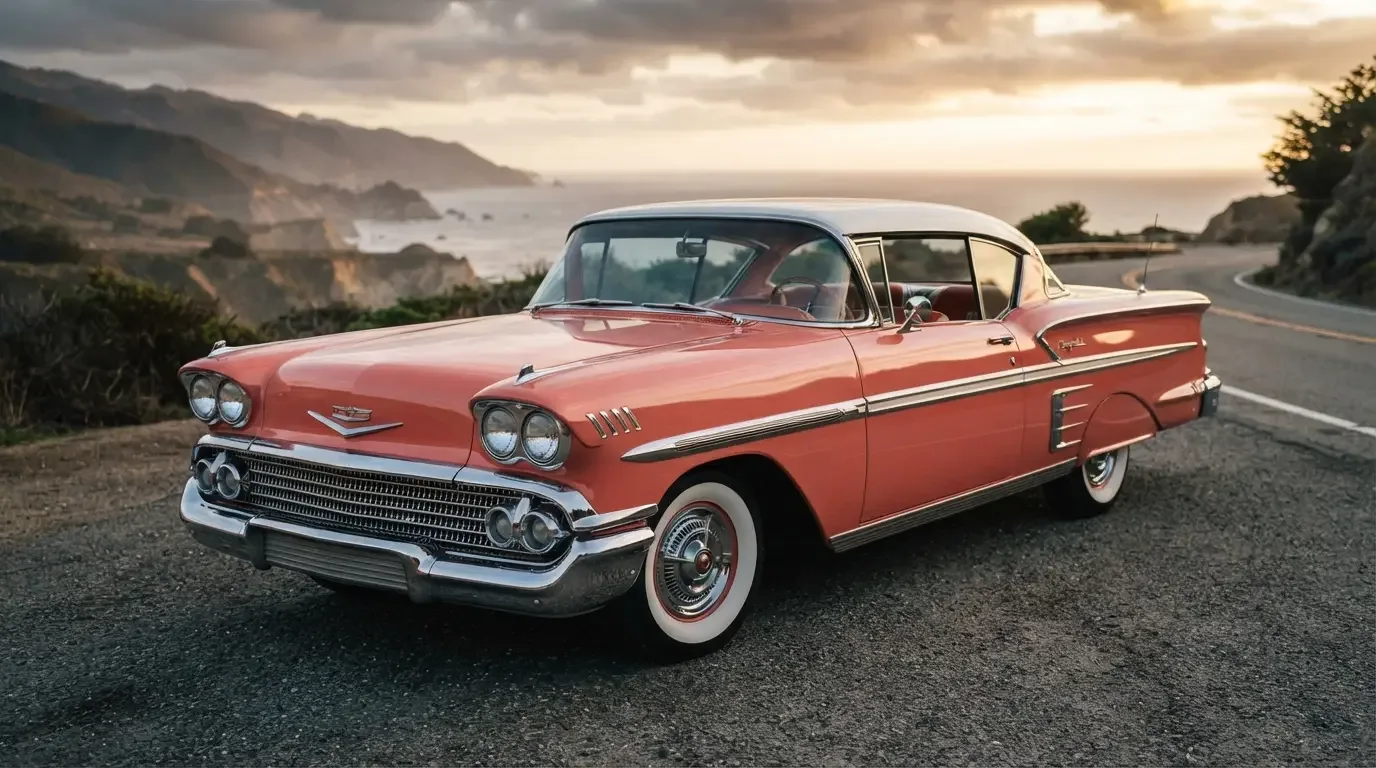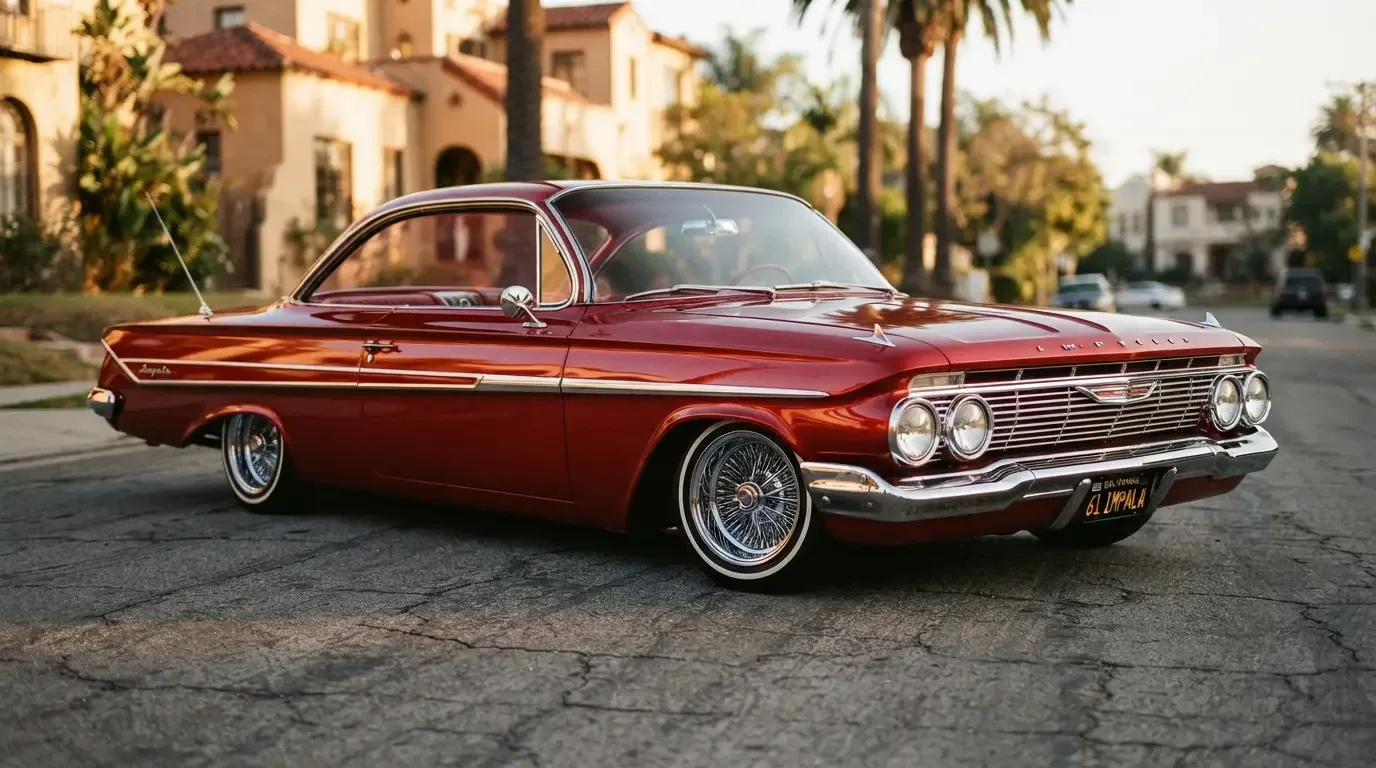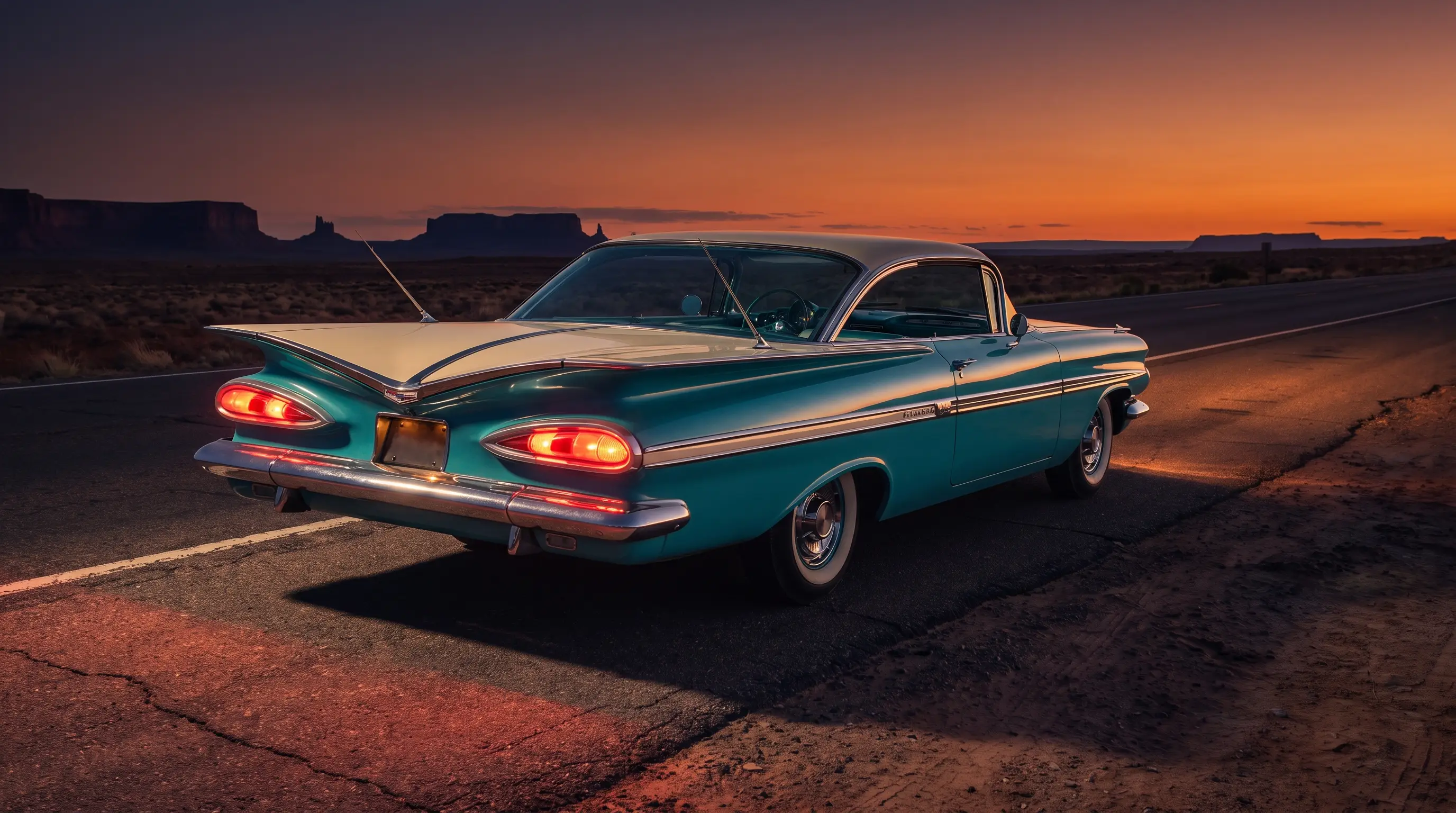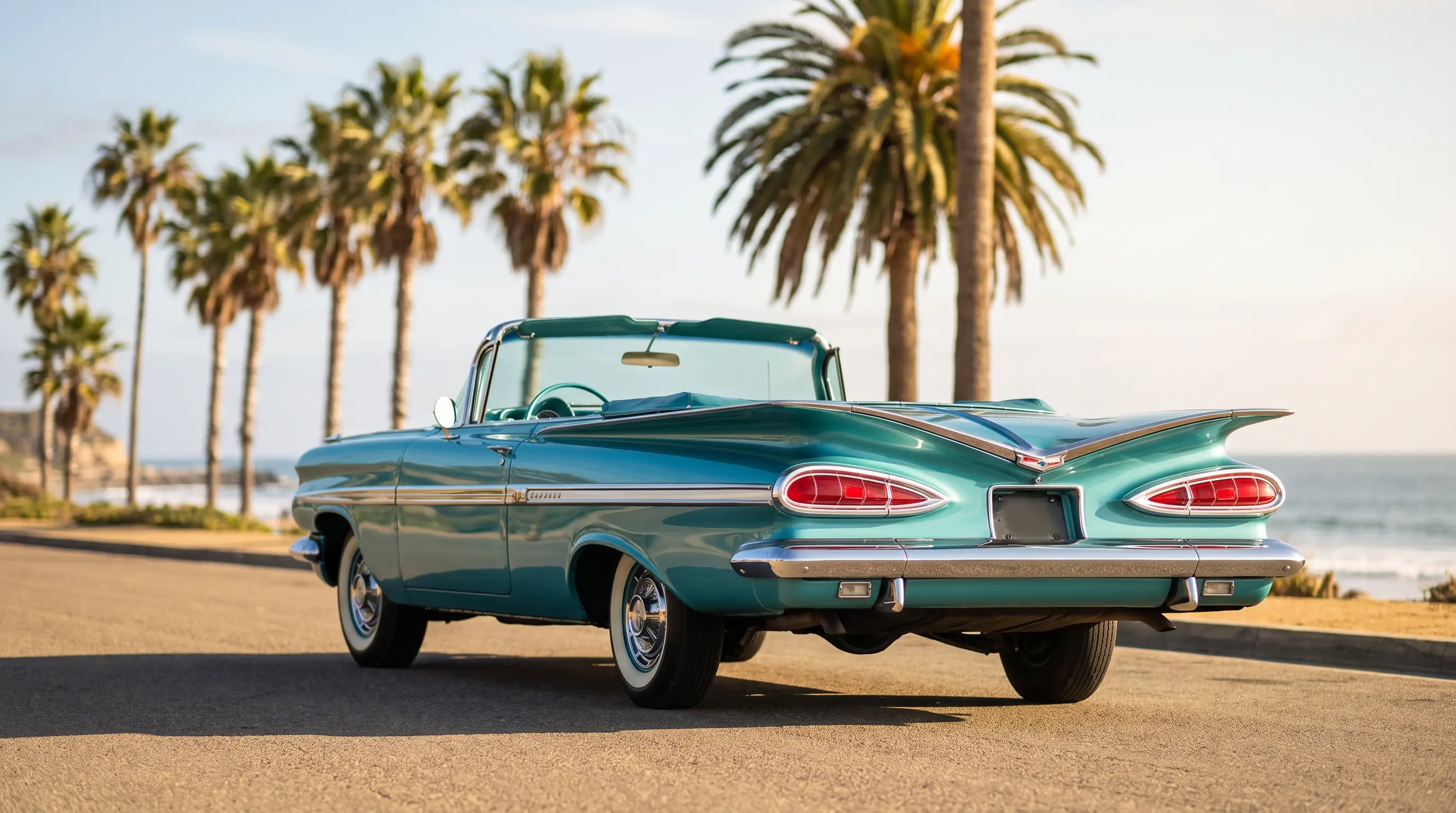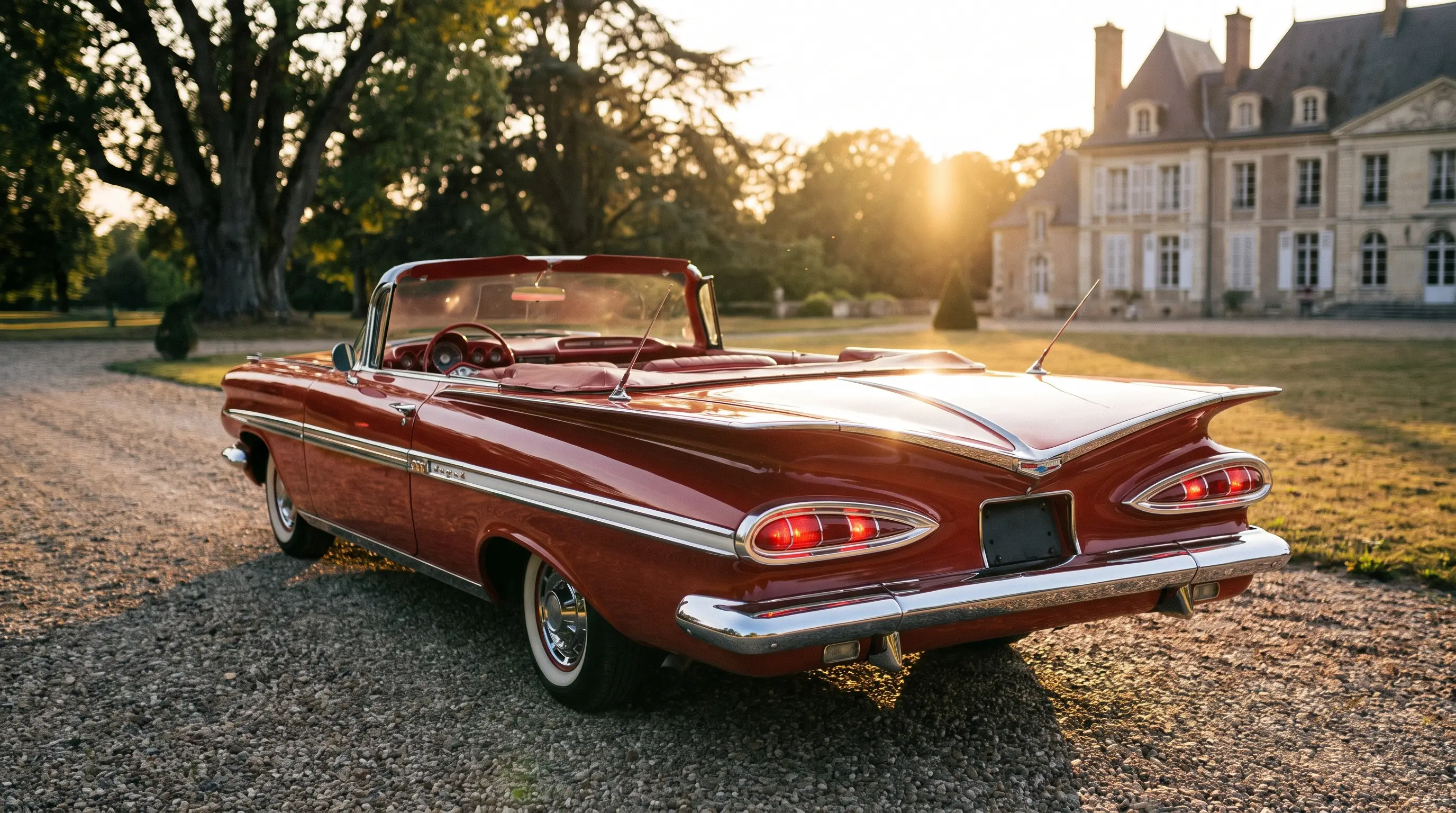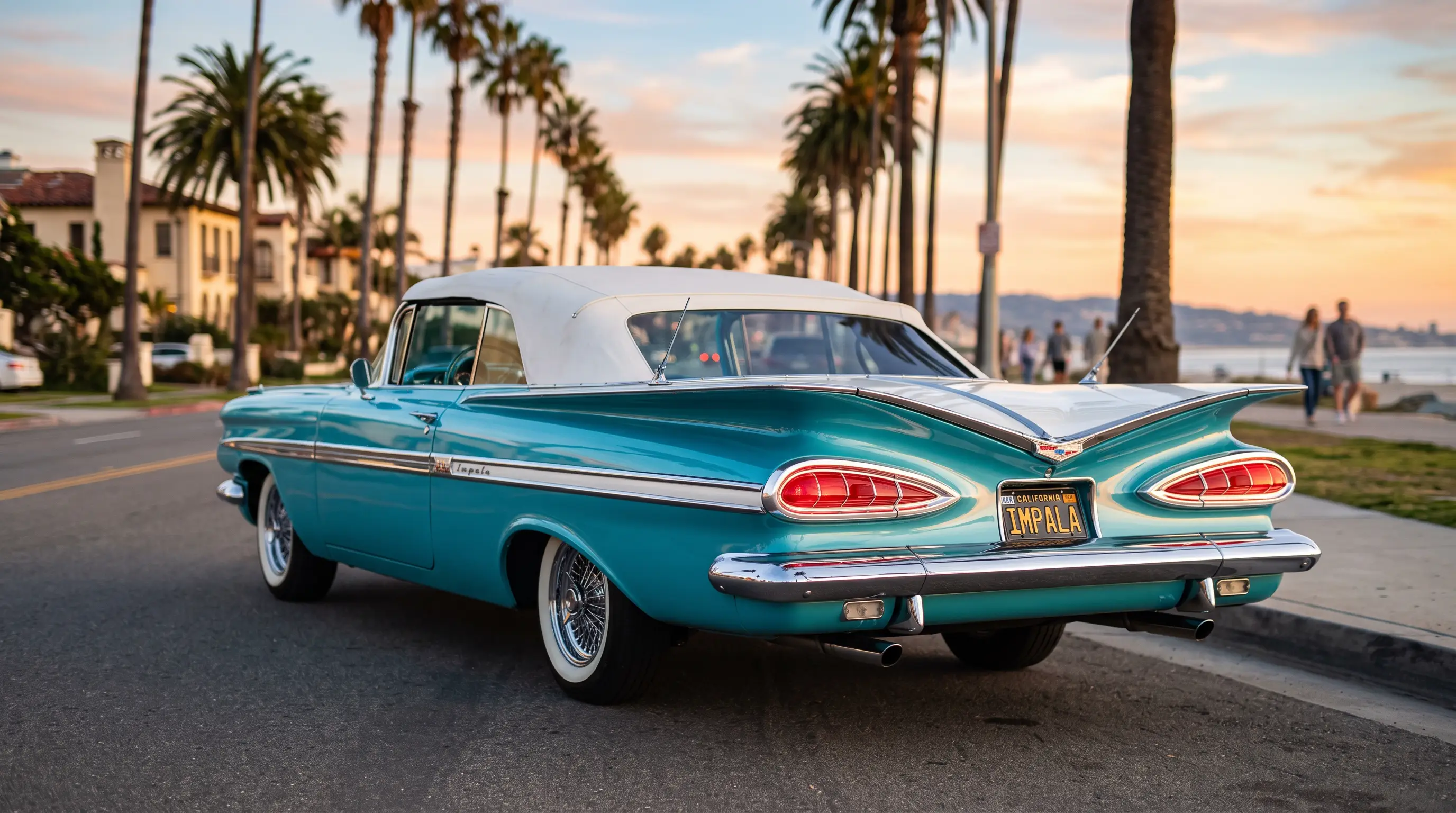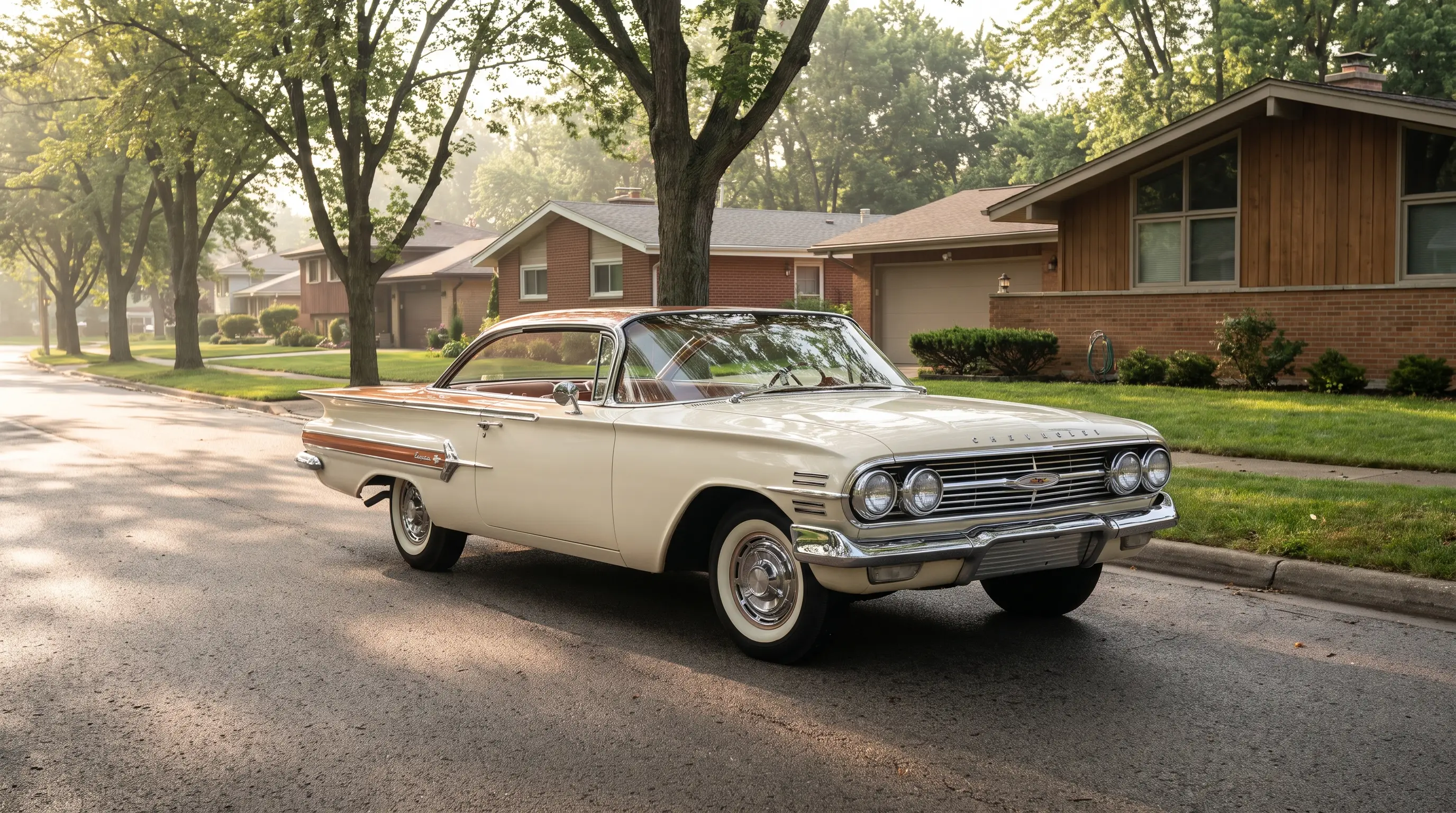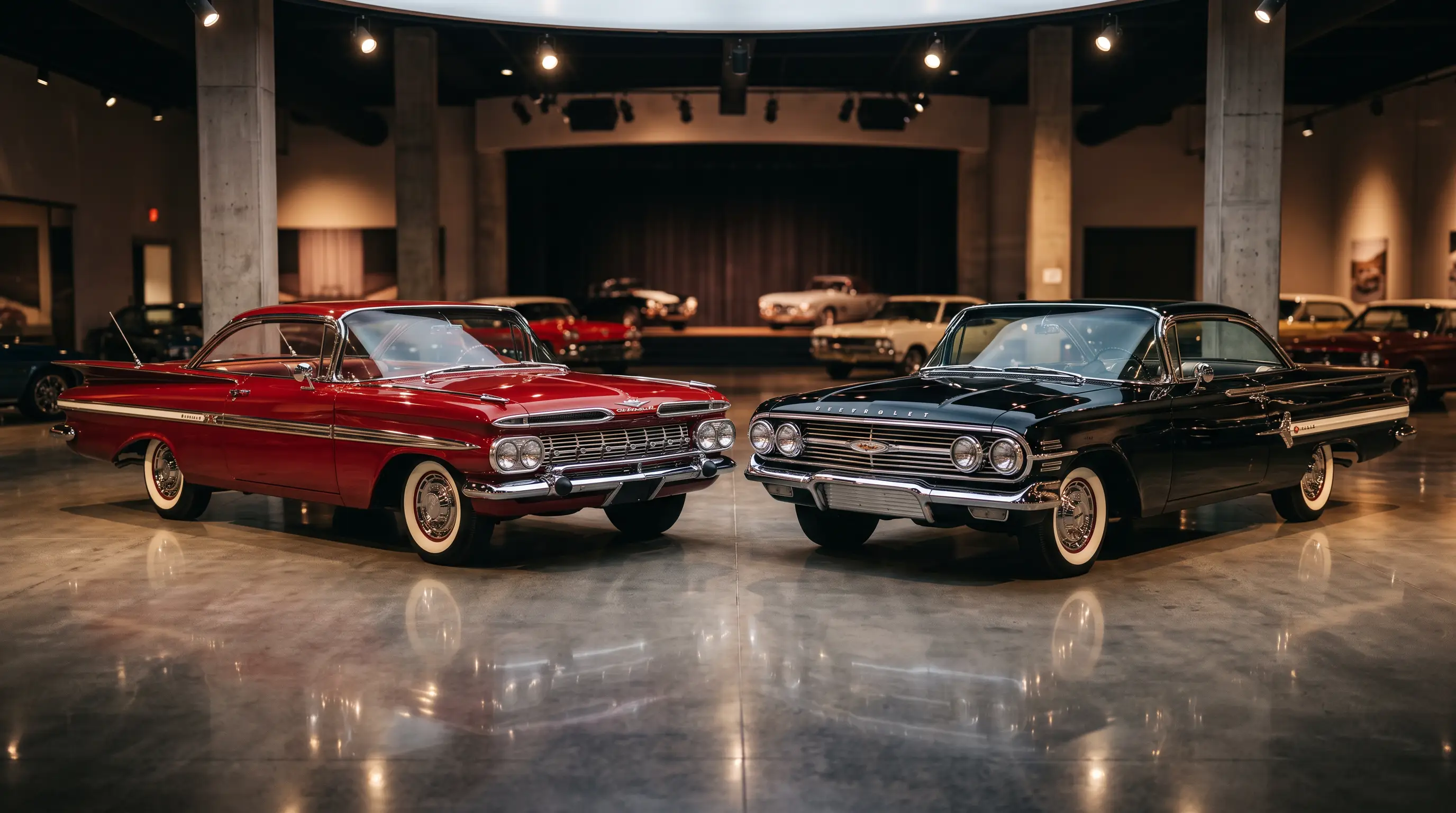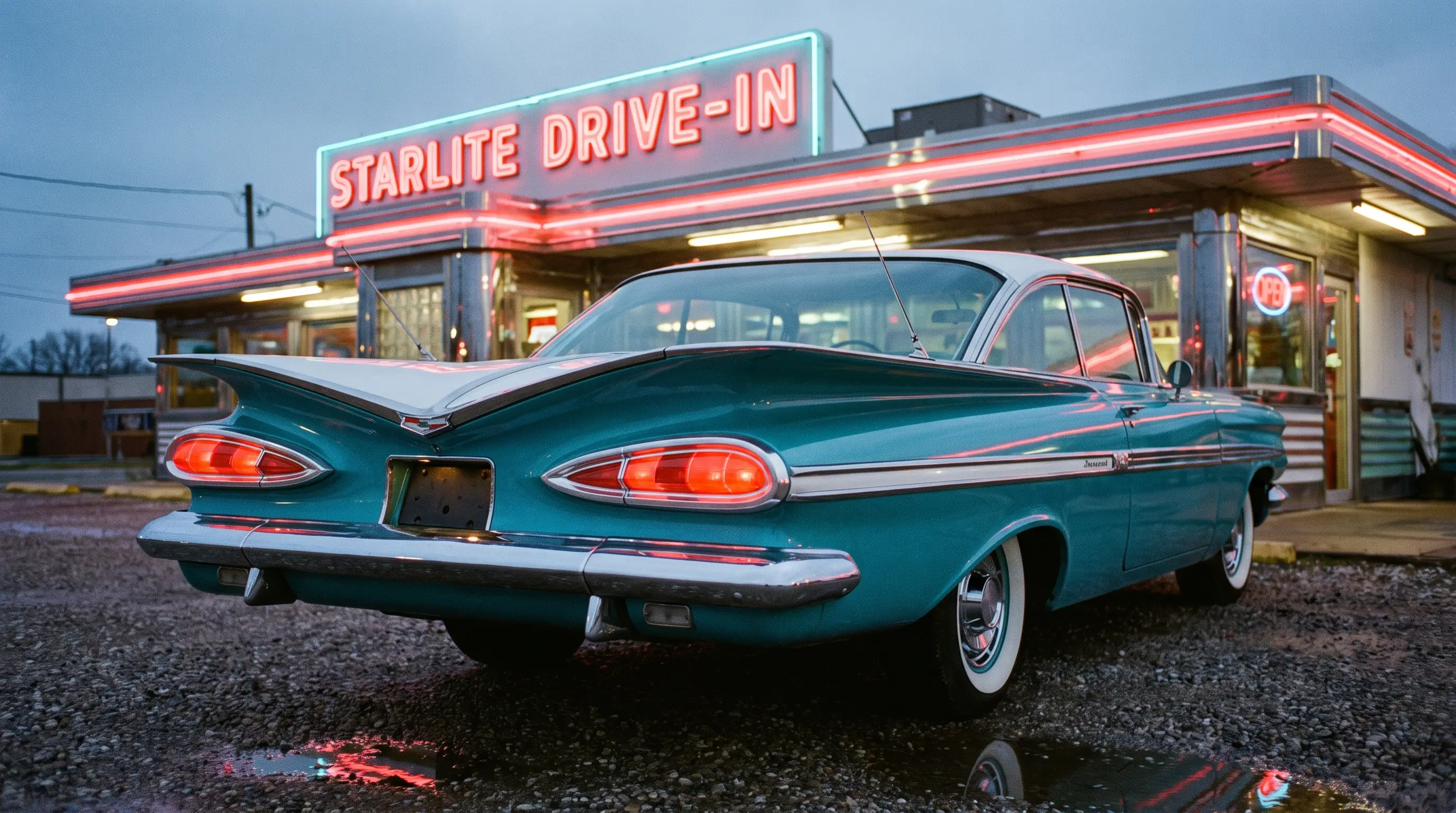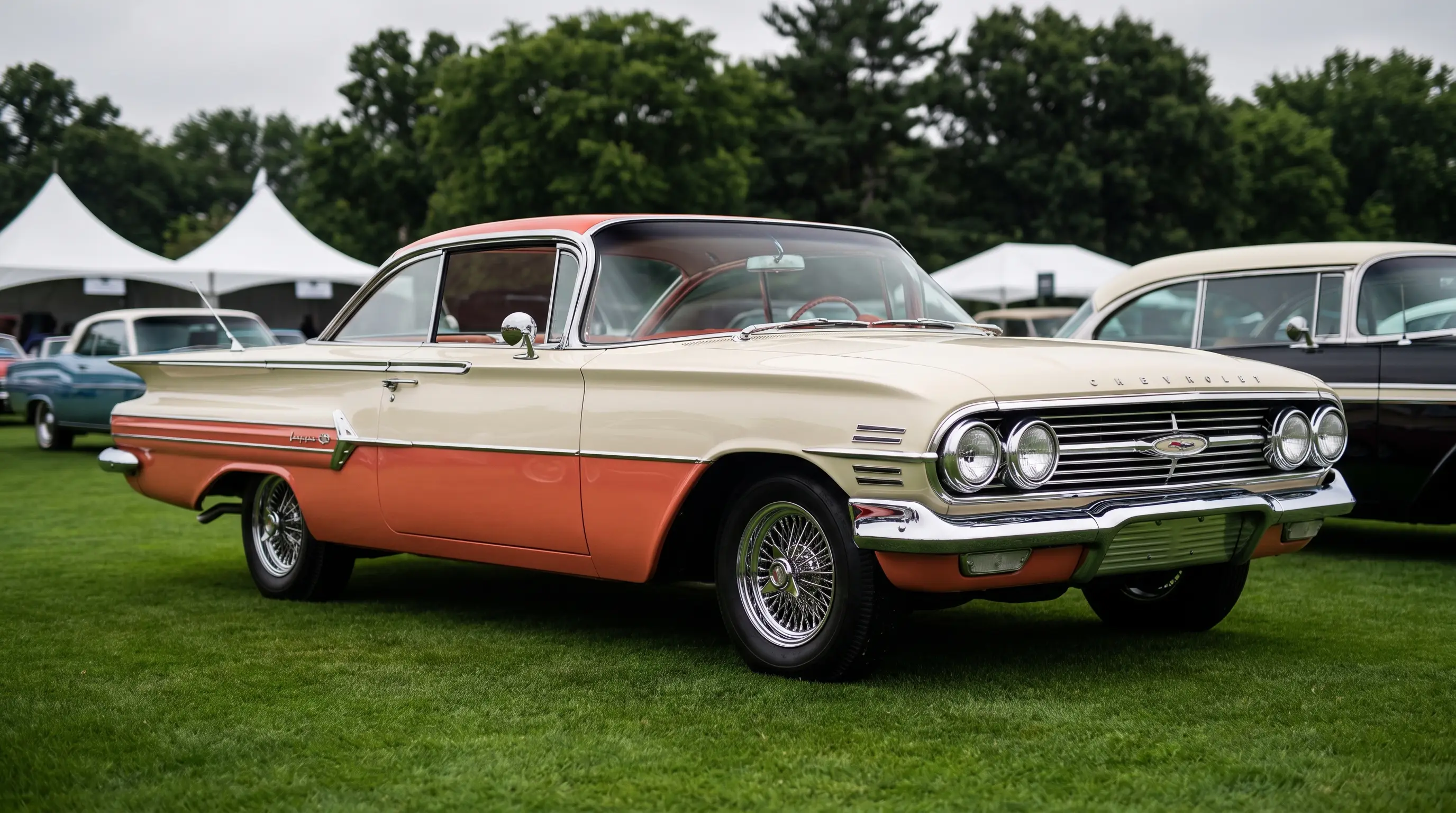
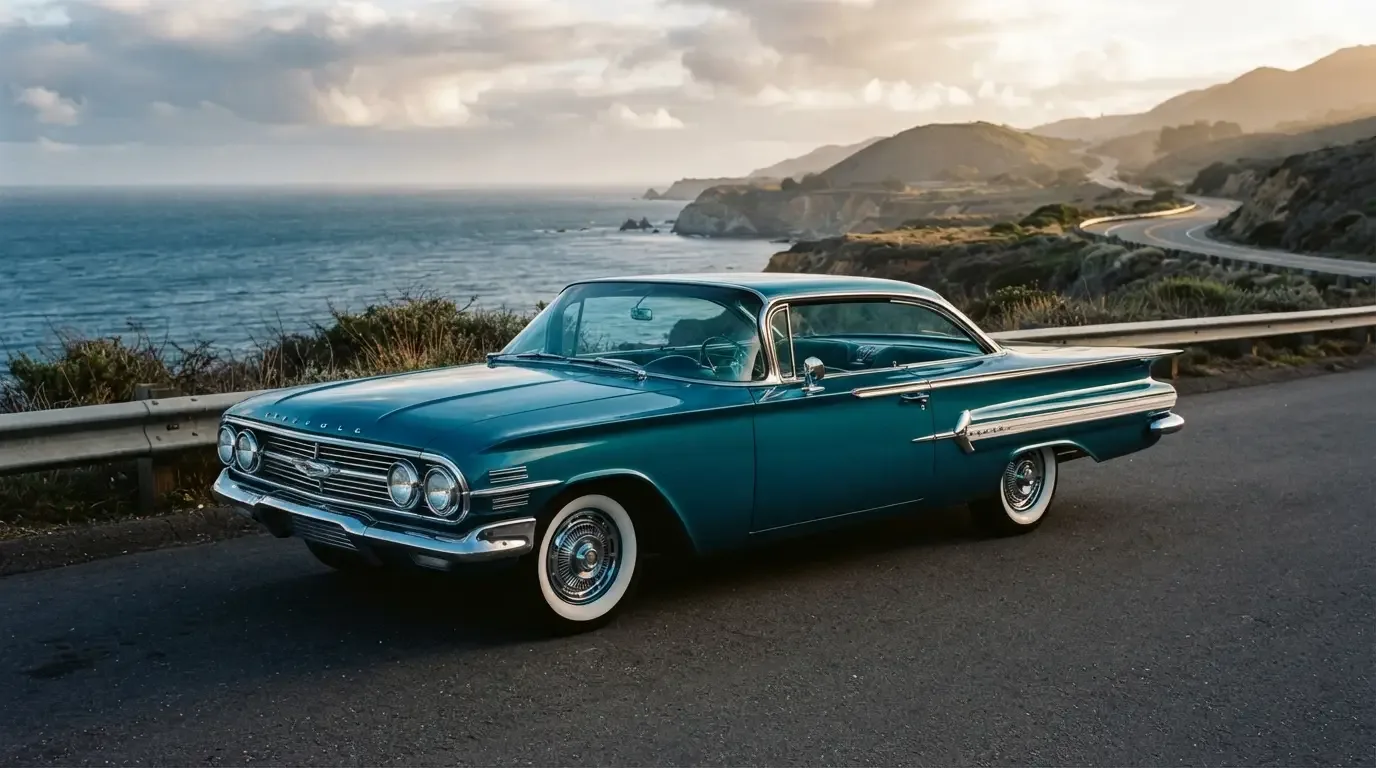
The 1959 Impala is the year the nameplate stopped borrowing and became a series of its own, and it announced that promotion with the most extreme sheet metal Chevrolet ever put into full production. Horizontal batwing fins spread across the rear like a gull in flight, and beneath them sat teardrop taillamps that owners have called cat's-eyes ever since. One year later the same car appeared with its wings clipped and its round triple taillamps restored. Two model years, two very different faces, and a clear lesson in how fast American styling moved at the end of the 1950s.
Anyone tracing the model from the beginning will find that this pair sits right after the one-year 1958 debut, and reading the full the chevy impala story makes the leap from sub-series to standalone easier to follow.
A clean break from 1958
Nothing carried over. For 1959 General Motors redesigned its full-size cars on a shared new body, and the Chevrolet version threw out the rounded, chrome-laden shapes of 1958 in favor of something wider, flatter, and far more theatrical. The car was longer and lower, the glass area was enormous, and the roof on the four-door hardtop floated on thin pillars.
The Impala was now the top series in its own right, no longer a trim on the Bel Air. That change expanded the body catalog. Where 1958 offered only a Sport Coupe and a convertible, 1959 added four-door options, including a sport sedan, alongside the two-door hardtop and the convertible. The Impala had become a full range rather than a single flourish, and that is part of why the year reads as a genuine turning point rather than a facelift.
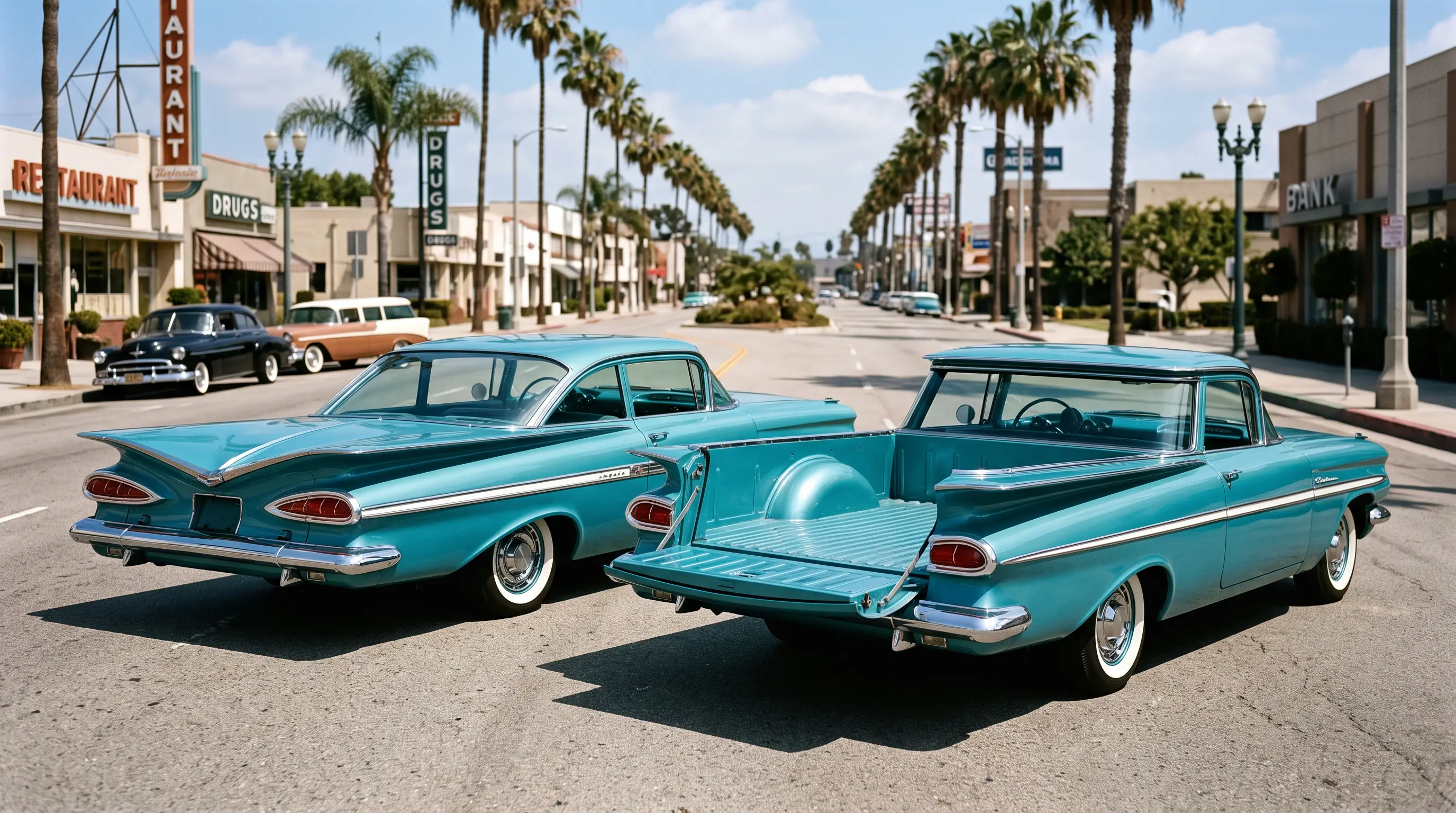
The batwing and the cat's-eye
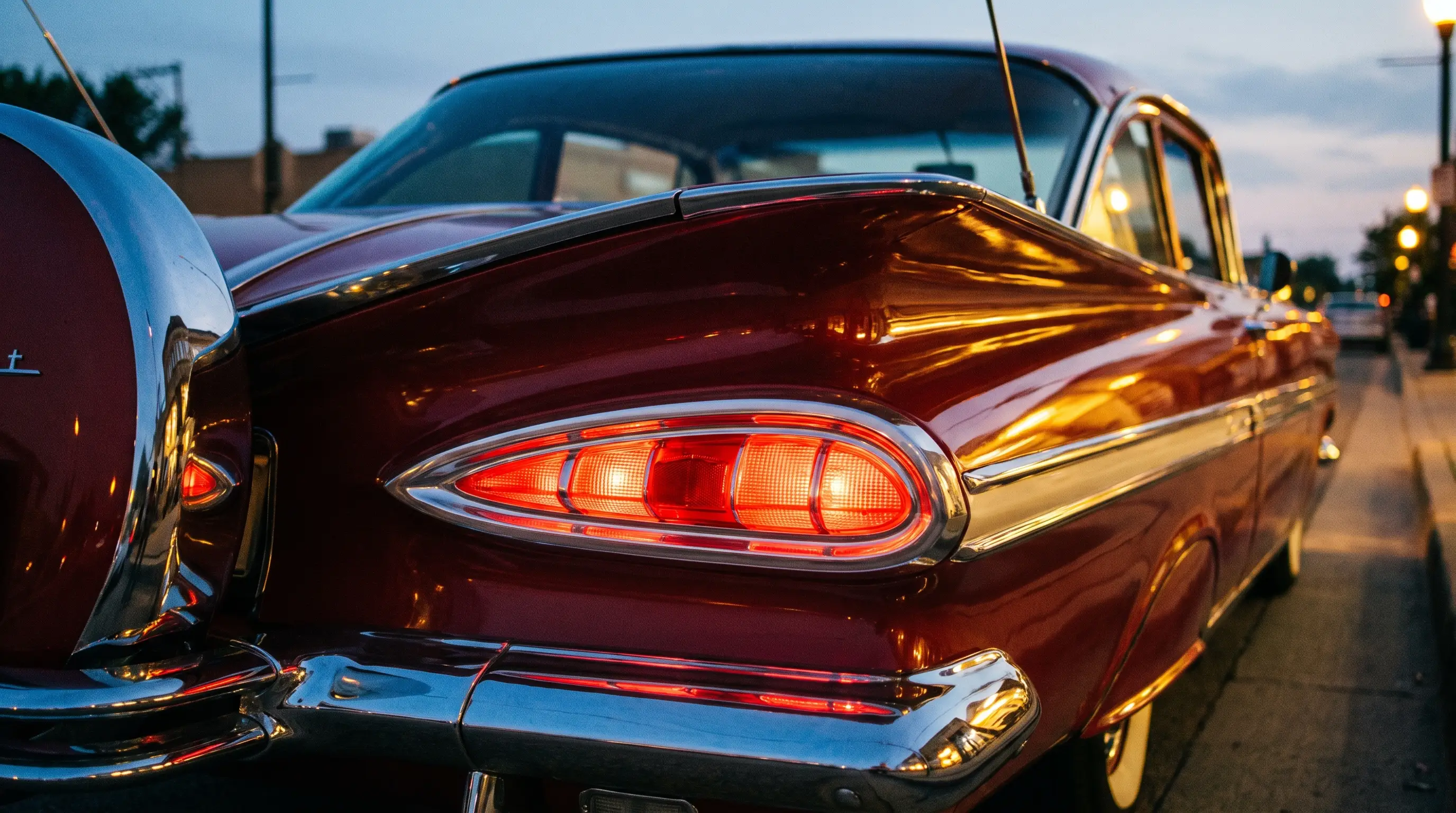
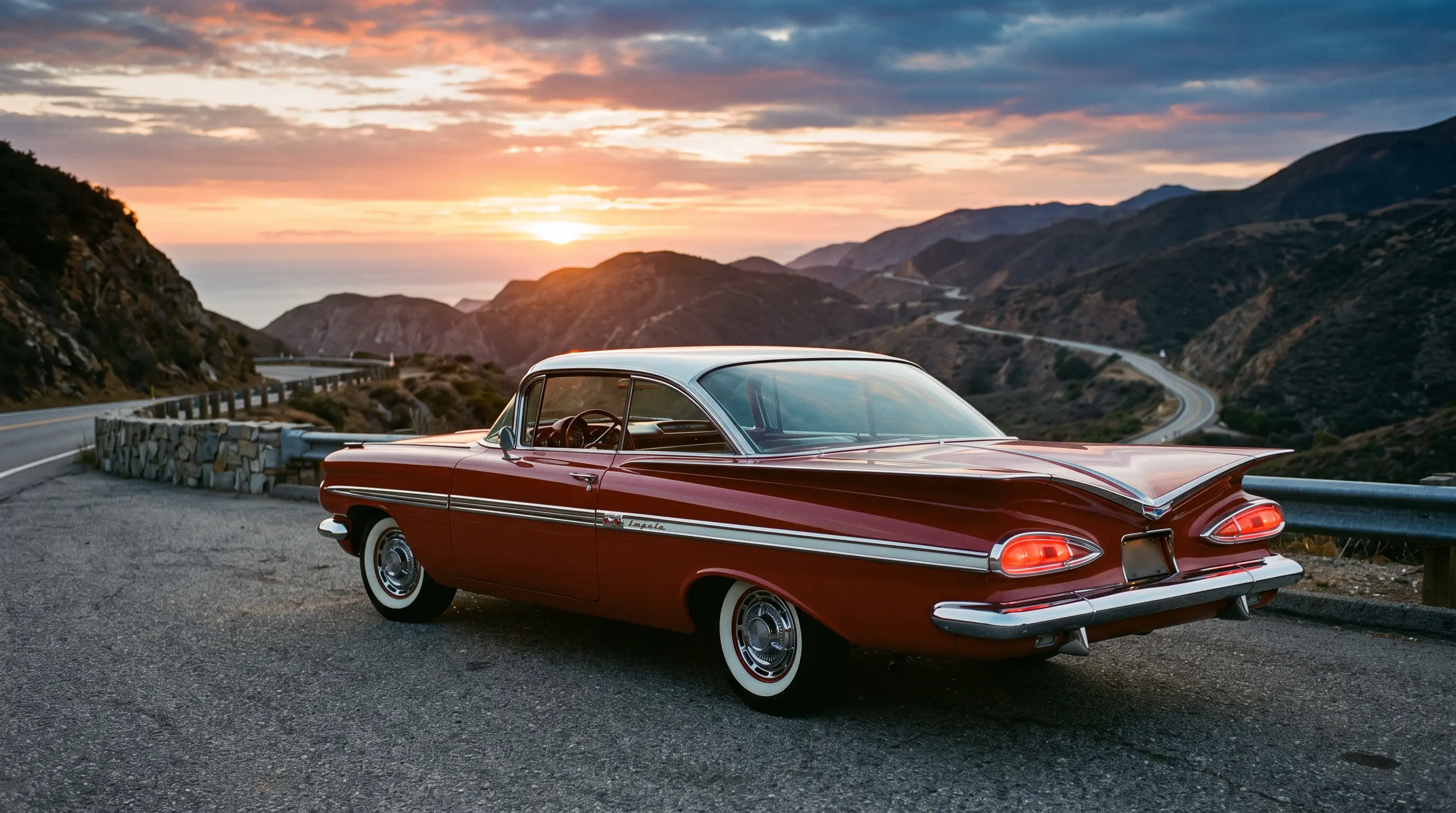
The 1959 rear end is the most discussed styling feature of the entire classic Impala run. The fins did not rise vertically like the tall blades on some competitors. They spread outward and flat, so the back of the car looked as though it had grown wings. Set into the deck below were the taillamps, teardrop-shaped units that gave the car its lasting nickname.
This was styling as spectacle, and it divided opinion immediately. To some period observers the batwing looked ungainly from certain angles. To others it was the boldest thing on the road. Time has been kind to it. The 1959 is now one of the most recognizable American shapes of its decade, and the very excess that unsettled conservative buyers in period is exactly what draws collectors now. A 1959 Impala convertible with the top down is an unmistakable artifact of its exact year, impossible to confuse with anything before or after.
1960: wings clipped, tradition restored
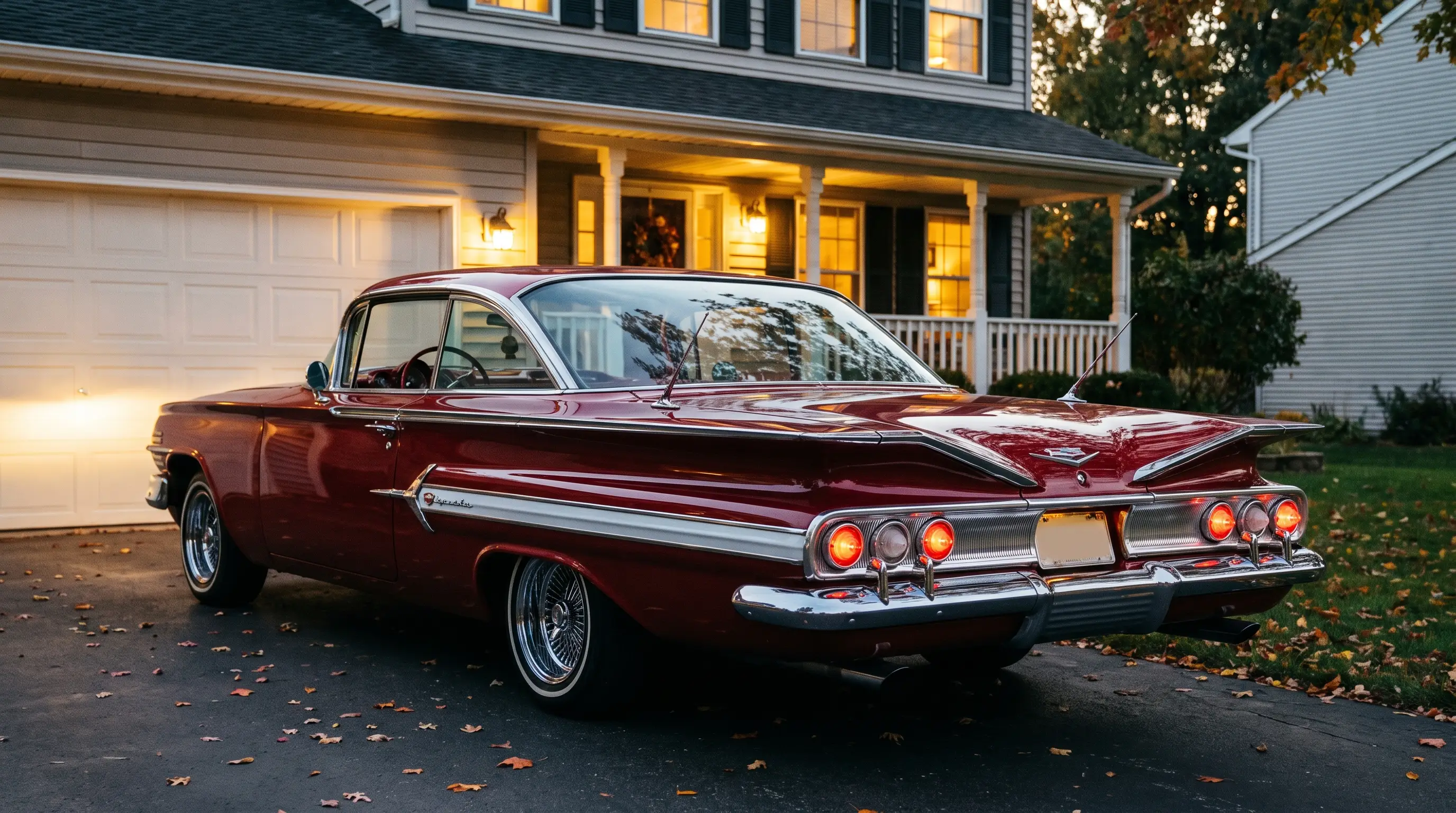
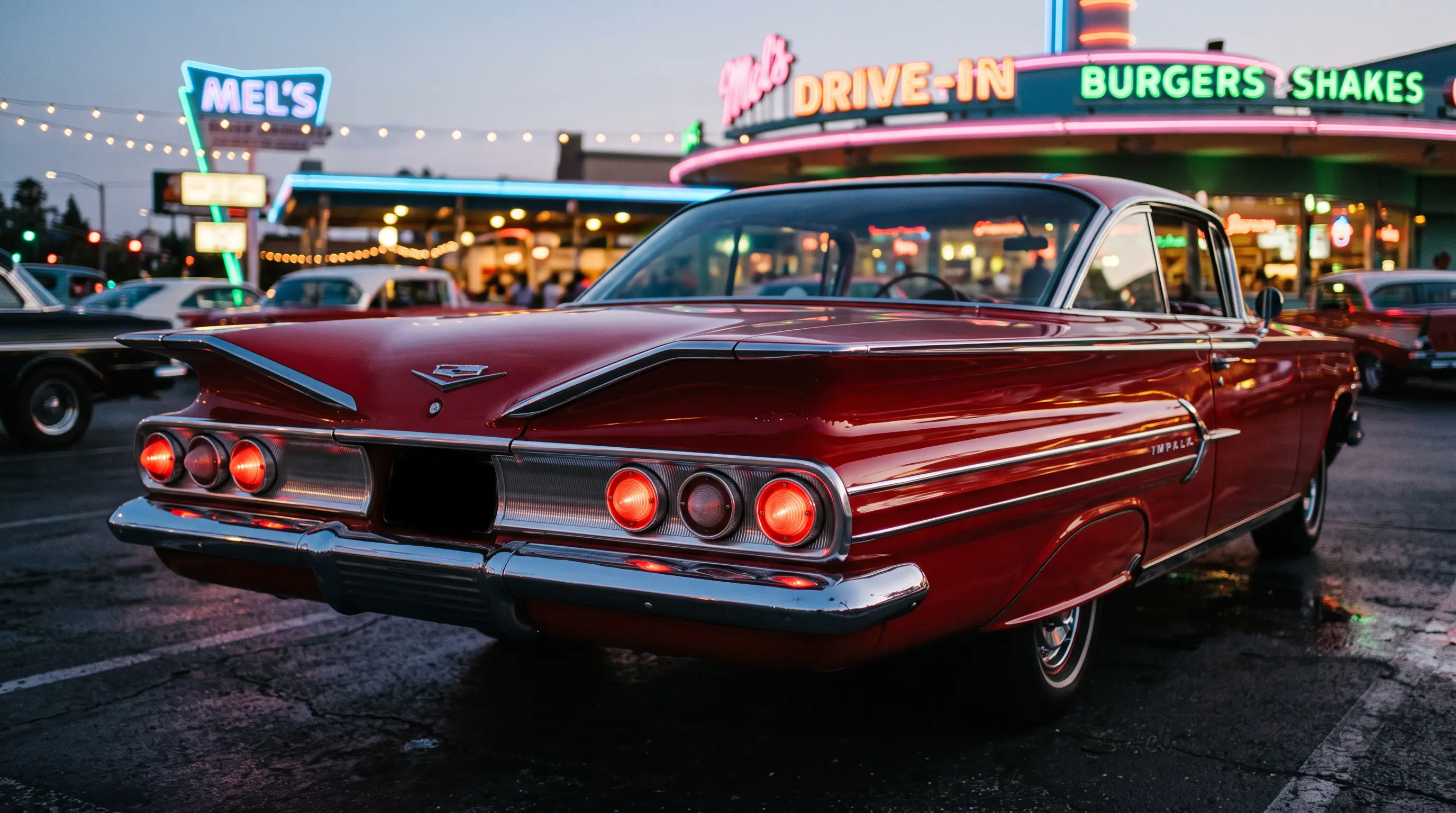
Chevrolet pulled back for 1960. The batwing fins were softened into a more conventional horizontal line, and the teardrop taillamps were replaced by round lamps: three per side, six in total, restoring the triple-taillight identity that the 1958 car had introduced and that would define the Impala for years. The 1960 car is calmer, more resolved, and in the eyes of many observers better balanced, even if it lacks the shock value of the 1959.
That contrast is the heart of the 1959 to 1960 story. The two years share a basic body but read as different characters. 1959 is the flamboyant statement, 1960 the settled follow-up. Collectors tend to sort themselves by temperament: those who want the boldest possible expression chase the batwing, while those who prefer restraint and the return of the round lamps favor the 1960. Both are correct, which is what makes the pair interesting to study side by side.
| Attribute | 1959 | 1960 |
|---|---|---|
| Rear styling | Flat batwing fins | Softened horizontal line |
| Taillamps | Teardrop cat's-eye | Round, three per side |
| Series status | Standalone top series | Standalone top series |
| Body styles | 2-door hardtop, convertible, 4-door hardtop and sedan | Same core range |
| Top V8 family | 348 W-block available | 348 W-block available |
| Character | Flamboyant statement | Restrained follow-up |
Engines and the running gear underneath
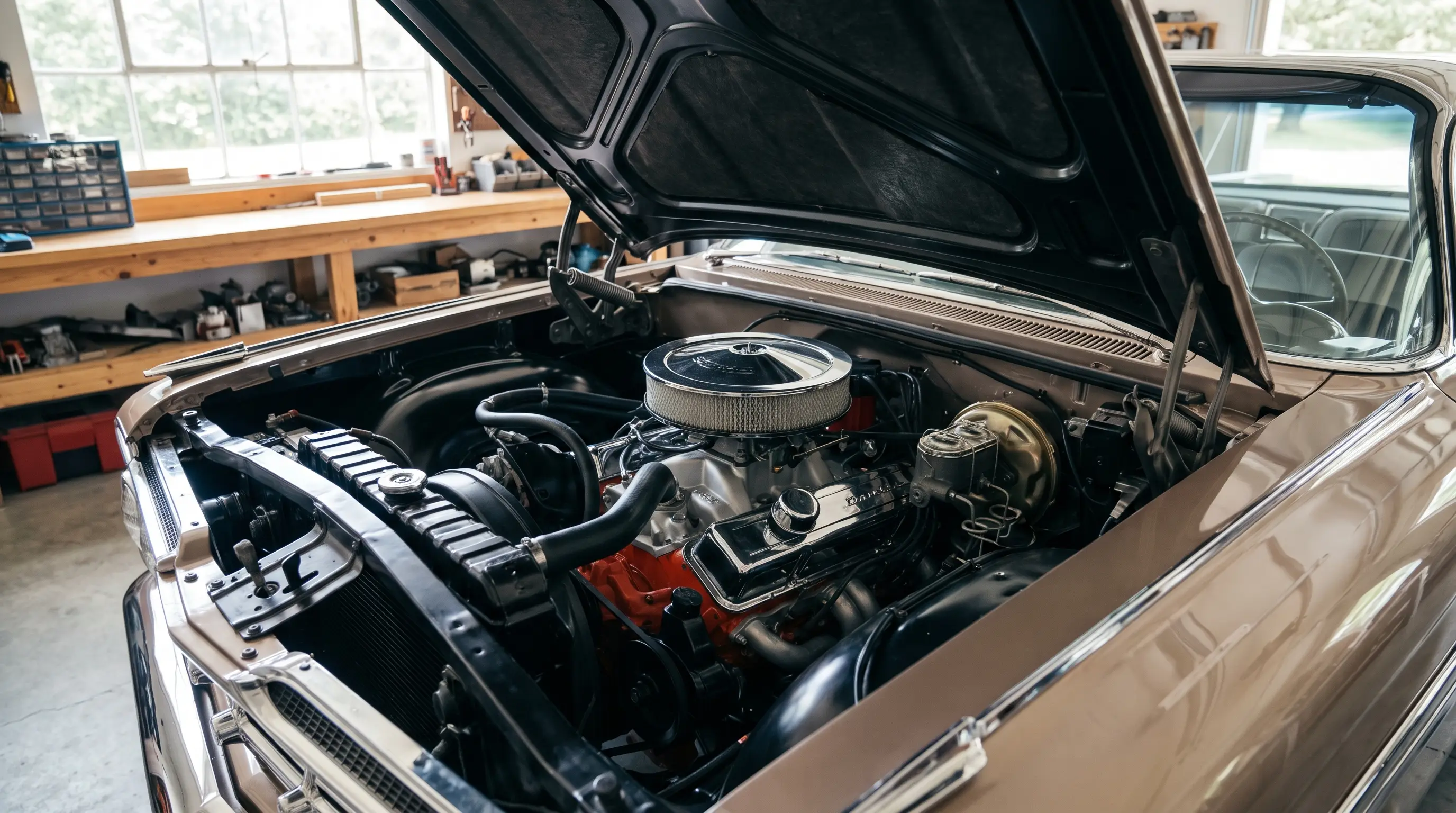
Mechanically the 1959 and 1960 cars continued the range that the model had established. The inline six remained the economy choice, the 283 small-block was the volume V8, and the 348 cubic inch W-block sat at the top for buyers who wanted the most performance the full-size line offered. For 1959 the 348 came in two factory forms, a 250 hp version with a single four-barrel carburetor and a 280 hp version with triple two-barrels. For 1960 the range widened to as many as five versions, from a 250 hp single four-barrel up through 305 and 320 hp four-barrel variants and a top 335 hp triple two-barrel Special Super Turbo-Thrust. Any specific horsepower figure on a survivor should still be verified against the car's own paperwork rather than assumed from a brochure.
The shared GM body of these years also underpinned other cars in the corporation's lineup, which is why the 1959 to 1960 Chevrolets feel so much larger and wider than the 1958. The platform was designed to spread across divisions, and Chevrolet's interpretation used it to make the Impala feel like the flagship it was now marketed as. For a buyer, the takeaway is that these are big, heavy, comfortable cars whose appeal is presence rather than agility.
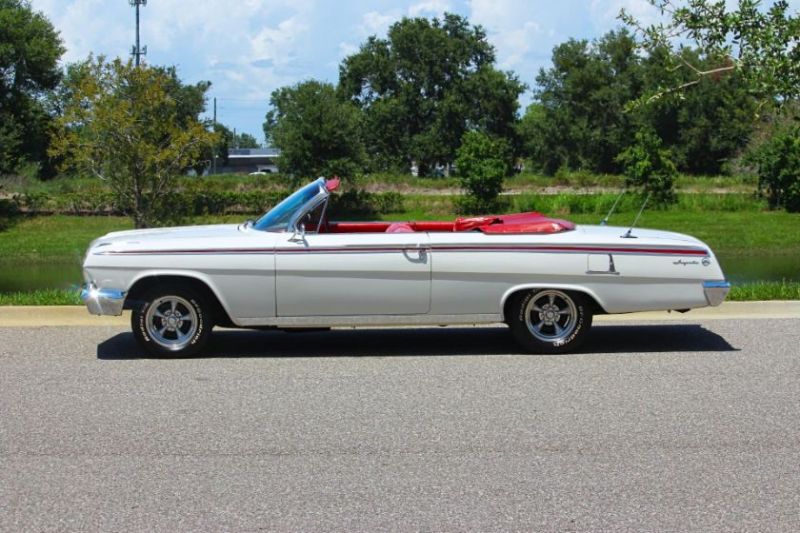
The convertible deserves a separate note. In both years the drop-top Impala was the halo body style, and it framed the styling extremes better than any closed car could. A 1959 convertible with the top folded shows the full width of the batwing deck, while a 1960 convertible lets the round taillamps and cleaner lines breathe. These are the examples that tend to lead the market for the two years, and they are also the ones most often restored, which makes documentation and correct trim all the more important when one comes up for sale.
Interiors, color, and the mood of a boom year
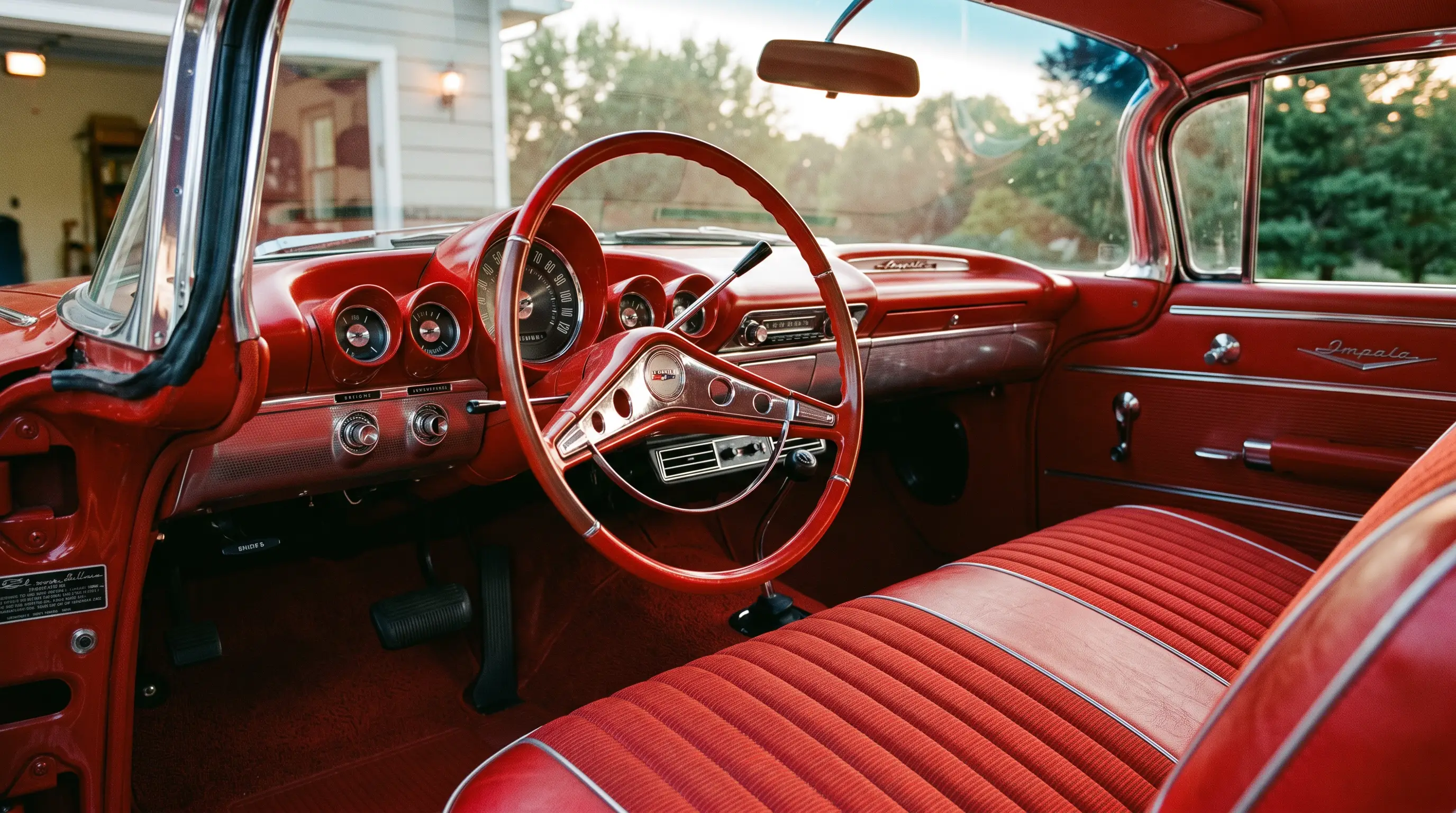
The cabins of the 1959 and 1960 Impalas matched the ambition of the sheet metal. Wide, flat dashboards, deep bench seats, and generous chrome accents inside made these cars feel like the flagships Chevrolet now marketed them as. The 1959 in particular carried a sense of theater indoors as well as out, with a broad instrument panel that stretched across the width of the enormous cabin. Correct interior materials and patterns are period-specific to each year and, as with any car of this age, are a primary check for a researcher trying to confirm originality.
Color tells its own story. The end of the 1950s was a high point for adventurous factory paint, and both years offered bright single tones and two-tone combinations that suited the flamboyant bodywork. A 1959 finished in a soft period color reads very differently from the same car in a bold hue, and original paint codes help place a survivor in its real context rather than a later owner's taste. These were optimistic cars sold at an optimistic moment, and the way they were finished reflects it.
The scale is worth pausing on. These are physically large automobiles, among the widest passenger cars Chevrolet ever built, and everything about them, from the acreage of glass to the sweep of the dashboard, was designed to feel expansive. That sense of space is a defining artifact of the exact economic mood at the turn of the decade, when American full-size cars reached a kind of maximum before tastes began to shift toward the trimmer shapes of the early 1960s.
Collecting the pair: what to weigh
For collectors, the 1959 and 1960 Impalas present a clean choice of personality backed by broadly similar mechanicals. The 1959 tends to command attention precisely because of its extreme styling, and convertibles in that year are among the most sought-after full-size Chevrolets of the era. The 1960, quieter and arguably more elegant, offers much of the same experience with the round taillamps that tie it to the rest of the Impala lineage.
Documentation and originality matter as much here as with any 1950s Chevrolet. Correct trim, correct interior materials, and a drivetrain that matches the car's claimed specification separate a well-kept survivor from a car that has been assembled from parts over the decades. Buyers who want to see how the two years are priced against each other can browse classic Impala listings and compare a batwing car directly with its restrained successor.
There is also a practical dimension to owning either year. These cars are enormous, and parts that are specific to a single model year, from the 1959 teardrop lamp lenses to correct 1960 trim, can be harder to source than the shared mechanical components underneath. That reality rewards buying the most complete and original car available rather than a cheaper project that will need year-specific pieces later. For a collector, a sorted 1959 or 1960 is almost always a better proposition than a bargain that is missing the very trim that defines its year.
Two years, one hinge in Impala history
For collectors, the two years together tell a story about how quickly American design could change direction. In the space of a single season Chevrolet went from the most flamboyant rear end it ever built to a measured revision that pulled the whole car back toward convention. That kind of rapid course correction was normal at the time, when annual restyles were a competitive weapon and a shape could be celebrated one year and quietly walked back the next. Studying the 1959 and 1960 side by side is one of the clearest lessons available in just how restless the industry was.
The lasting verdict has been generous to both. The 1959 is now prized precisely for the excess that made conservative buyers hesitate when it was new, and the 1960 is respected for the balance that made it the more resolved car. Neither has to lose for the other to win. A collector who owns one often ends up wanting the other, because the pair completes a single chapter rather than competing for the same shelf. That is unusual, and it is part of what keeps interest in these two years alive well into their seventh decade.
The 1959 Impala is the moment the name grew up, took the top spot in the lineup, and dressed for the occasion in the most daring sheet metal Chevrolet dared to build. The 1960 is the moment it learned restraint and reclaimed the taillamps that would follow it through the 1960s. Studied together, they show a company testing how far it could push style before settling into the identity that carried the Impala into its most collected era. If that later era is where your interest lies, the early 1960s bubble-top and Super Sport cars are another one worth knowing.
"Put a 1959 and a 1960 Impala side by side and you are looking at a single body wearing two philosophies. One shouts, one composes itself, and the taillamps tell you exactly which conversation each car was built to have."
- Sarah Whitfield