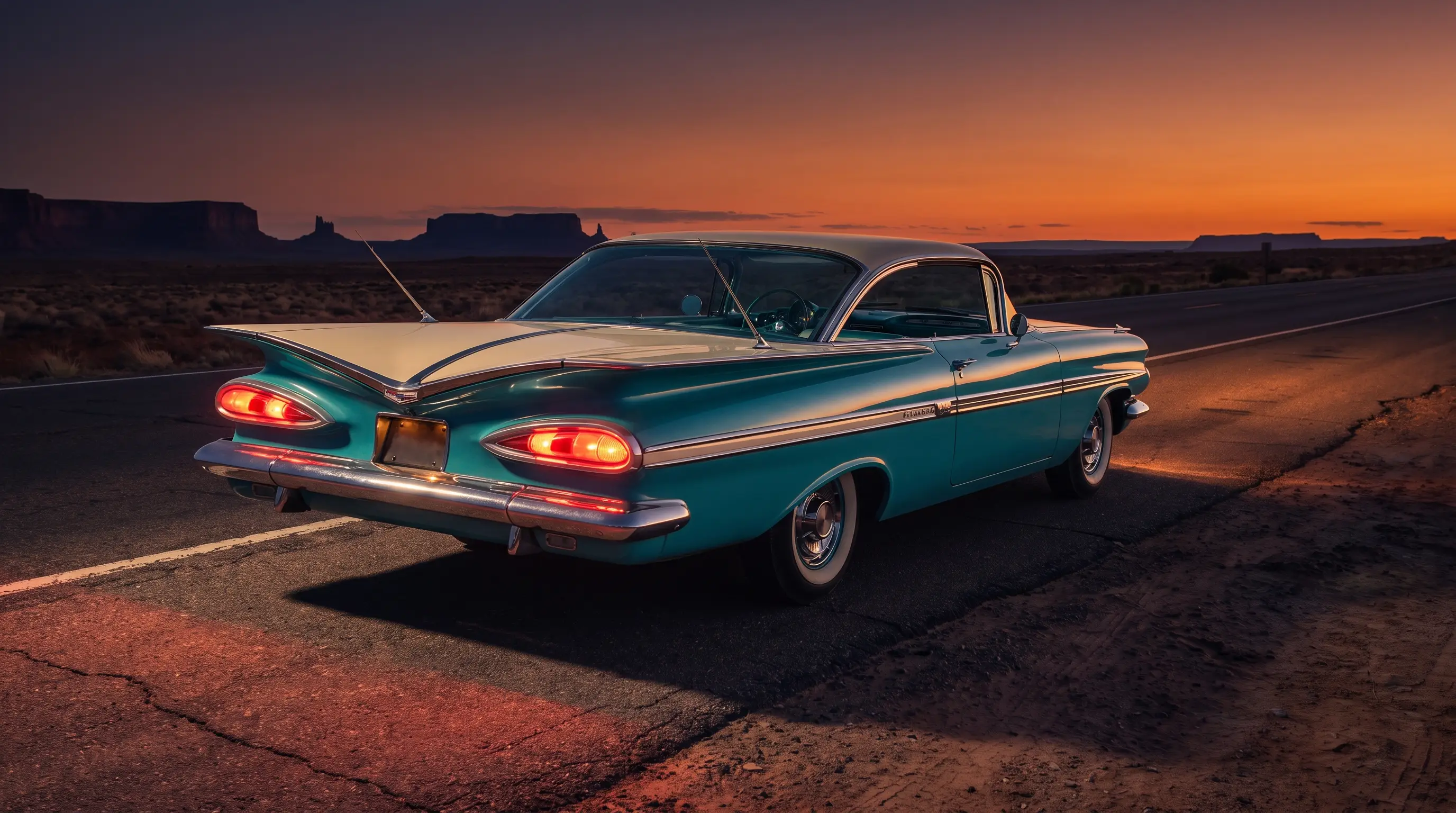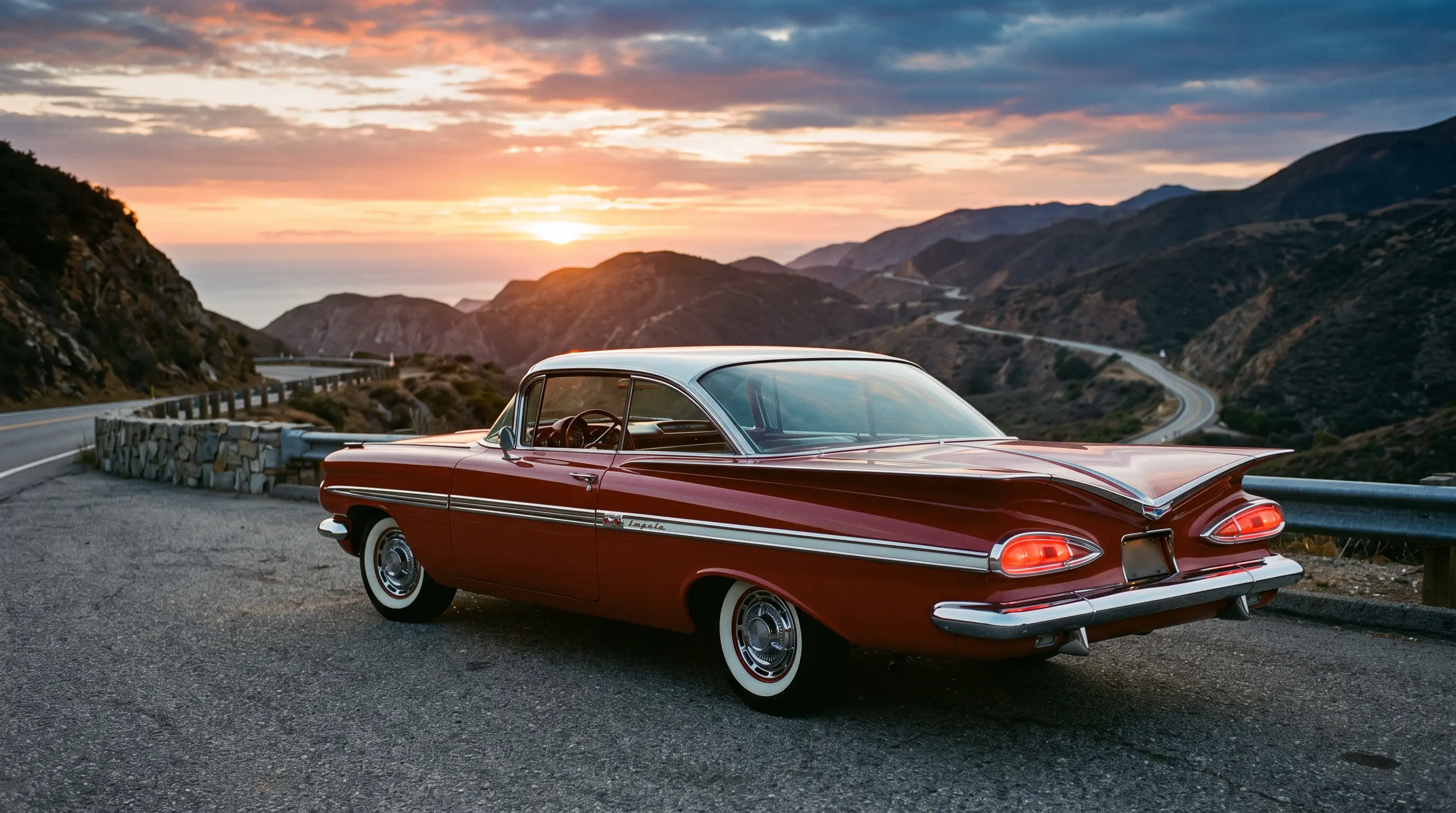
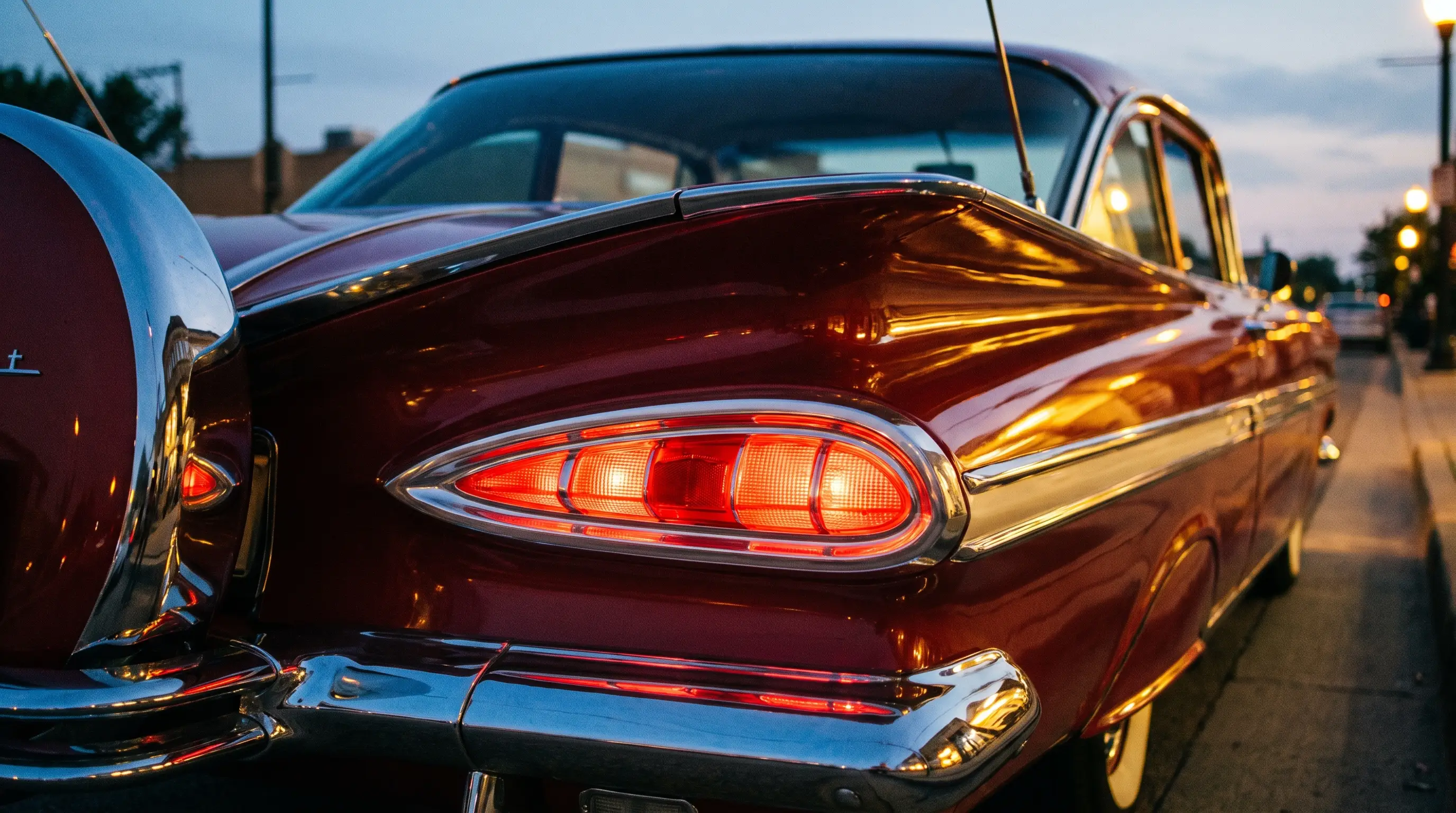
Look at a 1959 Chevrolet Impala from the rear and the first thing your eye finds is not the fin, not the chrome, not even the sheer width of the car. It is the taillights. Two elongated red lenses, canted at the outer edge of each bat-wing fin, catching the shape of an almond or, as several generations of Chevrolet enthusiasts have insisted, a cat's eye. The 1959 Impala cat eye taillights are one of the most recognized design details in American automotive history, and they lasted exactly one model year before Chevrolet moved on to something else entirely.
That single-year existence is part of what makes them fascinating. General Motors design studios in the late 1950s worked at a pace that would give a modern product planner an ulcer. A full-size Chevrolet could go from clay model to showroom floor in under two years, and styling themes that seemed permanent one September were gone the next. The cat's eye taillight belongs to that world: a design decision made under pressure, deployed once, and then retired before most buyers had finished their first oil change.
Why the shape looks like an eye
The 1959 full-size Chevrolet, Impala included, wore what GM's stylists nicknamed the "bat-wing" rear fin, a horizontal fin that swept outward from the beltline rather than rising vertically the way 1957 and 1958 Chevrolets had done. Fitting a taillight into that new geometry meant the lens could no longer be a simple round or oval unit stuck on a vertical panel. The fin's trailing edge was long, thin, and swept back, so the lens followed the same line: narrow, pointed at both ends, wider in the middle. Under the fin's overhang the lens sat in shadow for much of the day, which made the shape read even more like a slitted pupil when the sun caught it at an angle.
Chevrolet's own literature at the time did not use the phrase "cat's eye." That name is folklore, applied by owners and later by writers covering the era, and it stuck precisely because it fits so well. The factory called the styling theme things like "jet-age" or referenced the "Sculpturamic" body language shared across the 1959 GM lineup. The cat's eye label is retroactive branding by the people who loved the car, which in the collector world often counts for more than what the factory called it.
How the Impala's lights differed from lesser Chevrolets
Every full-size 1959 Chevrolet, from the entry Biscayne to the Bel Air, wore some version of the bat-wing fin and its associated taillight. What separated the Impala, which for 1959 graduated from a Bel Air sub-model into its own top-line series, was trim rather than lens shape. Impala models carried extra brightwork around the taillight housing, a wider chrome surround, and additional ornamentation on the rear deck that lesser trims skipped. The lens itself, in terms of shape and lighting function, was shared across the line, but the way it was framed told a buyer at a glance which car they were looking at.
This is a pattern worth remembering across the whole GM full-size range in this period: base engineering and body stampings were shared to control cost, while trim level did the work of signaling status. The Impala's cat eye housing, dressed in extra chrome, was one more place where Chevrolet reminded a customer they had paid for the nicer car.
One year only, and why it did not return
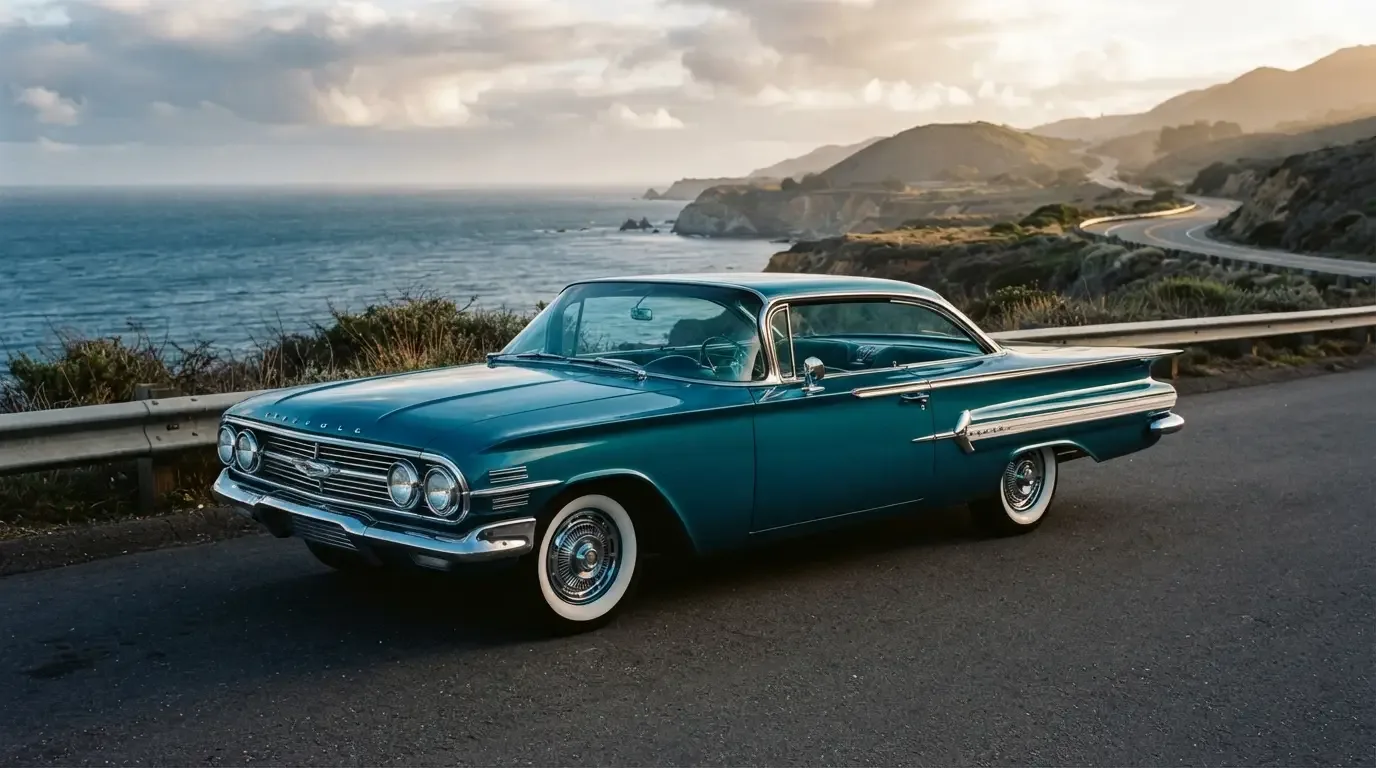
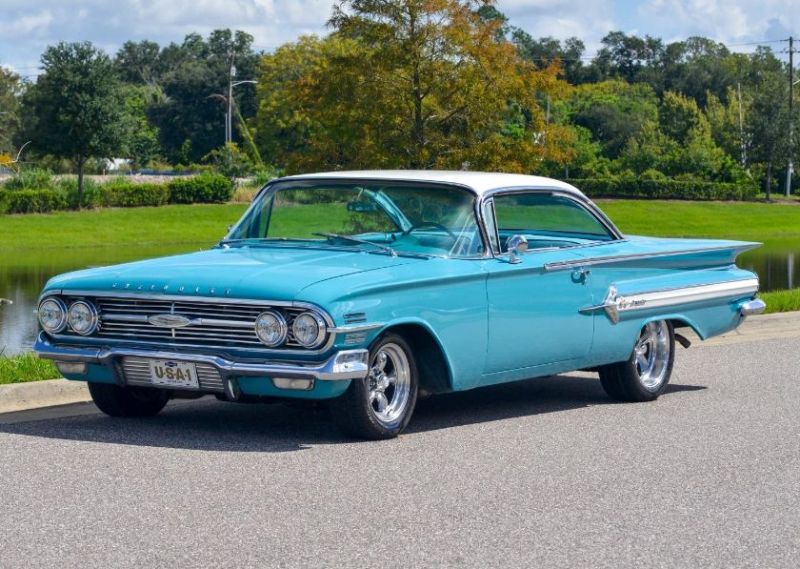
For 1960, Chevrolet revised the full-size body with a milder rear fin and abandoned the cat's eye lens entirely in favor of a new arrangement: three round taillights per side, an idea that would become a Chevrolet signature for decades afterward. The cat's eye shape never returned to a Chevrolet rear end. Design themes in this era rarely survived past a single model year unless they proved unusually durable, and the triple round taillight clearly won that contest. The cat's eye, by contrast, remains a one-year artifact, tied permanently to 1959 and to nothing else.
That exclusivity is exactly why collectors treat the 1959 model as its own thing rather than lumping it in with 1960. Owners who know the cars will tell you the rear-end treatment alone is enough to identify a 1959 from fifty yards, headlights aside. You will find our complete history for a broader account of both years, since the two model years share a chassis and much of a story despite looking so different from behind.
"People ask me why I chased down a 1959 instead of any other full-size Chevy from that decade, and I always point at the back of the car before I answer. Nothing else on the road looked like that, before or since. It was gone by the following September, which is exactly why it still stops people on the sidewalk."
- Sarah Whitfield
Parts, reproduction, and what to check
Because the cat's eye lens is unique to 1959 and shared no carryover with other model years, original lenses in good condition command real money on the parts market, and reproduction lenses have existed for decades to fill the gap. A buyer evaluating a car should look closely at lens clarity, check for cracking at the narrow tips of the almond shape where stress concentrates, and confirm the chrome bezel matches Impala-specific trim rather than a lesser series' simpler surround. Housings can also suffer from corrosion behind the lens where moisture collects in the tight bat-wing cavity, so a flashlight check from underneath the trunk lip is worth the two minutes it takes.
None of this is restoration instruction, just the kind of thing a careful buyer notices before money changes hands. The taillight is small in square footage but large in what it tells you about the rest of the car's originality. A 1959 Impala missing its correct lenses, running mismatched reproduction pieces, or wearing a bezel from a Bel Air instead of an Impala is a car that has had parts substituted somewhere along the line, and that is worth knowing before you fall for the shape from across a parking lot.
If the taillights have you thinking about the rest of the car, the good news is that 1959 and 1960 full-size Chevrolets both turn up regularly in the collector market, and you can find a classic Impala without much trouble if you know where to look. Whether you are drawn to the one-year-only cat's eye or the triple lights that followed, the era rewards buyers who pay attention to the small details, because on these cars the small details were the whole point.