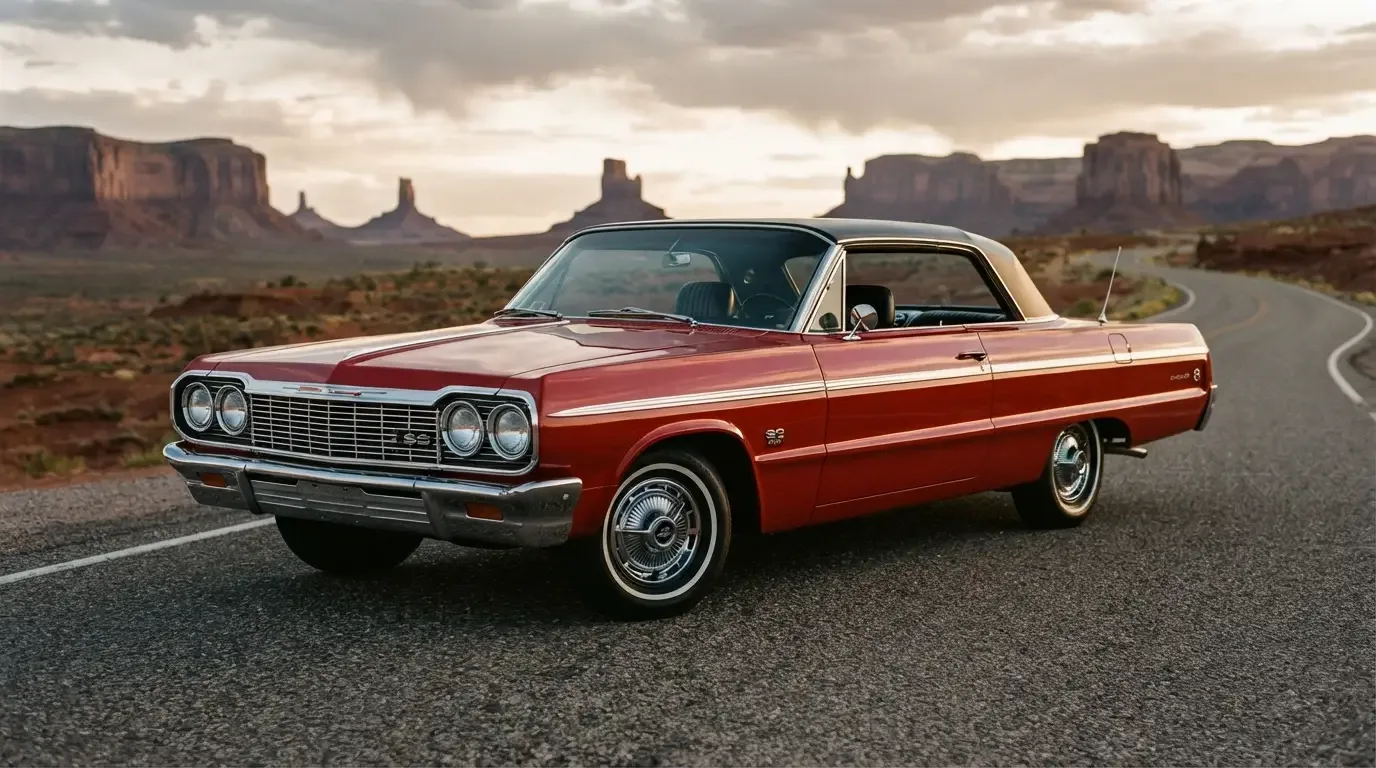
The 1964 Impala SS 409 is not the most famous engine option Chevrolet ever bolted into a full-size car. That honor usually goes to the 396 and 427 that followed it. But the 409 in 1964 is the one that earned the reputation first, and the numbers back it up better than the song does. This is a car built on a formula that worked, not on marketing copy.
The base number: 340 horsepower
Start with the plain fact. The 1964 Impala SS could be ordered with the 409 cubic inch V8 rated at 340 horsepower with a single four barrel carburetor and hydraulic lifters. A hotter solid lifter version of the same single four barrel setup was rated at 400 horsepower, and the top dual quad setup pushed the rating to 425 horsepower. Those are the numbers that matter, not the legend. A 340 horsepower full-size Chevy in 1964 was quick for its class, and the dual carb 425 horsepower version was quicker than most of what General Motors sold that year outside of the Corvette.
Compare that to the base Impala SS engine, a 250 horsepower 283 V8. The gap between the base car and the 409 is the whole story of why this option mattered. Buyers were not paying for a badge. They were paying for roughly 100 to 150 additional horsepower in the same body.
Why the 1964 body helped the case
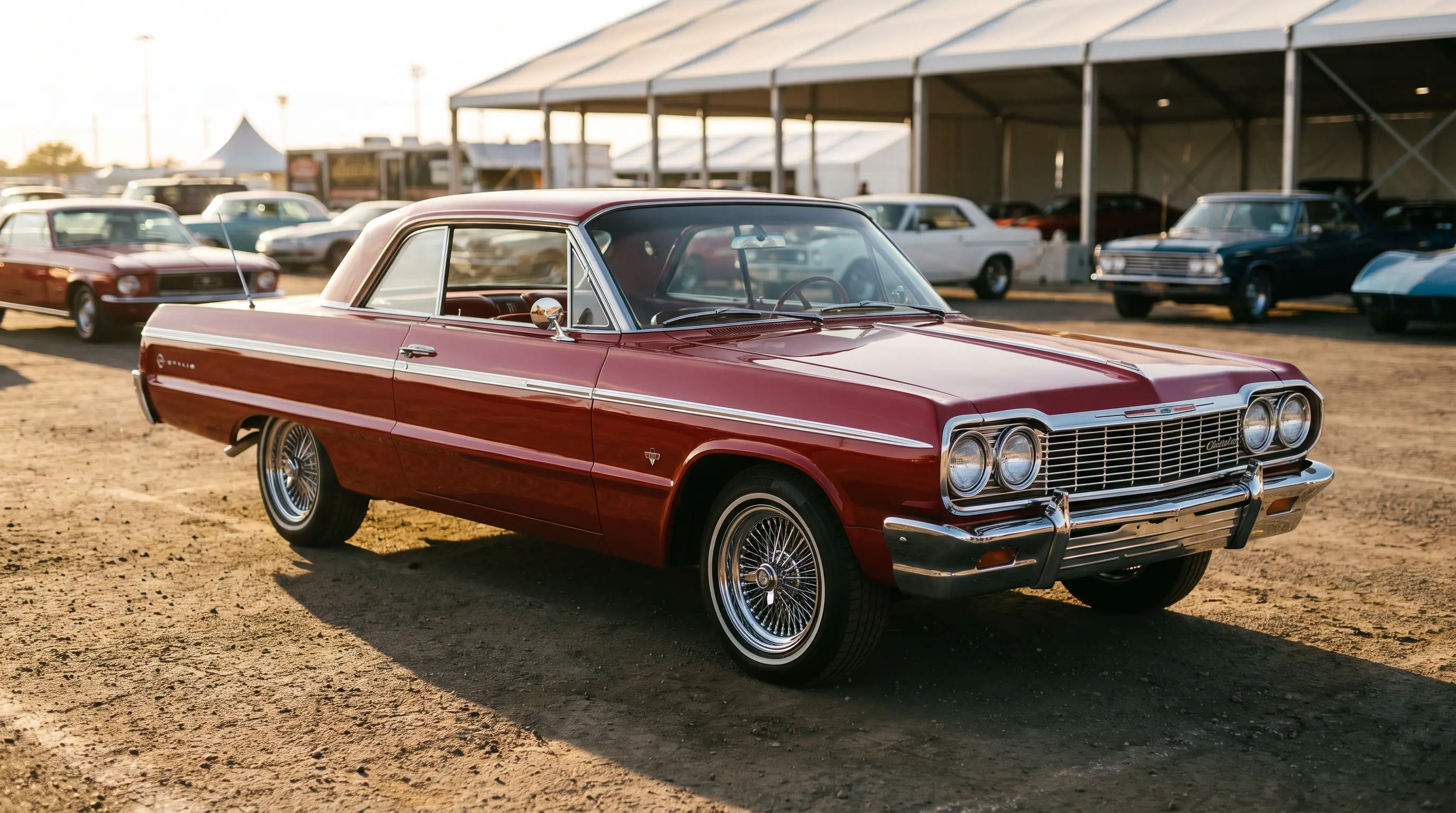
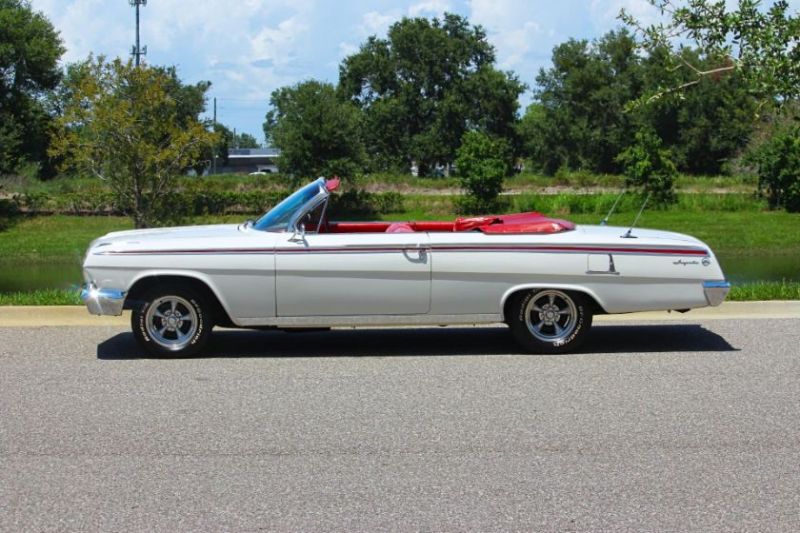
The 1964 Impala got a cleaner, more squared off restyle compared to the curvier 1961 through 1963 cars. Longer, lower, wider was the sales pitch, and it was mostly true. That new sheet metal is worth knowing about on its own terms, and anyone who wants 1964 impala ss 409 history should read how the platform evolved year to year before focusing on the engine bay. The SS package added bucket seats, a center console, and SS badging, but the 409 is what turned the trim level into something with a reputation beyond the showroom floor.
Weight is the number people skip. A 1964 Impala SS with the 409 and full options was pushing close to 3,700 to 3,800 pounds. That is not a light car. The 425 horsepower dual quad version worked because it had enough torque to move that weight without drama, not because the car was some stripped down racer. Chevrolet built it as a boulevard car with a serious option checked, and that combination is why it still gets attention six decades later.
Production reality, not internet rumor
The 409 was never the volume seller in the Impala SS lineup. Most buyers ordered the 283 or one of the smaller 327 V8 options because they were cheaper to insure and cheaper to run. The 409, especially in dual carb form, was a minority order. That is exactly why surviving examples with documented 409 build sheets carry real value today. Scarcity plus a known performance number is a better story than any myth about the car outrunning a big block by half a second in a bar argument.
The four speed manual was the transmission most serious buyers chose with the 409, though a Powerglide automatic was available. Buyers who wanted to actually use the extra horsepower generally skipped the automatic. That detail matters when appraising a car today, because a manual transmission 409 car with documentation tends to sell for more than an automatic car with the same engine.
"People want to talk about the song before they talk about the horsepower rating. I want the build sheet first. The number on paper is 340, 400, or 425, and everything else is conversation."
- Dan Reeves
What the 409 gave up compared to what came next
By 1965, Chevrolet moved on to the 396 cubic inch big block, and the 409 was phased out. In hindsight the 409 was a transitional engine, built on an older block design pushed about as far as it could go. The 396 that replaced it was a cleaner architecture with more room to grow into the 427 and 454 that followed. None of that takes away from what the 1964 409 did while it was current. It was the top performance option in the Impala SS catalog for that model year, full stop.
If the 409 story has you curious about the earlier Impala body style before the 1964 restyle, it is worth taking the time to keep exploring that chapter of the car's design history. The bubble top cars from a few years earlier show a completely different design philosophy sitting on the same basic platform lineage, and the contrast helps explain why 1964 felt like such a step forward at the time.
Ford and Mopar were both fielding their own big block options in 1964, and the 409 gets measured against them constantly in enthusiast arguments. Ford's 427 FE and Mopar's 426 wedge were both larger displacement engines, and on paper the 409 was giving up cubic inches to both. What the 409 had going for it was a chassis package, the Impala SS trim, that was already a strong seller before the engine option ever entered the conversation. A buyer did not have to choose an obscure model to get the 409. It bolted into one of the best selling cars in America that year, which is a different kind of advantage than raw displacement.
That accessibility is part of why the 409 built a reputation that outlasted some larger, technically stronger competitors. It was not the biggest number on the block. It was the biggest number a normal buyer could actually walk into a Chevrolet dealership and order without asking for something exotic.
Buying one today
A documented 1964 Impala SS 409, especially the 400 horsepower dual quad car with a four speed, is not a casual purchase. Verify the engine matches the build sheet before anything else. Numbers matching cars carry a real premium over clone builds, and with an engine this well known, clones exist. Check the trim tag, check the partial VIN stamped on the block, and do not take a seller's word for it without paperwork.
For those ready to look at what is actually on the market right now, there is a classic Impala for sale listing worth a look, whether the goal is a 409 car specifically or a 1964 Impala SS in general. The market moves fast on documented big block cars, so knowing the real numbers before shopping puts a buyer ahead of the guesswork.
The bottom line on the 1964 Impala SS 409 is simple. It was Chevrolet's top performance option for the full-size Impala that year, it delivered a real and verifiable horsepower gain over the base engine, and it did so in limited numbers that make surviving cars worth documenting carefully. Skip the song lyrics. Read the build sheet.
Sources and notes
- Barn Finds: Rare 409 V8 Dual-Quad 1964 Chevrolet Impala SS
- Automobile Catalog: 1964 Chevrolet Impala Hardtop Coupe full range specs
- FastestLaps: Chevrolet Impala SS Mk III (1964) specs
- HowStuffWorks: 1961, 1962, 1963, 1964 Chevrolet Impala Super Sport
- Wikipedia: Chevrolet Impala
- AutoHunter: 1964 Chevrolet Impala SS 409 4-Speed listing