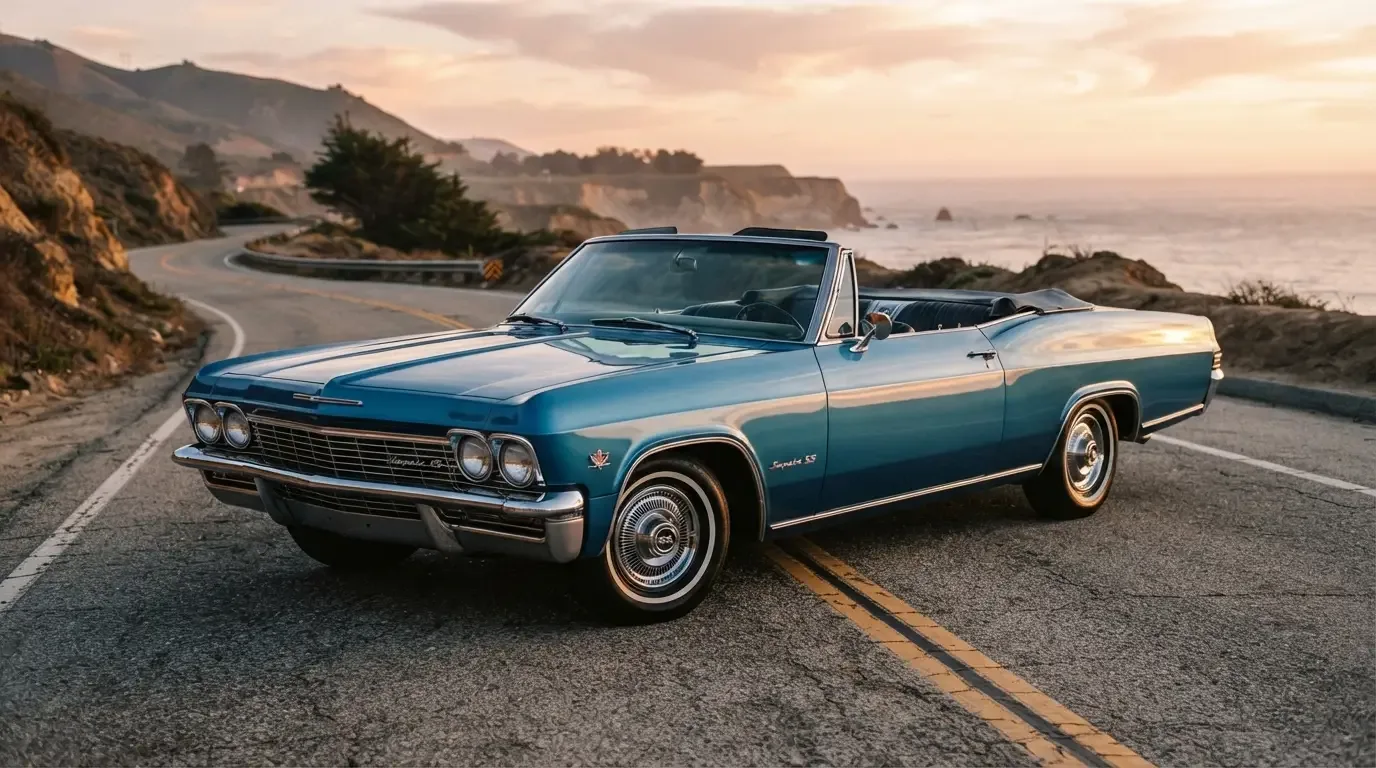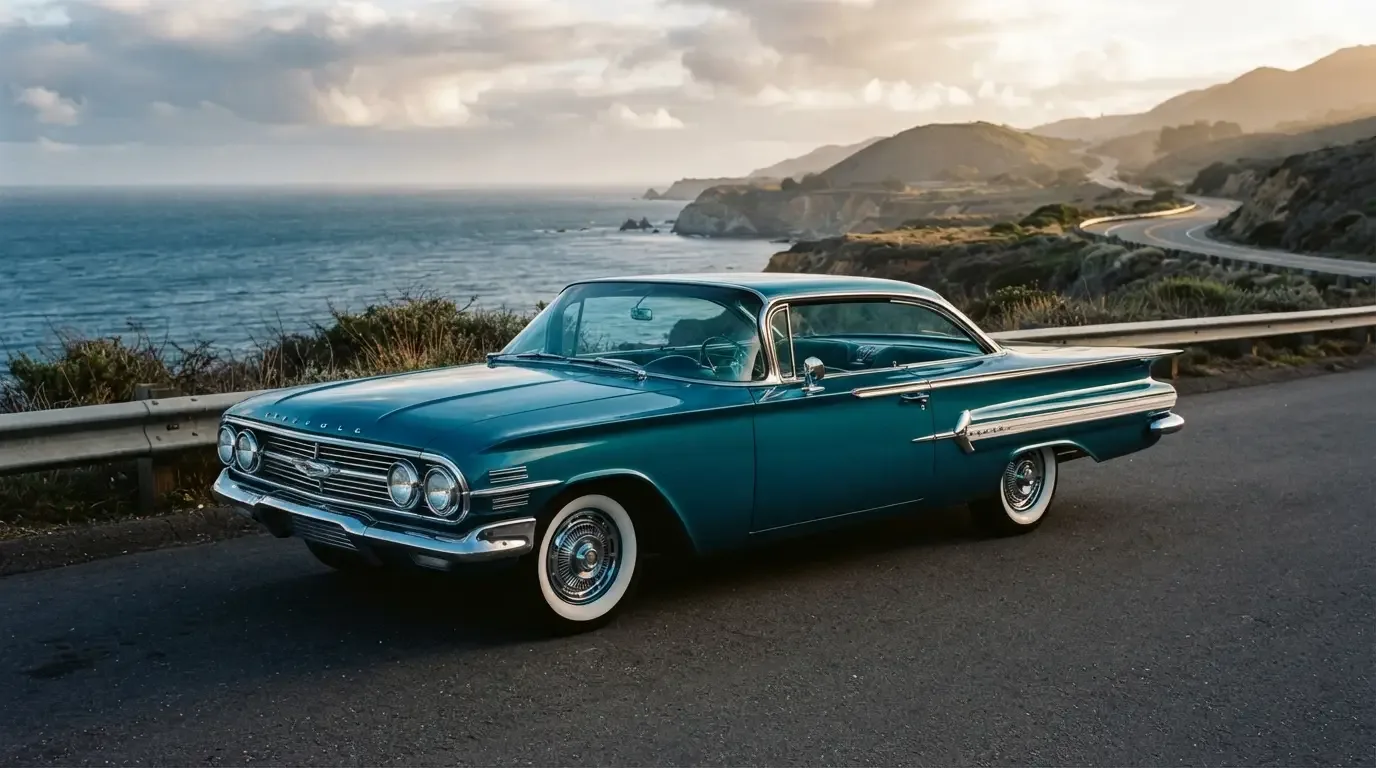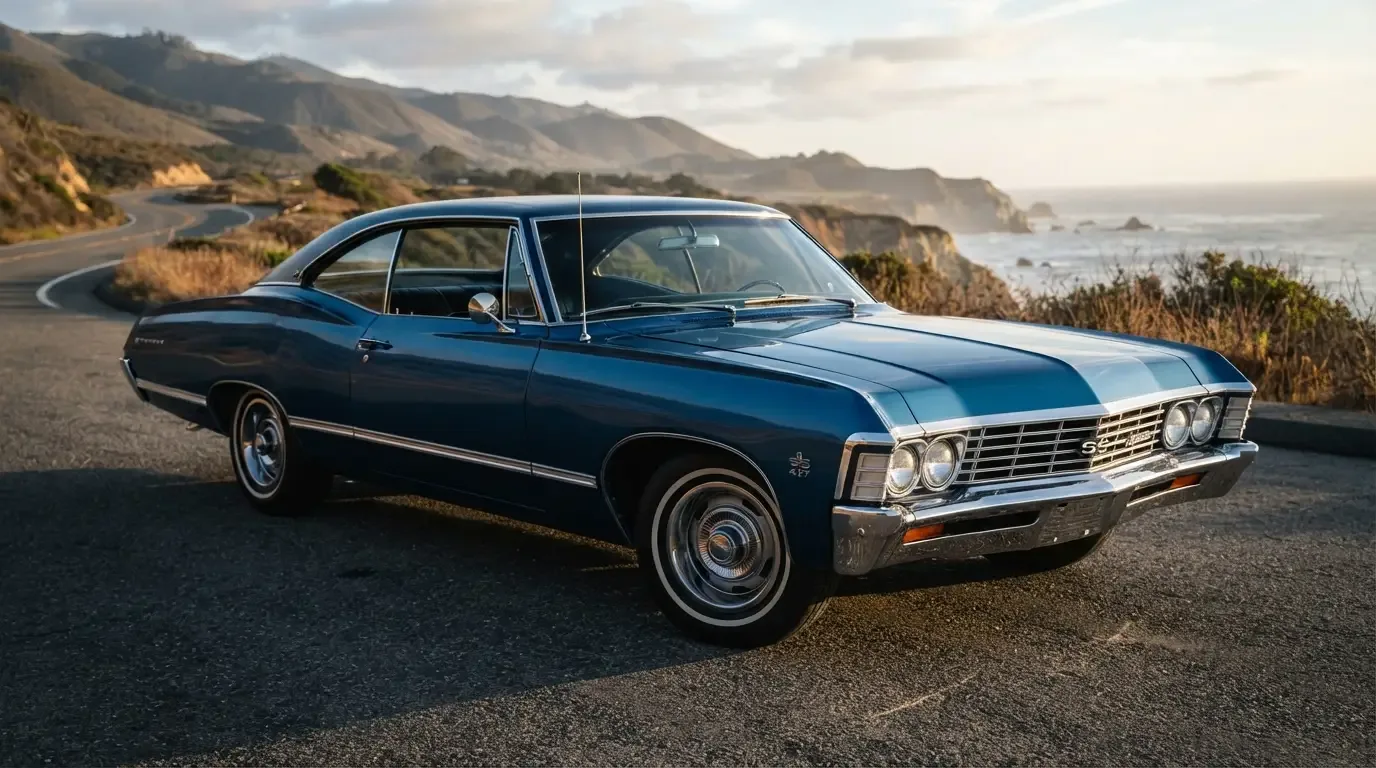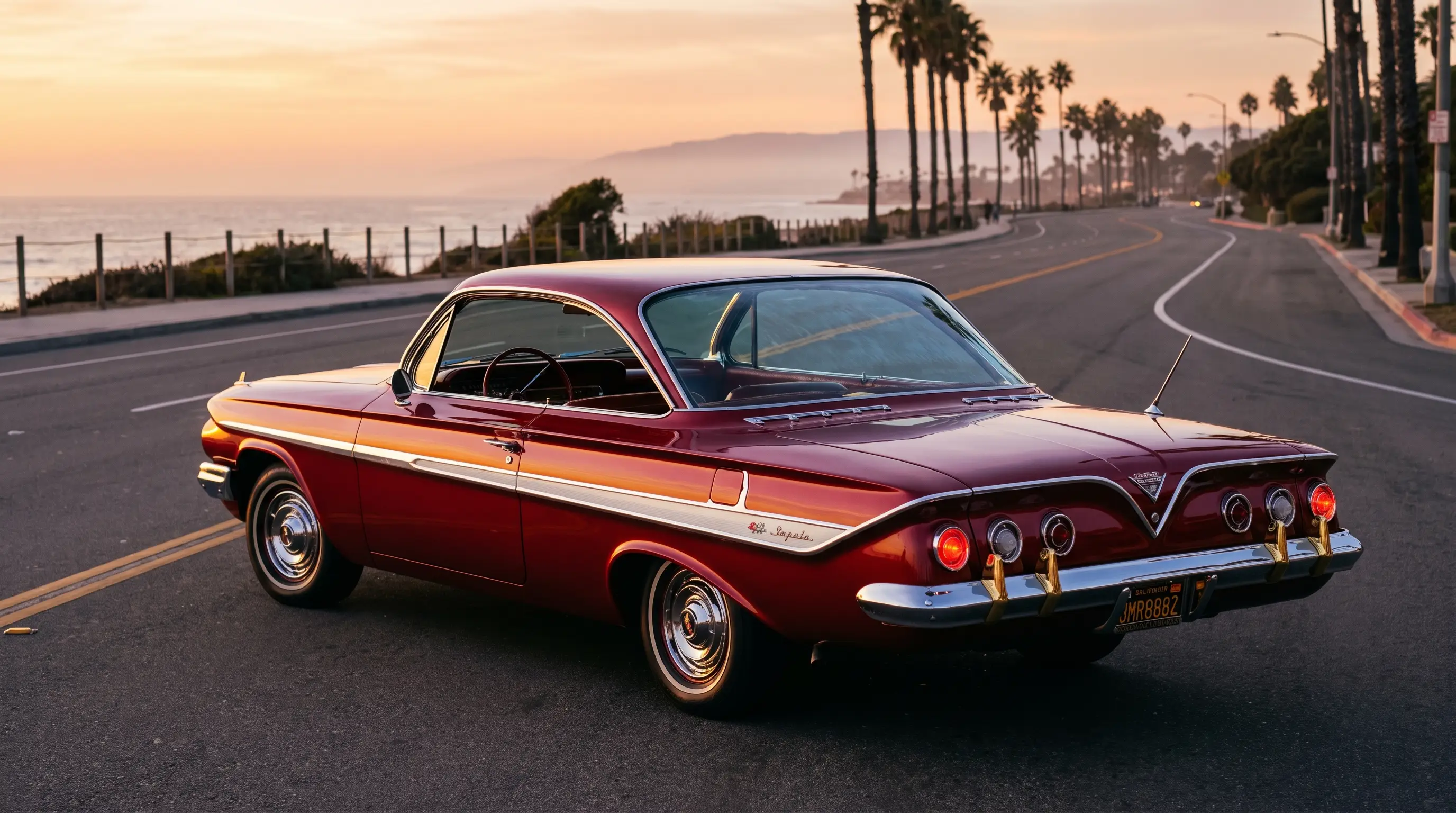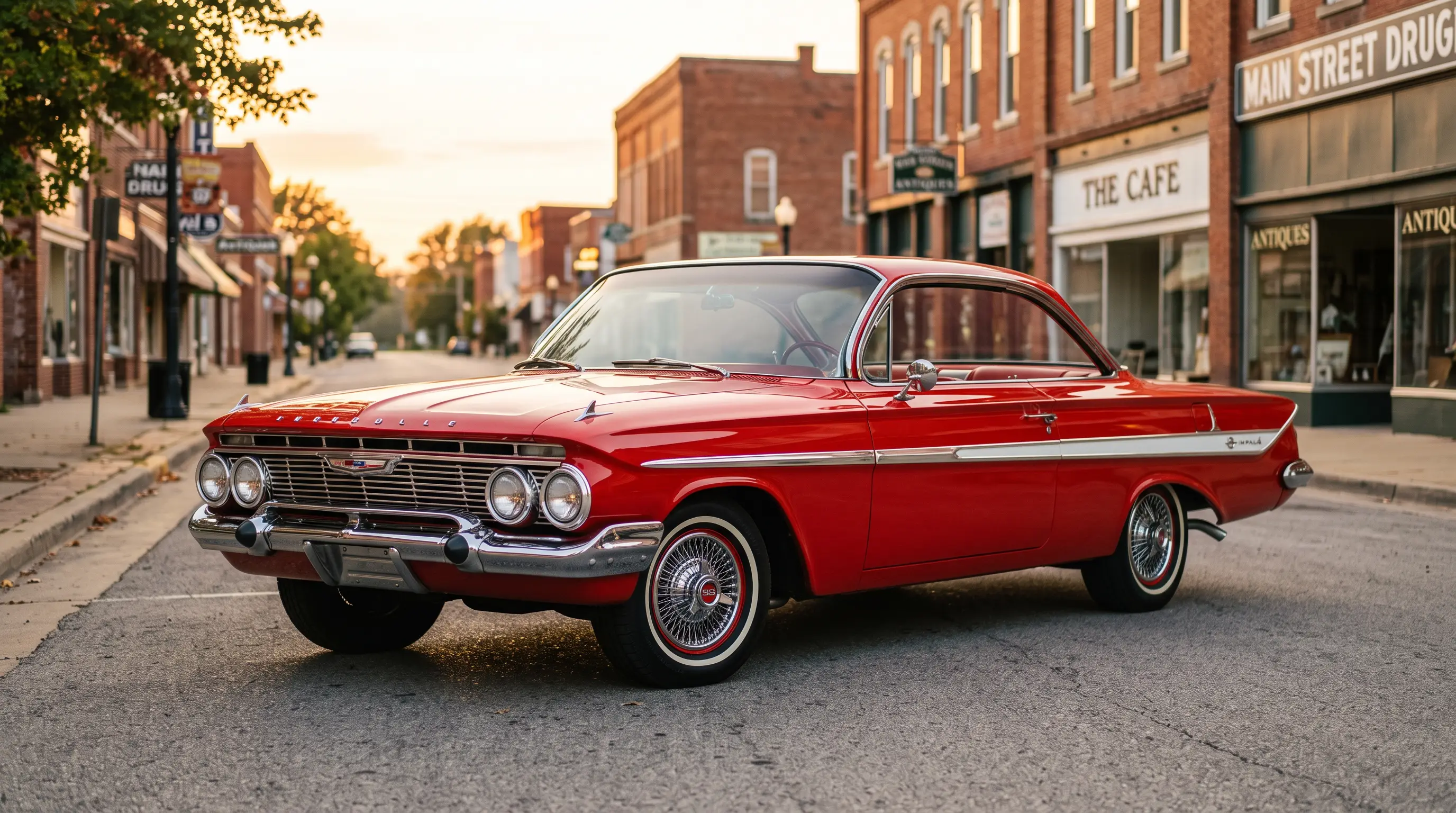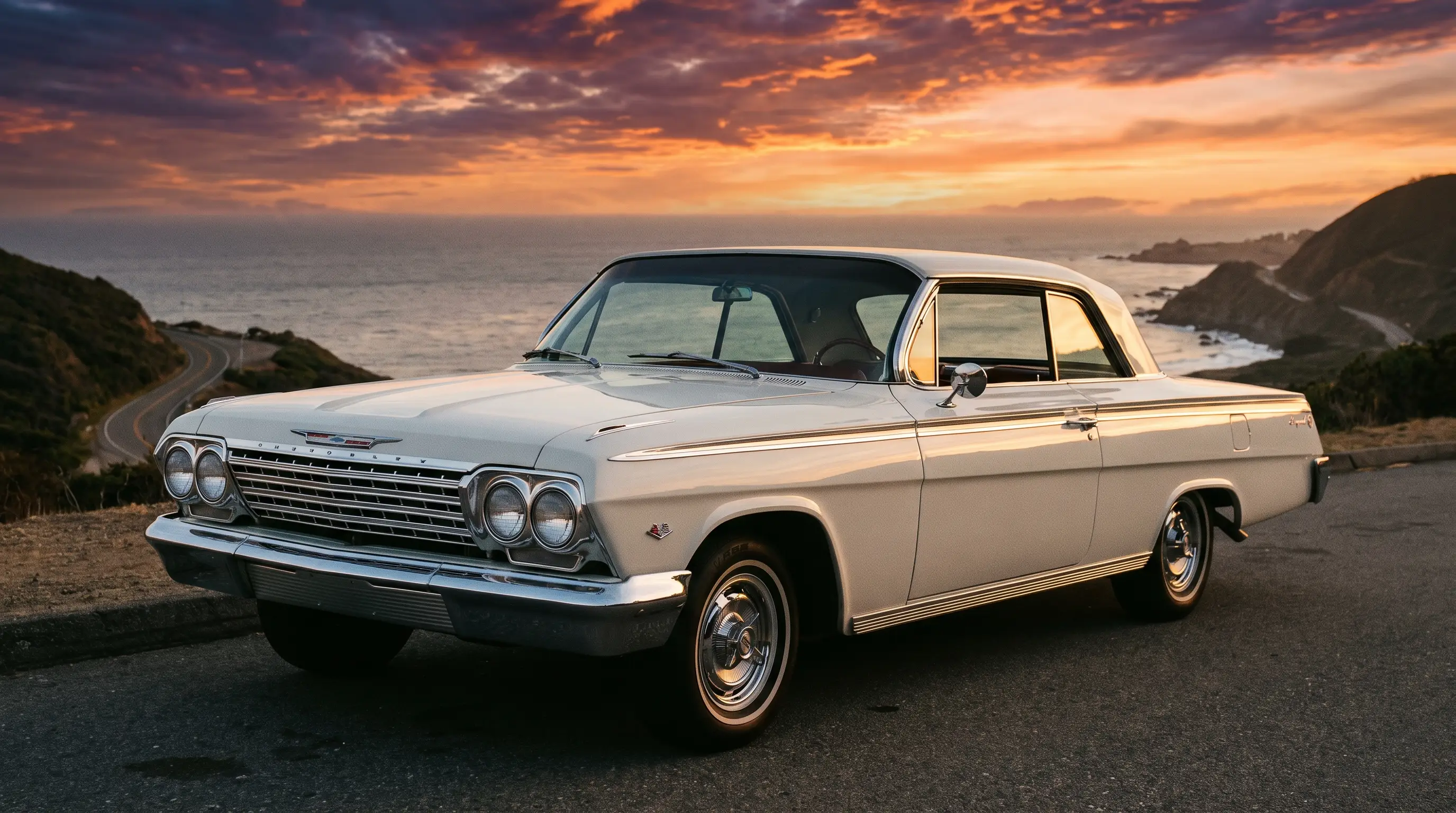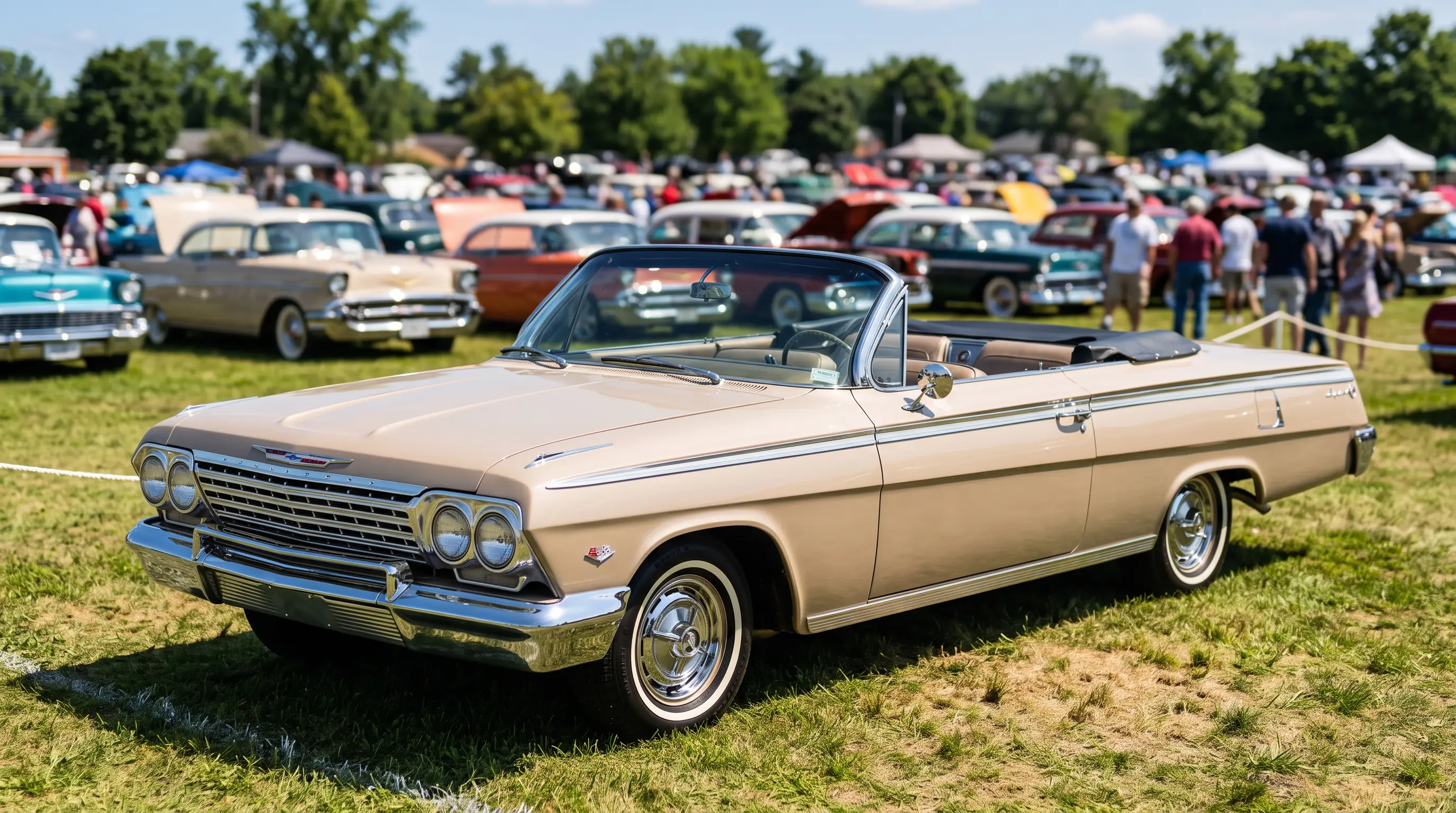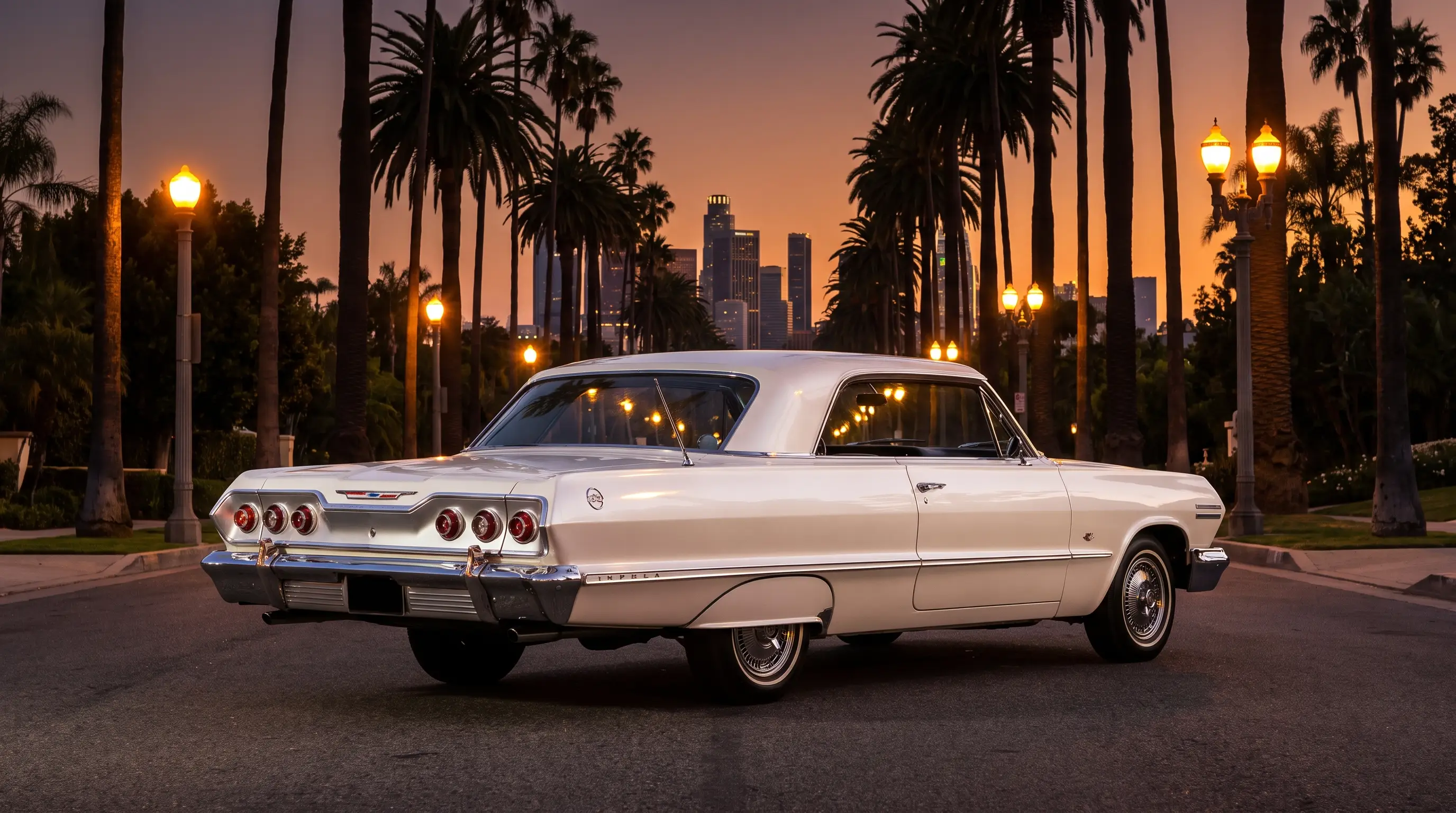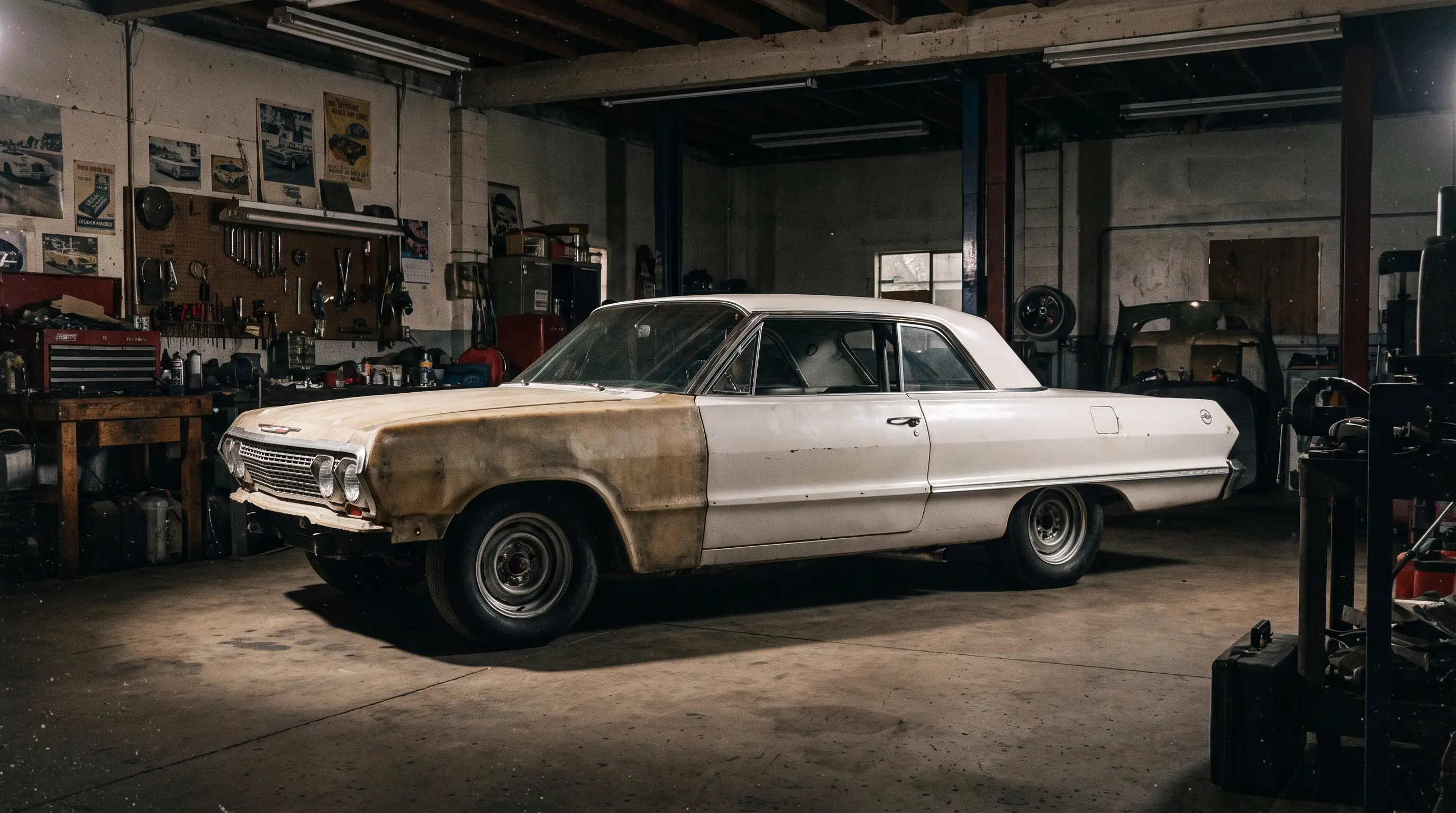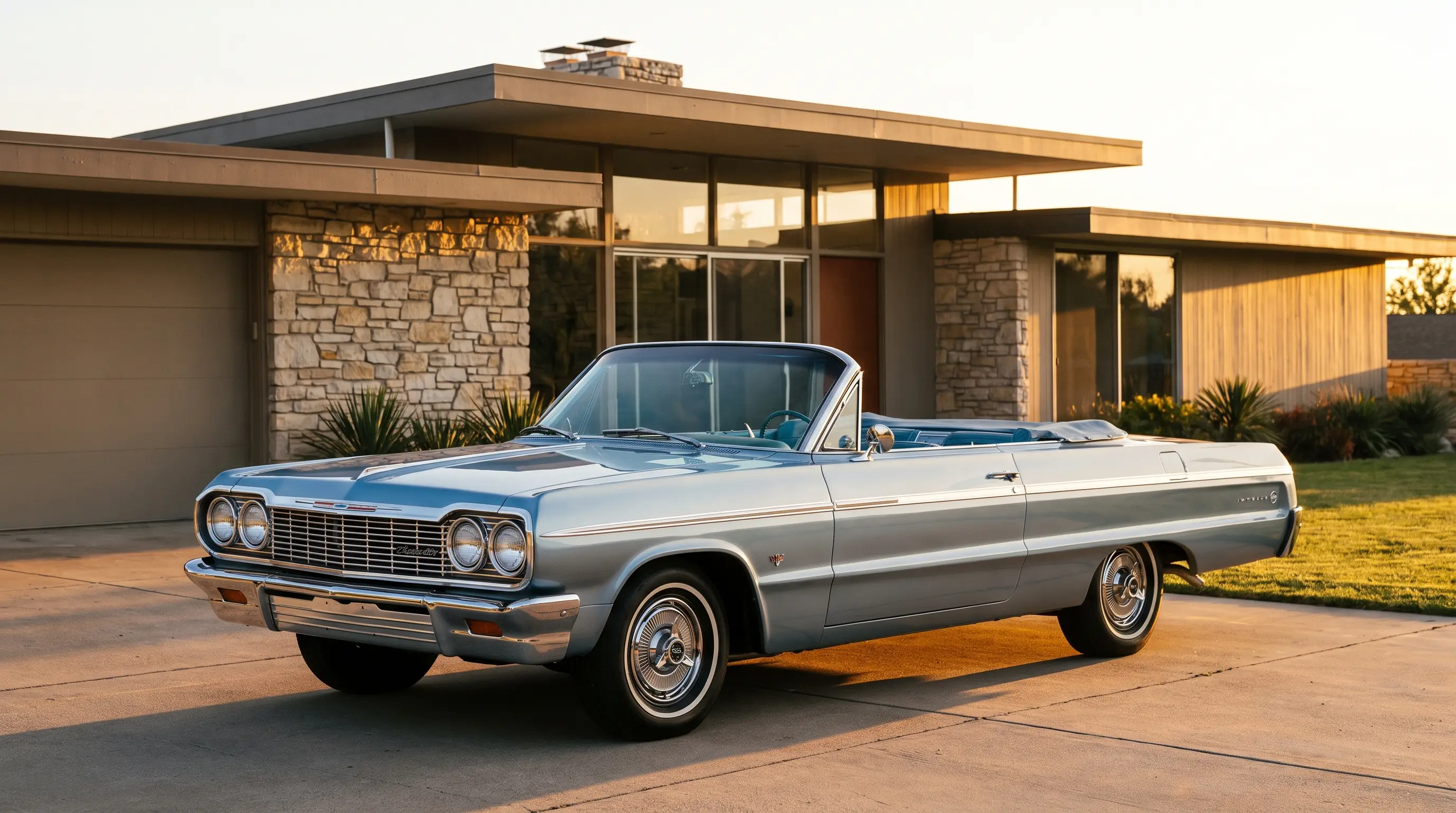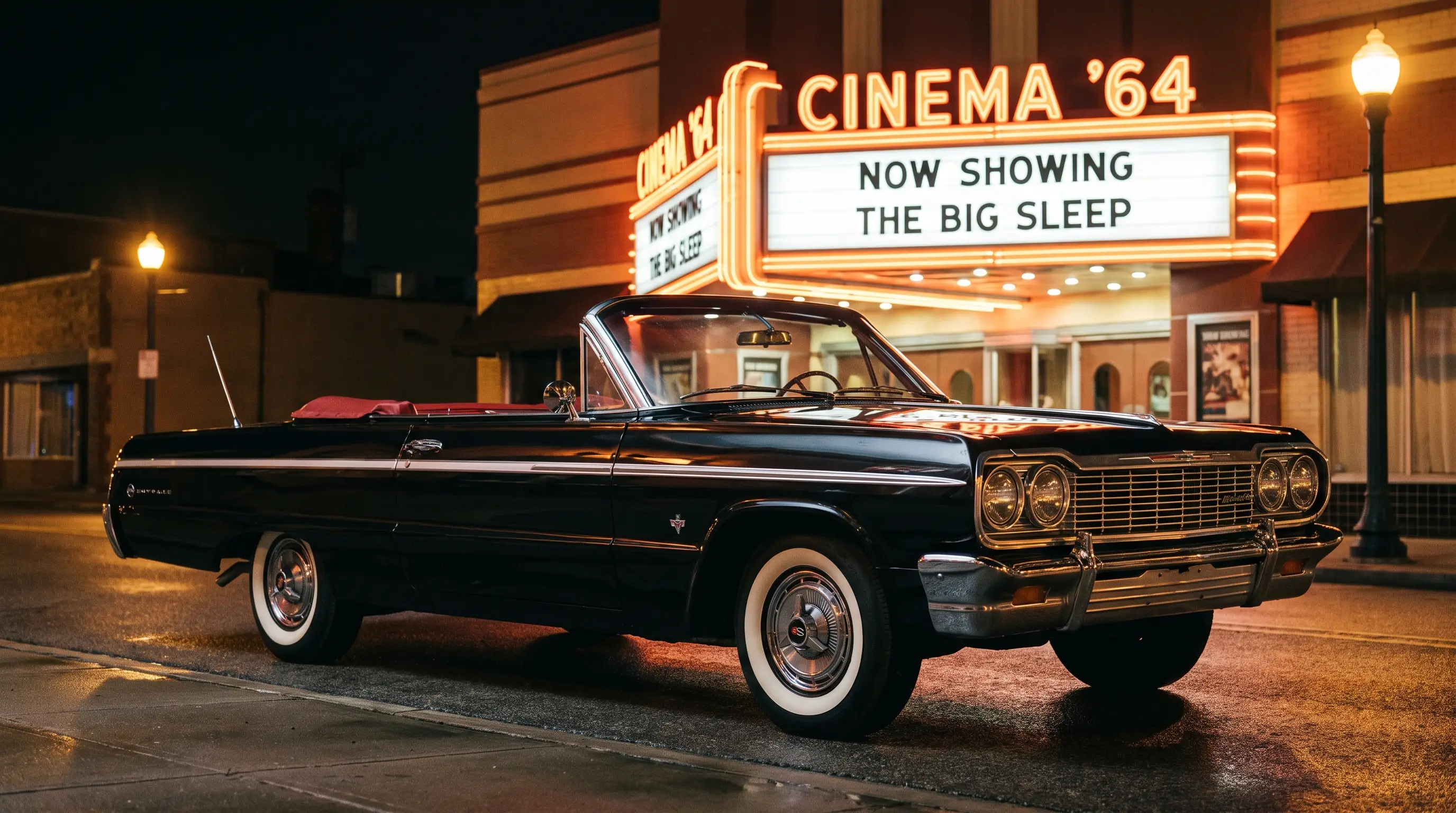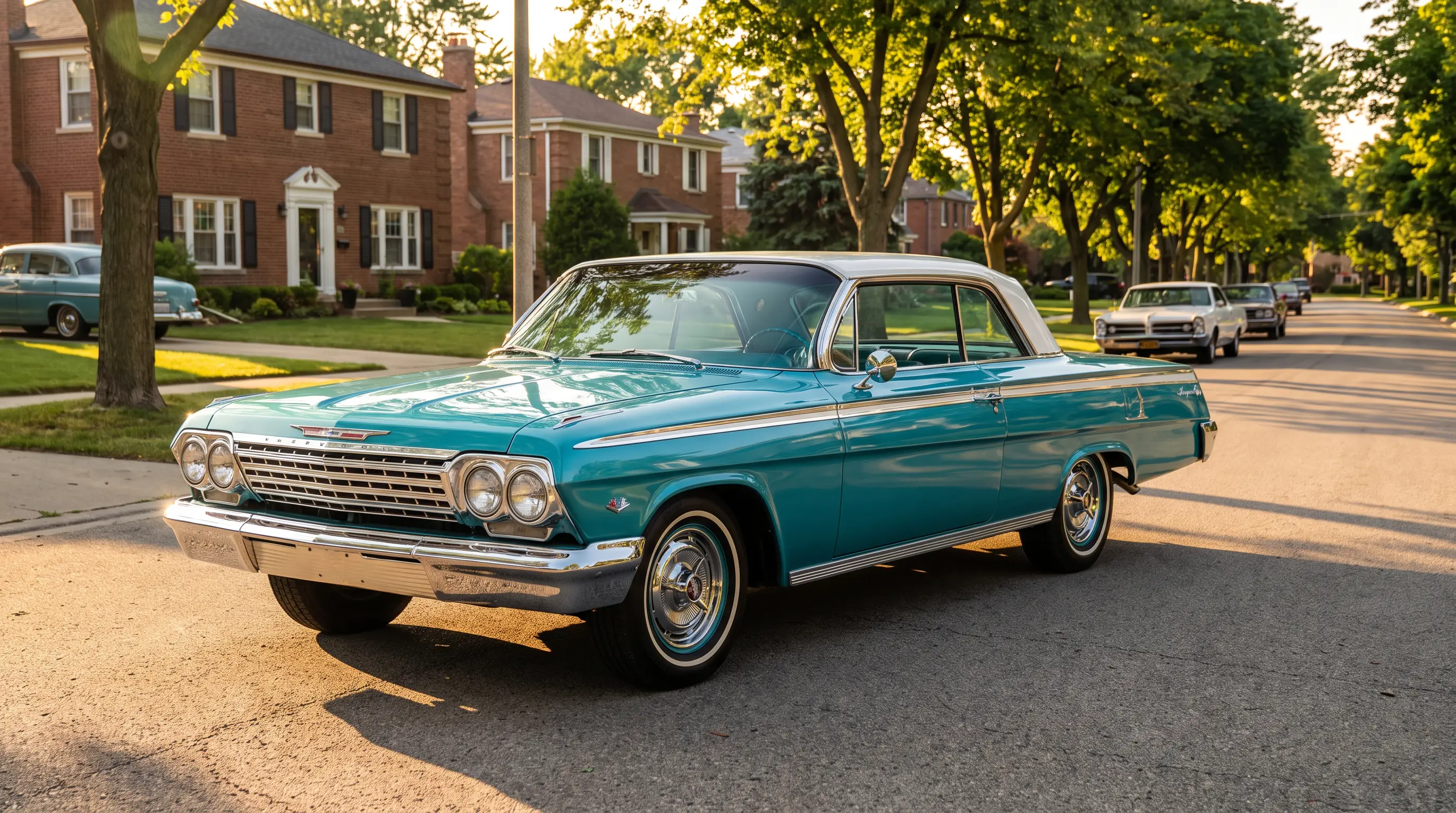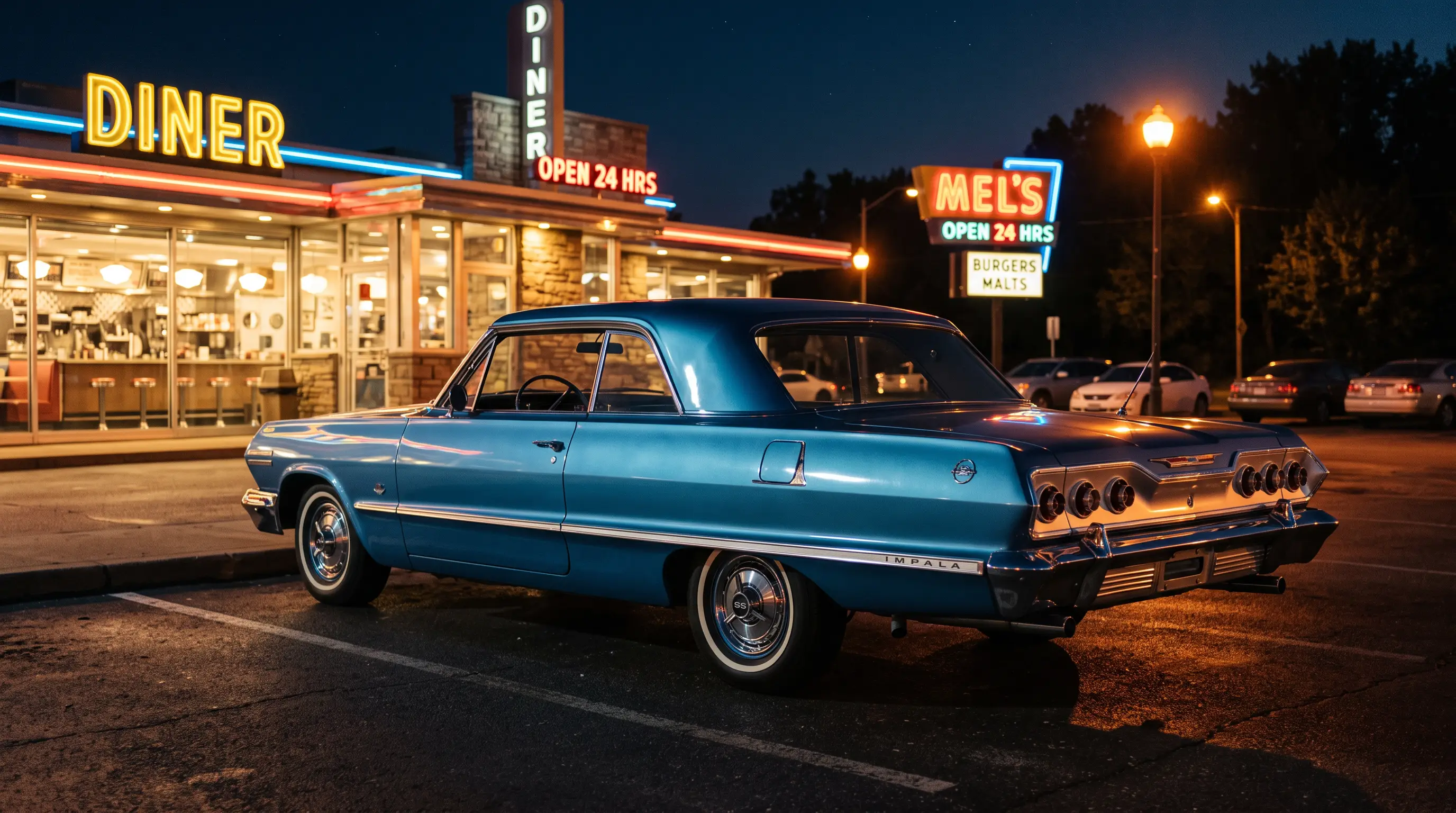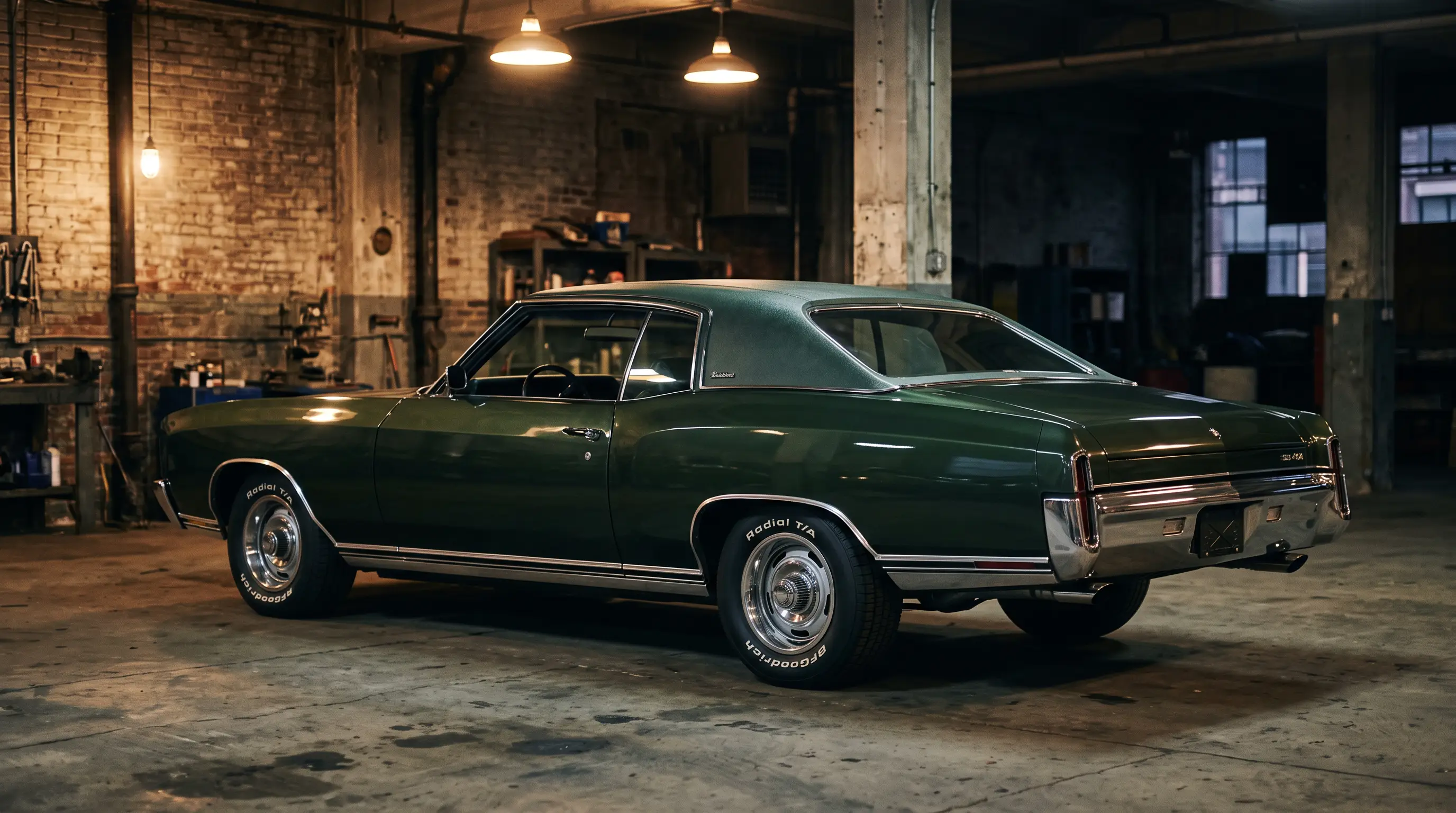
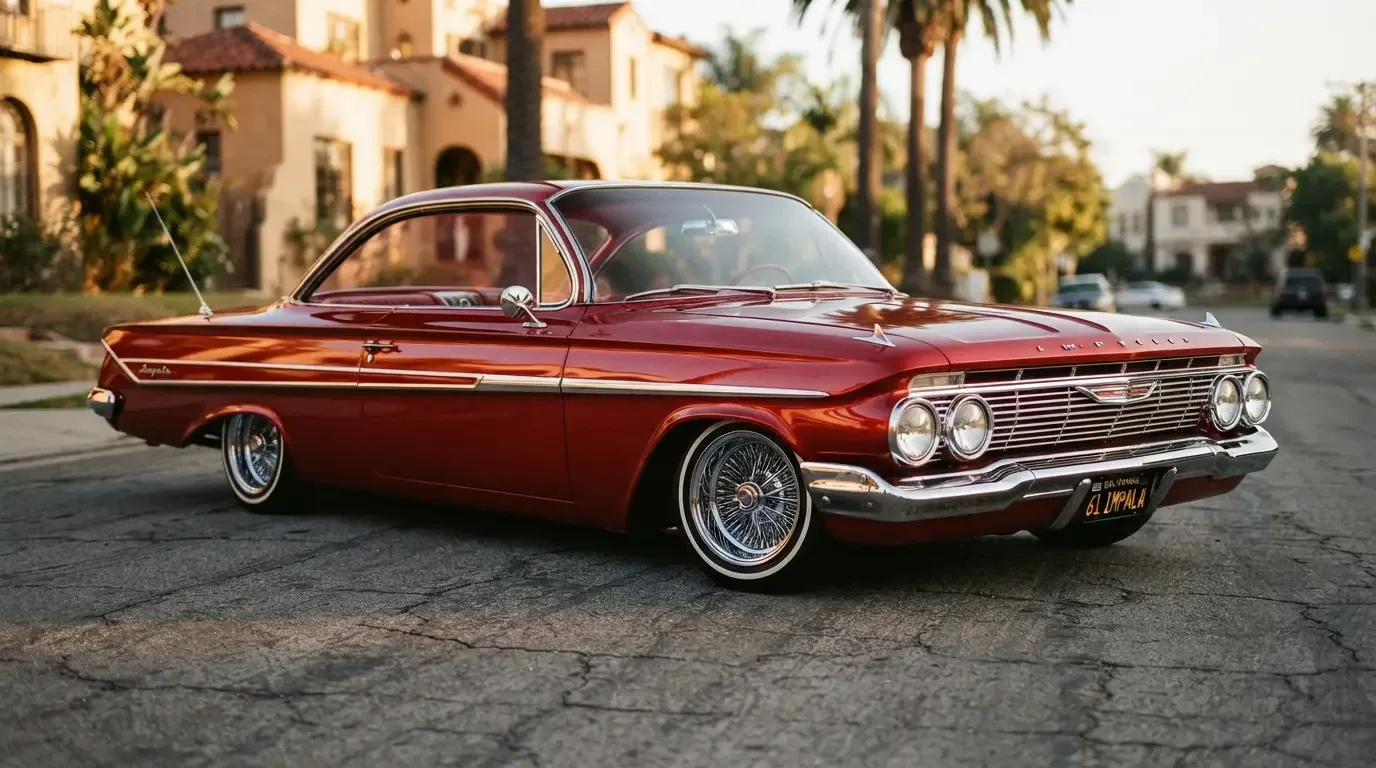
On a Friday night on Whittier Boulevard, the car that turns every head is not the newest or the fastest. It is a 1964 Impala riding low and slow, chrome wheels catching the streetlights, the nose dipping and rising on hydraulics that were never anywhere near a Chevrolet assembly line. That image is so fixed in American culture that people who have never opened a hood know the shape on sight. But the 1964 Impala did not begin as an icon. It began as the last and most refined year of a four-season run that started with a bubble-topped hardtop and a brand-new big-block, and turned an ordinary full-size Chevrolet into the most culturally loaded car the company ever built.
If you want the whole arc first, our our chevy impala retrospective lays out where these years sit, but the 1961 to 1964 cars deserve their own telling, because so much of what people love about the Impala was decided right here.
1961: the bubble top and the birth of the Super Sport
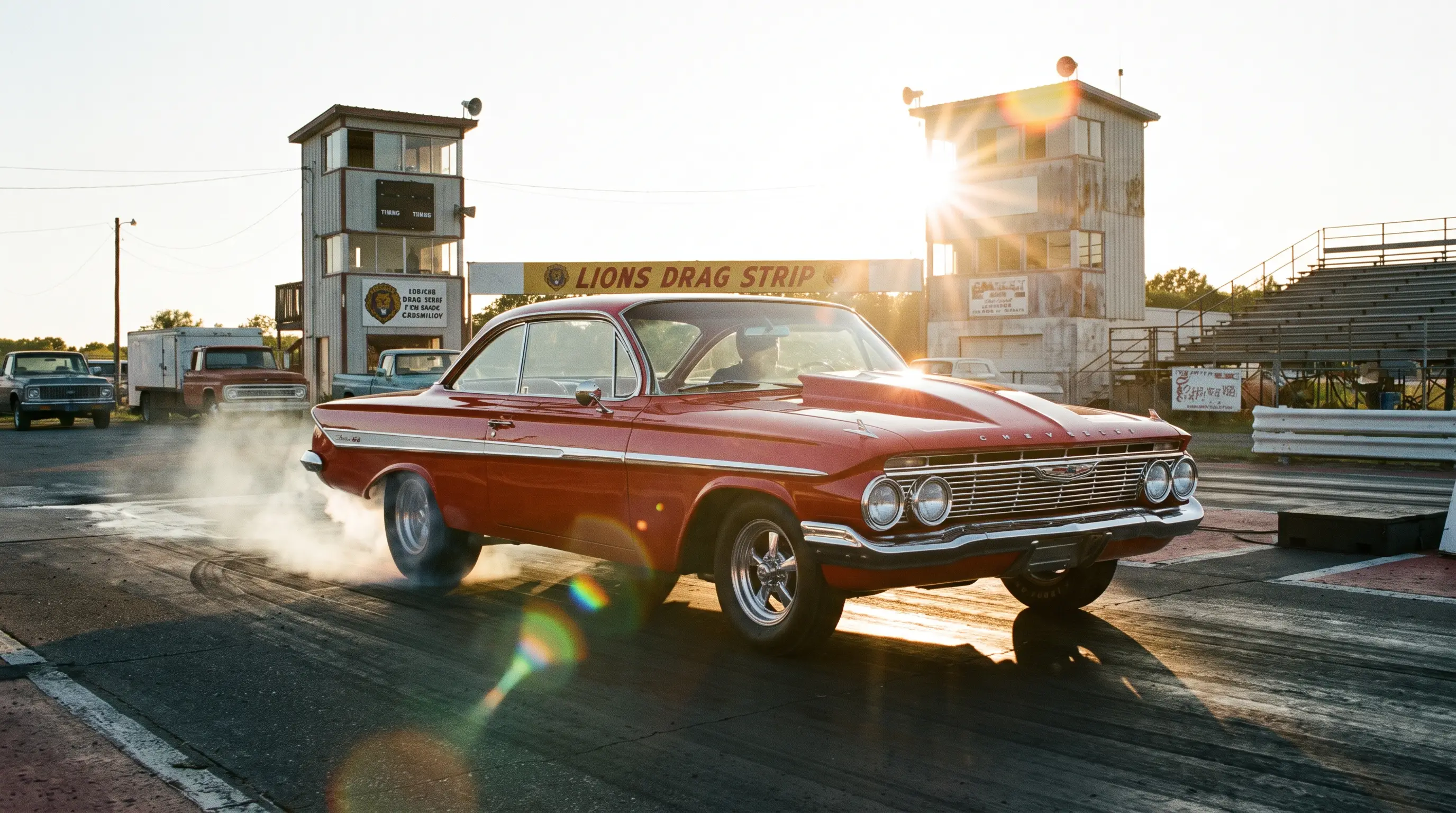
The 1961 Impala arrived with a fresh, trimmer body after the wide flamboyance of 1959 and 1960. The two-door hardtop wore a roofline enthusiasts named the bubble top, a thin-pillared greenhouse with a wraparound rear window that made the whole car look like it was moving standing still. It is one of the cleanest shapes of the early 1960s, and clean is not a word you get to use often about a car from an era that loved chrome.
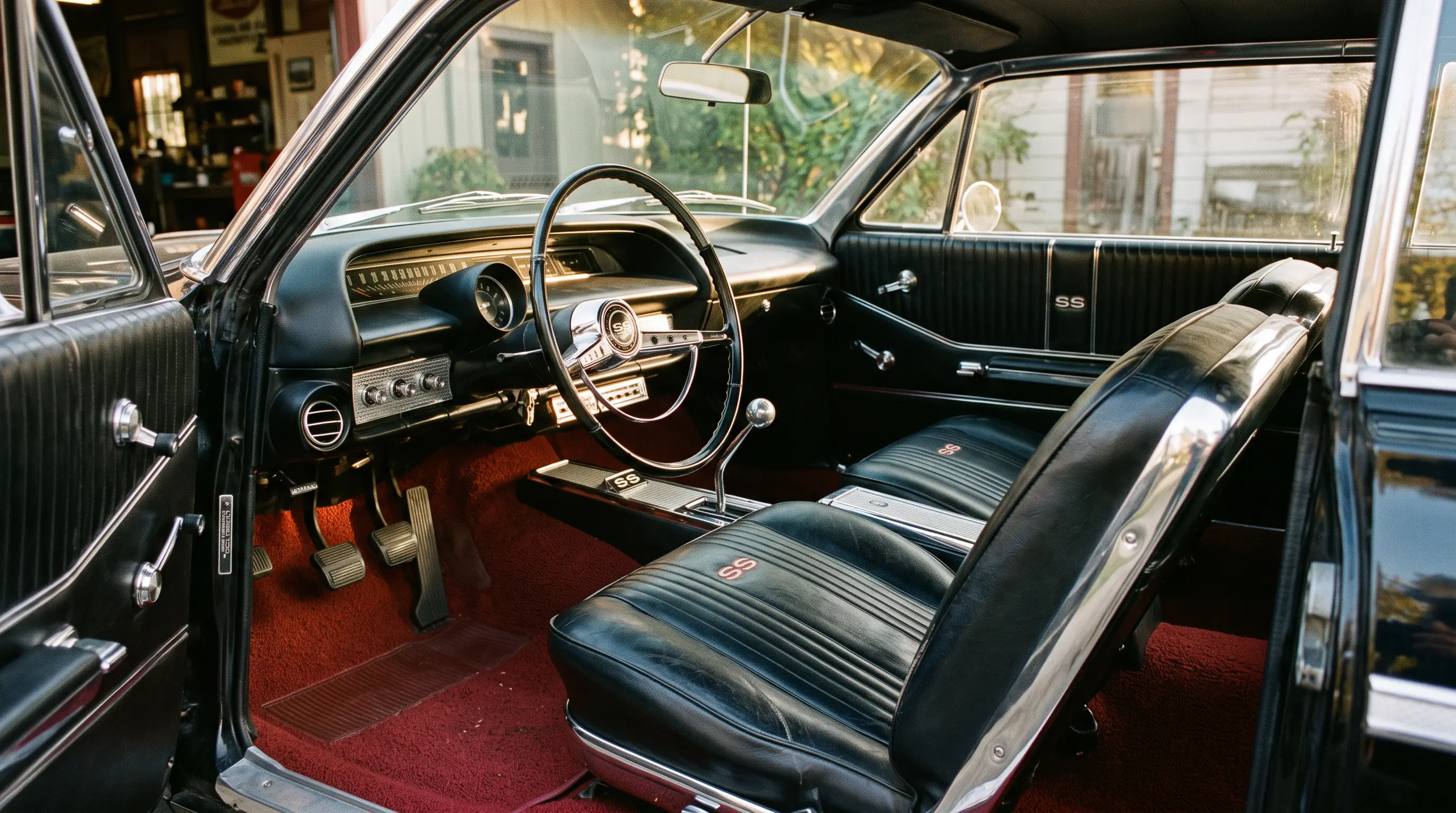
Two things landed in 1961 that would echo for decades. Mid-year, Chevrolet introduced the Super Sport option, the first time the Impala carried a badge built around performance and appearance rather than luxury. And under some of those hoods went a new engine that would become the stuff of legend within a year. The Super Sport story is big enough to be a related story of its own, but its roots are here, in the first year the letters SS meant anything on an Impala.
The 409 and a song that outlived the car
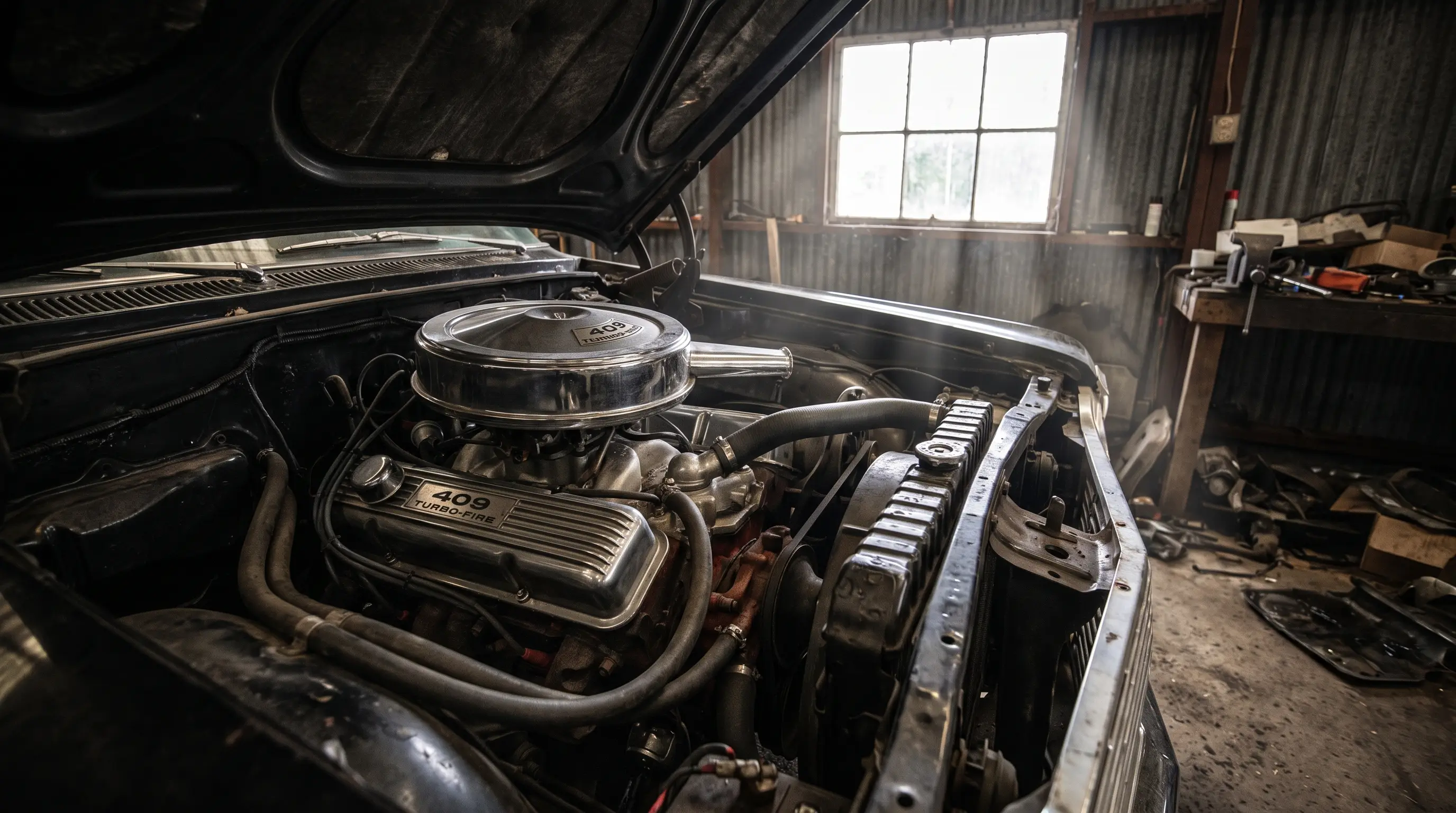
The engine was the 409, the big-block that grew out of the earlier W-series 348. In 1962 a couple of California kids named the Beach Boys put it into a song, and the line about a 409 being real fine did more for the Impala's image than any advertisement Chevrolet ever paid for. Suddenly the top full-size Chevy was not just a comfortable family car. It was something you bragged about at a stoplight.
Output climbed as the engine developed. The 1961 409 was initially rated at 360 hp with a single four-barrel carburetor. For 1962 Chevrolet offered a 380 hp single four-barrel version alongside a dual-quad 409 hp version, the figure the Beach Boys were almost certainly singing about. By 1963 the range had grown further, topping out at 425 hp with dual four-barrels and 11:1 compression. Any specific horsepower claim on a survivor should still be checked against its documentation rather than a memory of the brochure. What mattered culturally was the number itself. Four-oh-nine became shorthand for fast, and it welded the Impala to the early hot-rod and drag scenes at exactly the moment American youth culture was learning to worship the automobile.
The drag strips and the street
The 409 did not stay on the radio. It went to the drag strips, where lightweight, big-block Impalas became genuine competitors in the early days of organized quarter-mile racing. Chevrolet built special lightweight and high-compression versions aimed squarely at that world, and the sight of a full-size Impala launching hard off the line did as much for the model's credibility with young buyers as any showroom brochure. The car earned its reputation the honest way, by being fast where people were watching.
That performance halo trickled down to the street. A buyer who could not afford or did not want the hottest 409 could still walk into a dealership, order an Impala that looked the part, and drive home in a car that carried some of the same swagger. This is the quiet genius of the early 1960s Impala as a product. The image was built at the top of the range and sold across the whole of it, so an ordinary Sport Coupe borrowed a little glory from the race cars without its owner ever needing to prove anything at a strip.
1962 to 1963: the shape settles
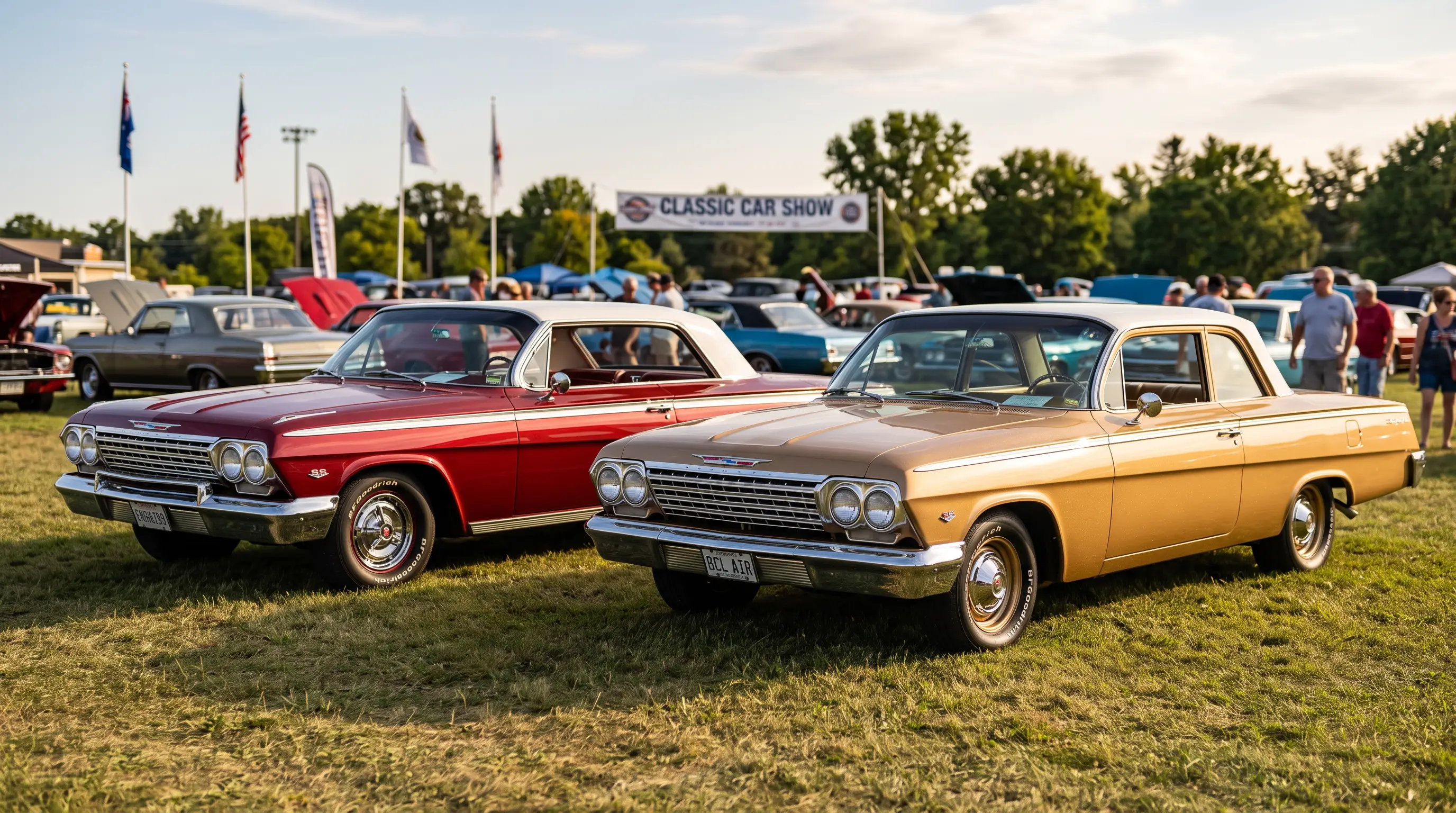
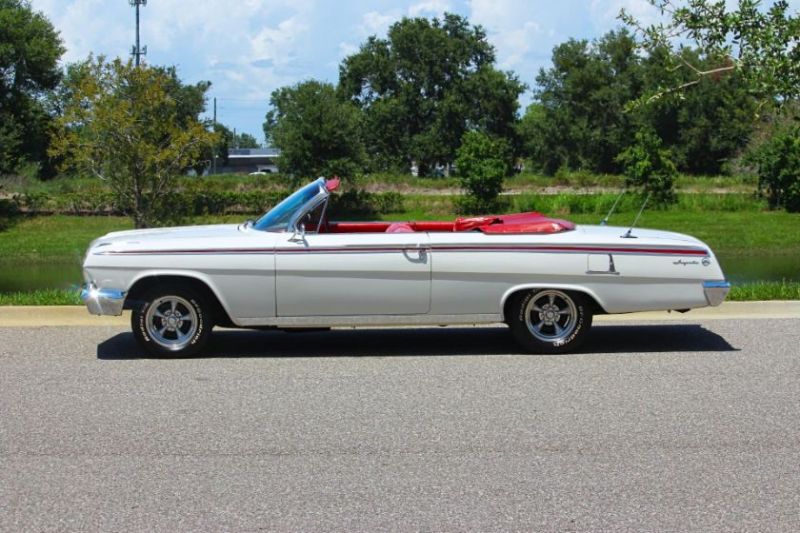
The bubble top gave way in 1962 to a more formal roofline on the Sport Coupe, a squared-off look meant to echo a convertible with the top raised. Some enthusiasts miss the airy 1961 glasshouse, but the 1962 and 1963 cars are handsome in a more grown-up way, and they sold in enormous numbers. These were among the best-selling cars in the country, which is worth remembering when people talk about them as exotic today. They were everywhere.
The 1963 restyle sharpened the details without losing the recipe: a big, comfortable, good-looking car available anywhere from a mild six-cylinder cruiser to a fire-breathing 409. That breadth is the secret of these years. The same nameplate covered a schoolteacher's Sunday sedan and a street racer's weapon, and both were legitimate. Very few cars have ever managed to be that many things to that many people at once.
It helps to remember just how many of these Chevrolet sold. The full-size Impala was routinely one of the highest-volume cars in America across these years, which means the survivors that come up today were once ordinary sights in every driveway and parking lot in the country. That ubiquity is a big part of the emotional pull. For a whole generation of Americans, the early 1960s Impala is not a rare exotic they read about. It is the car a parent drove, the car a first date happened in, the car that was simply around. Nostalgia this deep is something money cannot manufacture, and it feeds straight into how these cars are valued now.
1964: the year that became an icon
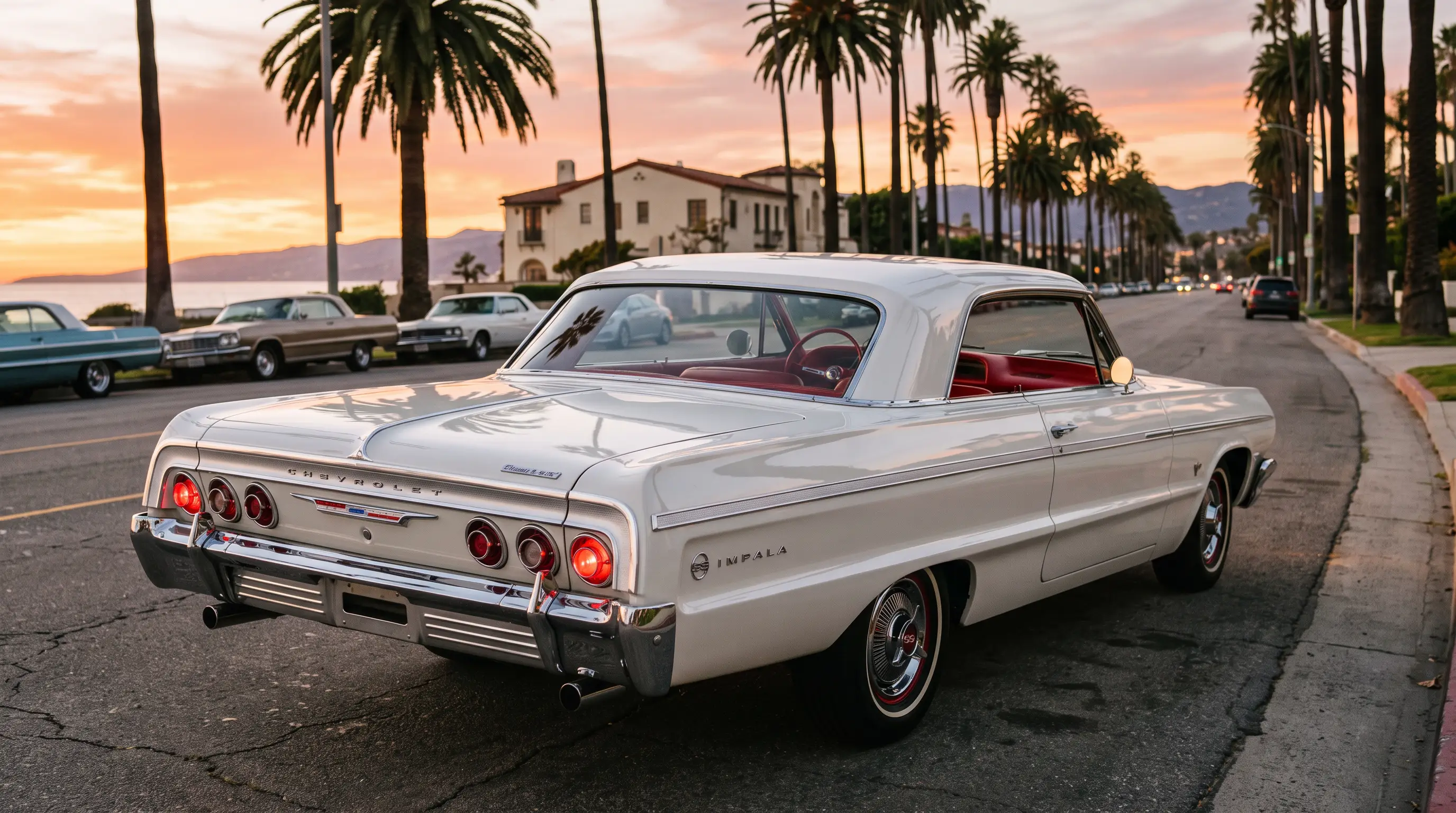
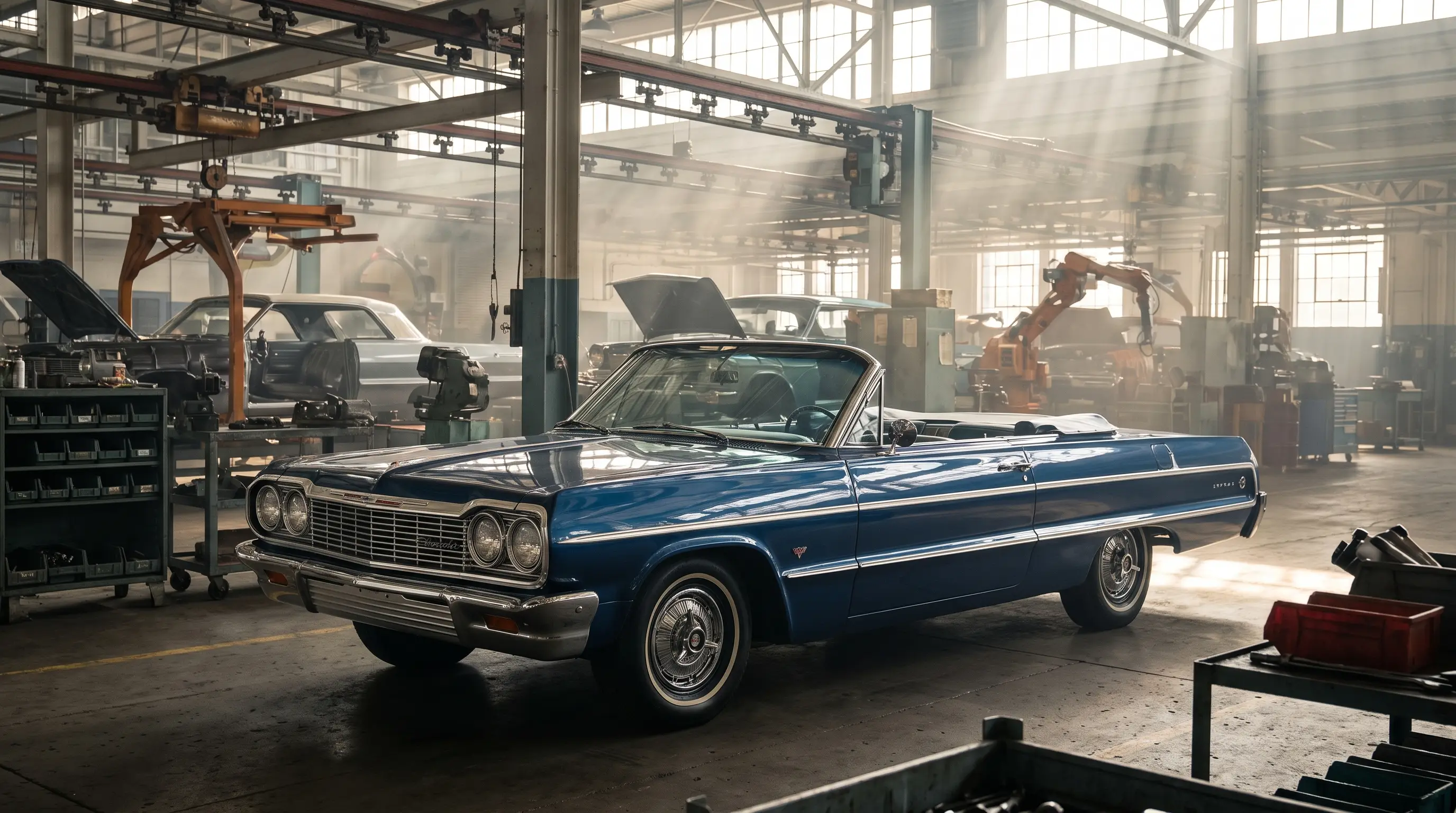
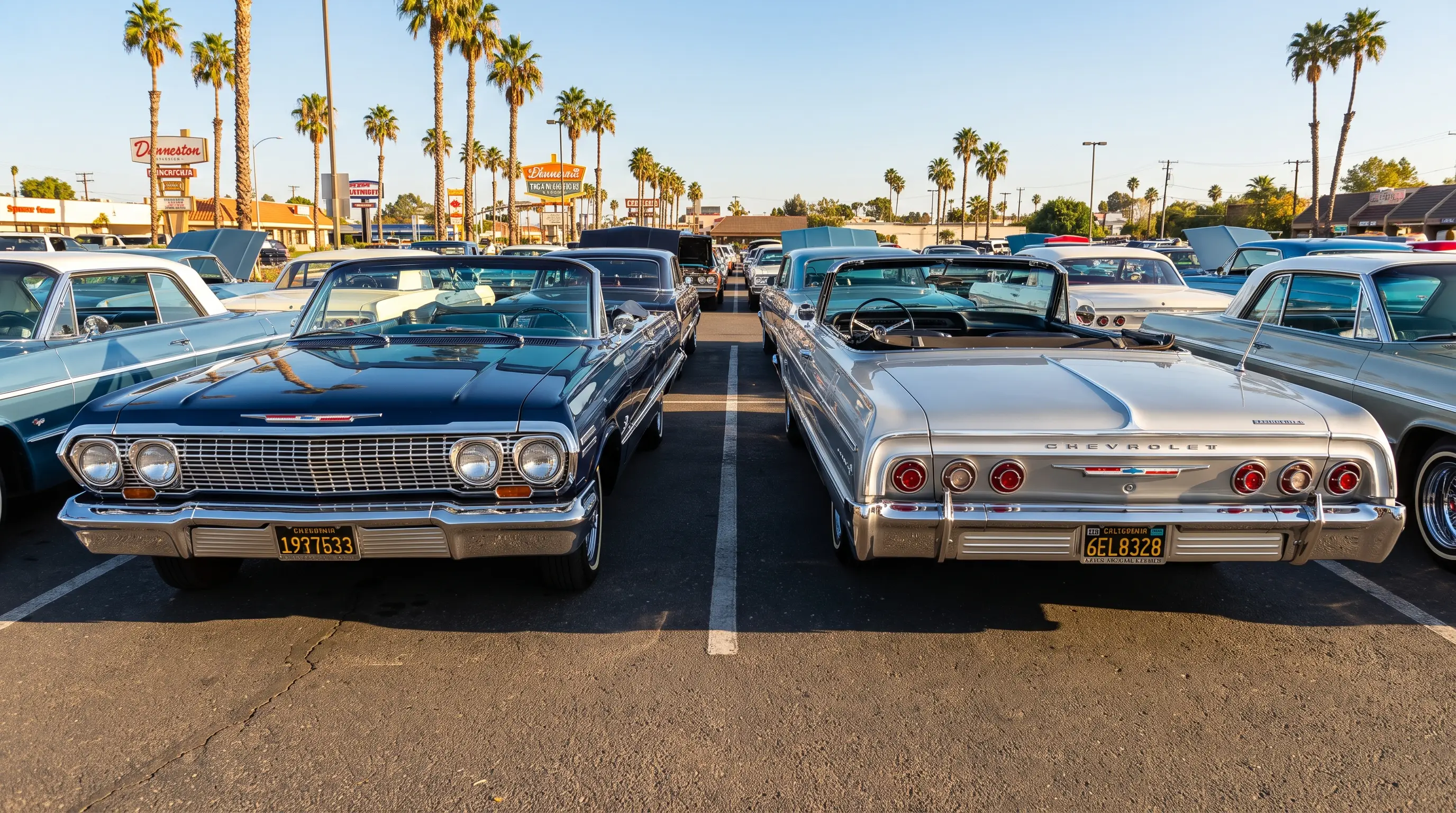
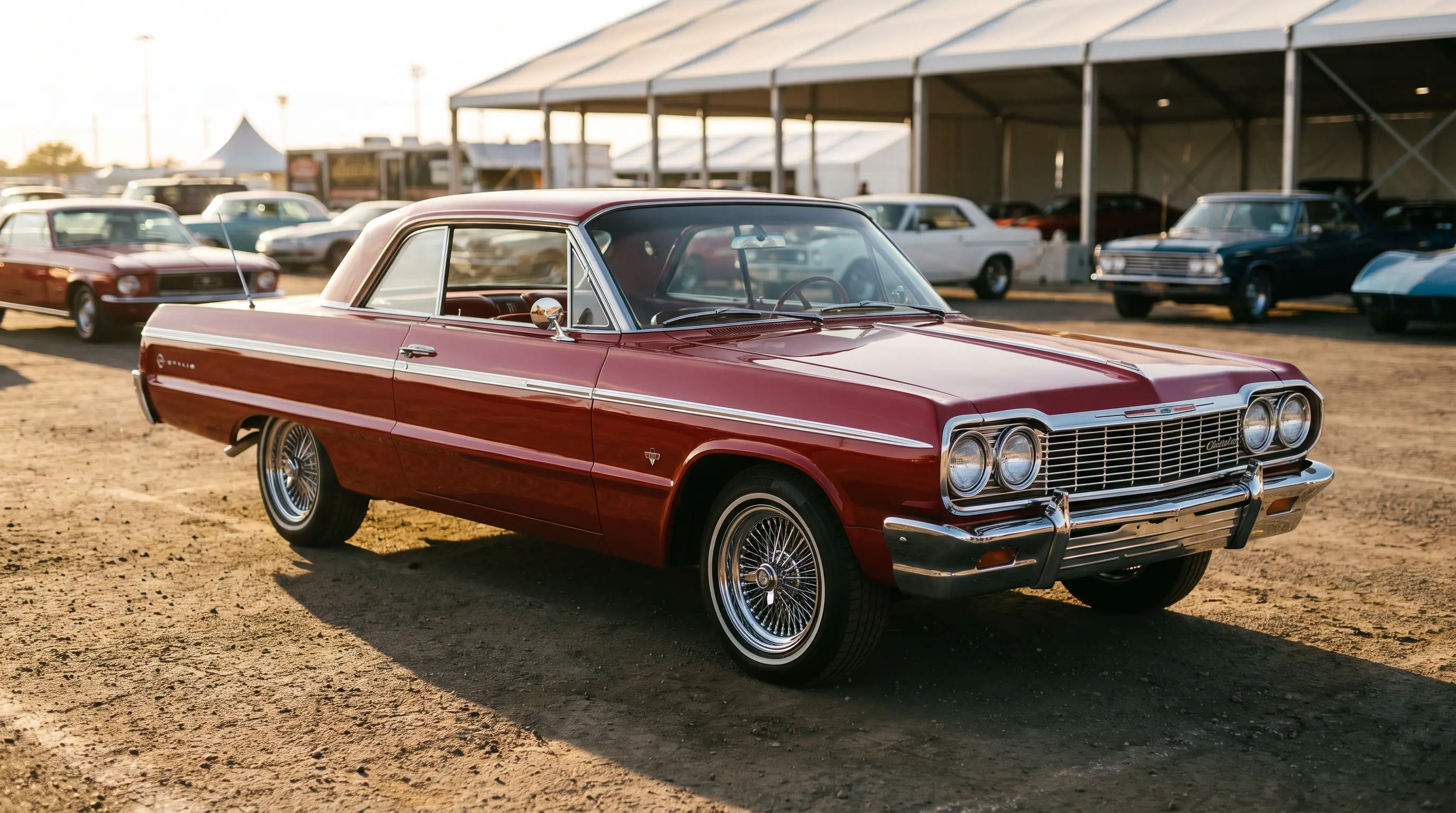
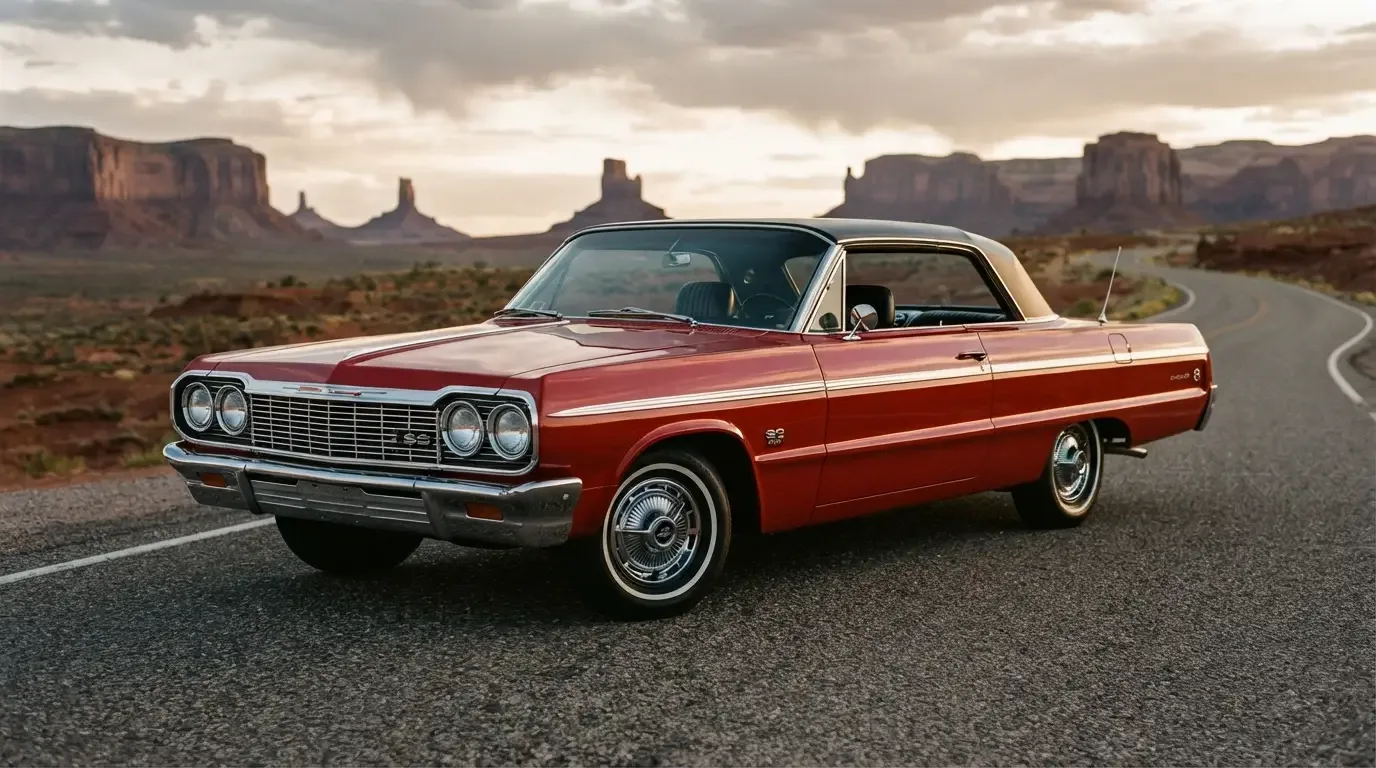
Then came 1964, the final year of the generation and the one that outgrew the car entirely. On paper the 1964 Impala is an evolution: cleaner lines, a refined interior, the same engine range topped by the 409. In the culture it became something else. Decades later, the 1964 Impala is the definitive lowrider, the car of choice for a movement that started in the Mexican-American communities of California and spread through music, film, and photography until the shape was known worldwide.
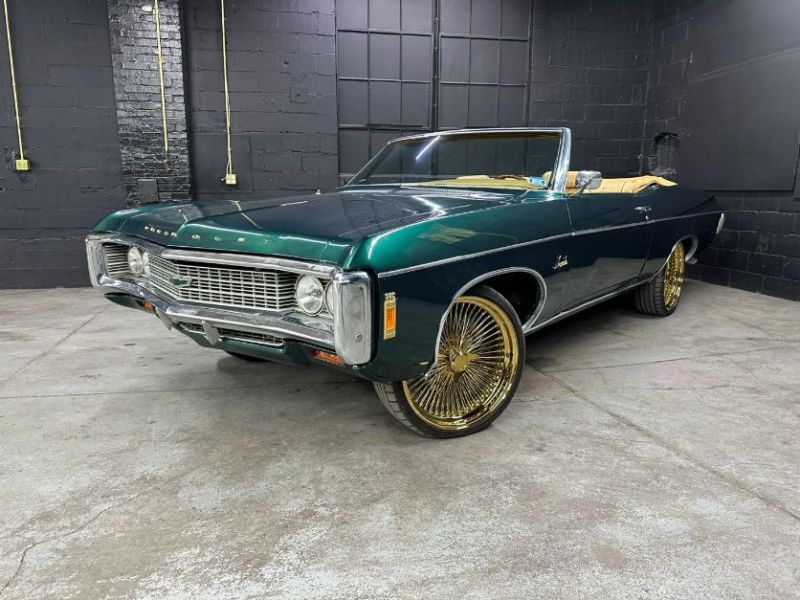
The lowrider builders took a mass-produced family car and turned it into a rolling art form, with candy paint, engraved chrome, and hydraulic suspension that could make the body dance. When hip hop went national, the 1964 Impala went with it, appearing in videos and on album covers until it became visual shorthand for a whole scene. That a car this common became this revered is the heart of its story. It was never rare. It was chosen.
Why the 1964 specifically, and not the 1963 or the 1965 that bracket it? Part of it is the shape. The 1964 sits at a sweet spot of clean, symmetrical lines that look right slammed low over chrome wheels, better than the busier years around it. Part of it is timing, because the car was plentiful and affordable exactly when the movement was taking hold, so builders could find good bodies without spending a fortune. And part of it is simply that culture, once it settles on a symbol, tends to stay loyal. The 1964 became the standard, and once it was the standard, every builder who wanted to be understood at a glance reached for the same year. Tradition compounds. The 1964 Impala is what happens when a shape, a moment, and a community all line up at once.
| Year | Signature | Notable point |
|---|---|---|
| 1961 | Bubble top roofline | Super Sport option introduced mid-year |
| 1962 | Formal Sport Coupe roof | 409 cemented by the Beach Boys |
| 1963 | Sharpened restyle | Peak full-size sales era |
| 1964 | Refined final-year lines | Definitive lowrider icon |
Why these four years still matter
Put the whole run together and you can watch an ordinary car become a legend in real time. The bubble top gave it style, the Super Sport gave it swagger, the 409 gave it a soundtrack, and the lowrider movement gave the 1964 an afterlife no marketing department could have planned. Not many cars get a second life richer than their first. The 1964 Impala got exactly that.
For anyone looking now, the appeal cuts several ways. Purists chase original SS and 409 cars. Builders chase clean bodies to turn into lowriders in the tradition. And plenty of buyers just want the shape they grew up seeing on the street and on screen. Whatever the motive, there are always Impalas for sale now from these years, and the spread of conditions and configurations is as wide as the cars' own history.
The two camps rarely see eye to eye, and that tension is part of what makes the 1964 such a fascinating car to follow. To the restoration purist, an untouched, numbers-matching Sport Coupe is the goal, and a lowrider conversion is a car that has lost its originality. To the lowrider builder, a factory-stock 1964 is a blank canvas, and the real artistry begins where the assembly line stopped. Both views are honest, and both have deep roots. The car is big enough to hold both, which is more than most classics can say. A 1957 Bel Air belongs firmly to the restoration world. The 1964 Impala lives in two worlds at once, and neither is willing to give it up.
The last word on the run
The 1961 to 1964 Impala is where the nameplate stopped being just a good car and started being a cultural object. The bubble top, the Super Sport, the 409, and finally the lowrider 1964 each added a layer, and the layers never came off. You can restore one of these cars perfectly and it will still carry all of that history in its shape. That is a rare thing to own, and it is why the 1964 Impala, in particular, remains one of the most recognized American cars ever built.
Ask anyone who has owned one and the same theme comes up. You do not just buy the car, you buy the reaction to it. Pull up anywhere in a clean 1964 and people come over, and half of them have a story, a parent who drove one, a cousin who built one, a song they remember. Few cars turn a trip to get fuel into a conversation the way this one does. That is the dividend on all that accumulated history, and it is the part no spec sheet can measure.
"You can tell someone the 1964 Impala was one of the most common cars in America and it doesn't dent the magic. It became an icon not because it was scarce, but because a whole culture decided it was worth loving. That is a harder thing to earn than rarity."
- Patrick Walsh