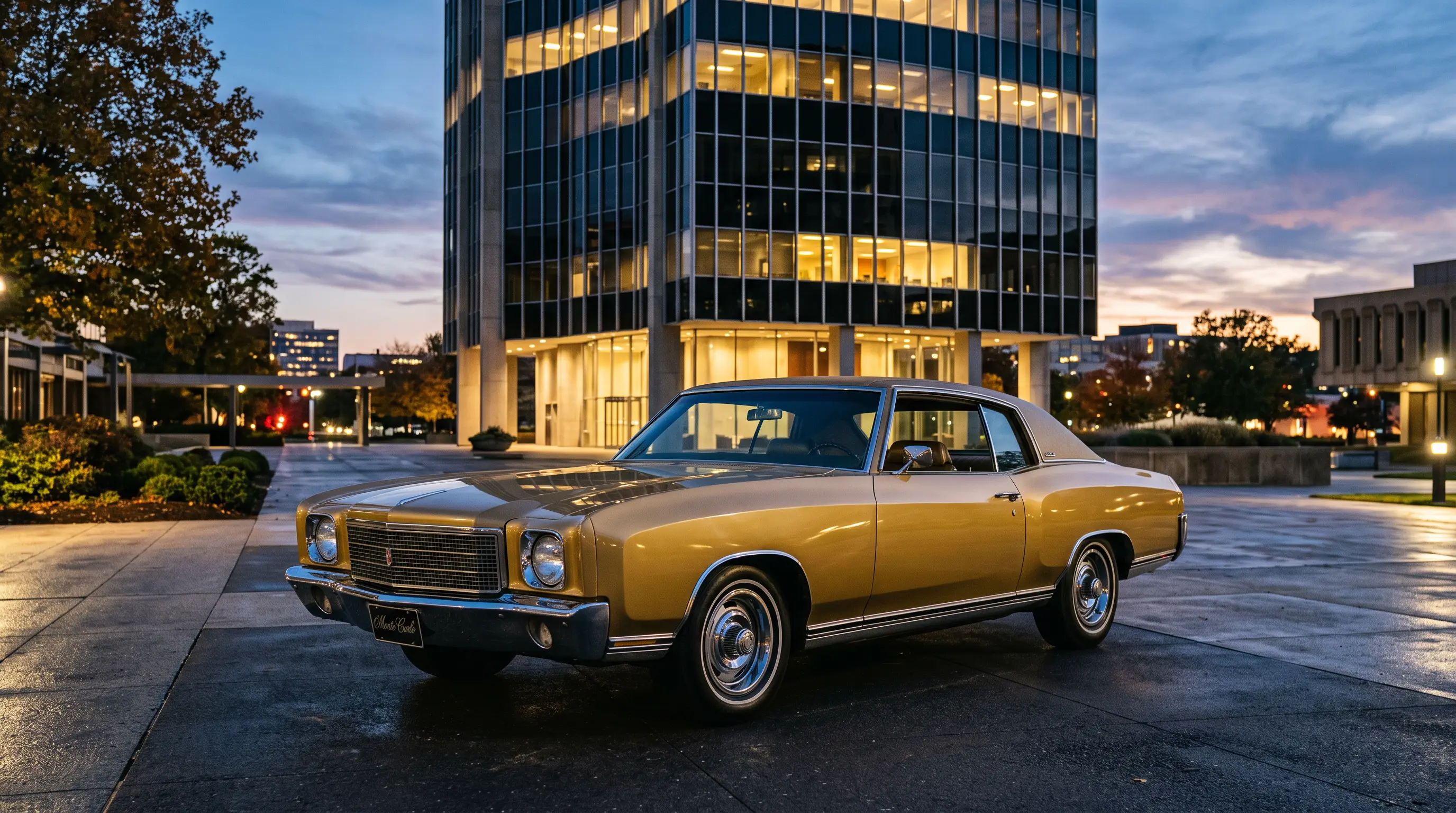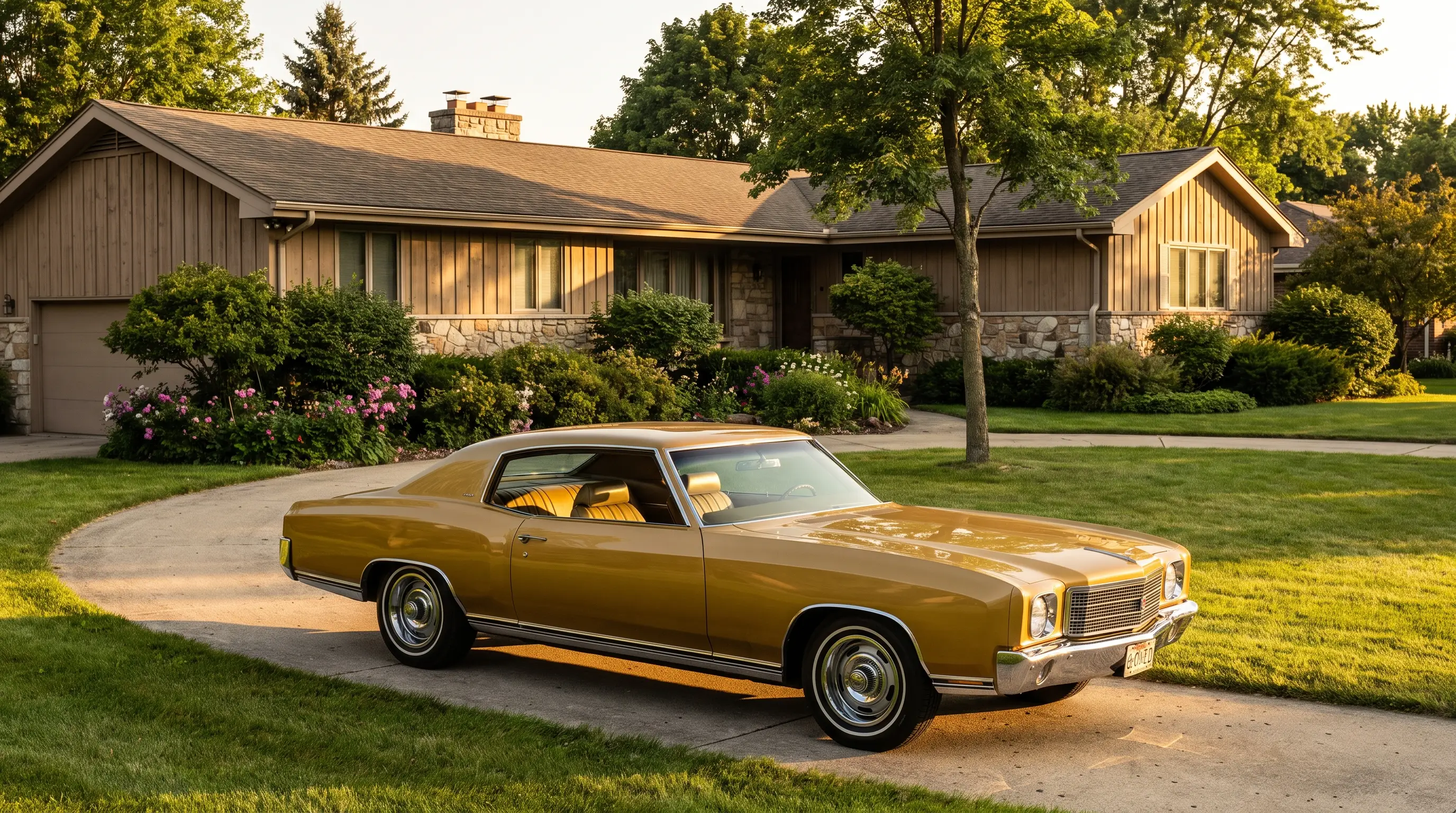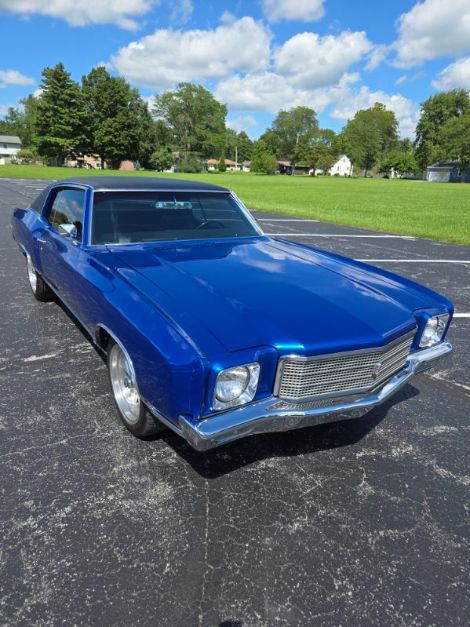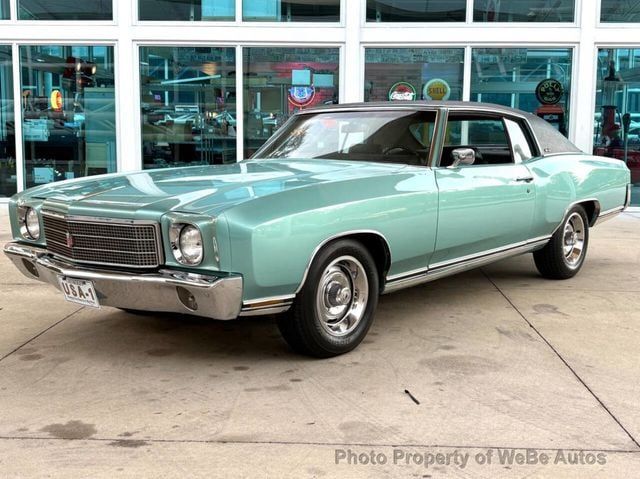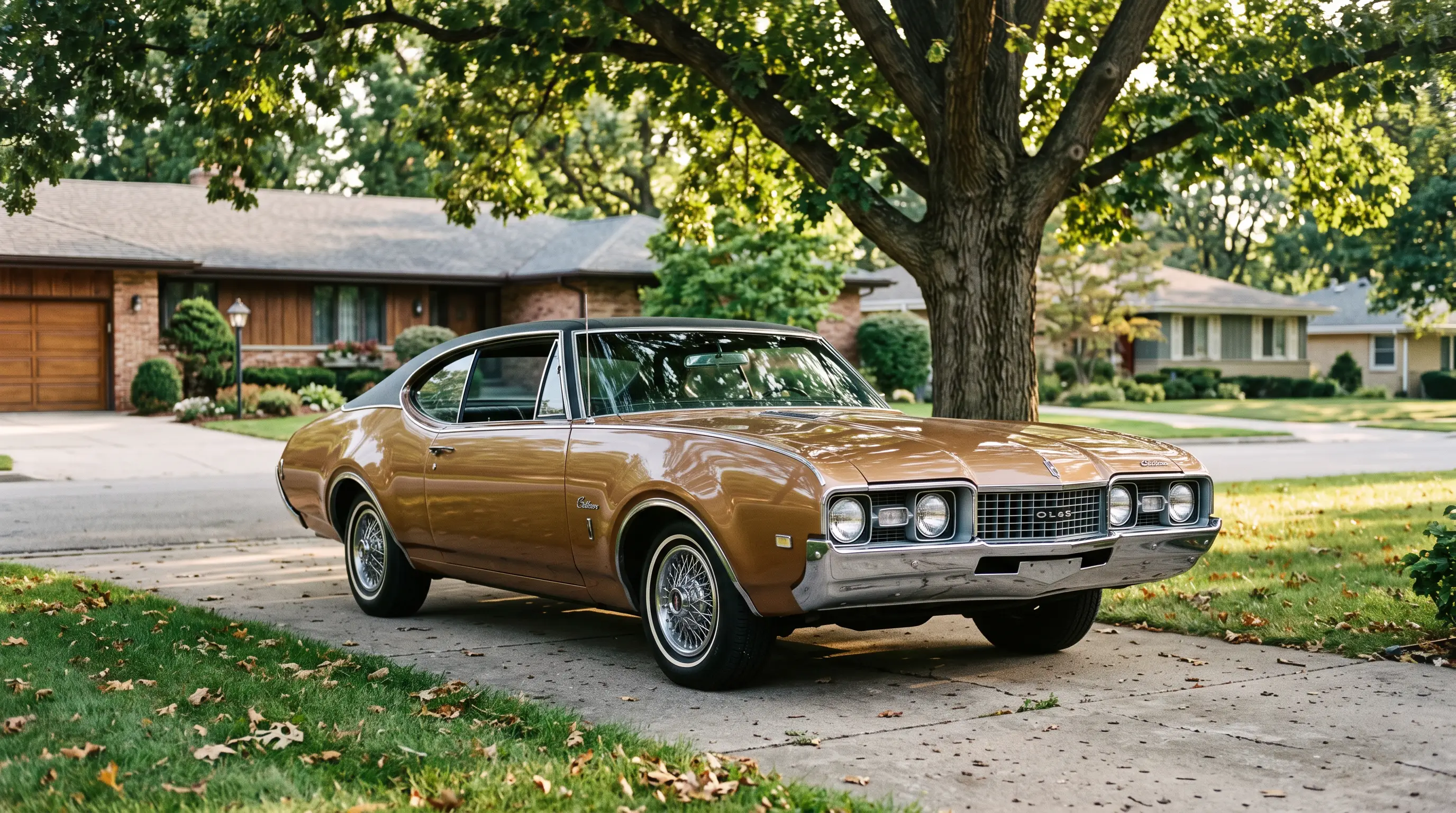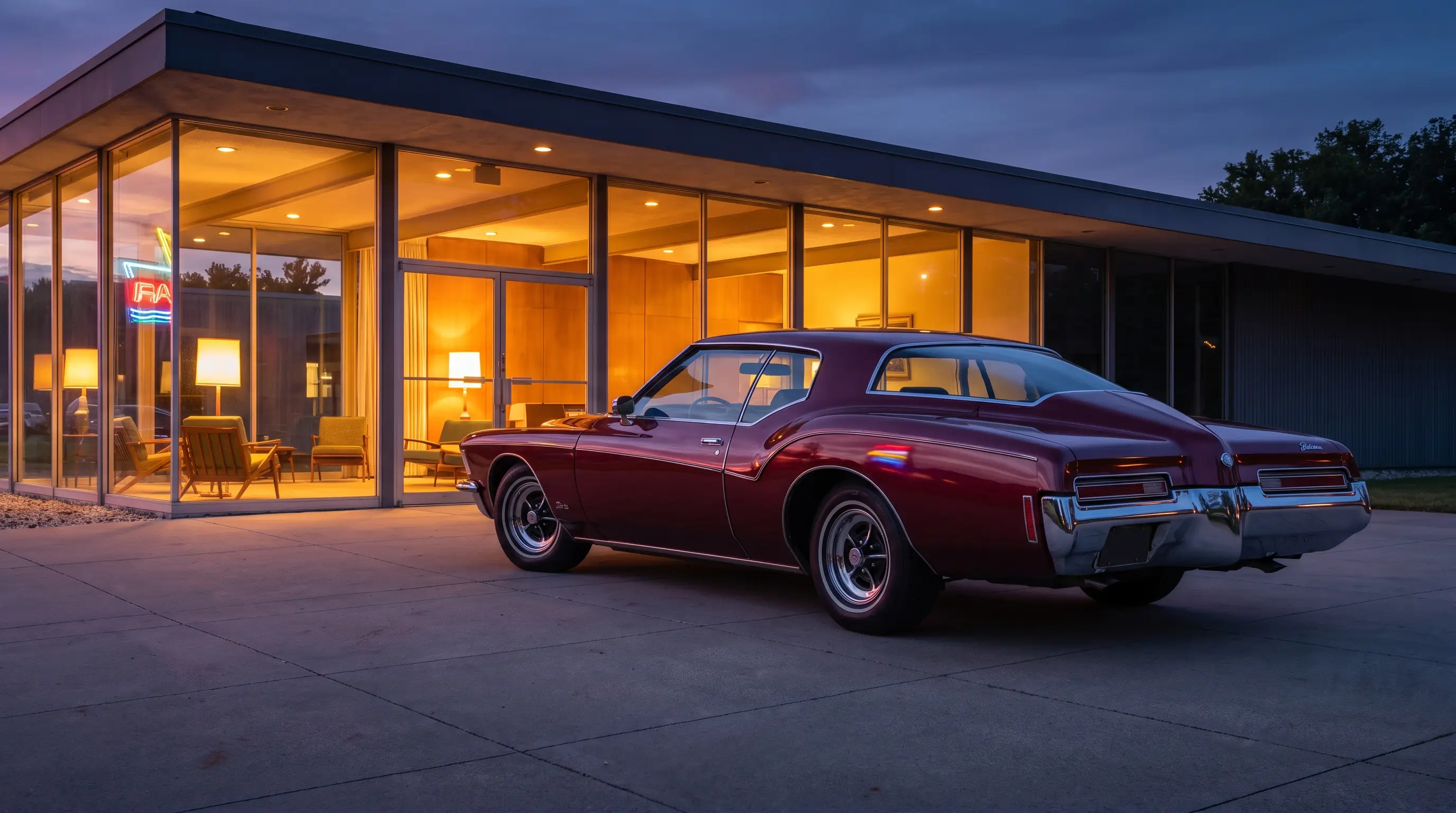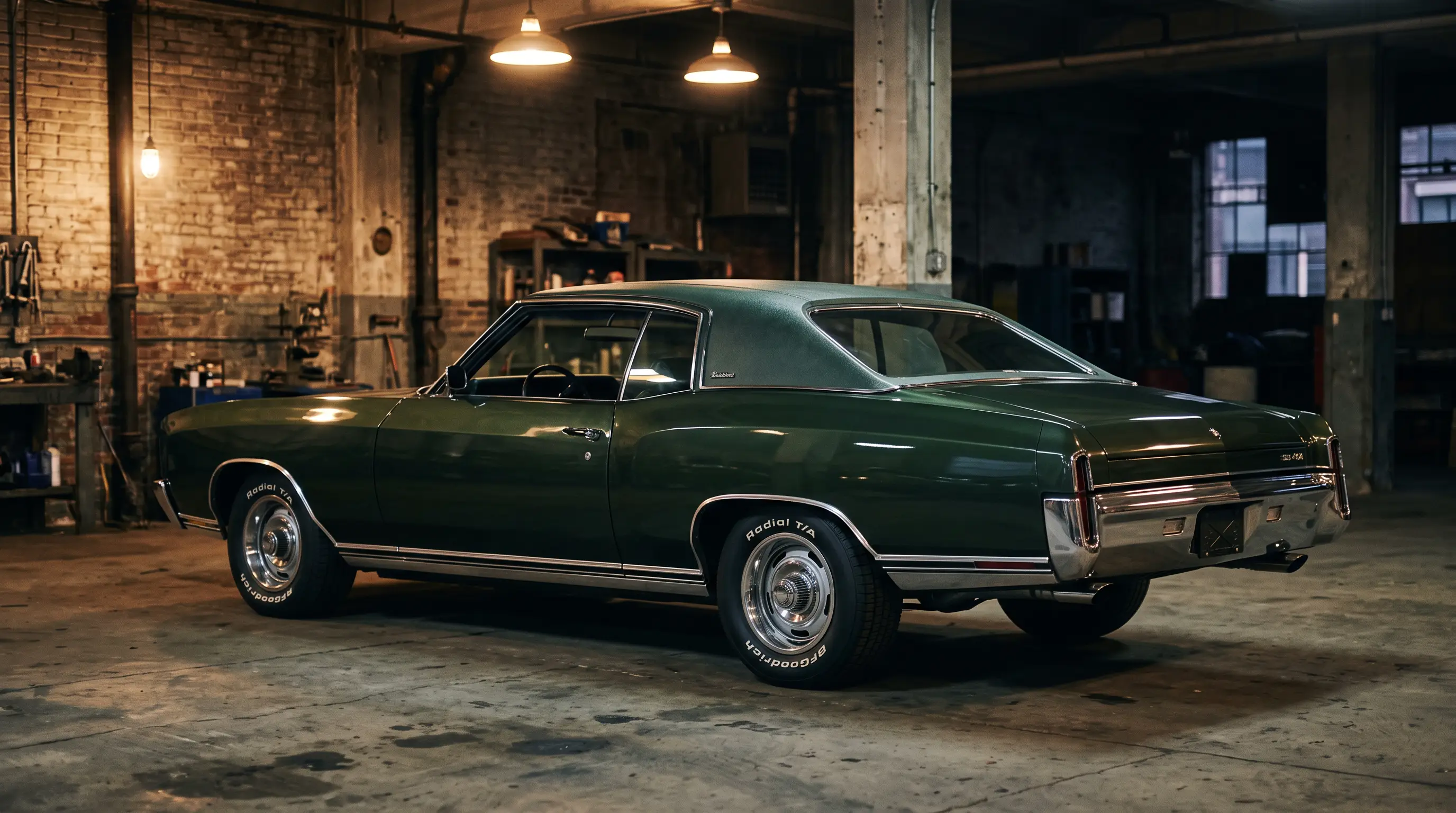
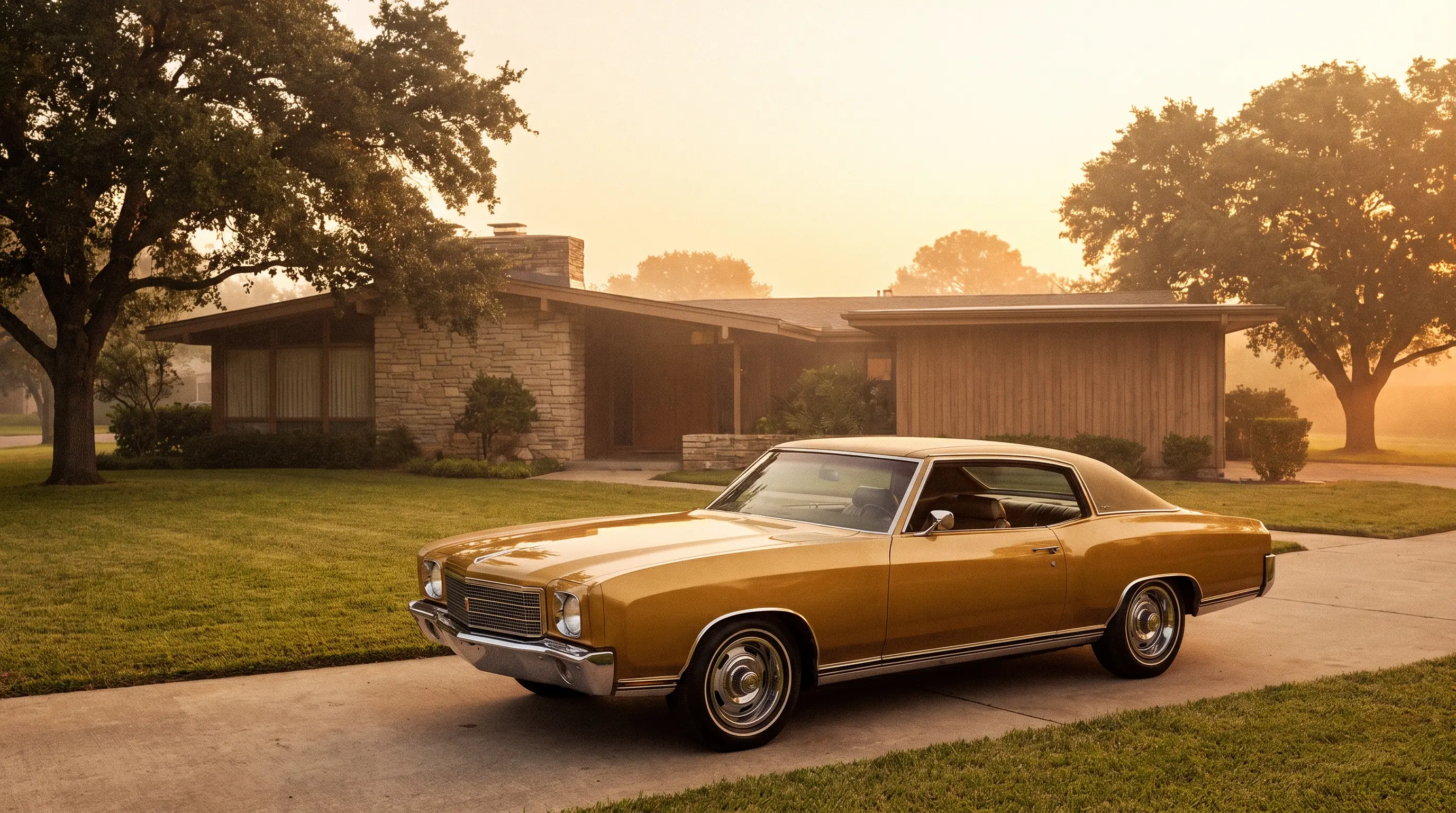
Picture a magazine spread from late 1969, the kind that landed in a mailbox alongside a stack of bills and a Sears catalog. A well-dressed couple stands beside a long-hooded coupe in evening light, the car angled just so, catching a last streak of sun across its flank. That was the visual language Chevrolet chose for the monte carlo 1970 advertising campaign, and it was a deliberate departure from how the division had been selling cars to America all decade.
Selling a feeling instead of a feature list
Chevrolet had spent the 1960s selling performance in numbers, cubic inches, quarter-mile times, horsepower figures printed boldly enough to read from across a showroom floor. The Monte Carlo campaign did something quieter. Rather than leading with a spec sheet, the advertising leaned on mood, soft-focus photography, couples dressed for an evening out, settings that suggested arrival rather than departure. The car was framed less as a machine to be conquered on a strip and more as a reward, something a person bought themselves after getting somewhere in life worth marking.
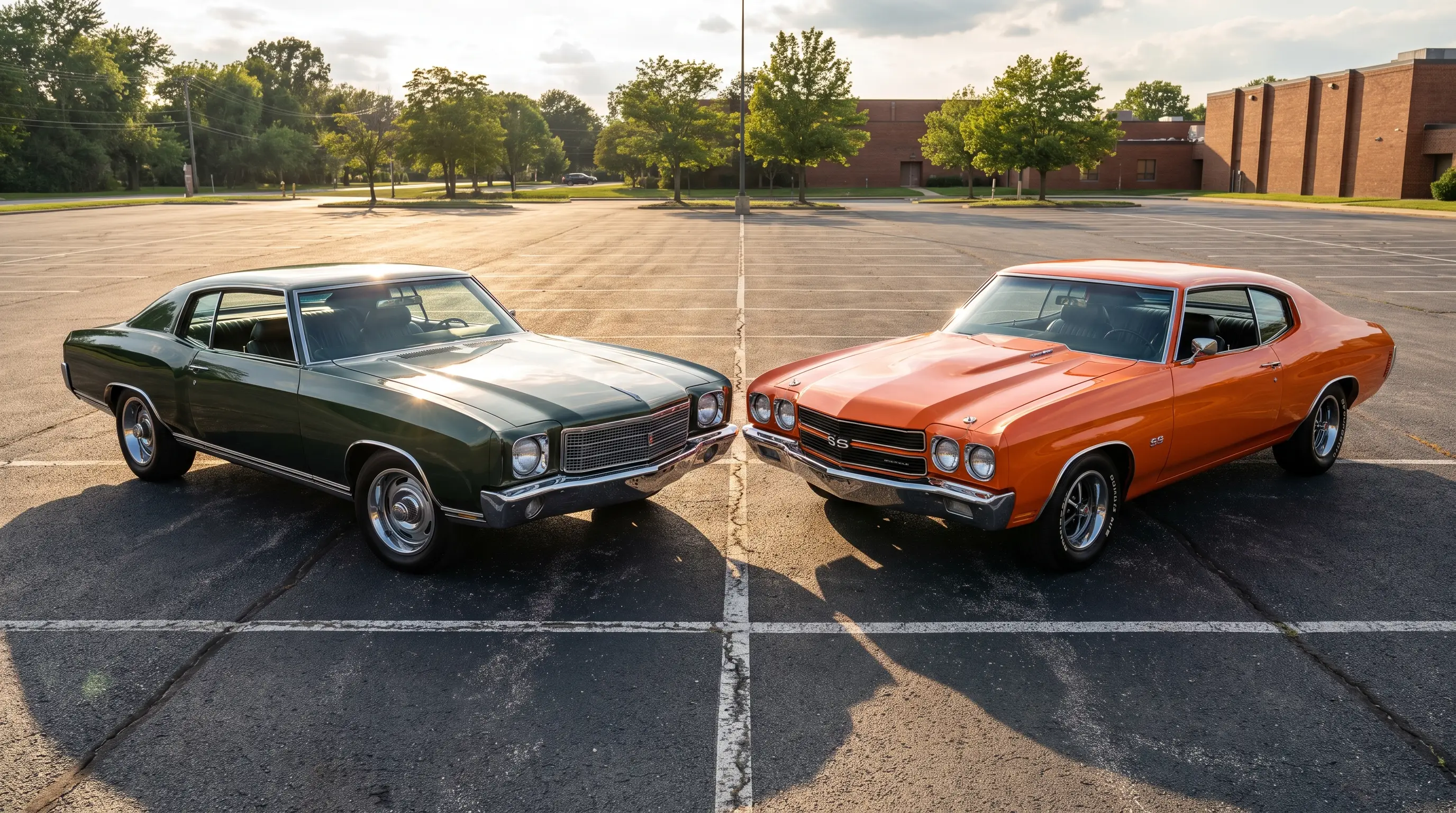
That shift mattered because Chevrolet was introducing a genuinely new kind of product to its own lineup. The Monte Carlo needed buyers to understand, almost instinctively, that this was not another muscle car wearing a bowtie. The imagery did that work before a single spec ever entered the conversation.
Print ads built for a different kind of reader
Where Chevelle and Camaro advertising ran hard in enthusiast magazines built around performance, Monte Carlo print placements reached further into general-interest and lifestyle titles, chasing a reader who might never open a car magazine but who cared deeply about how a purchase reflected on them. The copy in these ads tended toward restraint, describing comfort, quiet, and craftsmanship rather than 0-to-60 numbers, a register closer to how a furniture or watch advertisement of the era might have read than a typical Detroit muscle car pitch.
The photography carried as much weight as the words. Interior shots lingered on the simulated wood trim and available Strato bucket seating, giving prospective buyers a sense of what their own hands would touch every time they slid behind the wheel, long before they ever sat in one at a dealership.
The couple in the frame
There's something worth sitting with in how consistently Chevrolet's Monte Carlo advertising returned to the image of two people, rarely a lone driver, rarely a family with children crowding a back seat. This was a car pictured as something shared between two adults with somewhere to be and someone to be seen with. It's a small detail, but it says a great deal about who Chevrolet believed was actually signing the loan paperwork for this car, and it drew a clear line between the Monte Carlo's intended buyer and the more solitary, driver-focused fantasy that performance car advertising usually sold.
That choice paid off. The car found its audience quickly and in real numbers, moving 145,976 units in its debut year, a first-year sales result that validated both the product and the advertising built around it almost immediately.
An advertising strategy that outlived its own campaign
What's easy to miss, looking back from decades later, is how much the Monte Carlo's personal luxury advertising approach shaped the way Chevrolet and its GM siblings would go on marketing similar cars for years afterward. The mood-first, feature-second playbook the 1970 campaign established became the template for personal luxury advertising across the segment through the rest of the decade. In that sense, the ads did more than sell one model year. They taught an entire category of American car buyer how to want this kind of car, one soft-focus magazine spread at a time.
Television advertising during this period leaned on a similar restraint, though the medium demanded a different kind of patience. Where a print ad could linger indefinitely on a single frame, a thirty-second commercial had to establish mood almost instantly, usually opening on the car already in motion through a quiet, well-lit street rather than building toward a reveal the way performance car commercials of the same decade often did. Voiceover copy stayed measured rather than urgent, another small signal that Chevrolet wanted this particular ad campaign to feel unhurried, in keeping with the unhurried life it was implicitly selling alongside the car.
Dealership materials extended the same visual language down to the showroom floor. Brochures handed to walk-in customers echoed the magazine photography almost exactly, the same soft lighting, the same emphasis on interior craftsmanship over engine bay hardware. A salesperson working the Monte Carlo in 1970 was, in effect, continuing a story the advertising had already started weeks earlier in a magazine somebody had flipped through at home, which made the eventual test drive feel less like a cold sales pitch and more like the next chapter in something the buyer had already started imagining for themselves.
Looking at surviving print ads and brochures today, what still holds up is the confidence behind the whole approach. Chevrolet wasn't hedging with a campaign that tried to be everything to everyone. It committed fully to one emotional register and trusted a specific kind of buyer to recognize themselves in it, a bet that the sales figures suggest paid off far more completely than the division could have counted on going in.
What's easy to overlook now, looking at faded magazine pages under a collector's protective sleeve, is how much risk Chevrolet was actually taking with that confidence. The Monte Carlo had no sales history of its own to lean on, no prior model year of goodwill to draw from the way an established nameplate could. Every choice the advertising team made, the couple instead of the solo driver, the evening light instead of a sunlit drag strip, the quiet copy instead of a horsepower headline, was a bet placed without the safety net of knowing it would work. Seen that way, the campaign reads less like a safe marketing exercise and more like a genuine gamble on a new kind of American car buyer, one the sales numbers eventually proved Chevrolet had read correctly.
"You can learn almost as much about who a car was built for from the way it was photographed as from anything under its hood."
- Nora Beckett
The advertising only worked because the car underneath it delivered on the mood the campaign promised, a claim worth tracing back to how the Monte Carlo actually came together as a product. For where this started, the debut story fills in how Chevrolet built the car the advertising was selling. And for anyone who's looked at enough of those old magazine spreads to want the real thing parked in their own driveway, you can shop classic Monte Carlo listings and see how well the surviving cars still live up to the picture.