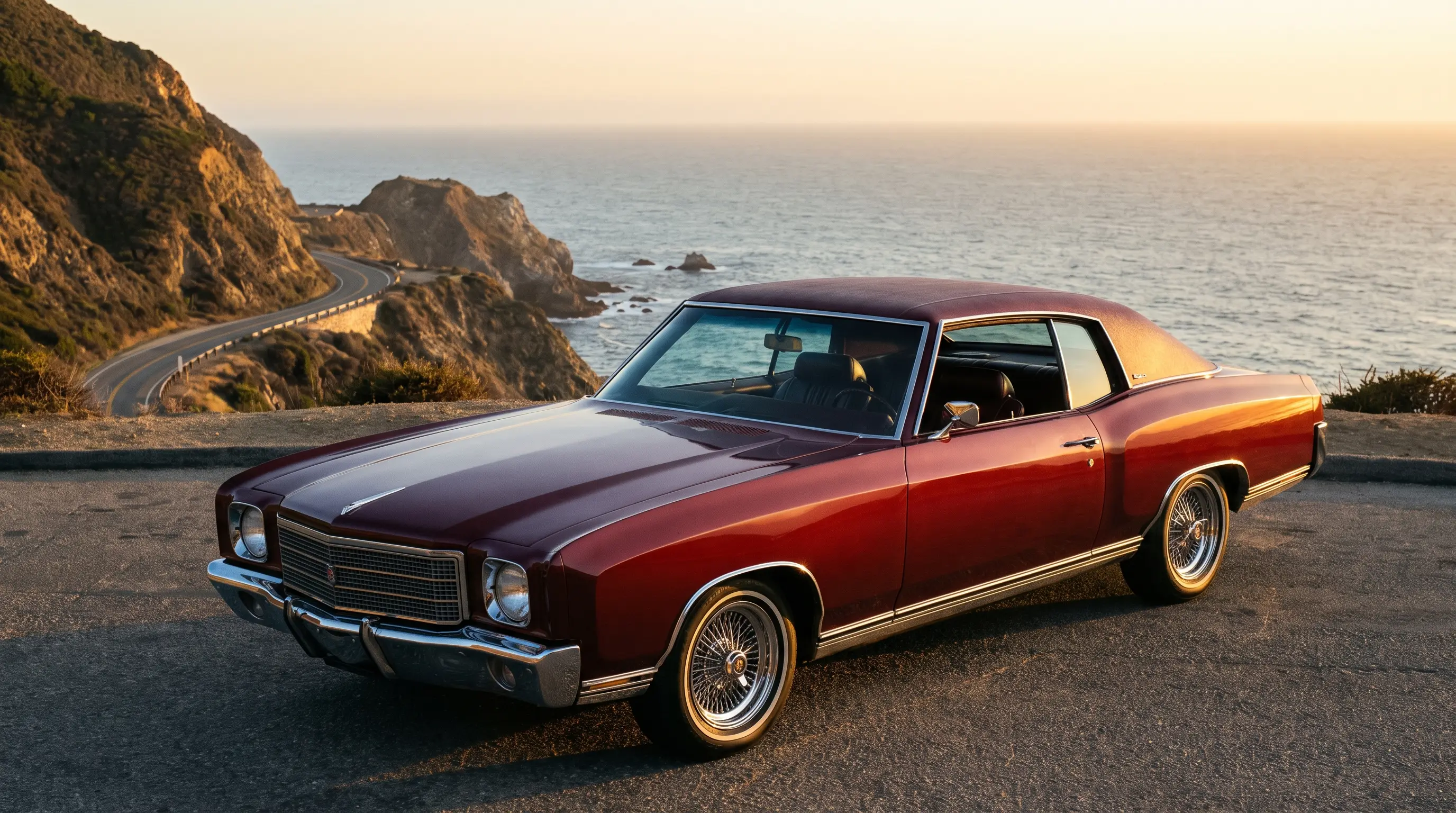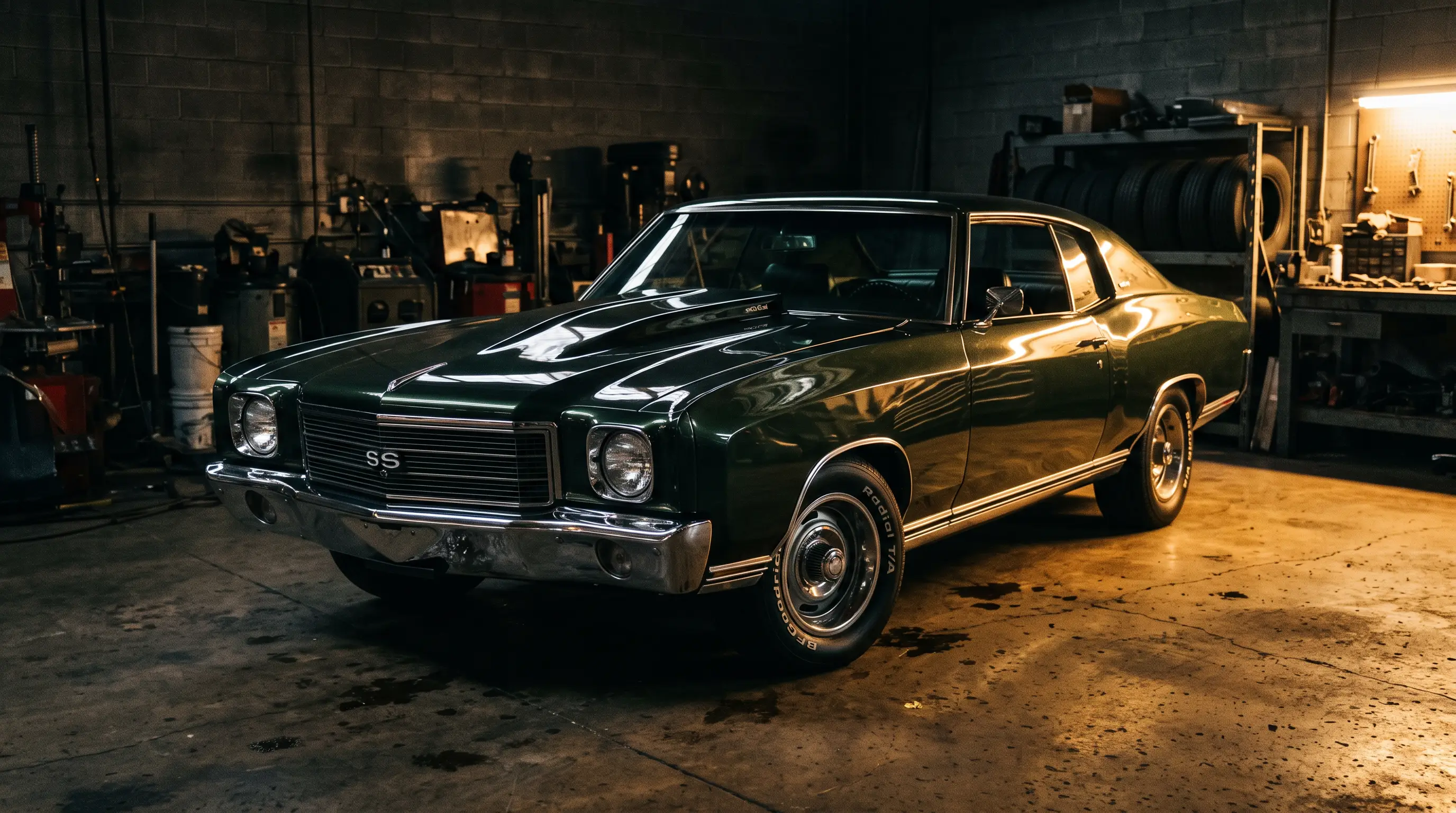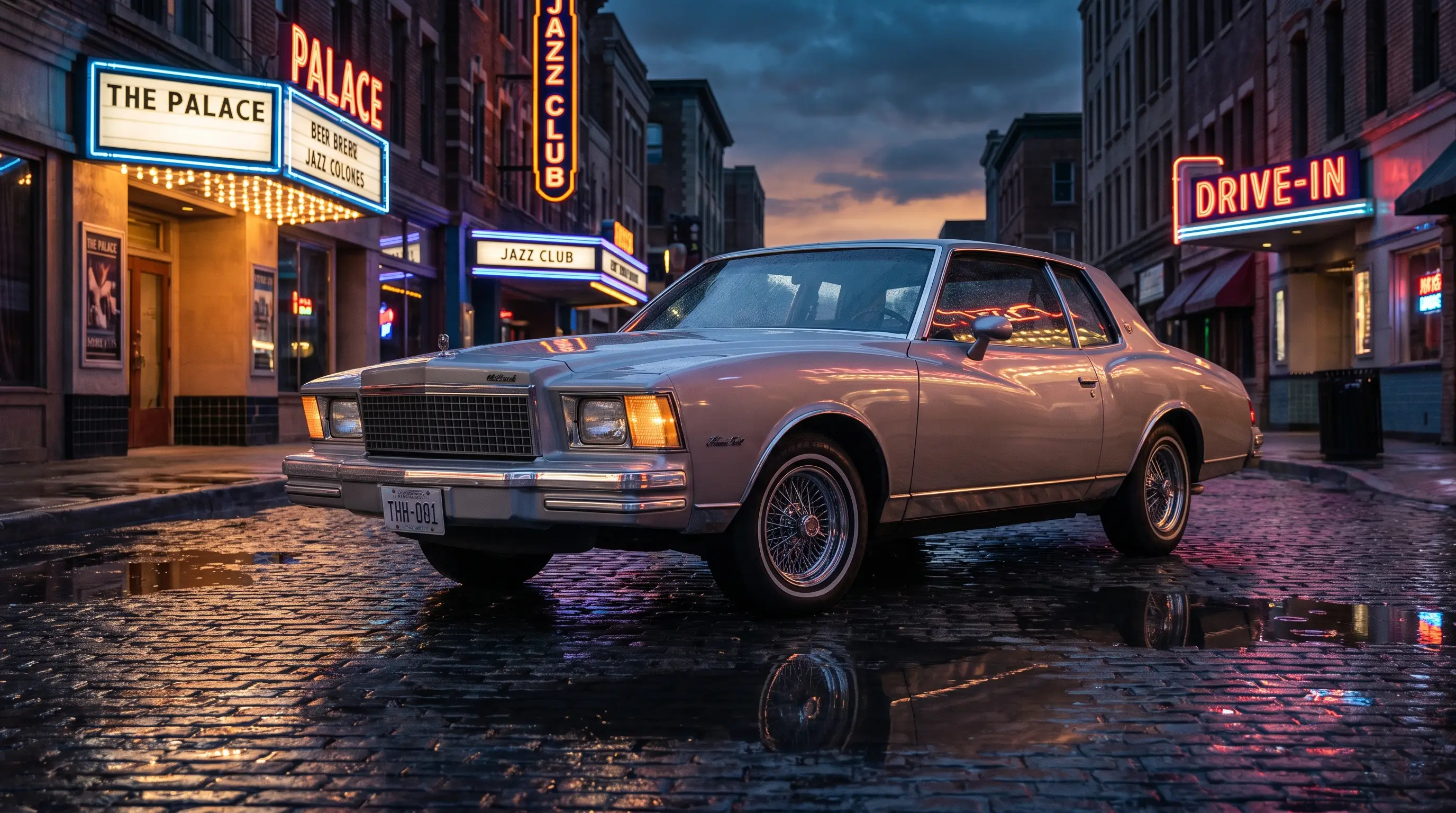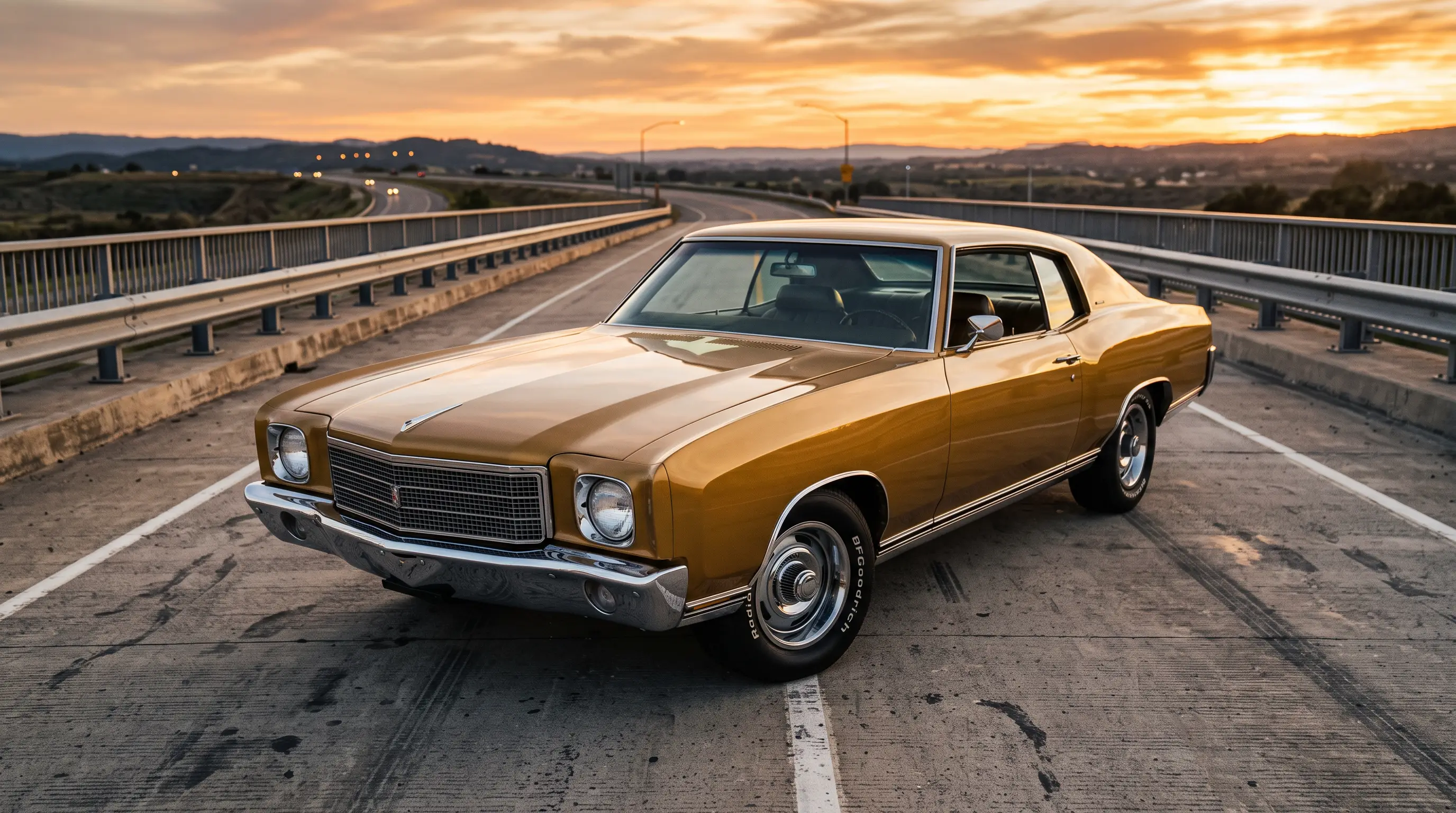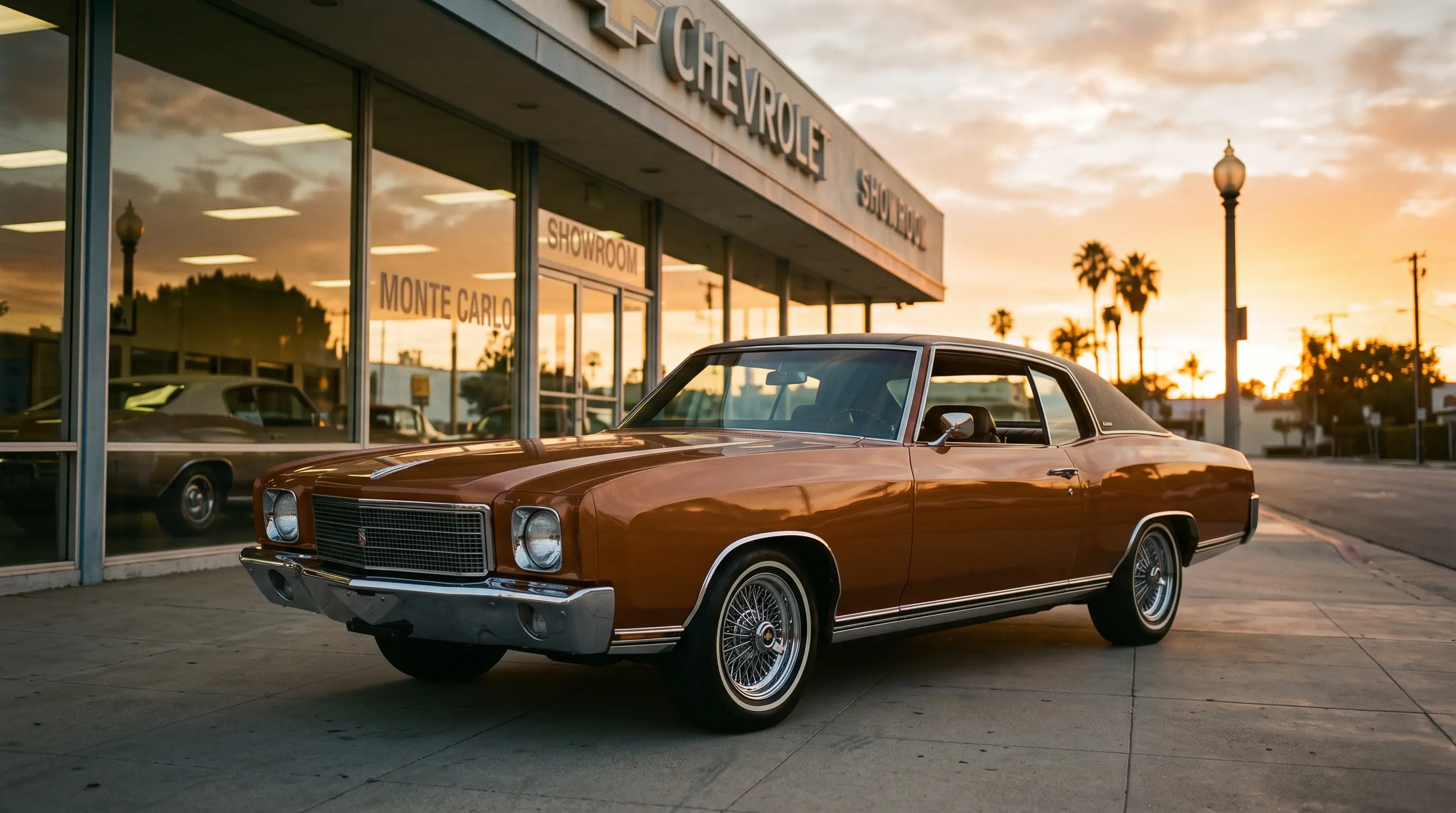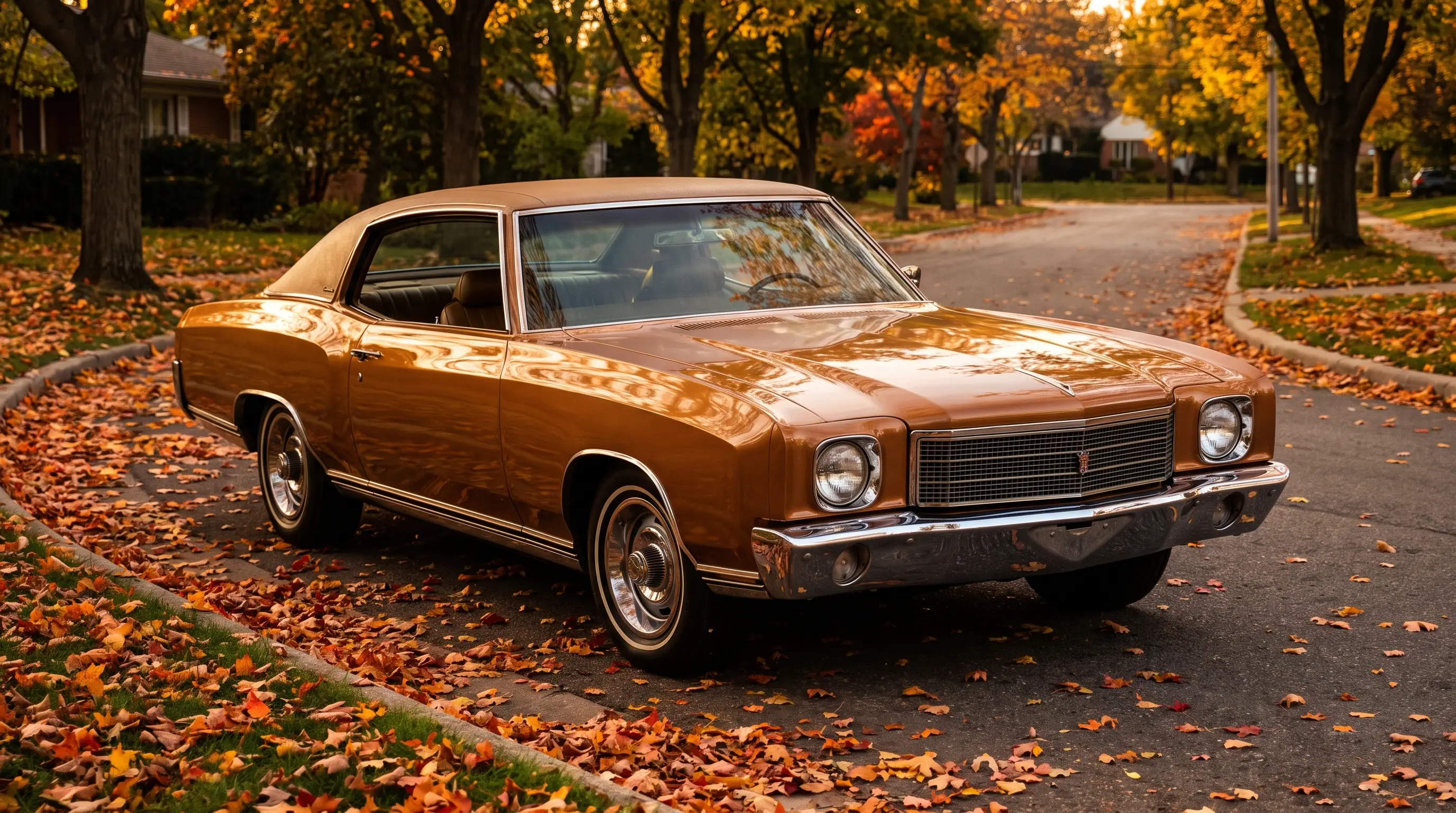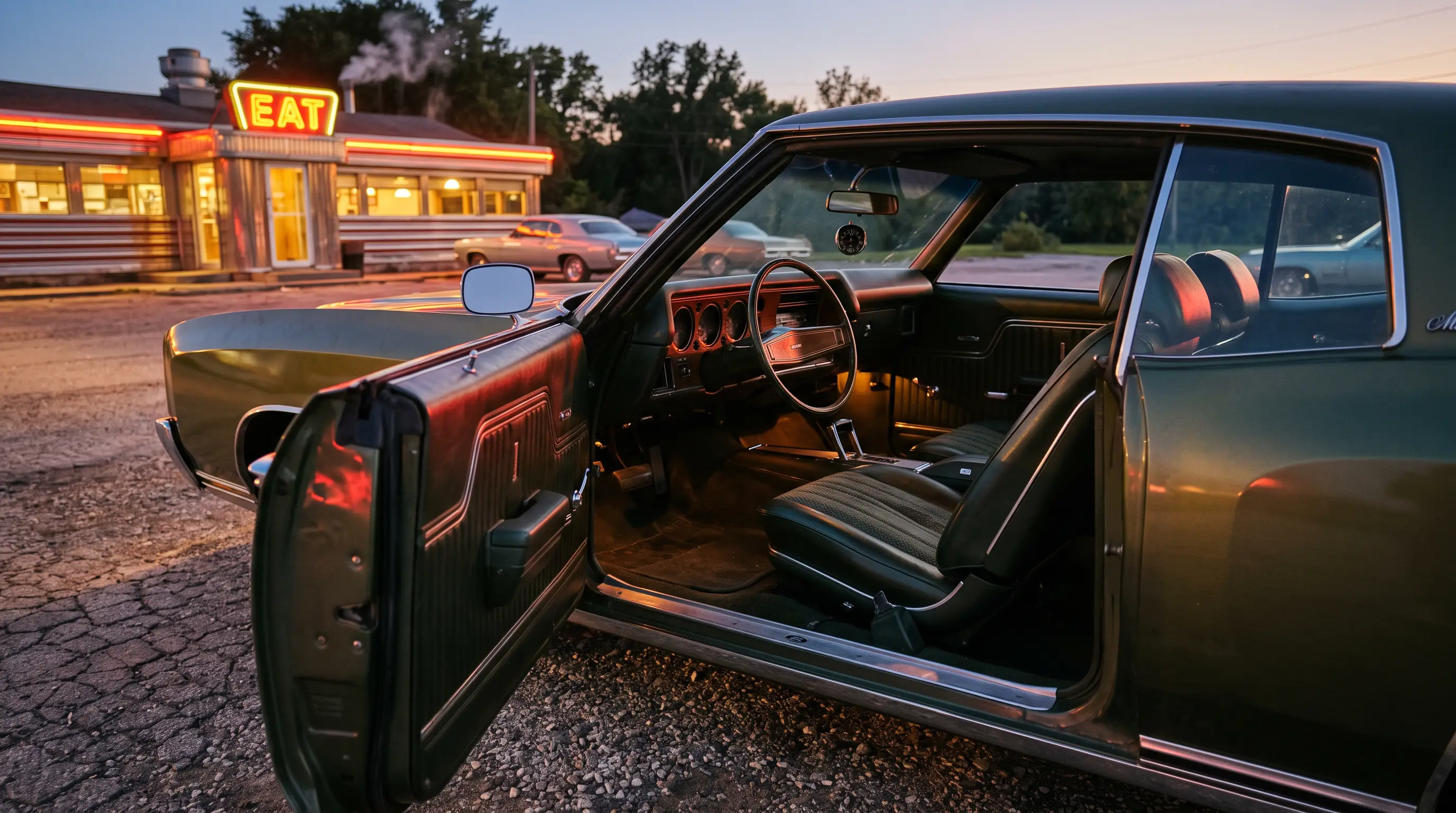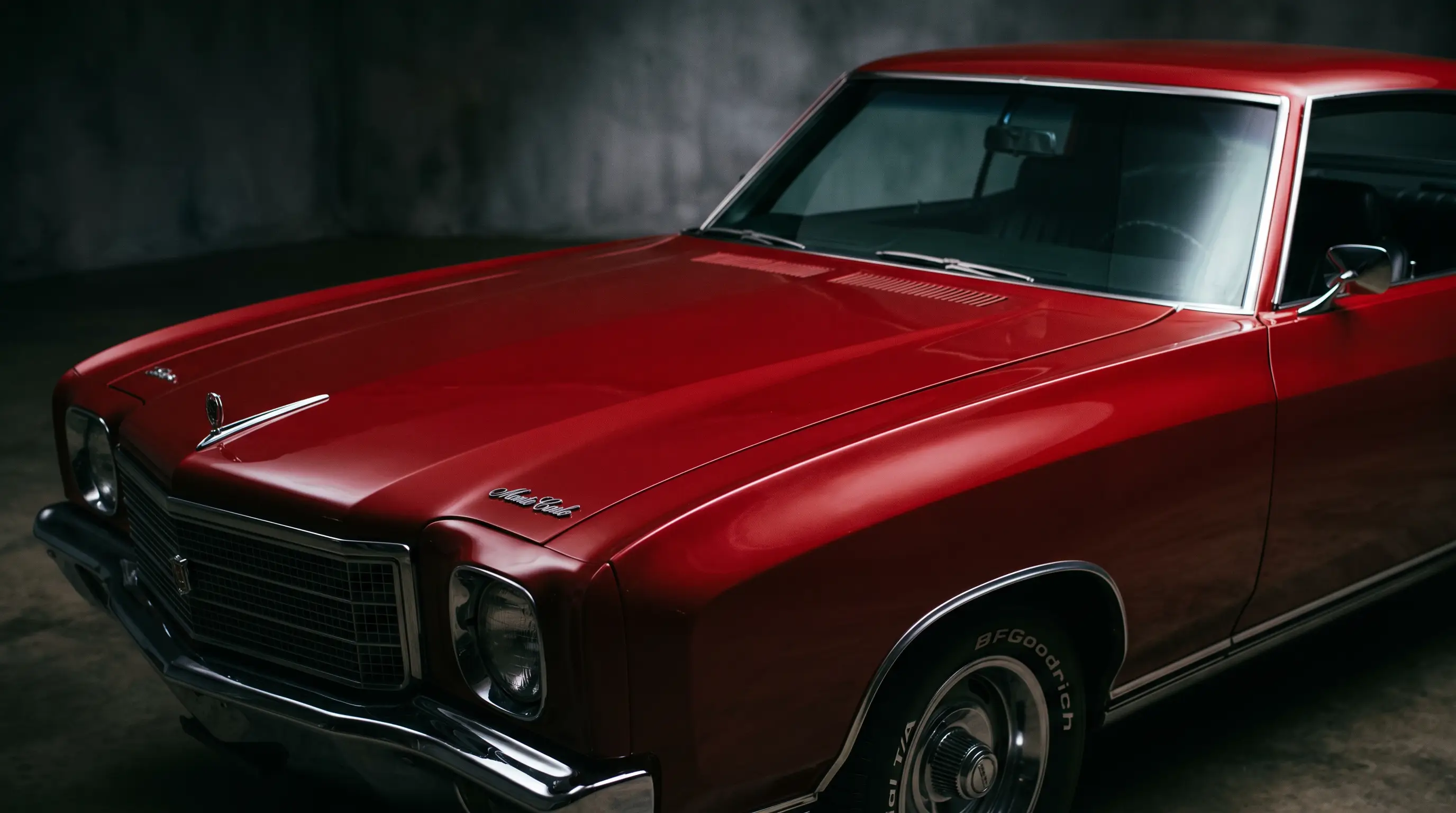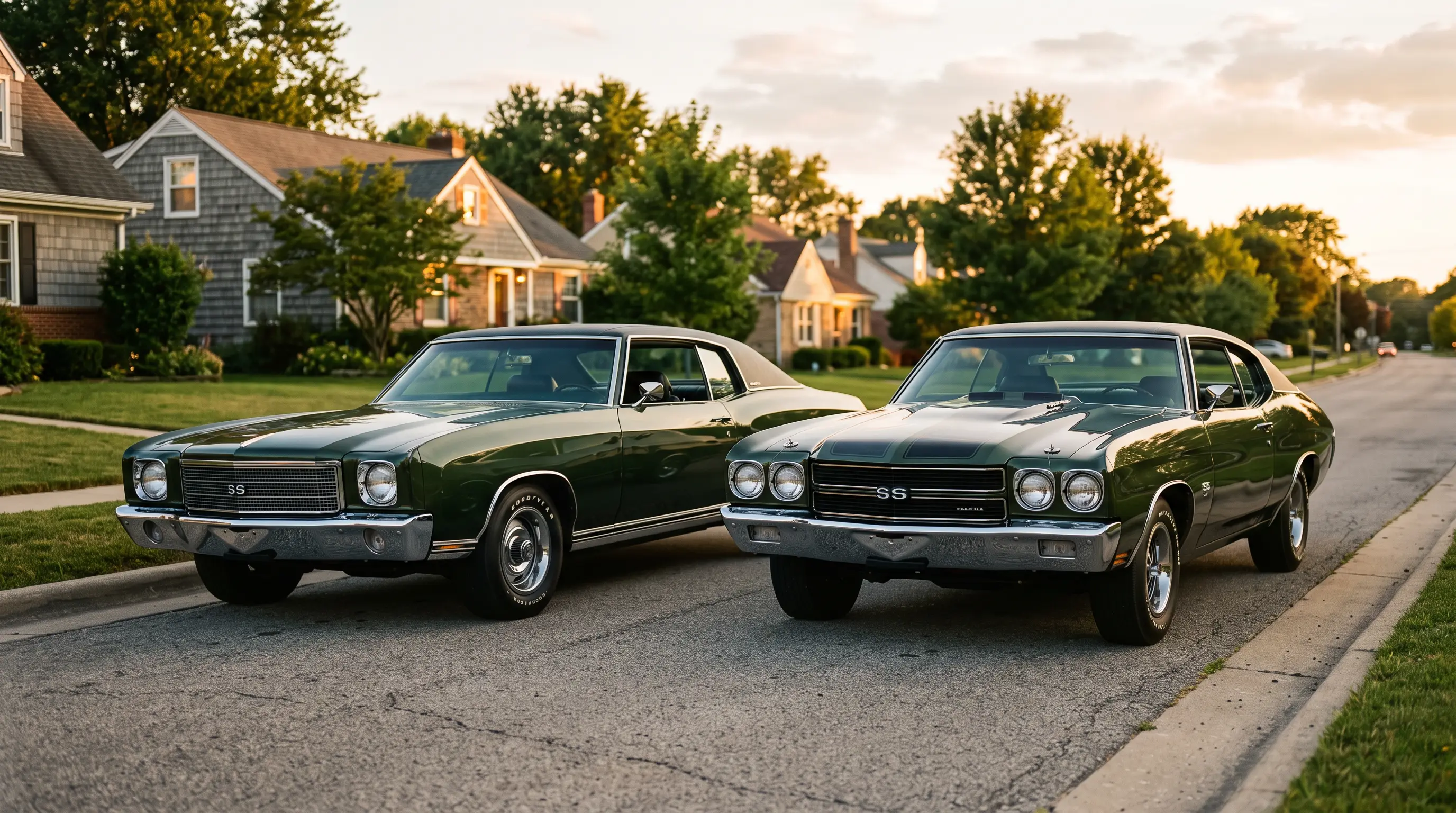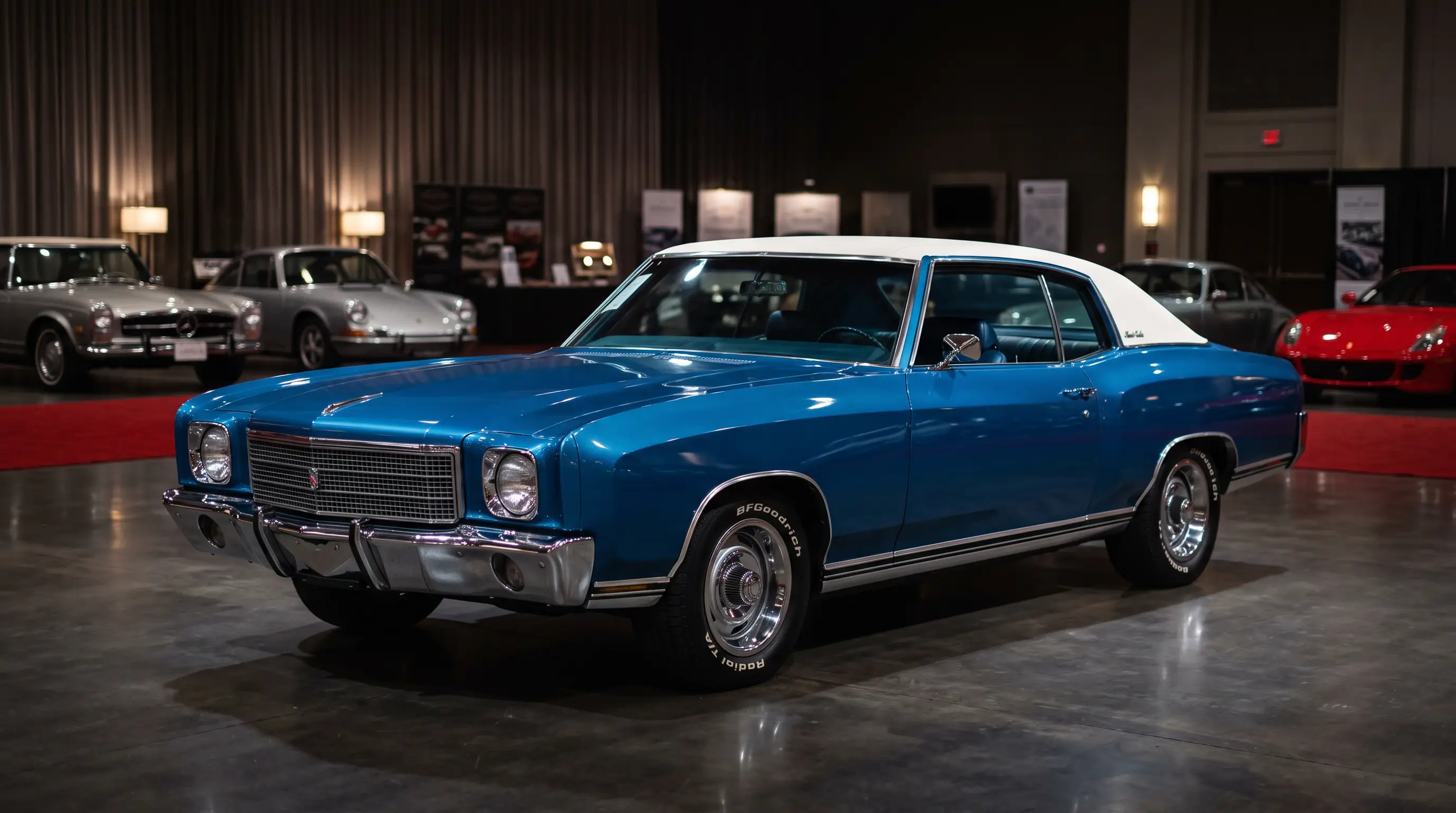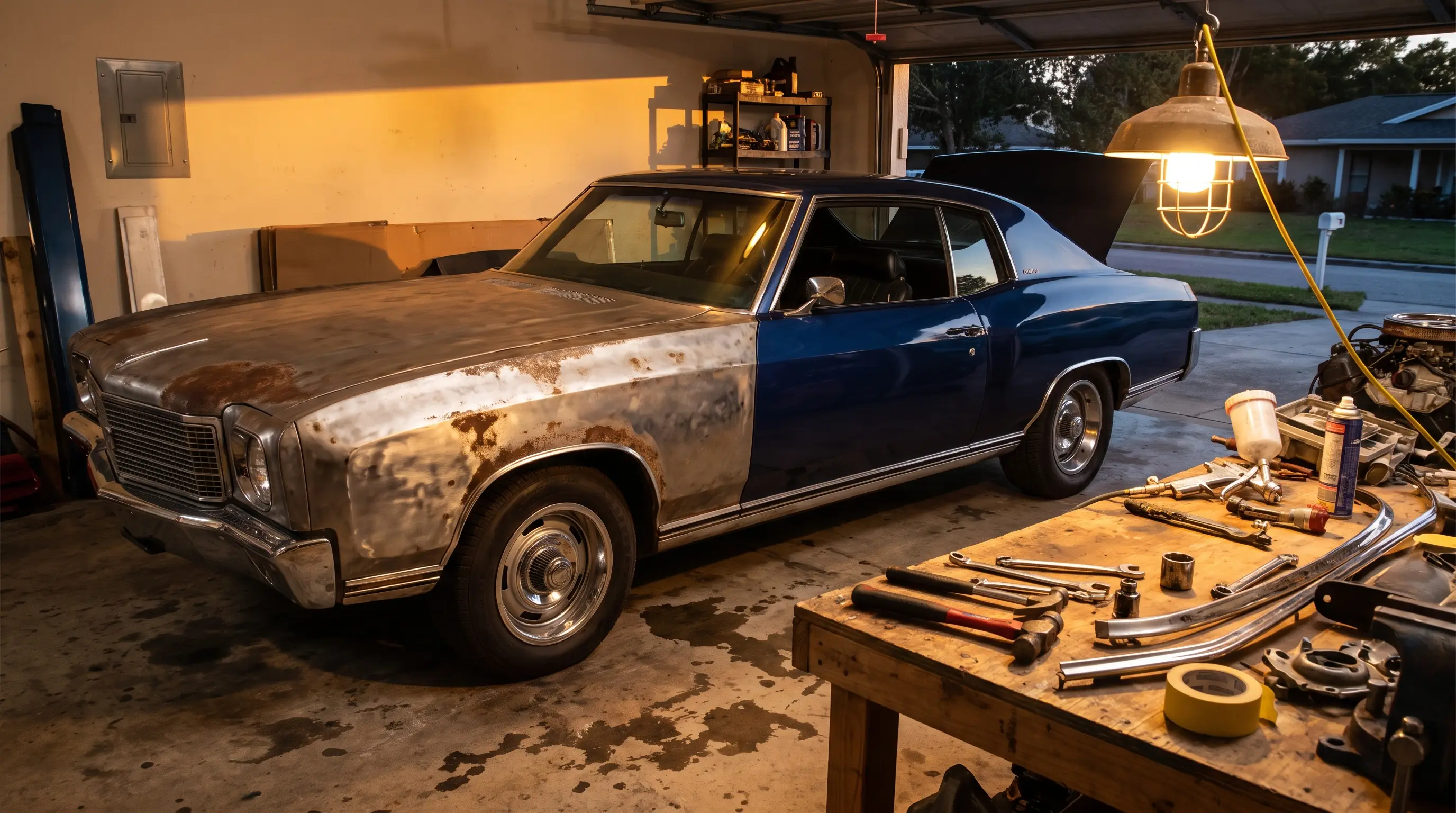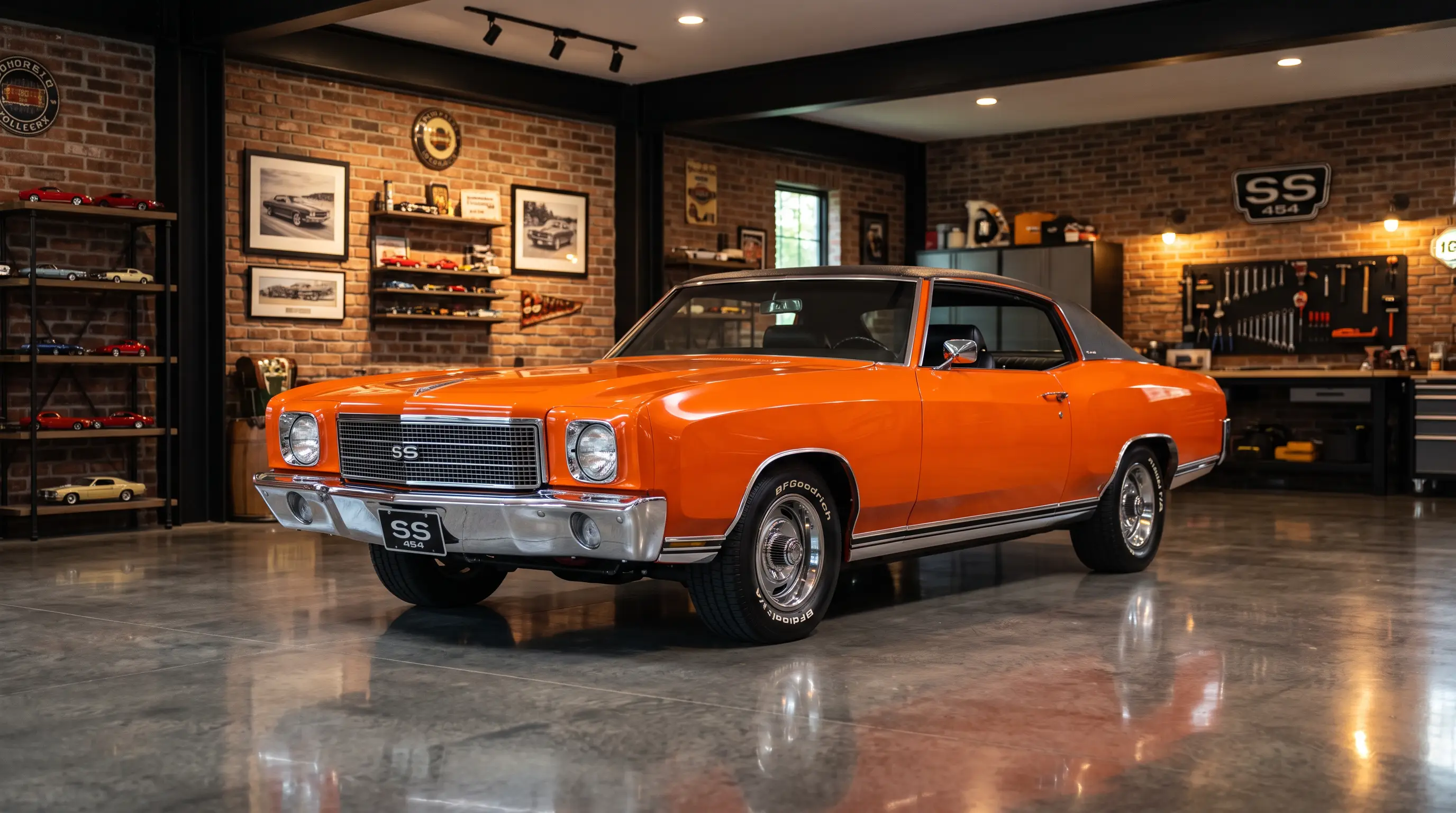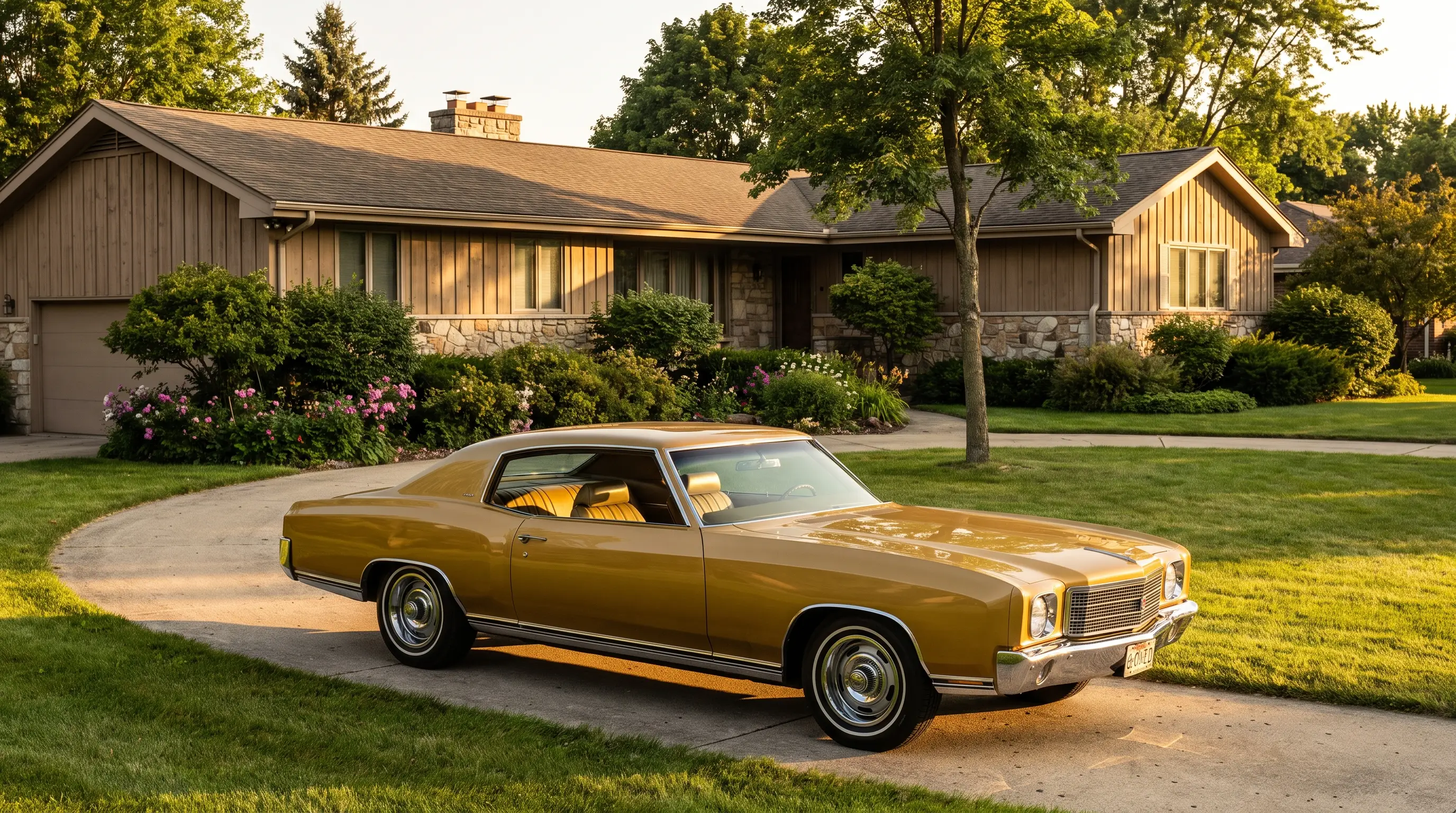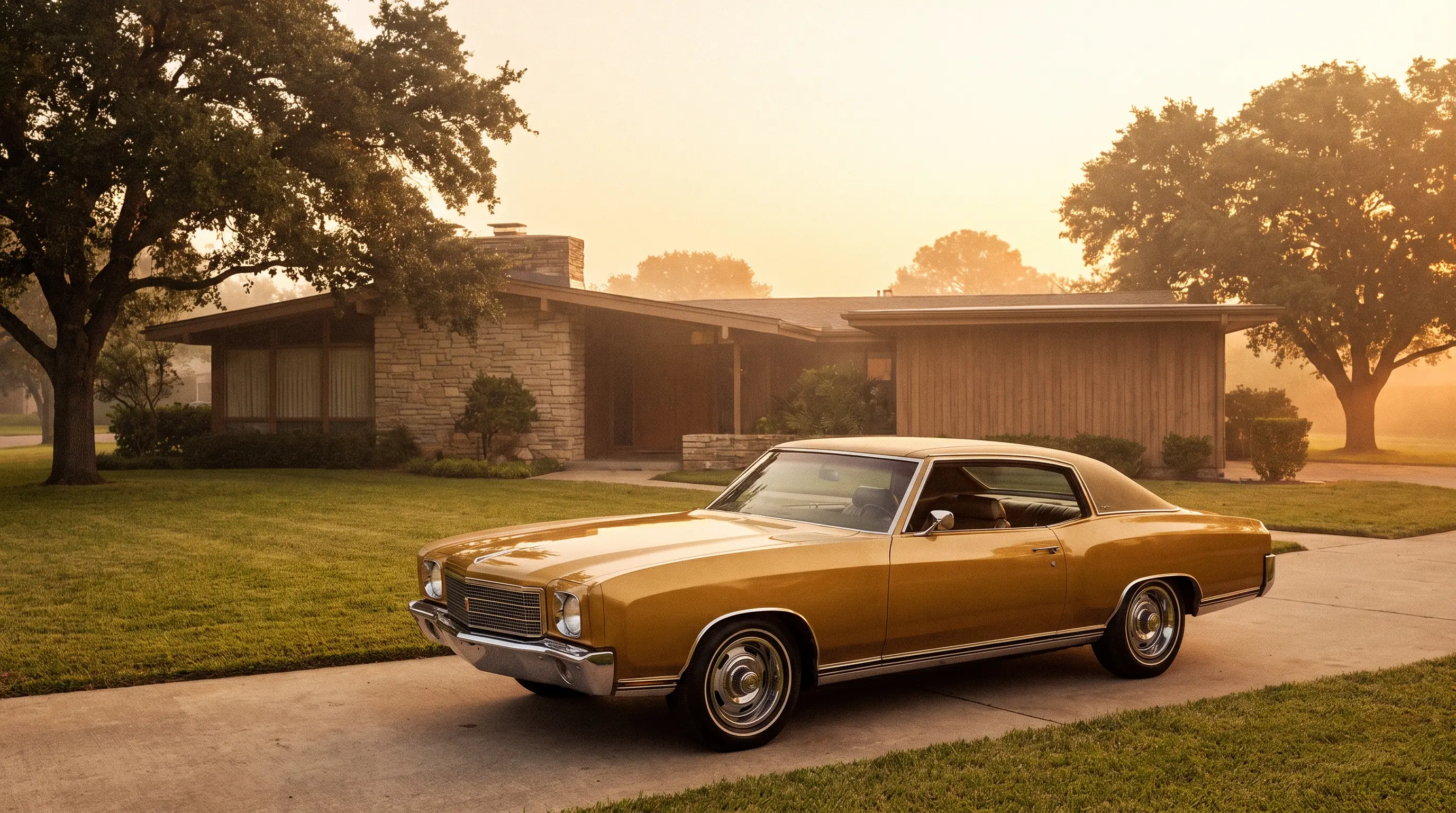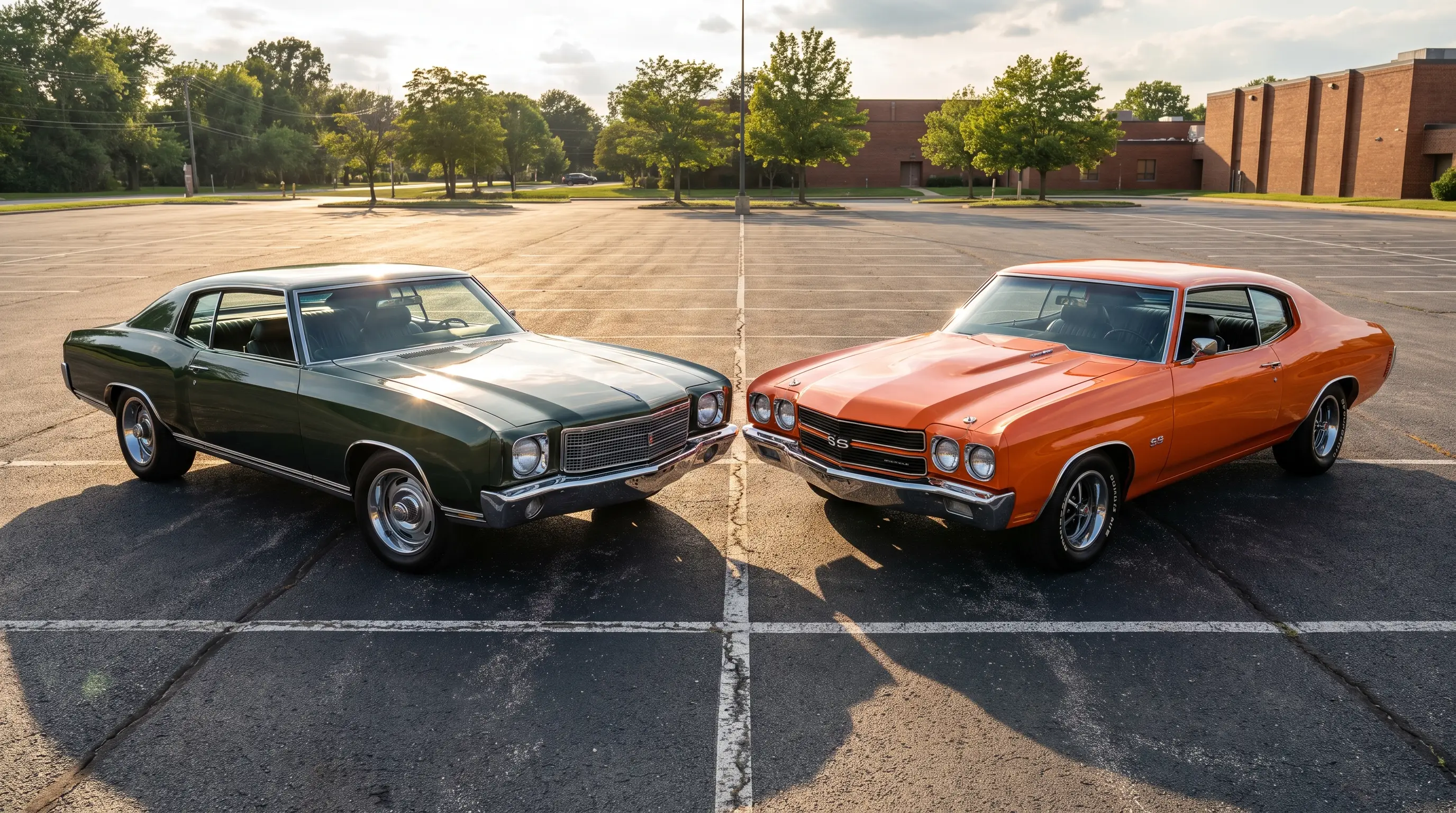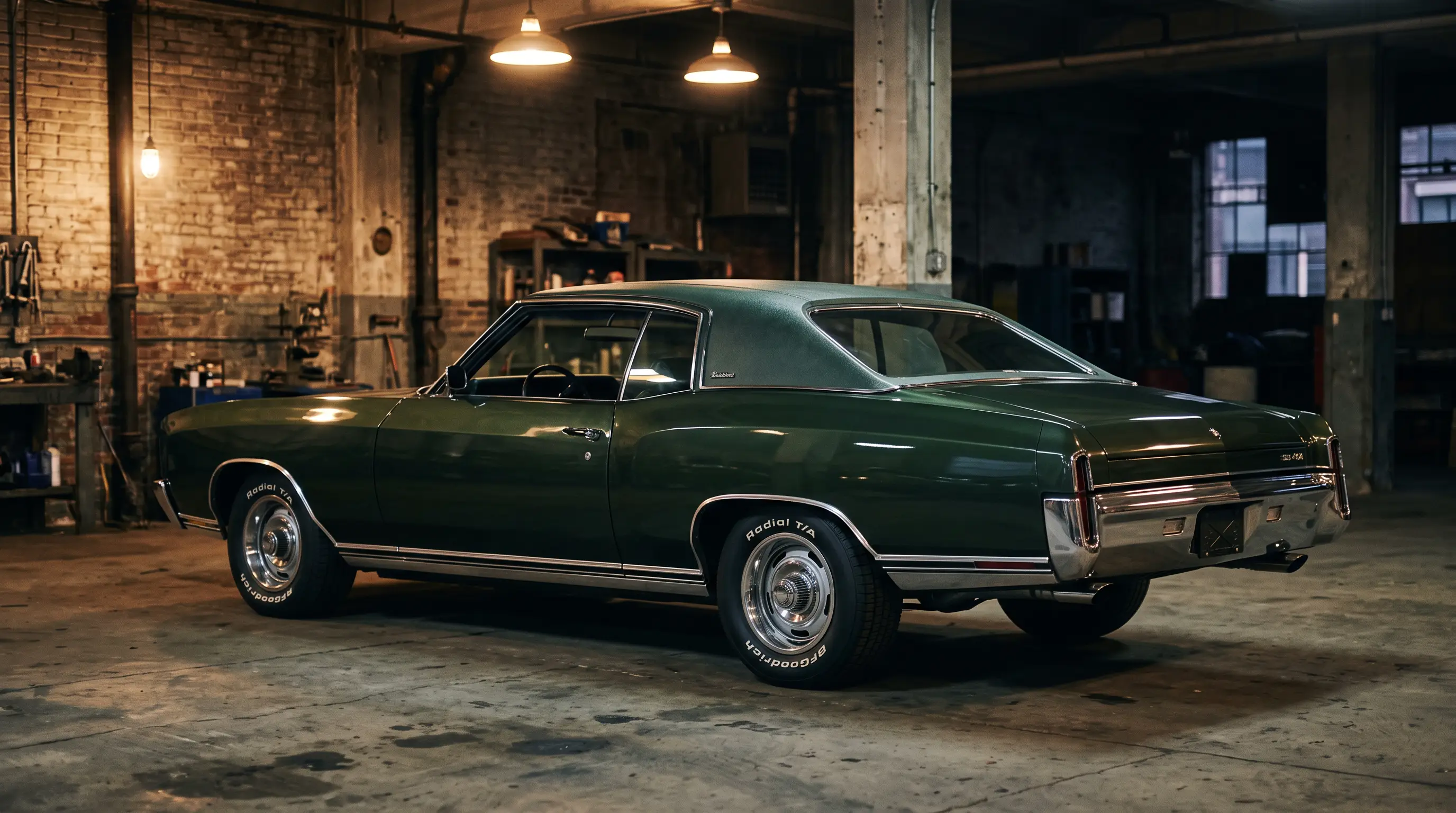
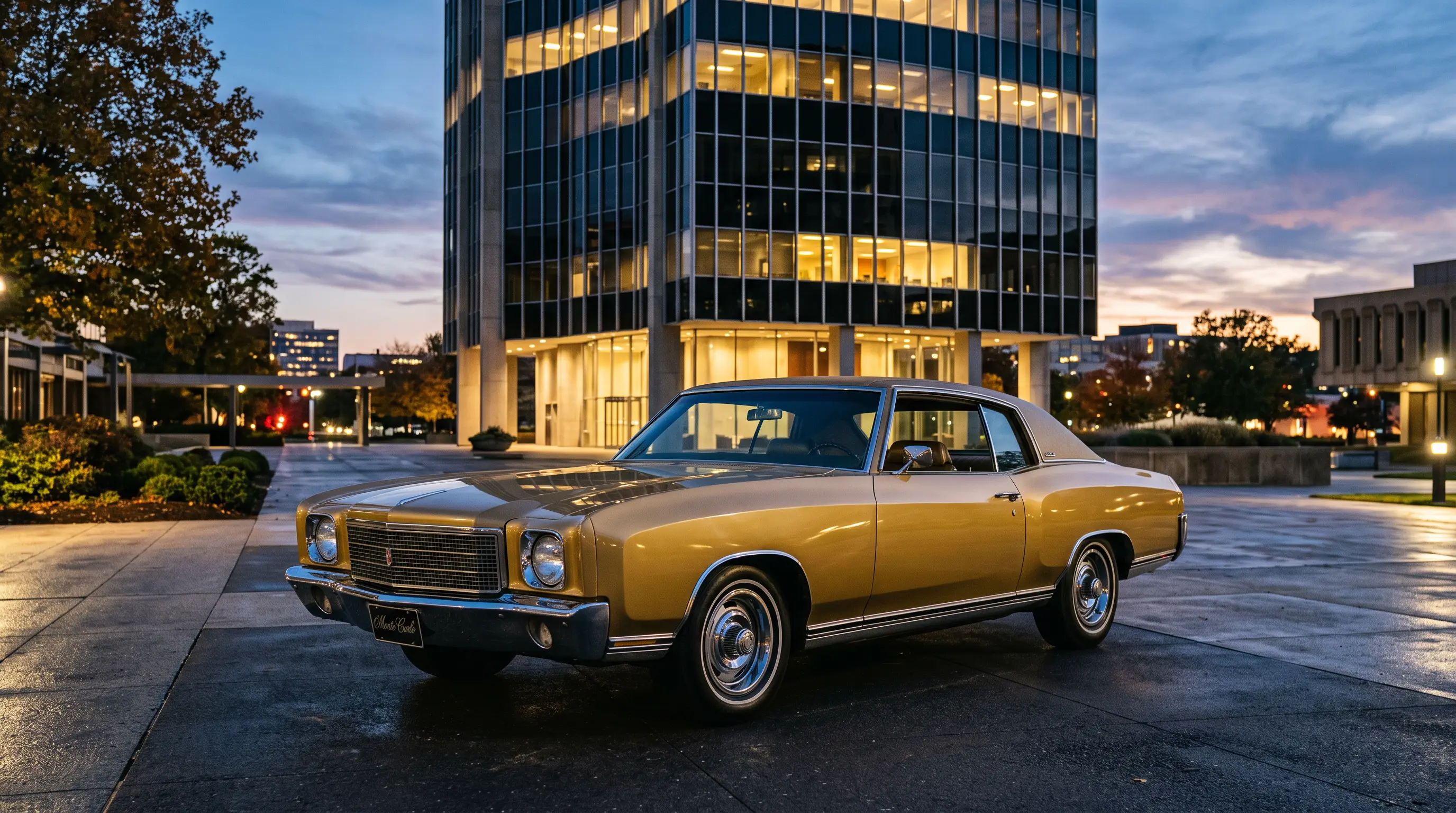
The 1970 Monte Carlo is often described as a badge-engineered Chevelle, and the description is both technically defensible and historically misleading. Yes, the first Monte Carlo shared a great deal with the A-body Chevelle underneath. But the paperwork tells a more deliberate story. Chevrolet did not simply reskin an existing car. It built a distinct personal-luxury coupe with its own wheelbase, its own styling language, and a specific competitive target in mind, and the production records from that first year show a company that knew exactly what it was doing.
To understand why the 1970 monte carlo mattered, you have to look at what Chevrolet was chasing and how carefully the division threaded the needle between cost and prestige.
The car Chevrolet built to answer Pontiac
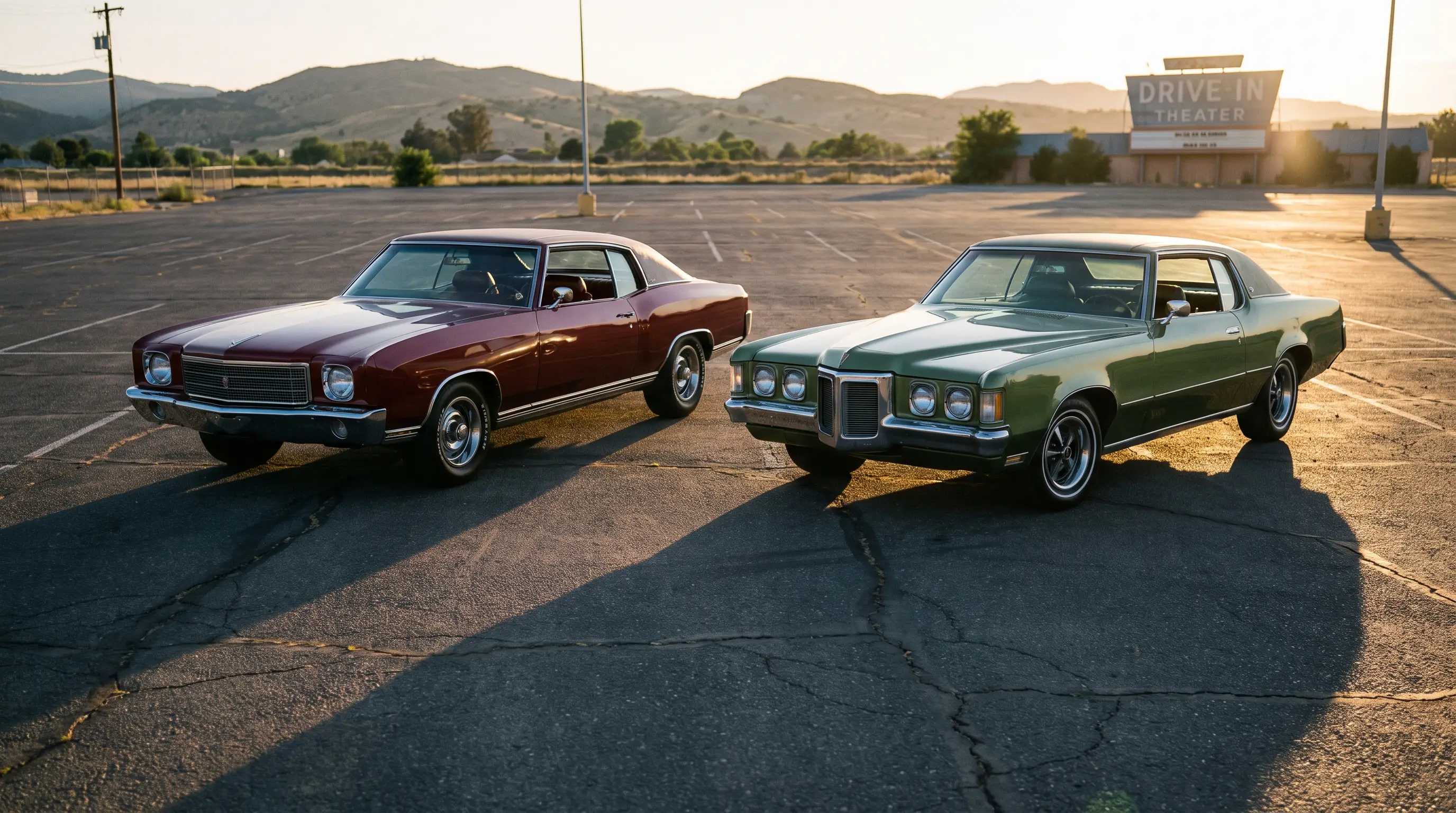
The target was the Pontiac Grand Prix, which had been reinvented for 1969 as a long-hood personal-luxury coupe and had sold well enough to make Chevrolet uncomfortable. Pontiac was a sister division, and watching a corporate stablemate own a profitable segment was not acceptable. Chevrolet general manager Elliott Estes, who had earlier run Pontiac, understood the formula intimately and pushed for a Chevrolet entry.
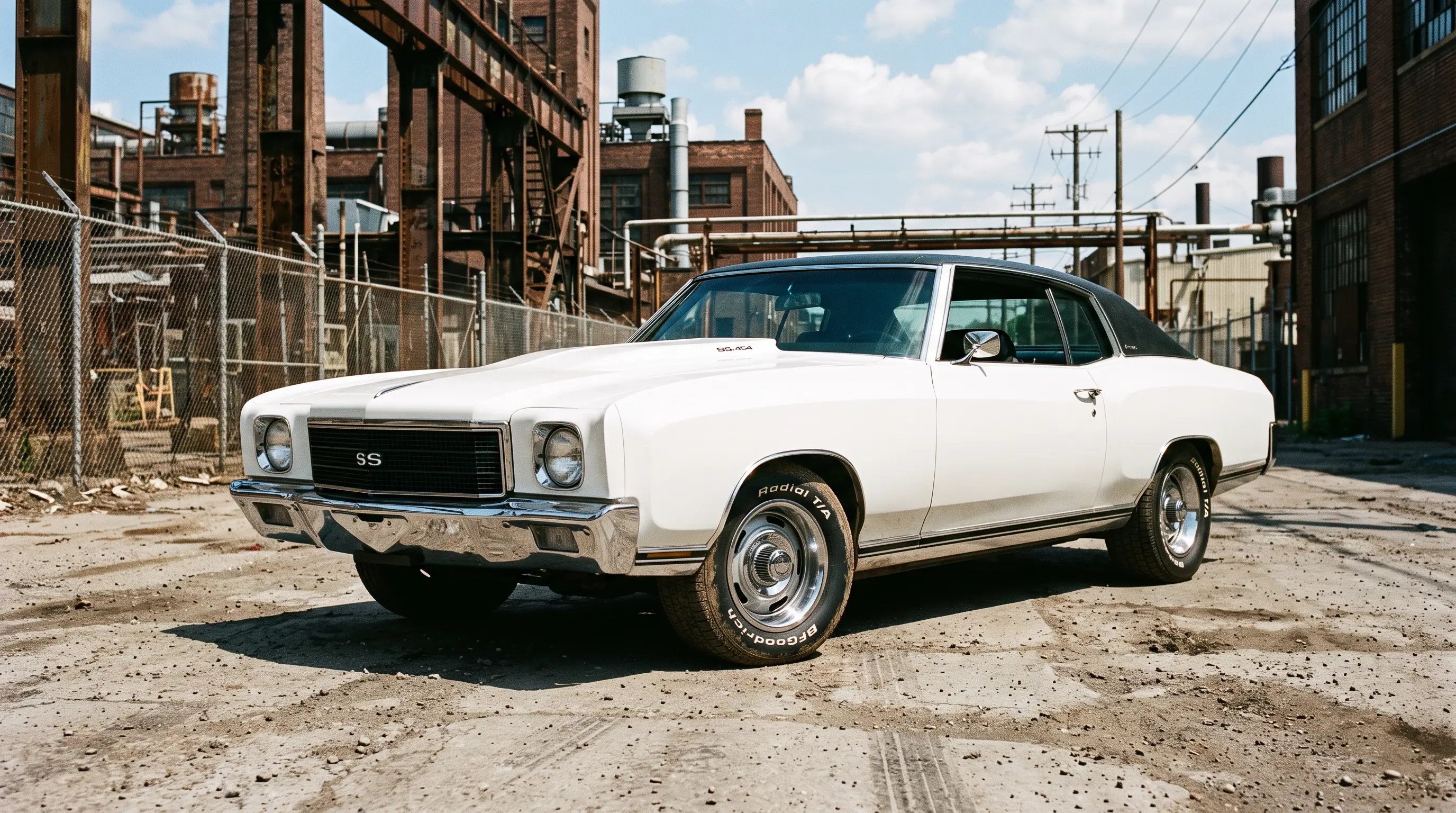
The result reached showrooms as a 1970 model. It used the corporate A-body architecture but stretched the front to a 116-inch wheelbase, four inches longer than the Chevelle it shared parts with. That extra length went entirely into the hood, giving the car the classic long-hood, short-deck proportions that defined the personal-luxury look. The design carried a single distinctive body side character line and a formal roof, and it wore more chrome and brightwork than a comparable Chevelle ever would.
The full sweep of how this first car seeded a two-decade dynasty is covered in the chevrolet monte carlo story, but the debut year deserves close attention because so much of what followed was set in place during those first twelve months.
What arrived under the hood
Chevrolet positioned the Monte Carlo as a comfortable coupe first, so the standard engine was a 350 V8 rather than anything exotic. Most buyers ordered it with an automatic transmission and a bench seat, and the car was tuned for smooth cruising rather than stoplight drama. That was the point. This was a car meant to feel a class above the Chevelle without the price of a Buick or an Oldsmobile.
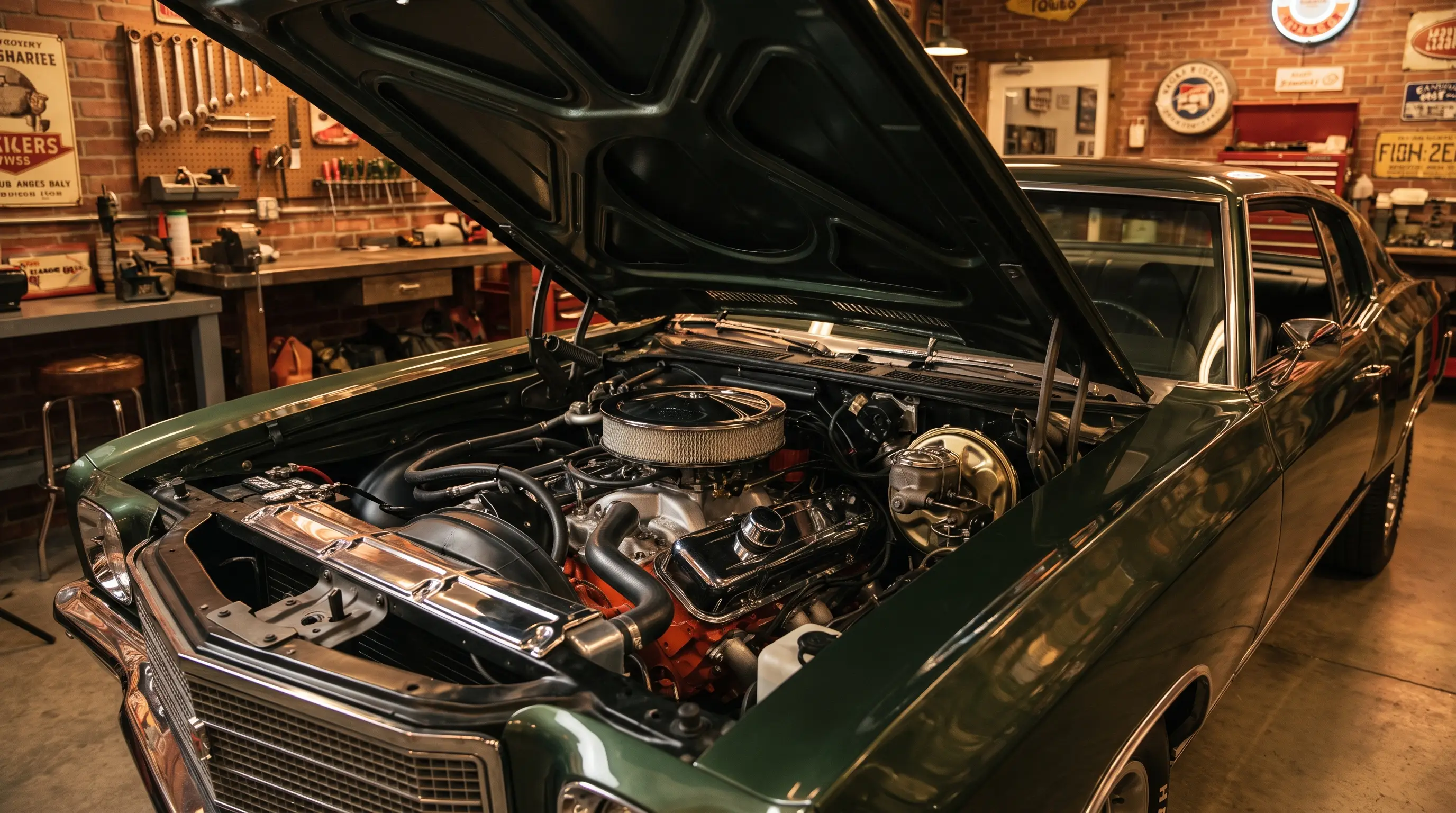
But Chevrolet also understood that image sells, and so the order sheet included the SS 454 option. Ticking that box brought the LS5 454 big-block, heavy-duty suspension, and a deeper rear axle, turning the gentleman's coupe into a genuine performer. The factory records show the SS 454 was a low-volume choice, with 3,823 built for 1970, a tiny fraction of total production. The vast majority of first-year cars left with the milder 350 or the optional 400, exactly as the marketing plan intended.
| Attribute | 1970 Detail |
|---|---|
| Wheelbase | 116 inches |
| Body style | Two-door personal-luxury coupe |
| Standard engine | 350 V8 |
| Top option | SS 454 with LS5 big-block |
| Platform | Stretched A-body |
| Market rival | Pontiac Grand Prix |
The numbers that surprised everyone
Here is where the production records correct a common misconception. People assume the Monte Carlo grew into a hit slowly. It did not. The car was a strong seller from the very first year, well beyond internal projections. Chevrolet moved well north of 130,000 units in that debut season, a figure that validated the entire program and guaranteed a second generation before the first had even finished its run.
That immediate success is why the Monte Carlo survived where other one-off ideas died. A car that sells in its first year earns the budget for the next. The division had gambled that Chevrolet buyers wanted personal luxury at a Chevrolet price, and the ledger proved the gamble sound almost overnight. Everything that came later, the Colonnade cars, the downsized coupes, the reborn SS, traces back to those first-year sales numbers doing the convincing.
It is worth pausing on how unusual that kind of first-year performance was. New nameplates typically build slowly as word spreads and dealers learn to sell them. The Monte Carlo skipped that phase entirely. Buyers seemed to grasp the pitch on sight, which suggests Chevrolet had read the market with unusual accuracy. The Grand Prix had already proved there was appetite for an affordable personal-luxury coupe, and Chevrolet simply brought that appetite a car at a Chevrolet dealer, where the volume was.
The records also show how quickly the program justified its own existence in accounting terms. Personal-luxury coupes carried healthy profit margins because buyers loaded them with options, and a well-equipped Monte Carlo left the dealership with a long list of extras on the window sticker. That combination of strong volume and rich per-car profit made the nameplate one of the more financially attractive things Chevrolet built, which bought it protection inside the corporation for years to come.
Colors, trim, and the culture of the coupe
Part of the appeal was how the car let buyers express themselves without shouting. The 1970 palette leaned toward dignified metallics and rich dark tones, and the interiors offered a level of trim that felt richer than the Chevelle's. A buyer could specify a car that looked expensive without paying for a nameplate that carried a country-club reputation. That democratization of personal luxury was the cultural heart of the Monte Carlo, and it started here.
The formal roofline and the crisp body sides also photographed well, and the car quickly became a fixture in the suburban driveways of buyers who wanted something that felt special for their commute. It was aspirational without being unattainable. That balance, more than any single mechanical feature, explains why the nameplate resonated. It gave ordinary buyers a taste of something they associated with a higher tax bracket.
"The factory documents are clear on one point that gets lost in casual retellings. The 1970 Monte Carlo was not an experiment that happened to work. It was a calculated response to Pontiac, and Chevrolet planned for success from the first order sheet."
- Tom Ramirez
The design decisions that aged well
Looking back through the factory styling records, the choices Chevrolet made for 1970 hold up better than most cars of the period. The single strong body-side character line gave the car a clean, confident profile that did not rely on gimmicks. There were no fake vents, no plastic add-ons meant to imply performance the car did not have. The restraint was deliberate, and it is a large part of why the debut car still looks composed today while flashier contemporaries have dated badly.
The formal roofline was another considered decision. Chevrolet wanted the Monte Carlo to read as dignified, closer to a personal Cadillac than a sporty intermediate, and the squared roof delivered that impression at a glance. Combined with the long hood, it created a silhouette that communicated status without a word of explanation. Buyers understood instantly what the car was meant to say about them, and that clarity of message was worth more than any single feature.
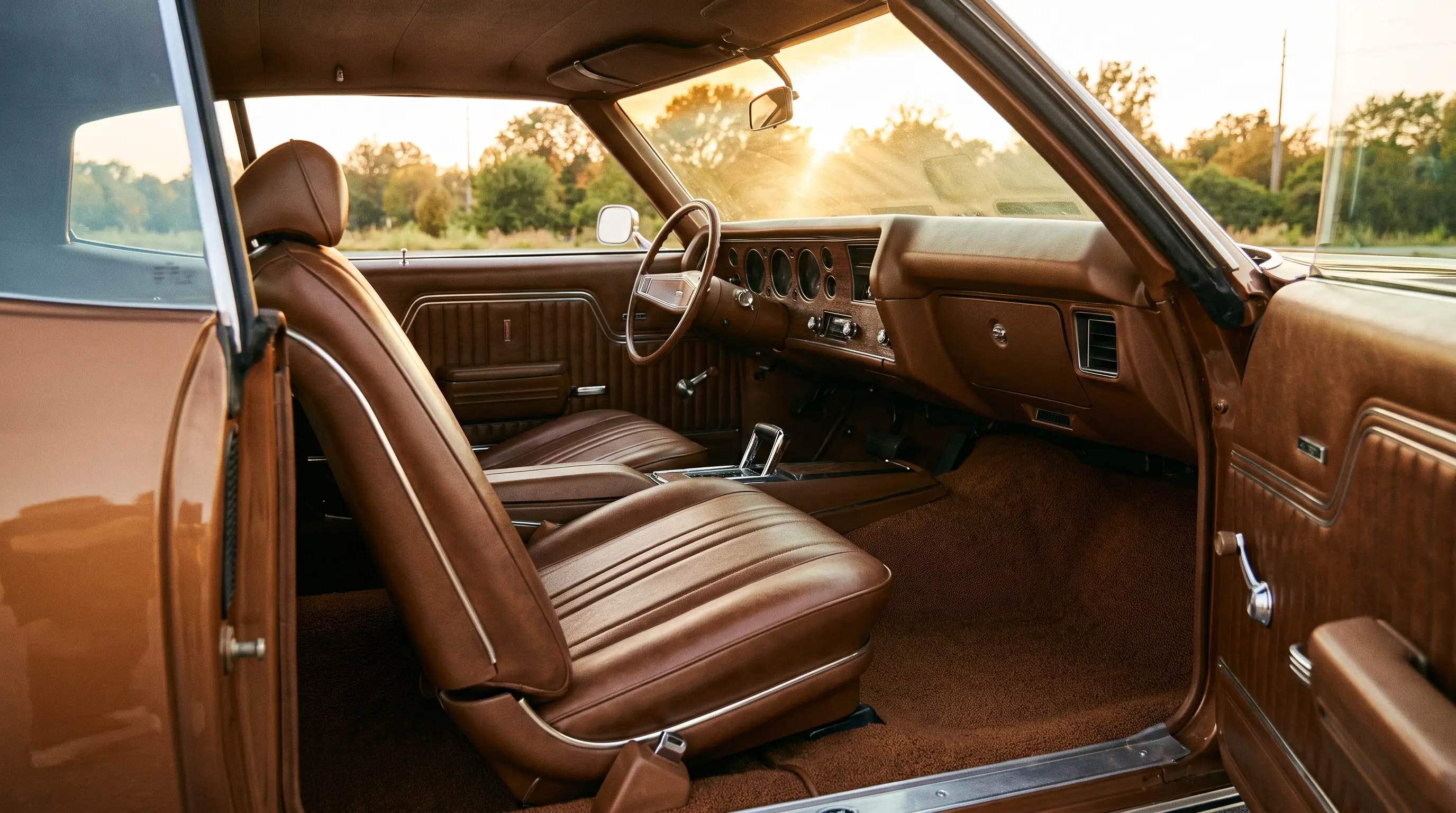
Inside, the division dressed the car richer than its Chevelle relative, with upgraded trim and appointments that reinforced the step up in class. None of it was extravagant, but all of it was consistent, and consistency is what sells a premium impression. The 1970 interior did not try to imitate a luxury car it was not. It simply felt a grade nicer than what a buyer expected at the price, which is exactly the reaction Chevrolet was engineering.
These are the details that separate a car designed with intent from one thrown together to chase a trend. The 1970 Monte Carlo was the former, and the coherence of its design is a big reason the nameplate earned a long life instead of a single season. Good bones, honestly styled, tend to endure, and the debut car had both.
Why the debut year matters to collectors
Among enthusiasts, the 1970 cars hold a special place precisely because they are the origin point. A first-year example carries the purest expression of the original concept before the design softened and grew through subsequent generations. The SS 454 cars in particular have become highly sought, both for their rarity and for the sleeper character that defined them, but even a well-kept base 350 coupe has a following among people who value the debut.
Provenance is everything with these cars now. Because so few SS 454 examples were built, documentation separates the genuine article from the tribute, and the market pays a real premium for paperwork. Collectors who understand the debut year know to look past cosmetics and dig into the build records, because the story a car can prove is worth as much as the metal itself.
There is also a symbolic value that goes beyond any single car. The debut model is the reference point every later Monte Carlo is measured against, the version that established what the name was supposed to mean. Owning a 1970 car is owning the thesis statement of the whole nameplate. For a certain kind of collector that origin status matters as much as rarity or condition, because it places the car at the head of a long and well-documented line rather than somewhere in the middle of it.
The debut also makes a natural starting point for anyone building a collection or simply learning the nameplate. If the 1970 car is where the dynasty begins, the downsizing years are where it reinvented itself for a changed market, and that is another one worth knowing before you decide which era speaks to you. Read our take on another one worth knowing to see how the formula adapted.
Finding a debut-year car today
The 1970 Monte Carlo occupies an interesting spot in the market. Base coupes remain relatively accessible and make an approachable entry into classic Chevrolet ownership, while the SS 454 cars sit firmly in serious-money territory. Between those poles is a healthy middle ground of clean, honest cars that reward patient buyers who know what to look for.
Documentation, originality, and condition drive value in that order, and first-year cars reward research more than most. When you are ready to see what has survived, you can browse classic Monte Carlo listings for the debut model and compare examples with a clear sense of what the paperwork should show. The car that started it all is still out there, and the 1970 story remains the best place to begin understanding why the Monte Carlo lasted as long as it did. Take time to browse classic Monte Carlo listings before committing to one.
Sources and notes
- Chevrolet Monte Carlo - Wikipedia
- Monte Carlo SS FAQ - Production Figures
- Disco-Era Darling: The Chevrolet Monte Carlo - Ate Up With Motor
- 1970 Chevy Monte Carlo - Supercars.net
- Pick of the Day: 1970 Chevrolet Monte Carlo SS 454 - ClassicCars.com Journal
- 1970 Chevrolet Monte Carlo SS 454 Valuation - Hagerty