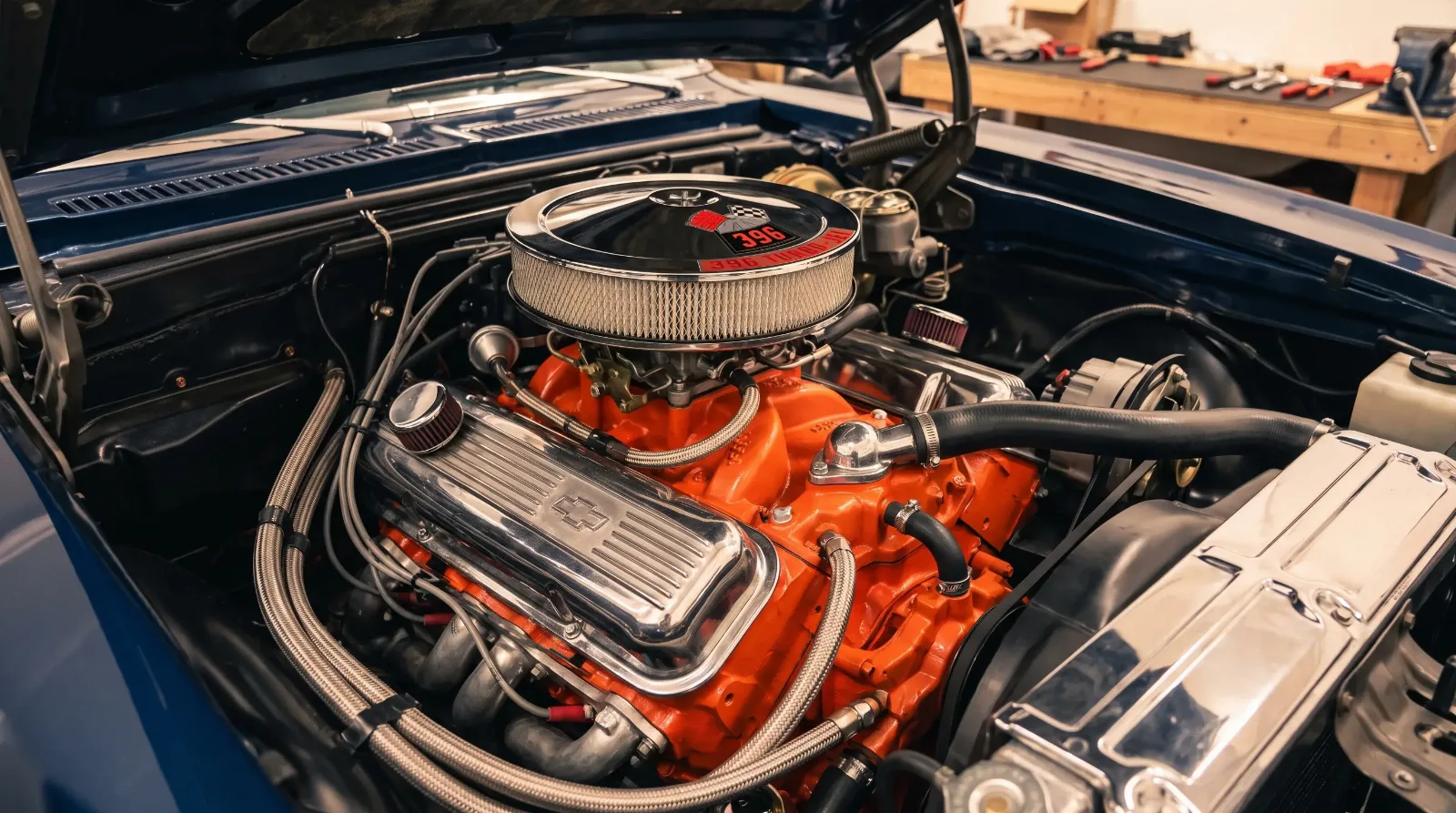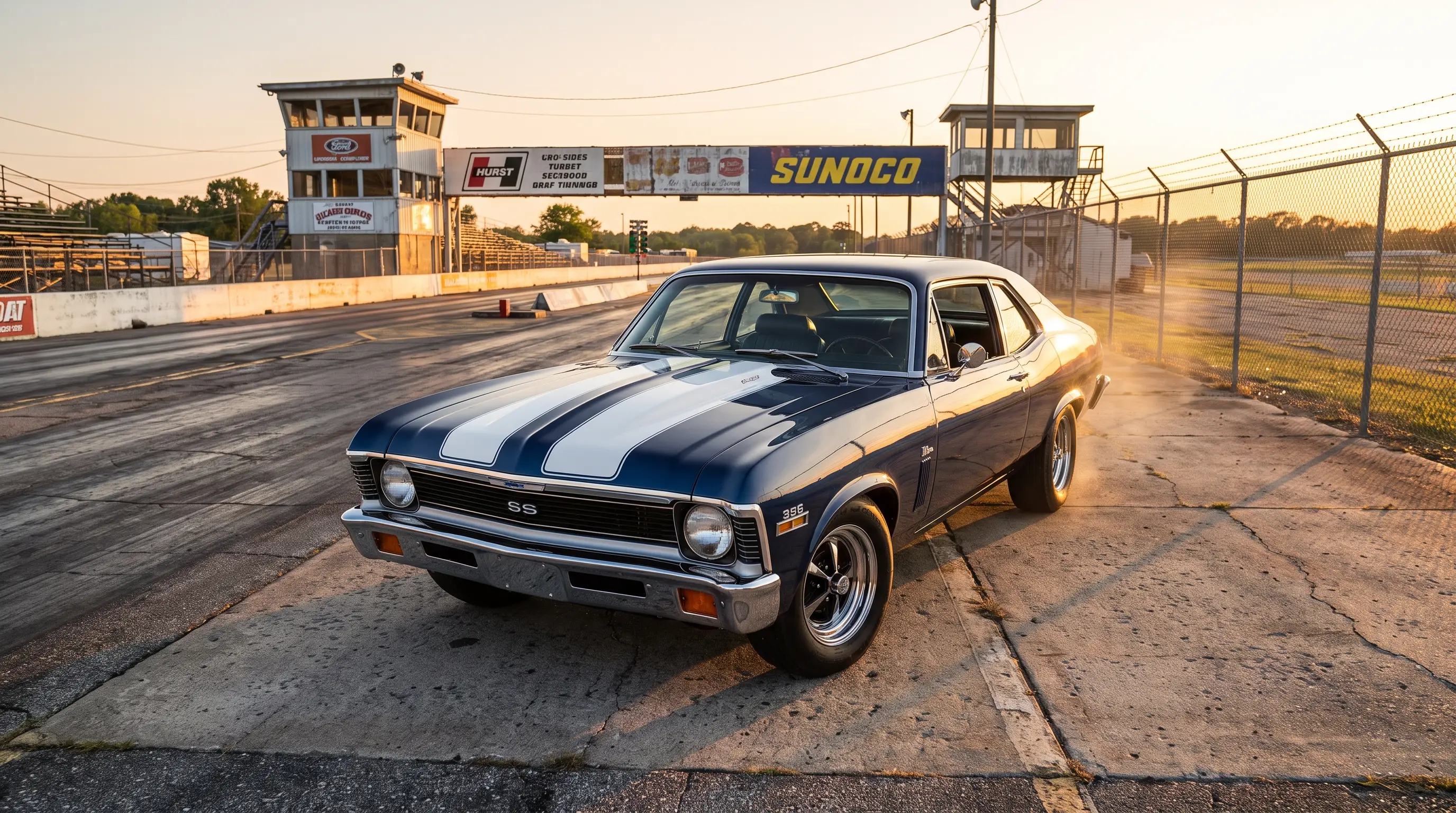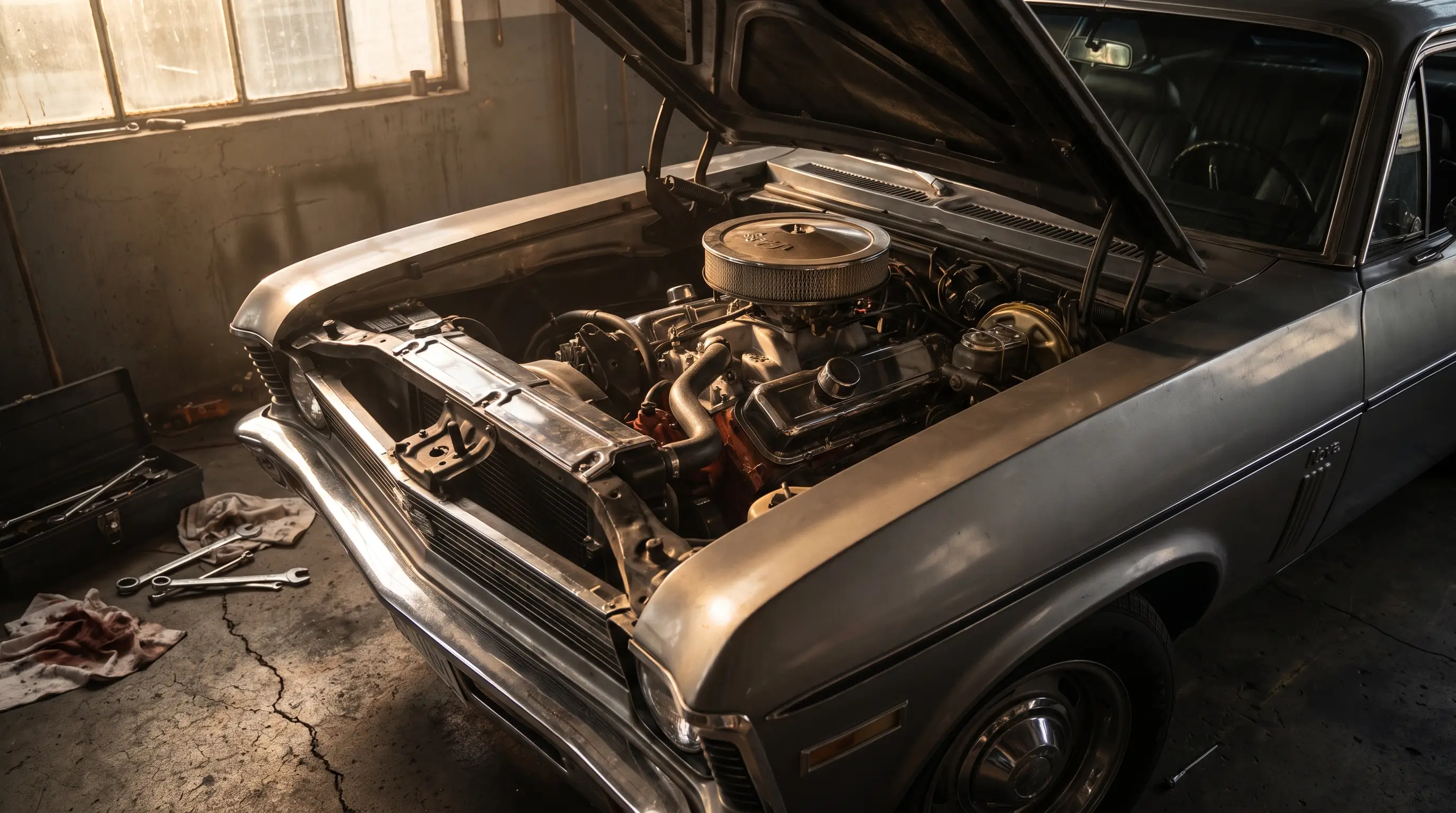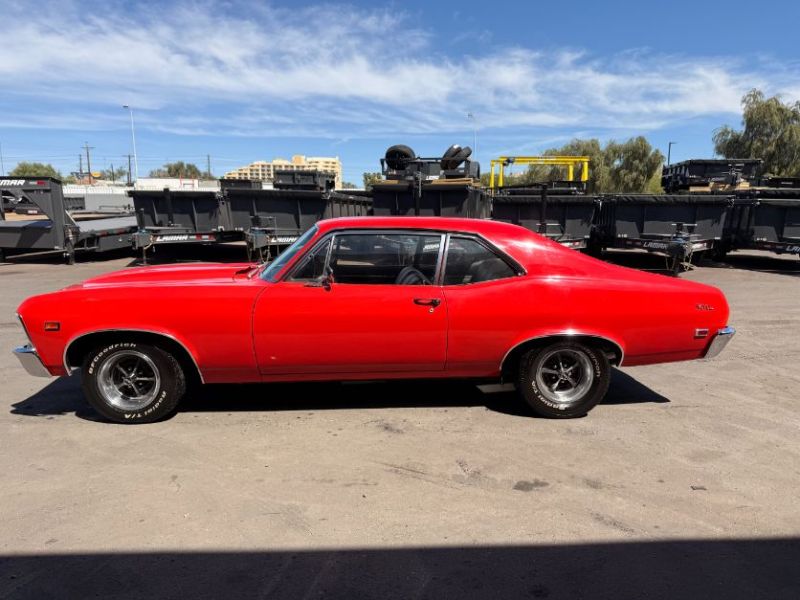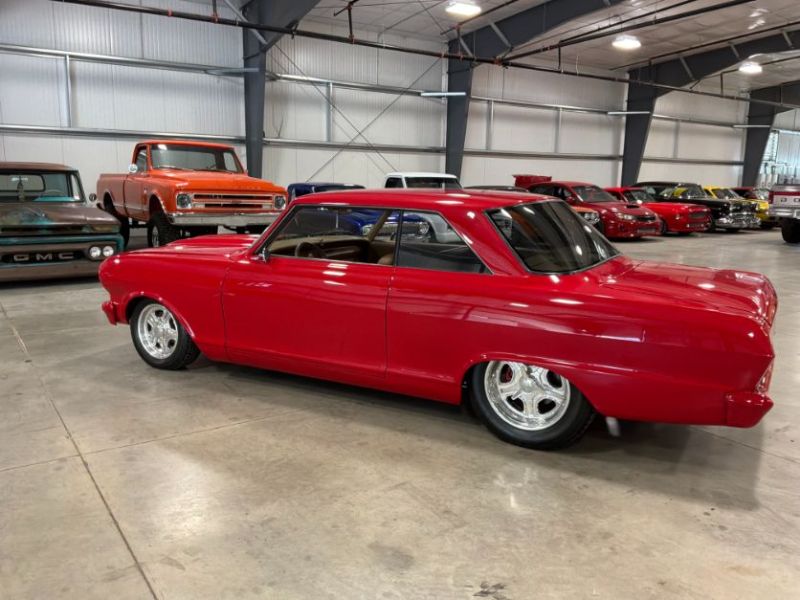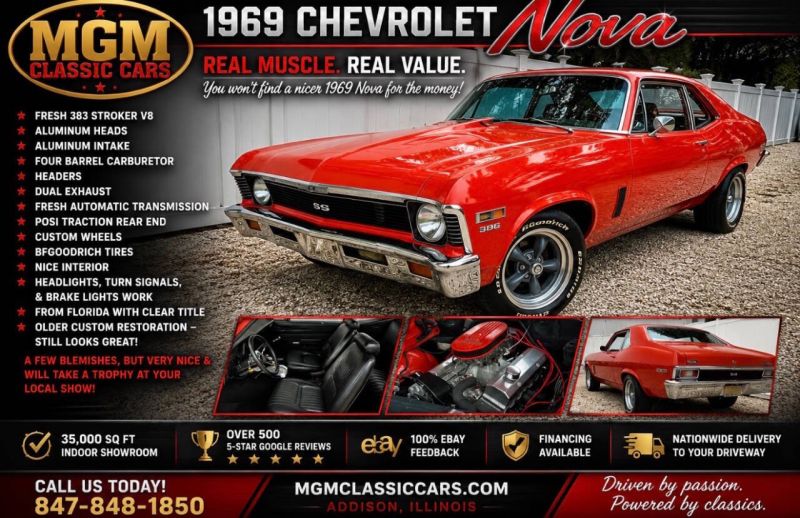
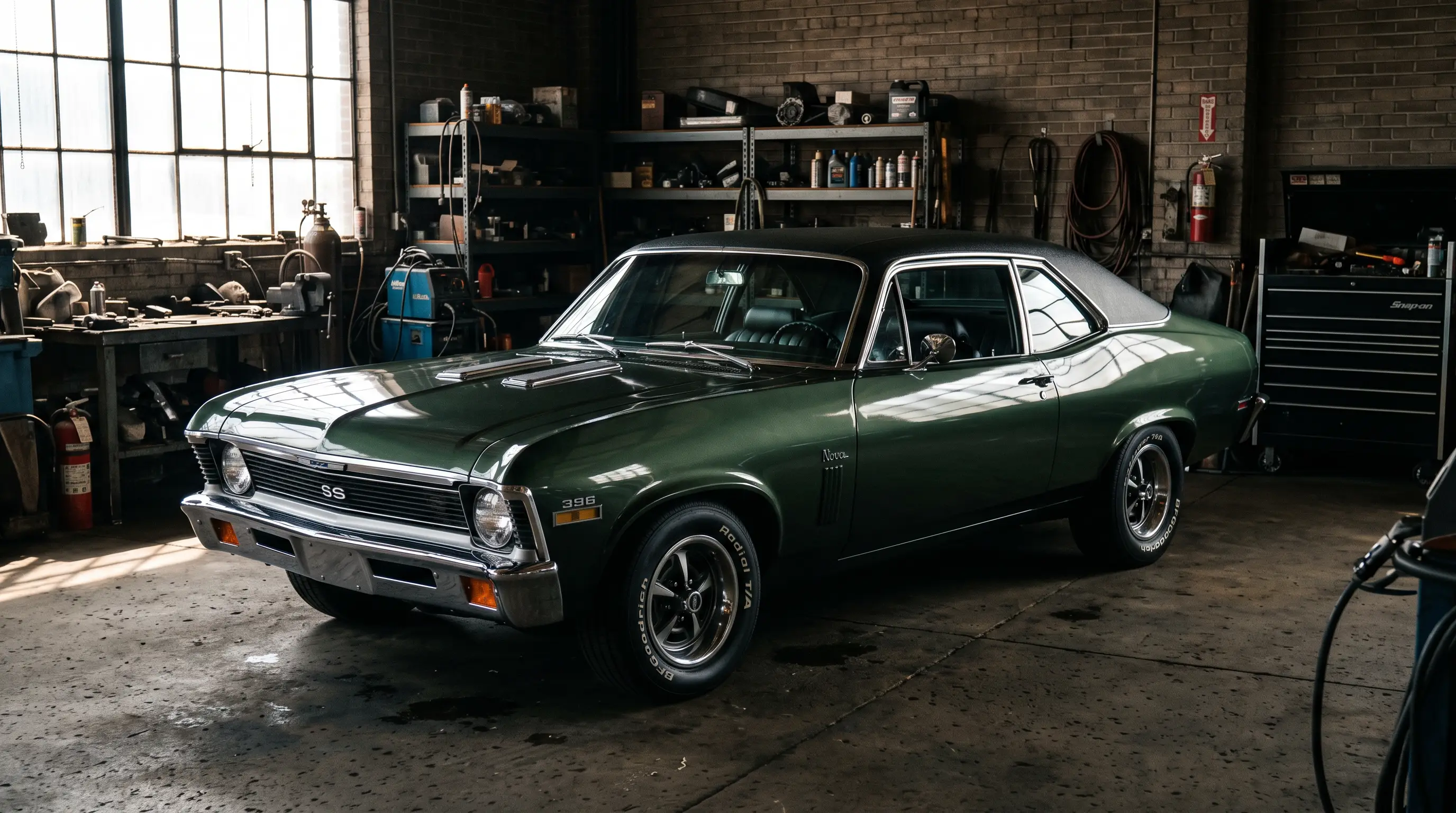
The most powerful nova engine Chevrolet ever put in a showroom car is the L78 396, rated at 375 horsepower, optional on the 1968 and 1969 Nova SS. That is the answer. Everything else people tell you about a "450 hp Nova" is bench racing, not a build sheet.
The number that actually left the factory
In 1968, Chevrolet let the Nova SS order form reach past the small block for the first time. The top box was RPO L78: a 396 cubic inch big block, solid lifter cam, 11.0:1 compression, single four barrel Holley on an iron intake, rated 375 hp at 5600 rpm and 415 lb-ft at 3600 rpm. That rating carried into 1969 unchanged. No factory Nova before or after touched it.
Compare that to the small block options in the same catalog. The 350 cubic inch L48 topped out at 300 hp in 1969 and 1970. The L78 beat it by 75 horsepower and did it with a torque curve that made the small block feel like a shopping cart. This is not a subtle gap. It is the difference between a quick car and a genuinely fast one.
| Engine (RPO) | Years offered in Nova | Horsepower | Torque |
|---|---|---|---|
| L78 396 | 1968-1969 | 375 hp @ 5600 rpm | 415 lb-ft @ 3600 rpm |
| L34 396/402 | 1970 only | 350 hp @ 5200 rpm | 415 lb-ft @ 3400 rpm |
| L48 350 | 1969-1970 (300 hp; dropped to 270 hp in 1971, 200 net hp by 1972) | 300 hp | 380 lb-ft |
Why the big number didn't last
1970 dropped the L78 option entirely. What replaced it was the L34, technically a 402 cubic inch engine still badged 396, rated 350 hp. That's a 25 hp cut on paper, and the real world gap was bigger once you account for lower compression and a milder cam. GM was already backing away from the horsepower race before the insurance companies and the EPA forced the issue outright. By 1972 every engine in the Nova lineup was rated in net horsepower, a different measuring stick that made a 200 hp small block look like a letdown next to a 1969 sticker, even when the hardware underneath hadn't changed nearly as much as the number suggests.
Read the engine chapter if you want the full rundown of every mill Chevrolet stuffed under a Nova hood across two decades. The L78 is one entry in a much longer list, but it's the one that answers this question.
Weight, chassis, and why the L78 Nova is not a light car anymore
A 1968 Nova with the small six weighed around 2900 lbs. Add the L78 396, the heavier 12 bolt rear, the bigger radiator, and the F41 suspension pieces most buyers ordered alongside it, and you're up around 3,400 lbs curb weight. That is not the lightweight compact the Nova started life as. The trade was worth it in a straight line, but it changed the character of the car. A small block Nova is nimble. An L78 Nova is a big block muscle car that happens to wear a smaller body, and it handles like one unless the front end has been properly set up.
"People quote 375 horsepower like it's a rumor. It's not. It's on the build sheet, it's on the RPO list, and Chevrolet built it that way for two model years. What they don't put on the build sheet is the extra 500 pounds you're carrying around to get there."
— Dan Reeves
Rarity and what it means for a buyer today
L78 Novas are not common. Most 1968-69 Nova SS buyers checked the box for a 350 or the base 327, not the top big block, because the L78 came with a real price jump and a rougher idle that most daily drivers didn't want. Documented production numbers, drawn from Nova club registries, put L78 output at roughly 667 cars for 1968 and around 4,951 iron-head cars plus 311 aluminum-head L89 cars for 1969, but treat any exact figure you see with some caution until it's backed by a build sheet or a Protect-O-Plate.
The scarcity isn't just a marketing line. A four barrel big block with a solid lifter cam and no air conditioning option was a hard sell to anyone using the car as a second family sedan, which was still most of the Nova's actual customer base in 1968. The SS package itself was a minority order on the Nova line that year, and the L78 was a minority order within the SS package. Stack those two filters and you end up with a genuinely small production run, smaller than the more famous big block Camaro and Chevelle numbers from the same two seasons.
What the L78 actually feels like from the driver's seat
Numbers on paper are one thing. What the L78 delivers in the car is a torque curve that comes on hard from just above idle and keeps pulling well past where a small block would already be running out of breath. The solid lifter valvetrain means it doesn't like sitting at a stoplight idling smooth and polite, and it wants revs to make its case. That's the trade Chevrolet built into the option: a small block Nova is the easier car to live with every day, and the L78 is the one you built specifically because you wanted the loudest possible answer to the horsepower question, daily comfort be damned.
If you're chasing the real thing, get the numbers checked before you get emotionally attached to the sticker. For a related deep-dive on how the small block and big block Novas actually compare on the road, not just on paper, the differences go well past the horsepower rating. And if you'd rather skip the research and just look at what's actually on the market, there are classic Chevy Novas for sale right now, big block and small block both.