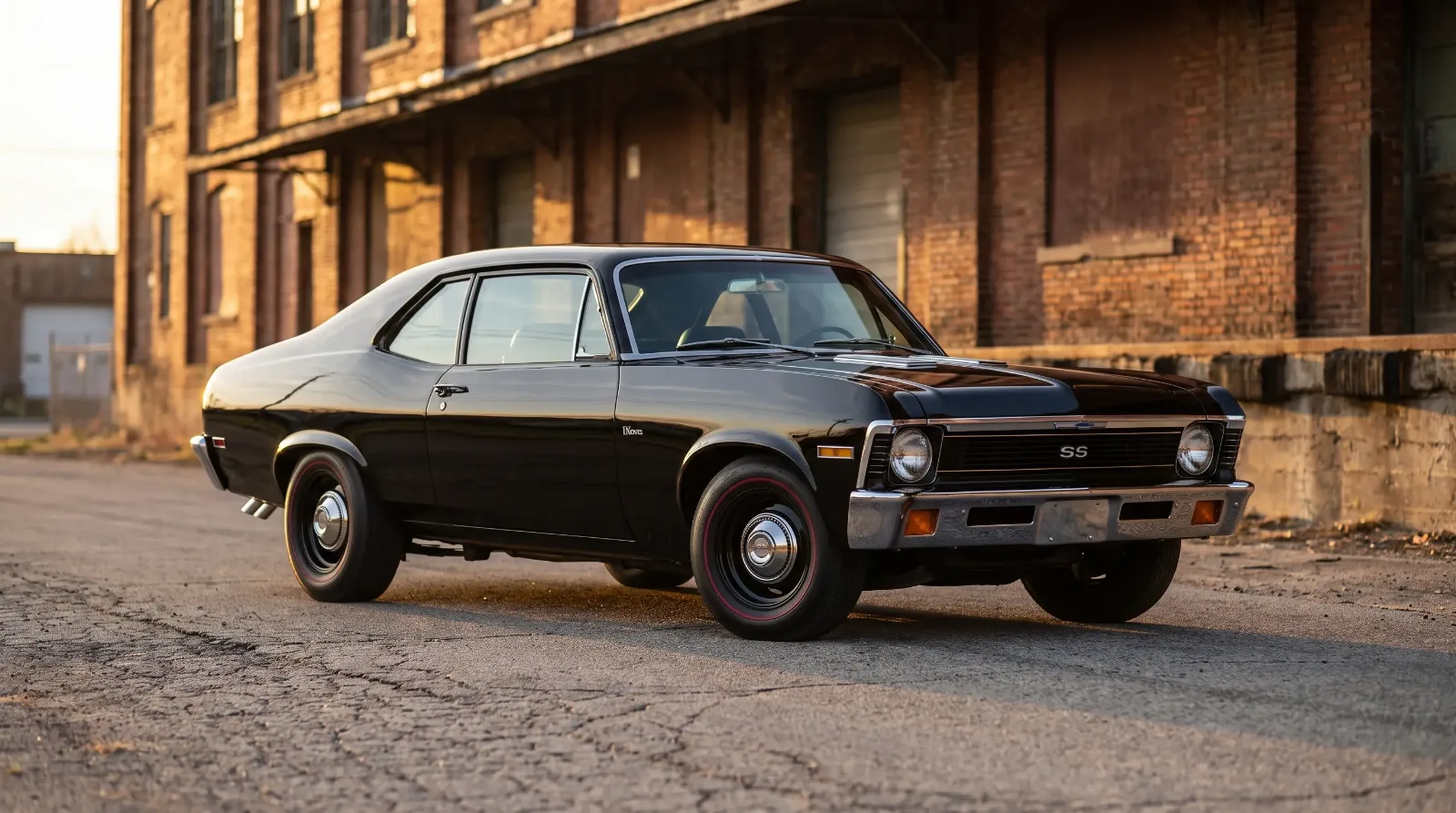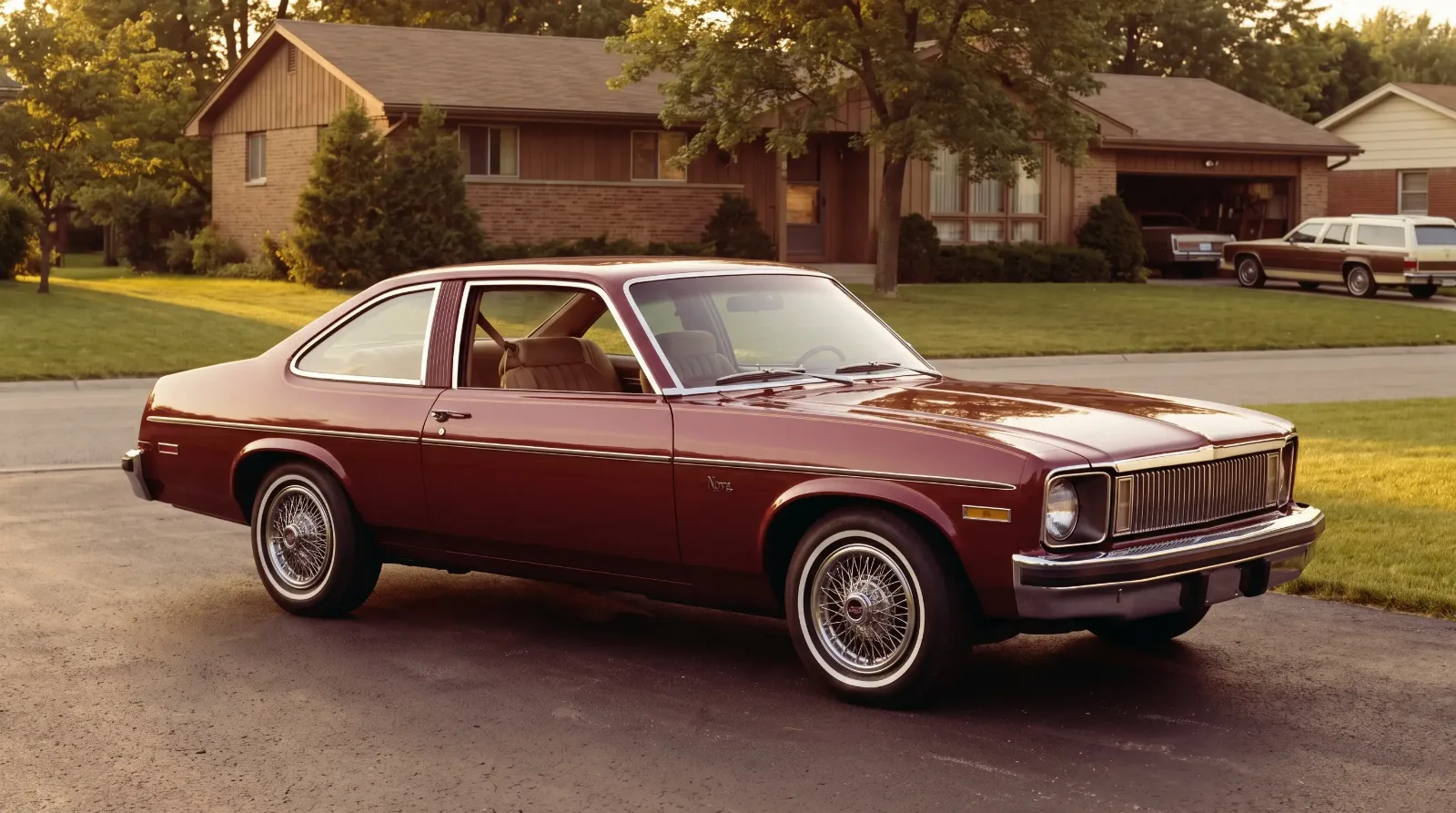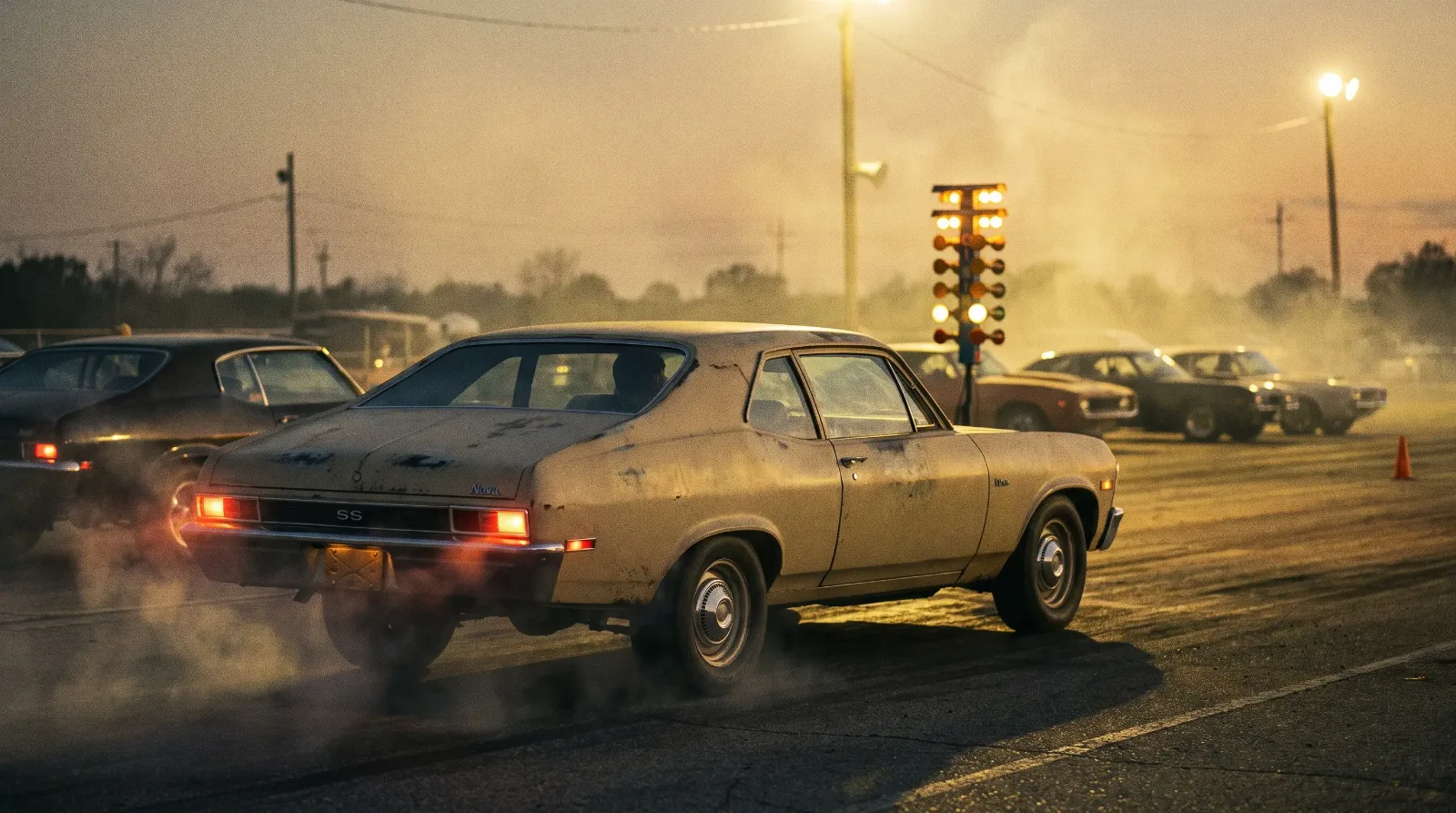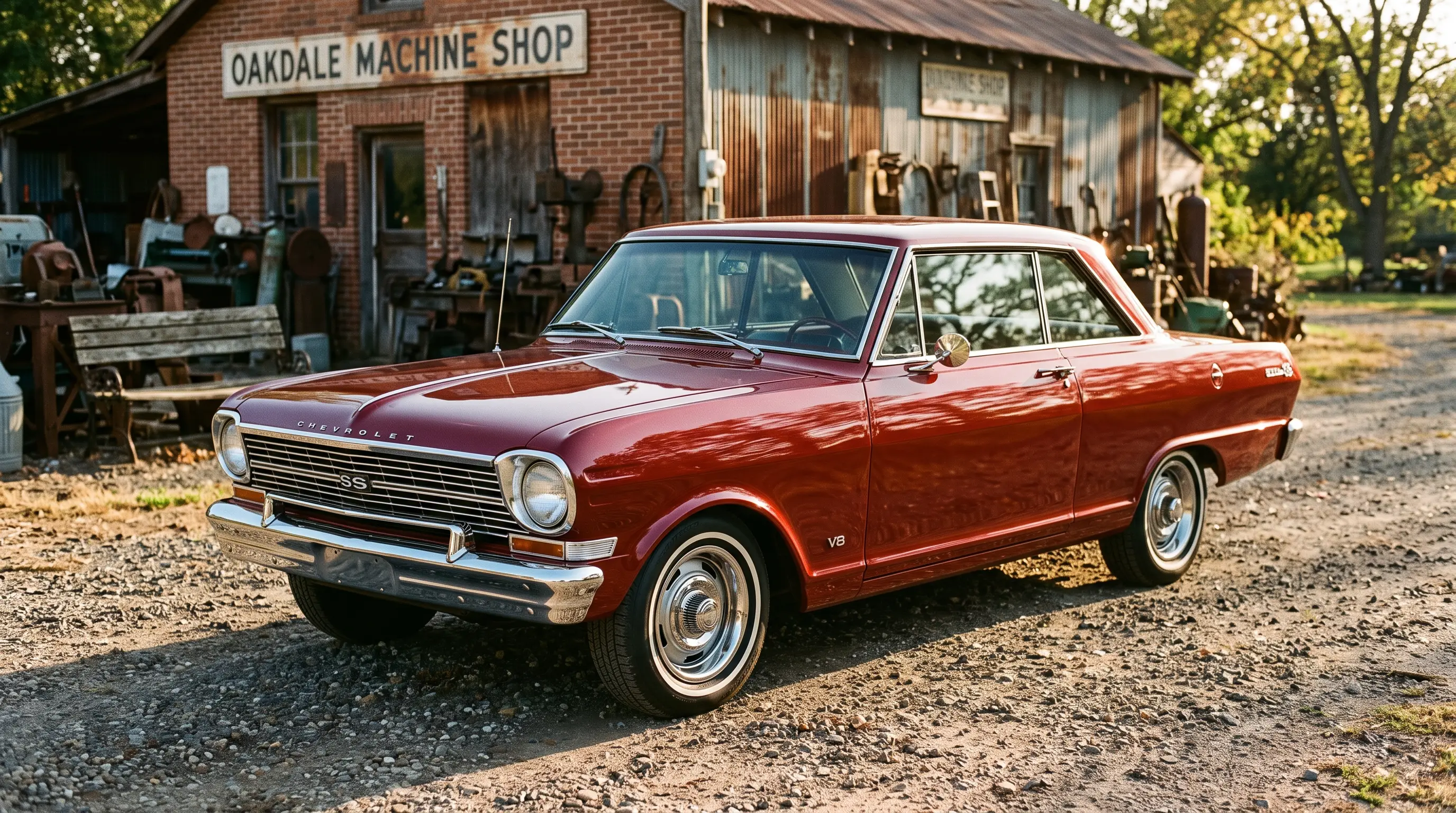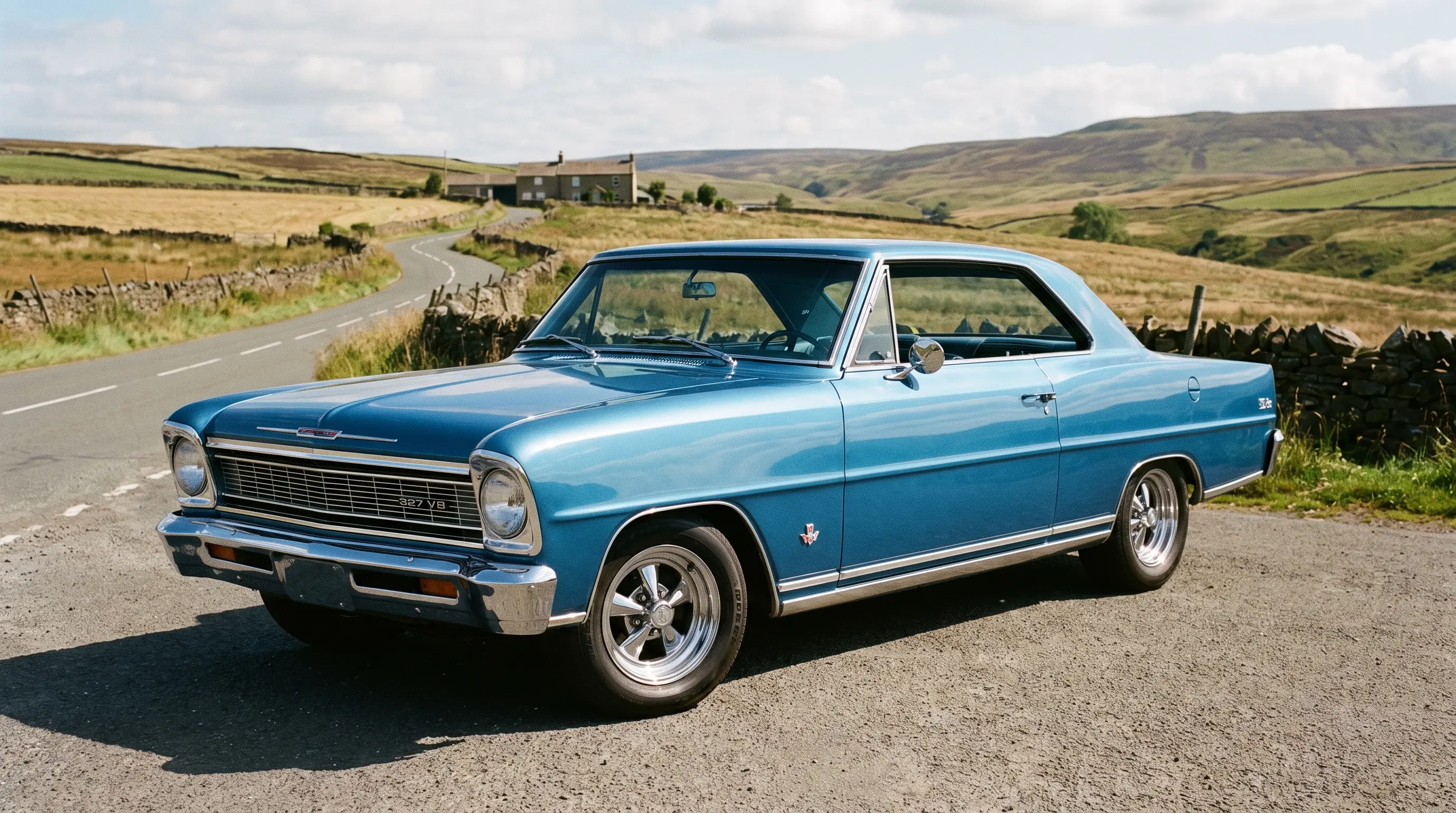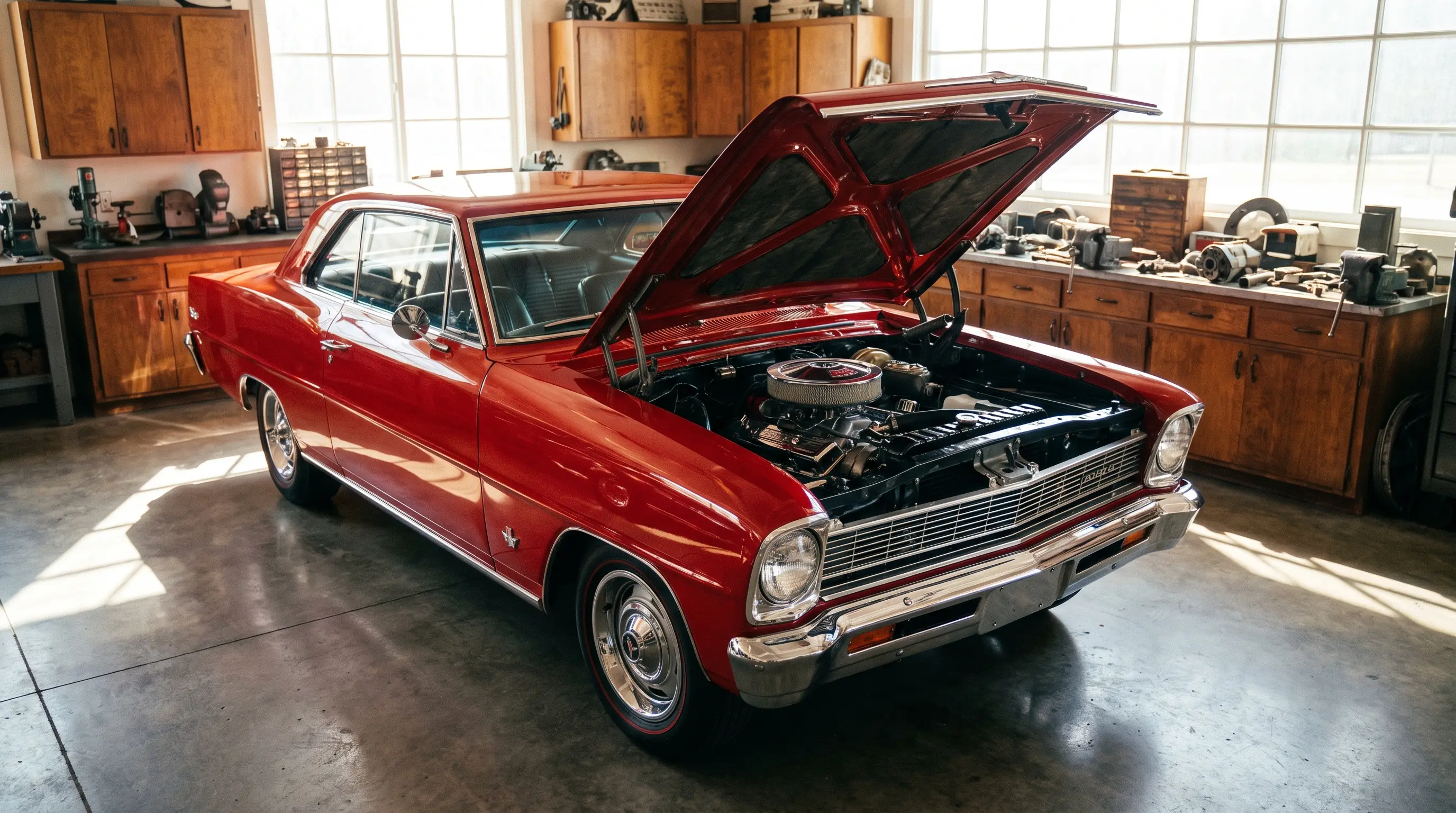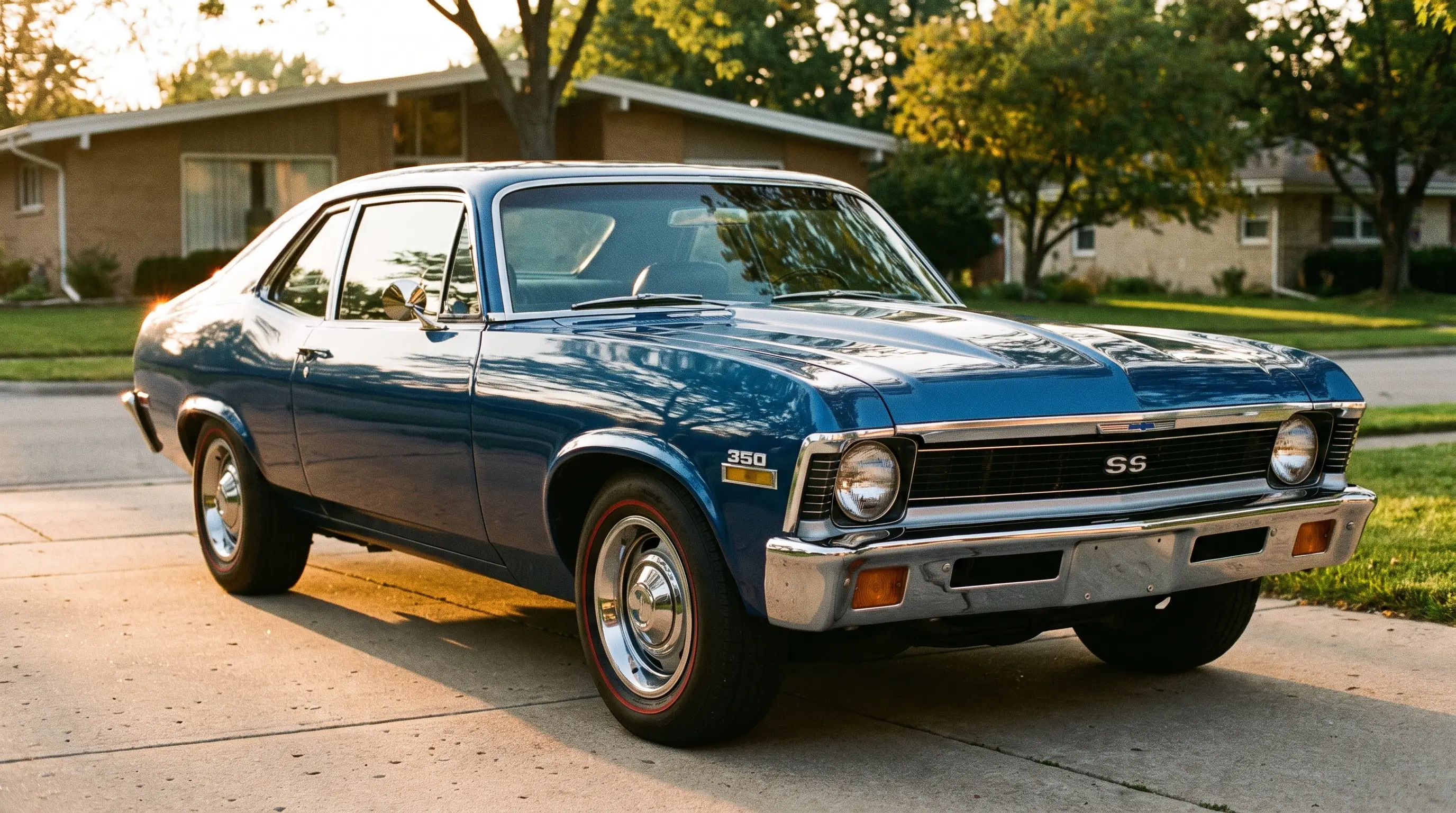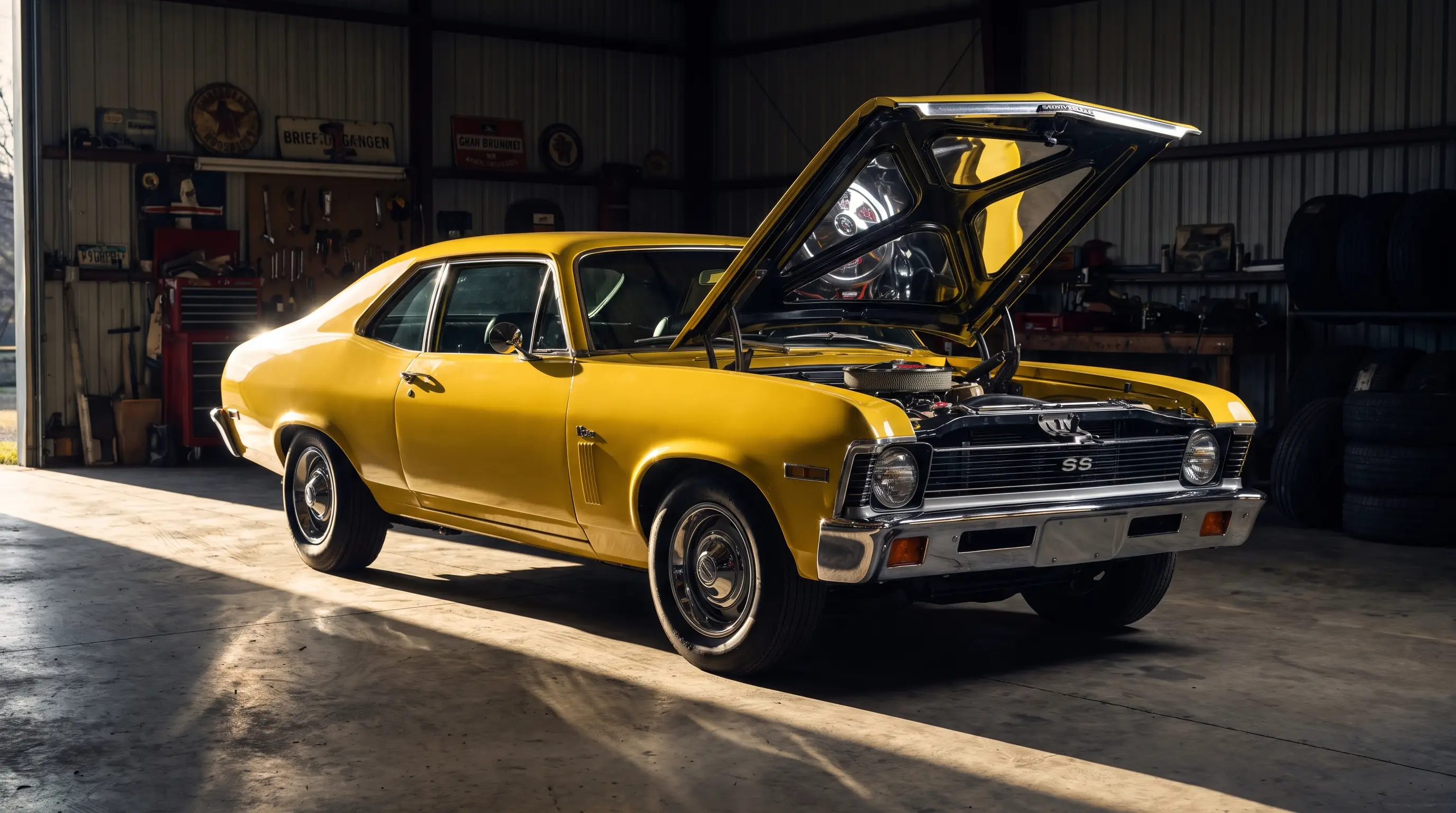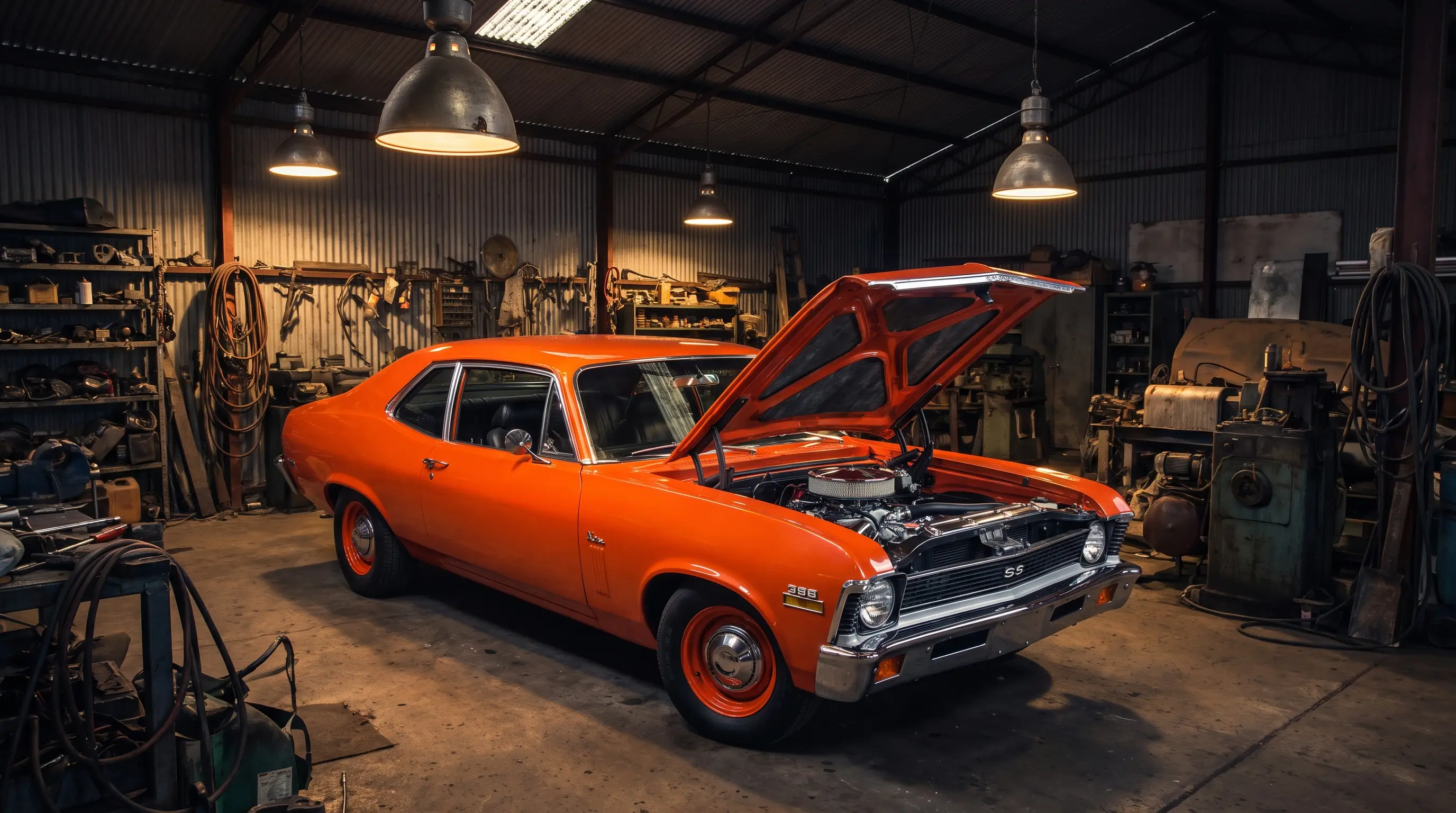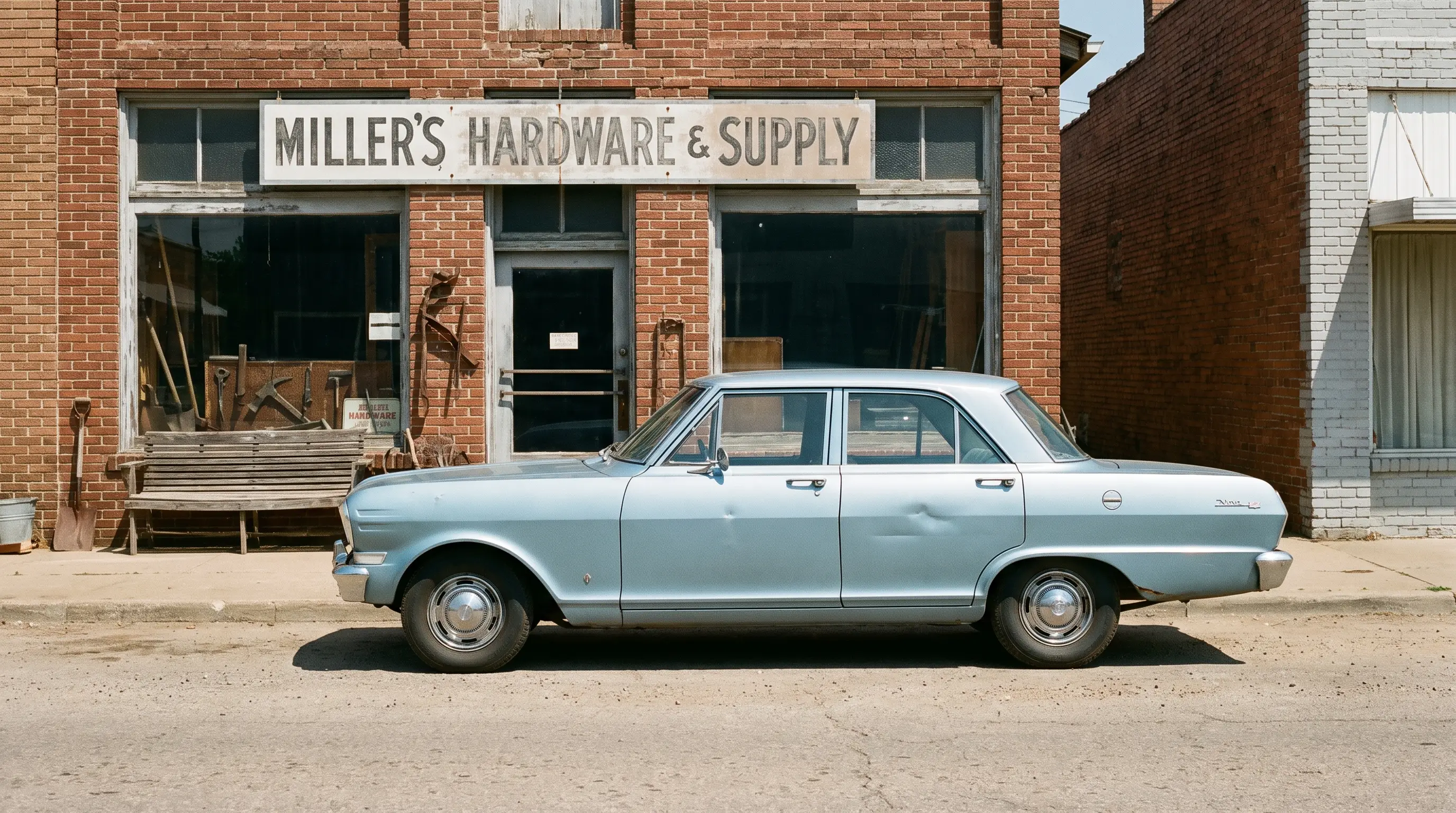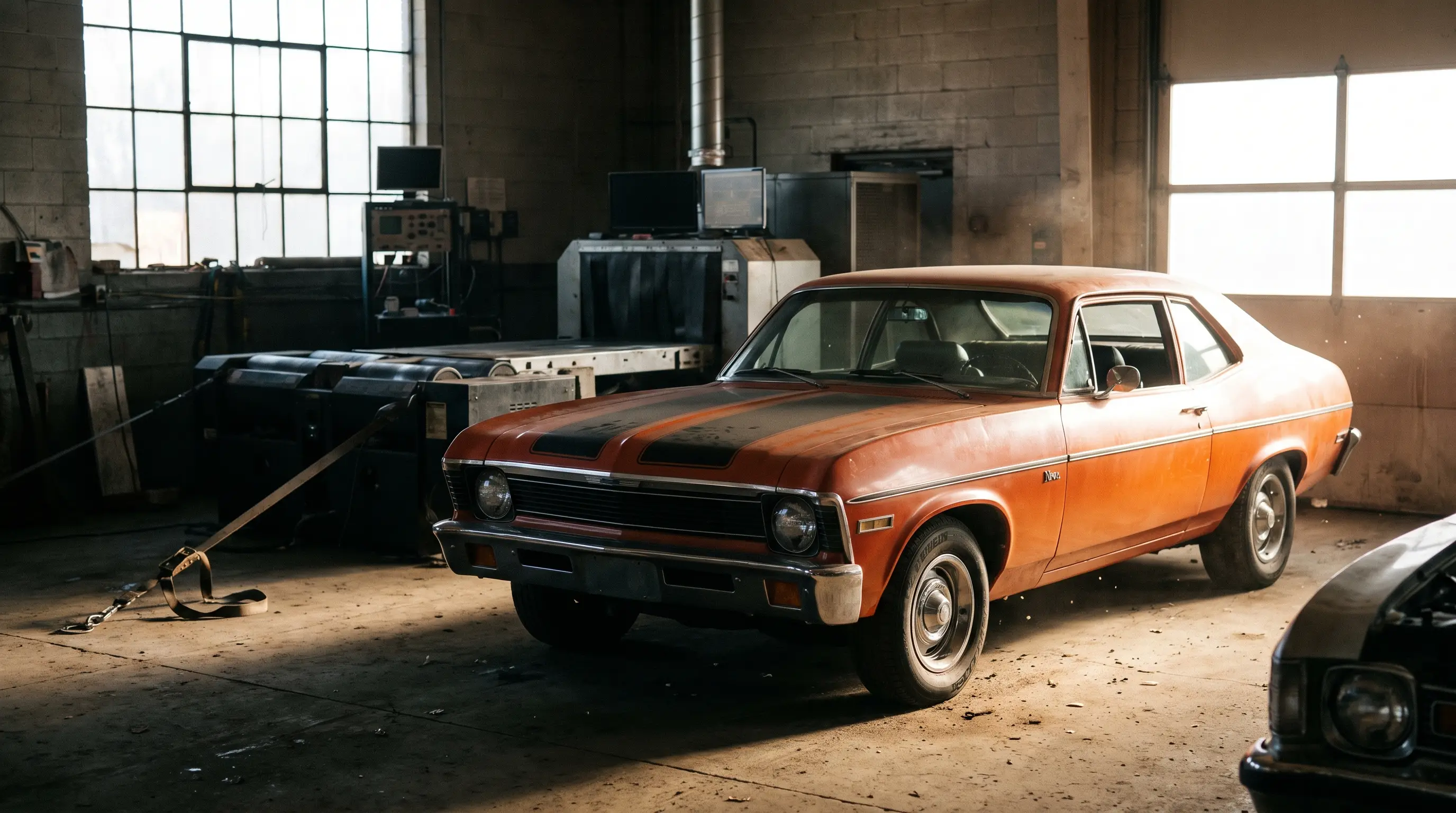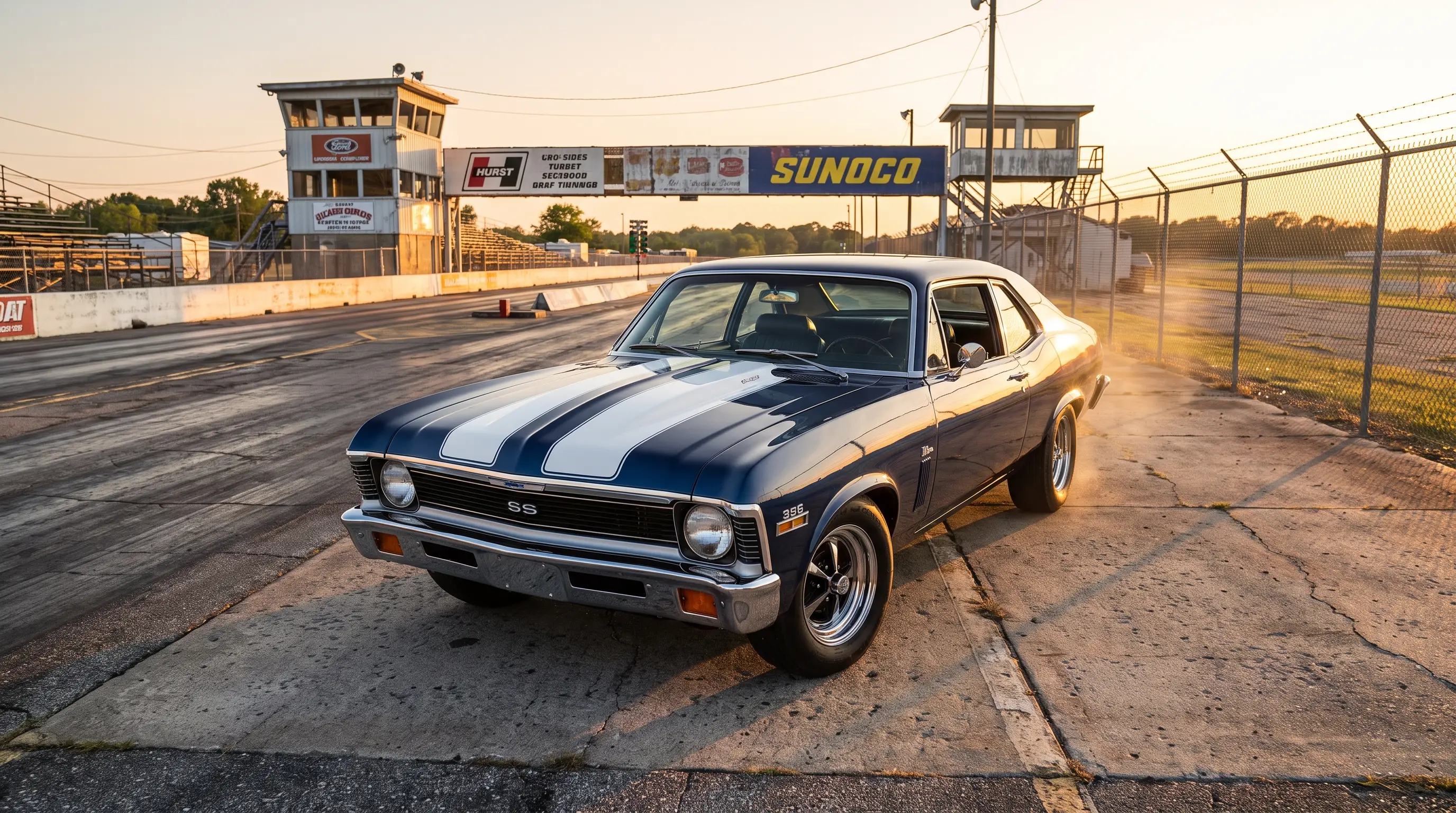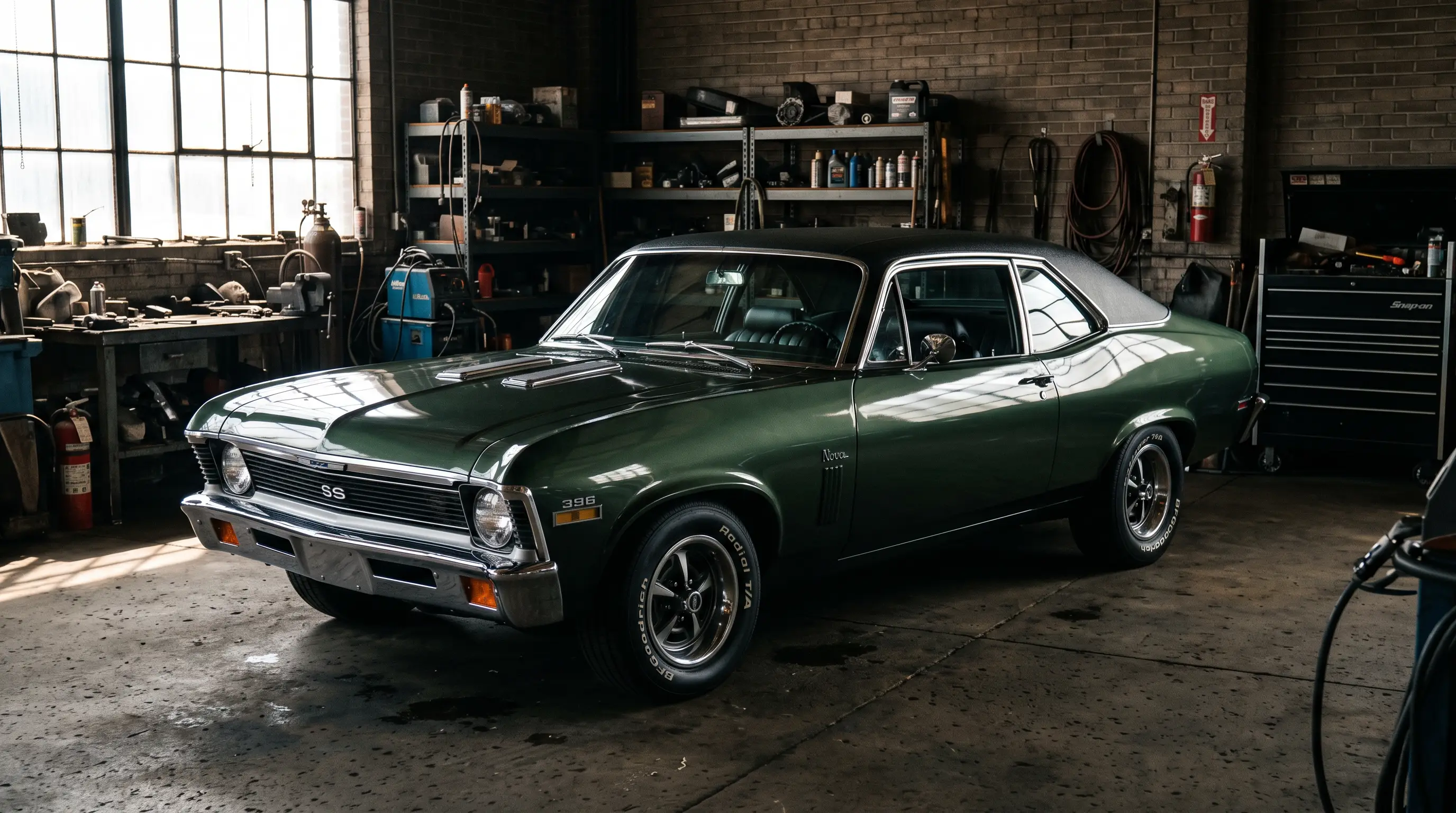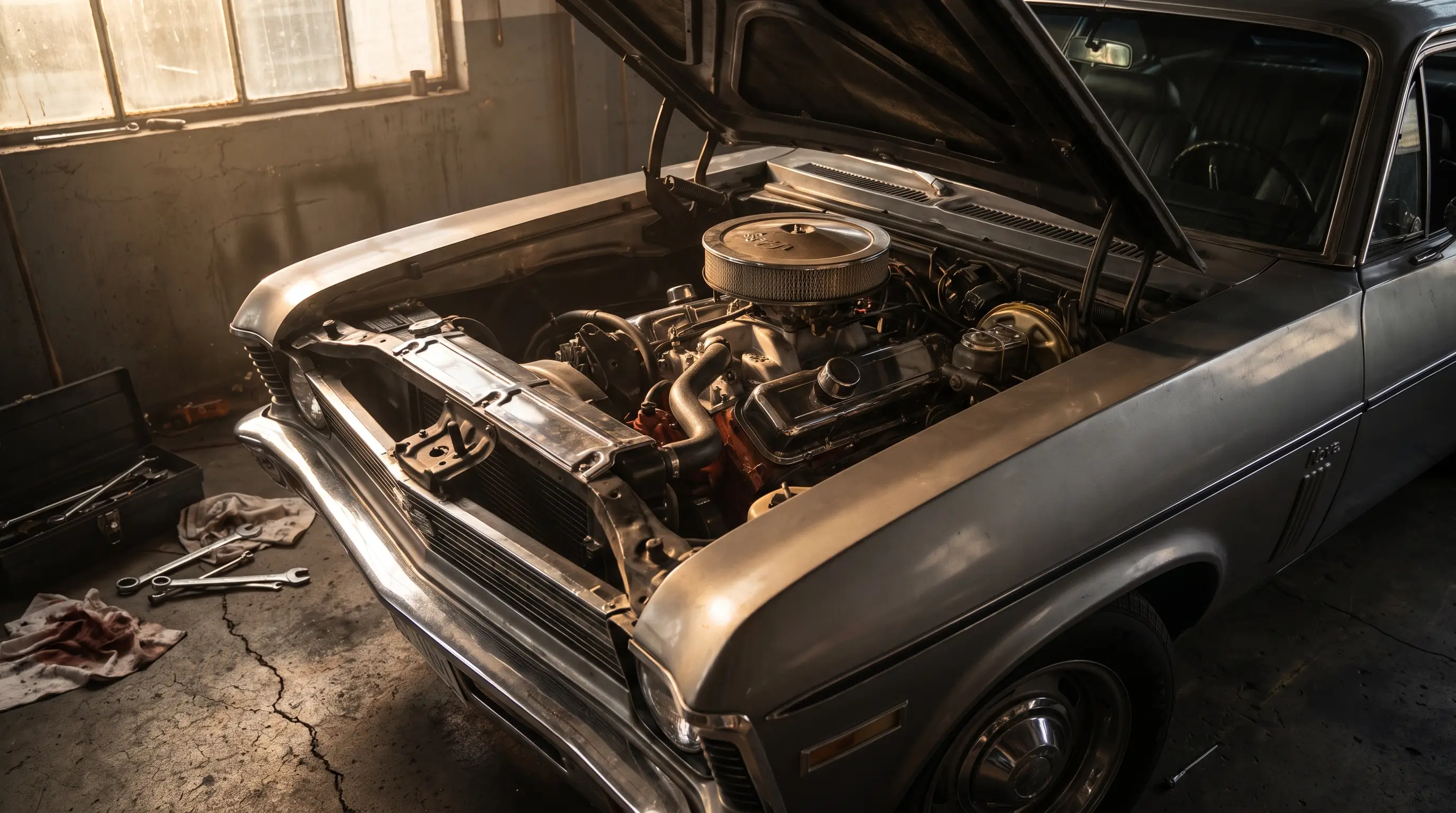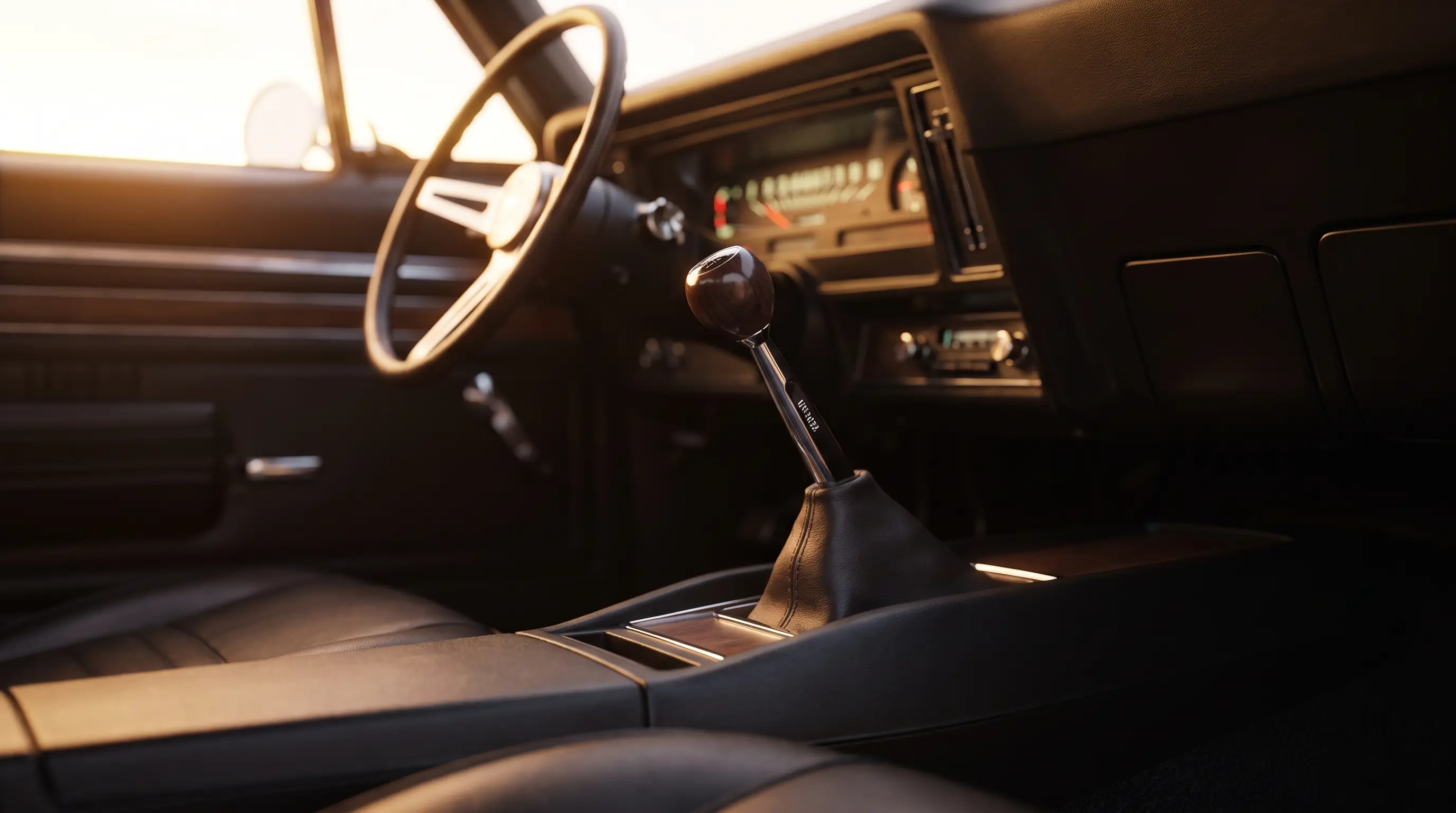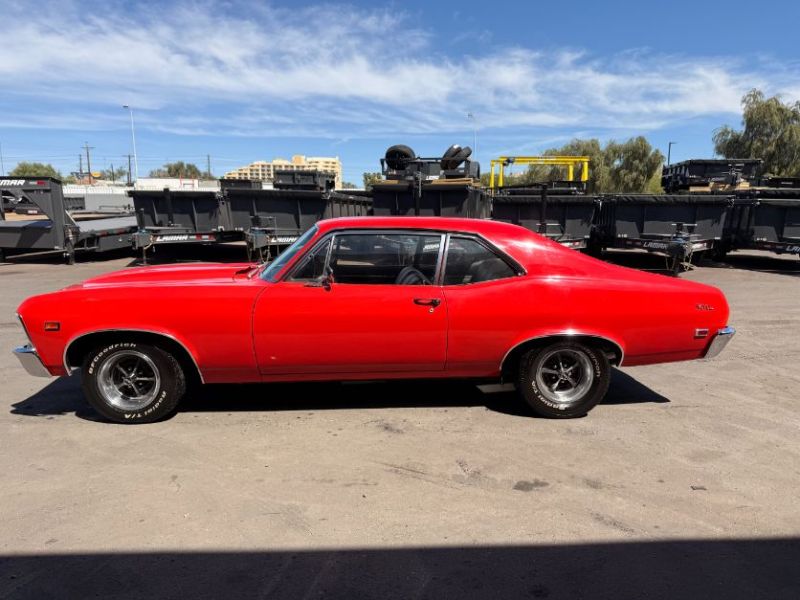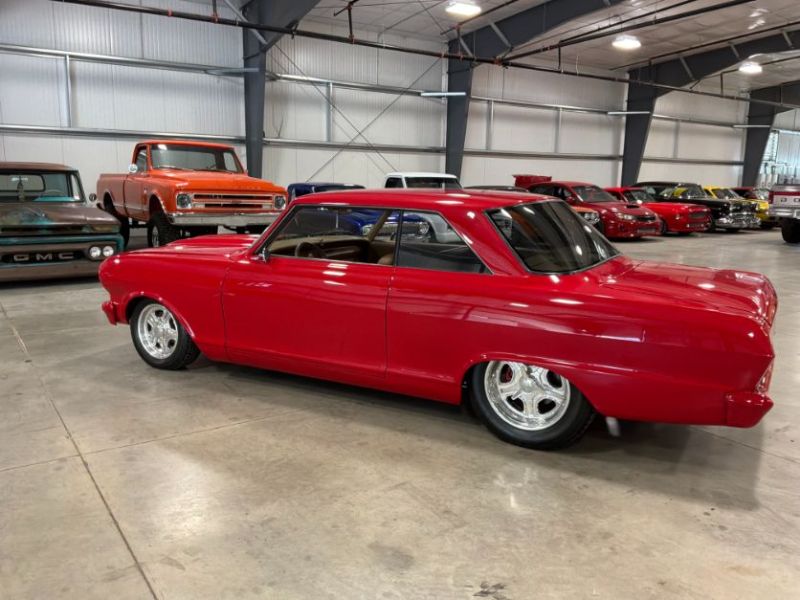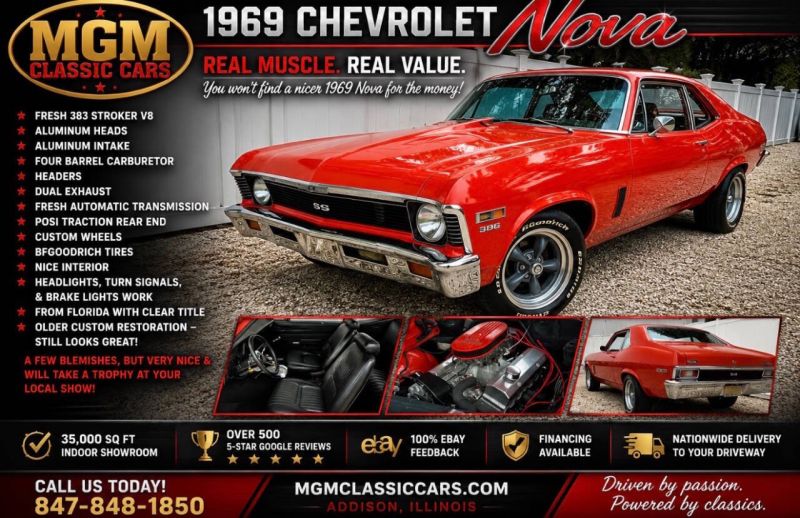
The Chevrolet Nova was never one car. It was one body that swallowed almost every engine Chevrolet built in the 1960s and early 1970s, from a wheezing inline-four to a 396 big-block that could embarrass cars costing twice as much. That range is the whole point. Understanding chevy nova engines means understanding how a cheap compact turned into a street sleeper, and why two Novas with the same badge can be separated by 250 horsepower.
Here is the short version. Base cars got sixes and a four. Mid-range cars got the 283 and 327 small-blocks. The hot cars got the L79 327, the 350, and the 396. Everything after 1972 got quieter on paper. The numbers below tell you why.
The stovebolt six and the 153 four
The Chevy II arrived for 1962 as a no-frills answer to the Ford Falcon. Base power was a 153 cubic inch inline-four rated at 90 horsepower gross. It was Chevrolet's only four-cylinder car engine of the era, and it existed to hit a price, not a stopwatch. Zero to sixty took its time. A lot of time.
Step up and you got the inline-six. Buyers and enthusiasts still call this family the stovebolt six, a name carried over from Chevrolet's older overhead-valve sixes. The Chevy II version started at 194 cubic inches and 120 horsepower, and later grew to 230 and then 250 cubic inches through the model run. It was cheap, torquey enough for a light body, and nearly impossible to kill. That reliability is why so many survivors still wear a six.
None of these engines were fast. All of them mattered. The four and the six kept the base price low, which kept the Nova in showrooms long enough for the V8 story to get interesting. If you want the full arc of how the car evolved, our Nova retrospective covers the model year by model year.
The 283 puts a V8 in the compact
Chevrolet dropped the 283 small-block into the Chevy II for 1964. Rated at 195 horsepower gross in two-barrel form, it turned a grocery-getter into something you could actually enjoy. The 283 was already a known quantity by then, a proven design from the 1957 full-size cars, so it slotted in without drama.
The 283 is not the engine collectors chase today. It is the engine that proved the platform could handle a V8 at all. Once the chassis and driveline showed they could take 195 horsepower, the door was open for everything that followed. Think of it as the test case that passed.
The 327 and the L79 change the conversation
The 327 is where chevy nova engines stopped being an afterthought. Available in the Chevy II from 1966, the base 327 (the L30) made 275 horsepower gross. Solid numbers for a light car. But the one that mattered was the L79.
The L79 327 was rated at 350 horsepower gross. It used a higher compression ratio, a hotter hydraulic cam, and a big four-barrel. In a Nova that weighed a little over 3,000 pounds, 350 horsepower was serious. This is the engine that gave the early Nova SS its reputation as a giant-killer, a small car that could run with muscle cars a full size class above it.
The L79 is also where numbers-matching starts to carry real money. A documented, correct L79 car is worth a large premium over a clone. More on that below, because the gap is wide.
The 350 small-block takes over
The Nova was restyled for 1968 and got bigger. The small-block that came to define the later cars was the 350, which appeared in the Nova around 1968 to 1969 and became the workhorse V8 through the muscle era. In SS trim the 350 was rated at 300 horsepower gross.
Three hundred horsepower does not sound wild next to a 396. It was the smart buy anyway. The 350 sat lighter over the front wheels than a big-block, so the car turned better and wore its front tires slower. For a lot of drivers the 350 SS was the more usable fast Nova, and the sales numbers reflected that.
The 350 also had the longest life of any Nova V8. It carried through into the emissions era, into the smog-choked mid-1970s, and kept the SS badge alive even after the ratings fell off a cliff. Which brings up the single most misread topic in this whole subject.
The 396 and 402 big-blocks
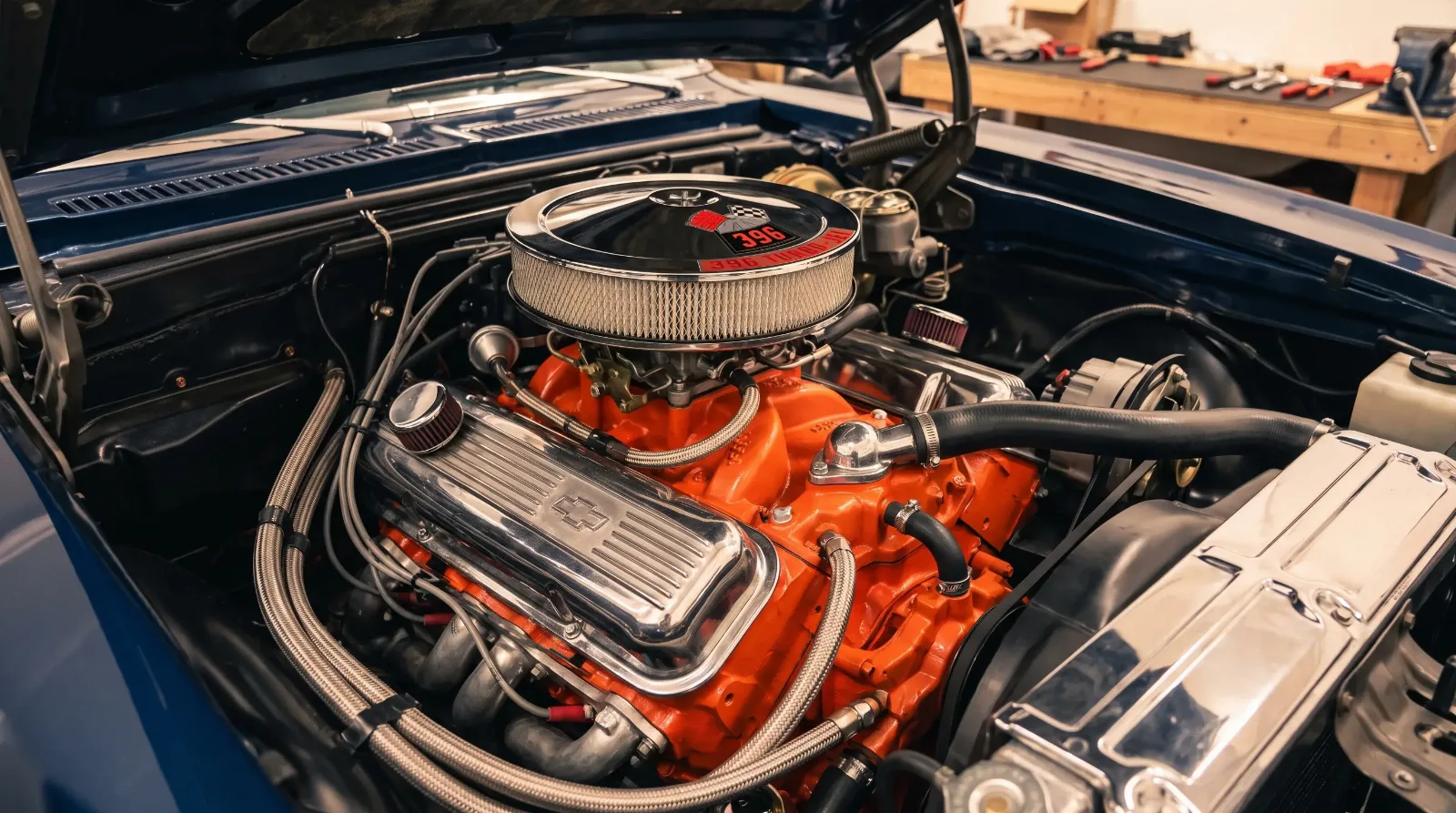
For 1968 Chevrolet did the obvious thing and stuffed the big-block Mark IV into the Nova. The SS 396 came in two main flavors. The L34 was rated at 350 horsepower gross, and the L78 was rated at 375 horsepower gross with solid lifters, higher compression, and rectangular-port heads. The L78 is the one people mean when they talk about a real 396 Nova.
Here is the detail that trips up buyers. For 1970 the "396" was actually bored out to 402 cubic inches, but Chevrolet kept selling it as a 396 because the badge had value. So a 1970 SS 396 is displacing 402 cubes under the hood. Same marketing name, different engine. Do not let a seller convince you the badge is wrong just because the block measures 402.
These big-block cars are the top of the market. Light body, heavy engine, and a factory that clearly knew what it was building. When buyer interest peaks it usually peaks here, and if you are shopping the results you can browse classic Chevy Novas for sale to see how the engine option moves the asking price.
"People argue about which Nova is the fast one. There isn't one answer. The L79 327, the 350 SS, and the L78 396 are three different cars with the same badge, and the price gap between them is the honest tell."
— Dan Reeves
Gross versus net, and why 1972 looks weak
If you compare a 1970 spec sheet to a 1972 one, the later car looks gutless. It usually was not, at least not by as much as the numbers suggest. The industry changed how it measured power.
Through 1971, horsepower was quoted as SAE gross: engine on a stand, no accessories, no real exhaust, ideal conditions. Starting in 1972, ratings switched to SAE net, measured with the accessories, air cleaner, and full exhaust the car actually used. Net numbers are lower for the same engine because they reflect the real installed state. A 350 that read 300 horsepower gross could shed a meaningful chunk of that number on paper without a single mechanical change, purely from switching how the same output was measured.
Compression drops for unleaded fuel were real and did cost power in the early 1970s. But a chunk of the apparent collapse between 1971 and 1972 is just the measurement standard. When you compare two Novas, make sure you are comparing gross to gross or net to net. Otherwise you are comparing a lie to the truth.
| Engine | Type | Displacement | Rated Power | Era |
|---|---|---|---|---|
| 153 four | Inline-4 | 153 cu in | 90 hp gross | 1962 on |
| 194 six | Inline-6 | 194 cu in | 120 hp gross | 1962 on |
| 283 V8 | Small-block | 283 cu in | 195 hp gross | 1964 on |
| 327 base (L30) | Small-block | 327 cu in | 275 hp gross | 1966 on |
| L79 327 | Small-block | 327 cu in | 350 hp gross | 1966 on |
| 350 SS | Small-block | 350 cu in | 300 hp gross | 1969 on |
| L34 396 | Big-block | 396 cu in | 350 hp gross | 1968 on |
| L78 396 | Big-block | 396 cu in | 375 hp gross | 1968 on |
| L78 "396" (402) | Big-block | 402 cu in | 375 hp gross | 1970 |
Numbers-matching and what it costs you
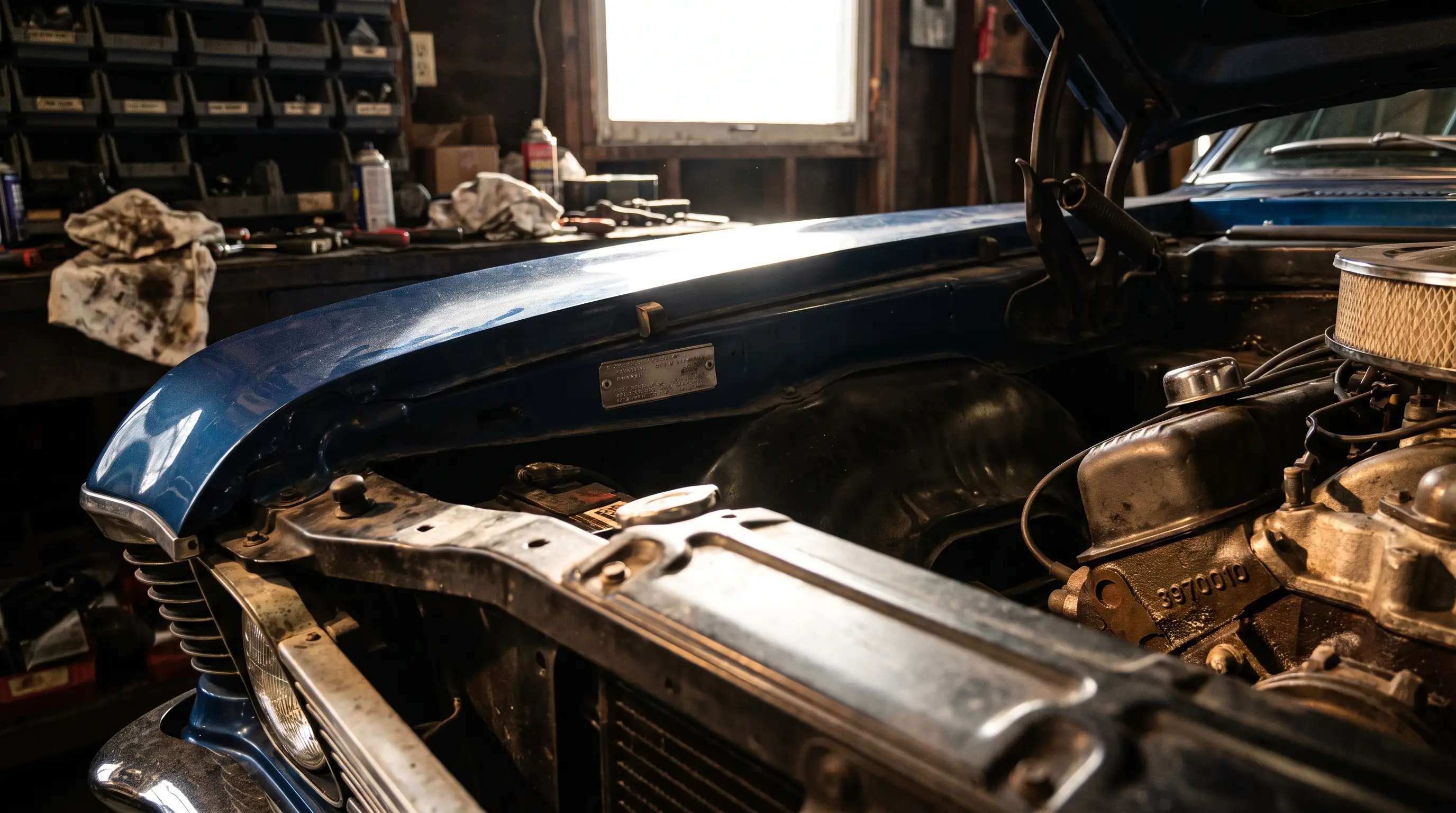
Numbers-matching means the engine block carries a stamped code and casting date that match the car's build records for that VIN. On a base six it barely moves the needle. On an L79 327 or an L78 396 it is most of the value.
The reason is supply. Small-blocks are common and easy to swap, so a "396 Nova" with a re-stamped or replacement block is a real risk. A documented, matching drivetrain removes the guesswork, and buyers pay a premium for that certainty. The engine story does not end at the crankshaft either, because how these cars were bought, raced, and customized is the next part of the story.
The engine is the reason two Novas can share a shape and nothing else. Base six or L78 396, the badge on the fender only tells you part of the truth. The block, the codes, and the era it was rated in tell you the rest.