Nova transmission options break into three real categories, not one long list: the two speed automatic that couldn't handle real torque, the three and four speed automatics that could, and the manuals, which ranged from a truck-grade three speed to a genuinely stout close ratio four speed. Which one sits behind your engine changes what the car can actually do, regardless of what the engine badge says.
The Powerglide problem
The Powerglide is a two speed automatic, and Chevrolet used it under plenty of small block Novas through the late 1960s and into the early 1970s. It's tough, simple, and cheap to rebuild. It's also a genuine limitation behind anything with real torque, which is exactly why Chevrolet wouldn't let you order it behind the L78 396. Two gears means the engine spends more time outside its power band than a three speed setup, and 0-60 numbers on a Powerglide car consistently trail an otherwise identical car with a three speed automatic. If your Nova has a Powerglide and a mild small block, that's a correct, honest factory pairing. If it has a Powerglide and a big block badge, ask questions.
The TH350 upgrade nobody talks up enough
The Turbo Hydramatic 350 replaced the Powerglide as the volume automatic choice on small and mid-size GM cars starting with the 1969 model year, and Nova buyers who wanted a three speed automatic behind a 350 small block generally got a TH350. It's a genuinely good transmission: strong enough for a street small block, reasonably efficient, and cheap to find parts for even now. It doesn't get the enthusiast attention the Muncie four speeds get, but for a daily-driven small block Nova, it's the transmission most owners actually want, whether they know the name or not.
| Transmission | Type | Typical pairing | Notes |
|---|---|---|---|
| Powerglide | 2-speed automatic | Base six / mild small block | Not rated for big block torque |
| TH350 | 3-speed automatic | 350 small block | Volume choice from the 1969 model year on, replacing the Powerglide |
| TH400 | 3-speed automatic, heavy duty | L78 396 (mandatory option) | Only auto Chevrolet allowed behind the L78 |
| Saginaw 3-speed | Manual | Base six / small block | Column shift, not a performance piece |
| Muncie M20/M21/M22 | 4-speed manual | Performance small block and big block | M22 "rock crusher" for the heaviest torque loads |
Muncie, and why M20, M21, and M22 are not interchangeable answers
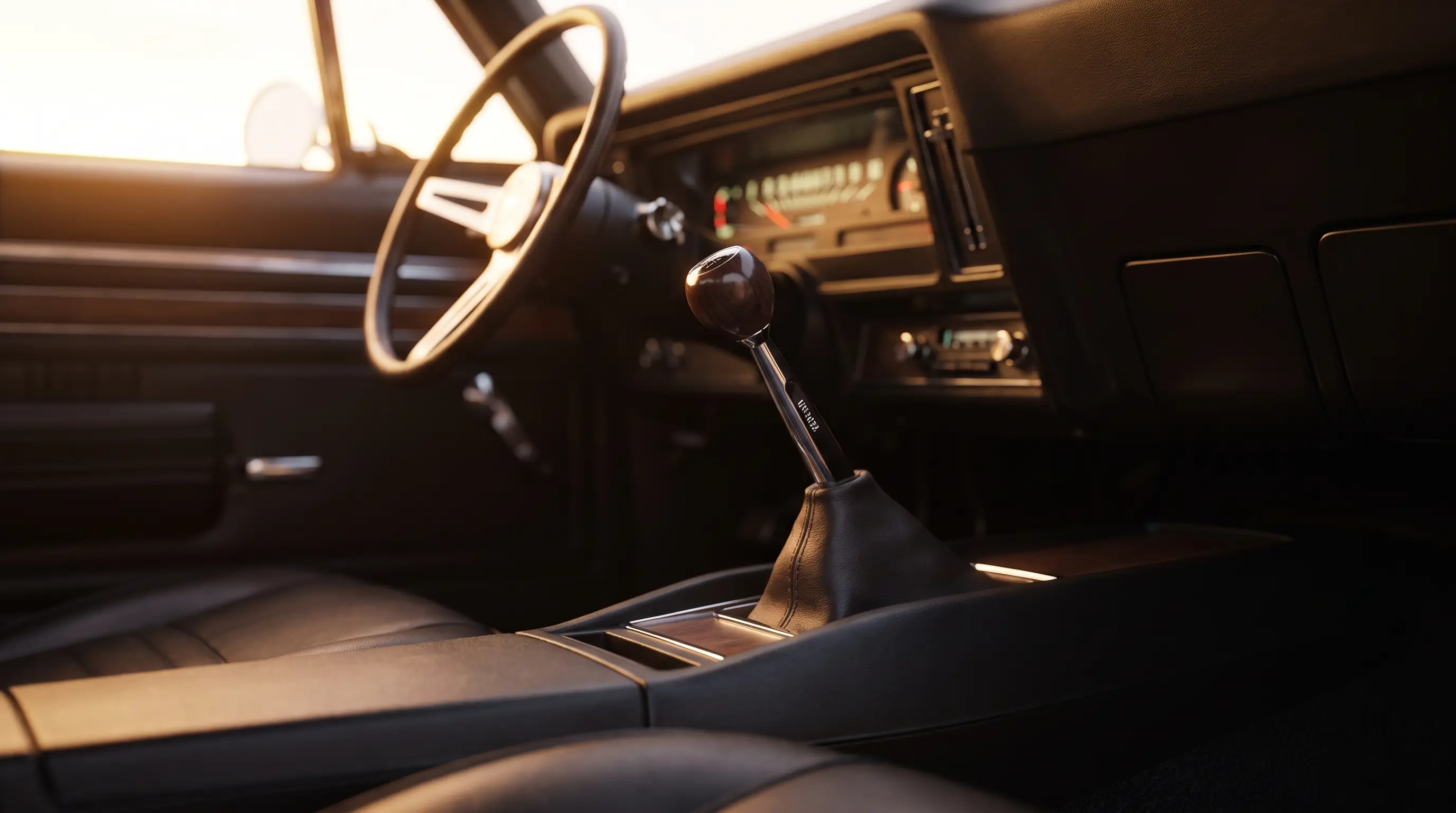
The Muncie four speed came in three flavors that get confused constantly. The M20 is wide ratio, built for a strong first gear launch with bigger jumps between gears, good for street driving. The M21 is close ratio, keeping the engine in its power band longer through the shifts, aimed at buyers who cared more about keeping revs up than an easy launch. The M22, nicknamed the rock crusher for the gear whine it's known for, is a close ratio box built with stronger internals specifically to survive high torque big block use. Chevrolet paired the M22 with the L78 396 for exactly that reason. A small block Nova with an M22 behind it is either a factory oddity or, more likely, a transmission swap somewhere down the line.
Matching the transmission to the rest of the drivetrain
Once you know which transmission is under the car, cross-check it against the engine. Nova power explained covers what each engine option was actually rated at, and that context makes it obvious when a transmission doesn't fit the story. A TH400 behind a mild small block isn't wrong, just unusual for a factory car. A Powerglide behind a documented big block is a mismatch that needs an explanation before you take the seller's word on anything else.
The rear axle is the third piece of that puzzle, and it's worth checking alongside the transmission rather than after. Chevrolet paired the heavier transmissions with stronger rear ends for the same reason they restricted transmission choices in the first place: a weak link anywhere in the drivetrain undoes the strength built into the rest of it. A correct M22 four speed sitting ahead of a 10 bolt rear axle behind a big block is the kind of inconsistency that tells you parts got mixed and matched somewhere in the car's history, whether from a repair, a swap, or a build that was never meant to be represented as stock.
What condition actually tells you
Age and mileage matter differently across these transmissions. A Powerglide that's never been rebuilt in fifty years is either extremely lightly used or living on borrowed time, since the internals weren't built for extreme longevity under hard use. A TH350 or TH400 in unknown condition is a safer bet to drive home and diagnose later, since both were built tougher and remain easier to source rebuild kits for even now. Muncie four speeds are the pickiest of the group, since worn synchros and a tired clutch tend to show up together, and a Muncie that grinds going into second gear is telling you two separate jobs need doing, not one.
"A transmission doesn't lie about what it was built for. A Powerglide can't hide behind a big block badge, and an M22 doesn't end up under a six cylinder by accident. Check the gearbox before you believe the sticker."
— Dan Reeves
For the broader story of how the small block carried the Nova nameplate long after the big blocks disappeared from the order form, a related deep-dive covers that shift in detail. And if you're ready to go looking at real cars instead of spec sheets, there are classic Chevy Novas for sale with both manual and automatic drivetrains on the market right now.