
Pop the hood on almost any hot Chevy Nova built after 1968 and you are looking at some version of the small-block Chevy V8. Not because Chevrolet ran out of ideas. Because the small-block fit, the small-block was cheap to build, and the small-block turned a plain compact into something a guy on a budget could actually race. If you want the full rundown on how displacement climbed year over year, I already covered that ground in the Nova engine story. This piece is about why the engine mattered more than the car it sat in.
Car Features
6 min read
Why the Small-Block Chevy Made the Nova
The Chevy Nova was never designed as a performance car, but the small-block V8 fit its engine bay so cleanly that it built the car's entire reputation.
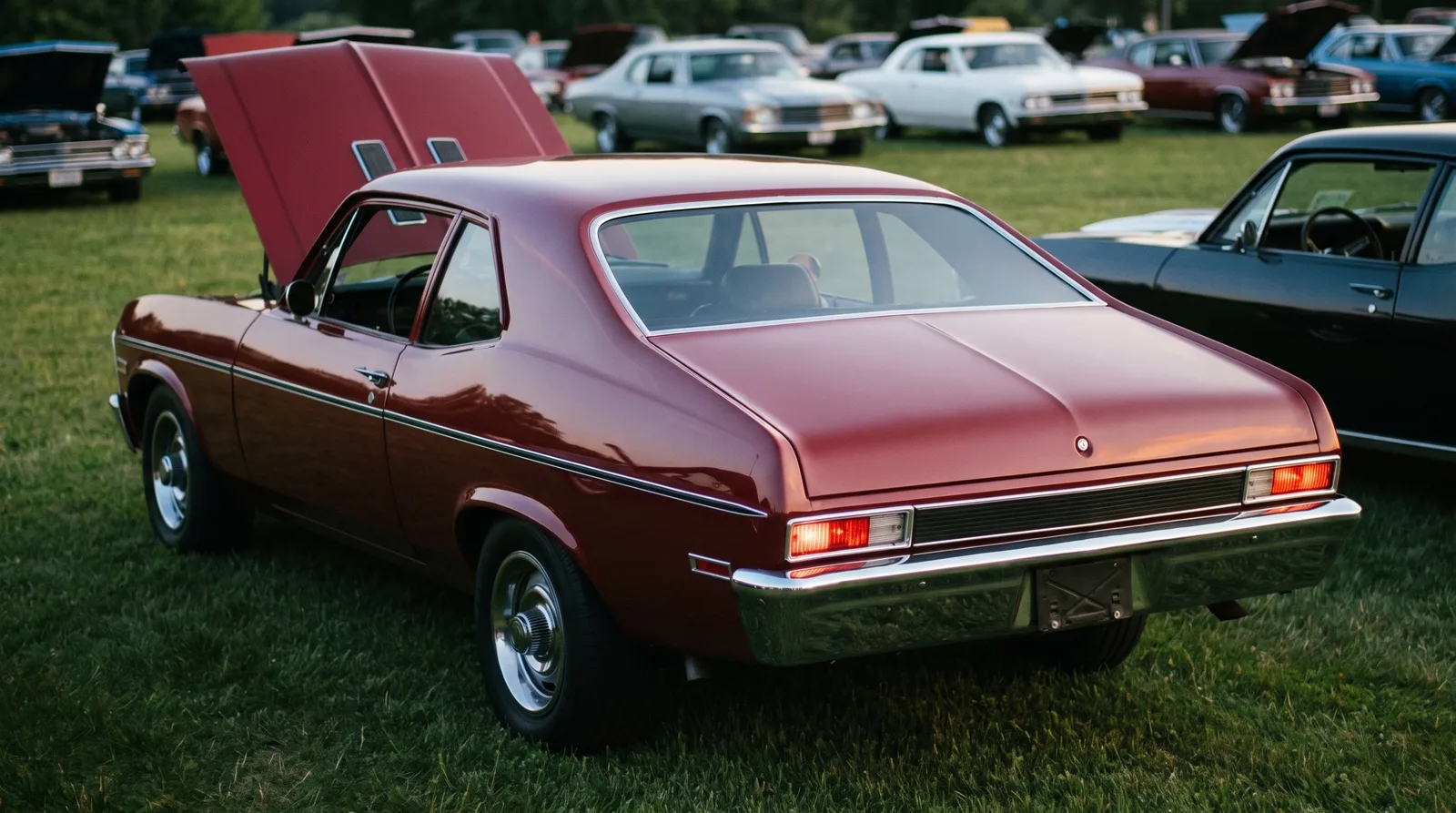
A compact that was never built to be fast
The Nova started life in 1962 as the Chevy II, a plain-wrapper answer to the Falcon and Valiant. Six-cylinder standard, thin sheet metal, a chassis built to be cheap and reliable, not quick. Nobody at Chevrolet drew that car with a V8 in mind. The engine bay was tight, the front subframe was narrow, and the whole point of the platform was economy transportation for people who did not care about a quarter-mile time.
Then in 1964 Chevrolet let the 283 and later the 327 into the engine bay, almost as an afterthought option, and everything about the car's reputation changed. The small-block Chevy was compact enough, light enough, and simple enough that it dropped into that narrow engine bay without a fight. That single fact, more than any styling change, is why the Nova has a performance history at all.
Why the small-block fit where a big-block never could
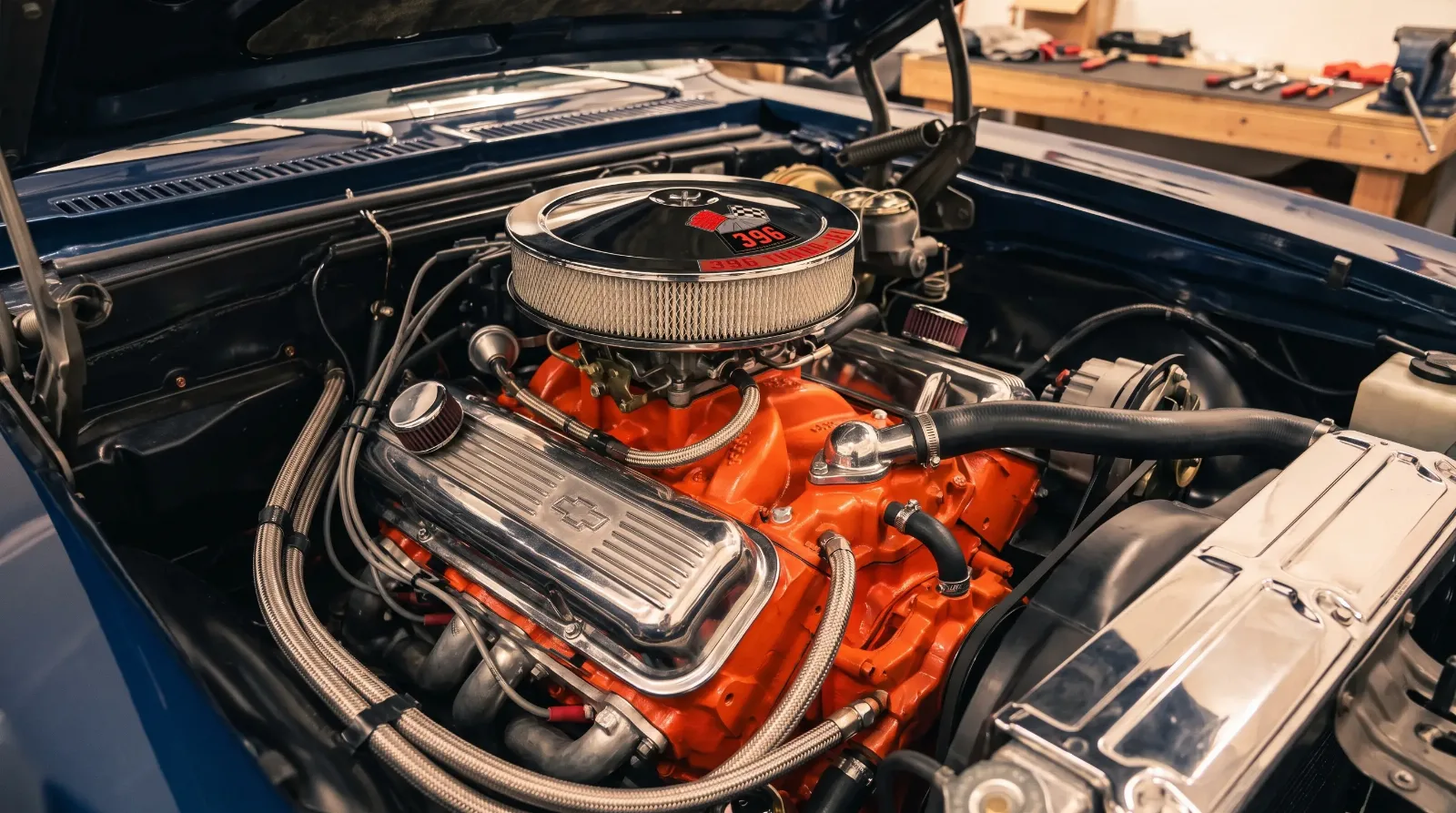
Weight and width are the whole story here. The small-block Chevy weighs less than most competing V8s of the era and it is narrow enough at the heads to clear factory frame rails and steering linkage without major surgery. A big-block Chevy, the 396 and 454 family, needed serious engine bay modification to fit the Nova's front clip. Some shops did it and the cars were monsters, but it took cut sheet metal and relocated components to make it work.
The small-block never needed that. Bolt patterns lined up with existing motor mounts, the accessory drive cleared the shock towers, and the transmission tunnel already had room from six-cylinder applications. Chevrolet's engineers were not chasing a performance halo when they specced the platform. They just built a car where the cheap, mass-produced V8 they already had on the shelf happened to bolt in clean.
1968 to 1972, the years that built the legend
The third-generation Nova, 1968 through 1974, is where the small-block relationship matured into something buyers actively sought out. The SS package brought a 350 as standard equipment starting in 1968, rated at 295 horsepower and up to 300 by 1969, with the 396 big-block still available for anyone who wanted more. But it was the 350-powered cars that moved in real numbers, because they were affordable to insure and cheap enough to repair when something let go.
Parts interchange is the other half of this. A Nova owner in 1971 could walk into a Chevrolet dealer and order carburetors, heads, intake manifolds, and camshafts shared across Camaros, Chevelles, and full-size Chevrolets. That parts commonality kept build costs down and kept the small-block Nova relevant on local tracks well past the point Chevrolet stopped actively marketing it as a performance car.
| Engine | Years in Nova | Factory horsepower (gross/net varies by year) |
|---|---|---|
| 283 V8 | 1964-1968 | 195-220 hp |
| 327 V8 | 1965-1968 | 275-350 hp (350 hp L79, 1965-66) |
| 350 V8 | 1969-1979 | 255-300 hp depending on year and package |
"Guys ask me why they should build a small-block instead of chasing a big-block swap. I tell them the same thing every time. The small-block was built to live in that chassis. The big-block was made to be forced into it."
Mike Sullivan
Why the engine outlasted the car's reputation
Chevrolet stopped building the Nova in 1979, and for a good decade after that the car was cheap, unloved, and easy to find in junkyards. What kept the model alive in enthusiast circles was never the sheet metal. It was the fact that a rusted-out Nova shell with a small-block still in it was worth saving, because the drivetrain underneath was the same reliable, cheap-to-fix V8 that half the domestic performance market already understood inside and out.
That is also why the Nova became one of the most common budget drag cars and street/strip builds through the 1980s and 1990s. Light curb weight, narrow front clip, and an engine bay that accepted small-block upgrades without drama made it a natural pick for racers who did not have Camaro or Chevelle money. If you want to see where that reputation led on the strip, the next story in this set covers the specific builds that made the Nova a fixture at the track.
Buying and building one today
If you are shopping for a small-block Nova now, do not assume the engine under the hood is original. Decades of swaps mean a lot of these cars have a later-model 350 or a crate motor where the factory 283 or 327 used to sit. That is not automatically a problem. It is a value question. A numbers-matching L79 327 car commands real money. A Nova with a mildly built 350 crate engine is a driver, priced like one, and honestly the more sensible daily option for most buyers.
Sources and notes
- Wikipedia: Chevrolet Chevy II / Nova
- Speedway Motors: Chevy L79 327 Engine History, Specs & Build Ideas
- Chevy Hardcore: Nova Engine Options, 1967
- Steve's Nova Site: 1968 Nova SS L78 discussion
- Muscle Car Facts: 1969 Nova
None of this happened by accident. The small-block Chevy did not just power the Nova, it defined what kind of car the Nova was allowed to become once buyers started asking for more than basic transportation. For the full history of the model built around that engine, the complete Nova guide lays out the whole timeline in one place. But if you want the short version, remember this: the Nova was a cheap car that happened to accept a great engine cleanly, and that combination is the entire reason anyone still talks about it.
Related Reading
Have a
Chevrolet Nova
for Sale?
Reach thousands of serious classic car collectors across the US.
Sell It Here →
Are You a Classic Car Dealer?
List your full inventory and connect with targeted classic car buyers.
Join as a Dealer →
#classic muscle cars
#small-block chevy
#chevrolet nova
#Chevy V8
#Nova engine history
#Chevrolet Chevy II

About the author
Mike Sullivan
Detroit-area muscle car enthusiast and restoration specialist with three decades of hands-on experience working on American iron.
Related Listings - Chevrolet Nova
Comments
Be the first to comment on this article.