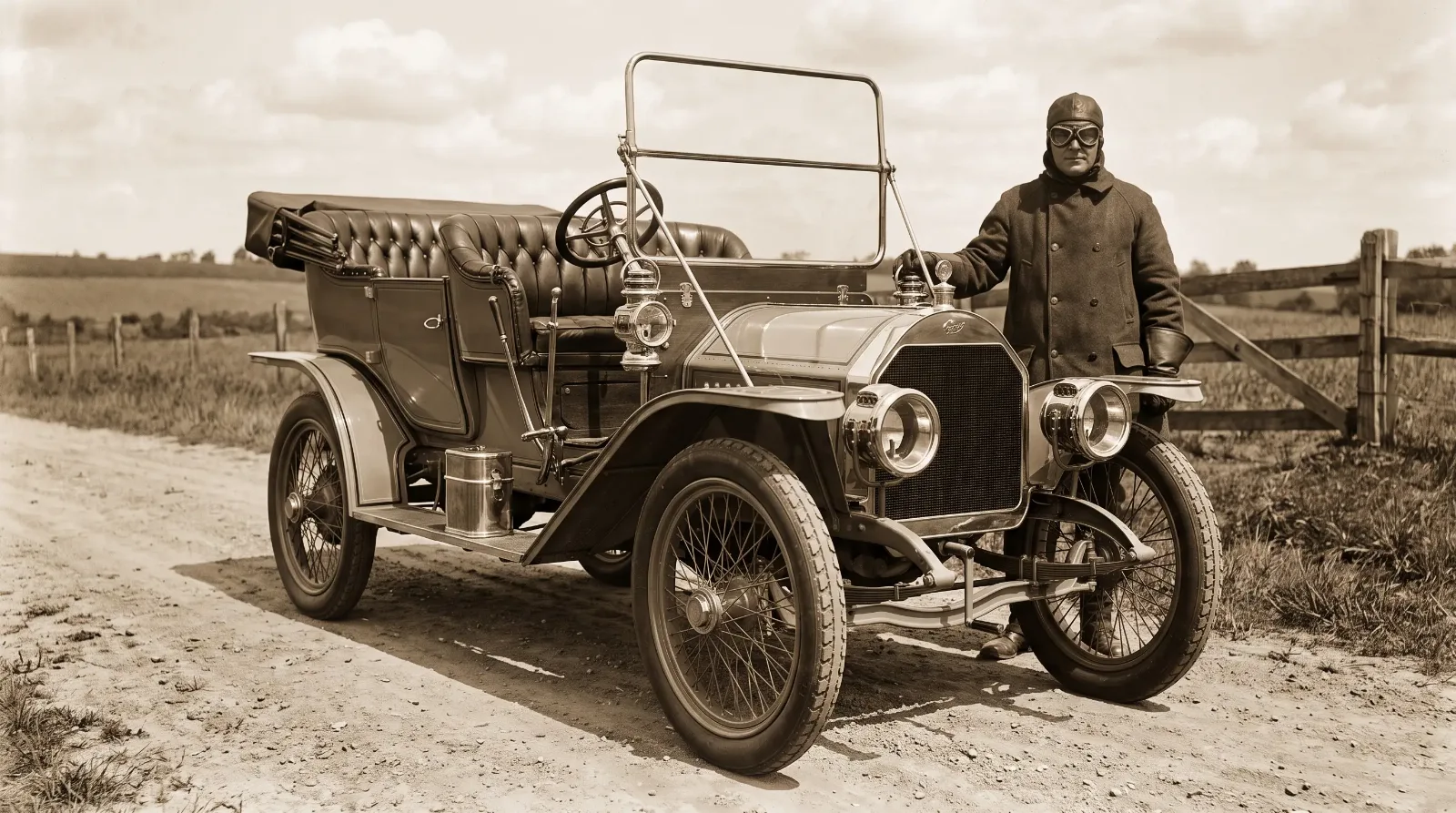
The Ford Model T is the single most produced car of the brass era, and it did not use anything close to what we would call a modern gearbox. It used a planetary transmission, controlled by foot pedals, an arrangement so different from a conventional gearshift that a driver trained on a Model T could genuinely struggle to operate a contemporary sliding-gear car, and vice versa. Understanding how it worked explains a design choice that seemed, for a while, like it might become the industry standard rather than the historical curiosity it is today.
What a planetary gearset actually is
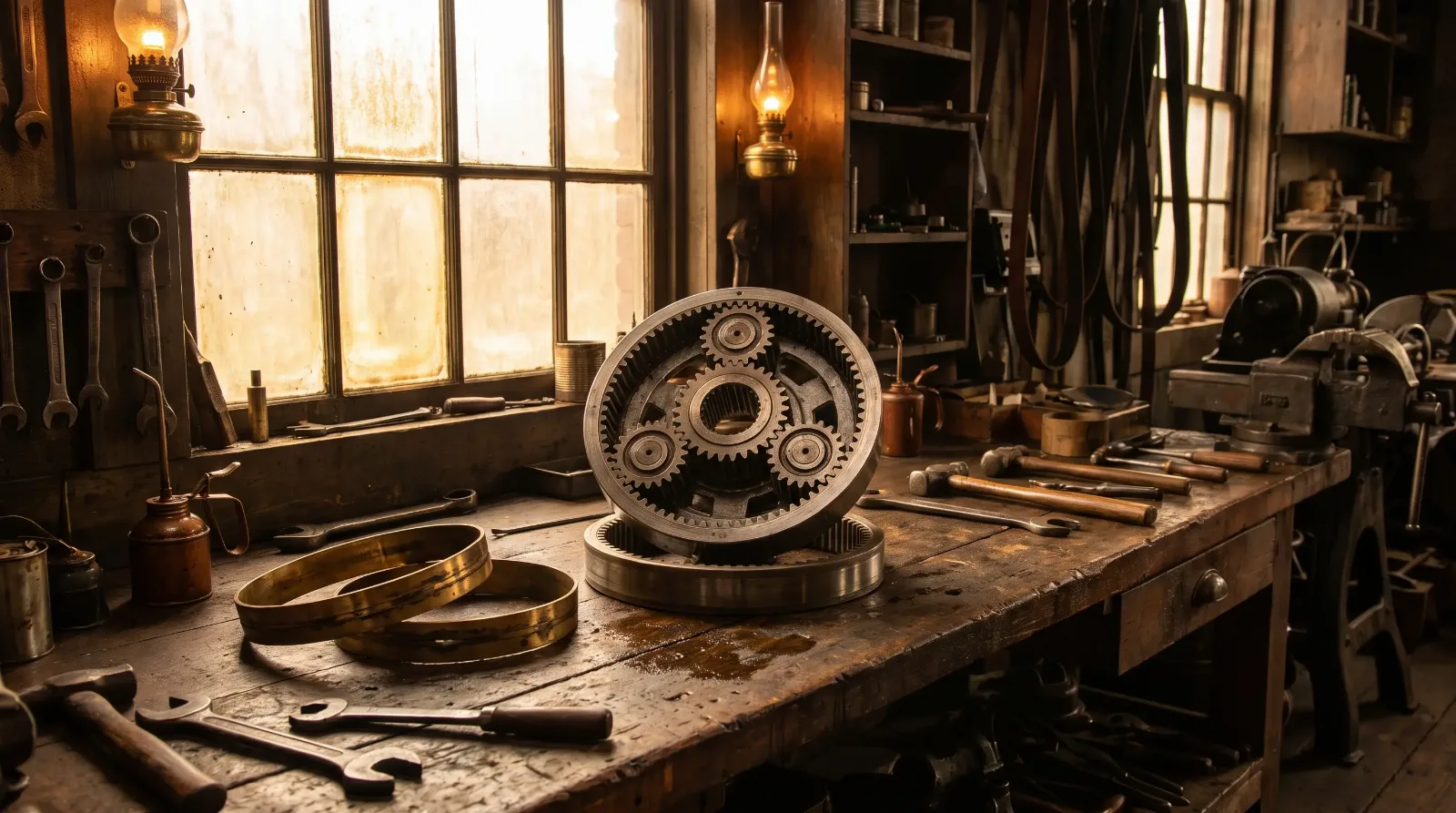
A planetary, or epicyclic, gear system arranges a central sun gear, a ring gear around the outside, and a set of smaller planet gears in between that mesh with both. What makes it clever is that you can change the output speed and direction not by sliding gears in and out of mesh, the way a conventional gearbox works, but by holding or releasing different parts of the same gear cluster using bands and clutches. Lock one element, let another spin free, and you get a different gear ratio entirely, all without any gears ever disengaging from each other.
That is a fundamentally different approach to changing gears than what became standard later, and it has real advantages. There is no risk of grinding gears the way an unskilled driver could ruin a sliding-gear transmission, because the gears themselves never move apart to re-mesh. The bands simply tighten or loosen around the outside of the assembly.
How it actually drove
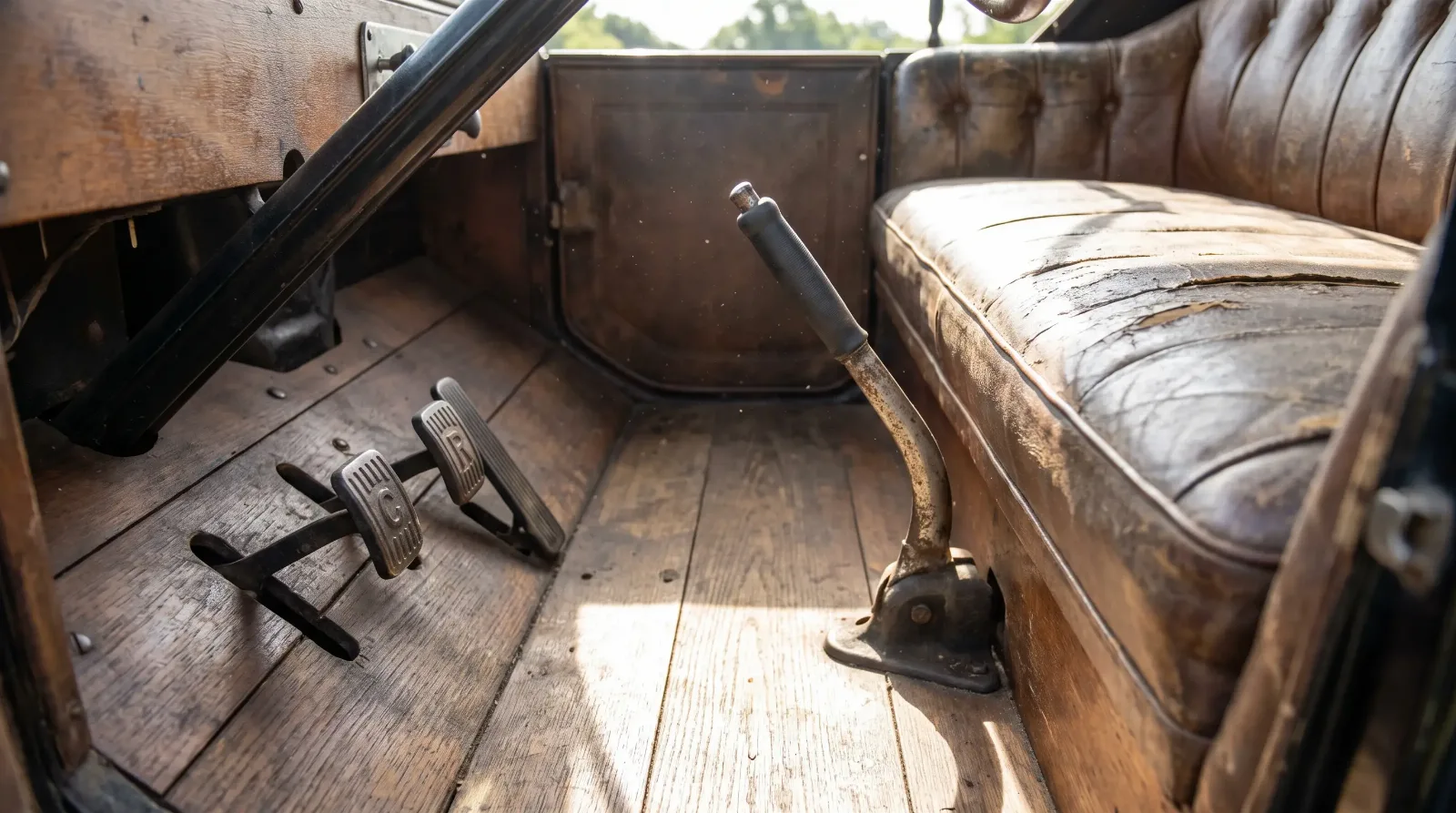
On the Model T specifically, the driver controlled the transmission with three foot pedals and a hand lever, not a conventional shifter. The left pedal controlled low and high gear, the center pedal was reverse, and the right pedal was the brake, while a hand lever on the side set neutral or effectively acted as a parking function. Getting smooth off the line meant a genuine coordinated skill, easing off the low pedal while feeding the throttle, timed by feel rather than by watching a tachometer that did not exist on the dashboard.
New Model T owners in period literally had to be taught this sequence, since nothing about it resembled driving a horse or operating any machine most first-time buyers had encountered before. Ford's own sales materials and dealer training spent real effort on exactly this problem, because a car that confused its buyers on day one was a car that would not sell well by word of mouth.
For where this transmission fits into the wider story of these early cars, the early planetary gear cars story covers the drivetrain choices manufacturers were experimenting with across the whole brass era, not just at Ford.
Why other manufacturers went a different way
Not every brass era manufacturer used a planetary system, and that split matters for understanding how the industry eventually settled on the sliding-gear manual that dominated for most of the twentieth century. Conventional sliding-gear transmissions, requiring a driver to disengage the clutch and physically move a lever to mesh a different set of gears, offered more available gear ratios and, once drivers learned proper technique, arguably more direct control over the car.
The planetary system's real strength was forgiveness for an inexperienced driver, which mattered enormously when Ford was trying to sell cars to people who had never operated any motorized vehicle before. As driving itself became a more commonly taught skill through the 1910s and 1920s, that particular advantage mattered less, and the wider gear range and mechanical simplicity of a conventional transmission won out across the rest of the industry.
What it means for a mechanic today
A planetary transmission from this era, done right, is not more complicated to service than a conventional gearbox, but it is unfamiliar, and that unfamiliarity is exactly where mistakes happen. The transmission bands wear over time and need periodic adjustment, a job that on a Model T is well documented and manageable for a patient owner, but not something a mechanic trained only on later cars should attempt without first learning the specific procedure for this design.
| Feature | Planetary transmission (Model T era) |
|---|---|
| Control method | Foot pedals plus hand lever, no conventional shifter |
| Forward speeds | Two, low and high |
| Gear engagement | Bands and clutches, gears stay meshed at all times |
| Main advantage | Forgiving for inexperienced drivers, hard to grind |
| Main limitation | Narrow gear range compared to sliding-gear boxes |
| Era of use | Roughly 1908 to late 1920s on the Model T |
"There is a real elegance to a planetary transmission once you understand what it is doing. Nothing slides, nothing grinds, the whole thing changes speed by clamping and releasing bands around a gear cluster that never stops meshing. It looks primitive to a modern eye because the pedals are unfamiliar, but the engineering underneath is genuinely thoughtful, solving a real problem for a generation of drivers who had never operated a clutch before in their lives."
— Sarah Whitfield
Where you still see this design
The planetary gear principle did not disappear from the automobile industry, it just moved. Automatic transmissions developed decades later use planetary gearsets internally, controlled electronically or hydraulically instead of by foot pedal, which means the basic mechanical idea Ford relied on in 1908 never really left. It just found a more sophisticated application once the technology to control it automatically caught up.
If you own or are considering a car with an early planetary transmission, treat the bands and the driving technique as their own specialty, worth learning properly rather than approaching it like a conventional stick shift with extra steps. The reward is a driving experience that connects you directly to how an entire generation first learned to drive.
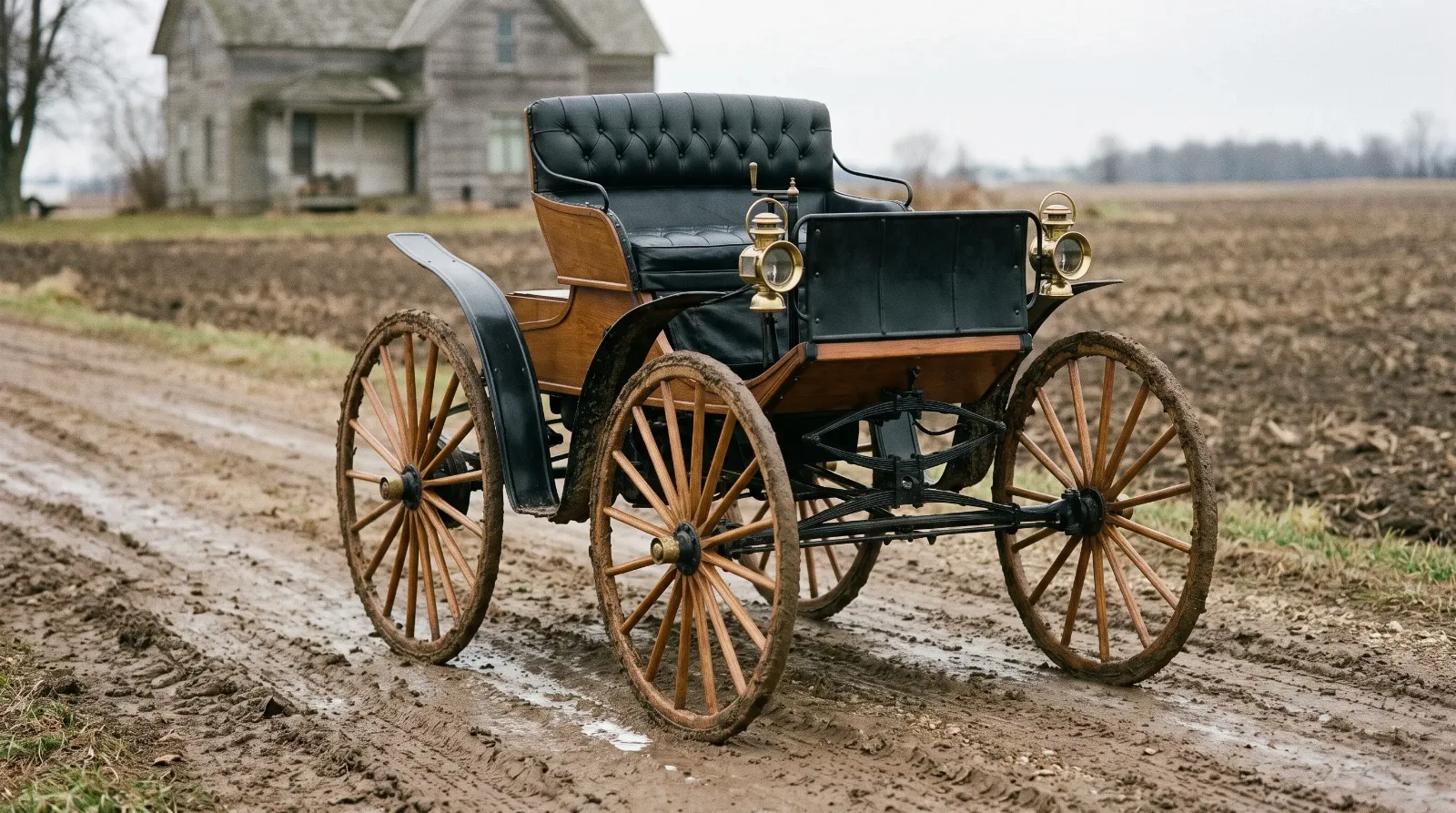
For more on the unusual and clever machines that filled out the roads in this same period, a related read covers the high-wheeler motor buggies that took an entirely different approach to building an affordable early automobile.