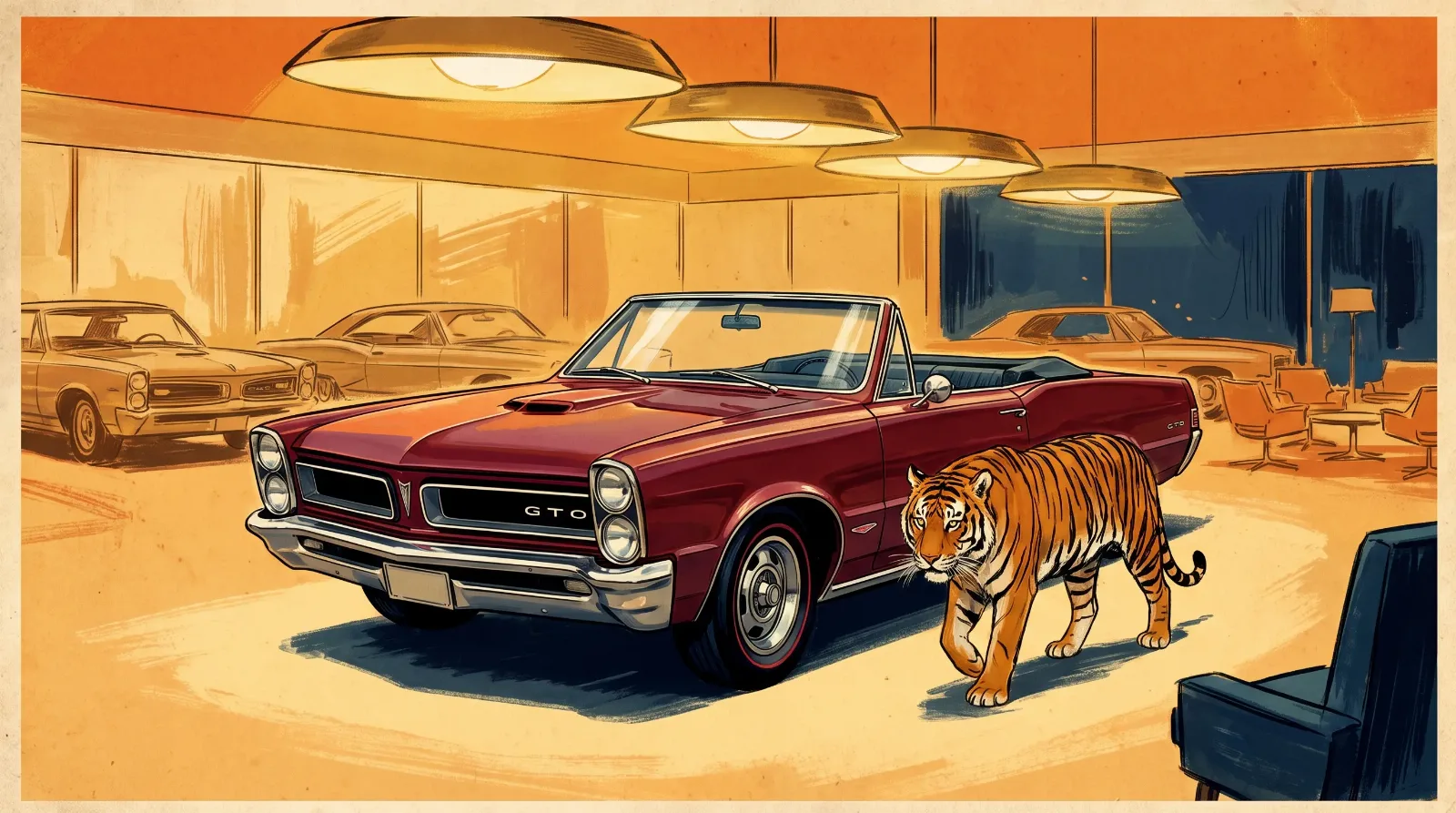
Somewhere in a Pontiac ad agency's file cabinet in 1965 sat an idea that shouldn't have worked: sell a car by pretending it was an animal. The first TV spot even used a real, live tiger on set, with announcer William Conrad growling that "some sporty cars are only pussy cats, Pontiac's GTO is all tiger." The live animal proved too dangerous to work with again, so a tiger-skin rug and tail stood in for the TV cameras from then on, while illustrated tiger artwork carried the character across magazine pages. It worked anyway, and worked so well that decades later, people who've never opened a GTO's hood still know the phrase that came with it.
"Put a Tiger in your tank," reimagined
Pontiac didn't invent the tiger-in-the-tank idea from nothing. Esso had already run its famous "Put a Tiger in Your Tank" gasoline campaign earlier in the decade, and the tiger as a symbol of hidden, coiled power was already floating in the culture by the time Pontiac's ad team reached for it. What Pontiac did differently was make the tiger the car itself, not a metaphor for what you'd feel after filling up, but a literal stand-in for the engine sitting under a GTO's hood.
The campaign leaned on illustrated tiger artwork in print ads, and Pontiac dealers eventually offered tiger-print seat covers and other tie-in merchandise that let owners bring the mascot into the car itself. It sounds almost silly described plainly. In period, surrounded by a wave of GTO advertising built around youth, speed, and a little bit of danger, it landed exactly as intended.
The print ads that built the character
The illustrated tiger showed up everywhere a GTO buyer might reasonably look. Magazine spreads in the enthusiast titles of the day carried the tiger prowling across a two-page layout, sometimes wrapped around the car itself, sometimes standing apart from it entirely, watching. The visual language stayed consistent season after season even as the copy underneath shifted from year to year, which is a discipline a lot of car advertising in this era simply didn't bother with. Competing manufacturers were still rotating through generic "performance" imagery, chrome close-ups and empty highway shots, while Pontiac kept returning to the same animal, building familiarity the way a good mascot is supposed to.
Dealer showrooms picked up the thread too. Tiger-striped seat covers became one of the more visible tie-in products, and some dealers displayed tiger cutouts or standees near the GTOs on the floor, turning a print campaign into something a customer could touch and sit inside. That crossover from magazine page to showroom floor to the actual driver's seat is part of why the campaign stuck. It wasn't just advertising a person read and forgot. It became something an owner could wear, literally, in the form of seat fabric.
Radio spots reinforced the same character with a growling voiceover standing in for the tiger's presence, since a mascot built around sound and speed translates naturally to a medium with no pictures at all. Later television spots, still a relatively new tool for car advertising budgets in the mid-1960s, used quick cuts and engine sound layered under the tiger's roar rather than long dialogue, betting that the image alone, the tiger's tail and the sound of the car, would do more work than a narrator reciting options and prices.
Why a mascot mattered more than a spec sheet
Pontiac's marketing team understood something that a lot of car advertising still gets wrong: buyers in this market weren't cross-shopping horsepower figures line by line. They were choosing an identity. The GTO wasn't competing purely against other muscle cars on paper, it was competing for a place in a young buyer's sense of who they wanted to be seen as. A tiger, wild, fast, a little dangerous but ultimately controllable if you knew what you were doing, mapped onto that fantasy almost perfectly.
The campaign also gave Pontiac's regular advertising a consistent visual thread to build around, season after season, model year after model year, at a time when competing muscle cars were often selling on engine displacement alone. A tiger is memorable in a way that a cubic-inch figure simply isn't.
A jungle of competing mascots
Pontiac wasn't the only division to figure out that a character sells better than a compression ratio. Plymouth leaned into the Road Runner's cartoon beep-beep a few years later, and Dodge built an entire Scat Pack identity around a snarling bee. Once the tiger proved the concept worked, the rest of Detroit's muscle car marketing followed the same instinct, animal or insect mascots standing in for engine notes and quarter-mile times that the average buyer couldn't feel from a magazine page anyway.
What set the Pontiac tiger apart from the wave that followed was timing and restraint. It arrived early enough to feel original rather than derivative, and Pontiac never let the mascot swallow the car's actual identity the way some later campaigns did. The tiger sold a feeling. It never became the joke the car itself had to live down, which is a trap a few of the cartoon-mascot campaigns that came after it fell straight into.
A campaign that outlived its own decade
Most car marketing from the 1960s reads as pure period artifact now, charming but clearly of its moment. The tiger campaign has aged differently. Collectors still reference it unprompted at car shows, tiger-themed merchandise still circulates in the hobby, and the phrase itself has drifted so far into general use that plenty of people who say "tiger in the tank" today have no idea it started as gasoline advertising before Pontiac turned it into a car's whole personality.
Original tiger-print seat covers and dealer promotional pieces have become collectible in their own right, changing hands among GTO owners who want the full period experience, not just the car itself. A worn original set carries more weight with serious collectors than a reproduction, even a very good one, because it comes with a small piece of the actual campaign attached to it.
"What strikes me about the tiger campaign is how little it actually talked about the car. No torque figures, no 0-to-60 claims, just a feeling. Pontiac trusted the feeling to sell the engine, not the other way around, and for this particular car, at this particular moment, that trust was earned."
— Nora Beckett
Marketing that matched the machine
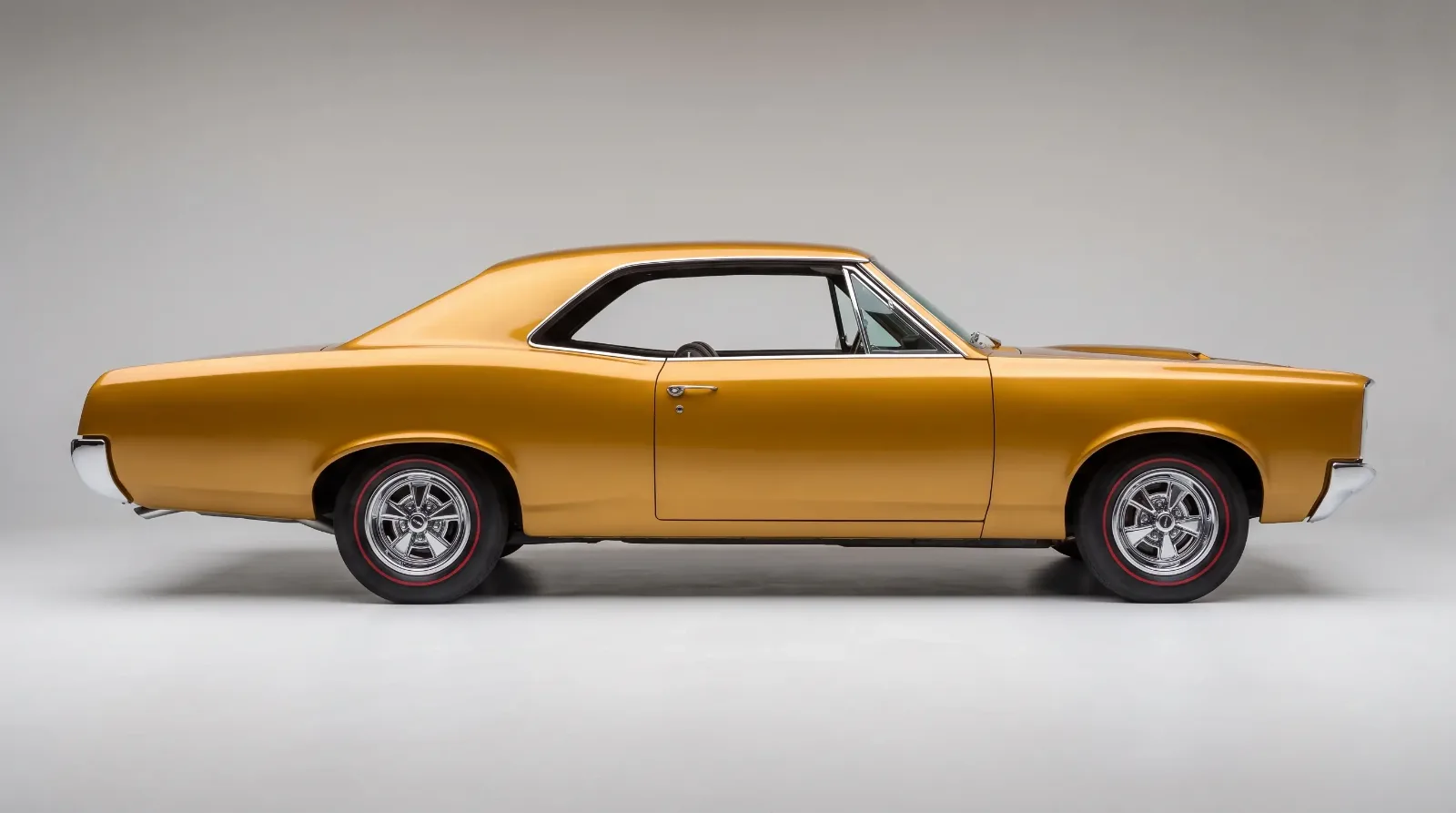
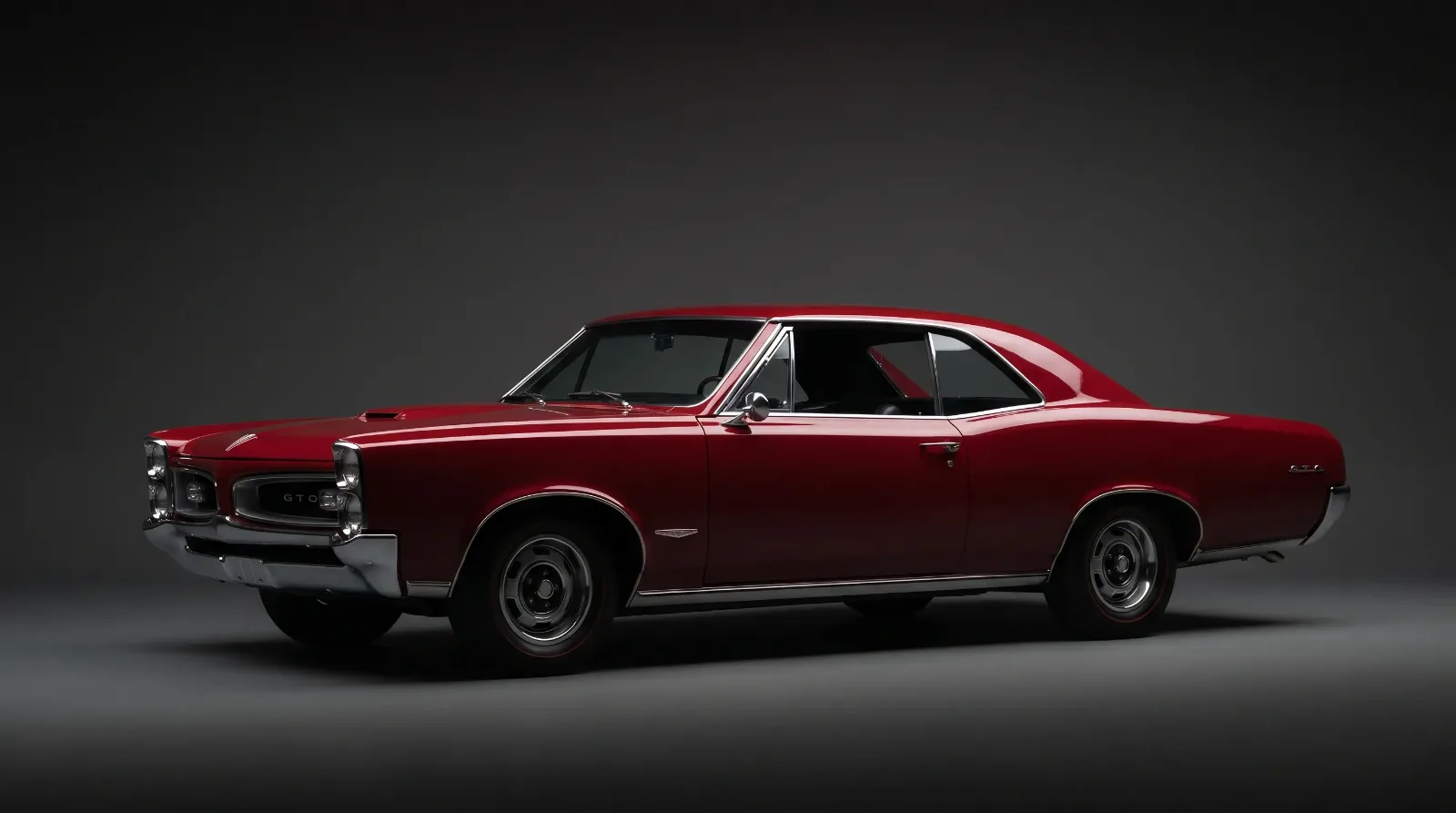
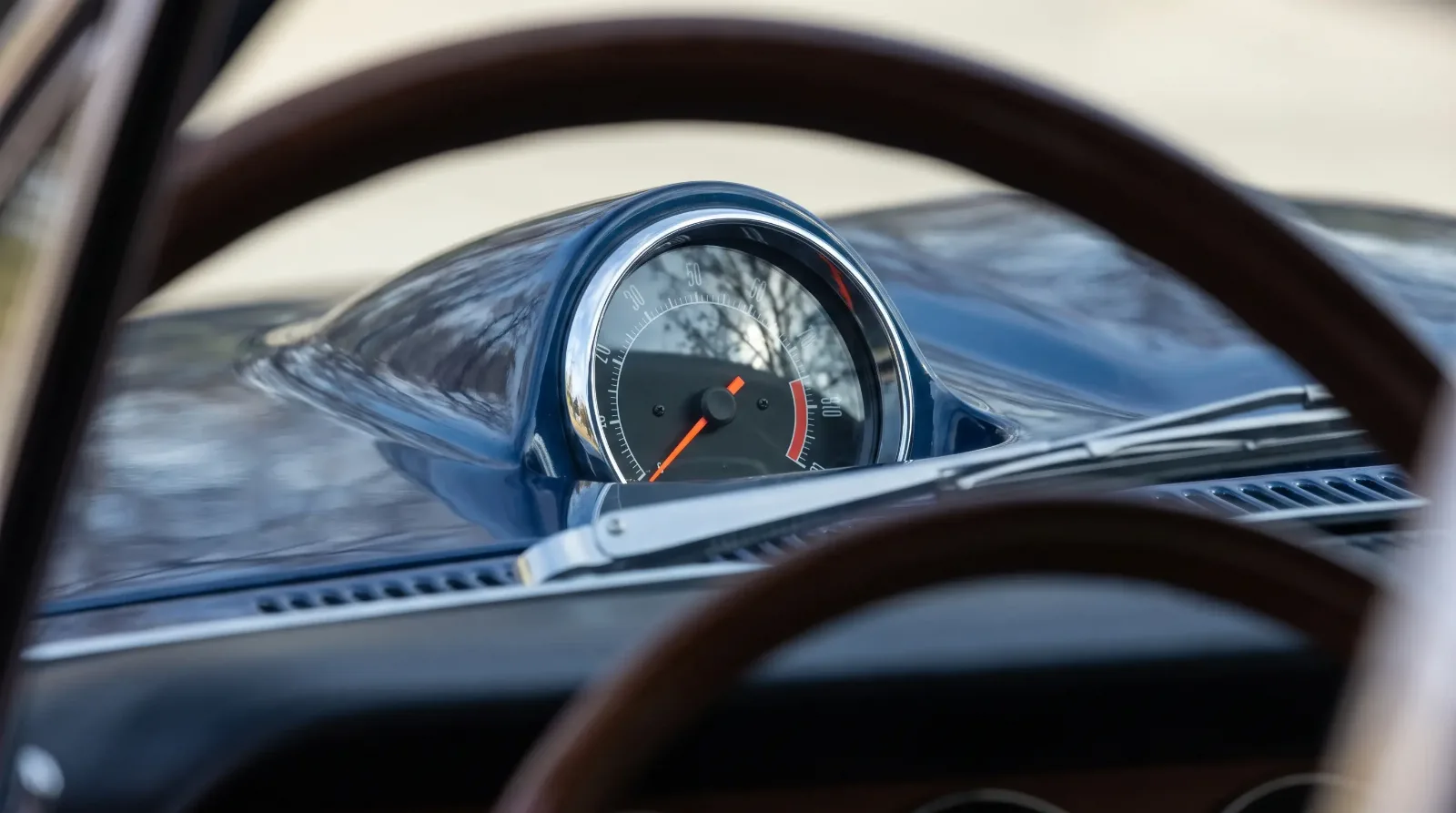
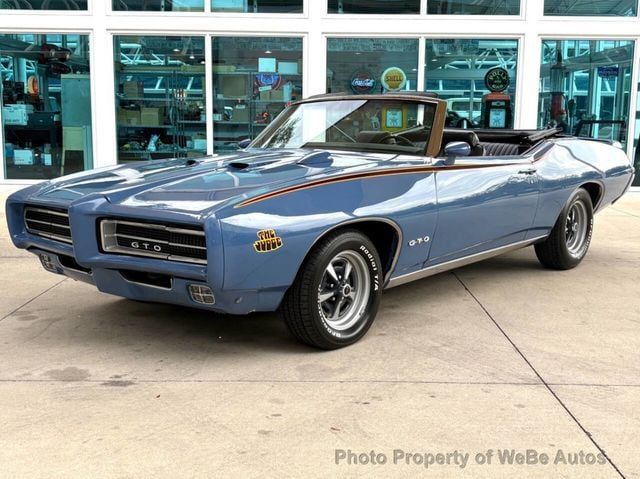
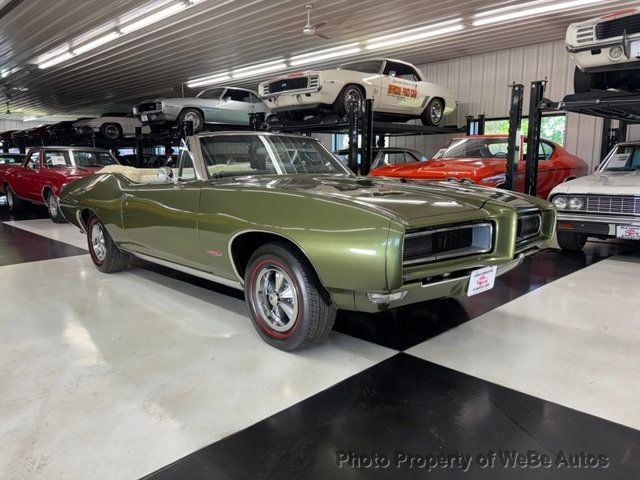
The tiger campaign ran alongside the classic Coke-bottle era of the GTO, and the pairing made sense. A car with a shape that sculptural, that confident, needed an image campaign with the same swagger, not a dry recitation of compression ratios. Pontiac had other flourishes in this period built on the same instinct, small design touches meant to make the GTO feel like nothing else on the road, including a genuinely strange dashboard gimmick mounted right on the hood. Read on for how that one came about.