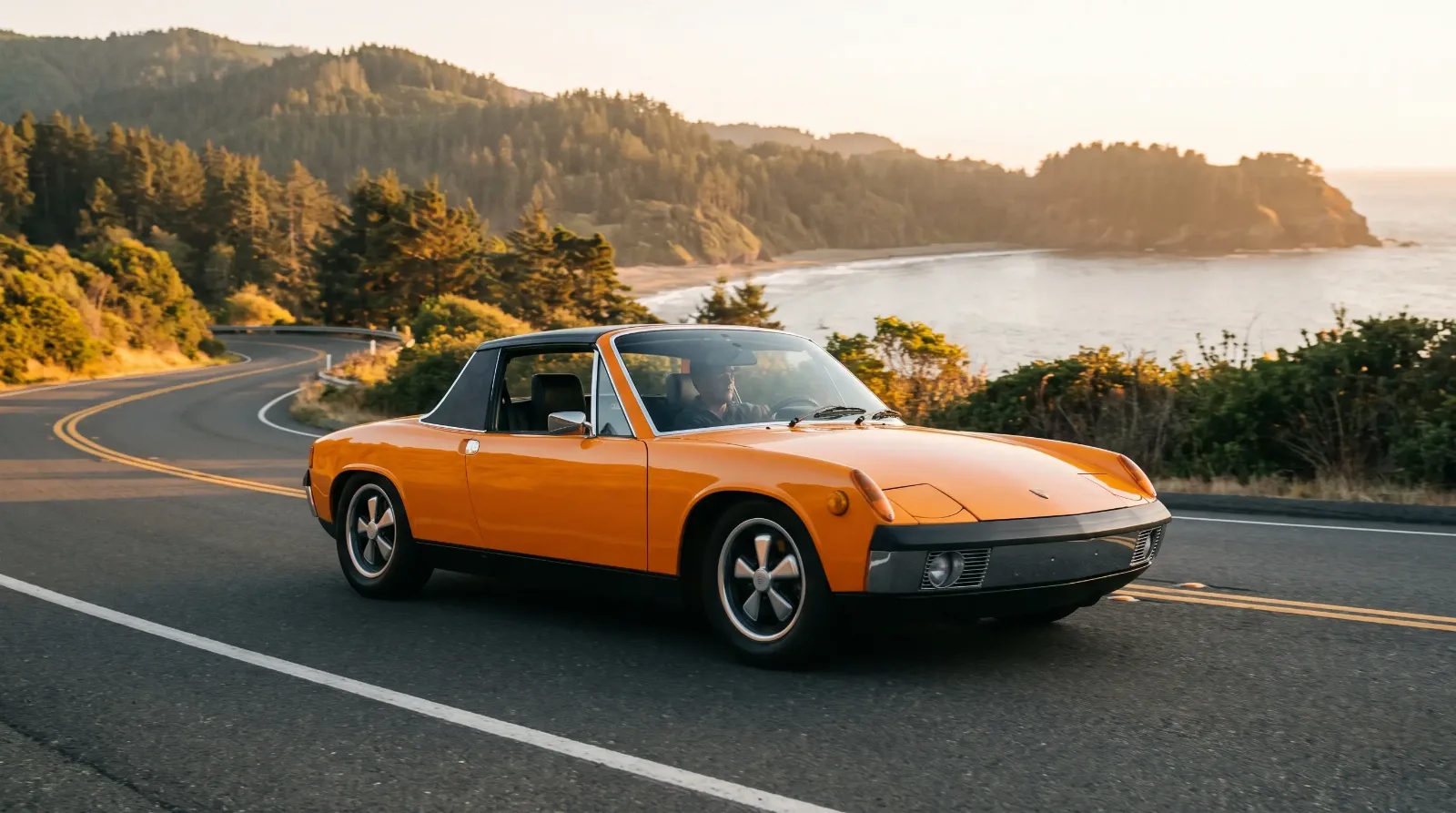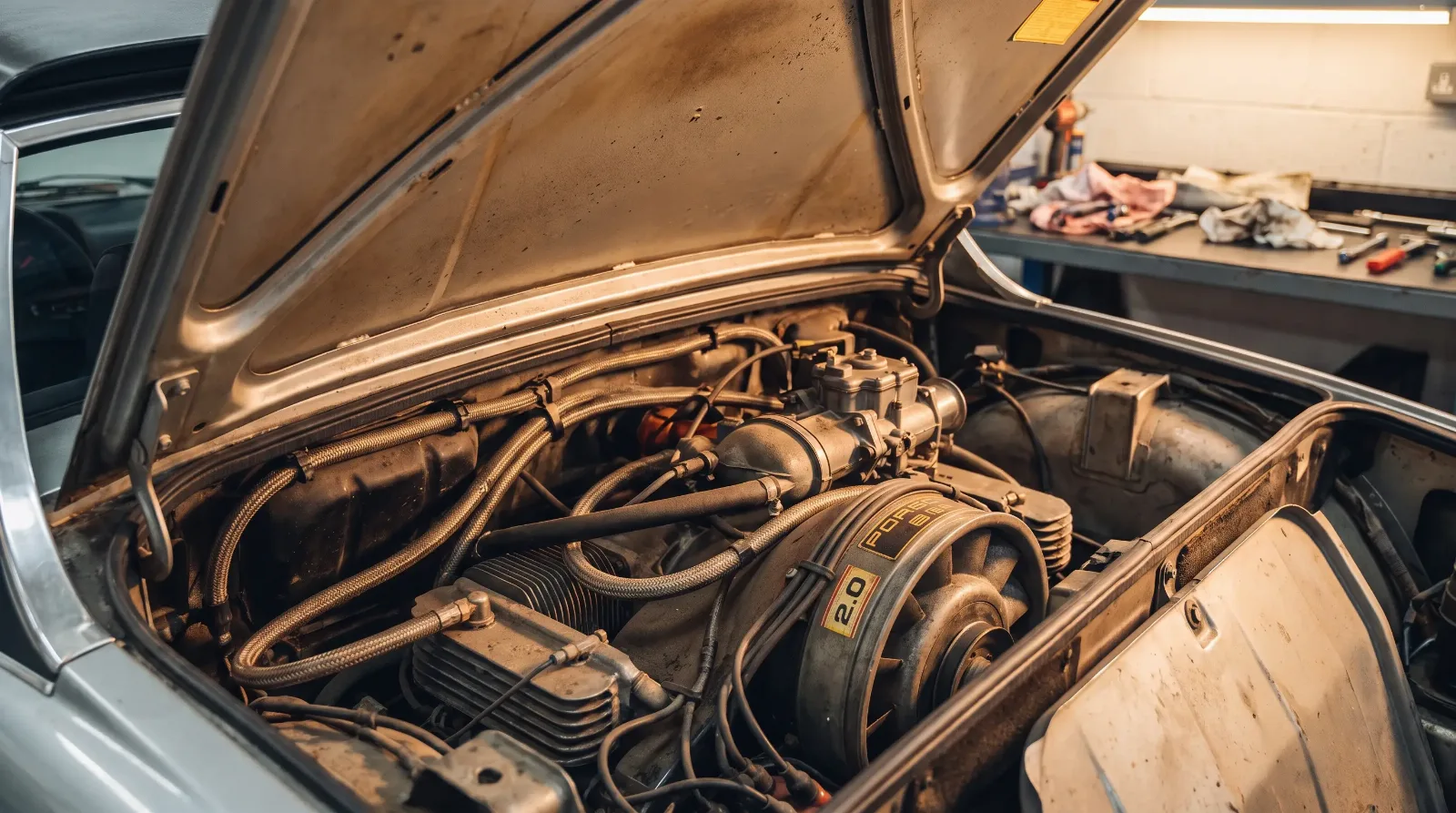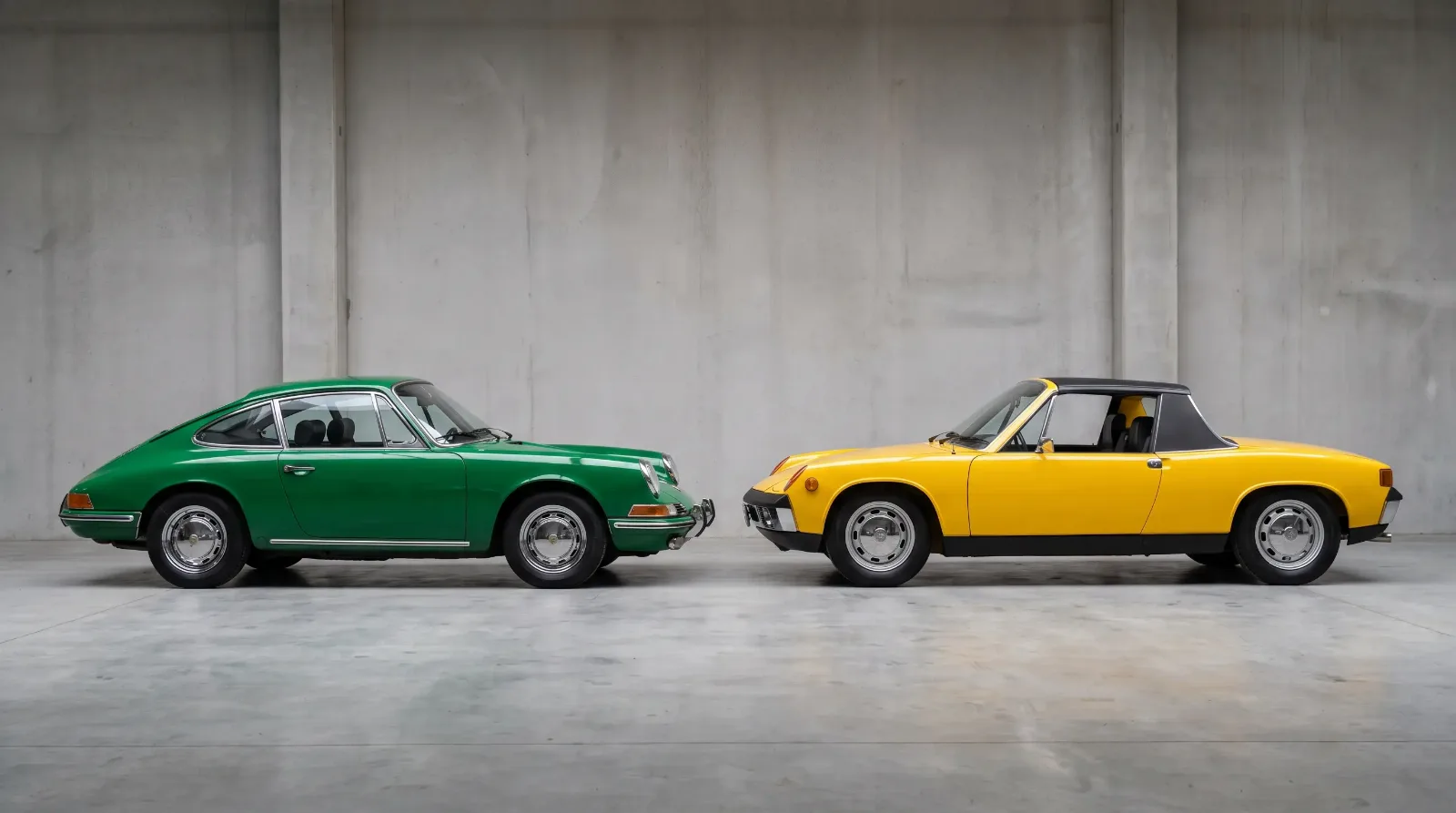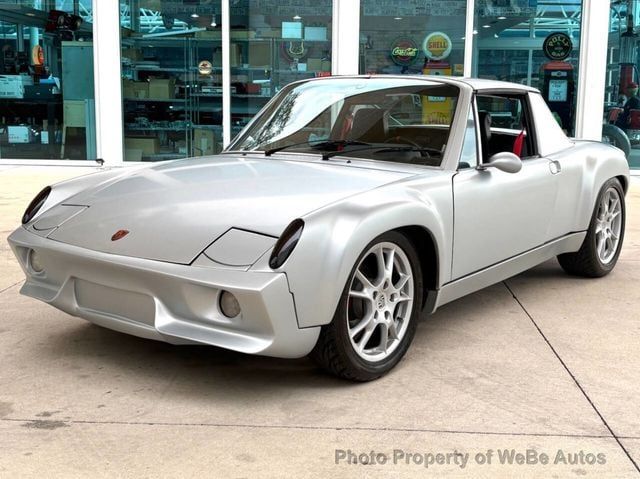
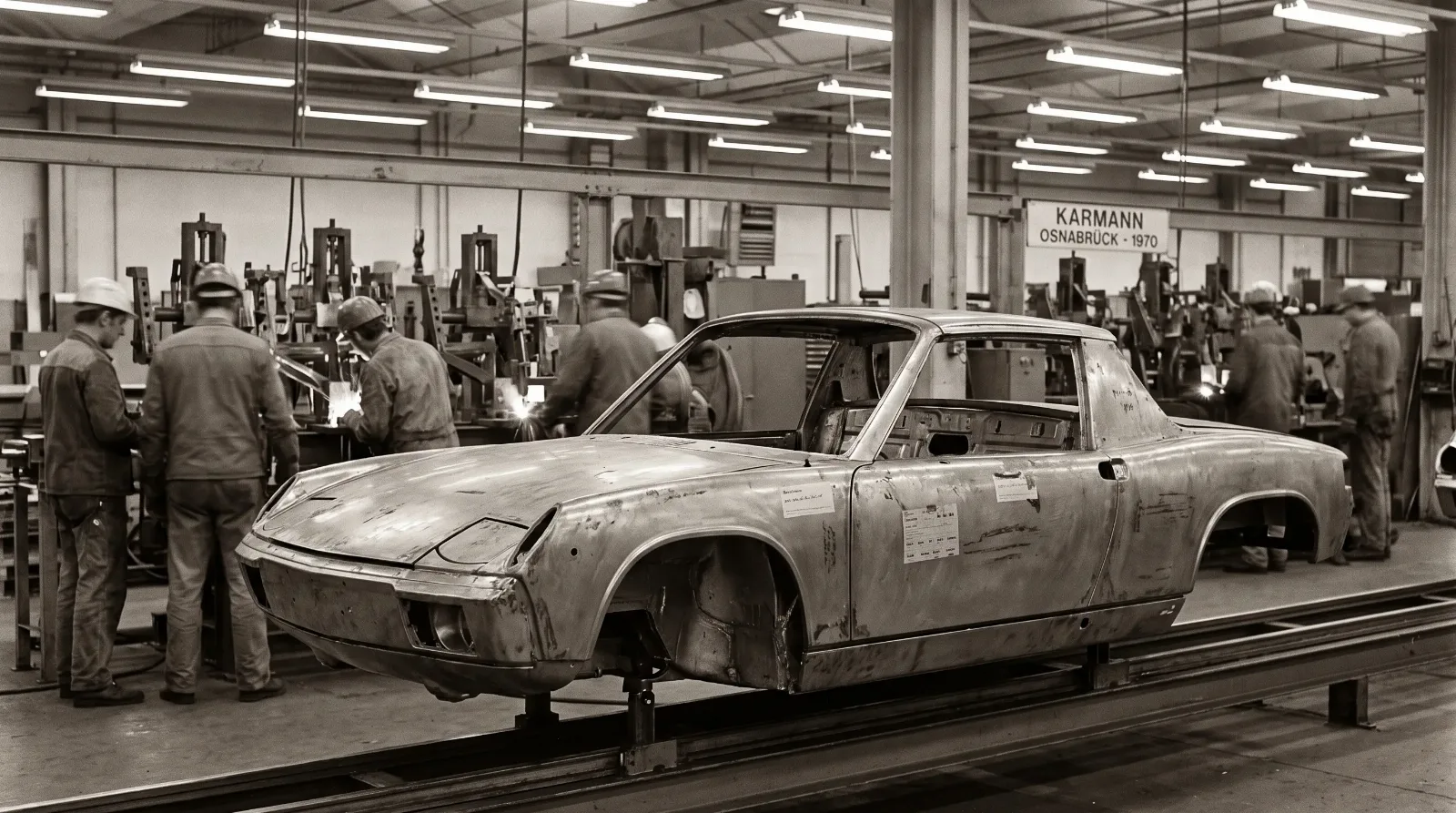
Karmann built every Porsche 914 body shell, and that single fact explains more about the car's reputation, its quality inconsistencies, and its eventual production numbers than almost anything else in the story. The Osnabrück coachbuilder was not a subcontractor brought in to stamp a few panels. Karmann was the manufacturing backbone of the entire program, and the 914 could not have existed as a mass-production car without the company's involvement from the earliest engineering stage.
Why Karmann and not Porsche or VW alone
Neither Volkswagen nor Porsche had spare body-building capacity to dedicate to a new joint model in the late 1960s. VW needed a replacement for the aging Karmann Ghia coupe, Porsche needed an entry-level car below the 911 to replace the 912, and Karmann already had the tooling relationship and the plant capacity to build unibody shells at volume for both companies. The arrangement made commercial sense before it made engineering sense, and Karmann's job was to reconcile the two: build a single body shell that could accept either the VW-sourced flat four or the Porsche flat six drivetrain without a redesign for each variant.
That single-shell requirement is why the 914 story reads less like a clean Porsche project and more like a genuine collaboration with all the friction that implies. Karmann's engineers had to satisfy specifications from two separate companies with two separate quality cultures, and the compromises show up in details enthusiasts still argue about, from panel gap consistency to the targa bar's structural execution.
What actually happened on the Osnabrück line
Karmann stamped, welded, and painted the complete unibody shell, including the distinctive removable targa roof panel and the structural bar that ran behind the seats to compensate for the lack of a fixed roof. Finished bodies then moved on for final assembly, and that step is where the real split happened: four-cylinder 914/4 bodies stayed at Karmann's Osnabrück plant for complete assembly, while 914/6 bodies were shipped to Porsche's own Zuffenhausen factory to be finished on the same line as contemporary 911s. This split assembly process is a large part of why 914/6 cars, finished with the more complex flat six drivetrain, ended up considerably more expensive to produce and sell than their four-cylinder siblings, despite sharing an identical body shell off the same Karmann line.
Quality control was not always consistent across this multi-company process, and it is a fair criticism that has followed the 914 since new. Rust protection in particular suffered from the split responsibility, since no single company owned the entire build process end to end the way Porsche did with the 911.
Paint and undercoating specifications were set by committee rather than by a single quality department with full authority over the finished car, and that arrangement produced real variance between individual cars built only months apart. Owners who have compared two 914s from the same production year often describe noticeably different rust outcomes decades later, a gap that traces directly back to inconsistent application on the Osnabrück line rather than to how the cars were subsequently stored or driven.
The production numbers Karmann's involvement produced
Total 914 production across the run came in at roughly 118,992 units built over seven model years, the overwhelming majority of them four-cylinder cars. The flat six variant was always the minority, numbering in the low thousands, partly because of cost and partly because the more complex split assembly process could not scale the way the simpler four-cylinder line could. Karmann's capacity, in other words, did not just build the car. It shaped which version of the car most buyers actually got to own.
"When you look at a 914 shell up close, you're looking at Karmann's build quality as much as anything Porsche engineered. That's not a knock on the car. It's just the honest provenance, and once you understand it, you stop being surprised by inconsistencies that would be baffling on a car built entirely in one factory."
— Emily Chen
How the arrangement changed after the 914
Karmann's involvement with Porsche did not end when 914 production wound down in 1976. The relationship established during the 914 program, where Karmann handled body engineering and production for a car sold under someone else's badge, became a template Porsche returned to for later models built in partnership with outside coachbuilders and manufacturers. Understanding the 914's Karmann chapter, in other words, is understanding the origin of a manufacturing model Porsche leaned on repeatedly in the decades that followed, not an isolated one-off arrangement specific to a single unloved model.
That context also reframes how the 914 should be judged against cars built entirely in-house. It was never meant to be judged by that standard, because it was never built that way. The shared-body, split-assembly approach was the entire point of the joint venture, a deliberate cost-sharing arrangement between two companies rather than an accident of circumstance, and Karmann's execution of that plan, imperfect as it sometimes was, is what made the car commercially viable at all.
Why this matters for buyers today
Understanding Karmann's role changes how a prospective buyer should evaluate a 914. This was never a car built with the single-source consistency of a 911, and holding it to that standard misreads the history. The better question is which specific shell you are looking at, how it was finished, and whether the rust protection and structural details match what Karmann's process actually delivered for that variant and production year. If you want to keep reading the series, see how the 914's four-cylinder pricing and positioning compared directly with the 912 it replaced, since the manufacturing story here explains a lot of that pricing gap as well.
Sources and notes
- Porsche 914 - Wikipedia
- Model Guide: 914, The VW-Porsche - Porsche Club of America
- Porsche 914 Production Numbers - Stuttcars
- 914 History: The Production Numbers, 7 Years and 118,992 914s - Nine Motoring
- The 914 Is No Longer Porsche's Ugly Duckling - Hagerty
- VW-Porsche 914 (1969-1975) - Volkswagen Newsroom