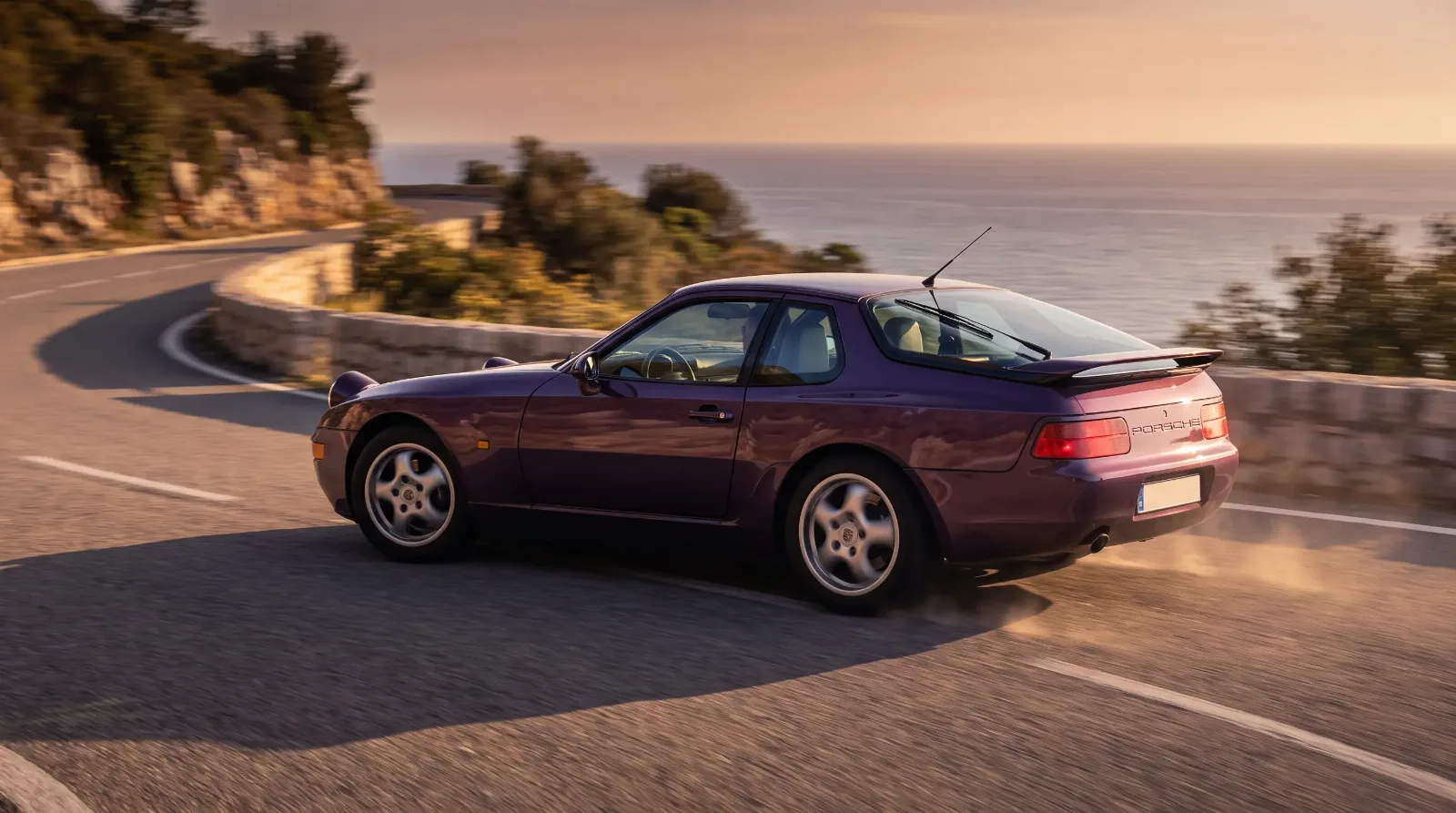
The Porsche 968 arrived in 1992 as roughly 80 percent new parts over the 944 it replaced, and that number is the whole point of its history. Porsche did not build a clean-sheet car. It took the 944 S2's 3.0-liter four, the same transaxle layout, and rebuilt the body, suspension, and electronics around it. The 968 ran from 1992 to 1995, and it closed out the transaxle four-cylinder line for good. No successor followed. The Boxster and the 996-generation 911 took Porsche's entry-level business in a different direction after 1995, which makes the 968 the last of something rather than the first.
The number that opens the story: 236 hp
The 968 made 236 hp from its 3.0-liter four, up from the S2's 208 hp, thanks to Porsche's VarioCam variable valve timing system, the company's first use of that technology in a production car. VarioCam adjusted intake cam timing to broaden the torque curve, and the result was a four-cylinder that pulled harder across more of the rev range than the S2 it replaced. 0-60 mph dropped to somewhere in the roughly 6-second range for the manual car, depending on the test.
Porsche also gave the 968 a 6-speed manual transmission, a first for the transaxle four-cylinder line, replacing the 5-speed used in every 944 variant. That gearbox alone changes how the car feels on the road, with closer ratios and better use of the engine's now-wider power band.
| Spec | Porsche 968 (1992-95) |
|---|---|
| Engine | 3.0L naturally aspirated inline-four, VarioCam |
| Power | 236 hp |
| 0-60 mph | Around 6 seconds, manual |
| Transmission | 6-speed manual or 4-speed Tiptronic auto |
| Body styles | Coupe, Cabriolet |
Why Porsche called it 80 percent new
The 968's sheet metal looks different from the 944's at a glance, with a nose closer to the 928's and updated bumpers, but the underlying platform and transaxle architecture trace straight back through the transaxle Porsches that came before it. Porsche's own figure at launch was that roughly 80 percent of the 968's parts were new relative to the 944 S2, covering the body panels, interior, electronics, and suspension tuning, while the core engine architecture and transaxle layout carried over. That number explains both why the 968 feels like a meaningfully different car to drive and why it shares its bones with a lineage going back to 1982.
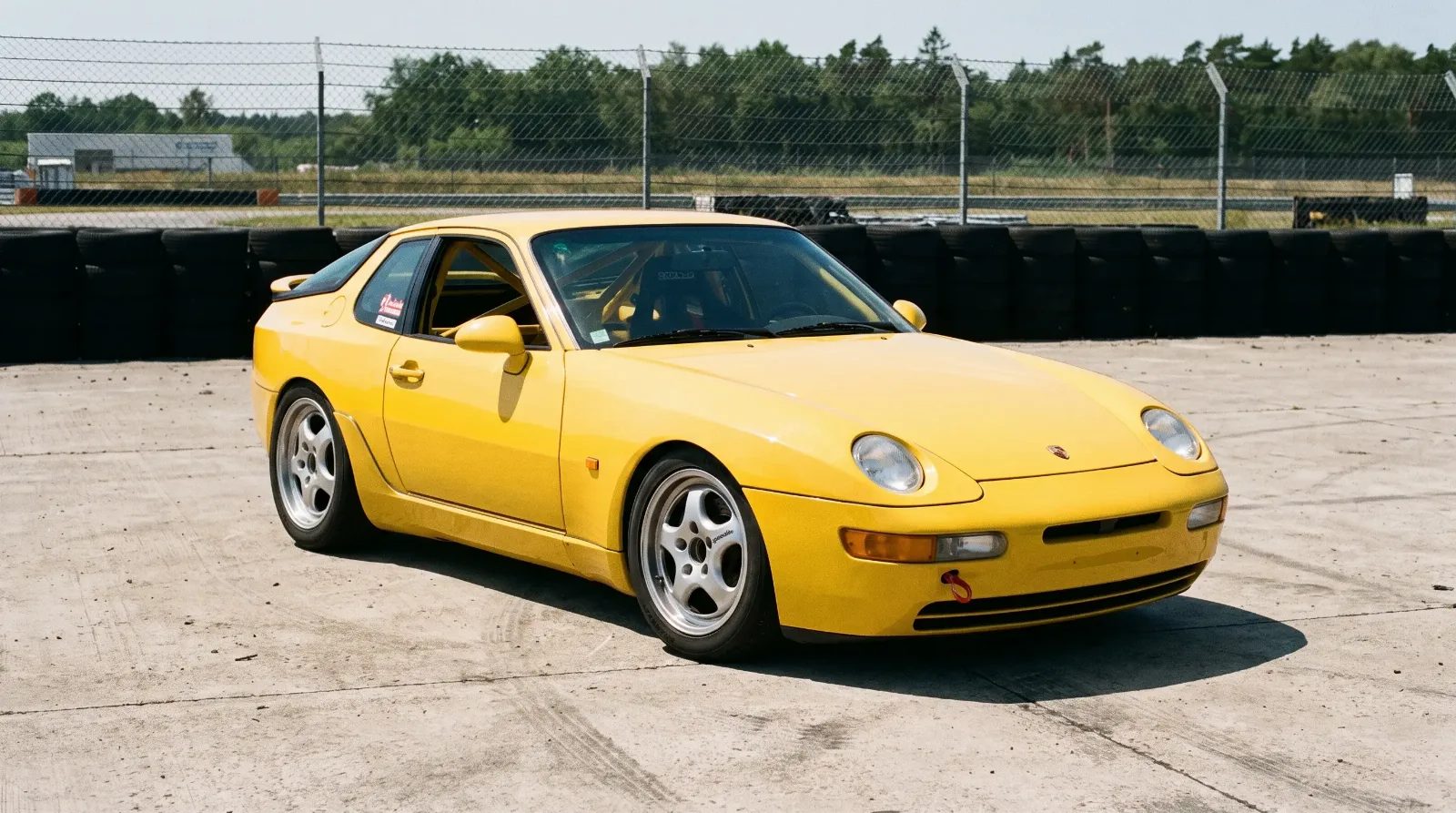
The 968 came in Coupe and Cabriolet form, and later added the Club Sport and Turbo S variants aimed at track use. Those stripped-down and forced-induction versions are their own story, separate from the standard car's history here.
How VarioCam changed the way the car drove
The 944 S2's engine was strong but flat-footed at the bottom of the rev range if you were not already in the right gear. VarioCam fixed that specific complaint by advancing intake cam timing at low rpm, filling in torque exactly where the older engine felt lazy, then backing off again at higher revs to let the engine breathe freely. The practical result is a car that pulls cleanly from low rpm in a taller gear and still revs out properly on top, rather than forcing the driver to choose one characteristic over the other.
Paired with the 6-speed gearbox, the 968 rewards a driver who uses the whole rev range rather than short-shifting everywhere. It is a more engaged car to drive quickly than the S2, even though the chassis underneath is fundamentally the same transaxle layout with 50/50 weight distribution that every car in this lineage shares.
Steering feel and brake feedback carried over largely unchanged from the S2, since Porsche's engineers saw no reason to fix a chassis that was already working. The real news was always under the hood and inside the gearbox, and that is exactly where a shopper cross-checking a 968 against an S2 should spend their attention rather than assuming the newer car is automatically the better one for every use case.
The end of an era, not a mid-cycle refresh
Calling the 968 a facelifted 944 undersells it and calling it a clean-sheet design oversells it. The honest read is that Porsche took a proven transaxle formula, sharpened the engine with VarioCam, added a 6-speed gearbox, and updated the styling and interior enough to justify a new name. Sales never matched the 944's numbers, and Porsche ended production in 1995 without a direct four-cylinder successor. The 968 is the last chapter of a car type Porsche has not built since.
That scarcity has worked in the 968's favor with collectors. Fewer were built than 944s, the engineering represents the final and most refined version of the formula, and the 6-speed manual coupe in particular has become the version enthusiasts specifically hunt for.
"236 horsepower and a 6-speed gearbox. That's the 968 in two numbers. Everything else is Porsche dressing up a proven formula one last time before they walked away from it."
— Dan Reeves
What to check before buying a 968
Timing belt and water pump service on the same roughly 30,000-mile interval as every transaxle four-cylinder Porsche, no exceptions. Check the VarioCam solenoid and oil supply lines, since this was new technology for Porsche and early examples can develop leaks at the housing. Inspect the 6-speed synchros on cars that have seen aggressive shifting, and check cabriolet top mechanisms the same way you would on any convertible 944 or 968.
The 968's story does not end with the standard coupe. Porsche built a stripped, track-focused version that pushed the formula further, and the next story in this set covers exactly what Porsche cut and kept to build it.