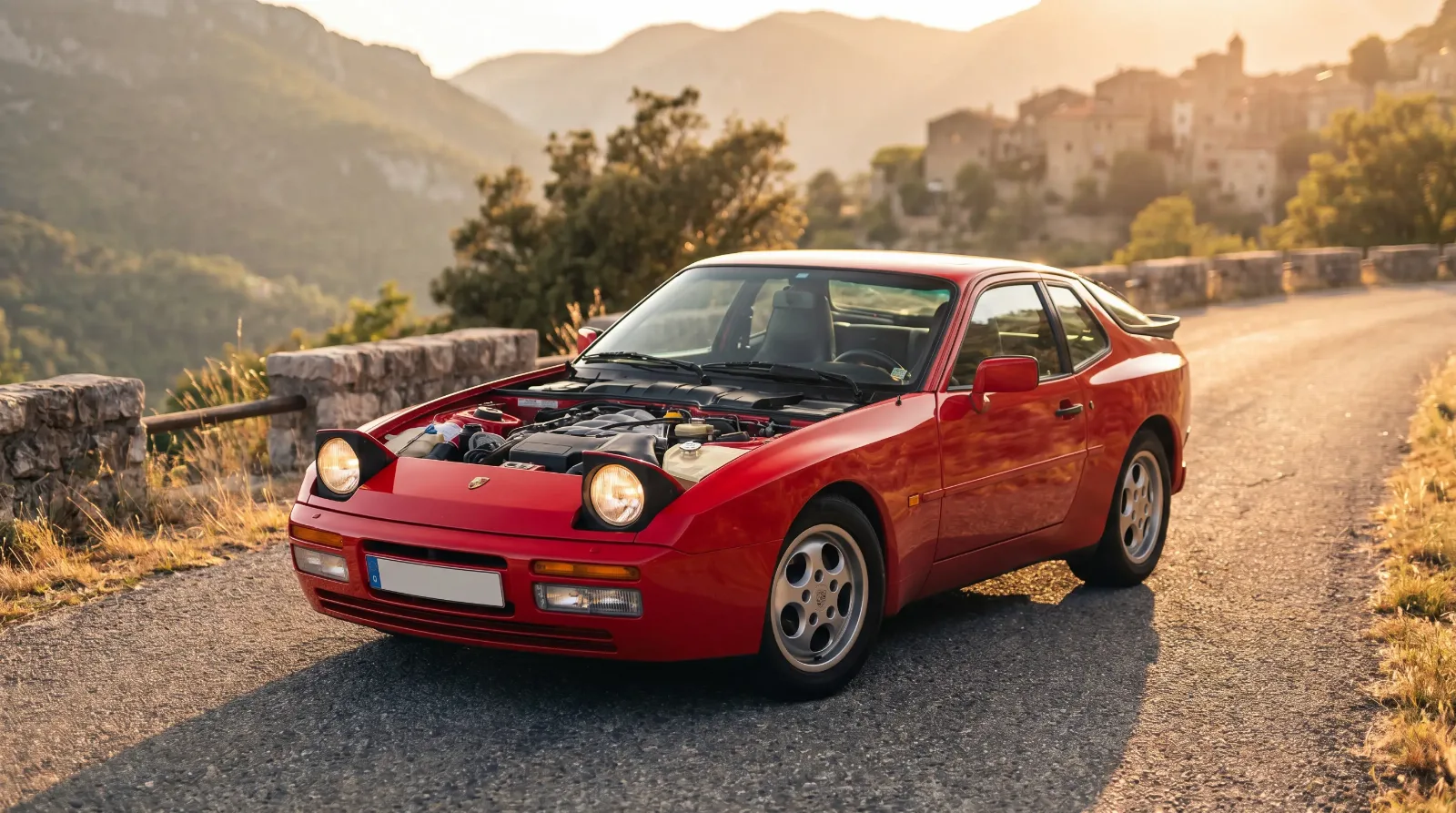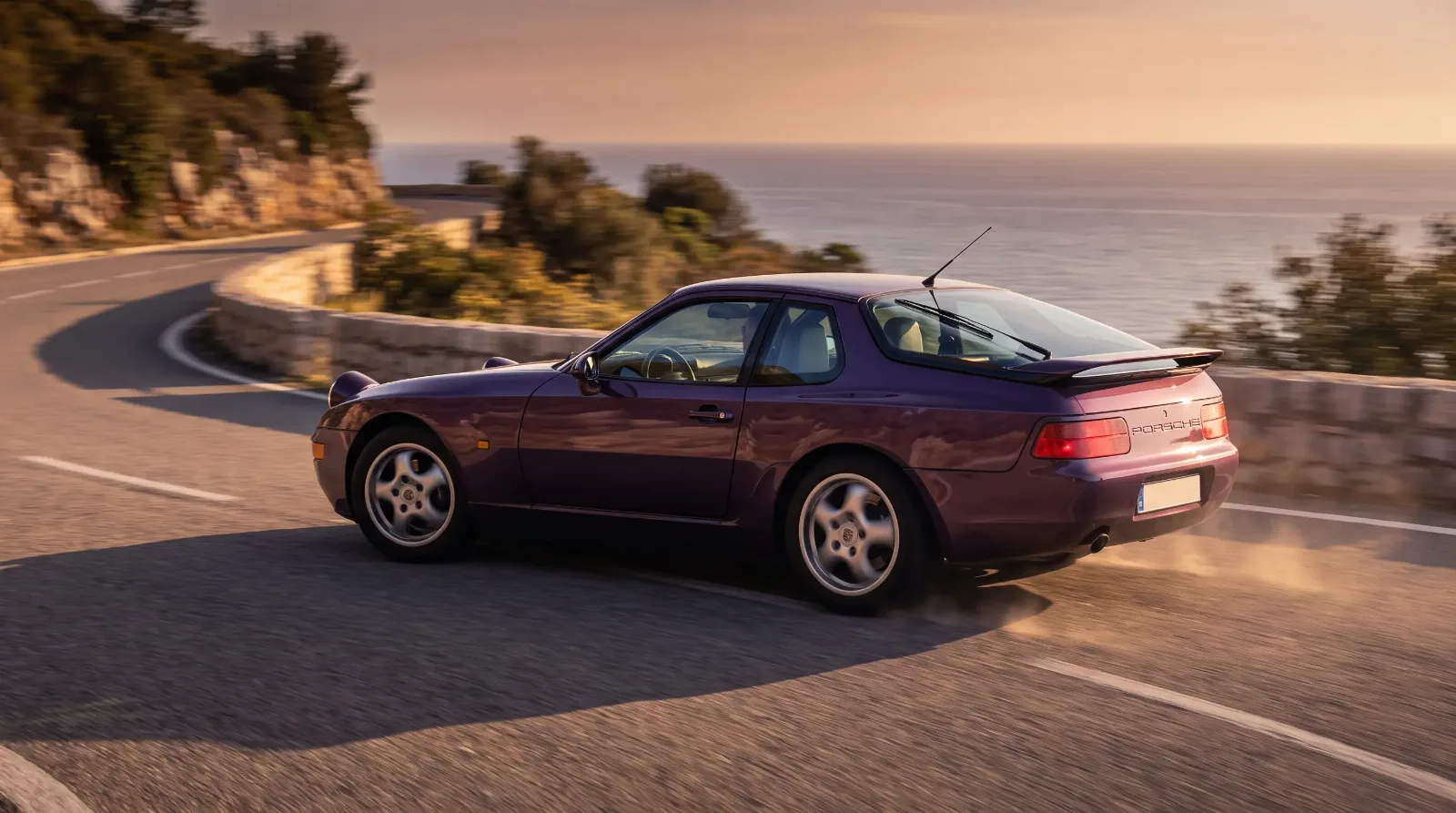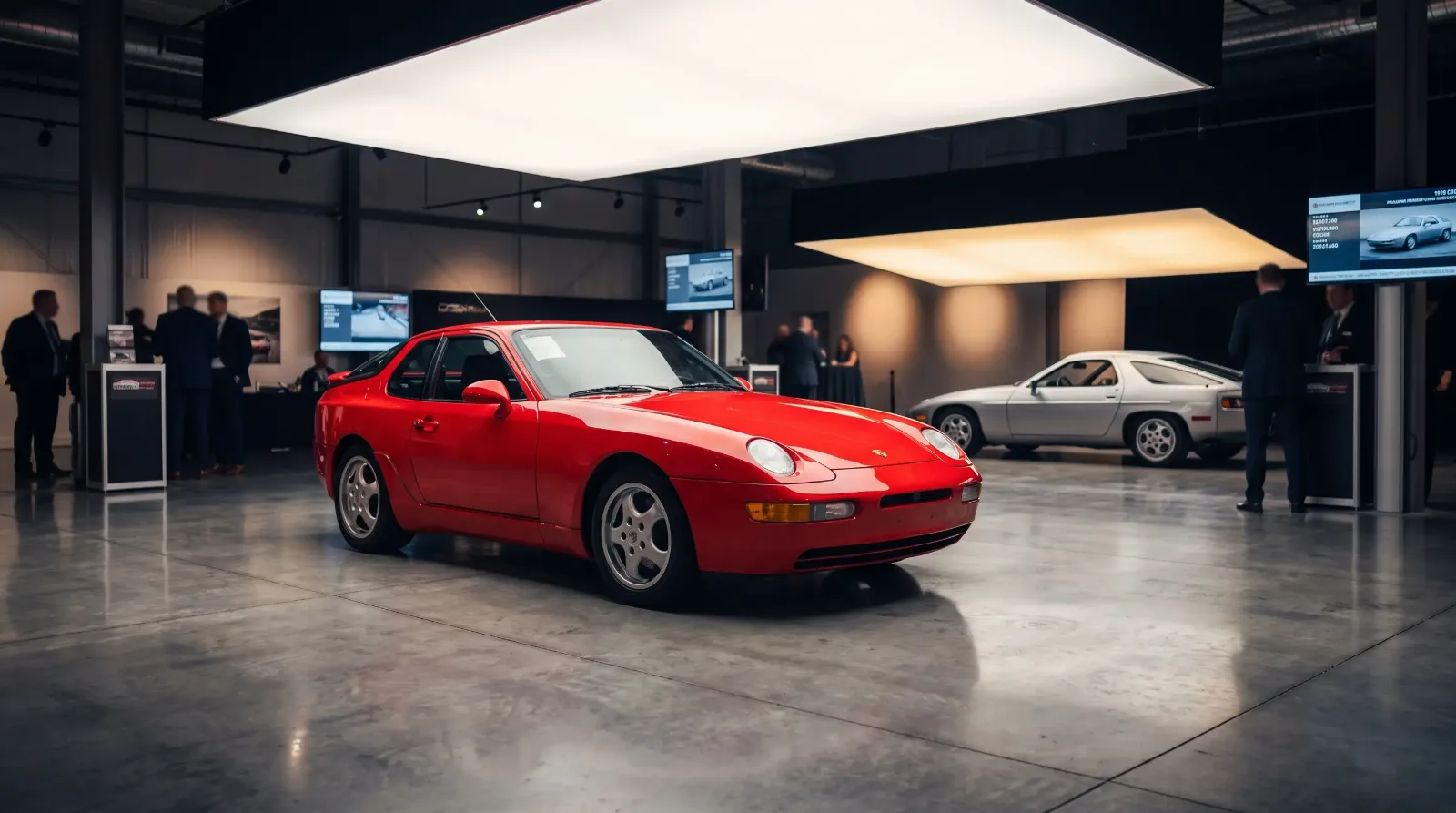
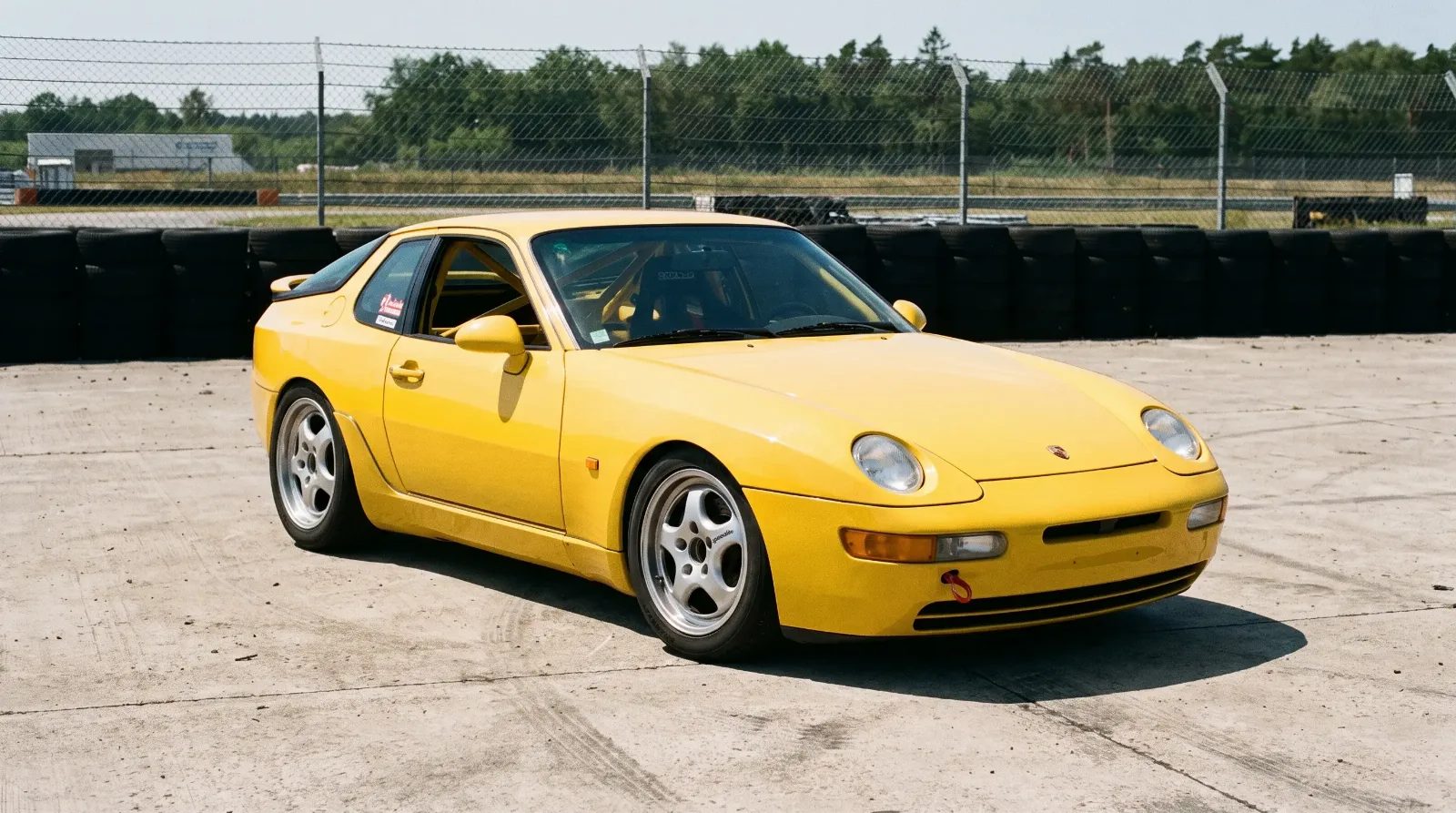
The Porsche 968 Club Sport weighed about 100 kg less than the standard 968 Coupe, and that single number is the entire pitch. Porsche took the regular 968, pulled out the rear seats, the sound deadening, the power windows, and half the interior trim, and sold what was left as a track-day car with a license plate. Built from late 1992 to 1995 for European markets, with roughly 1,538 examples made, the Club Sport is the stripped, purpose-built version of the last transaxle four-cylinder Porsche ever made.
The number that matters: roughly 100 kg lighter
Porsche's own figures put the Club Sport at around 1,320 kg, roughly 100 kg lighter than a standard 968 Coupe. That gap came from deleting rear seats entirely, removing sound insulation, dropping power windows and central locking in favor of manual cranks and key locks, and fitting lighter door panels and a simpler dashboard. The engine stayed the same 3.0-liter naturally aspirated four making 236 hp (240 PS), unchanged from the standard car. The Club Sport did not add power. It subtracted mass, and in a car this size, that trade often matters more than horsepower does.
Suspension was lowered and stiffened compared to the standard 968, and the ride height drop alone changed the car's roll characteristics noticeably on a circuit. Porsche also fitted the Club Sport with the shorter final drive ratio and, in some markets, the limited-slip differential as standard equipment rather than an option box.
| Spec | 968 Club Sport (1993-95) |
|---|---|
| Engine | 3.0L naturally aspirated inline-four, VarioCam |
| Power | 236 hp (240 PS), unchanged from standard 968 |
| Weight | 1,320 kg, roughly 100 kg lighter than standard Coupe |
| Transmission | 6-speed manual only |
| Rear seats | Deleted |
What Porsche took out, and what it kept
The Club Sport kept the brakes, the chassis structure, and the 6-speed manual gearbox from the standard 968. It kept the VarioCam engine untouched, which tells you Porsche's engineers considered the power output already sufficient for the car's intended job. What left the car was anything that added weight without adding speed: rear seats, most sound deadening, power accessories, and some of the interior trim that made the standard 968 a comfortable daily driver. Air conditioning, a radio, and other comfort items were available as no-cost delete options, meaning buyers could specify the car even lighter if they wanted to.
This approach sits squarely inside the philosophy running through the transaxle chapter of Porsche's history, where the front-engine four-cylinder cars were always positioned as the honest, mechanically straightforward alternative to the flat-six 911. The Club Sport pushed that philosophy to its logical end point: take the honest car and make it lighter instead of chasing bigger numbers.
Why the lighter car matters more than the spec sheet suggests
Horsepower figures get all the attention in car conversations, but weight does the quieter work of changing how a car actually behaves. Every part of the driving experience improves when mass comes out: braking distances shorten, turn-in gets sharper, and the suspension does not have to work as hard managing the same body motions. A 100 kg reduction on a car in the roughly 1,300 to 1,400 kg range is a bigger percentage cut than it sounds like, and drivers who have spent real time in both a standard 968 and a Club Sport back to back consistently describe the Club Sport as feeling like a noticeably different, more alert car rather than just a lighter version of the same one.
That is also why the Club Sport did not need more power to be faster around a track. The standard 968's chassis and brakes were already good. Porsche's engineers understood that removing weight from a well-sorted chassis produces more usable speed than adding horsepower to a heavier one, and the Club Sport is the clearest example of that thinking anywhere in the transaxle lineup.
Buying one today: rarity versus usability
Club Sport production numbers were low to begin with, and the market has caught up to that scarcity. These cars carry a real premium over standard 968 Coupes now, and that premium keeps climbing as more buyers recognize the car for what it is rather than treating it as an oddly optioned 968. The tradeoff is daily usability. No rear seats, minimal sound insulation, and a stiffer ride mean the Club Sport asks more of an owner than the standard car does. That is the point of it, but it is worth being honest with yourself about how often you actually want that experience on a commute.
"100 kilograms out, zero horsepower added. That's not a marketing gimmick, that's an engineering decision, and it's the right one for a car built to be driven hard on a track."
— Dan Reeves
What to check before buying a Club Sport
Verify the car's history and title status first if it is in North America, since import documentation and compliance vary widely and directly affect value and legality. Confirm timing belt and water pump service on the same roughly 30,000-mile interval as every other transaxle four-cylinder Porsche. Check for factory-correct delete options versus items added back later by an owner chasing comfort, since a Club Sport with a stereo and air conditioning retrofitted is not wrong, but it should be priced and understood as a modified car rather than an unmolested original.
The Club Sport is not the only overlooked corner of this lineup. For a broader look at where these stripped and specialized transaxle cars sit in the collector market, more from this chapter covers the wider picture, and the Classic Cars Arena Porsche guide ties the entire transaxle story together from the first 924 to this final Club Sport.
Sources and notes
- Porsche Newsroom: A guide to the Porsche 968 Club Sport
- Wikipedia: Porsche 968
- Carfolio: 1993 Porsche 968 Club Sport specifications
- Carscoops: The 968 Club Sport Was Porsche Going All Out About Weight Saving
- Sports Car Market: 1993 Porsche 968 Club Sport profile
- Prestige & Performance Car: Porsche 968 Club Sport road test