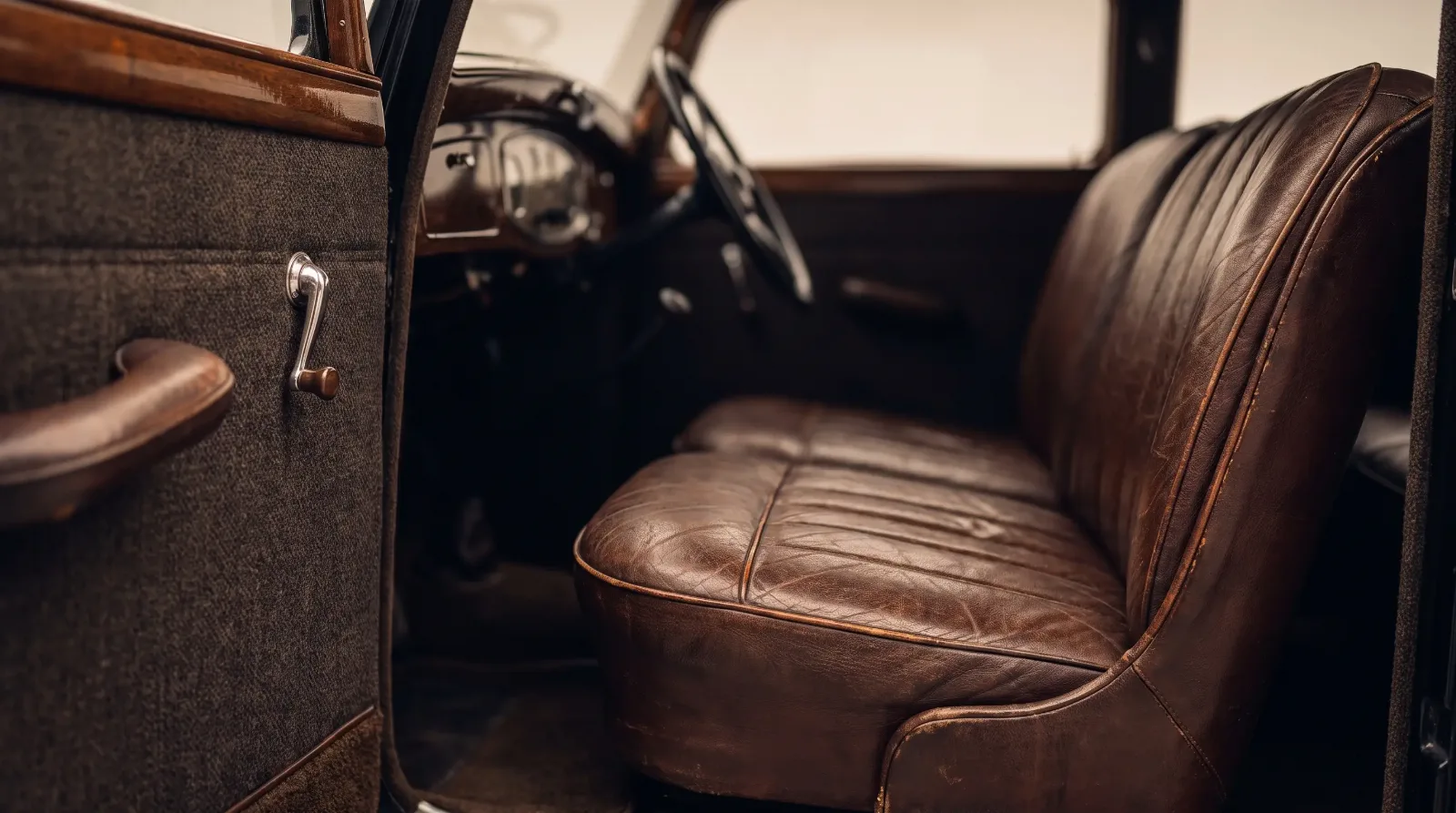
An interior that has survived a century tells you things a repainted body cannot. The grain of the original leather, the weave of a mohair broadcloth, the pattern a coachbuilder chose for a particular body style, all of it is period evidence that disappears the moment someone reaches for a modern reupholstery kit. Before deciding a worn interior needs to be replaced wholesale, it is worth understanding what can actually be saved, because in this era of craftsmanship, original material often carries more weight with serious collectors than a fresh, technically flawless redo.
What survives, and what does not
Leather from this period was tanned and finished differently than what goes into a car today, and it ages accordingly. Vegetable-tanned hides can dry out, crack along stress points, and lose the finish coat that gave them their original color and sheen, but the base material underneath is often still structurally sound. Fabric is less forgiving. Wool broadcloth and mohair can hold up remarkably well if they have been kept out of direct light and away from moisture, but once moths, mildew, or sun exposure have done real damage, there is a limit to what conservation work can bring back.
The honest first step is a close inspection, panel by panel, rather than a judgment made from across the garage. A seat that looks tired from ten feet away may only need cleaning and conditioning. One that looks fine from a distance may have hidden splits along a seam that will fail the first time someone sits down.
Conditioning original leather correctly
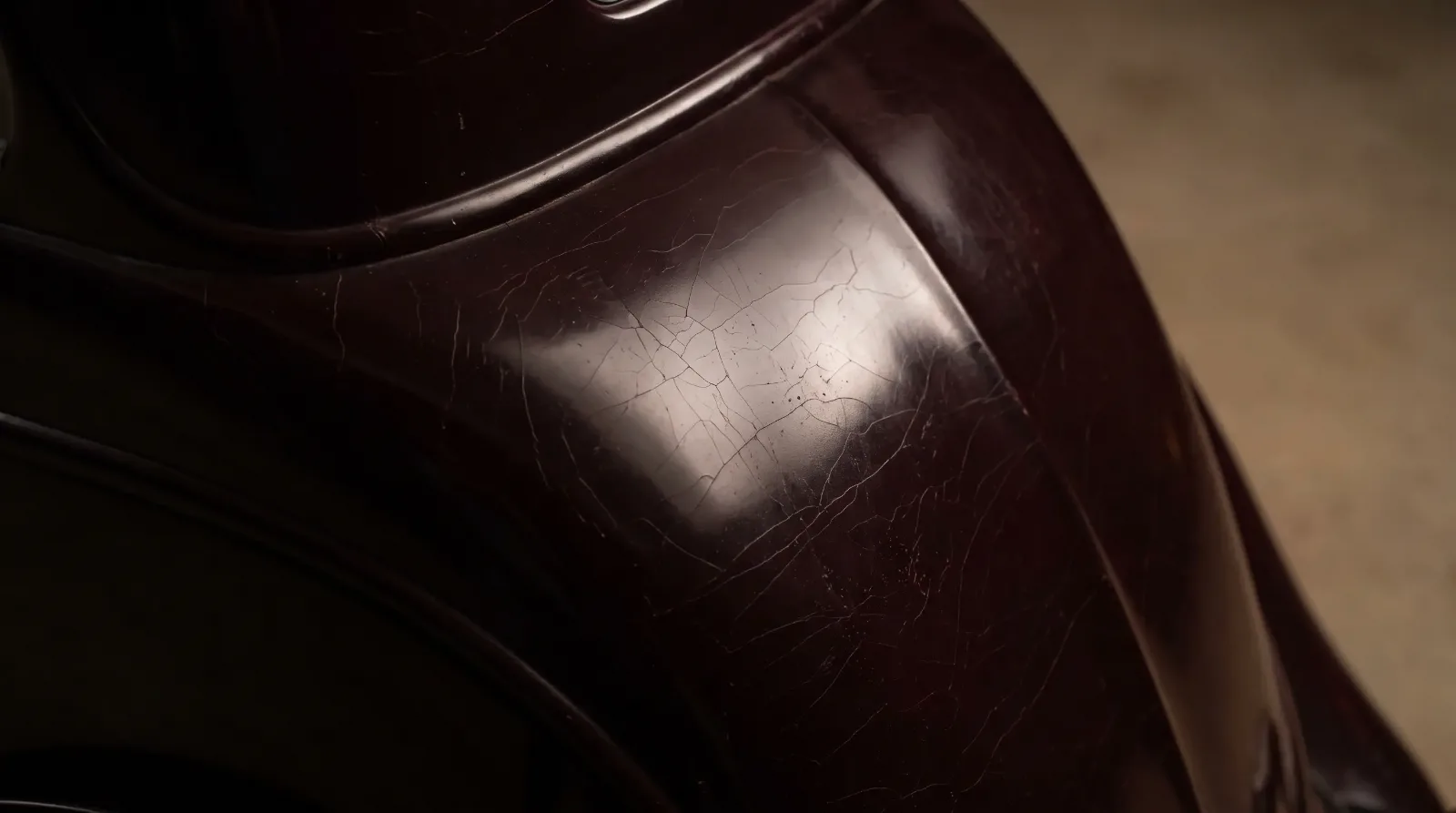
Leather conditioning on a century-old hide is not the same job as conditioning a modern seat. Aggressive commercial conditioners, especially anything petroleum-heavy, can darken original leather permanently or soften it past the point where it holds its shape. The safer approach is a gentle, pH-balanced leather cleaner first, applied sparingly, followed by a conservator-grade conditioner worked in over several light applications rather than one heavy one. Patience matters here more than product strength. Old leather rehydrates slowly, and rushing the process with a heavier product tends to leave a greasy surface finish rather than genuine flexibility restored from within the hide.
Cracks that have already formed will not close up through conditioning alone. Conditioning stops them from spreading and keeps the surrounding leather supple, but structural cracking needs a conservator's repair, typically a careful backing and fill applied from behind the panel, to actually be stabilized.
"An original interior is a document as much as it is a seat. I have seen owners strip out perfectly conservable leather because nobody told them cleaning and conditioning were even an option before reupholstery."
— Sarah Whitfield
Fabric that can be saved, and fabric that cannot
Original wool broadcloth and mohair respond well to careful vacuuming with a low-suction, brush attachment approach, followed by spot treatment for stains rather than a full wet clean, which risks setting shrinkage or color migration into a fragile weave. Where moth damage or heavy soiling has genuinely compromised a section, a period-correct approach is targeted, sympathetic patching using fabric sourced or rewoven to match the original, rather than replacing an entire panel that is otherwise intact.
This is slower and more expensive than wholesale reupholstery, and it requires finding someone who actually specializes in period textile conservation rather than a general upholstery shop. But for a car with real documentation value, it is often the difference between preserving evidence and erasing it.
Finding someone qualified to do this work
Textile and leather conservation for cars of this age is a narrow specialty, and it is worth being selective about who touches original material. A general upholstery shop, even a very good one, is usually set up for efficient full reupholstery rather than the slower, more deliberate work of stabilizing and repairing what already exists. Ask to see examples of prior conservation work specifically, not just finished reupholstery jobs, since the two skill sets do not always overlap. Marque and model clubs are often the best source for referrals here, since members have usually already been through this decision themselves and know which specialists actually understand period materials.
It is also worth asking any prospective conservator how they document their work before beginning. A conscientious specialist will photograph condition before, during, and after treatment, which protects both the material's history and your ability to prove what was original versus repaired if the car is ever evaluated or sold.
Knowing when replacement is the right call
Conservation is not always the correct answer, and pretending otherwise does a disservice to owners facing real decisions. If an interior has been replaced already with incorrect material, if moisture damage has gone past the point of stabilization, or if a car is being built as a driver rather than preserved for its documentation value, a well-researched, period-correct reproduction interior is a legitimate and often better choice than fighting to save material that will not hold up to regular use anyway.
The decision usually comes down to what the car is for and what it has to prove. more on restoring antique car interior fabric lays out how original material weighs against valuation more broadly, which is useful context before committing either direction.
The frame and body underneath that interior deserve the same care in weighing originality against practicality, particularly on cars from an era when the structure itself was often built from wood; a related read covers what that work involves and where it tends to go wrong.
Sources and notes
- AACA Forums - mohair upholstery on pre-war Buicks
- Original Auto Fabric: vintage auto cloths from Model T to LaSalle
- SMS Auto Fabrics - classic auto interior materials
- LaFontaine Classic Cars: upholstery restoration materials and techniques
- Classtique Upholstery - period-correct Model T and Model A kits
- Hagerty - Preservation Class cars and original material value