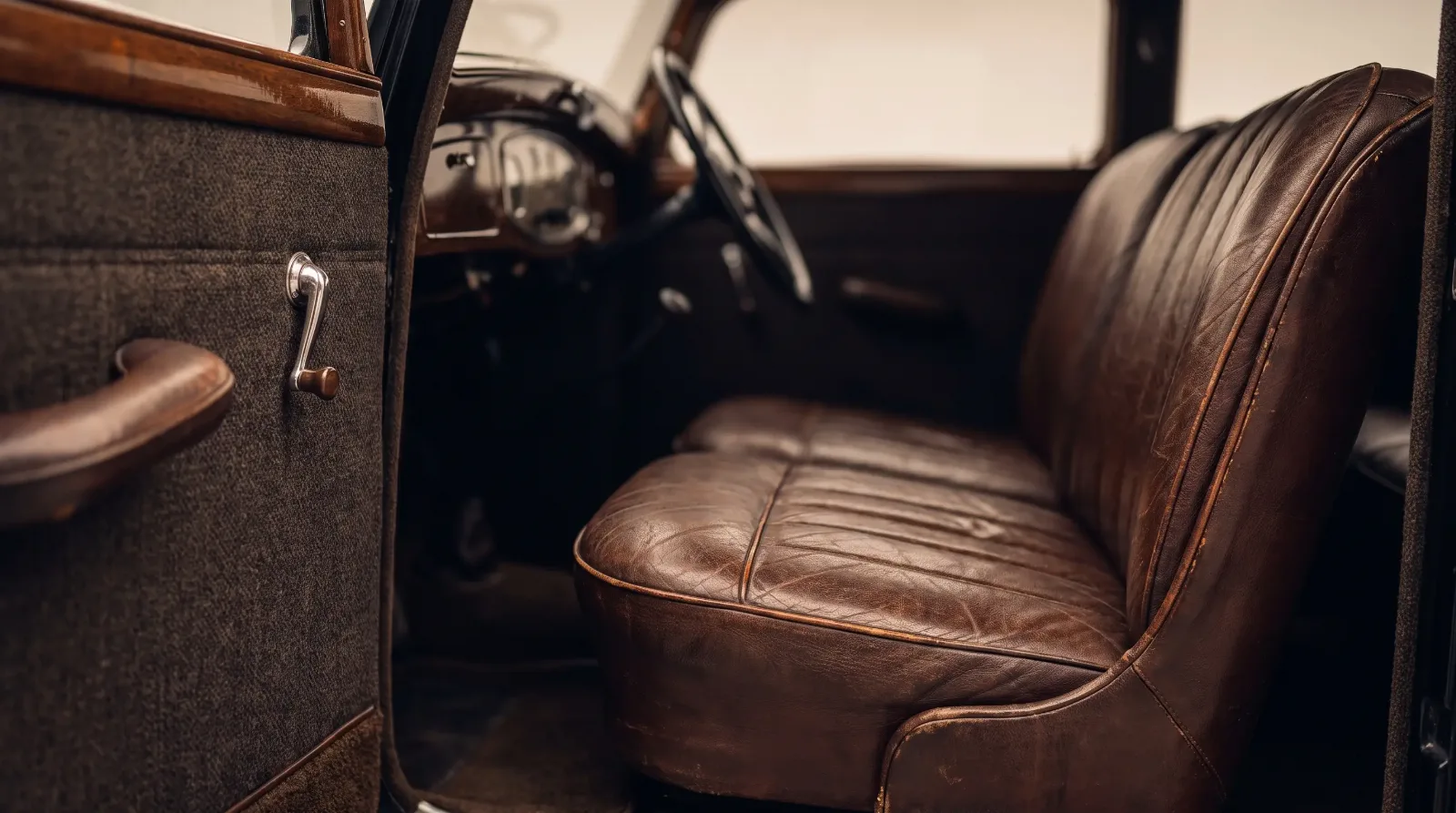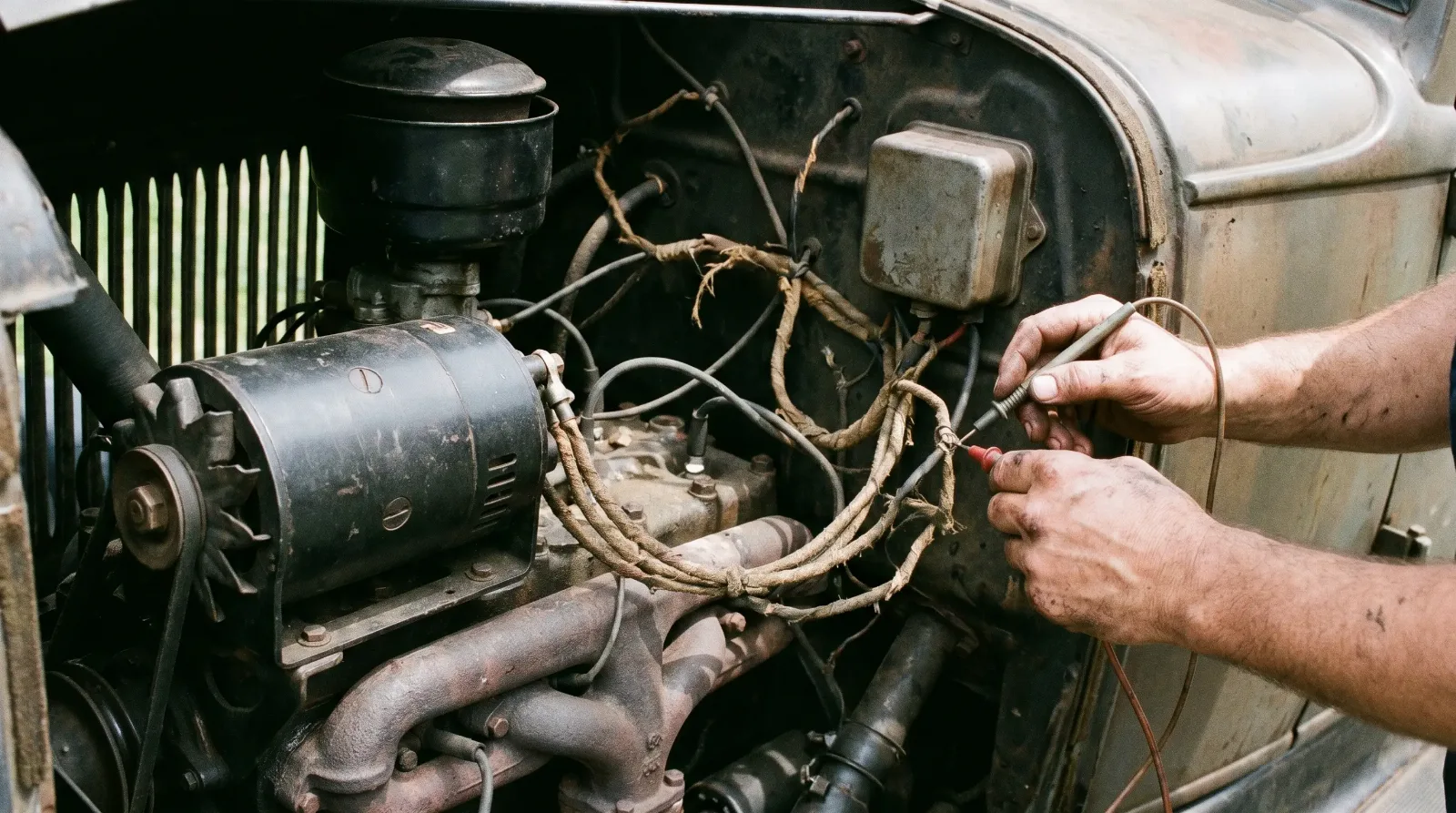
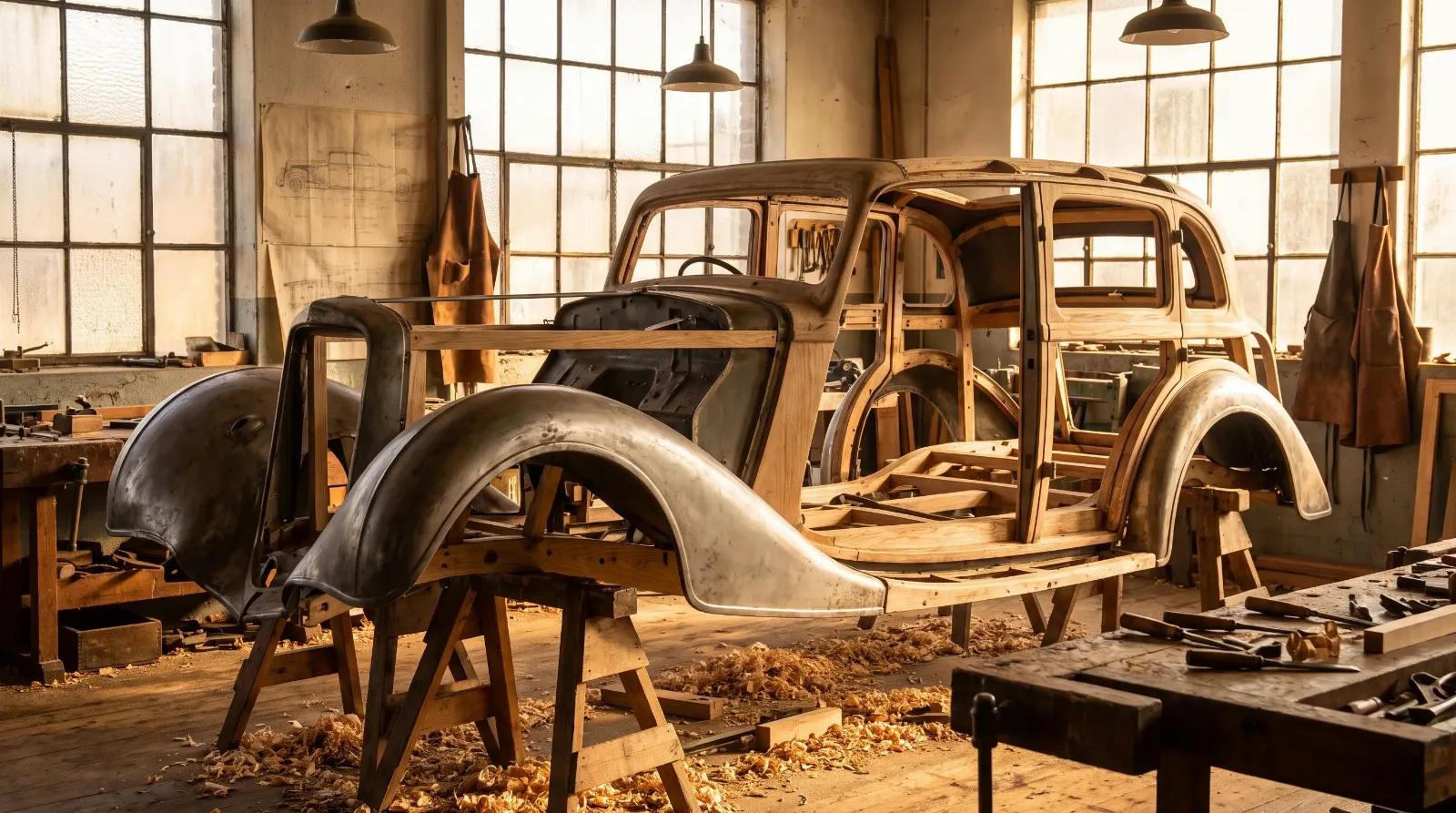
Most people picture a pre-war car body as steel over a steel chassis, and the chassis part is right, but a lot of these bodies were actually built around a wooden frame, with steel or aluminum panels tacked over ash or maple structure underneath. That wood is doing real structural work, not just filling space, and when it fails, the whole body can start to sag, rattle, and lose the panel fit it had when it left the factory. Rebuilding that frame is patient carpentry as much as it is automotive work, and it rewards someone who is comfortable with both.
Why wood was the right call at the time
Wood framing let coachbuilders shape complex curves and compound panels that would have been far harder to produce in steel stamping at the volumes these cars were built in. Ash was the material of choice for most structural framing because it combines strength with the ability to bend under steam or moisture without splitting, which made it ideal for the curved pillars and sweeping lines that defined so many bodies of the era. Maple and other hardwoods show up in load-bearing joints and mounting points where a harder, denser wood held fasteners better over time.
None of that changes the fact that wood ages, moves with humidity, and eventually rots if it has been exposed to moisture trapped under panels for decades. A frame that was engineered correctly in 1932 can still be structurally compromised today simply from age and neglect, and that is not a design flaw, it is just what happens to organic material over ninety years.
Diagnosing what actually needs replacing
Start by removing panels methodically and documenting exactly where each piece of framing sits before you take anything apart, because these frames are rarely symmetrical in ways you would expect, and a piece that looks identical to its opposite number often is not. Probe every joint and structural member with an awl or a pick rather than relying on visual inspection alone. Sound wood resists the point and gives a solid feel. Rotted wood is soft, sometimes crumbly, and the awl sinks in with almost no resistance.
Pay particular attention to the areas where wood meets metal, around door hinges, at the base of pillars, and anywhere moisture would naturally collect and sit. These are the spots that fail first, and they are often hidden until a panel comes off. A frame member can look fine at a glance and still be rotted through at exactly the point where it needs to bear the most load.
"The panels are what everyone worries about, but the panels only fit right if the wood underneath is true. I have seen beautiful steel work ruined because nobody checked whether the frame it was mounted to had already sagged."
— Ray Delgado
Replacement, and doing it right
When a member needs replacing, match the original species and, wherever possible, the original grain orientation, since the wood's strength depends heavily on grain direction relative to the loads it carries. Straight-grained ash is the standard choice for most structural replacements, and it is worth the extra effort to source properly seasoned stock rather than using something that has not been dried long enough, which will move and shrink after it is installed.
Cut new members to match the old piece exactly before the old piece is fully removed, using it as a template while it is still roughly in place. This sounds obvious, but rushing this step is the single most common reason replacement wood ends up slightly wrong, which then shows up later as a panel gap that never quite closes correctly.
| Wood type | Typical use | Key property |
|---|---|---|
| Ash | Curved pillars, main structural framing | Bends without splitting, strong for its weight |
| Maple | Load-bearing joints, fastener points | Dense, holds hardware securely |
| Oak | Sills, floor framing on some makes | High strength, more resistant to moisture than ash |
Once new or repaired wood is in place, seal it properly before panels go back on. This is the step that gets skipped most often under time pressure, and it is exactly the step that determines whether the next owner deals with rot in fifteen years or in seventy.
Joinery matters as much as material choice
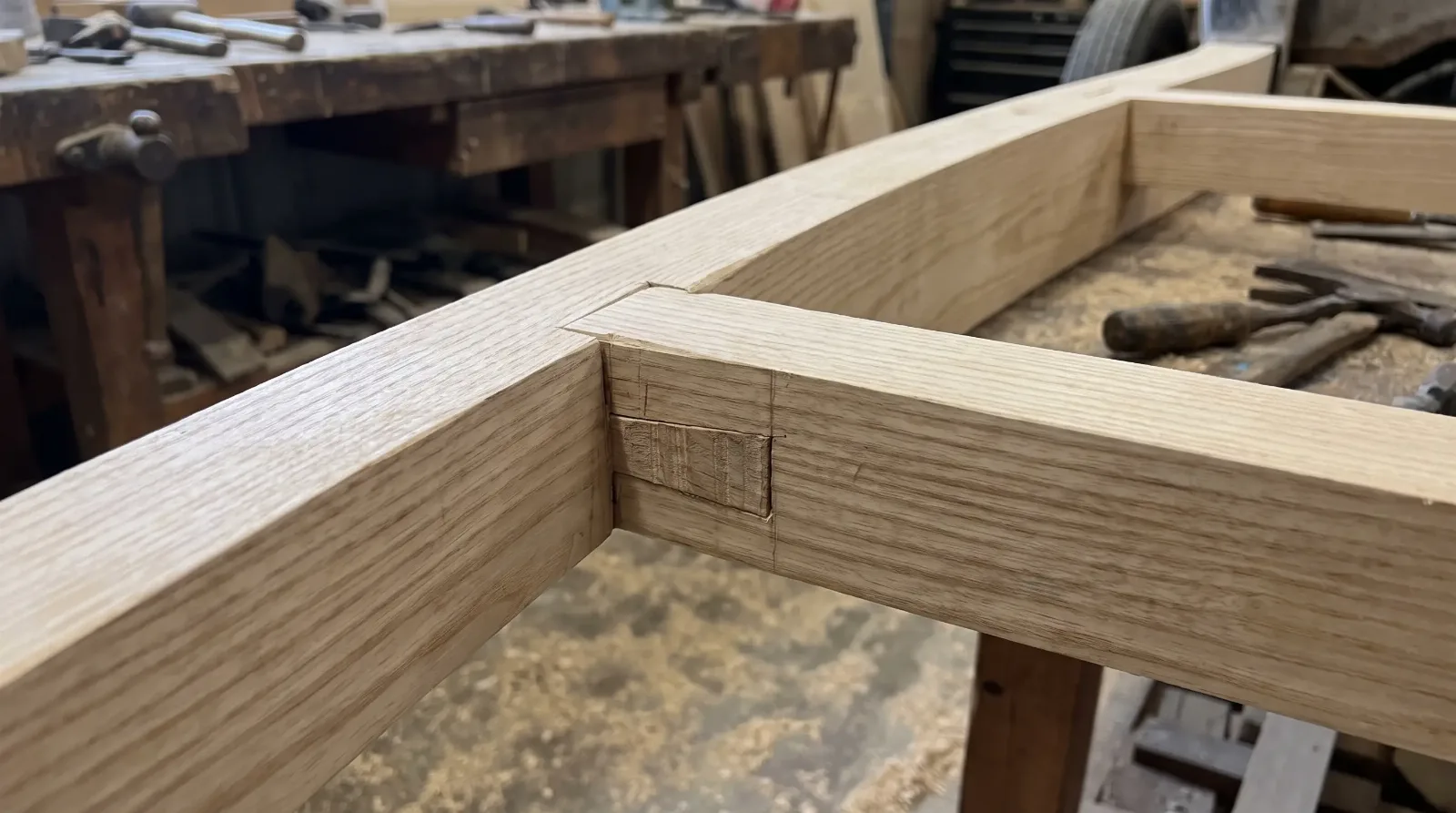
The way frame members were originally joined, whether through mortise and tenon, lap joints, or simple butt joints reinforced with metal brackets, was chosen deliberately for the loads each specific point had to carry. Copying that joinery exactly, rather than substituting a simpler joint because it is easier to cut, keeps the rebuilt structure behaving the way the original engineers intended. A butt joint substituted for an original mortise and tenon might look fine and even feel solid when you test it by hand, but it will flex differently under the twisting loads a body takes over rough roads, and that difference eventually shows up as new cracks in the panels mounted to it.
Take the time to understand not just what wood was used but how it was cut and joined before committing to a repair method. A rebuilt frame that respects the original joinery will age the same way the original did. One that does not will develop its own new set of problems, just on a different, faster timeline.
This kind of structural work is where a car's coachbuilt origins really show themselves, since the framing choices often trace directly back to which coachbuilder built the body in the first place; read on for how those coachbuilding traditions shaped the cars that survive today. For a broader look at how wood framing fits into the larger restoration and valuation picture, our deep dive on wood framed car restoration is worth reading before committing to a full frame rebuild.
Once the body structure is sound, the systems that make the car actually run and stop reliably deserve the same attention; the next story covers what it takes to keep a period-correct electrical system working properly.
Sources and notes
- Wikipedia: Coachbuilder and coachbuilding timber practice
- Wikipedia - Weymann fabric bodies and flexible ash framing
- Wikipedia: Body-on-frame construction history
- AACA Forums - early GM cars with metal wrapped wooden frames
- LAAK Woodworks: coachbuilding wood framing techniques
- Classic Driver - wood-framed chassis myth-busting