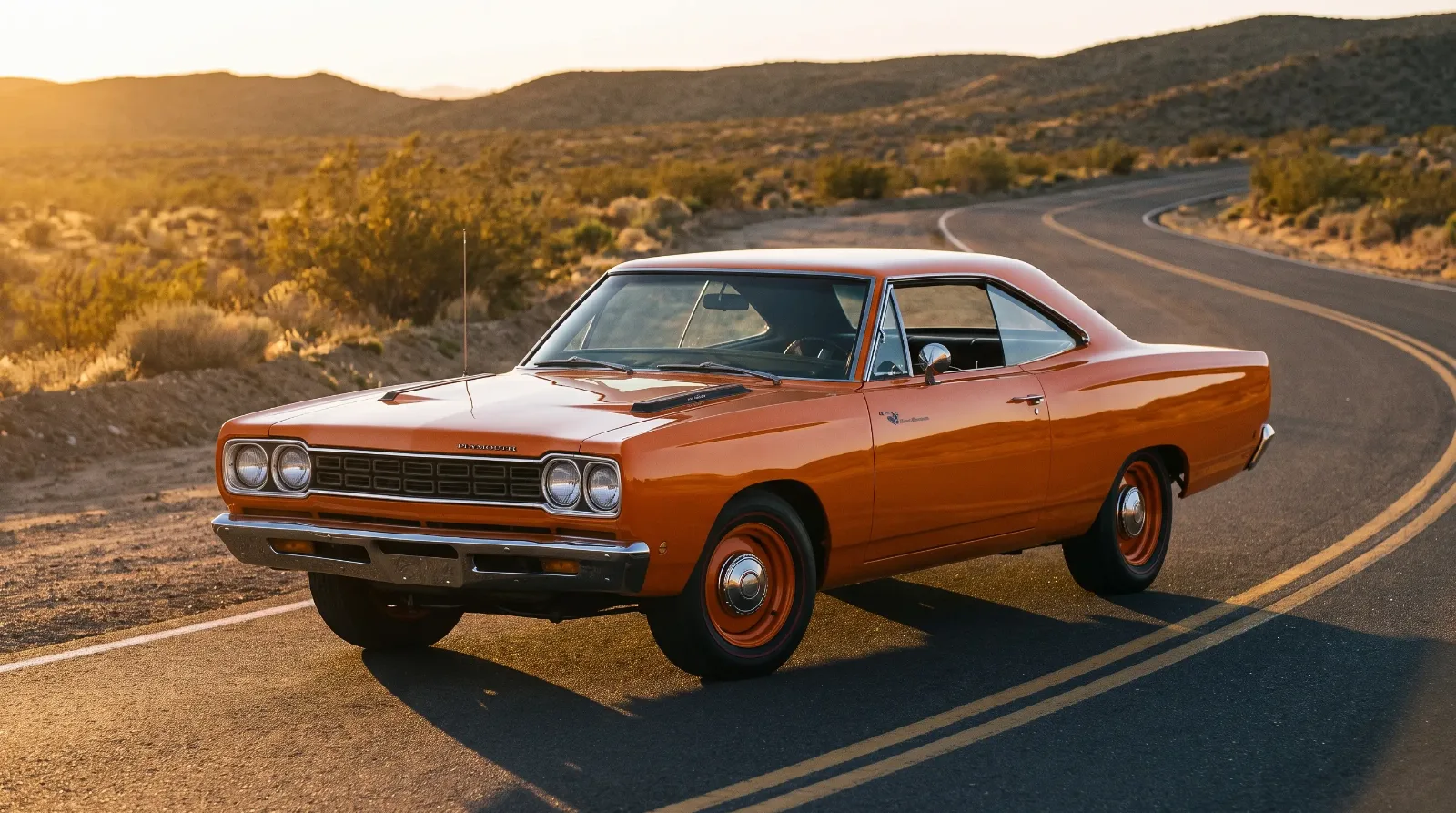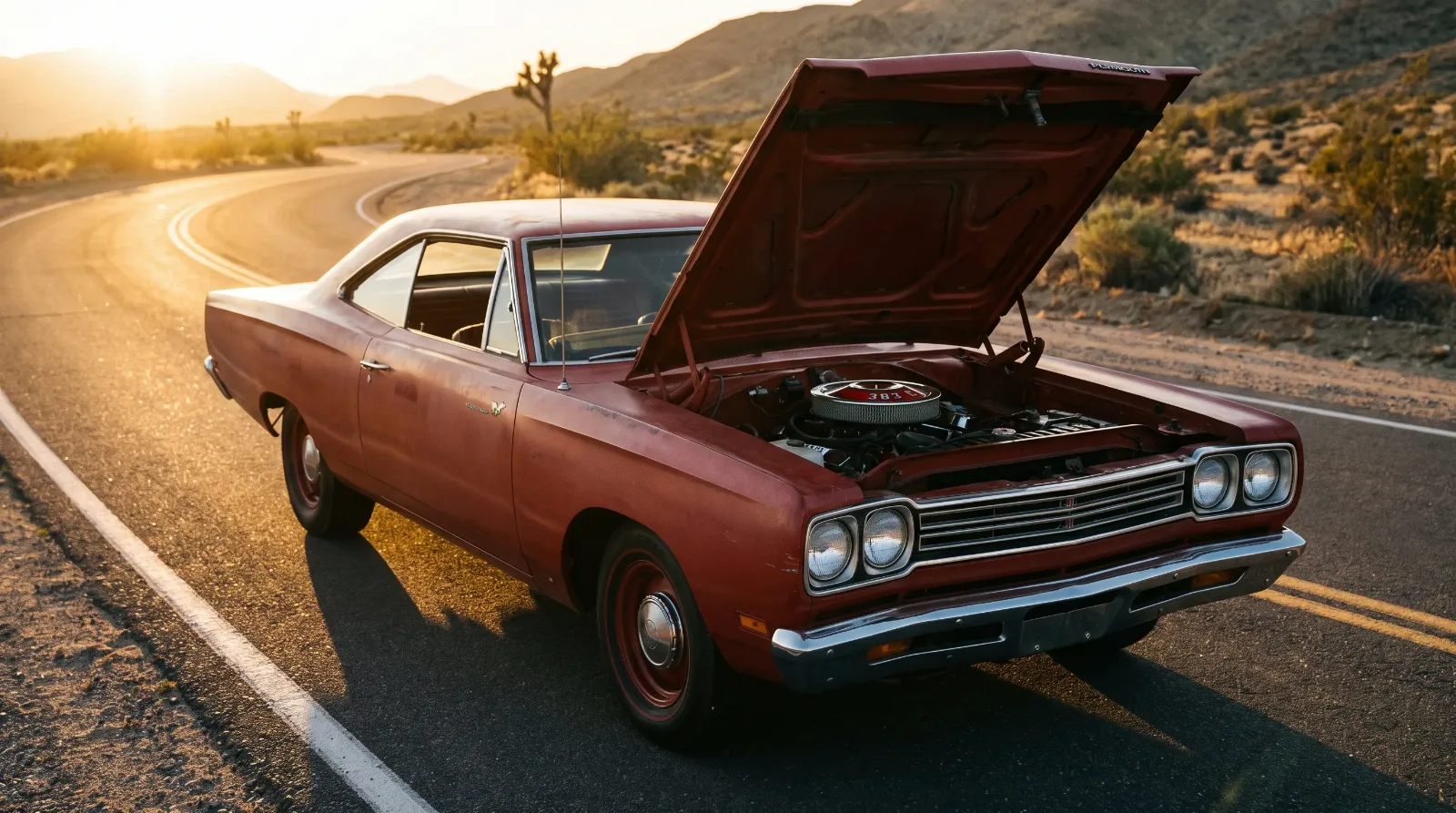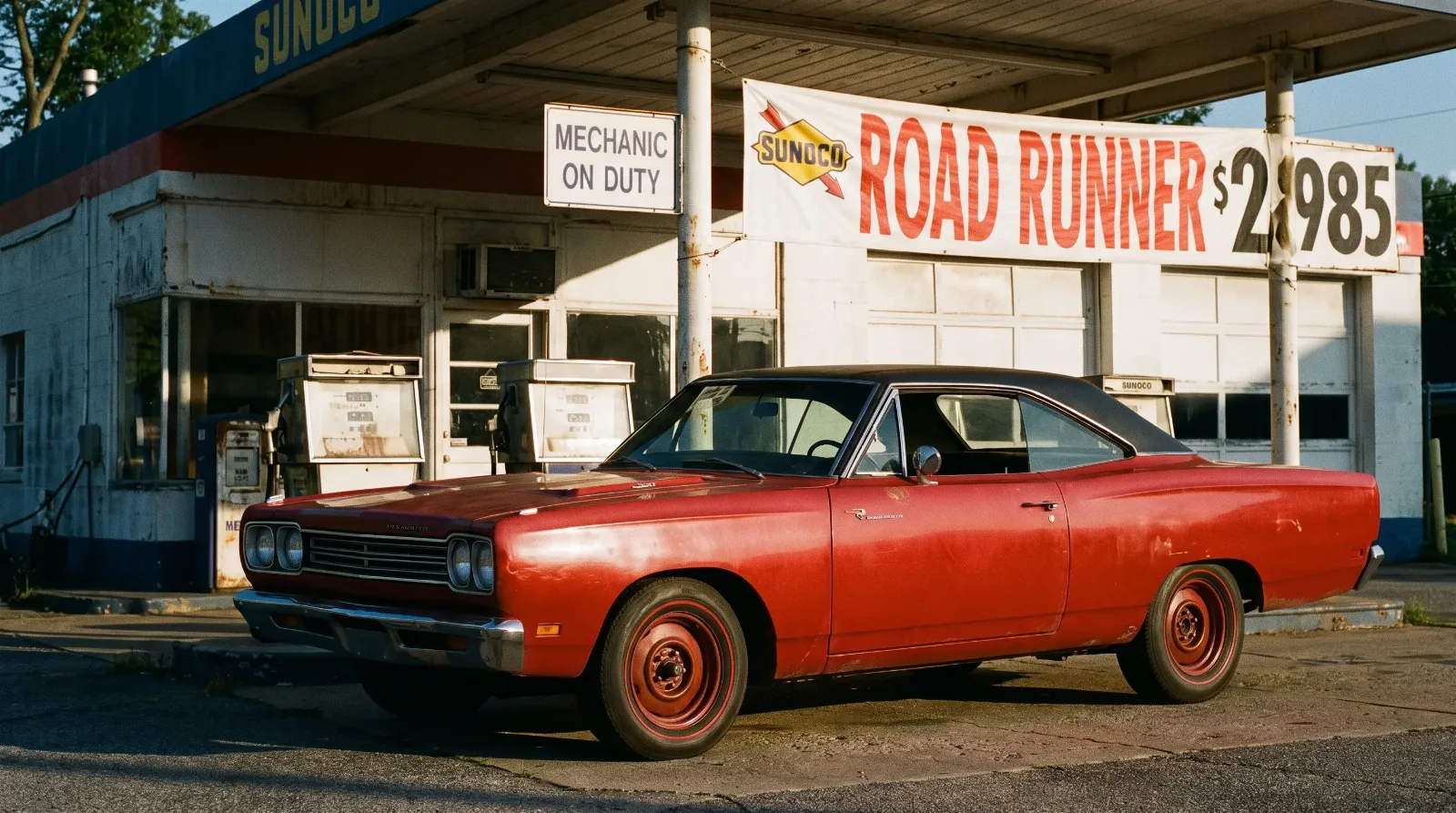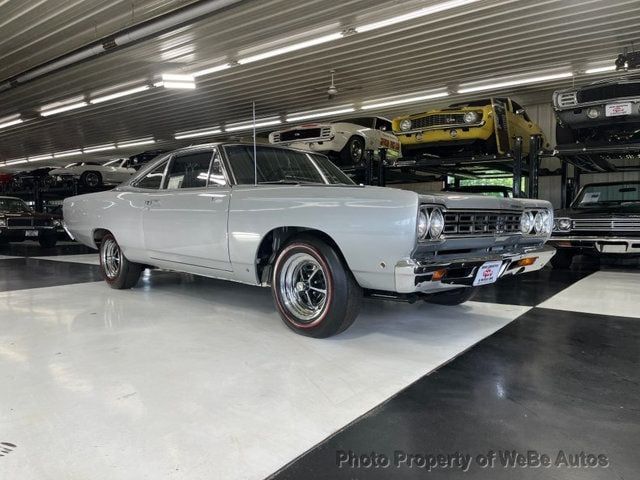
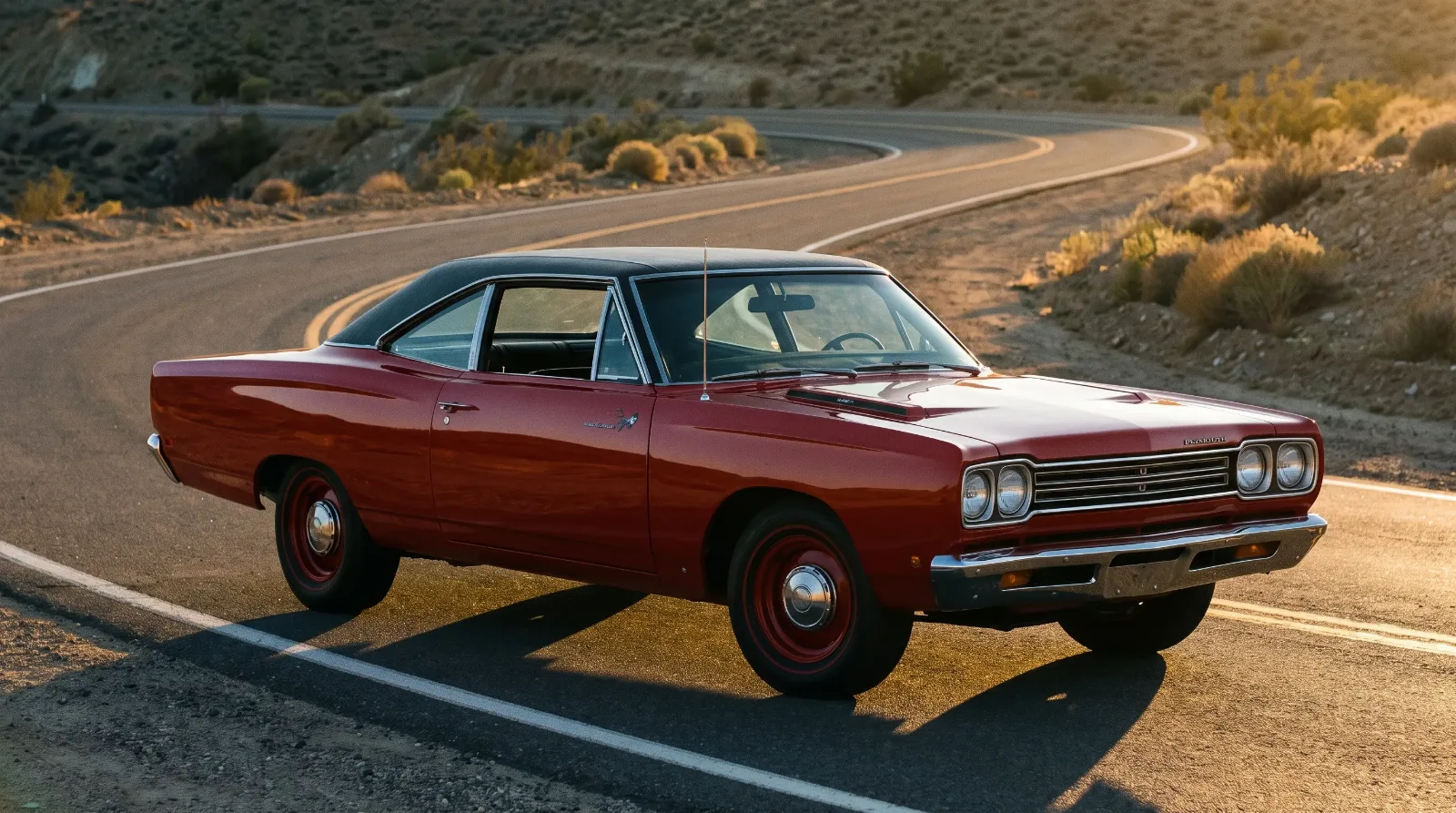
The 1968 road runner body styles question comes up constantly among people new to the model, and it deserves a more careful answer than most casual references give it. Plymouth launched the Road Runner in exactly one body style for its debut year, the two-door pillared coupe, before adding a hardtop version partway through the model year. That sequence matters for anyone trying to date a car correctly or understand original production patterns.
The coupe came first, and that was deliberate
Plymouth's B-body lineup already offered both coupe and hardtop configurations across its mid-size cars, but the Road Runner launched specifically as a pillared coupe. The reason traces directly back to the car's whole reason for existing. Plymouth needed the cheapest possible structure to hit its price target, and a pillared coupe body is inherently cheaper to engineer and build than a pillarless hardtop, which requires additional structural reinforcement elsewhere in the body to compensate for the missing B-pillar.
That structural difference is not a minor engineering footnote. The B-pillar on a coupe carries real load in a unibody structure, and removing it for a hardtop's cleaner window-down look means the rest of the body has to pick up that job through reinforced rockers, floor pans, and roof rails. All of that costs money to design and build. For a car whose entire identity depended on hitting a price point under $2,900, starting with the simpler, cheaper coupe body made complete sense.
Why the hardtop arrived mid-year
Once the coupe's sales success became clear early in the model year, Plymouth added a hardtop body style to the Road Runner lineup, giving buyers who wanted the cleaner, pillarless roofline the option without abandoning the car's core value proposition. The hardtop carried a modest price premium over the coupe, reflecting its more complex construction, but it still landed well under GTO pricing.
The hardtop's arrival mid-year means original 1968 Road Runner hardtops represent a smaller slice of total production for that model year than the coupe does, which has real implications for collectors trying to understand rarity and originality claims made in listings today.
What each body style says about the buyer
Period buyers who chose the coupe were generally the most budget-conscious segment of the Road Runner's customer base, people who wanted every dollar going toward the drivetrain and nothing toward styling flourishes. Buyers who waited for or specifically sought out the hardtop were willing to pay a little more for the cleaner roofline, a decision that put them closer to a traditional muscle car buyer's priorities even while still shopping well below GTO money.
Neither choice compromised the mechanical package. Both body styles carried the same standard 383 engine, the same heavy-duty suspension, and the same optional 426 Hemi availability. The difference was purely structural and cosmetic, which is exactly how Plymouth wanted it. The performance case for the car did not depend on which roofline the buyer chose.
| Body style | Availability in 1968 | Notes |
|---|---|---|
| Pillared coupe | From launch, full model year | Original launch body style, lower cost structure |
| Hardtop | Introduced mid-year | Pillarless roofline, modest price premium, lower total production |
"Documentation matters enormously when you're looking at an early 1968 hardtop. The production window was narrower than most buyers assume, and a seller claiming an early hardtop needs to show the paperwork to back that claim up."
- Sarah Whitfield
Restoration considerations tied to body style
Anyone researching a car's history rather than working on it directly still needs to understand that the two body styles present different structural realities decades later. Coupe bodies, with their intact B-pillar, generally hold their structural integrity a bit better over long-term storage and use, since that pillar was always doing real work in the unibody. Hardtop bodies rely more heavily on floor pan and rocker panel condition to maintain rigidity, which means a hardtop with a history of rust in those areas can present a more involved history to document and verify than a coupe with a similar storage past.
None of that makes one body style objectively better than the other for a buyer. It simply means the questions a serious buyer should ask about structural history differ slightly depending on which body style they are evaluating, and sellers who understand this distinction tend to provide more useful documentation upfront.
What this means for today's collector market
Body style alone does not drive Road Runner values the way engine choice does, but it does factor into how collectors evaluate a specific car's place within the model year's production story. A documented early-build hardtop carries a narrower production window than a coupe from the same year, and buyers who care about that kind of production detail should ask sellers for build sheet documentation confirming both the body style and the production date, since window stickers and casual descriptions alone do not always tell the full story.
The full story on the 1968 launch covers how both body styles fit into Plymouth's broader rollout strategy for that debut year, including how the sales mix shifted once the hardtop became available partway through production.
If you're comparing body styles in person, you can browse classic Runner listings to see how coupe and hardtop examples are currently priced relative to each other, along with how documentation quality affects asking prices across both configurations.
How to visually tell them apart at a glance
For anyone still learning to identify these cars quickly at a show or in listing photos, the giveaway is the door frame and roofline. The coupe retains a fixed B-pillar between the front and rear side glass, visible as a solid painted post when the windows are down, while the hardtop's side glass drops fully with no center post interrupting the view. It is a small detail from a distance but an immediately obvious one up close, and it is the fastest way to confirm which body style you are looking at before ever checking a build sheet or asking the owner directly.
Interior details generally track with the exterior body style too, though trim and upholstery options were largely shared across both configurations, since Plymouth's cost-saving approach applied to materials regardless of which roofline a buyer chose. The structural difference was where the real engineering and cost separation lived, not in the cabin itself.
A decision that still shapes how the car reads today
Fifty-plus years on, the coupe versus hardtop question remains a genuine point of interest rather than a settled matter, precisely because the coupe represents the purest version of Plymouth's original budget muscle car concept while the hardtop represents the company's first concession to buyers who wanted a bit more style without giving up the value proposition underneath it.