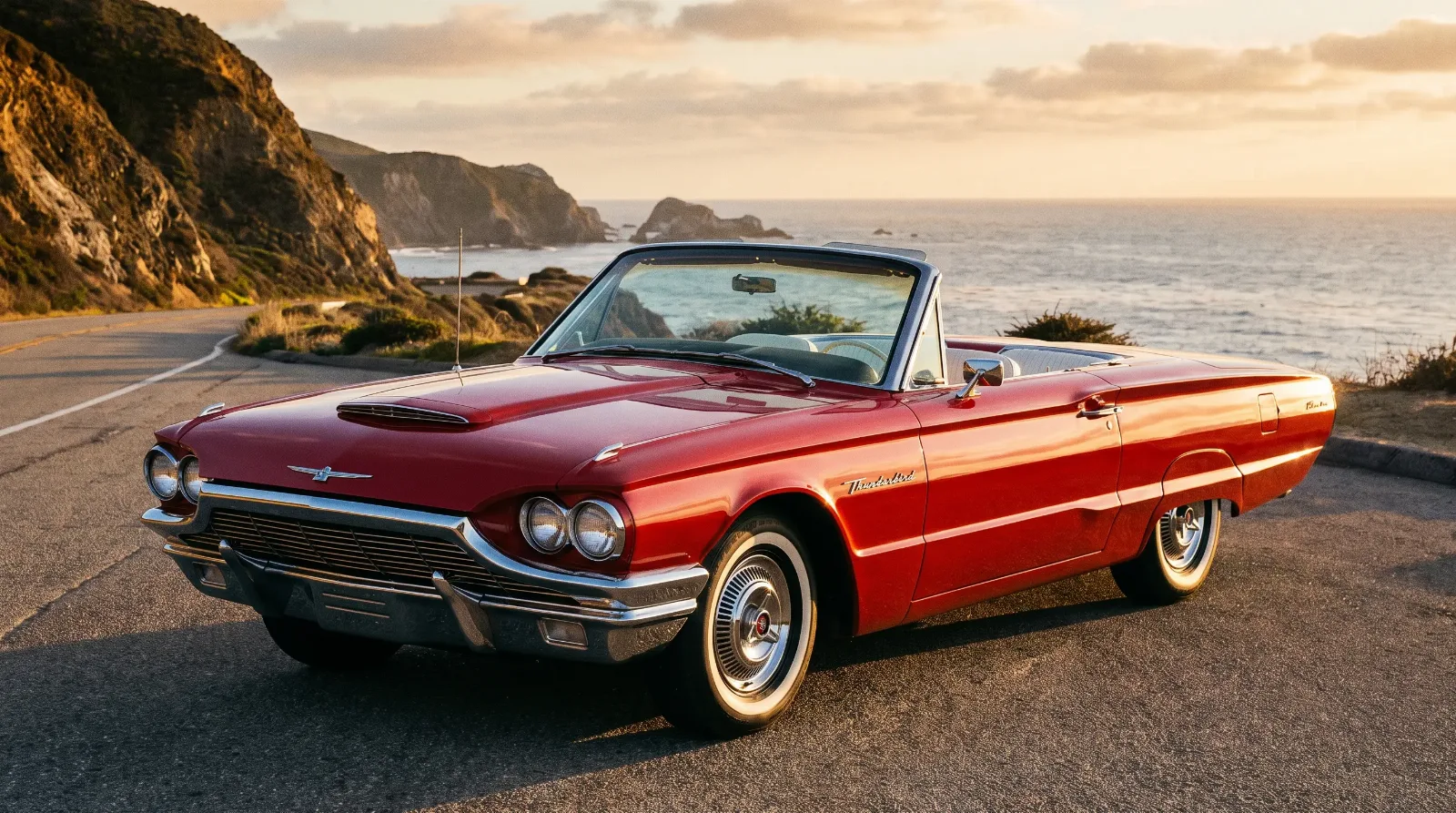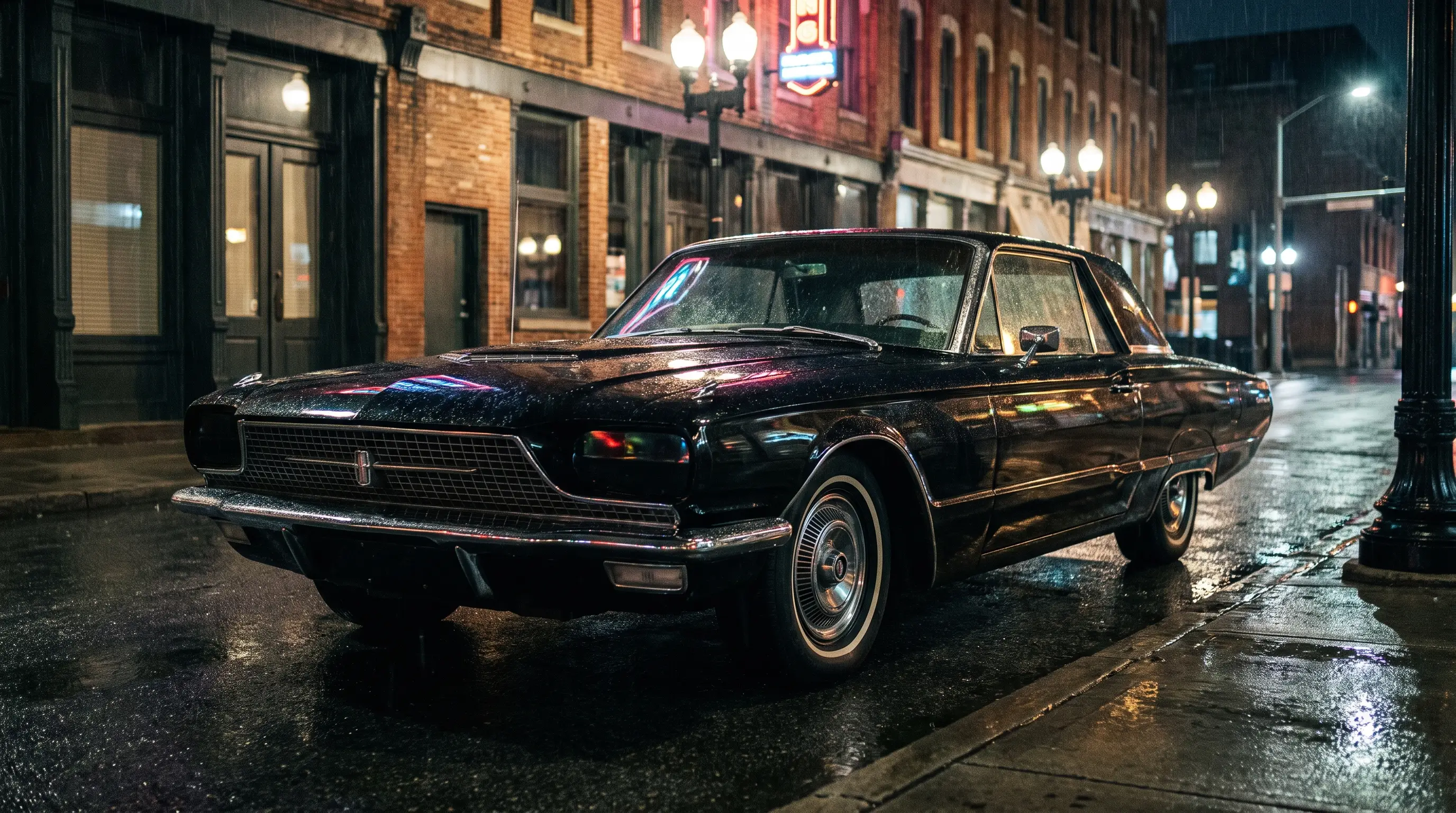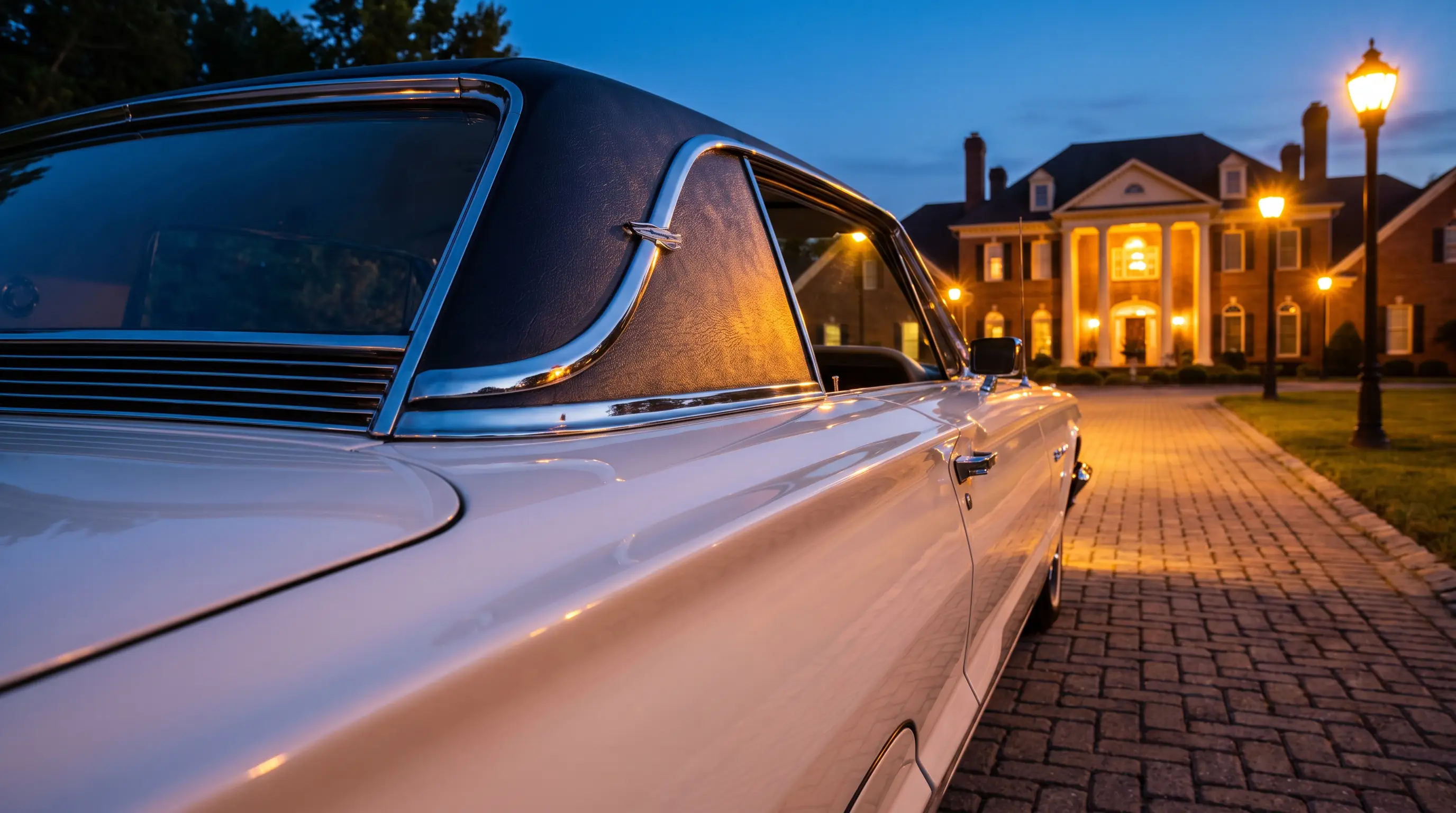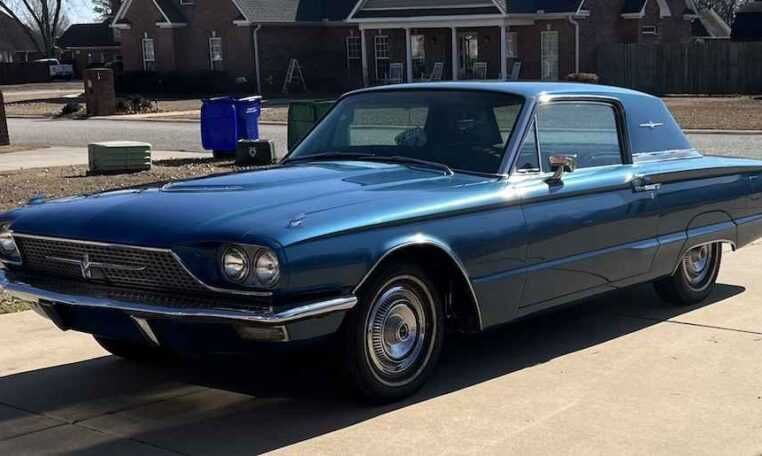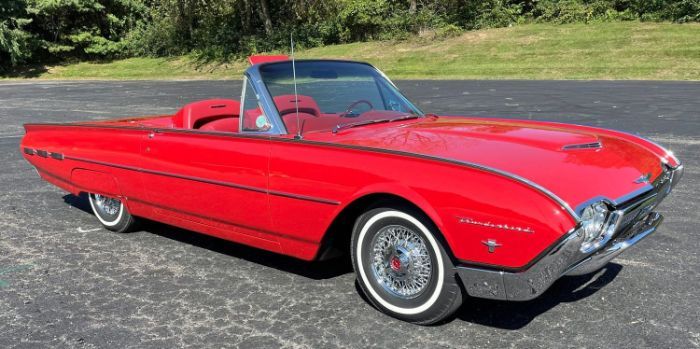
Formal is not a word most people reach for when describing an American car from the mid 1960s, an era better known for chrome, fins, and sheer visual noise. Yet 1964 Thunderbird styling deliberately pursued formality as its organizing principle, and understanding that choice explains almost every design decision Ford made on this generation, from the roofline down to the taillights.
A deliberate break from the previous generation
The Thunderbird that preceded the 1964 redesign carried a more rounded, bullet nosed profile with a low, sporty stance that traced back to the model's two seat origins. For 1964, Ford's stylists moved in a different direction entirely, squaring off the greenhouse, sharpening the beltline, and giving the car a longer, more upright presence that read as formal rather than sporting. This was not a subtle evolution. It was a clear statement that the Thunderbird was positioning itself as a personal luxury car first, a sporting coupe a distant second.
For the full context of that redesign and the model year it introduced, the 1964 Ford Thunderbird story covers the mechanical and market reasoning behind the change alongside the styling itself. The two are difficult to separate, since Ford's engineering and design teams were working from the same brief that year, a car that looked and felt more substantial than what came before it.
The details that carried the formal language
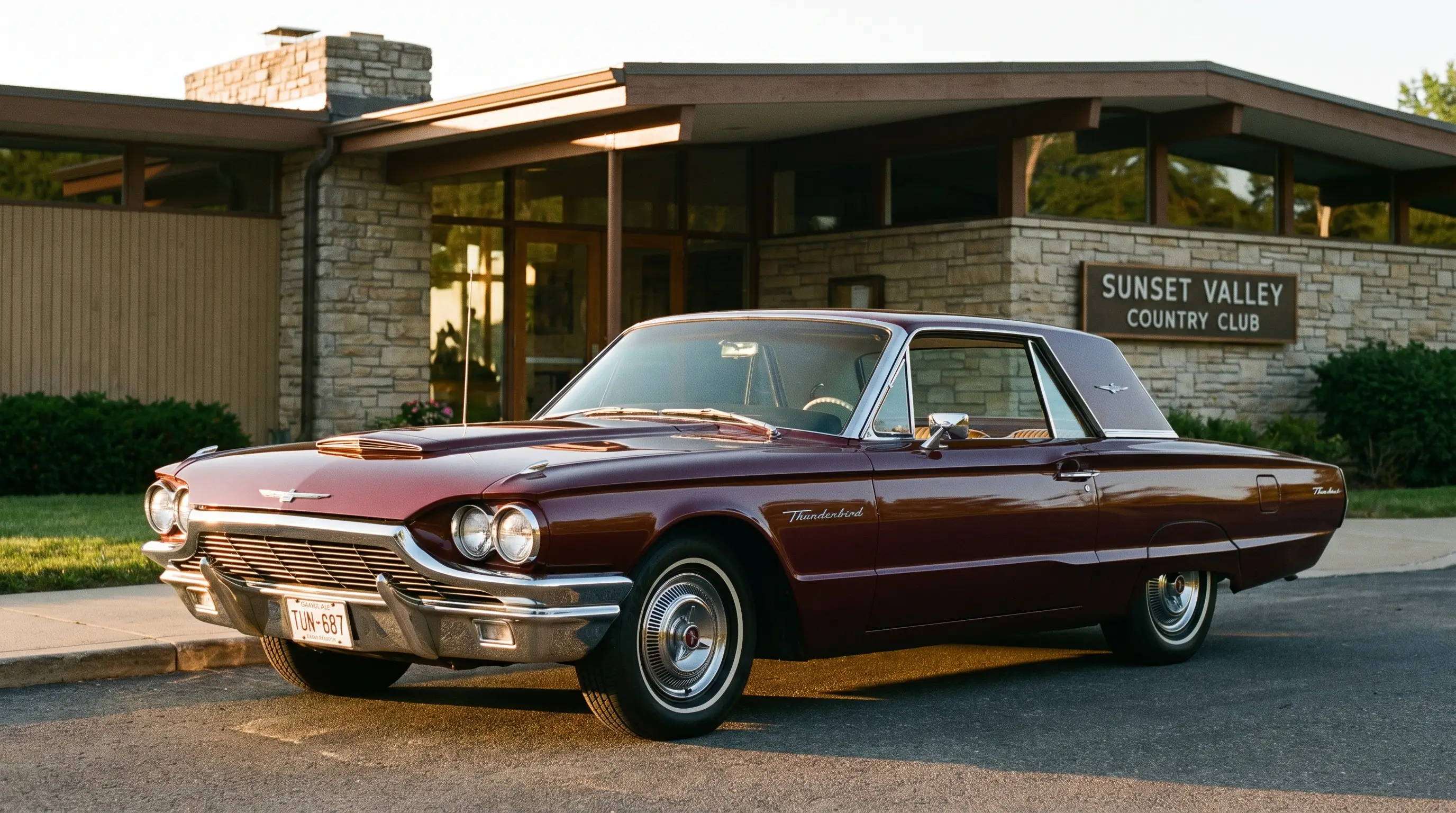
Several specific styling elements did the work of communicating that formality to a buyer walking around the car on a dealer lot. The roofline sat higher and more upright than the outgoing model's, with a distinct, almost architectural relationship between the greenhouse and the beltline below it. The rear of the car received particular attention, with a wide, flat deck and taillight treatment designed to look substantial from directly behind, the angle a Thunderbird buyer's neighbors would most often see it from in a driveway or at a stoplight.
Interior materials followed the same philosophy. Ford emphasized closer fitting panel gaps, richer trim materials, and a dashboard layout that leaned toward instrumentation presented with a sense of occasion rather than pure function. None of this was accidental. Every one of these choices reinforced the idea that a Thunderbird buyer was purchasing something closer to a small personal statement of arrival than a simple means of transportation.
| Styling element | 1964 direction |
|---|---|
| Roofline | Higher, more upright, formal profile |
| Rear treatment | Wide flat deck, prominent taillight presence |
| Overall stance | Longer, more substantial than prior generation |
| Interior emphasis | Richer materials, tighter fit and finish |
How this fit the broader Thunderbird story
The Thunderbird had already reinvented itself once before, moving from a two seat sports car in the 1950s to a four seat personal luxury car by the end of that decade. The 1964 redesign represented a second, quieter reinvention, refining that four seat formula into something more deliberately upscale rather than changing the basic formula again. The full story traces that entire arc from the original two seat car through this formal era, and it puts the 1964 design language in context as one chapter within a much longer pattern of the nameplate adapting to what buyers wanted from it decade to decade.
What makes the 1964 approach notable within that longer history is how confidently it committed to formality as a concept rather than hedging between sporty and upscale the way some competitors did during the same period. Ford's stylists were not trying to be everything to everyone with this car. They picked a lane and pursued it thoroughly, from the roofline to the door handles.
"Documenting a design language like this means looking past the obvious chrome and asking what problem the designers were actually trying to solve. In 1964, the problem was making a Thunderbird feel like an occasion, and every line on that car answers to that brief."
- Sarah Whitfield
What to look for on a surviving example
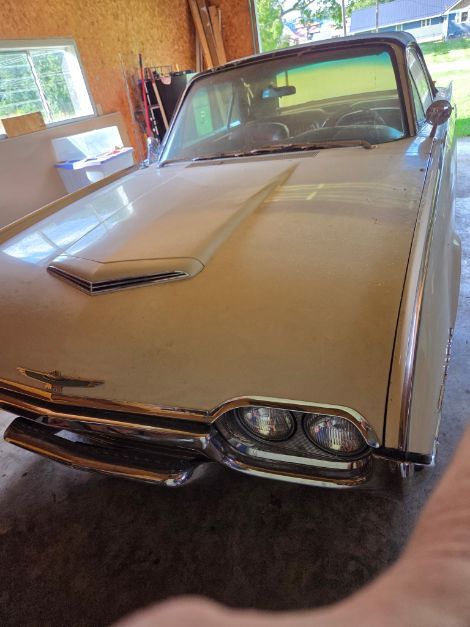
For anyone examining an original 1964 Thunderbird today, the styling details worth verifying against period photographs include the specific roofline profile, trim spec on the rear deck, and interior material choices, since all three were used consistently across the model year and deviations often indicate later modification rather than factory originality. A car that has had its formal roofline altered, or interior materials swapped for something outside the period correct range, has moved away from the specific design statement Ford was making that year, whatever its mechanical condition might be.
If you want to see how well this design language survives on cars available today, you can browse classic Thunderbirds on the market and compare surviving examples against the styling details described here, keeping in mind that the formal language introduced in 1964 carried through largely intact to the end of this body generation in 1966.
How competitors responded
Ford's decision to commit fully to formal styling in 1964 did not go unnoticed by rival manufacturers, and the personal luxury segment grew more crowded through the back half of the decade as other automakers introduced their own interpretations of the same basic idea, a close coupled, richly trimmed coupe positioned above an ordinary family car in both price and presentation. What set the 1964 Thunderbird apart within that growing field was the consistency of its execution. Every surface of the car reinforced the same formal vocabulary, rather than mixing sporting cues with luxury details the way some competing designs did during the same period.
That consistency is part of why this specific model year continues to draw serious attention from people who study automotive design history rather than only casual collectors. A design brief followed through completely, without compromise in one area undermining the intent established in another, is comparatively rare, and it is the kind of detail that period design references and archived Ford internal documents tend to confirm when researchers go looking for the reasoning behind specific choices.
Researching a car this old properly means treating the styling itself as a primary source, not just a backdrop to the mechanical specifications. The 1964 Thunderbird rewards that approach because so much of what made it significant lived in the design decisions themselves rather than in any single engineering breakthrough. Read carefully, the sheet metal tells its own version of the story just as clearly as any dealer brochure from the period.
That is ultimately why 1964 Thunderbird styling still holds up as a reference point for collectors and design historians alike. It was not chasing a passing trend, and it did not need decades of hindsight to be understood correctly. Ford's designers stated their intention plainly through the shape of the car itself, and a well preserved original from that model year continues to make the same argument today that it made on a showroom floor sixty years ago.
Sources and notes
- Hagerty: The 1964-66 Thunderbird is the ugly duckling of the family
- Ate Up With Motor: Gaudy but Glamorous - 1958-1966 Ford Thunderbird
- Wikipedia: Ford Thunderbird (fourth generation)
- MotorCities: Ford Thunderbird Models Offered Sculptured Style, 1964 and 1965
- HowStuffWorks: 1964, 1965, 1966 Ford Thunderbird