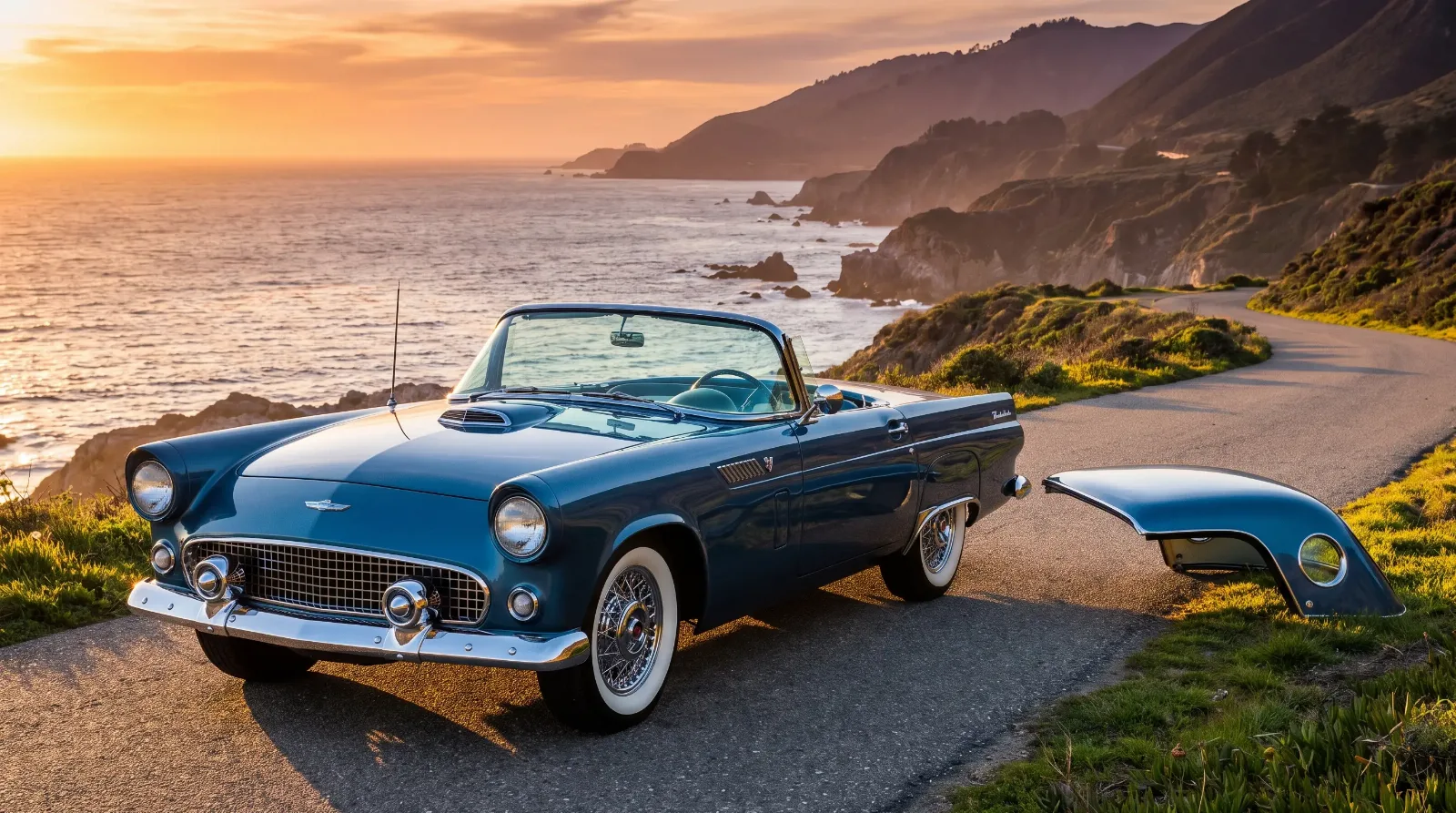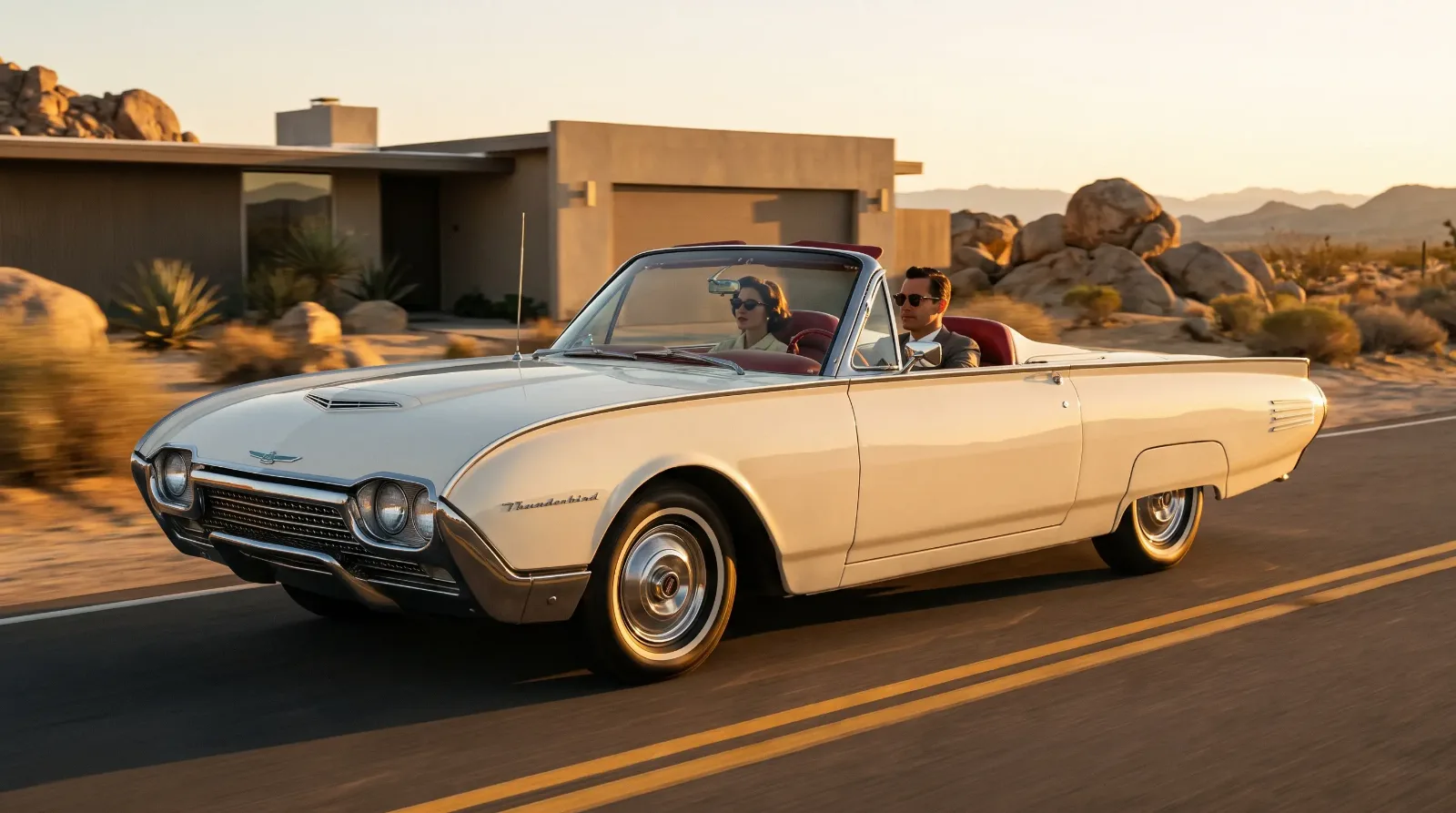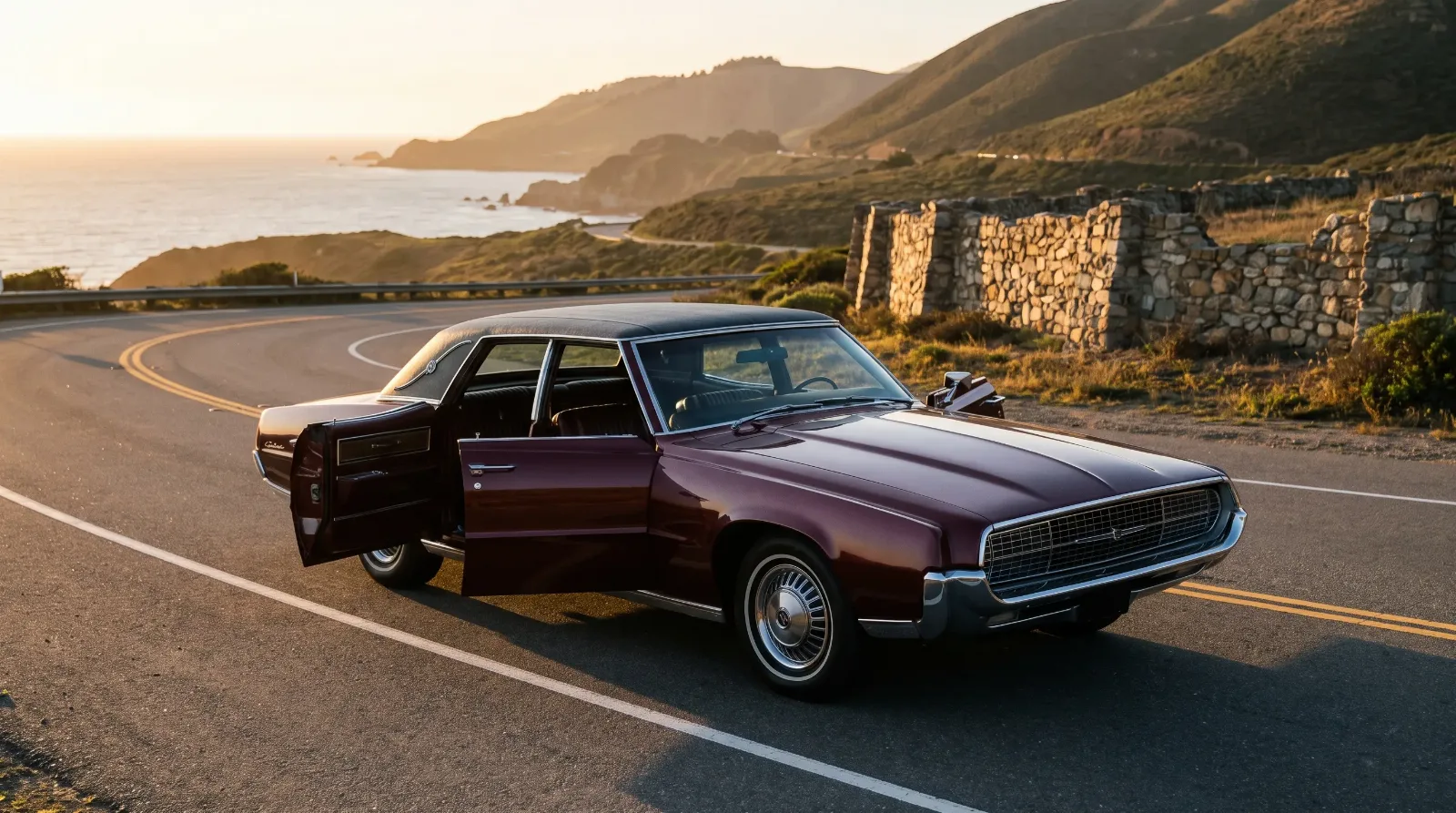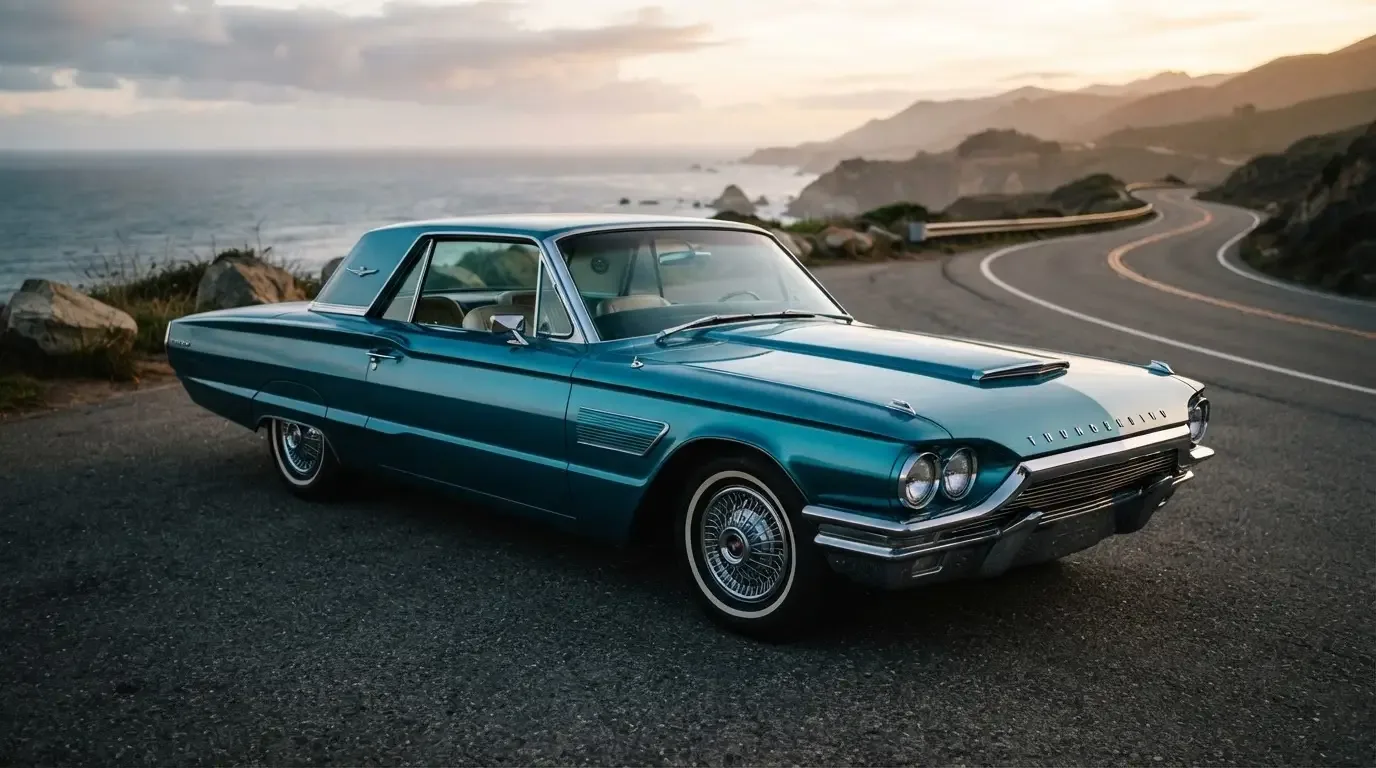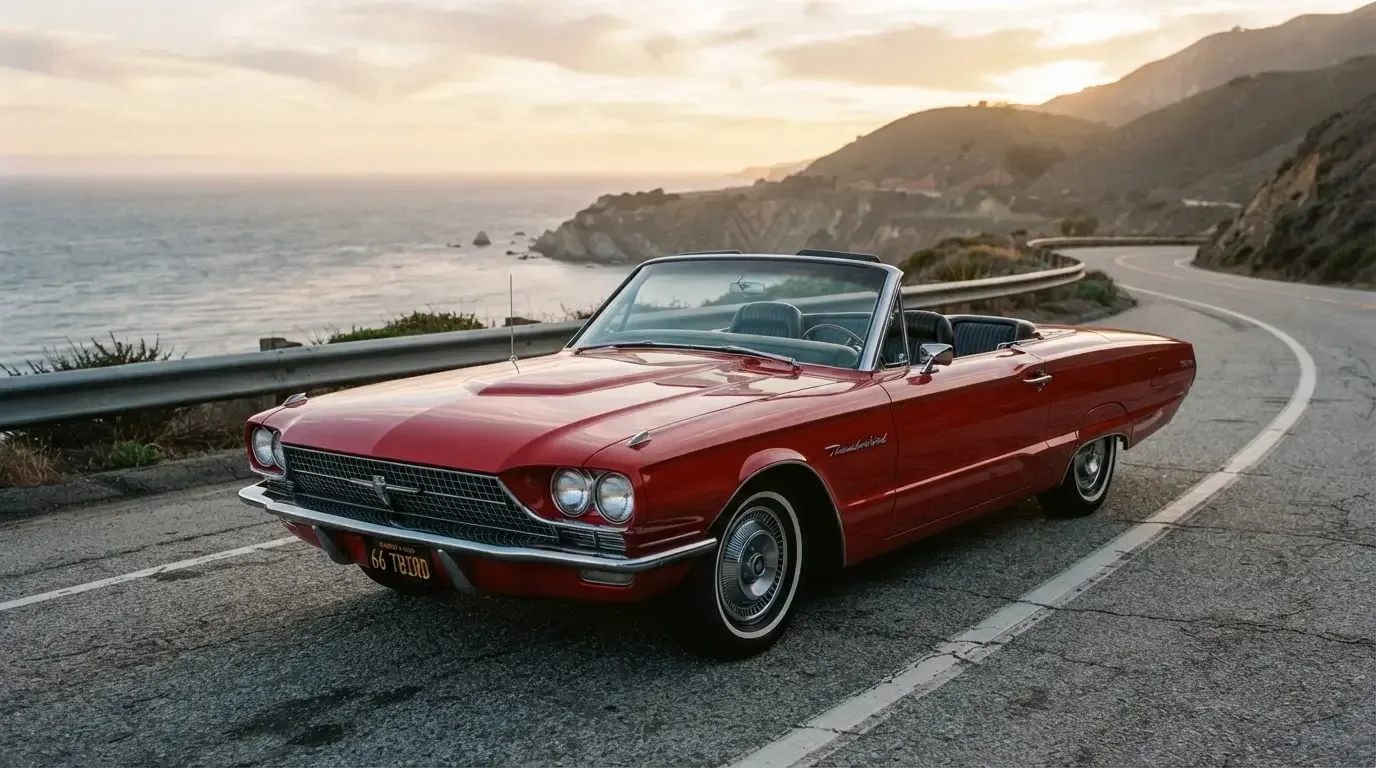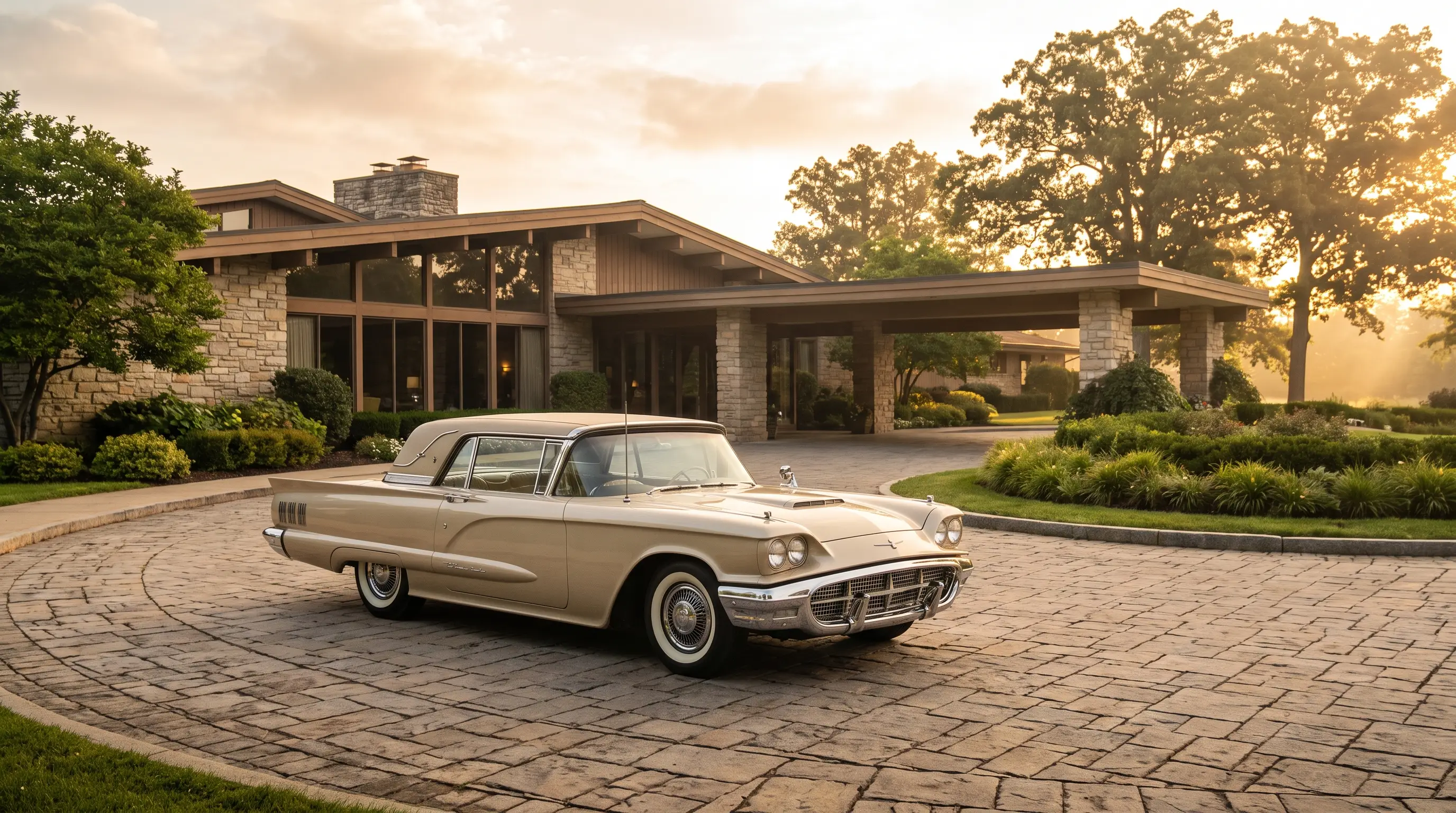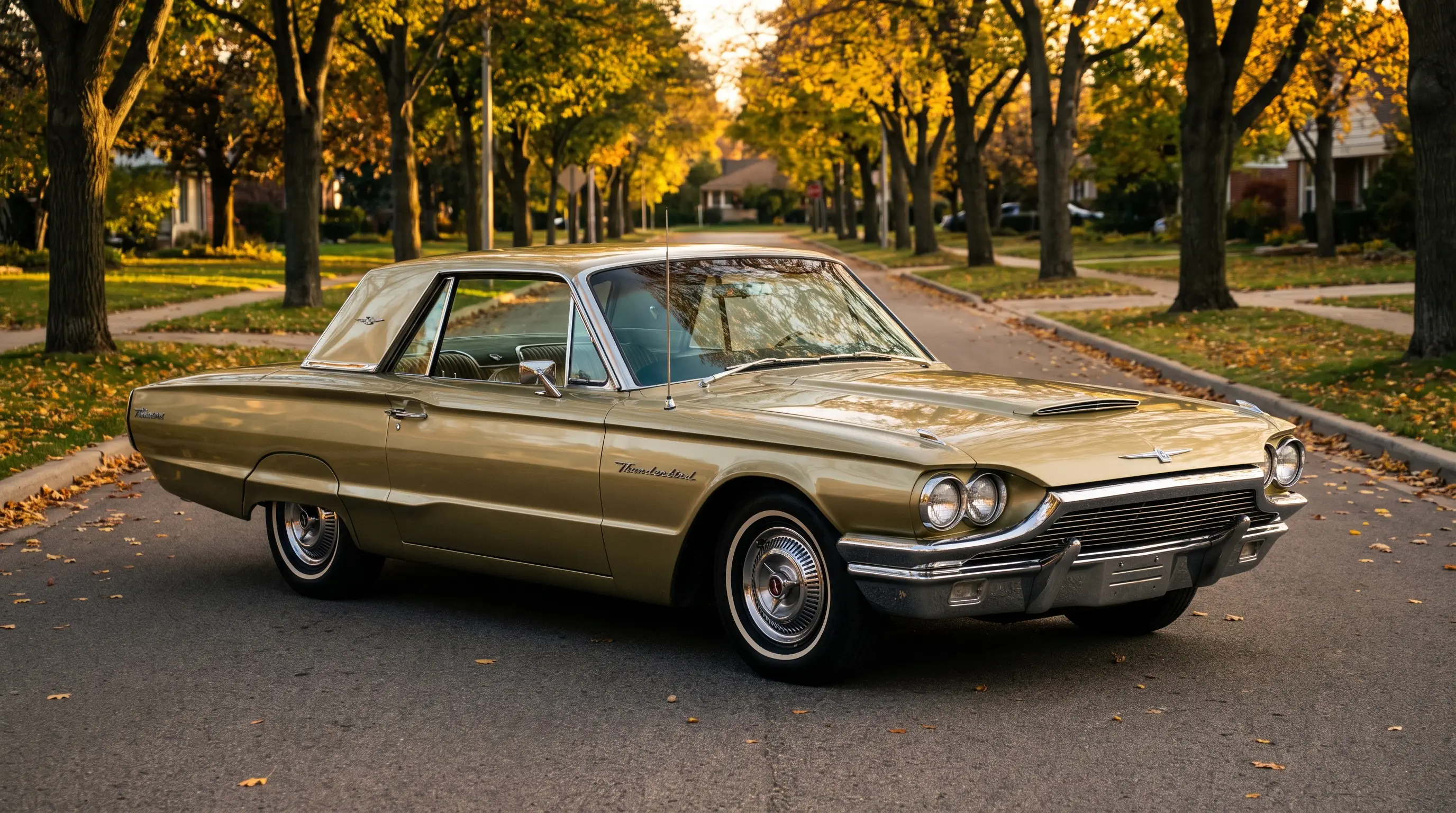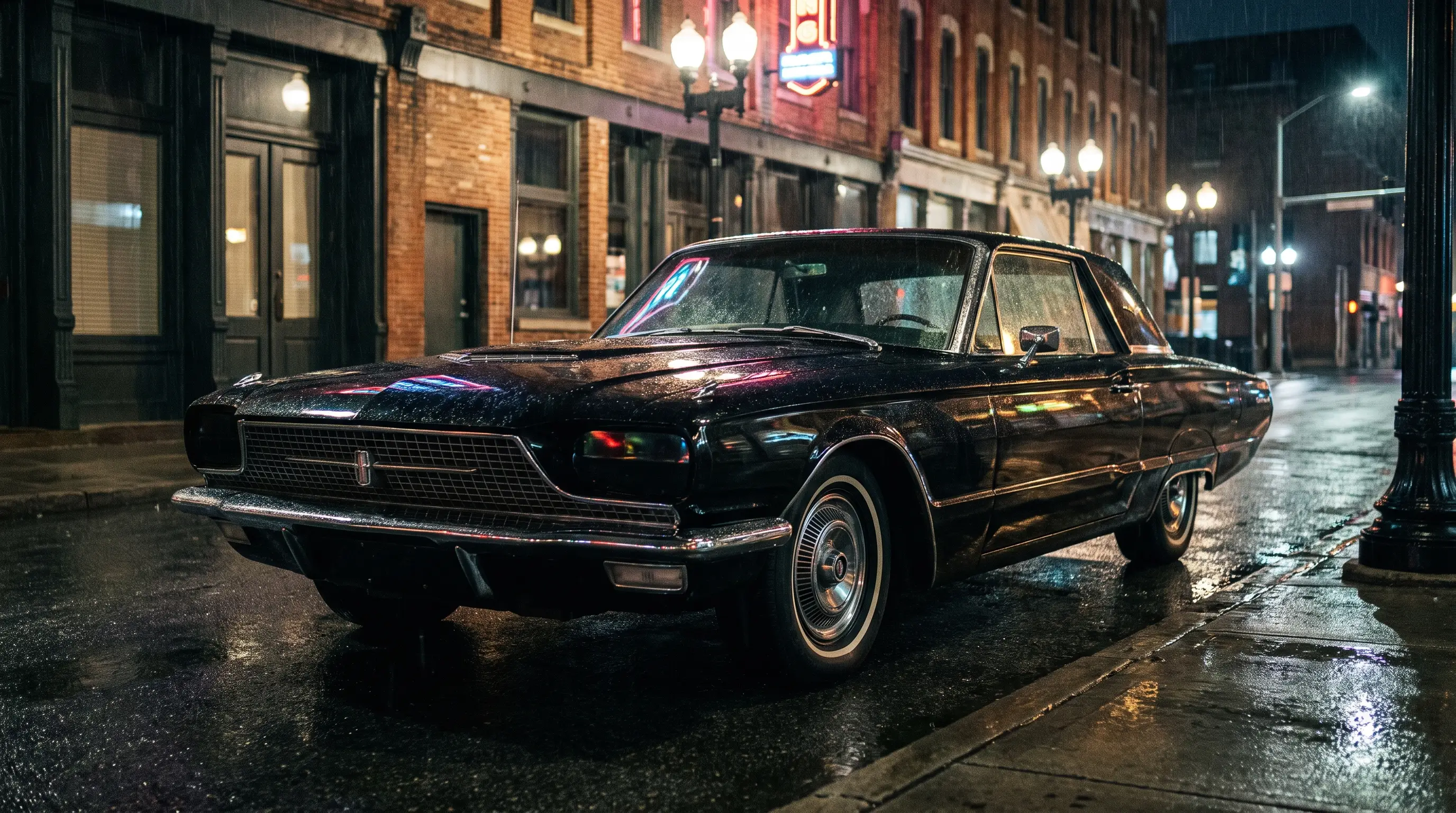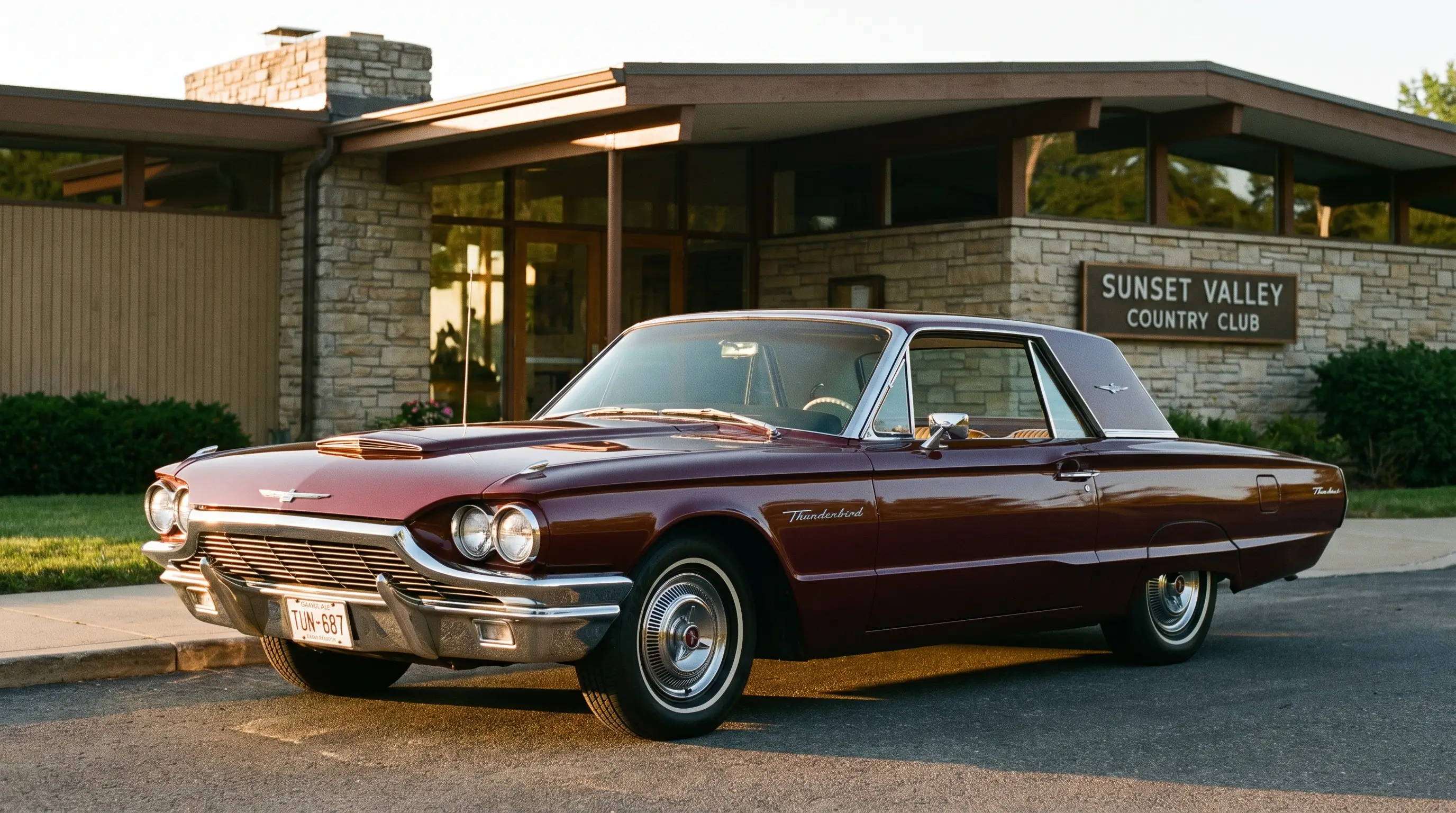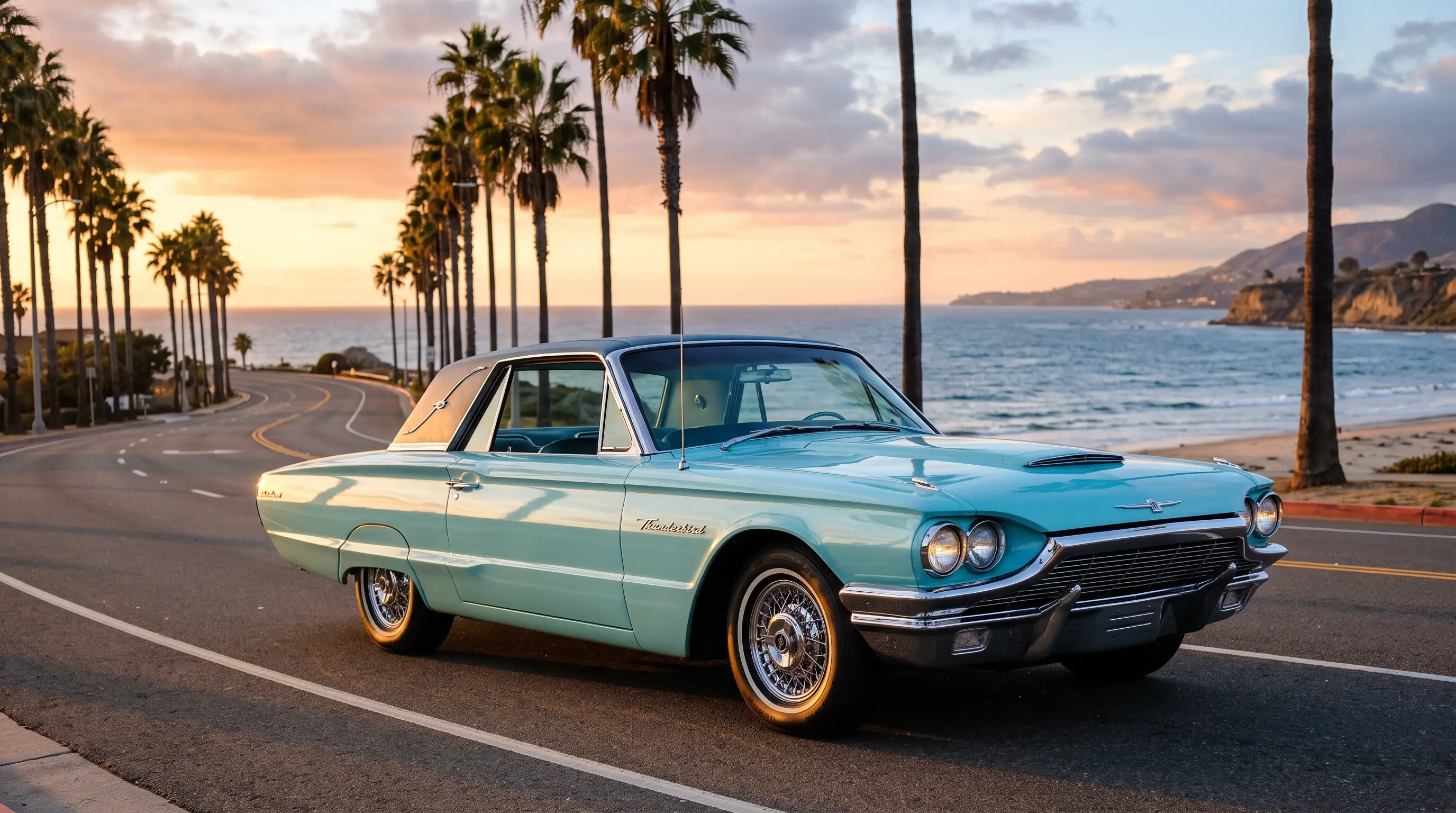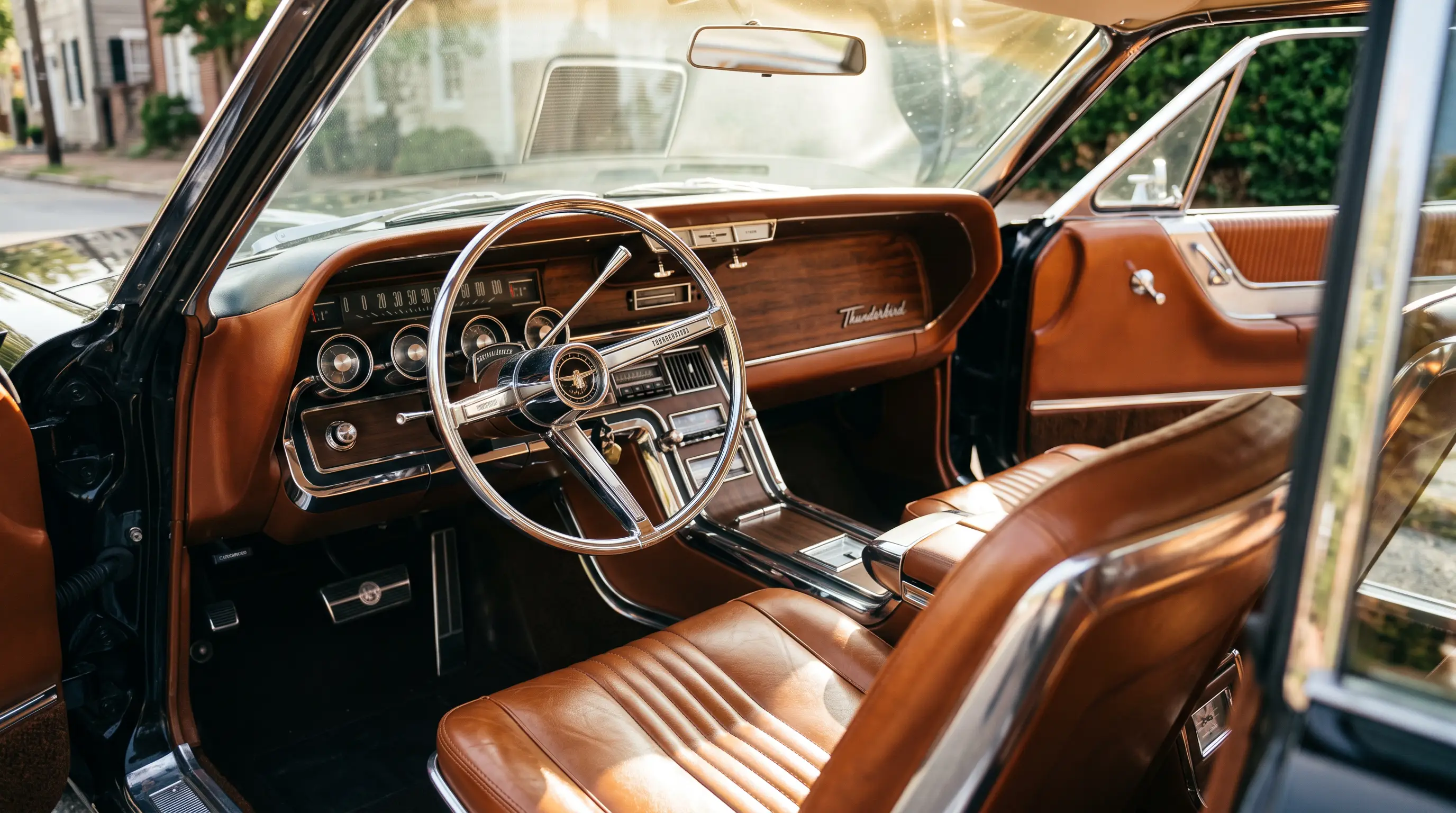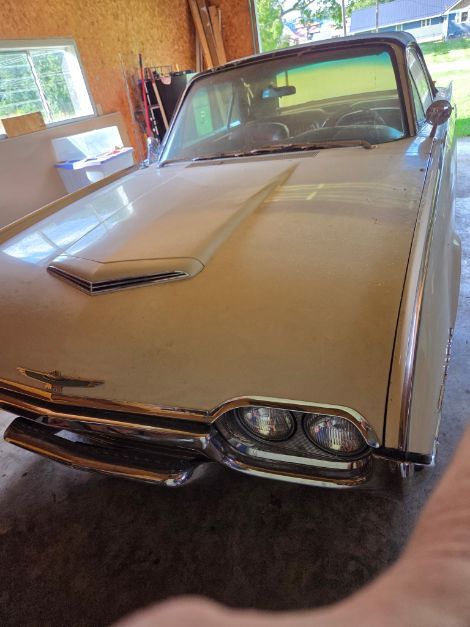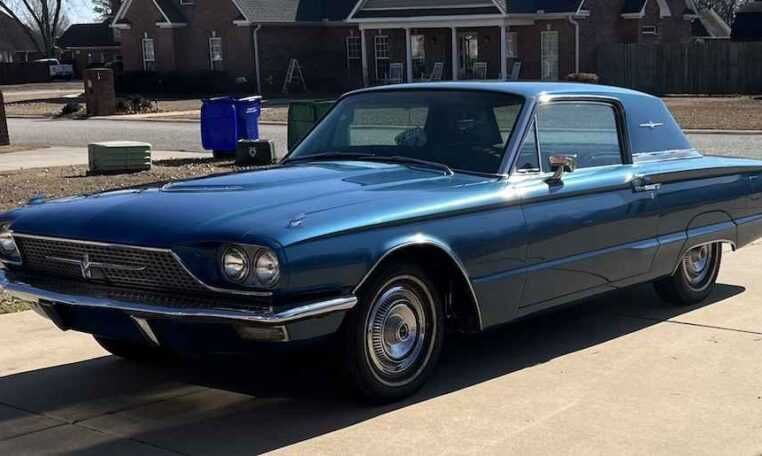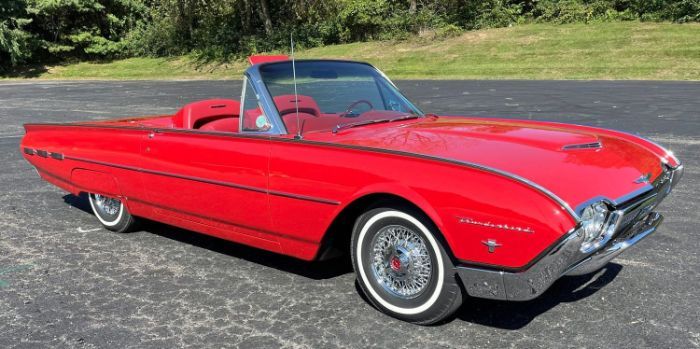
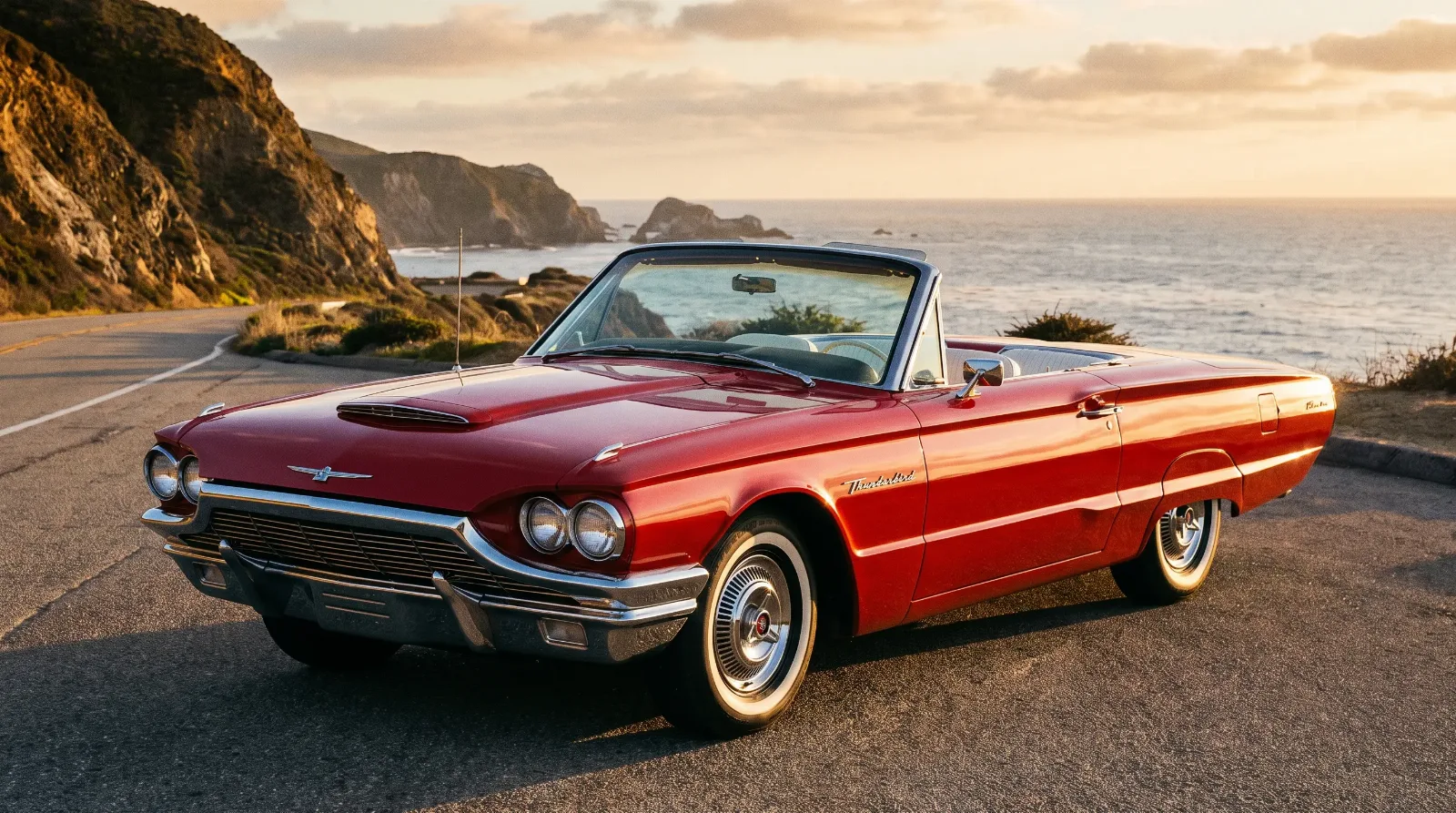
The 1964 ford thunderbird is often described in club literature and auction catalogs as the start of the fourth generation, and that is correct as far as it goes. What the shorthand misses is that this generation, known as the Flair Bird and built from 1964 through 1966, marked the end of something the model would never offer again. The 1966 Thunderbird was the last convertible the nameplate produced until a brief and unrelated revival decades later. For a car that had begun life in 1955 as an open two-seater, the quiet retirement of the folding top in 1966 closes a specific and important chapter. The production records make the shift plain, and it is worth setting them out carefully.
Let me correct a common misconception before going further. Enthusiasts sometimes treat the Flair Bird as a mild update of the Bullet Bird that preceded it. The sheet metal was entirely new, and the design intent had shifted from jet-age drama toward crisp, formal elegance.
A new body and a new posture
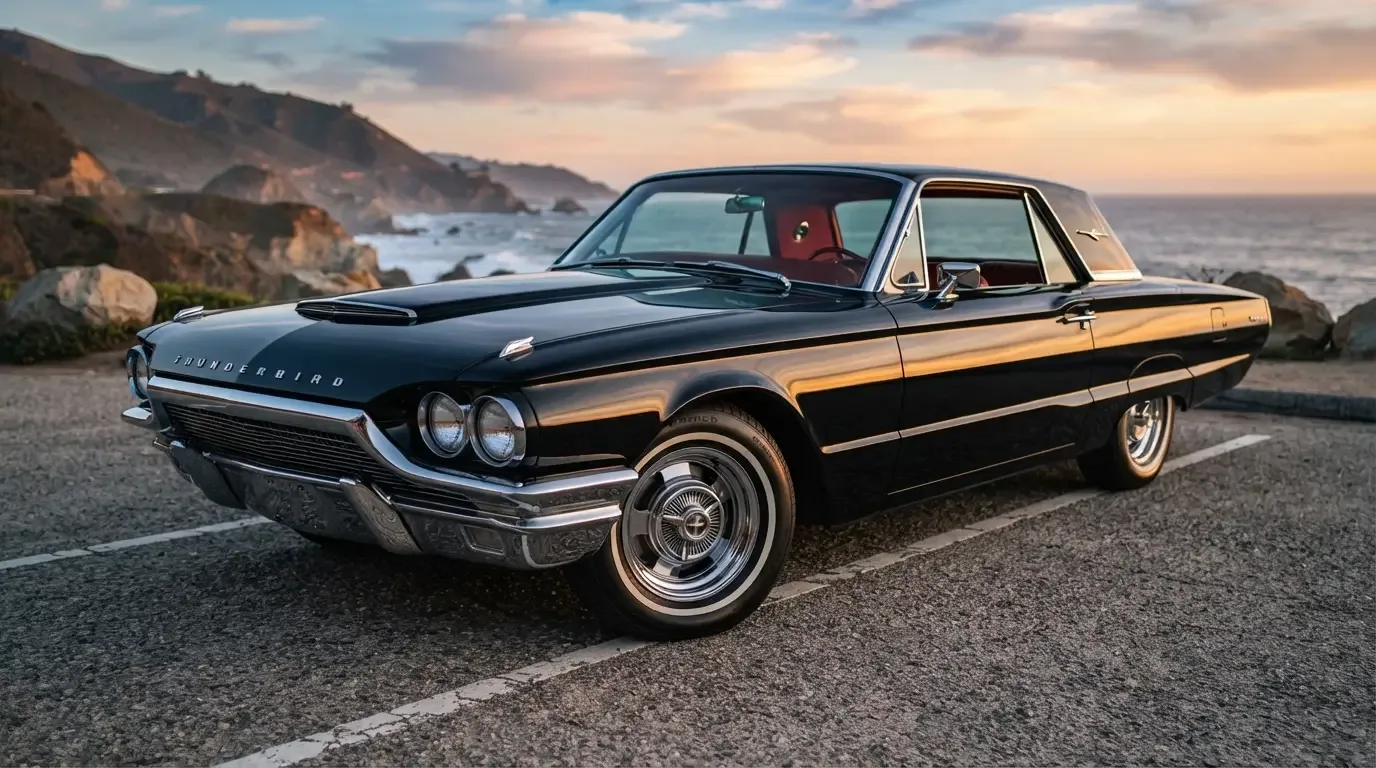
The Flair Bird abandoned the pointed, projectile theme of the 1961 to 1963 cars in favor of sharper, more chiseled lines. The sides gained sculpted panels, the roofline grew more formal, and the overall impression was of a car that had traded its rocket fantasies for something closer to tailored restraint. Ford's stylists gave it a more upright and dignified stance, and the change reflected where the personal luxury market was heading as the 1960s matured.
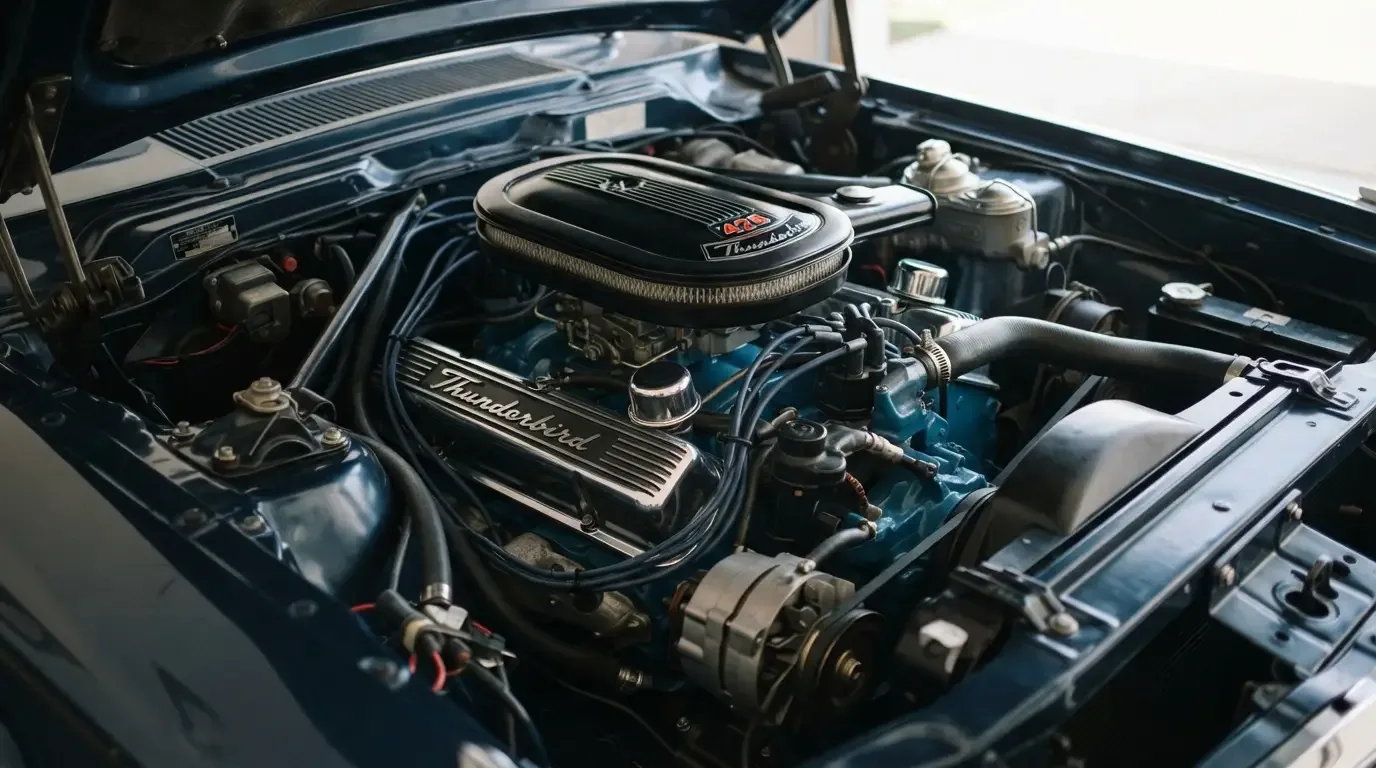
Underneath, the car continued with unibody construction and the 390 cubic inch FE-series V8 as standard equipment. The mechanical continuity is real, and it is one reason the generation is sometimes underrated. But to focus only on the shared driveline is to miss how thoroughly the character of the car changed. The Flair Bird looked and felt like a more serious, more grown-up machine than the flamboyant Bullet Bird, and buyers responded to it. Anyone tracing the full evolution of the line will find more on the ford thunderbird in our wider coverage of the marque.
The sequential taillights nobody expected on a Ford
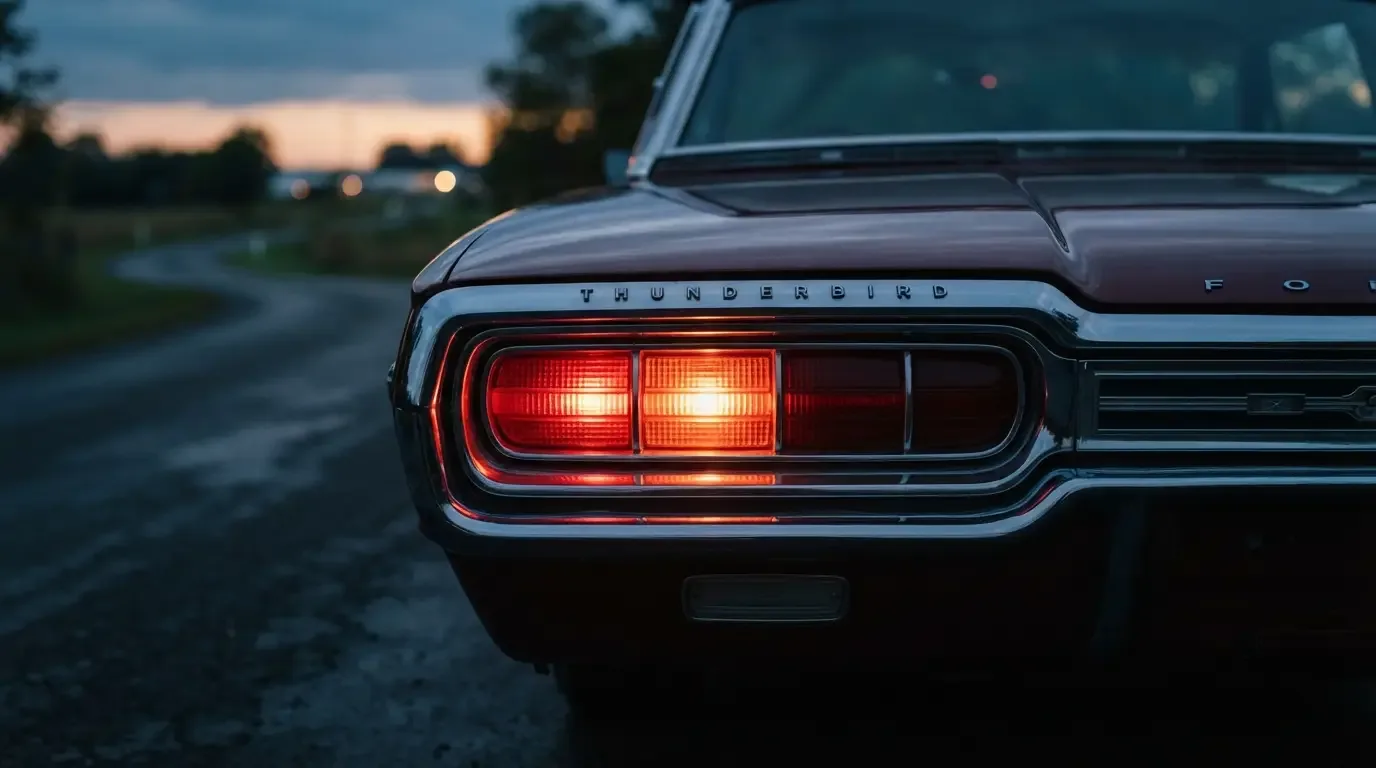
The single detail most people remember from this generation appeared in 1965 and 1966. Ford fitted the Flair Bird with sequential turn signals, taillights that illuminated in a sweeping sequence from inside to outside to indicate a turn. It was a genuinely novel feature on an American production car of the period, and it gave the rear of the Thunderbird a distinctive signature after dark.
The mechanism was clever for its day, using a motorized sequencer to fire the three lamp segments in order. The feature would migrate to the Mercury Cougar later in the decade, but the Thunderbird had it first among Ford Motor Company products, and it remains one of the most cited details when collectors describe why they were drawn to a 1965 or 1966 car. It was the kind of theatrical touch that fit the personal luxury brief, and it is period-correct only on those two model years, a fact that matters when judging originality.
| Detail | Flair Bird (1964-1966) |
|---|---|
| Production years | 1964, 1965, 1966 |
| Body styles | Hardtop, Landau, and convertible |
| Standard engine | 390 cubic inch FE-series V8 |
| Top engine (1966) | Optional 428 cubic inch V8, rated at 345 hp |
| Signature feature | Sequential turn signals (1965-1966) |
| Historical note | 1966 was the final convertible Thunderbird of the classic era |
The end of the convertible, in the numbers
The retirement of the open Thunderbird was not a sudden decision so much as a response to a clear trend in the sales ledgers. Convertible demand had been declining across the industry through the mid-1960s, pressured by the growing popularity of air conditioning and the rising appeal of the fixed-roof hardtop and the vinyl-topped Landau. The Thunderbird convertible had always been the lower-volume body style, and by 1966 the figures no longer justified the tooling and complexity.
Ford built a modest number of convertibles in that final 1966 year, and they are consequently among the more sought-after cars of the generation for collectors who value the last-of-its-kind distinction. When the fifth-generation Thunderbird arrived for 1967, it came only as a hardtop and a four-door, with no open version at all. The folding top that had defined the earliest Thunderbirds was gone from the range. Readers interested in how the model changed again after this point will find more from this era in our coverage of the generation that followed.
Special editions and the Landau
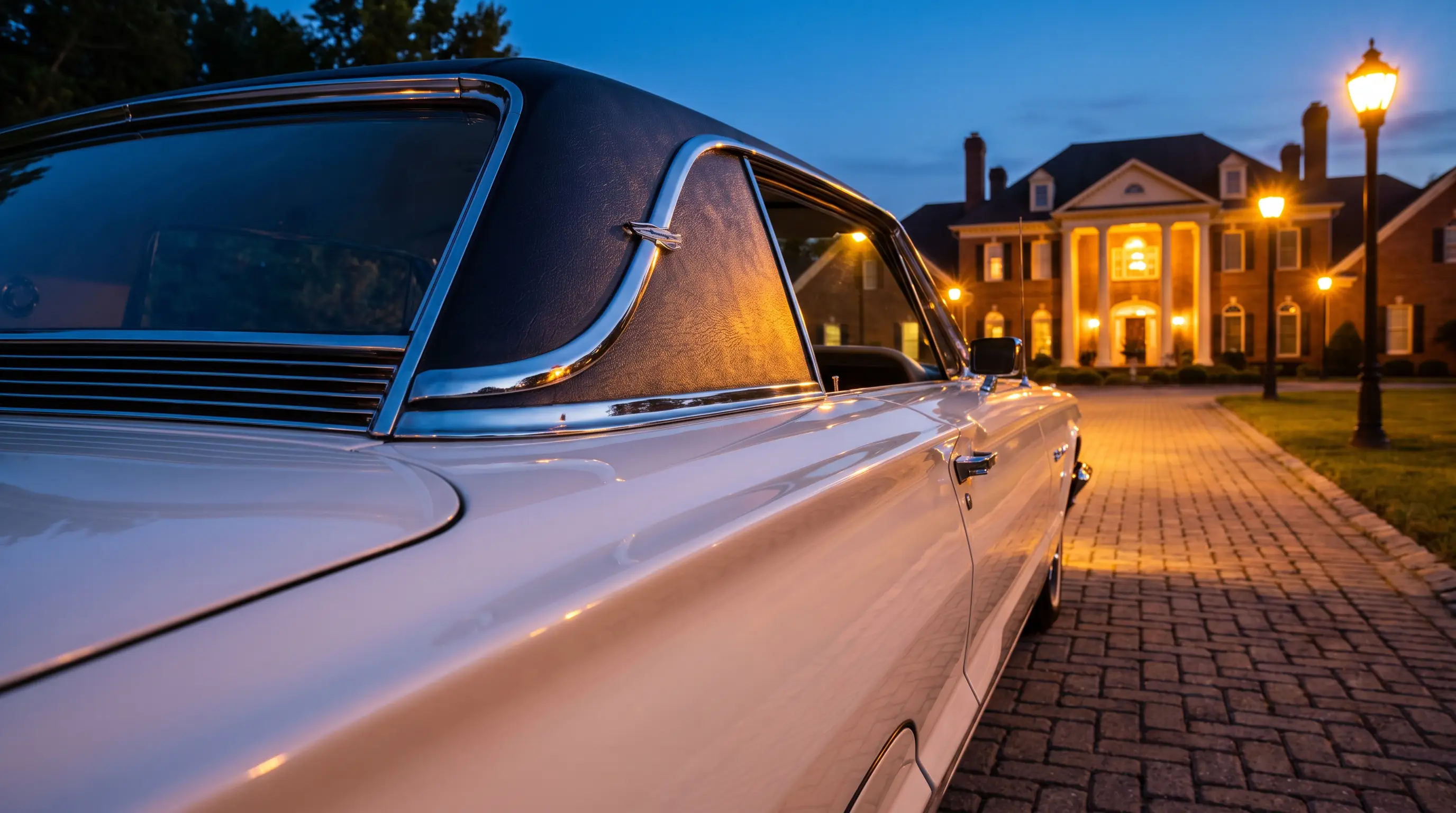
The Flair Bird generation carried forward the Landau trim, a hardtop dressed with a vinyl roof covering and small S-bar ornaments on the rear pillars. The Landau leaned into the formal, luxurious character of the new body and sold well, reflecting buyer preference for the enclosed, upscale look over the open convertible.
Ford also produced limited special editions during these years, including cars trimmed and colored to commemorate specific occasions and dealer promotions. These were produced in small numbers and are documented in the factory records, and they attract collectors who value the traceable, limited-run examples. For the factory historian, these special editions are useful precisely because they leave a clear paper trail, allowing a car's authenticity to be checked against production documentation rather than taken on faith.
"The Flair Bird gets treated as a footnote between the flashy Bullet Bird and the four-door cars that came after, and the production records show that is unfair. This is the generation that closed out the convertible Thunderbird and introduced features that the rest of the industry would copy. When you read the build sheets, the 1966 convertible reads as the deliberate end of a line, not an afterthought."
- Tom Ramirez
The 1966 facelift and how to read the year
Enthusiasts frequently misdate these cars, and the factory documentation is the cure. The 1964 and 1965 Flair Birds share a front-end treatment, while the 1966 car received a revised grille and a reworked front that carried a single large opening rather than the earlier arrangement. The 1966 also introduced the option of the larger 428 cubic inch V8 at the top of the range, a genuinely torquey engine that suited the car's grand-touring character better than its outright performance ambitions. When a seller lists a Flair Bird by year, these front-end and engine details are the primary evidence, and they should be checked against the car's data plate rather than accepted on the strength of the paint alone.
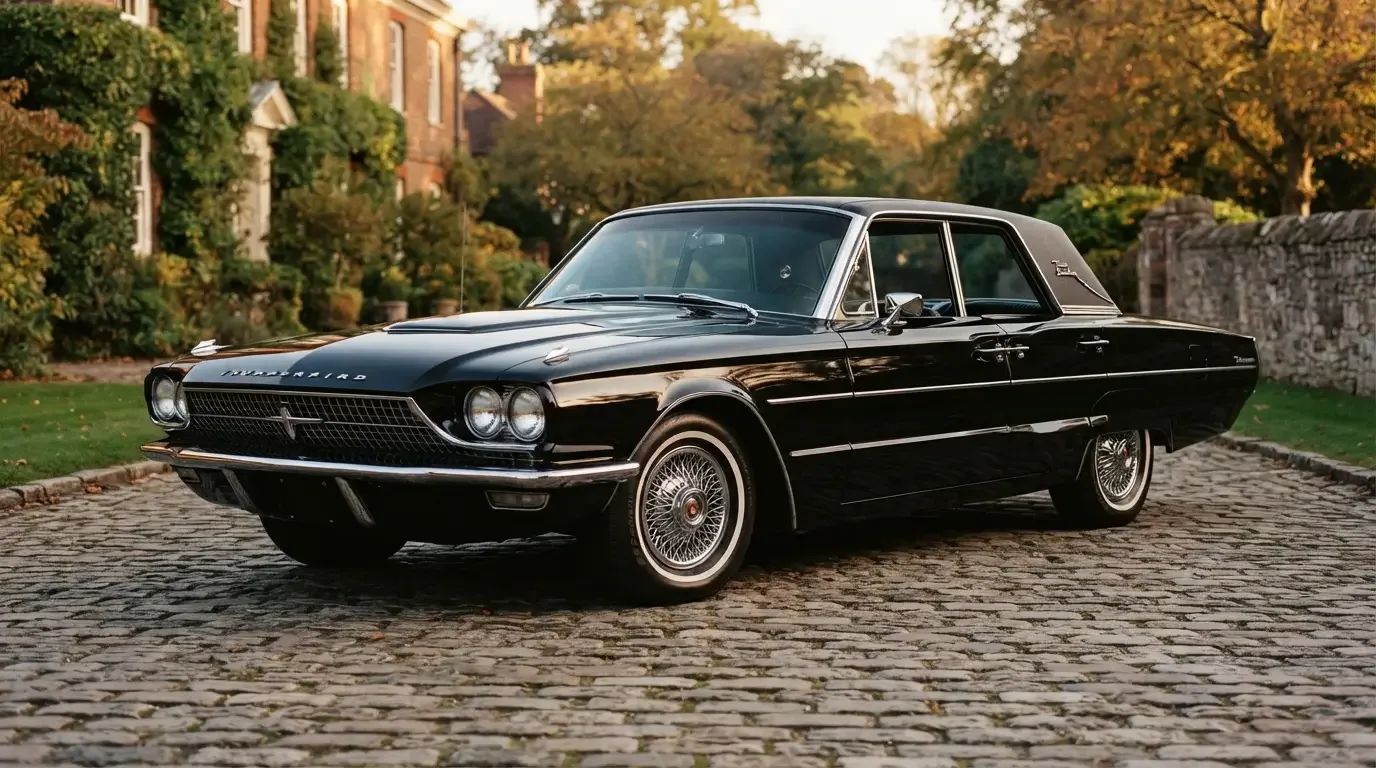
A related correction concerns the Town and Country roof options. The Flair Bird was offered with distinct roof configurations across its run, including the standard hardtop, the vinyl-covered Landau, and the more formal fixed-roof treatments that leaned into the enclosed luxury look. These are not interchangeable trims casually swapped between cars, and each leaves its own signature in the factory records. A car represented as a particular configuration should carry the correct pillar treatment, roof covering, and ornamentation, and the build documentation is the arbiter when the physical evidence is ambiguous.
The reason this precision matters is not pedantry. It is that value and authenticity in the collector market rest on exactly these distinctions, and a buyer who cannot read the year and configuration correctly is a buyer who can be misled. The Flair Bird is a well-documented car by the standards of its era, and that documentation is the collector's protection. Learning to read it is the single most useful skill a prospective owner of one of these cars can develop.
Where the Flair Bird sat in the market of its day
It helps to place the car against its 1964 competition to understand what Ford was doing. By the mid-1960s the personal luxury field that the Square Bird had opened was filling with rivals, and the Thunderbird could no longer rely on being the only serious entry in its class. Buick, Oldsmobile, and others were pushing upscale coupes, and the Thunderbird had to justify its premium price with a combination of style, features, and brand cachet rather than novelty alone. The Flair Bird's more formal design and its emphasis on gadgetry, from the sequential taillights to the range of power conveniences, were Ford's answer to that intensifying competition.
The strategy largely worked. The Flair Bird sold in healthy numbers across its three years and kept the Thunderbird firmly in the premium personal car conversation. The shift in emphasis, away from the sporting pretensions of the earliest cars and toward comfort, presence, and quiet prestige, reflected an accurate reading of where the money was. Buyers in this segment increasingly wanted to be seen arriving rather than to carve up a back road, and Ford built the car those buyers wanted.
For the historian, this is the interesting tension in the Flair Bird's identity. It carried a name that had been born on an open two-seat sports car in 1955, and by 1966 it was retiring the convertible entirely in favor of formal, enclosed luxury. The generation therefore sits at the exact point where the Thunderbird finished becoming one thing and stopped being another. Reading that transition in the production records, model year by model year, is to watch a nameplate complete a transformation that had been underway since Robert McNamara first added a rear seat.
Collecting the Flair Bird with the records in hand
For the collector, the fourth-generation cars offer a combination of accessibility and genuine historical interest. Hardtops and Landaus remain reasonably priced and represent solid value in the classic Thunderbird field. The convertibles, and especially the final 1966 examples, carry a premium that reflects both their lower production and their status as the last open Thunderbirds of the era.
Because these were unibody cars, structural corrosion is the primary concern, as it is across the personal luxury Thunderbirds. The sequential turn signal system on 1965 and 1966 cars uses period electrical components that can require attention, and correctness of that system is worth verifying on cars sold as original. As always with these generations, documentation is the collector's best friend, and cars that come with build records and a traceable history occupy a clearly higher tier.
Where the Flair Bird stands
The fourth-generation Thunderbird deserves better than its reputation as a transitional car. It introduced a more formal design language that suited the maturing personal luxury market, it debuted a feature the wider industry would adopt, and it brought the convertible Thunderbird to a close after eleven continuous years of open cars. The production records tell that story clearly, and they reward the collector who takes the time to read them.
For anyone drawn to a car that sits at a genuine hinge point in the model's history, the Flair Bird is an intelligent choice, well documented and still reasonably valued. The cars turn up regularly enough that a patient buyer can find a good one, and those looking to find a classic Thunderbird from this hinge-point generation have a real chance of landing an example whose paperwork matches its promise.
Sources and notes
- Ford Thunderbird - Wikipedia
- 1966 Ford Thunderbird Hardtop 428 V-8 specs - Automobile Catalog
- 1966 Ford Thunderbird Q-Code Roadster - The Last Detail
- Curbside Classic: 1961 Ford Thunderbird - Curbside Classic
- Thunderbird Identification 1958-1968 - Vintage Thunderbird Club
- Data Plate Decoder - Classic Thunderbird Club International