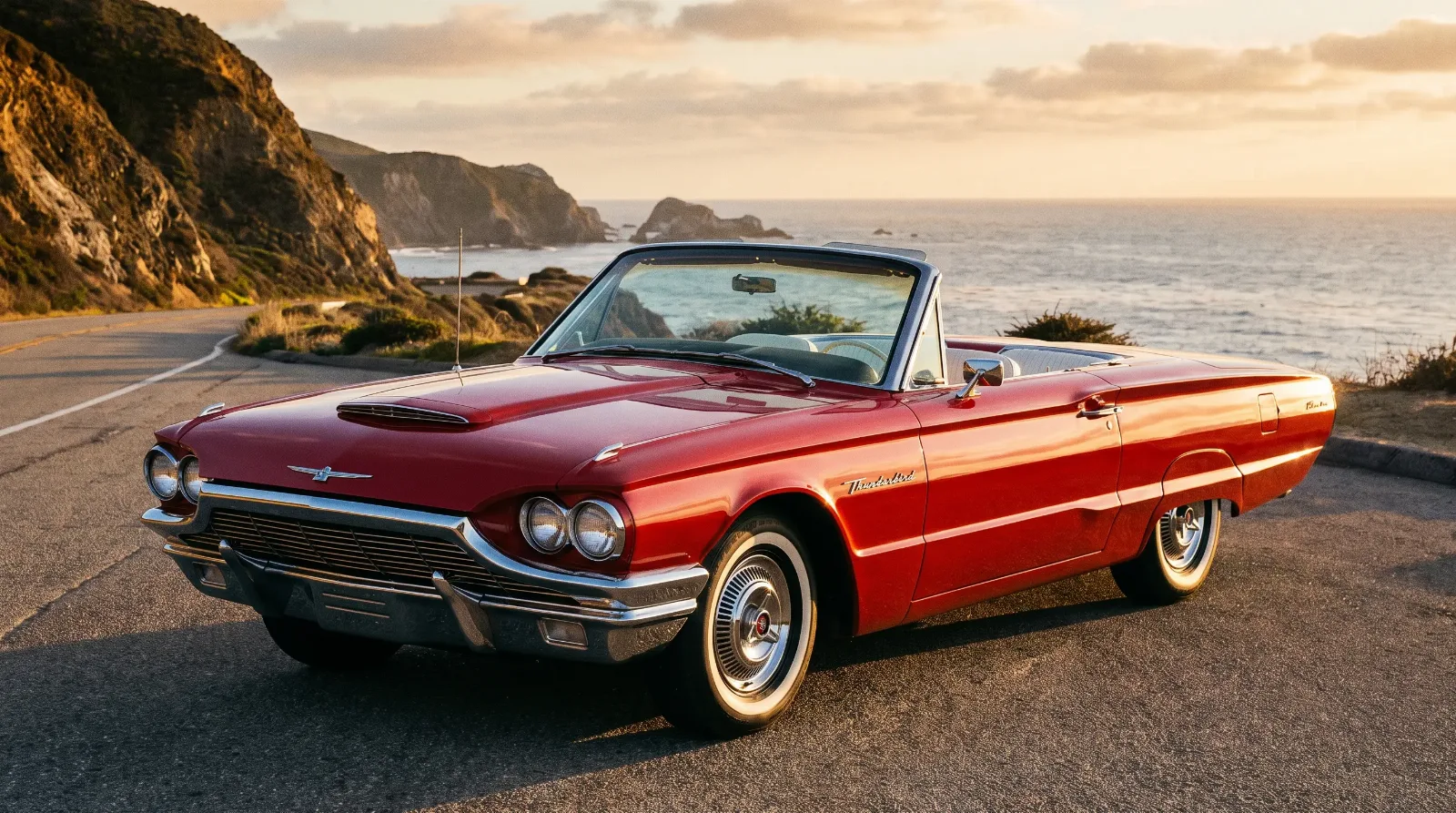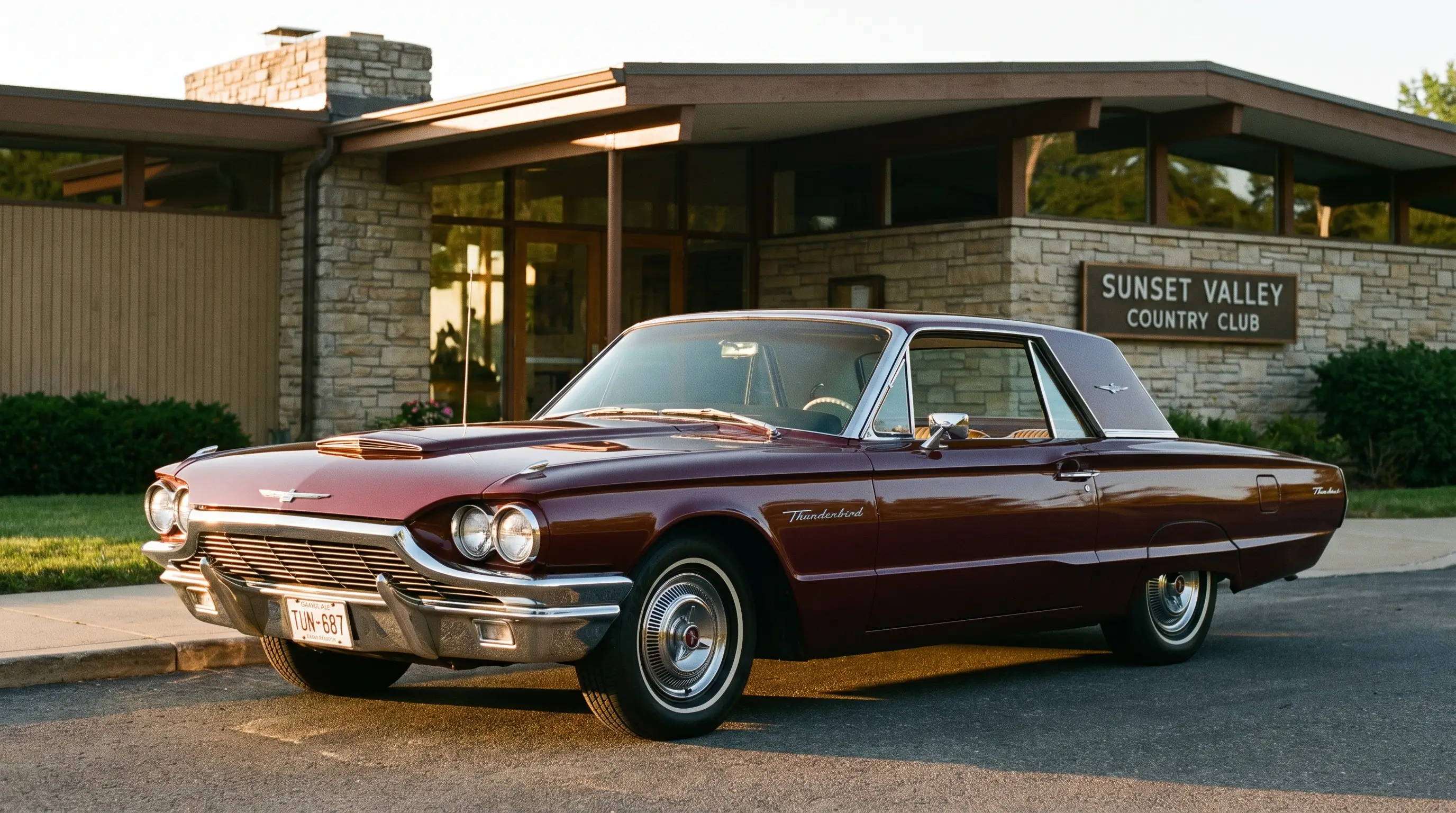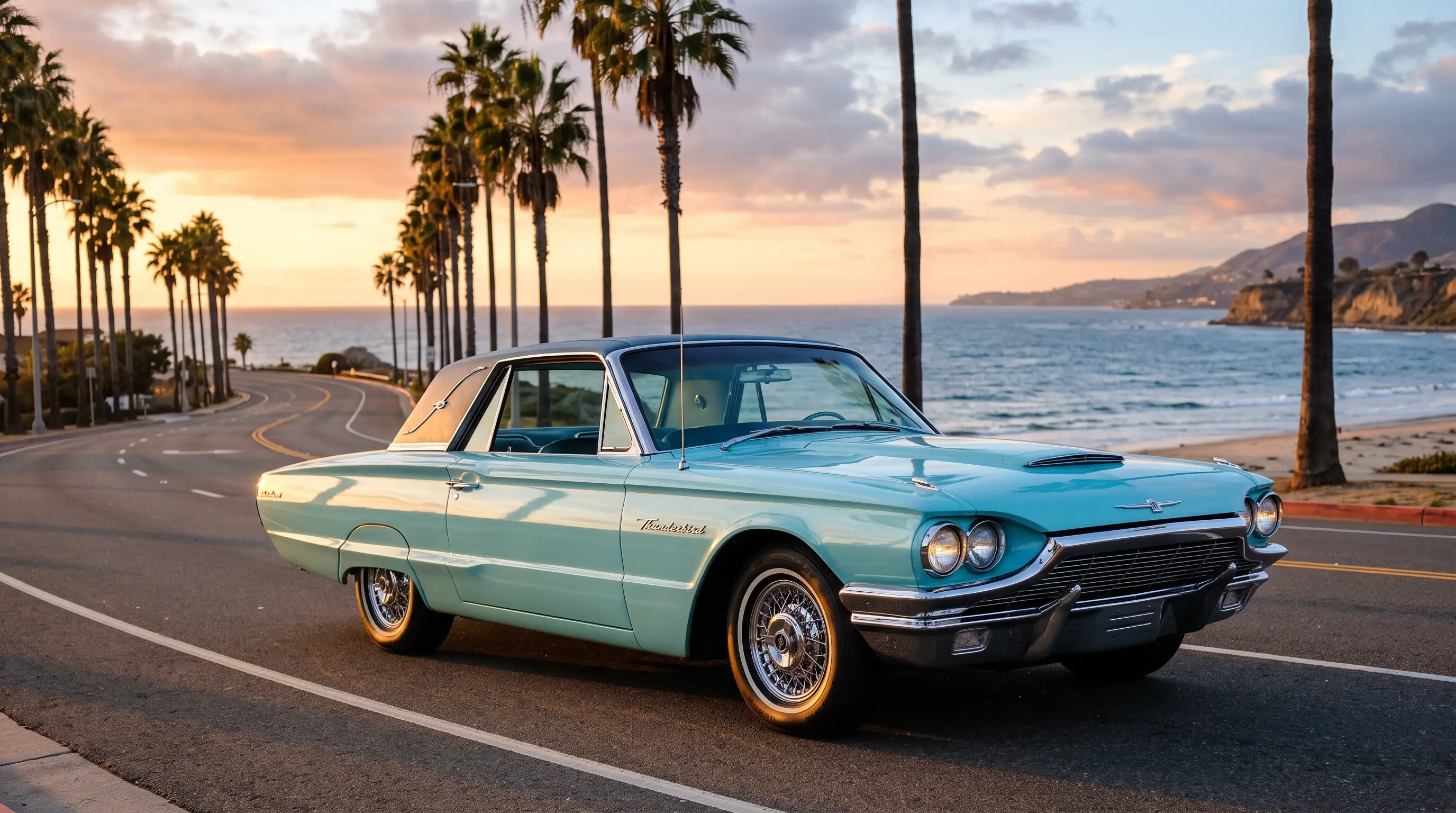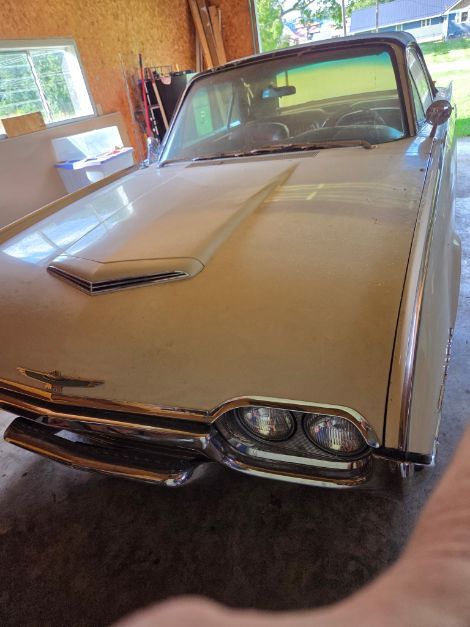
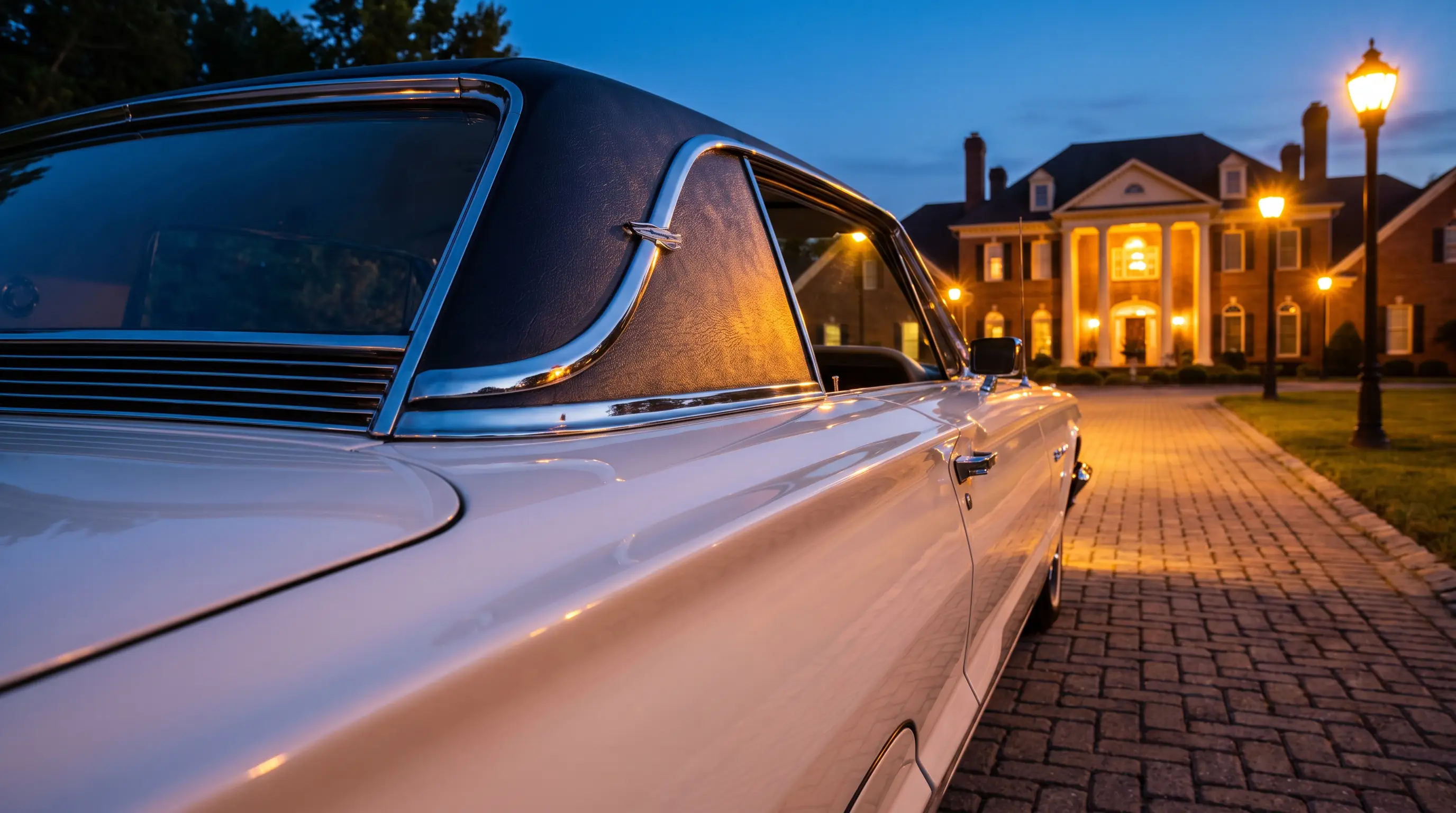
Ask ten Thunderbird owners what makes their car a Thunderbird and not just another Ford, and at least six of them will point at the little chrome bar bolted to the rear roof pillar before they mention the engine. The thunderbird landau bar was never functional. It didn't fold the top down, didn't hinge, didn't do anything a mechanic could explain. It sat there, gleaming, pretending to be a hardware relic from the days of real convertible landau tops, and it worked anyway. That's the part people forget when they talk about badge engineering and trim packages: sometimes a completely fake detail becomes the realest signal a car can send.
I've judged Thunderbird class at three regional shows now, and I still catch myself checking the landau bars first. Not the paint, not the wheels. The bars. Because a car that got its landau bar right usually got everything else right too, and a car with a mismatched, repainted, or missing bar is telling you something about its history before you've opened a door.
Where the idea came from
Landau bars go back to horse-drawn carriages, specifically the landau carriage, which had a folding top supported by exposed hinge irons on the sides. Coachbuilders in the early twentieth century carried that hardware over to formal automobile bodies, first as functional hinges on genuine convertible sedans, later as decoration on cars that had no folding top to hinge in the first place. By the time Ford put them on a Thunderbird, the landau bar had already spent three decades as a symbol rather than a mechanism, and Detroit understood exactly what it was buying: an instant association with coachbuilt luxury, at the cost of a few pounds of stamped chrome trim.
Ford wasn't shy about it. The company's own literature for the mid-1960s Thunderbird leaned hard on words like "formal" and "elegant," and the landau bar did more of that work than any single line item in the brochure. It told a buyer, before they'd even sat down, that this was not a sports car pretending to be practical. It was a personal luxury car, a term Ford more or less invented for the Thunderbird, and the bar was the visual shorthand for the whole idea.
The Flair Bird years
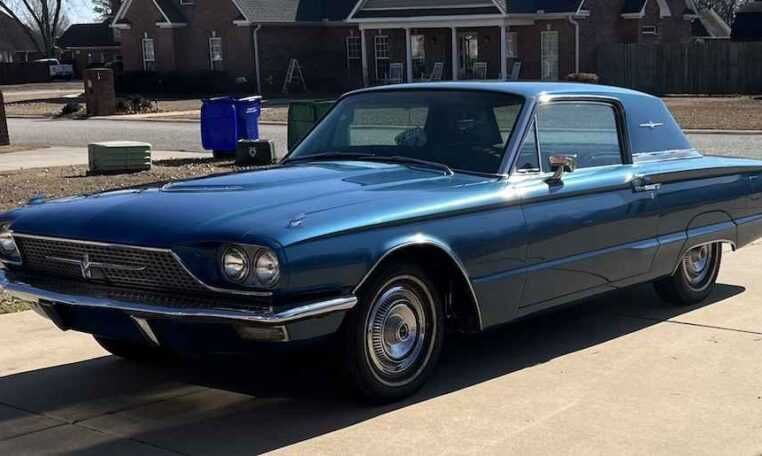
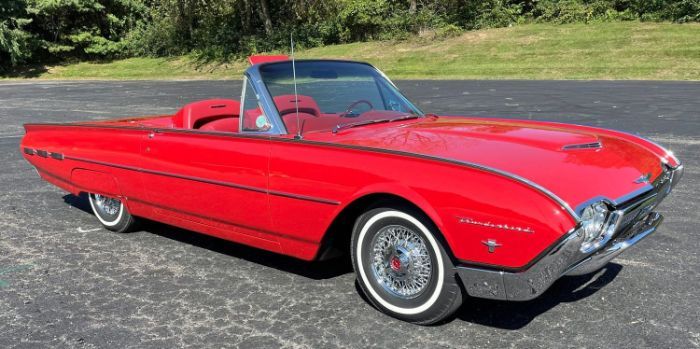
The fourth-generation Thunderbird, built from 1964 through 1966 and nicknamed the Flair Bird by enthusiasts for its sculpted flanks, is where the landau bar became inseparable from the car's identity. The Landau hardtop trim level put a padded vinyl roof section behind the doors with a substantial chrome bar running down each side, angled just enough to catch light from almost any direction on a showroom floor. You could read the full story of that generation elsewhere, but the short version is that the Landau became one of the best-selling body styles Ford offered on the Thunderbird in those years, outpacing the convertible by a wide margin. Buyers wanted the presence of a formal roof and the bar that announced it.
The bars themselves were not identical from year to year. The 1964 and 1965 pieces have a slightly different profile than the 1966 units, and reproduction parts sold today don't always nail the casting depth or the plating thickness that Ford used originally. A judge who has handled enough original bars can feel the difference blindfolded. The original chrome sits heavier in the hand, and the mounting studs are positioned with a precision that later aftermarket copies sometimes miss by a few millimeters, which throws off the whole panel gap when it's reinstalled.
Why it mattered to buyers
Personal luxury as a market category didn't fully exist before the Thunderbird carved it out, and Ford's own designers understood that the car needed visual cues that a Fairlane or a Galaxie simply didn't carry. A vinyl-covered roof panel with a decorative bar told a passerby, at a glance and from thirty feet away, that the owner had paid for something formal. It's the same instinct that put opera lamps on Lincolns a decade later and landau tops on personal luxury coupes clear through the 1980s. The Thunderbird got there first, and it got there with genuine restraint compared to what followed. One bar per side, not three. A defined vinyl section, not a whole roof smothered in padding.
Club members I've talked to over the years, the ones who bought their Thunderbirds new or close to new, remember the bar as a point of pride in a very specific way. It wasn't about performance bragging rights. It was about pulling into a country club parking lot or a church lot on Sunday and having the car read as expensive without saying a word. That's a different kind of status symbol than a big-block emblem on the fender, and the Thunderbird's landau bar sold that story better than almost anything else Ford built in the era.
"People ask me why a strip of fake carriage hardware matters so much to originality scoring, and I tell them it's because Ford's own customers cared about it more than the engine. That bar was the whole sales pitch for the Landau trim, and it still is the first thing collectors check today."
- Wayne Coburn
Spotting a correct bar today
If you're looking at a Flair Bird era Thunderbird and want to know whether the landau bar in front of you is original, start with the mounting. Factory bars use specific stud spacing that matches the roof stamping exactly, so a bar that's been shimmed, re-drilled, or filled with body putty at the edges has almost certainly been swapped or repaired. Check the plating too. Original 1960s chrome over pot metal has a warmer, slightly less mirror-bright finish than modern triple-plated reproductions, which tend to look almost too perfect next to sixty-year-old paint.
| Detail | 1964-65 Landau bar | 1966 Landau bar |
|---|---|---|
| Profile | Slightly narrower casting | Wider, more pronounced curve |
| Mounting studs | Two per side, closer spacing | Two per side, revised spacing |
| Common trim level | Landau hardtop | Landau hardtop and Town Landau references begin |
| Typical roof material paired with bar | Vinyl, several color options | Vinyl, expanded color options |
Club swap meets are still the best source for a genuinely correct bar if yours is missing or damaged, though prices have crept up as fewer donor cars turn up in salvage yards. Reproduction bars have improved over the last decade, and a careful buyer can get a set that passes a driving-distance inspection, but anyone chasing a top-tier judged score at a national meet will still want to track down an original set if they can find one.
Buying one to own the story yourself
None of this is academic if you're actually shopping. A well-preserved Landau hardtop with its original bars intact tells you the car has probably had at least one careful owner along the way, because those bars are exactly the kind of small trim piece that gets lost or damaged during a sloppy repaint. If you're looking at a classic Thunderbird for sale, take the extra five minutes to check the bar mounts and plating before you check anything under the hood. It won't tell you about the engine, but it will tell you a lot about how the car was cared for, and that's usually the better predictor of what you're actually buying.
The landau bar is a small thing to build a car's identity around, but that's exactly what happened. Ford's designers guessed correctly that American buyers wanted the language of formal coachbuilding without any of the inconvenience, and six decades later the guess still holds up every time one of these cars rolls onto a show field.